-
-
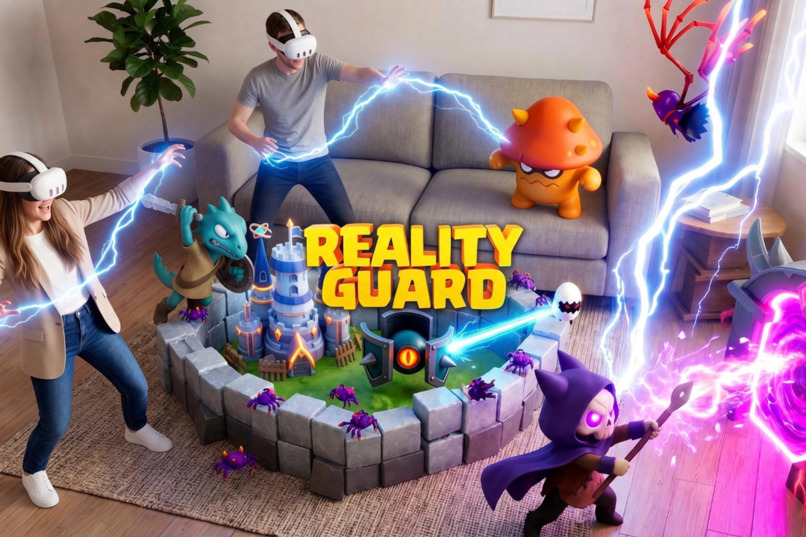
Cover: RealityGuard
-
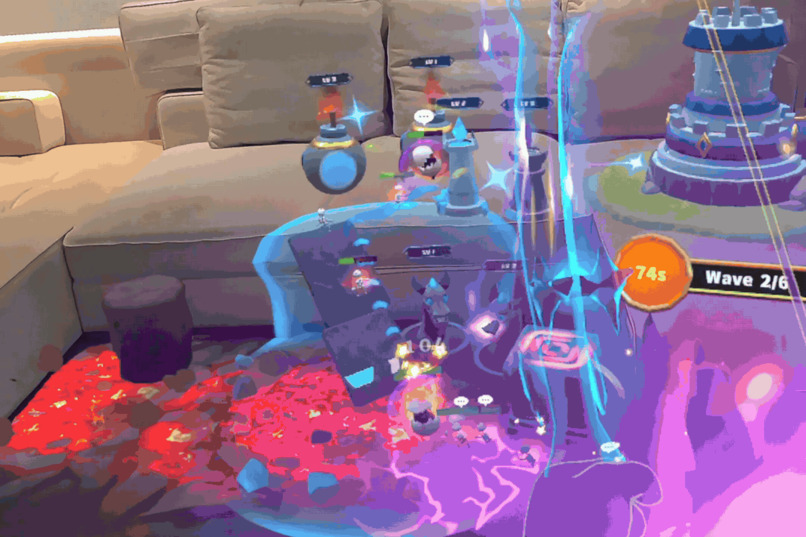 GIF
RealityGuard turns your real living room into a tower-defense battlefield; fight monsters on your own sofa in passthrough MR.
-
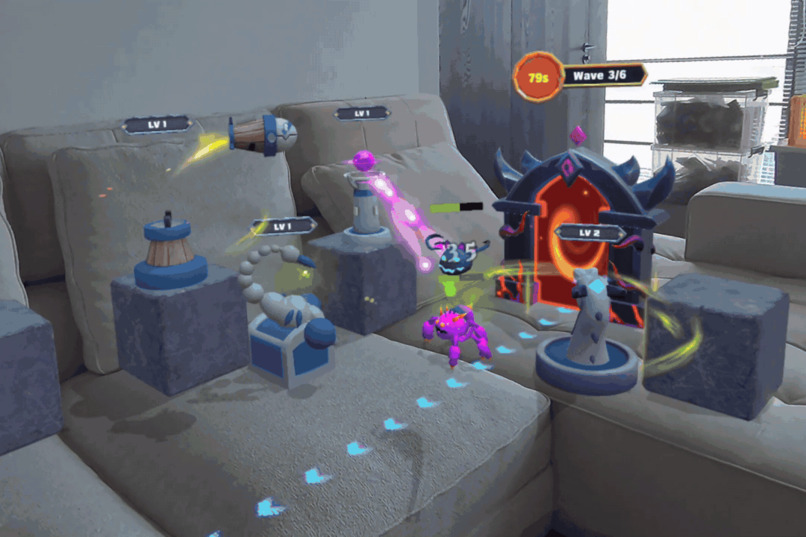 GIF
Your real furniture is the map—build on couches and tables as enemies weave through your room's terrain.
-
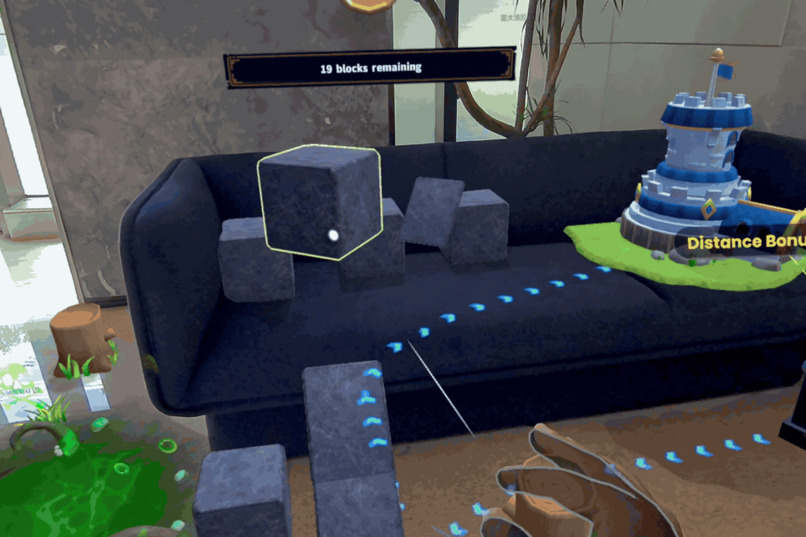 GIF
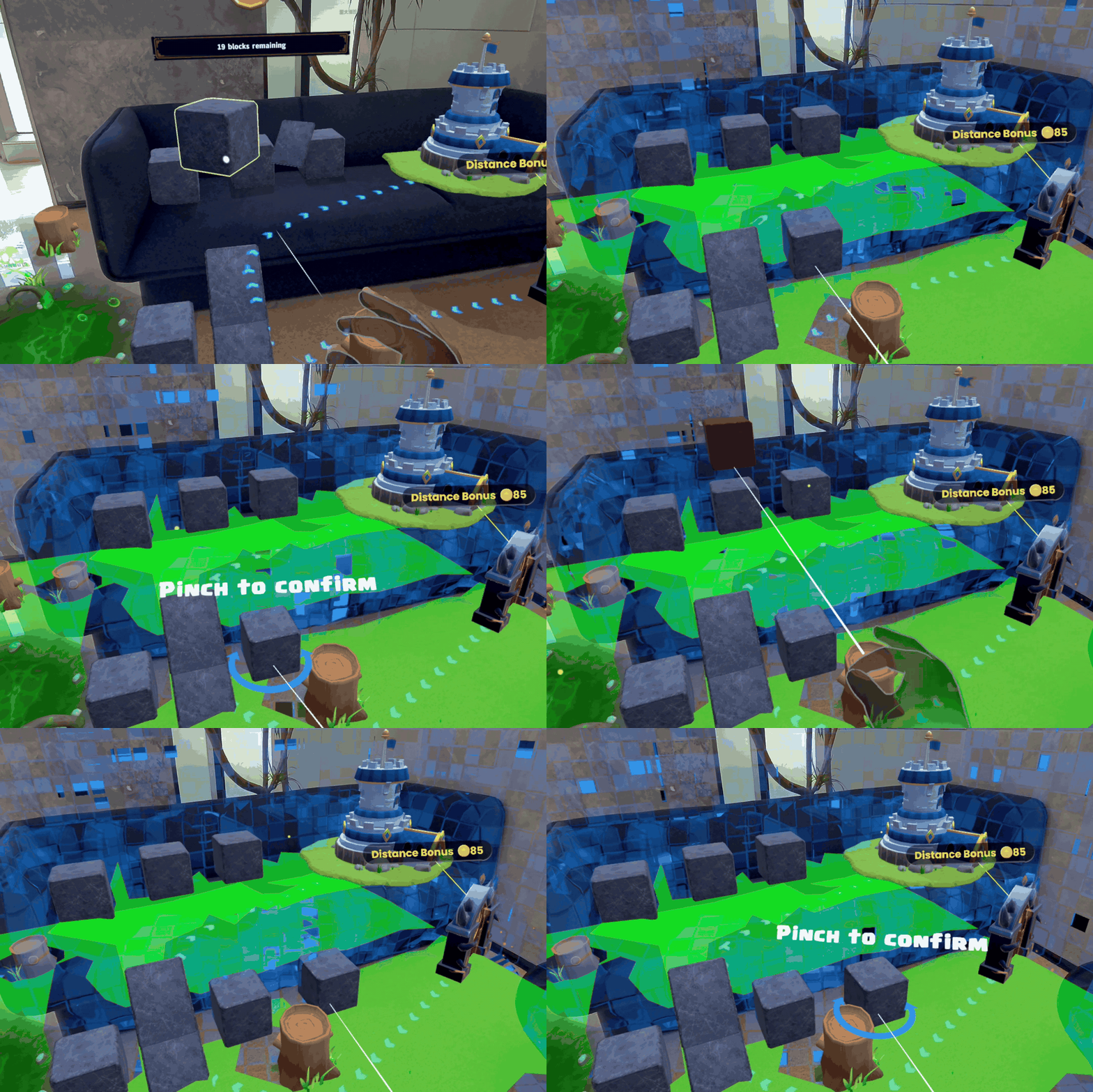
Plan your strategy: preview the enemy path through your space and place towers for maximum coverage.
-
 GIF
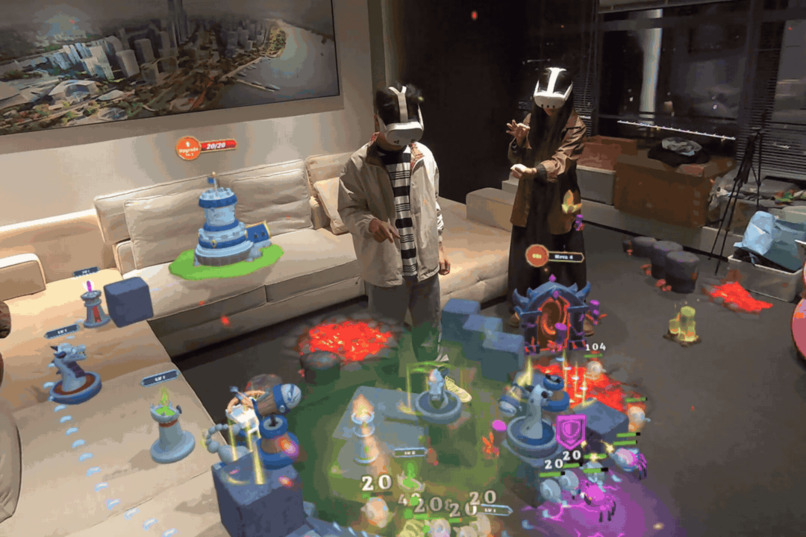
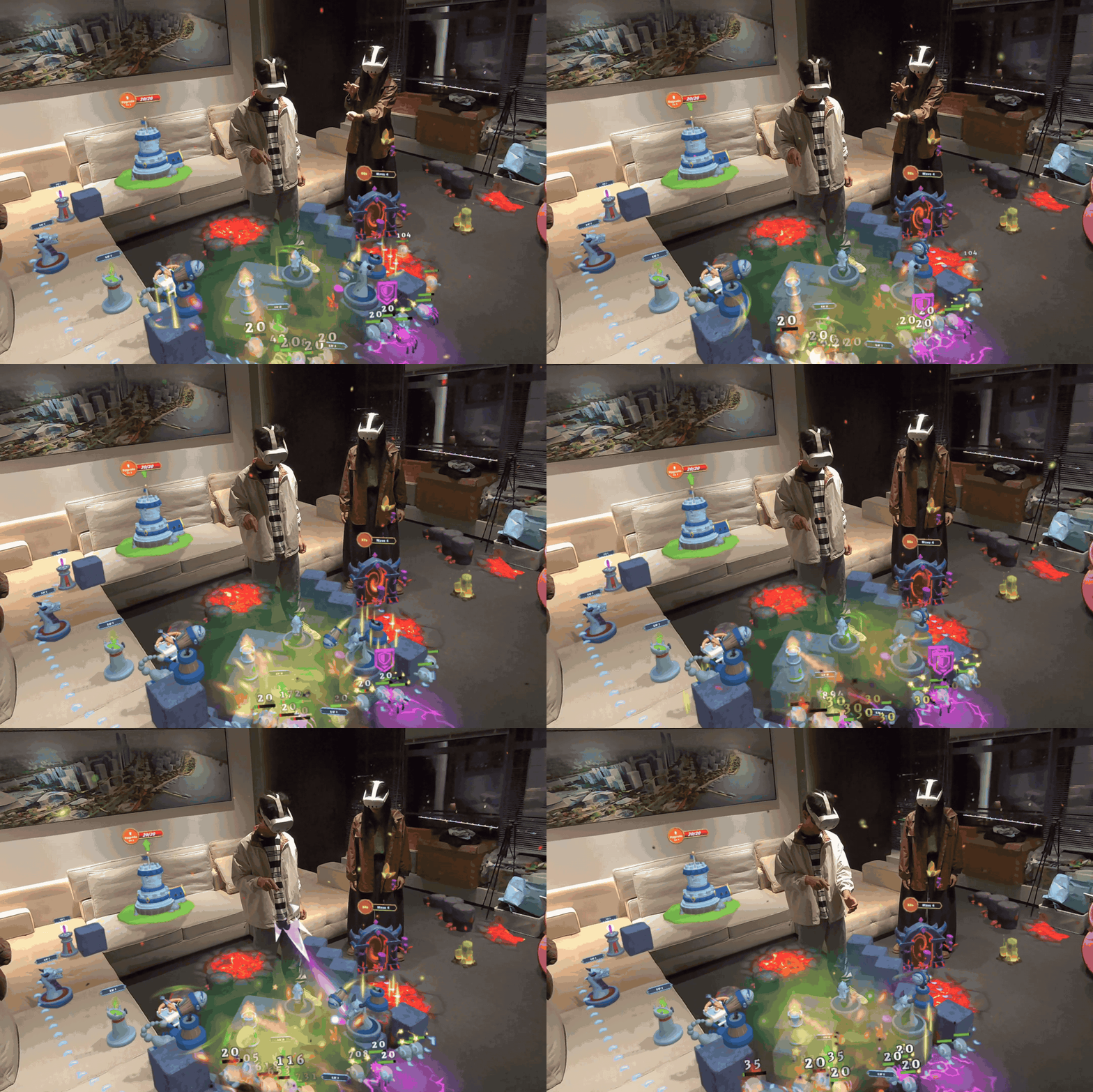
Team up in local co-op—two players share one mixed-reality battlefield in the same room.
-
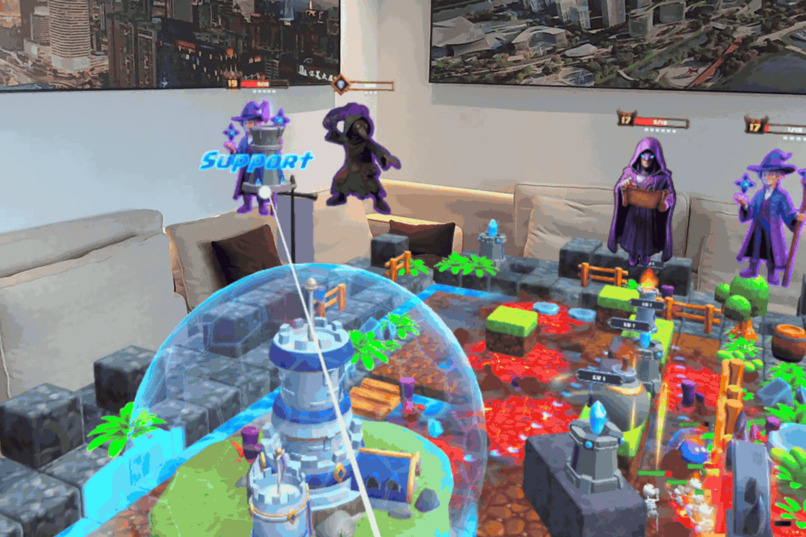 GIF
Team play in PvP: share and pass your tower cards to a teammate to build a stronger combined defense together.
-
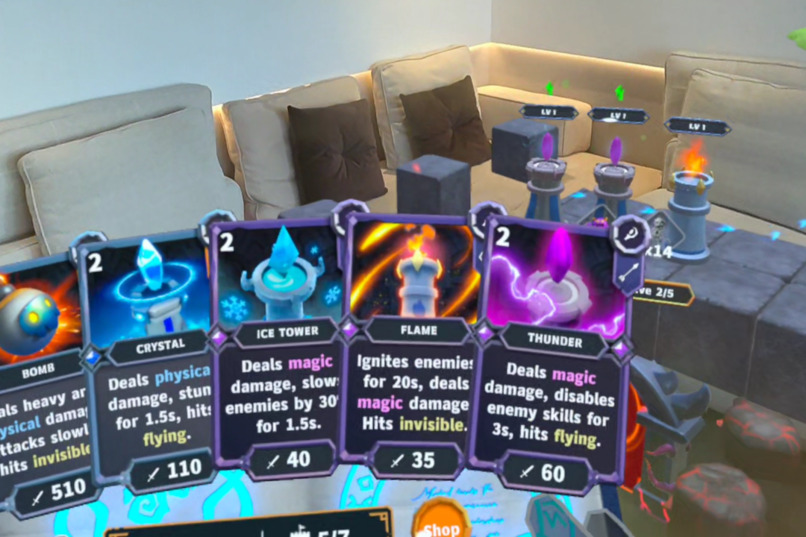
Buy and collect multiple tower cards, then mix and match them to craft your own ideal combo and strategy.
-
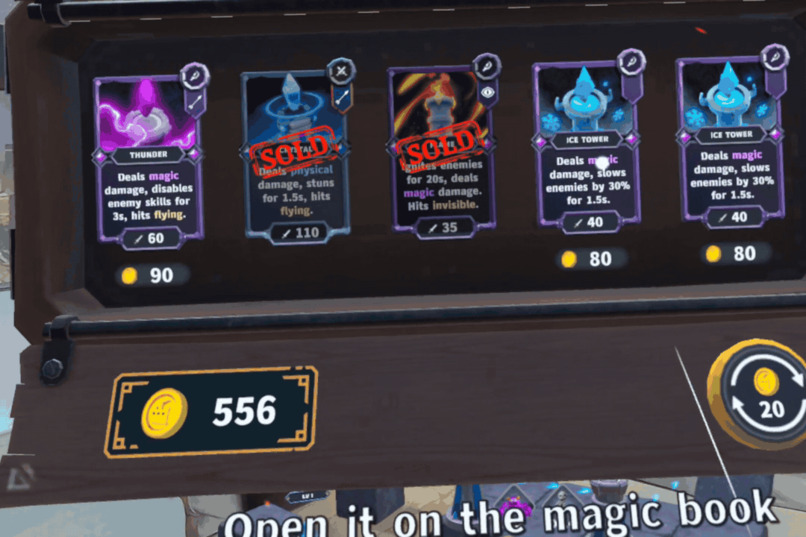 GIF
A deep roster of elemental towers—Thunder, Crystal, Flame, Ice—each with unique damage types and effects to mix and master.
-
 GIF
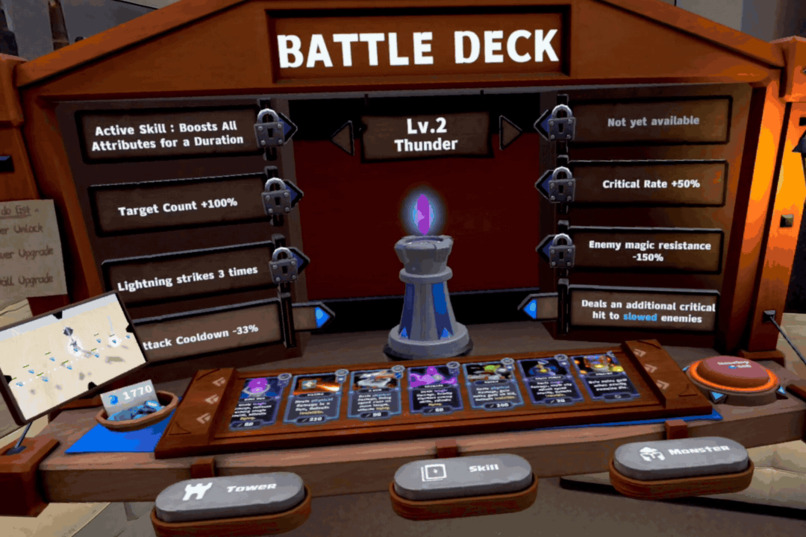
Build and customize your own battle deck—tune each tower's skill tree before you fight.
-
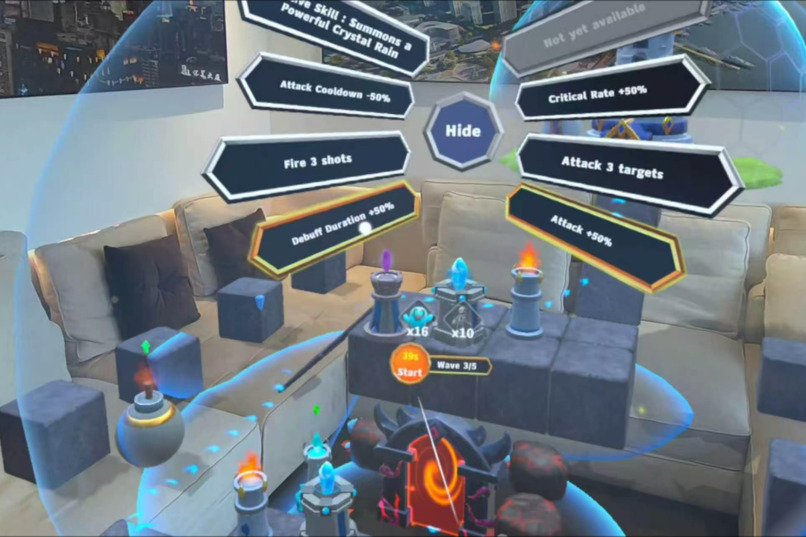
Roguelike progression: every wave offers random upgrades, so no two runs ever play the same way.
-
 GIF
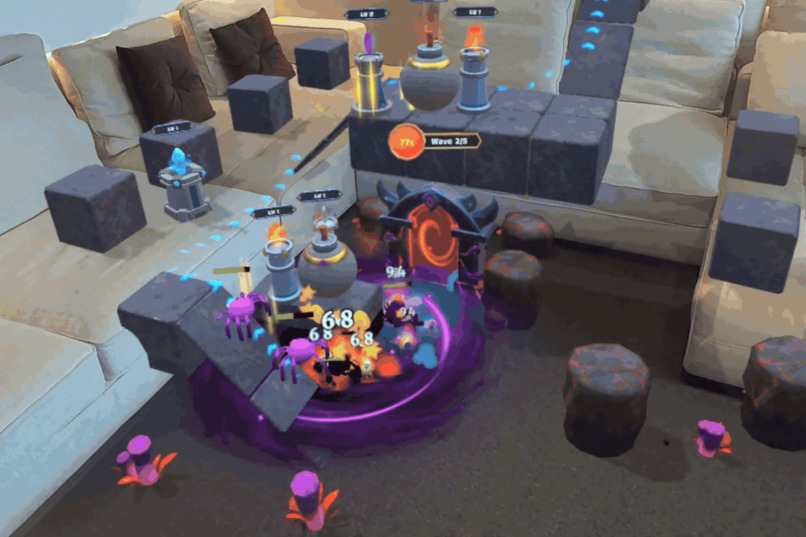
Cast skills with your own two hands—unleash powerful abilities to blast incoming monsters directly.
-
 GIF
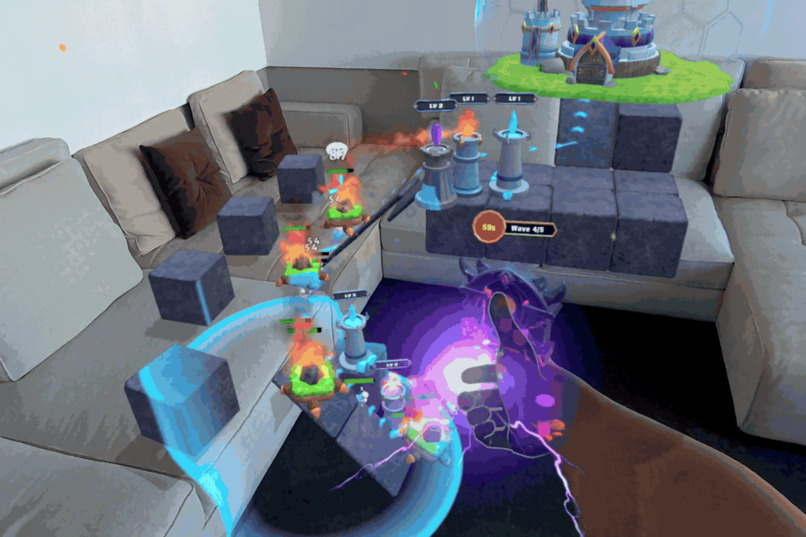
Hands-on combat: use your bare hands to aim and unleash another skill, striking enemies yourself.
-
 GIF
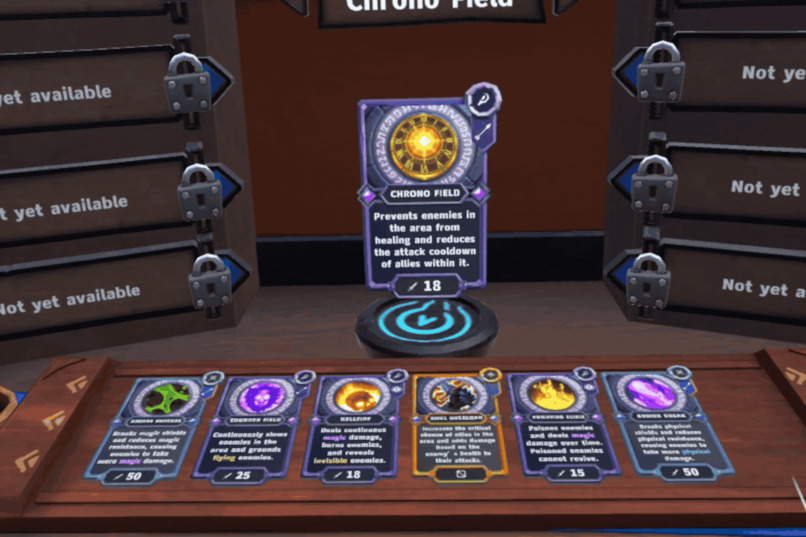
Game-changing field spells like Chrono Field add tactical depth and clutch comebacks.
-
 GIF
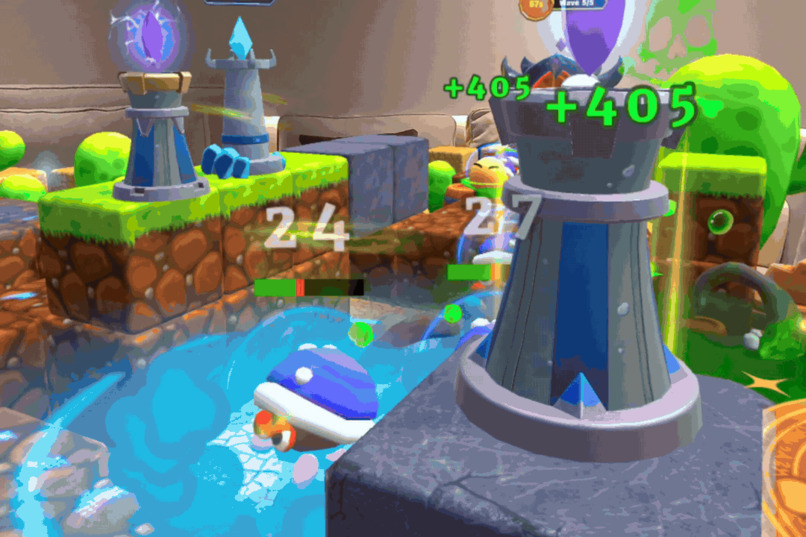
Charming, colorful 3D enemies and bosses bring the miniature battlefield to life on your table.
-
 GIF
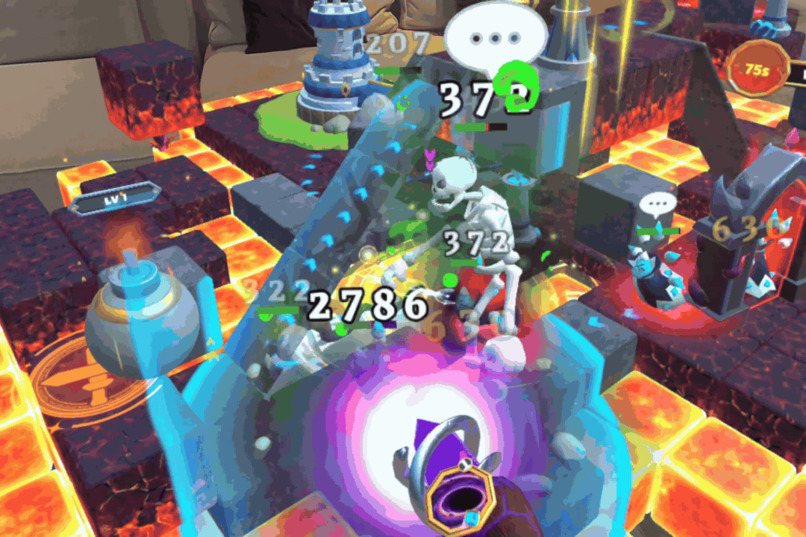
Play in VR mode too—no physical space restriction, dive into an immersive fantasy battlefield rendered all around you.
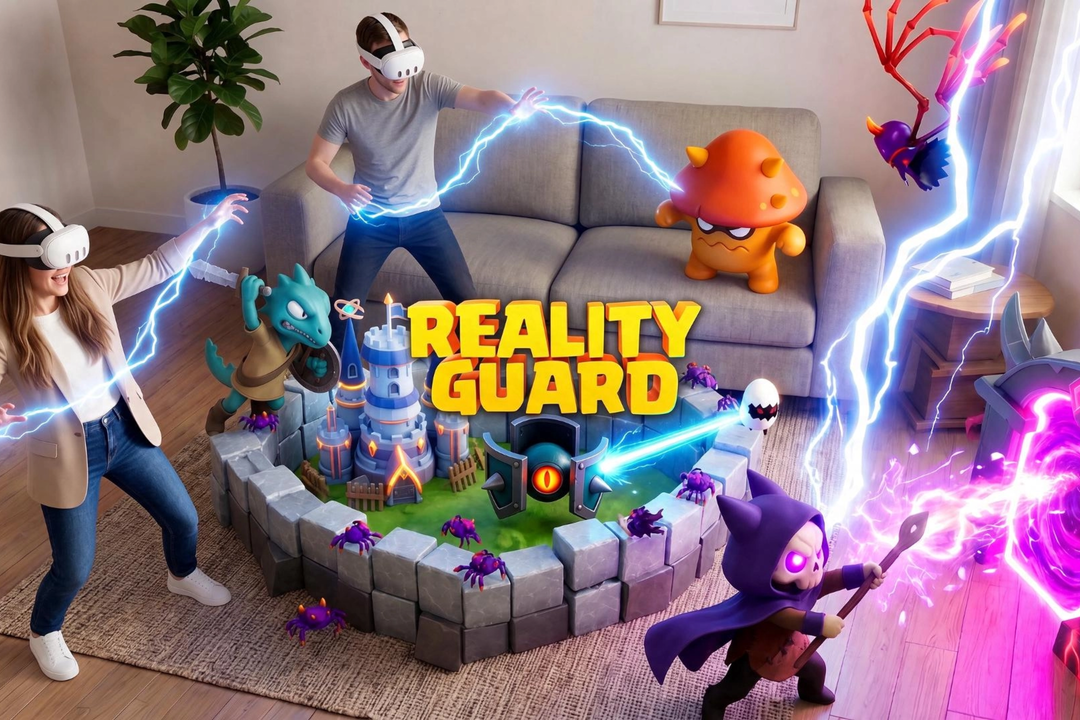
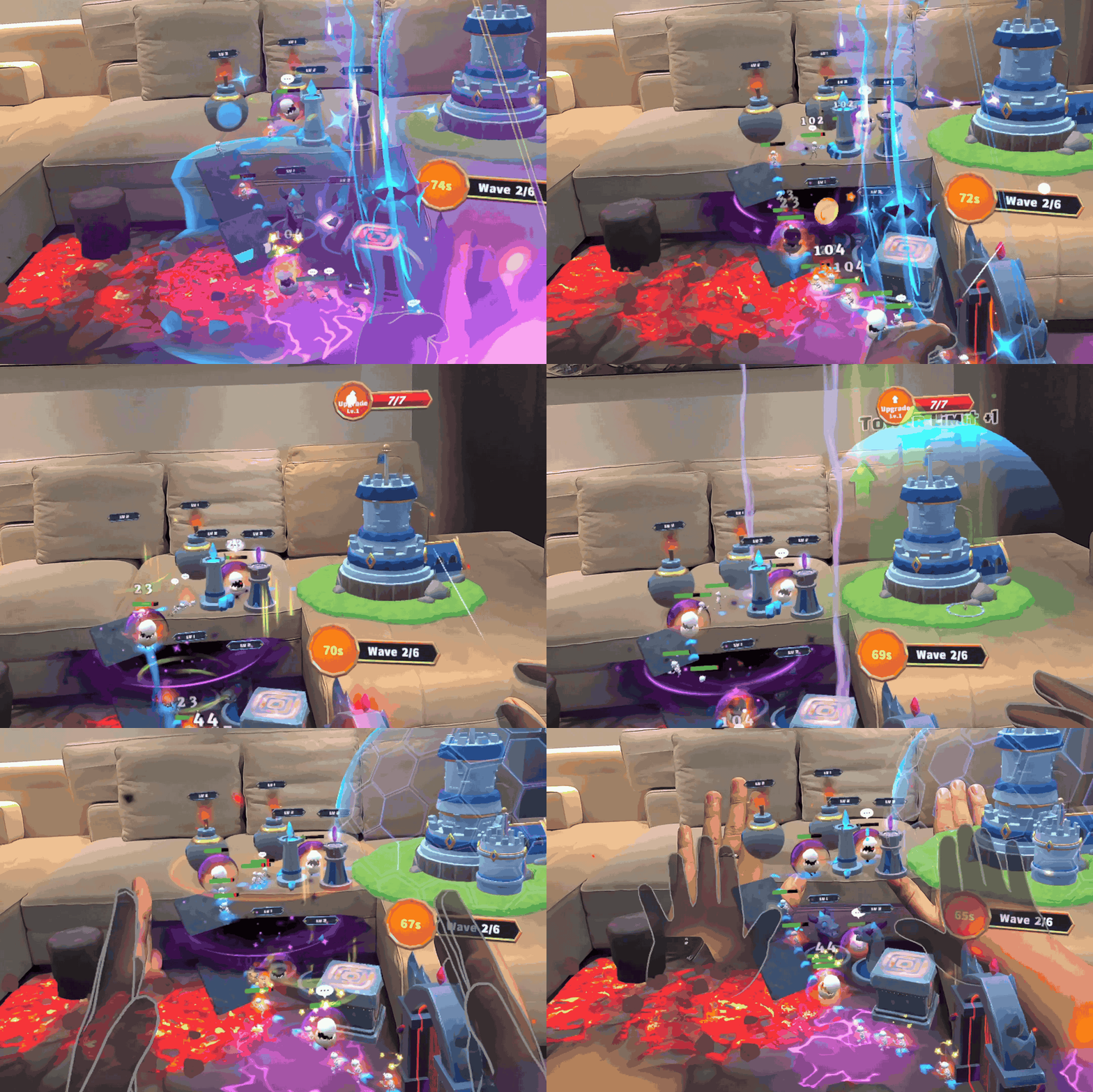
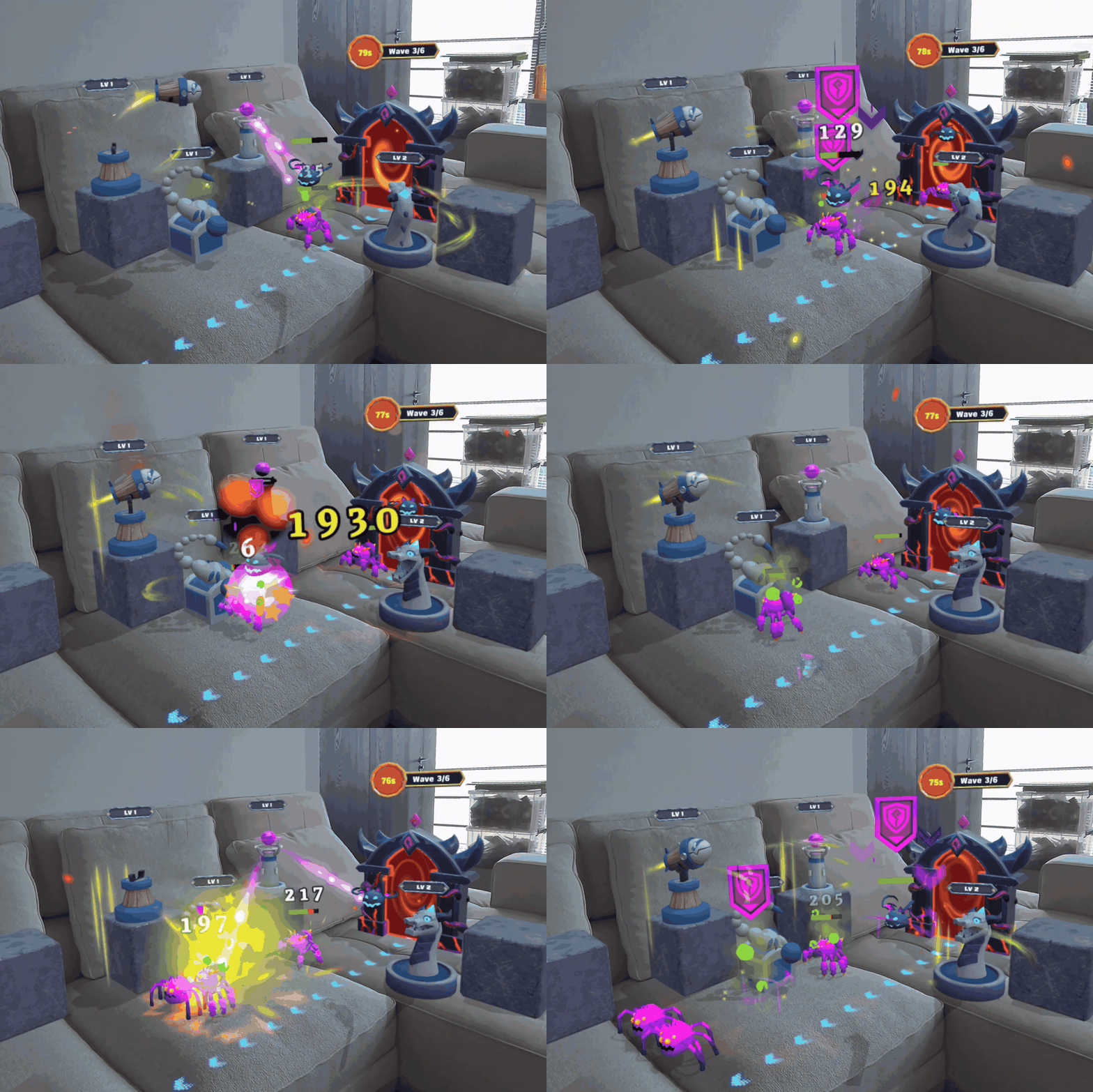
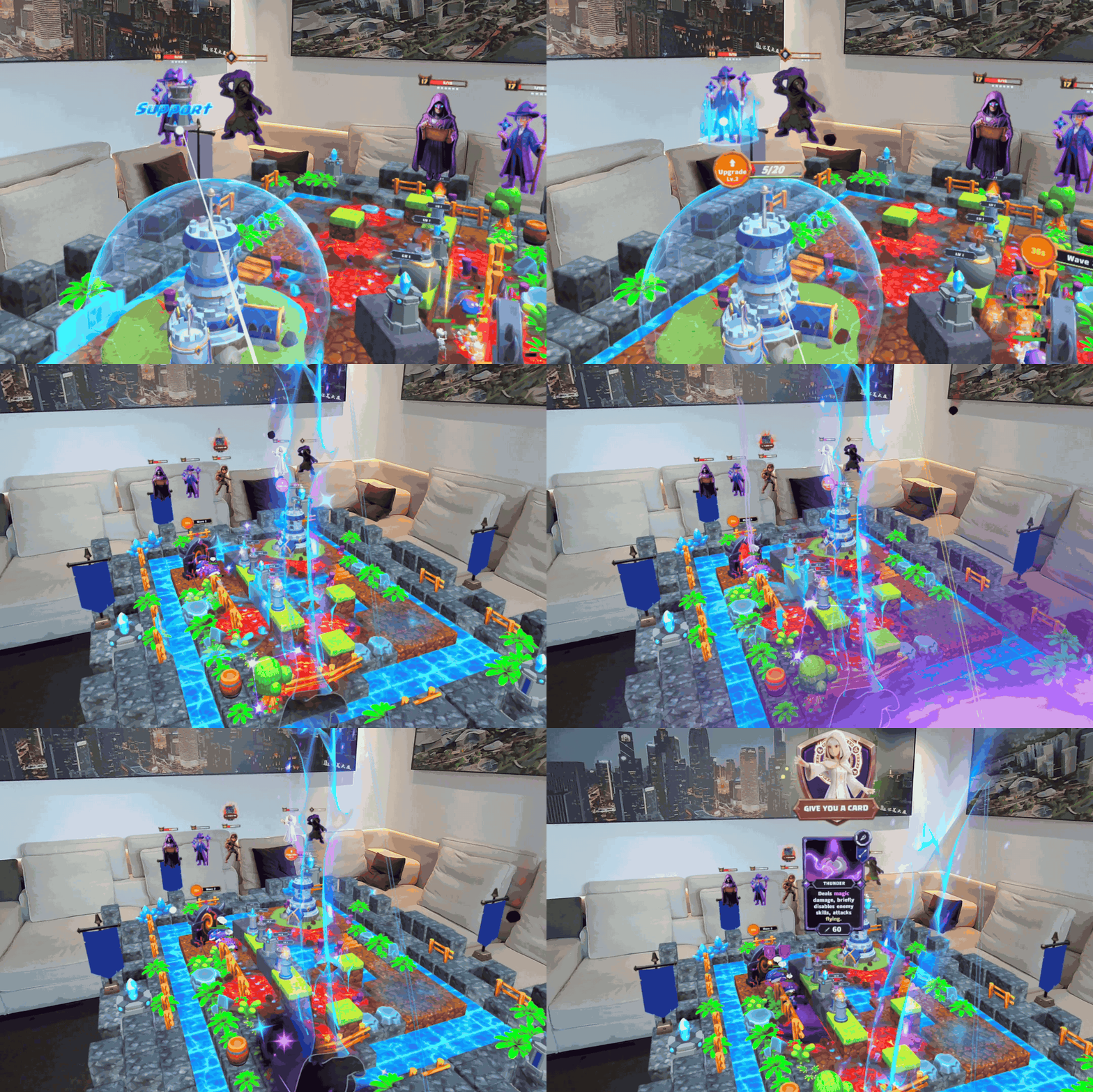
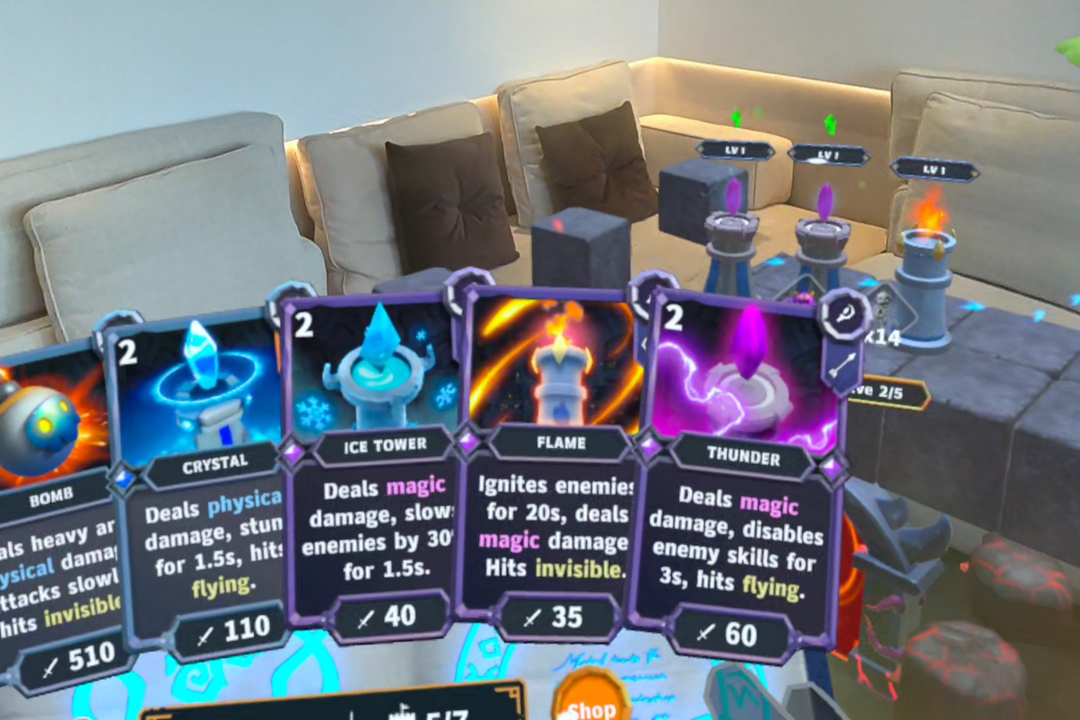
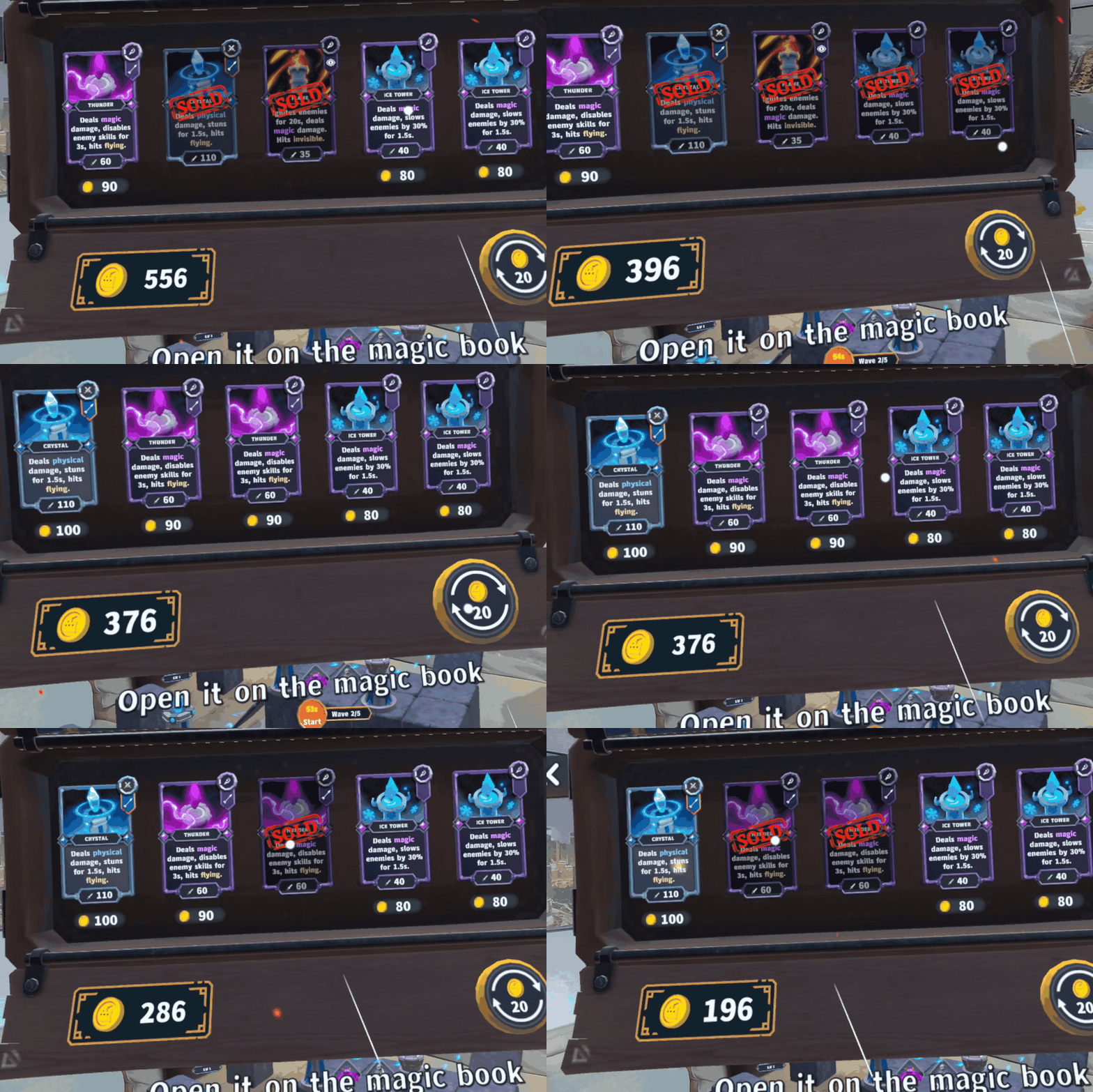
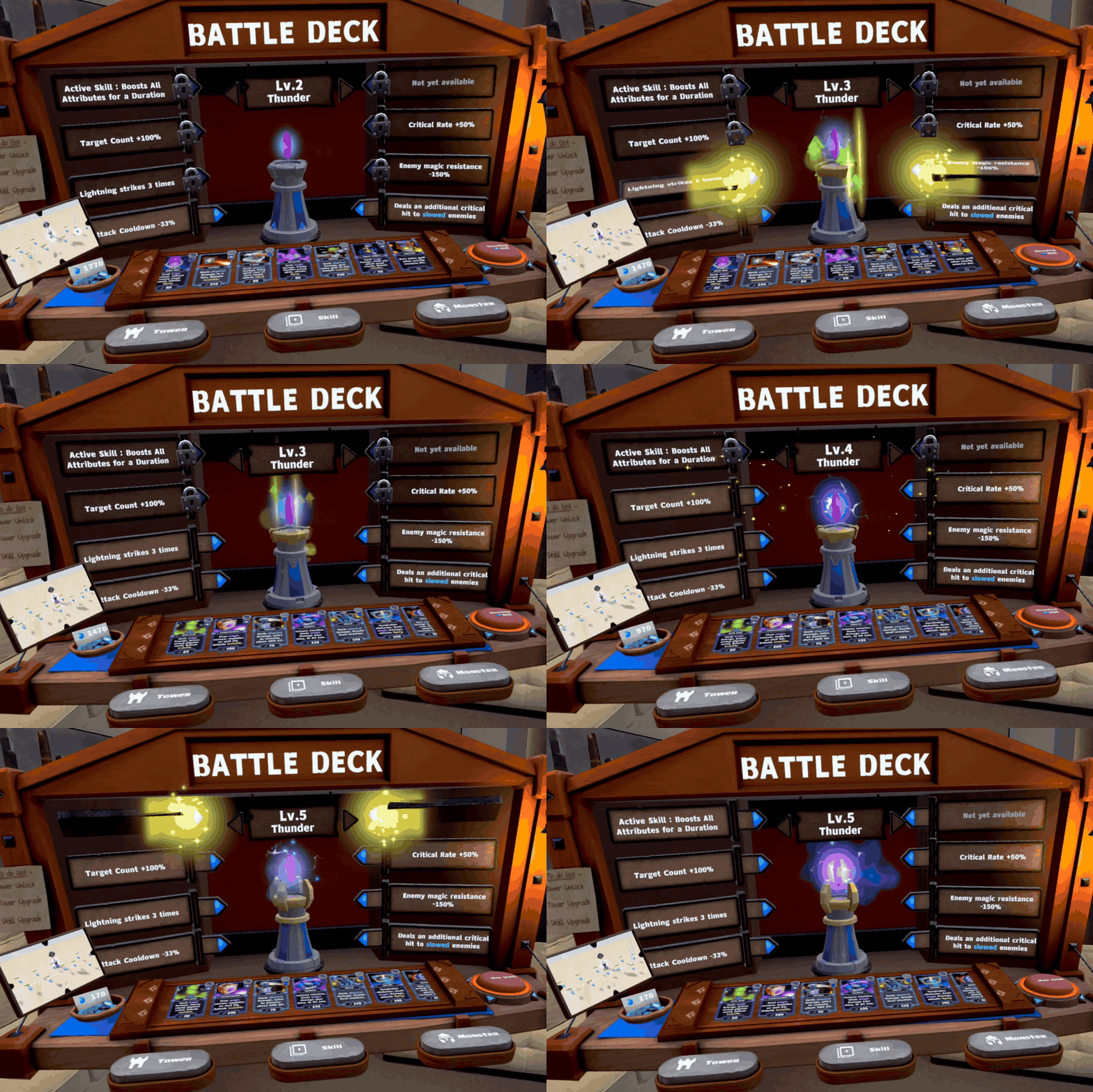
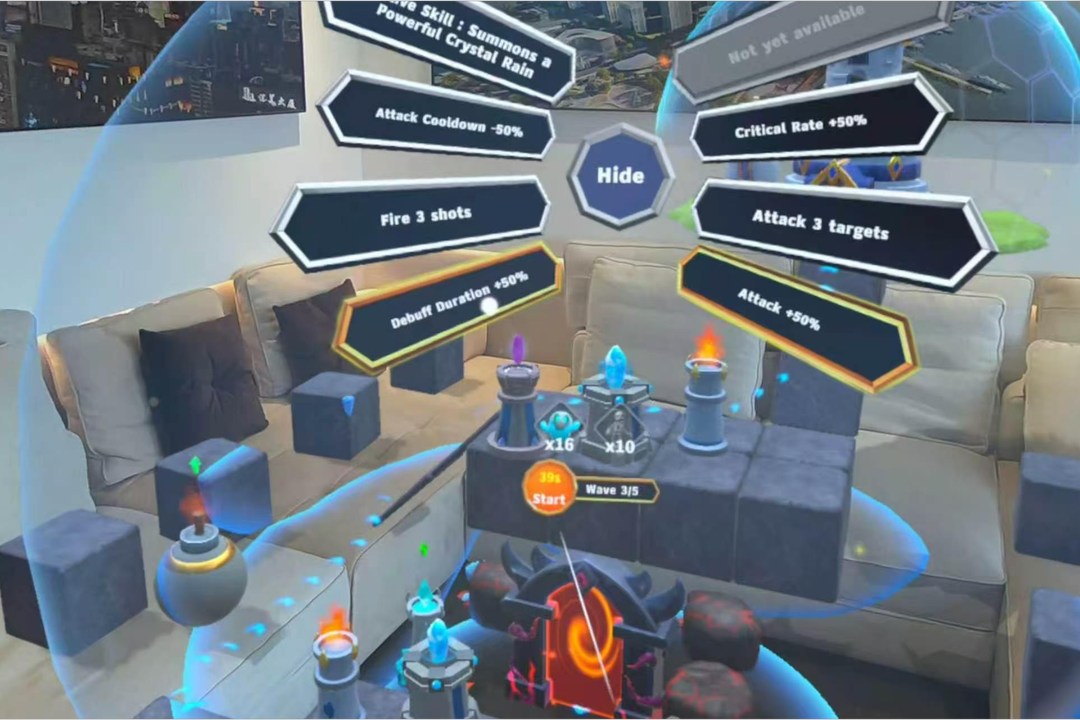
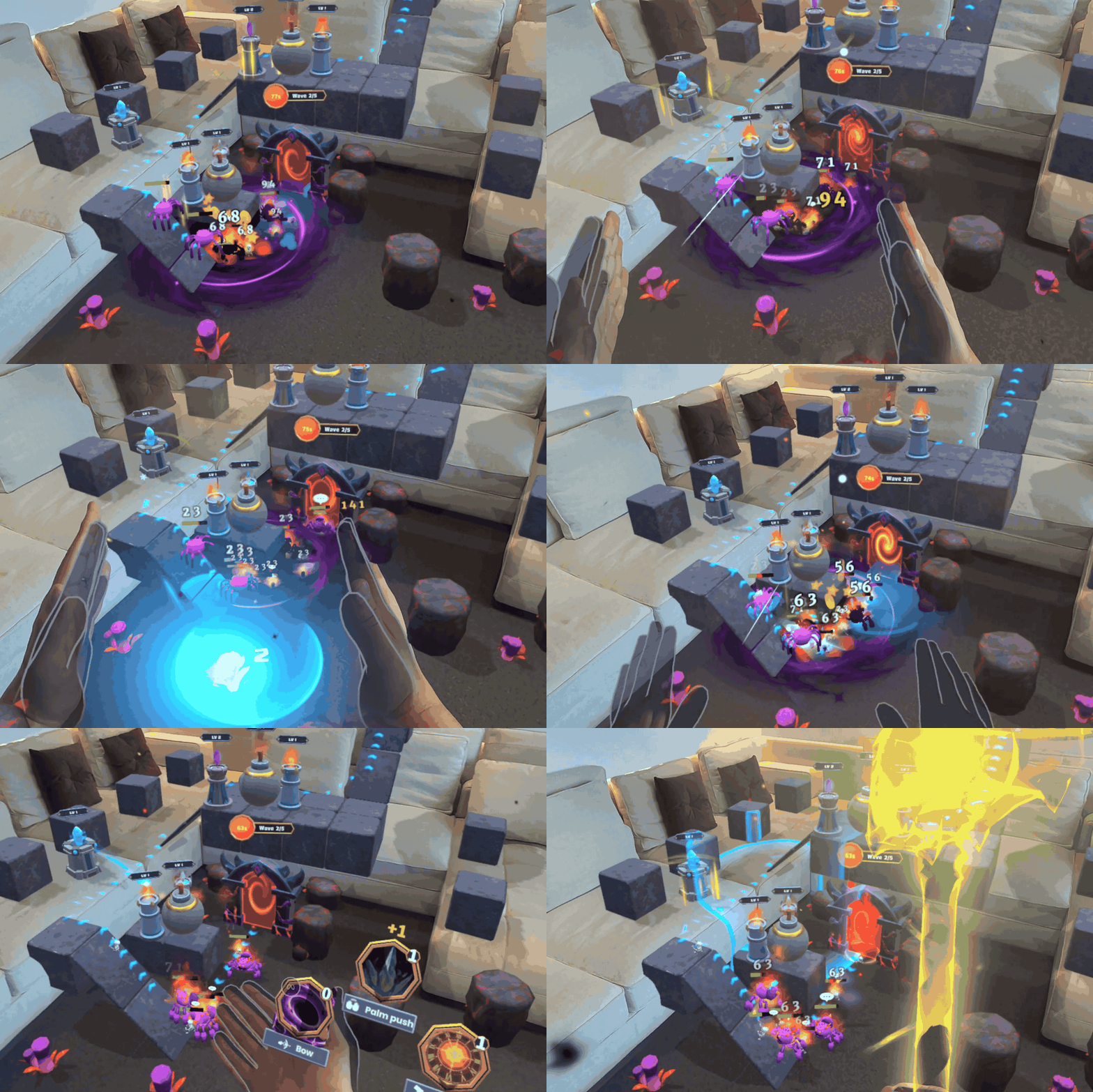
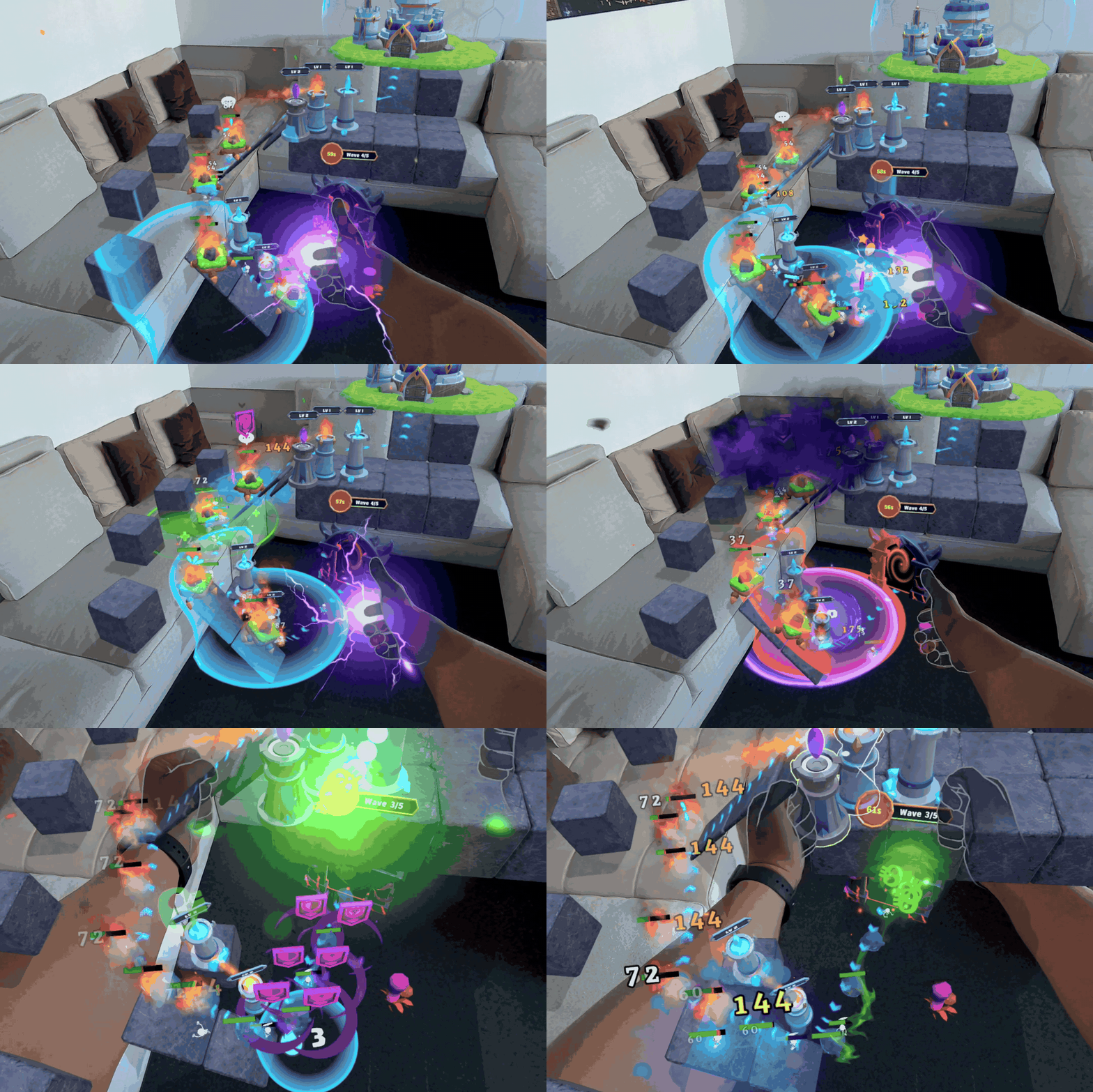
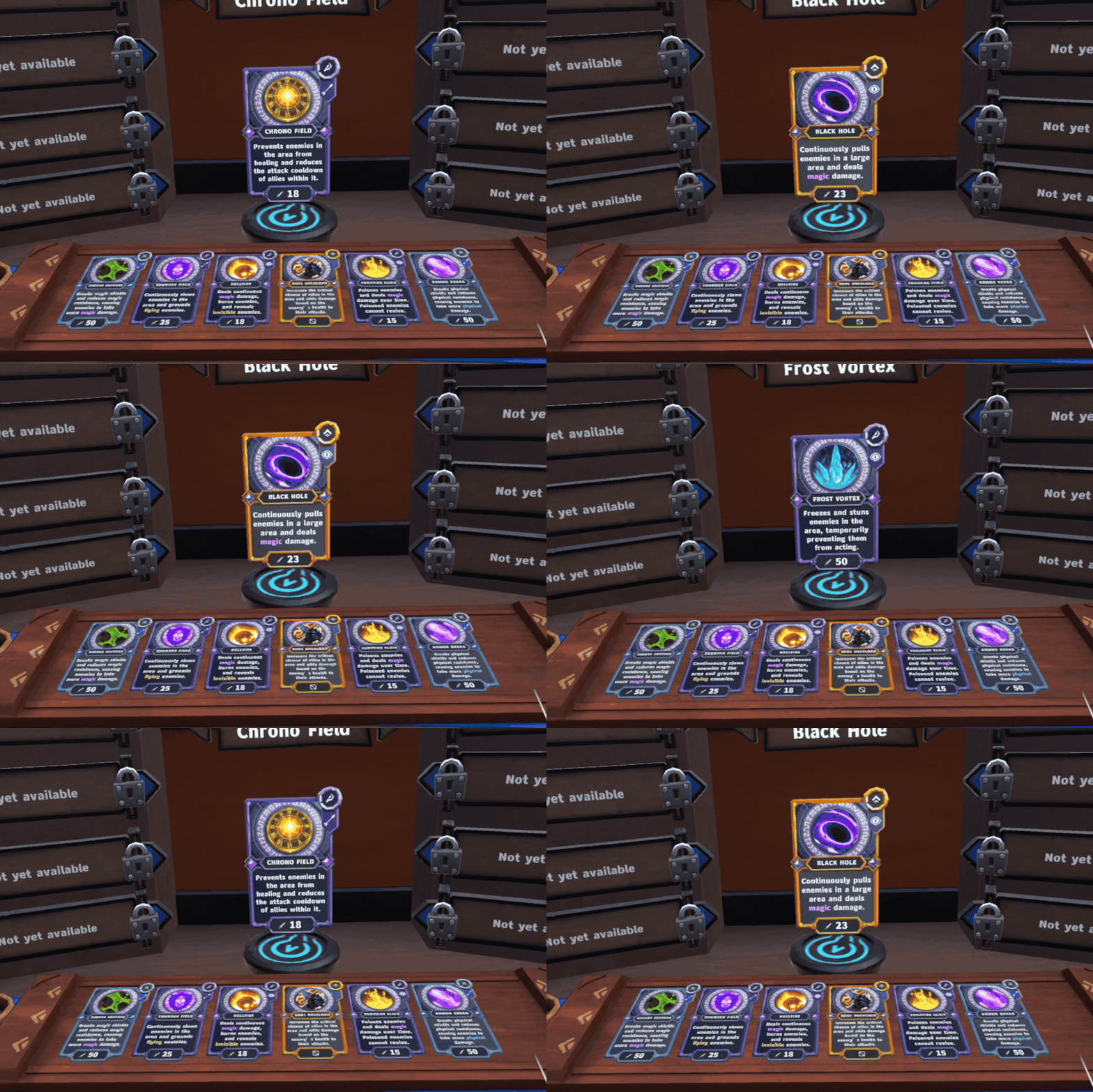
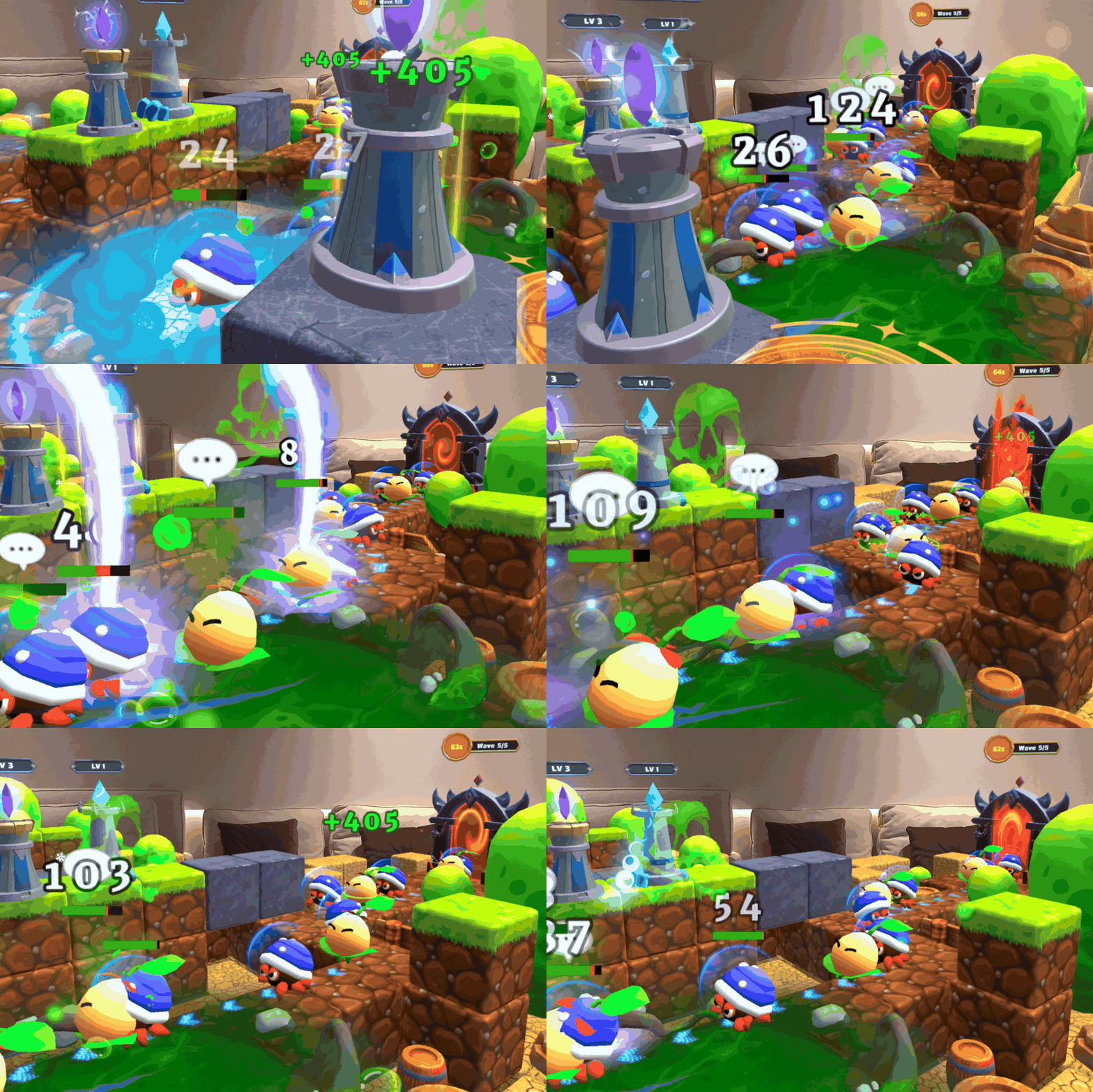
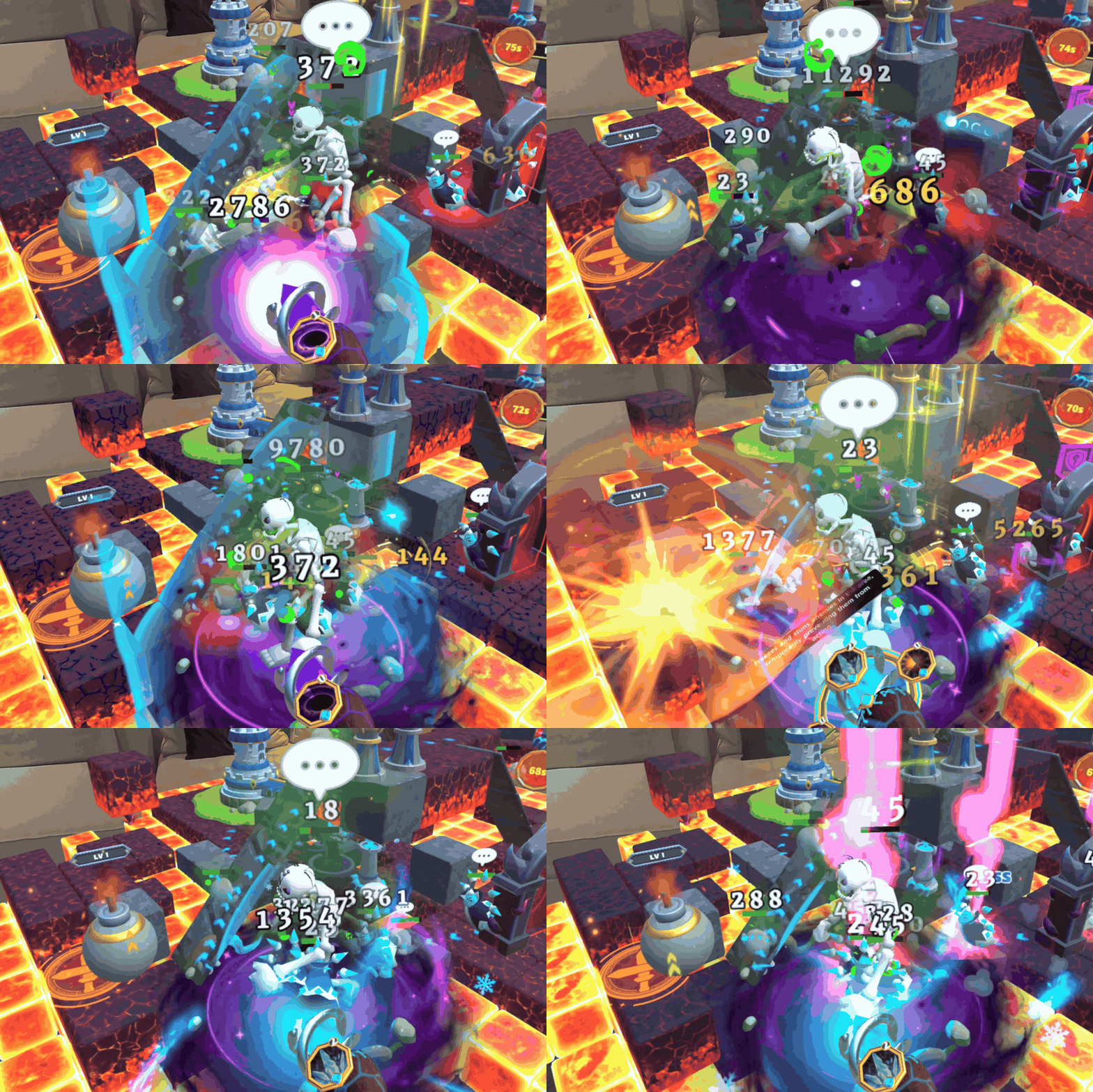
RealityGuard is a Mixed Reality tower defense game for the Meta Quest 3 family, currently in Early Access. For this competition we built a new version with hand gestures fully integrated: the whole game can now be played with bare hands, which makes it more fun and ready for Meta VR Glasses.
Inspiration
What excites us most about Mixed Reality is that you stay connected to the real world: you move freely, see the people and the room around you, and interact naturally with virtual content. We wanted to show what that blend can do for a classic genre like tower defense. Your room becomes the battlefield, you build the terrain on it with your own hands, and friends standing next to you join the same fight. Neither a flat screen nor VR alone can offer that.
What it does
RealityGuard is a tower defense game in your physical place. Players build terrain by stacking blocks, design the paths enemies take, and place towers on real-world surfaces and objects, including walls and ceilings, to hold off waves of enemies.
- Hand Gestures: Play the entire game with bare hands: navigate the UI, pick up and place towers, and cast skills at enemies. Controllers are supported too.
- MR Mode: Your physical room is part of the battlefield. Combine real and virtual objects to shape the terrain.
- VR Mode: A fully immersive virtual battlefield.
- PvE: Co-op with co-located friends in a party.
- PvP: Competitive 3v3 matches against remote players online.
- Strategic Combat: Tower placement, terrain design, and active abilities all decide the outcome.
How we built it
Built in Unity 6 with the Meta XR SDK.
- Room as level geometry: MRUK loads the scanned room, and its global mesh becomes real level geometry. Player-built blocks are combined with it and the navigation mesh is rebuilt at runtime, so enemies path across the real room.
- Custom gesture recognizers: Written on raw hand-joint data: five spell gestures, plus pinch-and-aim tower placement with a palm roll to rotate. Thresholds live in data tables, so we tuned them on the headset without rebuilding the app.
- Rebindable gestures: A gesture triggers a skill slot, not a fixed skill, so players can remap them.
- Multiplayer: An authoritative server runs the battle. For players in the same room, Colocation Discovery and Shared Spatial Anchors align everyone to one coordinate space.
Accomplishments that we're proud of
- Player Reception: Player feedback has been overwhelmingly positive. Some players have logged dozens of hours, and some have spent long sessions playing co-op together, which speaks to the replayability of the core gameplay.
- Space as Gameplay: Real-world surfaces such as walls and ceilings are part of the defensive layout, so the physical room genuinely shapes every match.
- Controller-free Play: Core gameplay works without controllers, including customizable gesture-based ability casting.
What we learned
- Design around space first: MR games should be designed around physical space from the start, not by dropping virtual objects into the real world.
- Technology serves the experience: A new interaction method should make the game simpler, more intuitive, and more enjoyable, not more complicated.
- Multiplayer needs meaning: Great multiplayer takes more than technical synchronization. It needs meaningful cooperation and interaction between players.
- Onboarding: Helping newcomers quickly grasp spatial interaction and the game's mechanics.
Built With
- quest3
- unity


