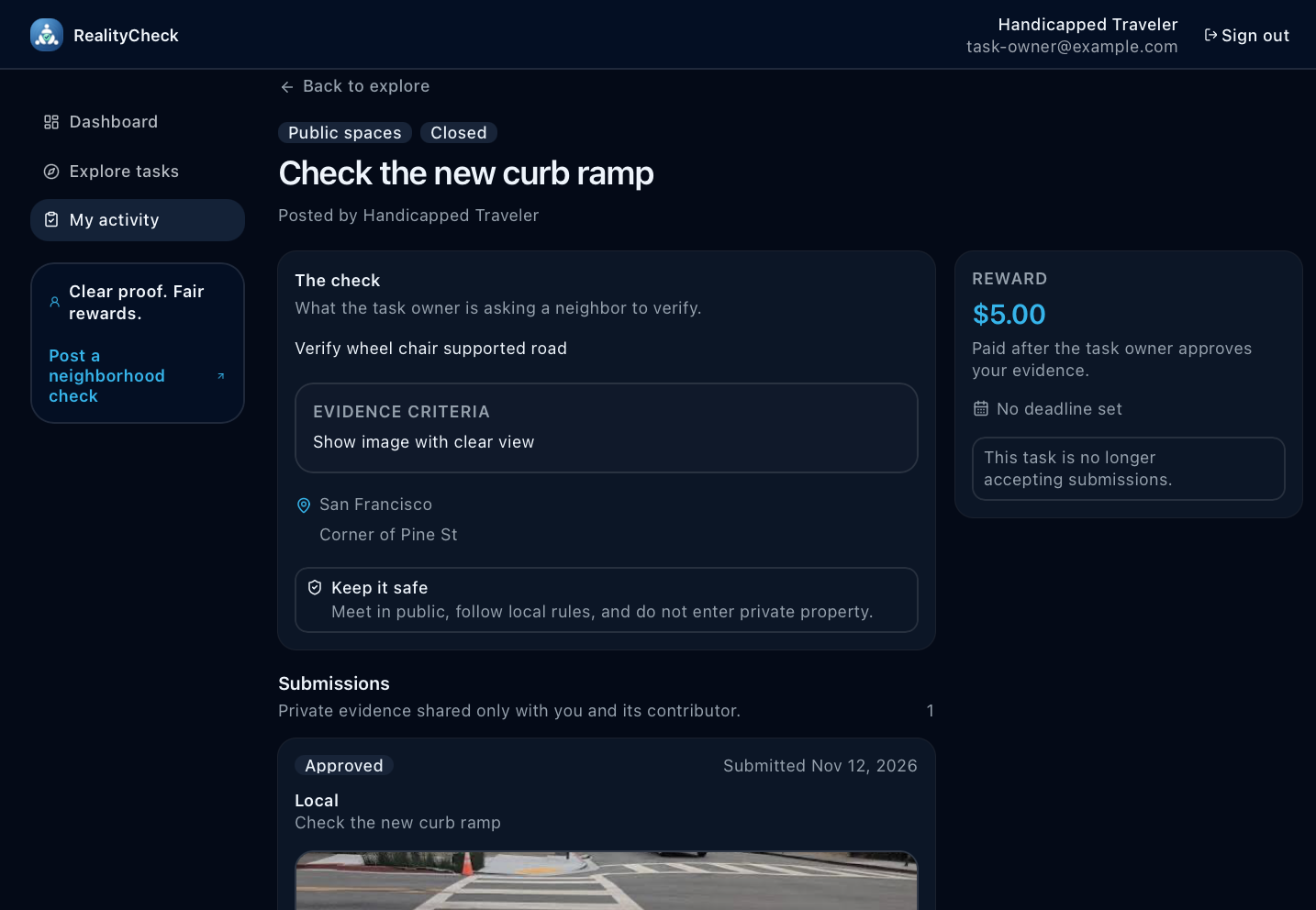
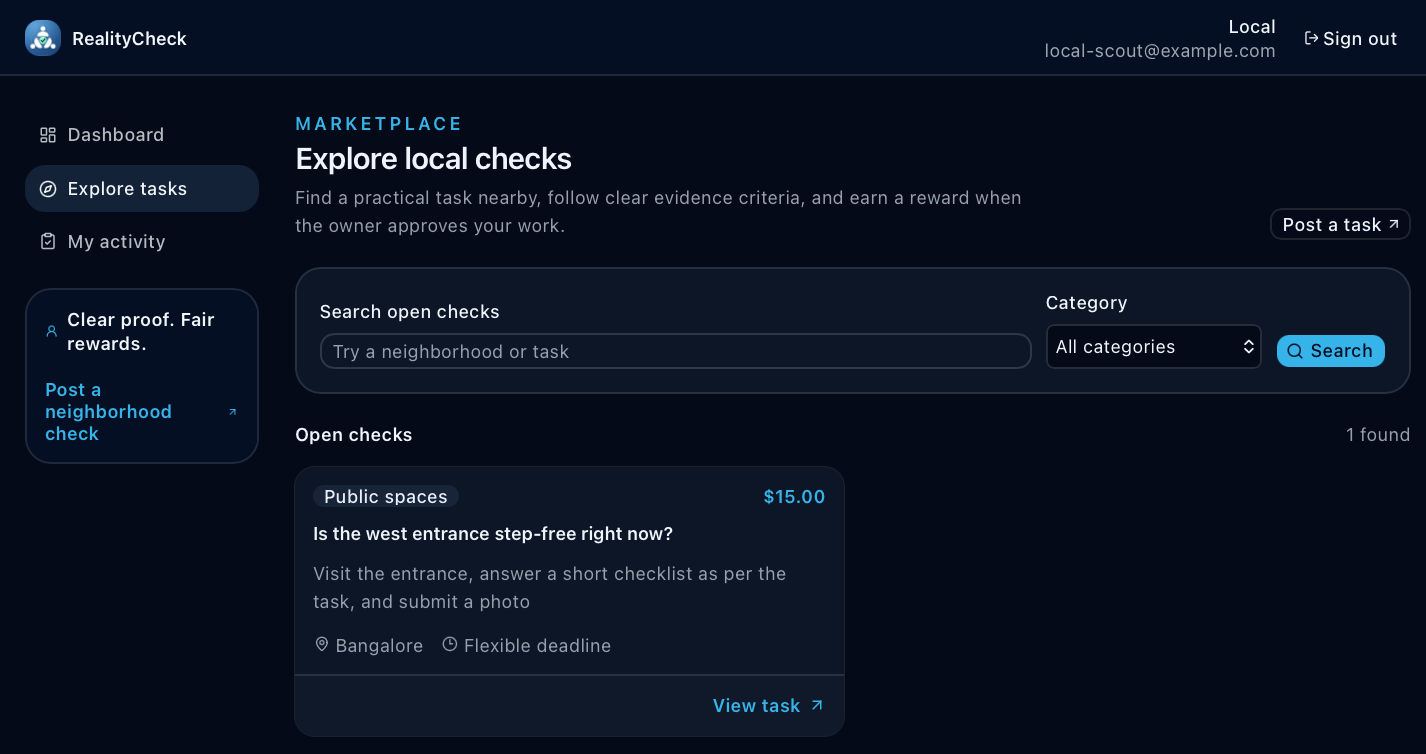
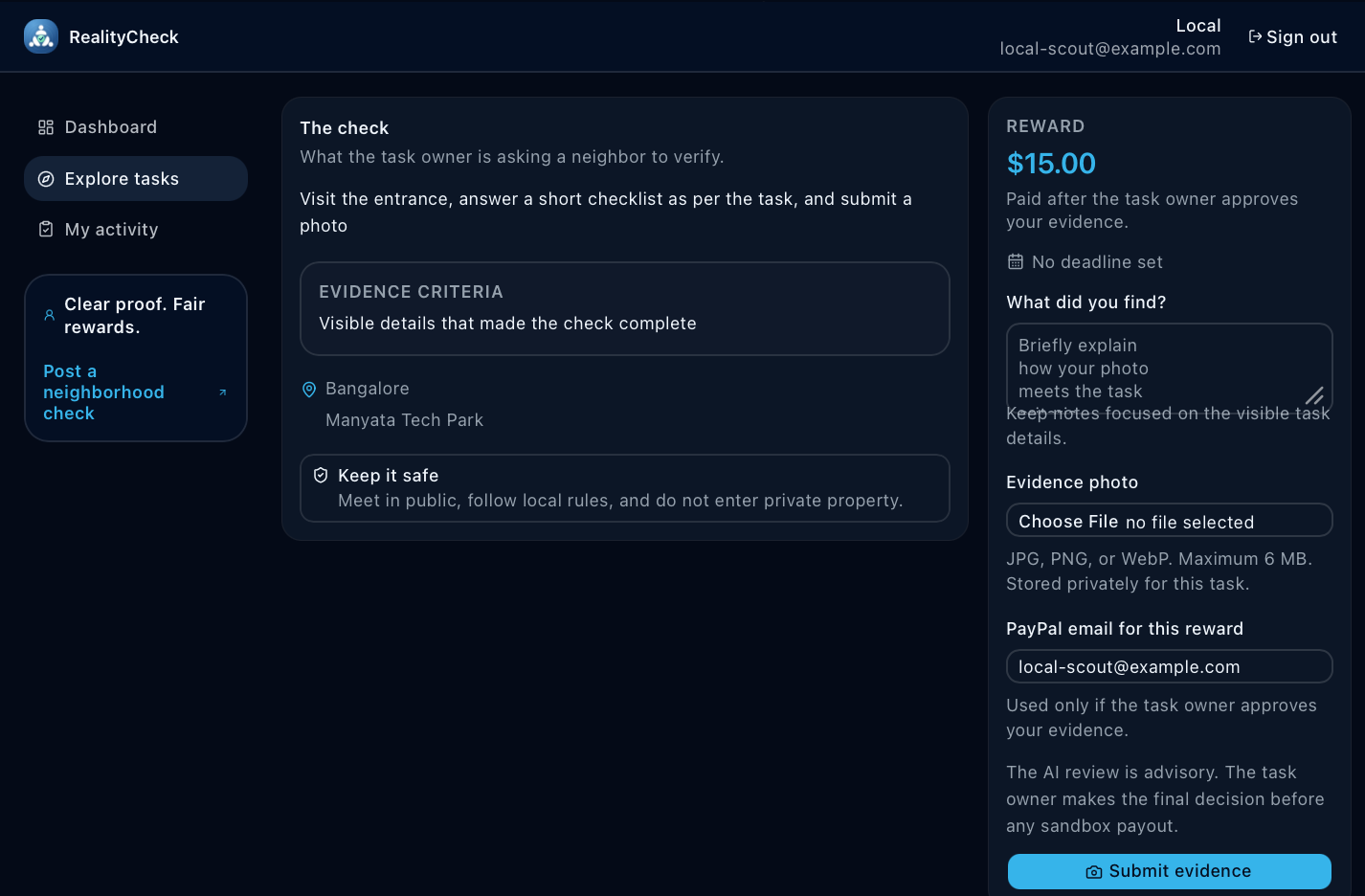
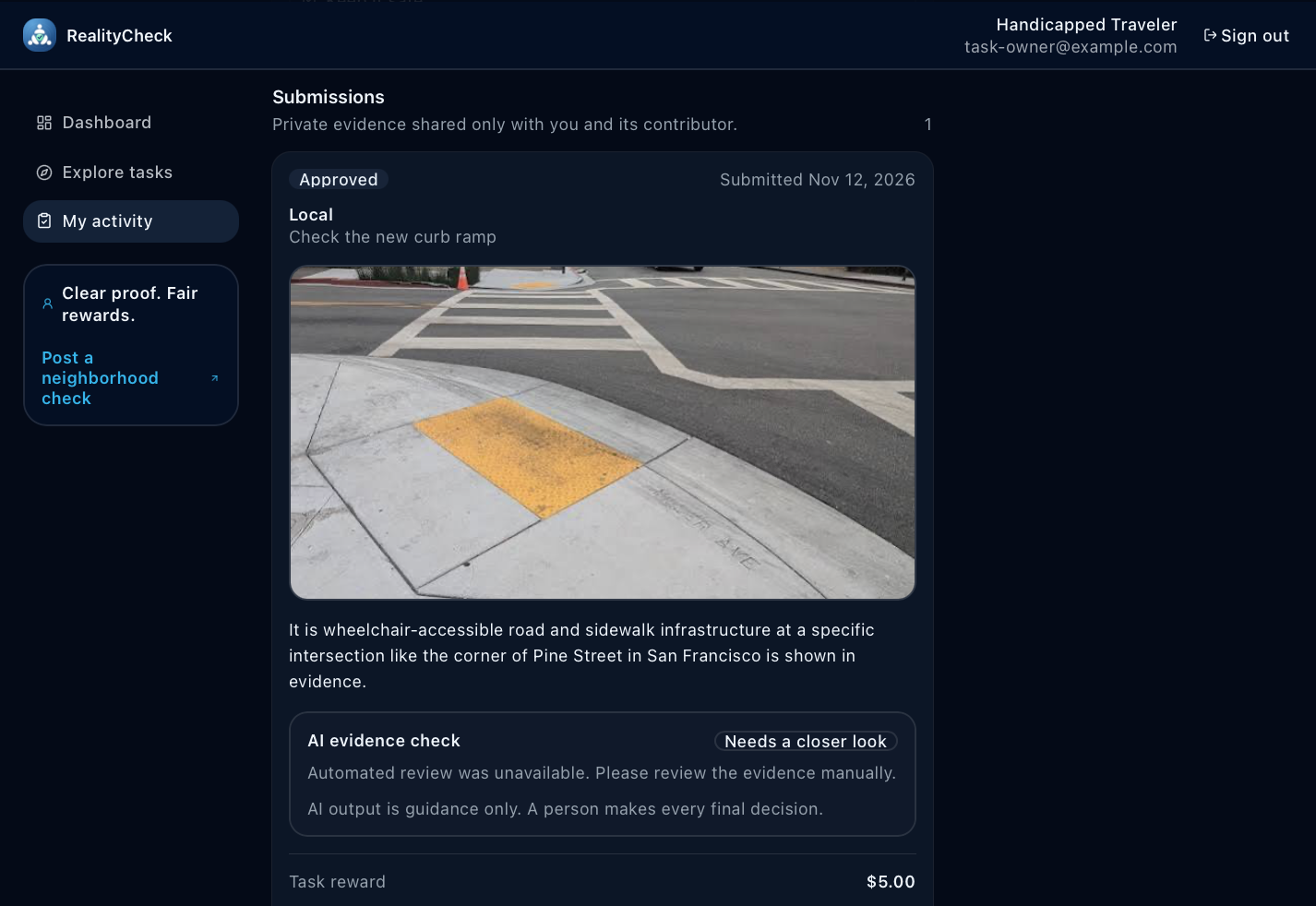
The problem: Search results about real places can be outdated—and an AI guessing about accessibility can have real consequences. This is for people with mobility needs who want current, firsthand information before visiting a venue.
The idea: When someone asks, “Is the west entrance step-free right now?”, the AI checks its available information. If it can’t answer reliably, it creates a small paid task for a nearby human scout: visit the entrance, answer a short checklist, and submit a photo. The AI checks whether the evidence addresses the question and presents a timestamped, human-reported answer. After the requester approves it, PayPal Sandbox Payouts pays the scout.
Why RealityCheck is useful: The AI doesn’t just generate content or recommend products—it recognizes a knowledge gap, creates paid work to fill it, and uses PayPal to compensate the person who helps. That’s a new interaction between AI, people, and money.
RealityCheck Uniqueness: The AI’s uncertainty handling and evidence review make the technology meaningful; the traveler/scout flow gives it a solution to real world pain point; the accessibility use case has clear impact; paid human verification is the novel idea; and the live payout makes the presentation and helping to people concrete. Keeping it honest: it label results “human-reported” and show the evidence and timestamp—it don’t imply the AI certifies accessibility from a photo alone.
Focused on Social Impact : RealityCheck platform uses PayPal to expand access or drive good in the world.
Inspiration
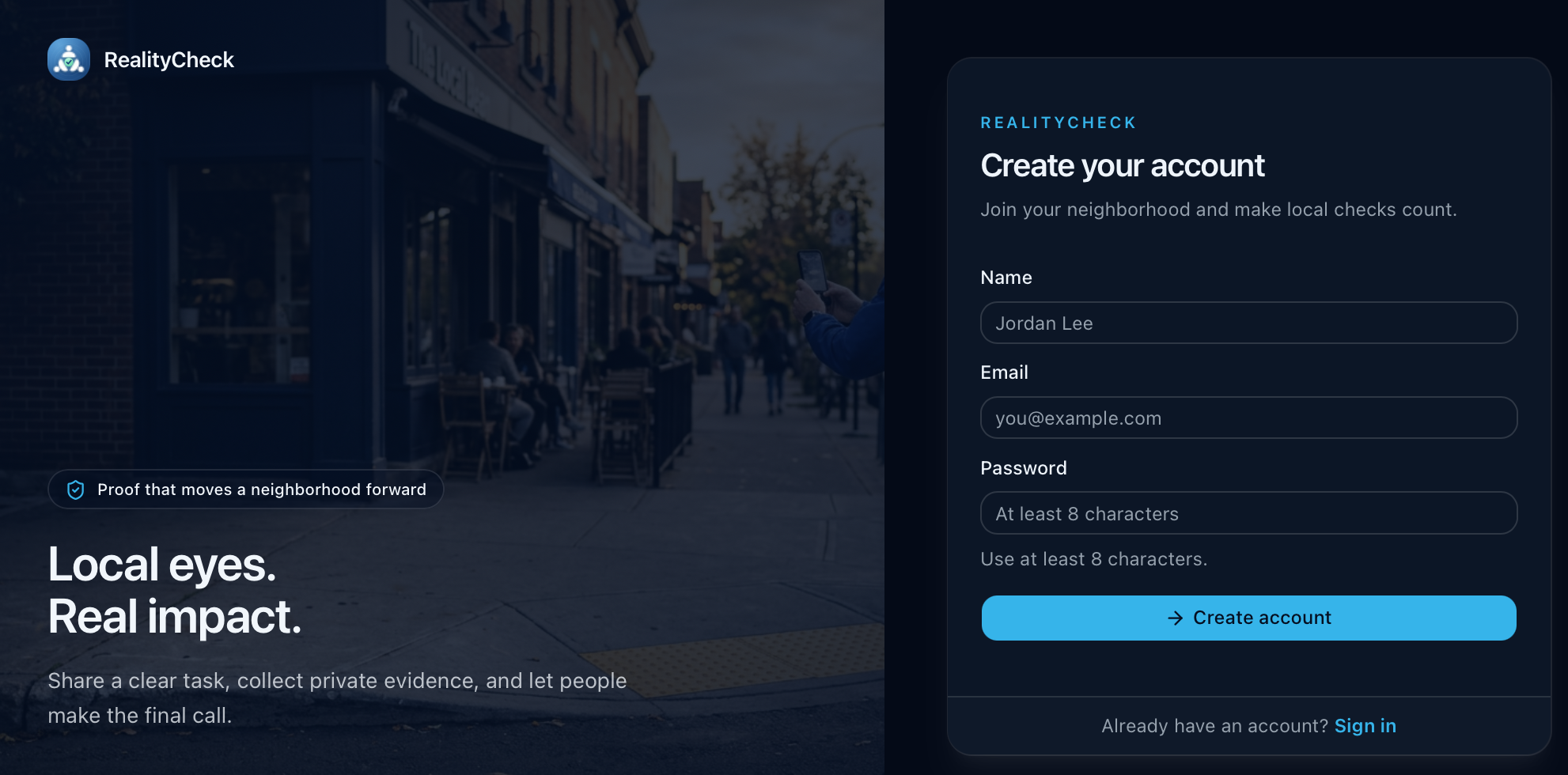
Small, everyday questions about a place often require someone nearby to check in person. RealityCheck was inspired by the idea of making those local checks easier to request and rewarding contributors for clear, useful evidence.
What it does
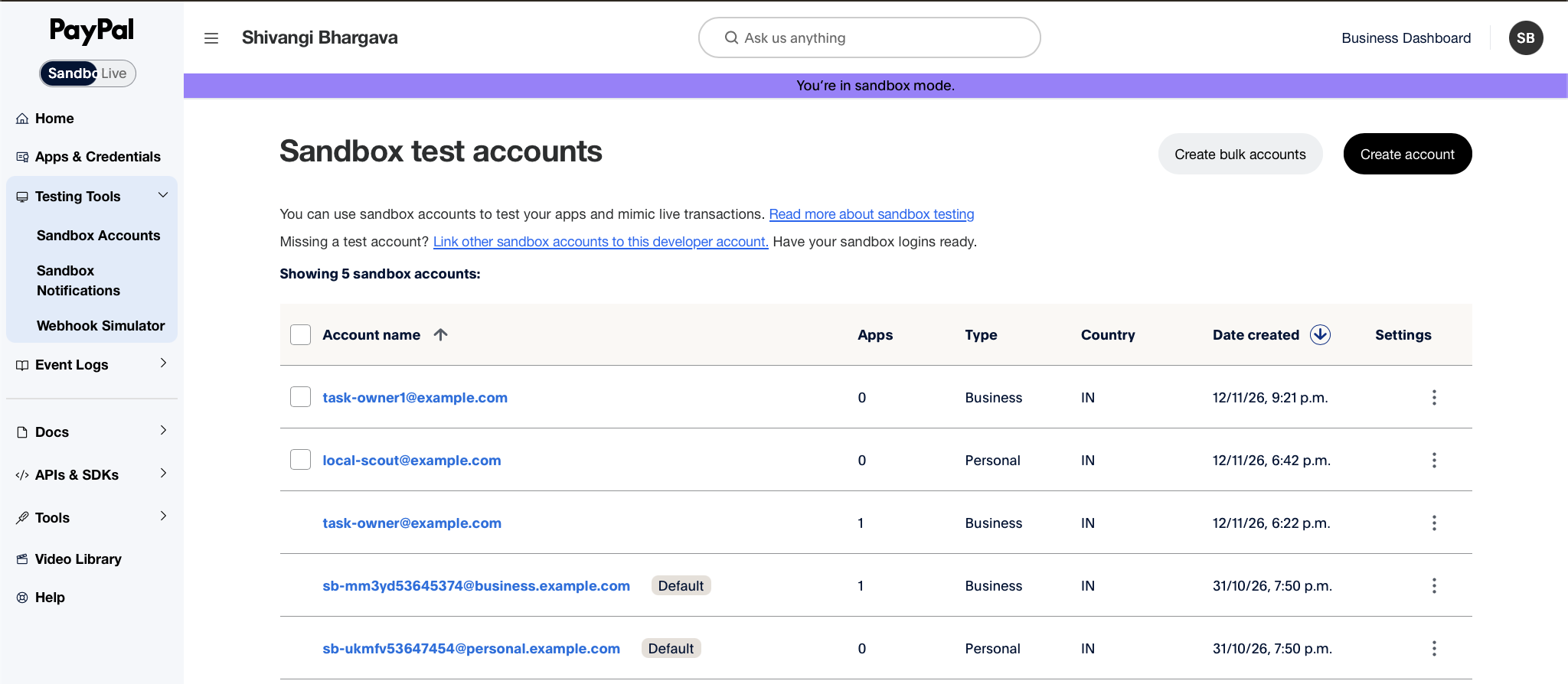
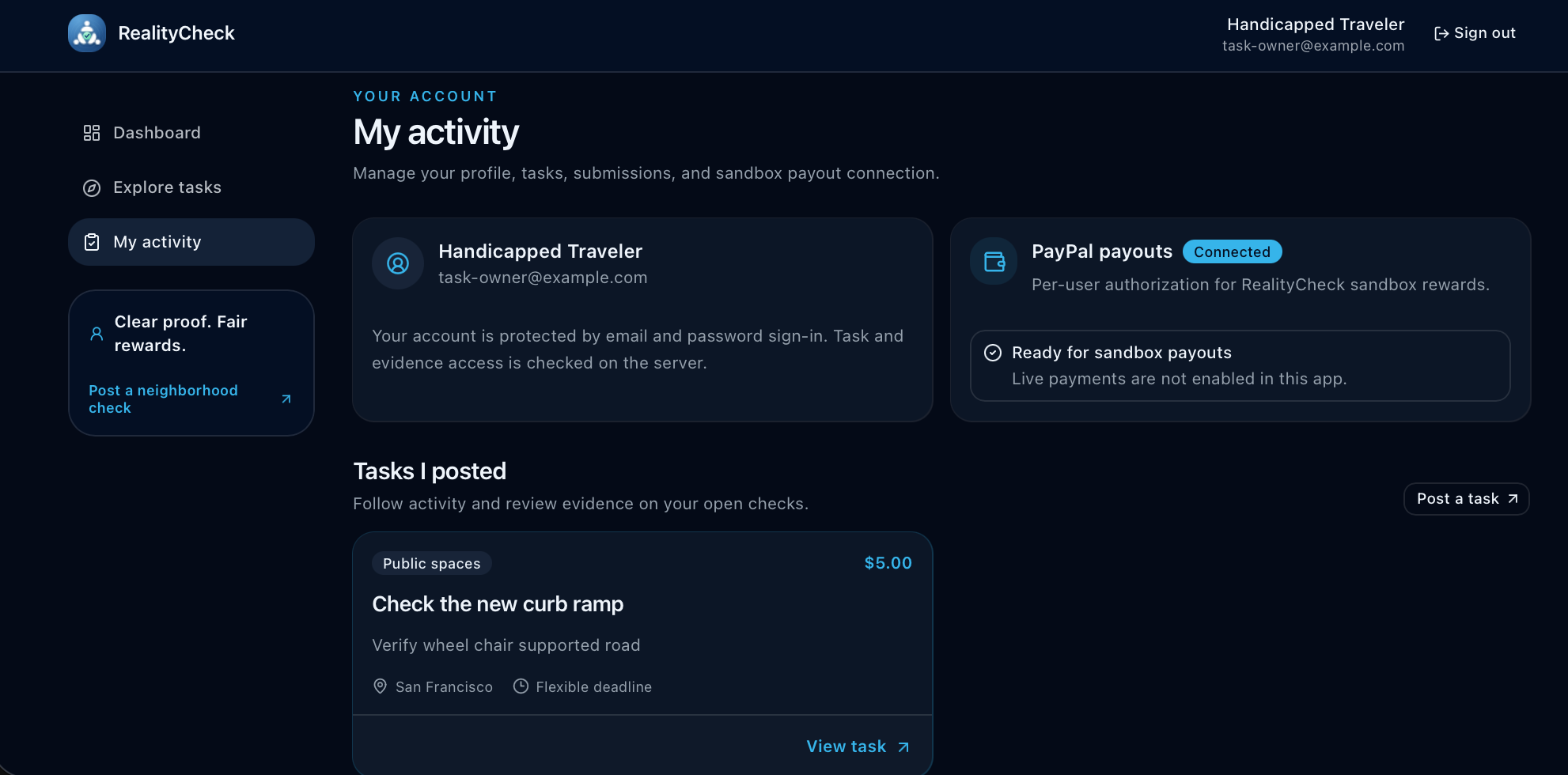
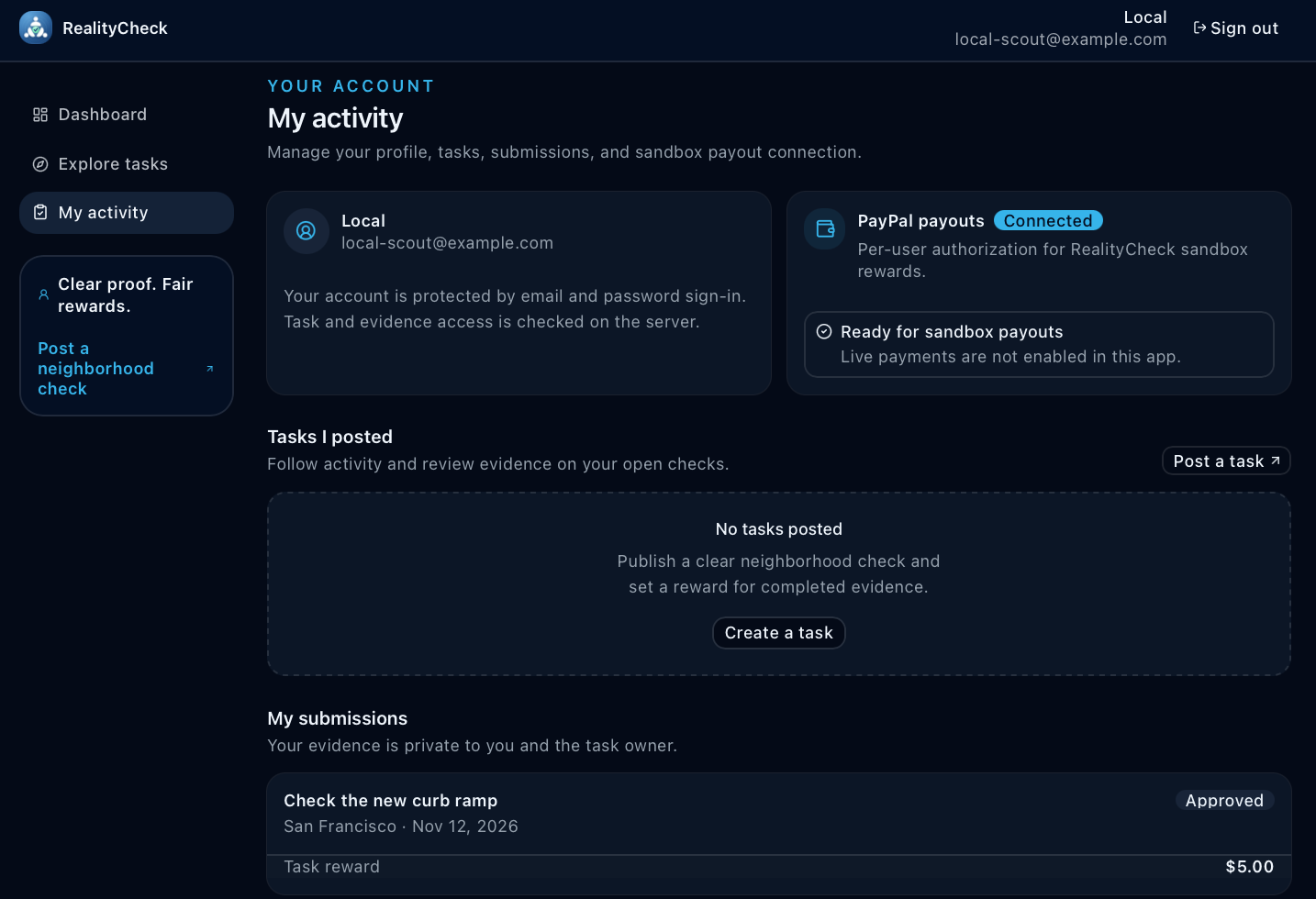
People post local verification tasks with instructions, a reward, and evidence criteria. Contributors submit photo evidence; an AI review provides a structured checklist and summary, while the task owner makes the final decision. Once approved, the owner can initiate a PayPal Sandbox payout to the contributor.
How I built it
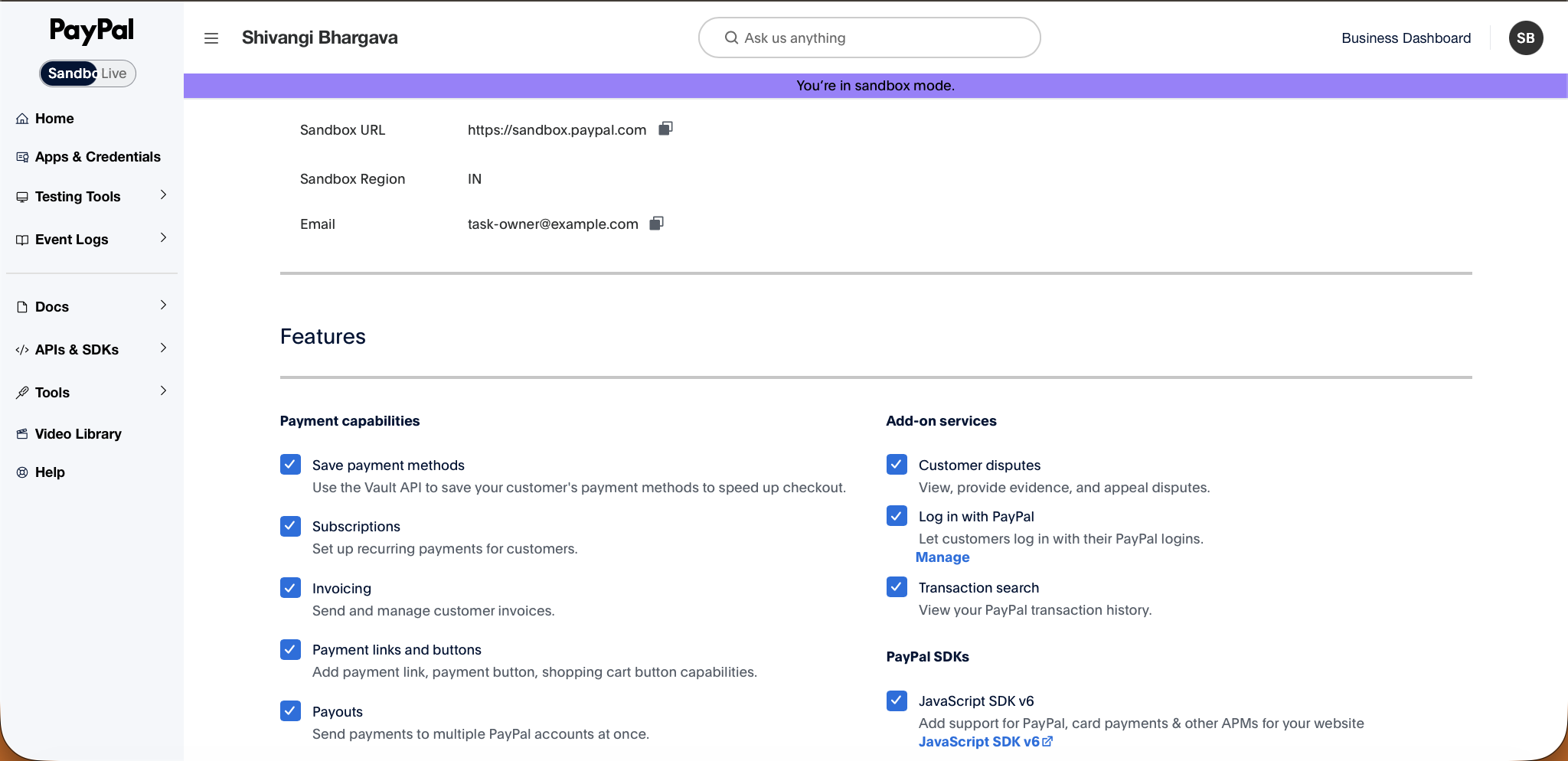
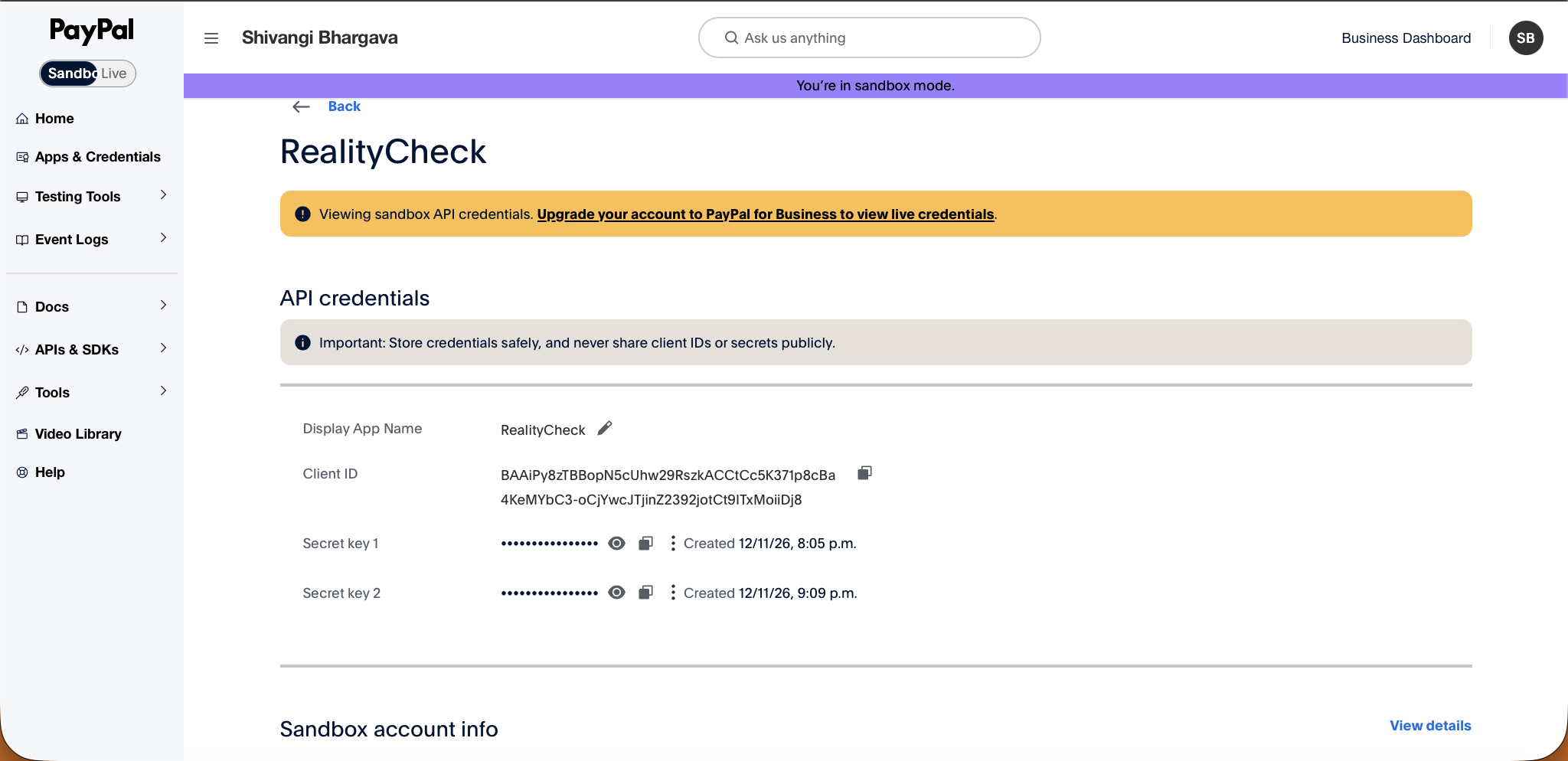
I built RealityCheck with Next.js App Router, TypeScript, and a responsive component-based UI. Better Auth and Neon handle accounts and task data, while private Vercel Blob storage protects uploaded evidence. The review flow uses the Vercel AI SDK and AI Gateway with Anthropic Claude Sonnet 5.5. PayPal Connect provides user-scoped authorization, and approved rewards are sent through the PayPal Payouts API Sandbox.
Challenges I ran into
The most important challenge was keeping trust boundaries clear: uploads stay private, payout amounts come from server-side task data, and every user’s queries are scoped to their account. I also had to make AI useful without letting it make the final call, and design payout handling so uncertain responses cannot casually trigger duplicate transfers.
Accomplishments that I’m proud of
The project connects the full workflow—from posting a task to evidence review, owner approval, and a tracked sandbox payout—while keeping human judgment at the center. I’m also proud that evidence access is private and that the AI produces structured, actionable checks rather than an unexplained verdict.
What I learned
I learned how much product trust depends on details beyond the model itself: access control, evidence privacy, server-side validation, and safe handling of payment retries. AI works best here as a reviewer’s assistant, not as the authority that decides whether someone gets paid.
What’s next for RealityCheck?
Next, I’d add payout reconciliation, dispute handling, and richer location-based task discovery. I’d also test the evidence-review flow across more task categories and real-world photo conditions.
