
Inspiration
In today's world, where news and information flood in from all directions, it has become increasingly difficult to understand what is true, what is misleading, and what really matters. We often live surrounded by media, yet we're disconnected from the actual issues affecting our societies. Much of the information we consume is vague, contradictory, or manipulated — making it hard to identify the real problems. It is a platform that doesn't just read the news — it helps understand it, verify it, and act on it.
What it does
It scans articles, updates, and news feeds from various sources — whether trusted, biased, or unknown. It: -Verifies factual accuracy using multiple data points and AI-powered logic. -Filters out misinformation by checking credibility, comparing multiple reports, and referencing verified fact-checking databases. -Summarizes the core issue in each story using advanced language models. -Suggests actionable strategies to understand or address the problem. -Helps users research deeply, understand events more broadly, and even sort through potential solutions in sectors like health, policy, and technology. This tool is designed for those who want to think critically, see the full picture, and solve real-world problems — not just consume headlines.
How we built it
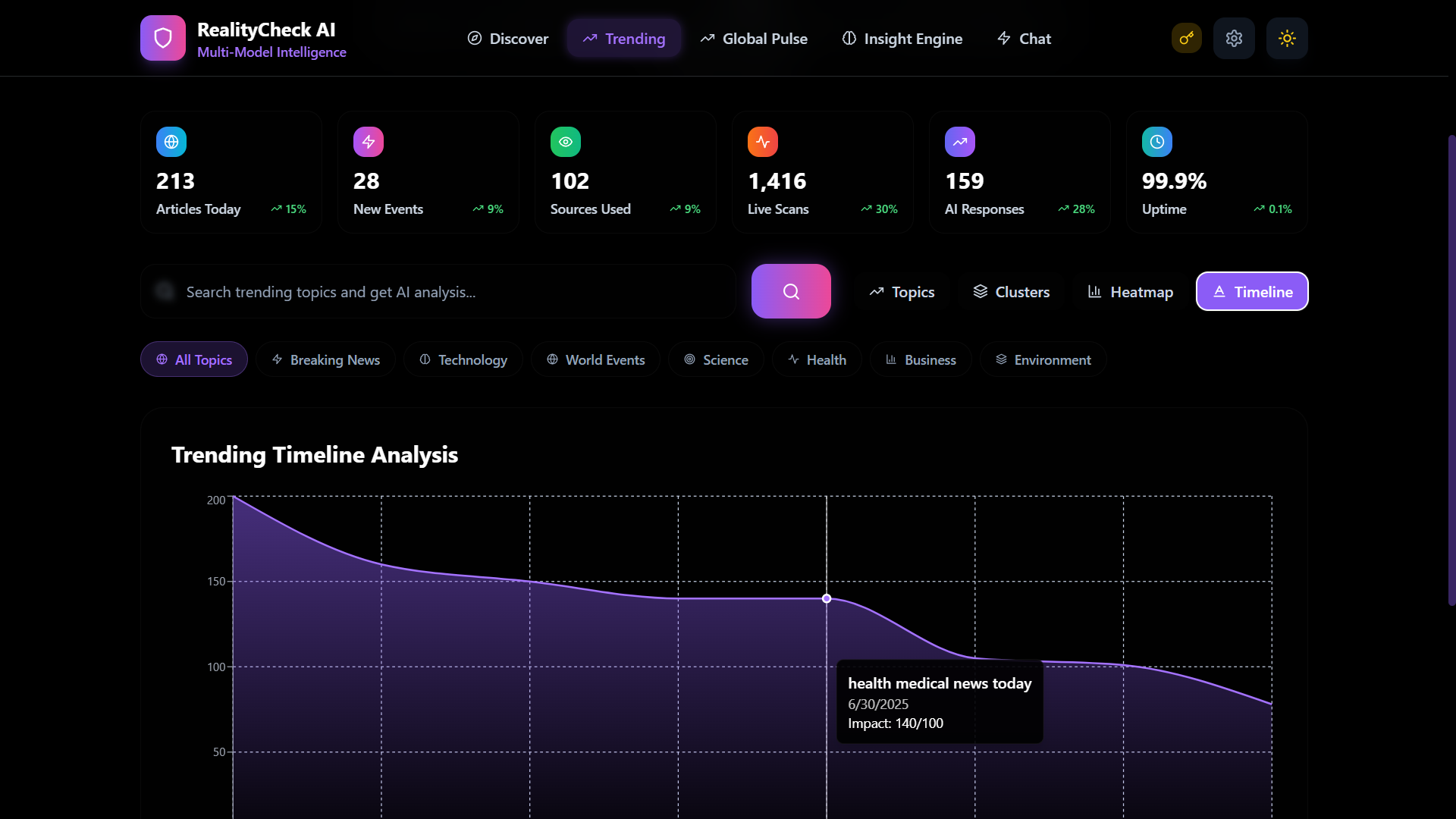
It is built using a combination of powerful tools and modern technologies: -Frontend: A clean, minimal user interface powered by React and styled with Tailwind CSS. -Backend: Custom APIs that fetch articles from public RSS feeds, trusted news APIs, and fact-checking services. -AI Integration: Uses large language models to: -Analyze the textual content -Cross-reference facts -Score the reliability of claims -Summarize issues and propose contextual strategies -Data Handling: Temporary in-app storage and metadata analysis allow the platform to learn and filter intelligently over time. -Visualization: Key insights are displayed in a clear, digestible dashboard — including trust scores, issue summaries, and recommended actions.
Challenges we ran into
-Handling multilingual or region-specific news sources. -Avoiding false positives in misinformation detection. -Managing AI prompt costs or latency in real-time use cases.
Accomplishments that we're proud of
-Designing a clean, usable interface for complex AI analysis. -Building an initial pipeline that can actually filter, analyze, and verify articles. -Creating a system that moves beyond just identifying fake news — and actually helps users understand and act.
What we learned
-Expanding support to other languages and regions. -Adding image & video fact-checking (e.g., checking if an image was reused or miscaptioned). -Letting users contribute feedback (thumbs-up/down, flagging issues) to improve model accuracy. -Deploying RealityCheck AI as a browser extension or mobile app to make fact-checking more accessible in daily life. -Partnering with journalists, NGOs, or educators to help fight misinformation at scale.
What's next for RealityCheck AI
-Plug this into a Markdown or HTML file for your README -Shorten or split it into multiple tabs for the UI -Translate any of it into Hindi or regional language for inclusivity
Built With
- api
- node.js
- tailwind
- vite


Log in or sign up for Devpost to join the conversation.