-
-
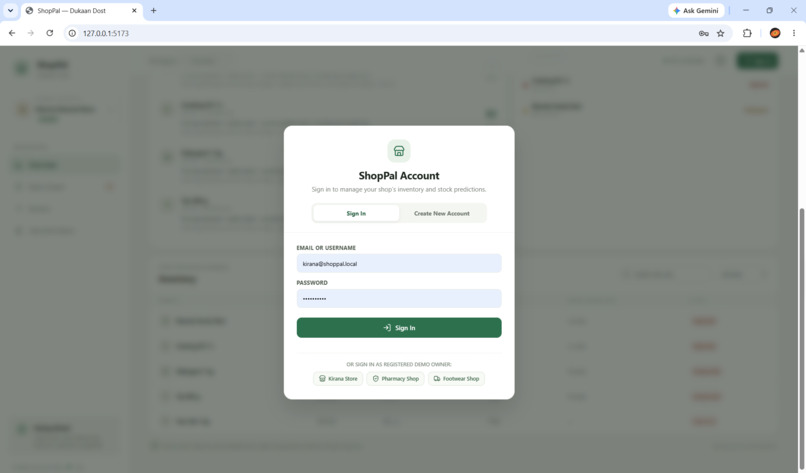
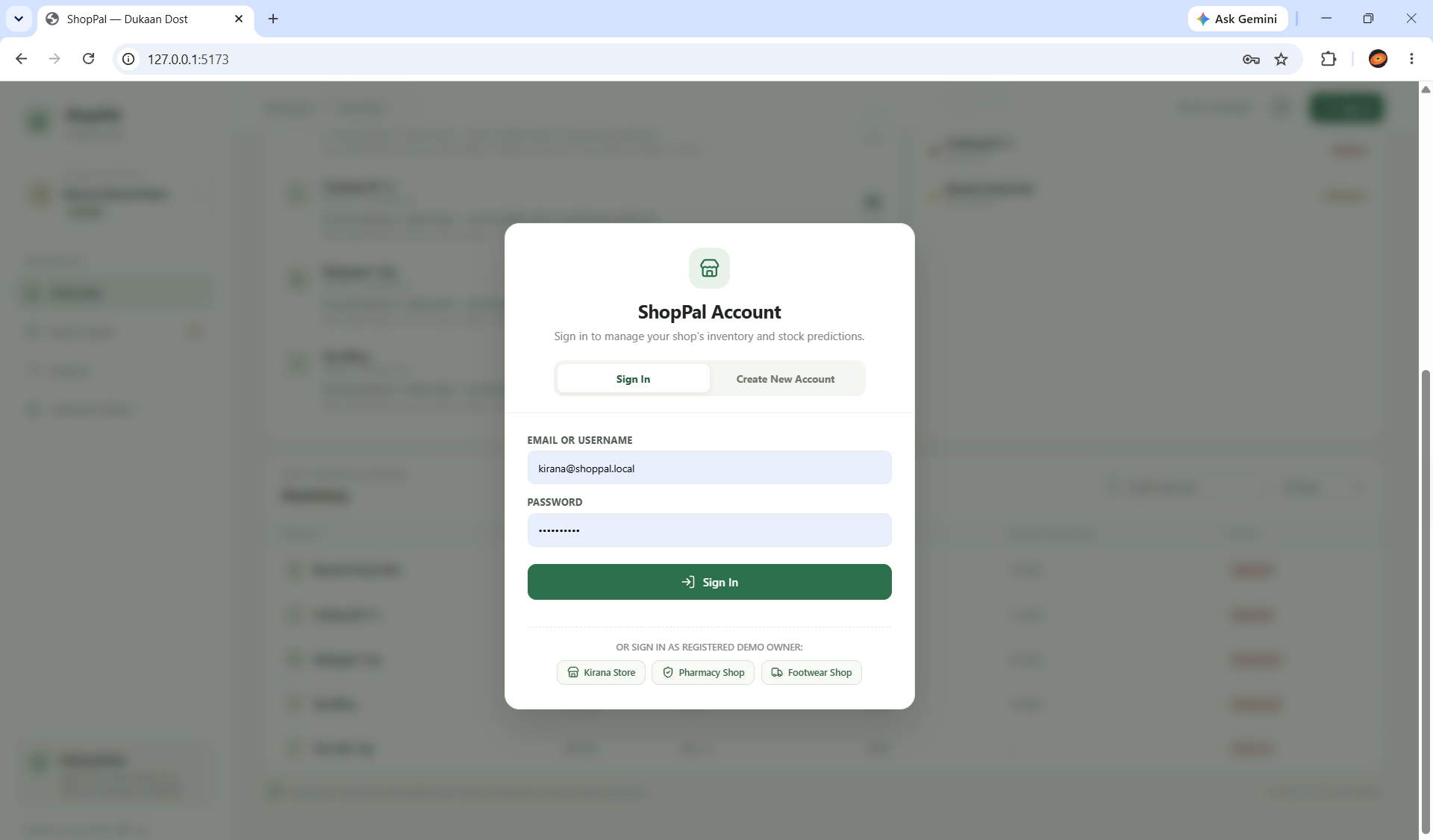
login page of ShopPal
-
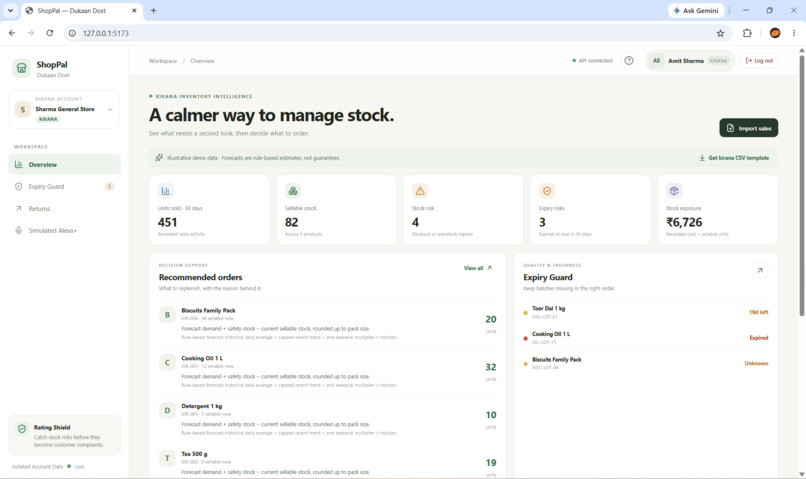
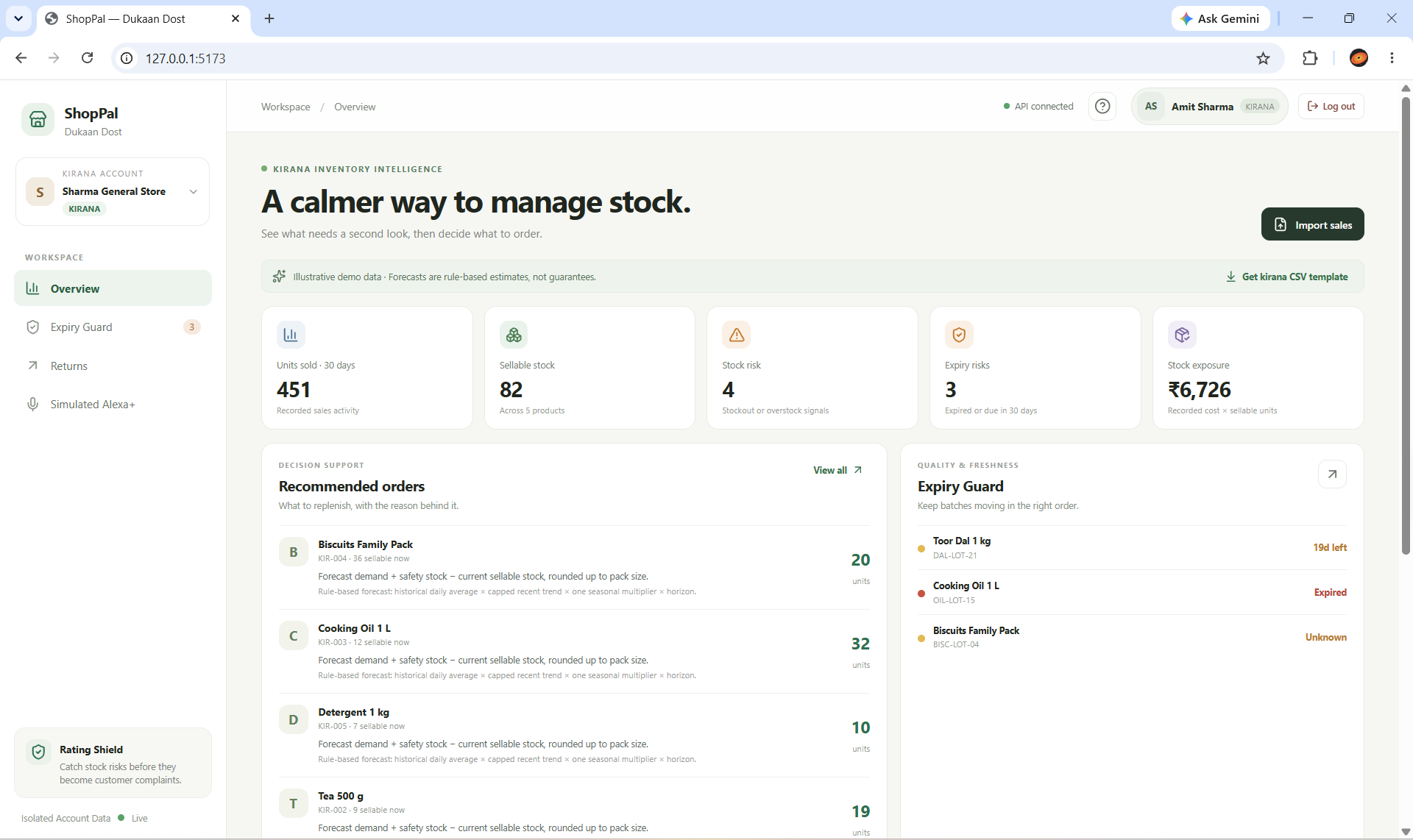
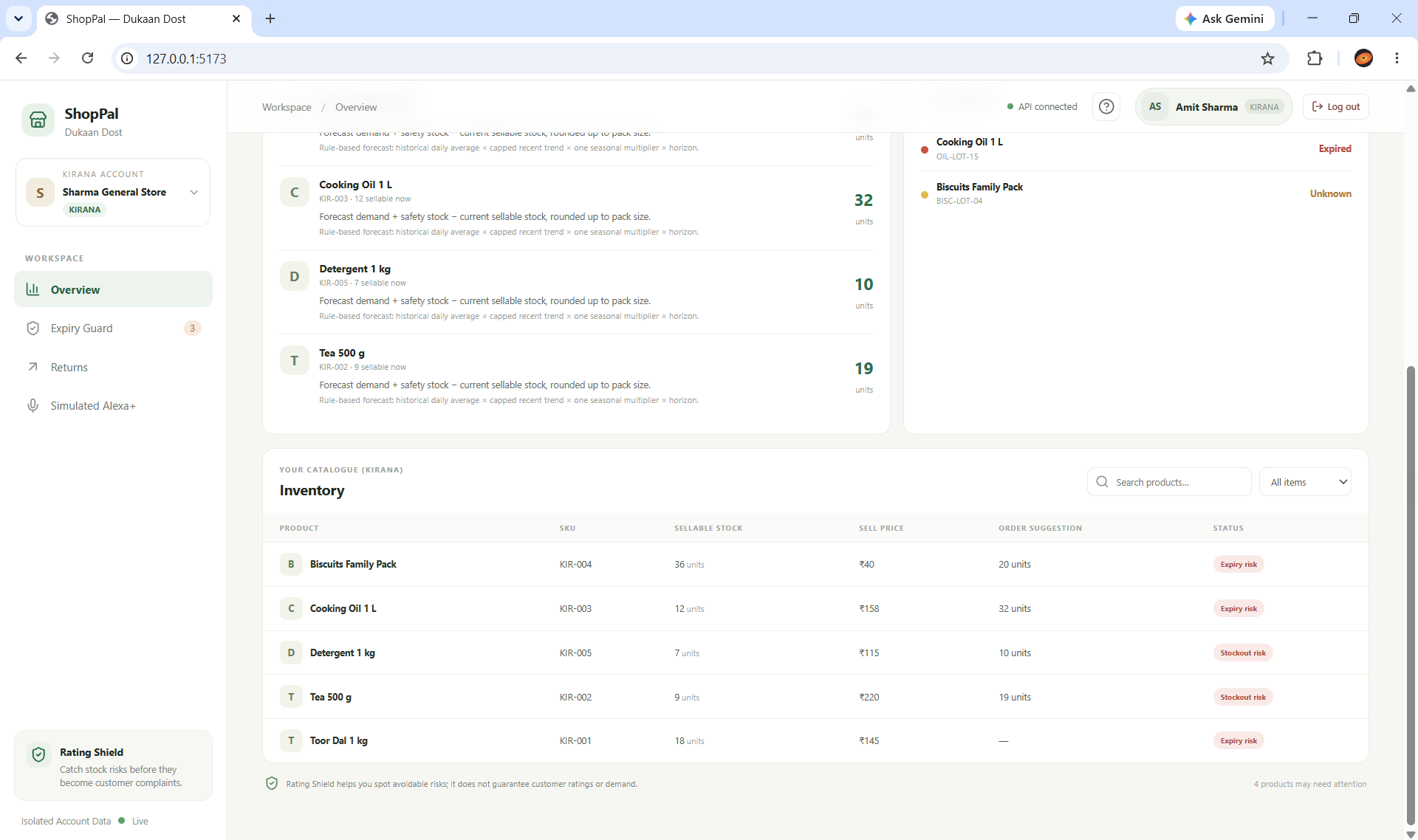
Dashboard of Kirana Store{Grocery Store}
-
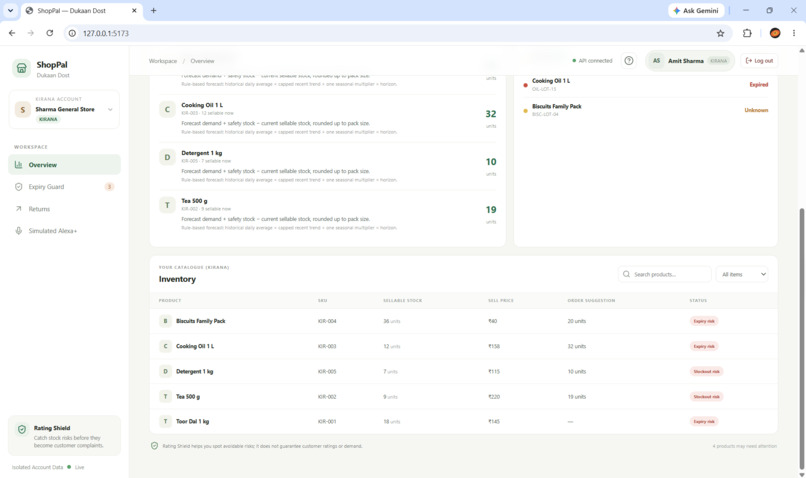
Inventory lists of kirana store
-
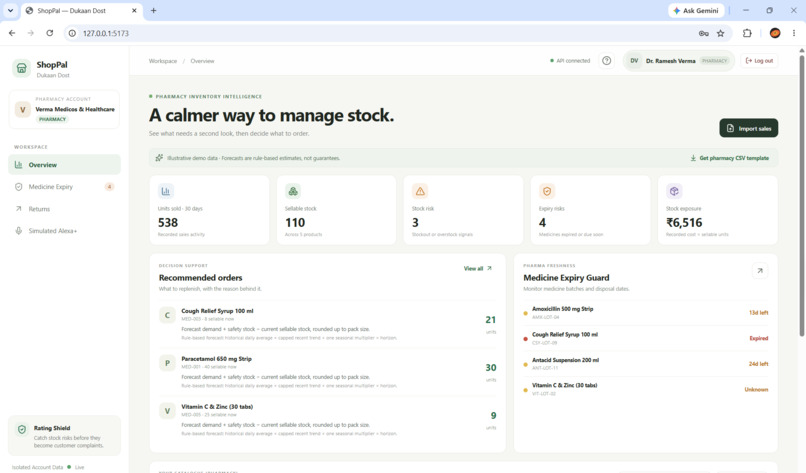
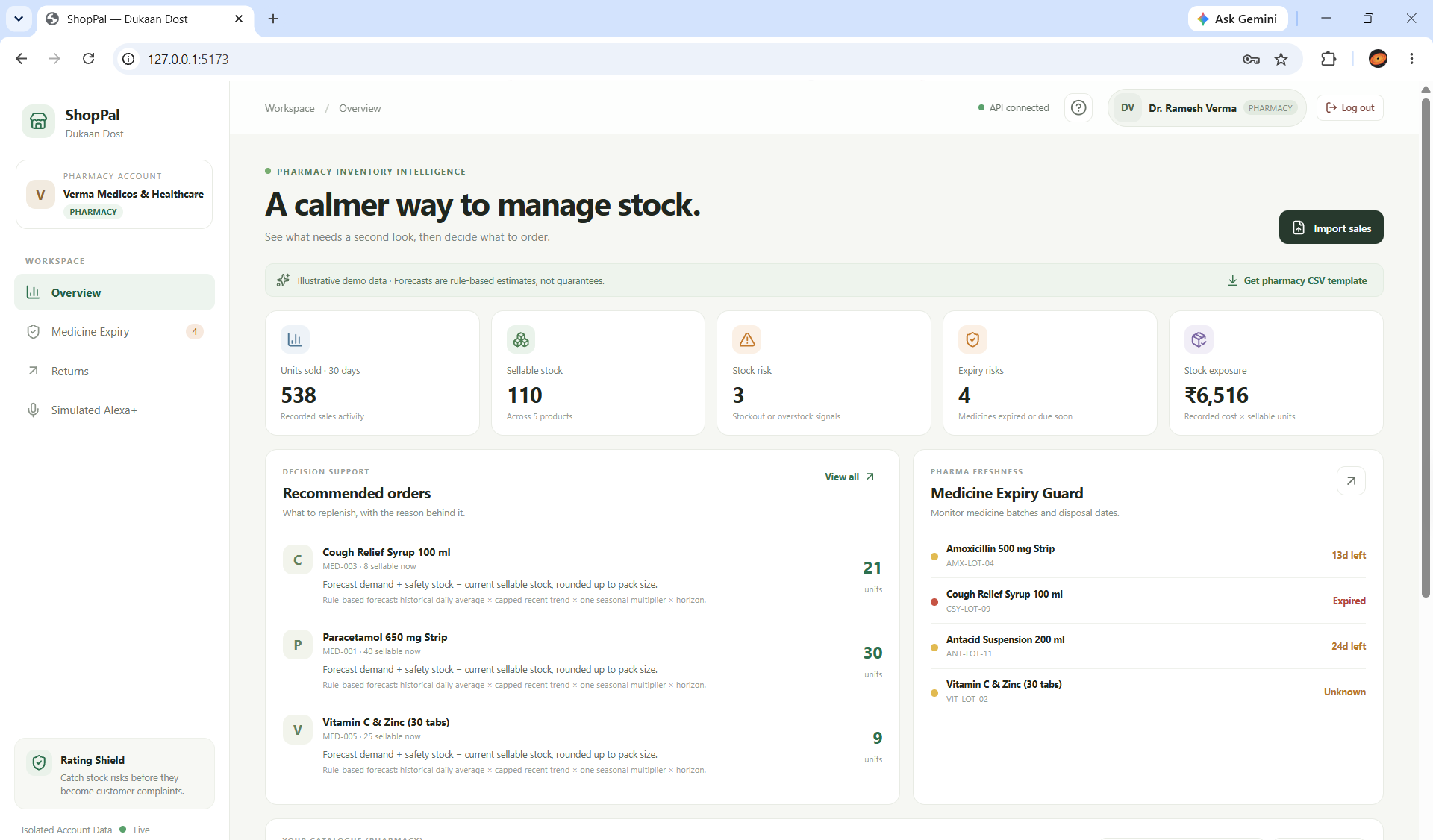
Dashboard of pharmacy Store
-
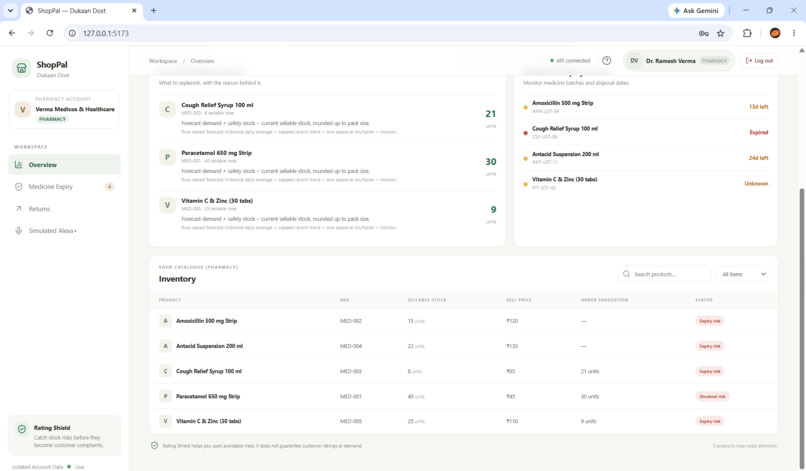
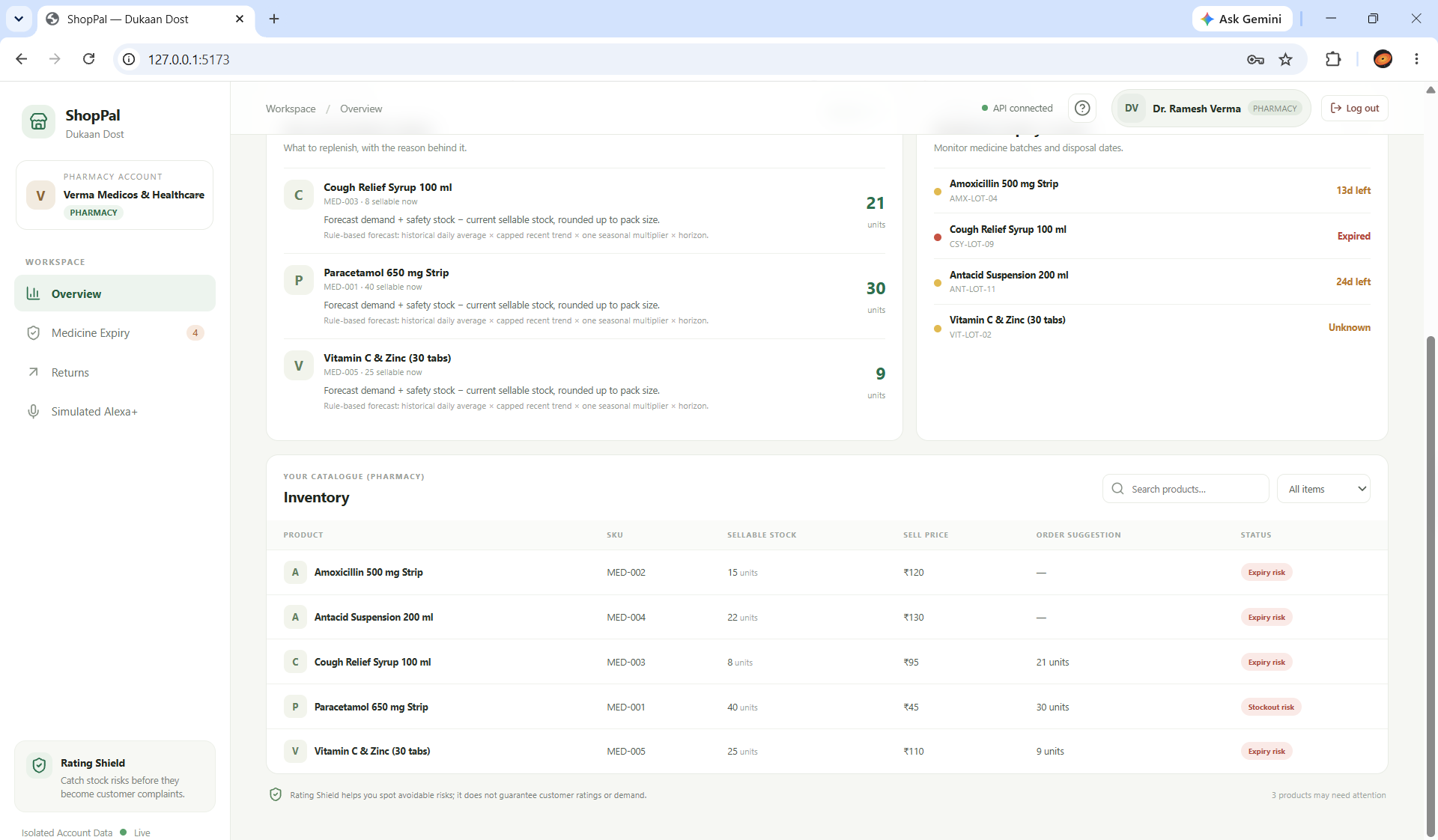
Inventory list for Pharmcy Stores
-
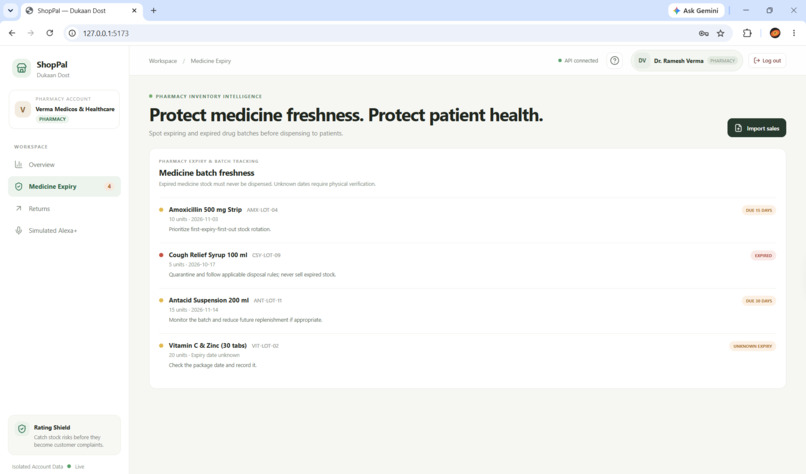
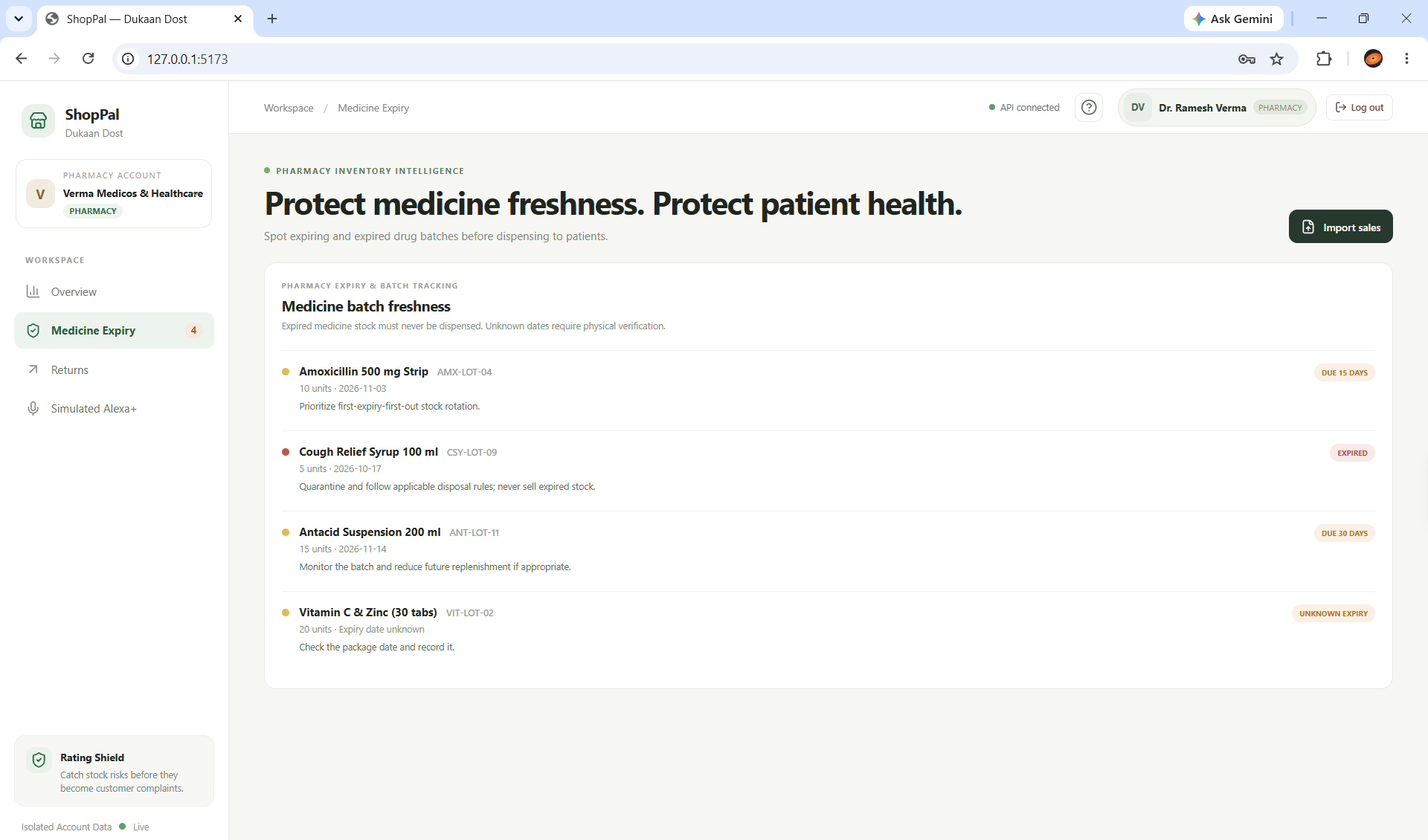
Medical Expiry List
-
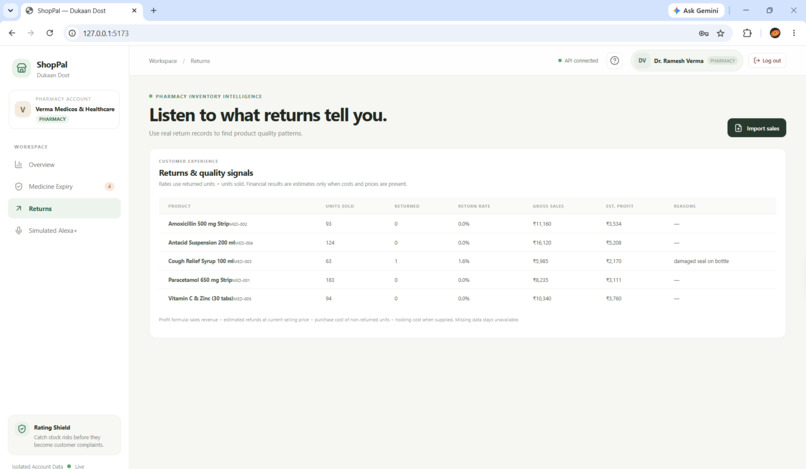
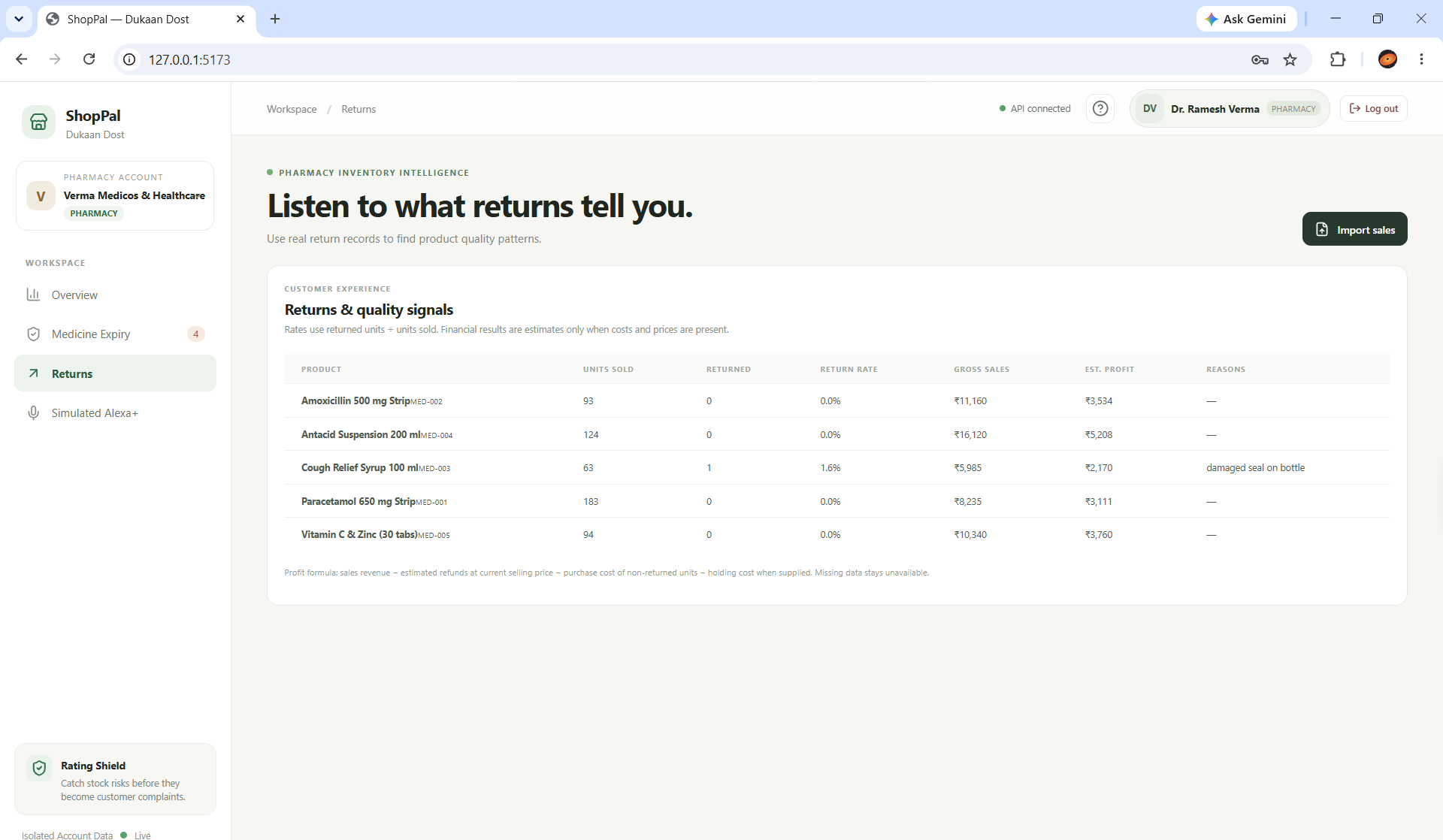
Returns the shop get and why
-
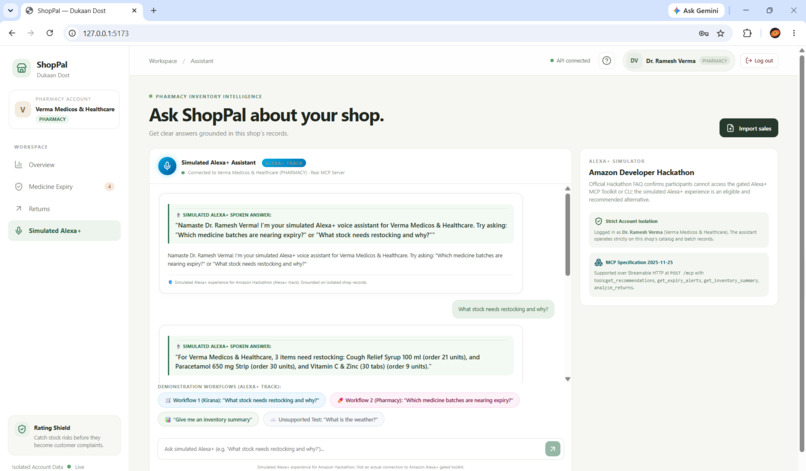
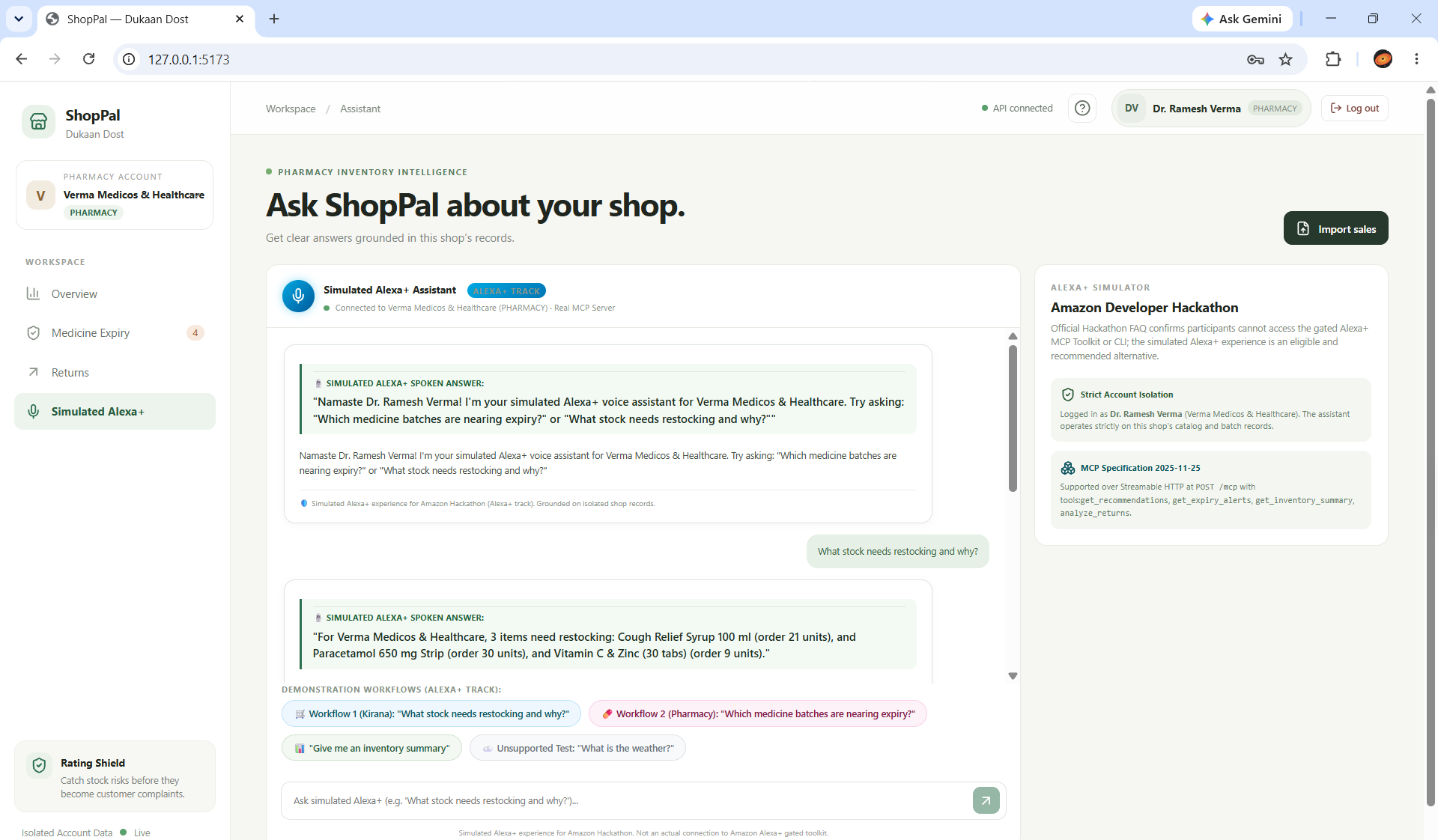
Simulation Of Alexa+ for ShopPal
-
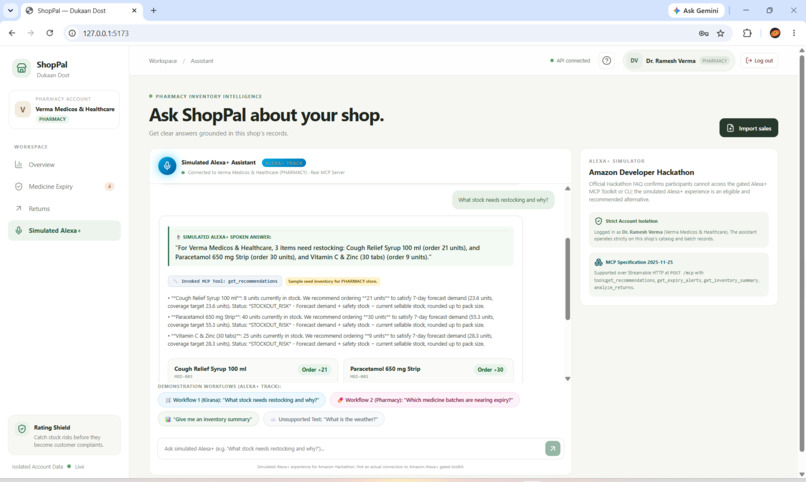
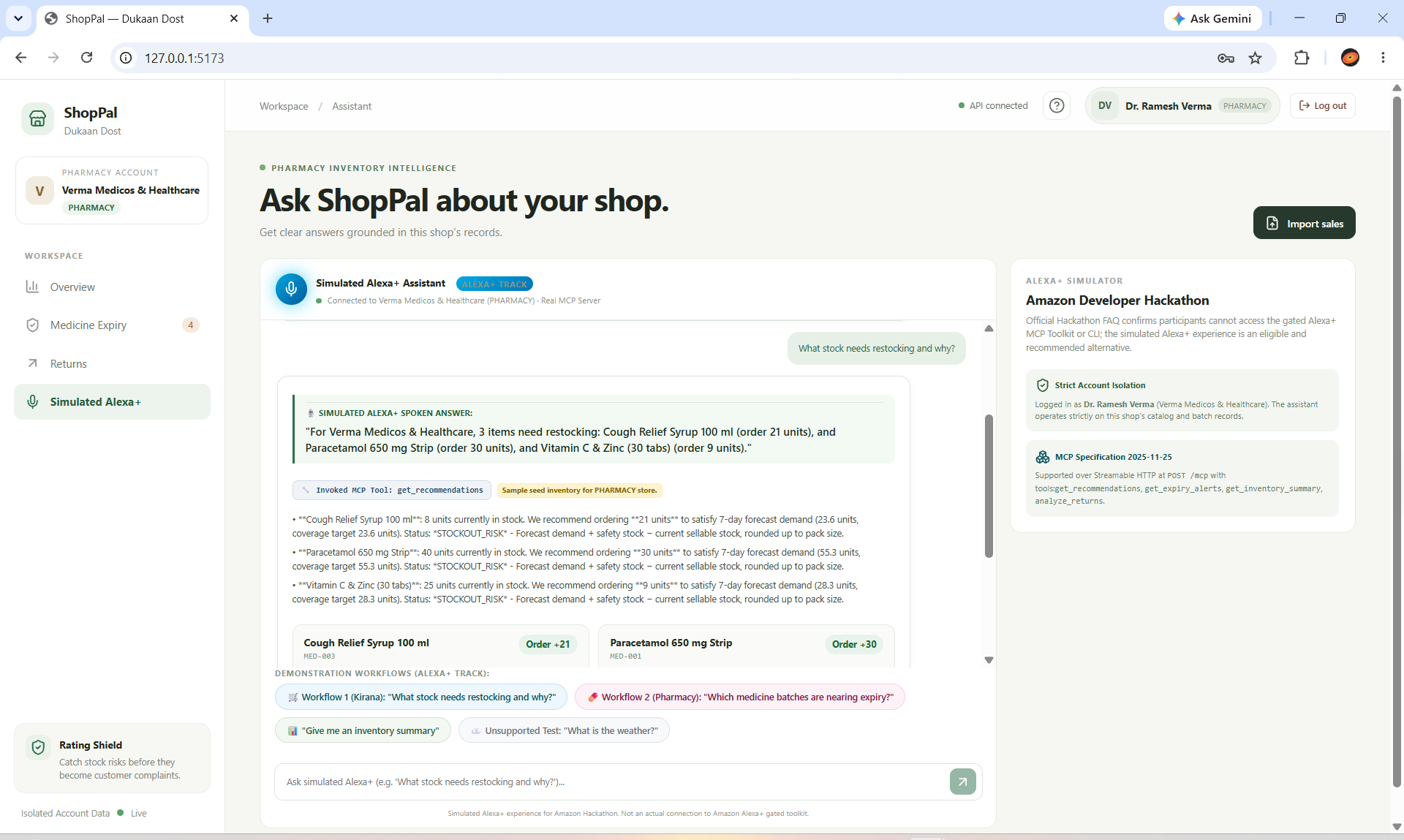
how Alexa+ simulation answering the question{ For Pharmacy}
-
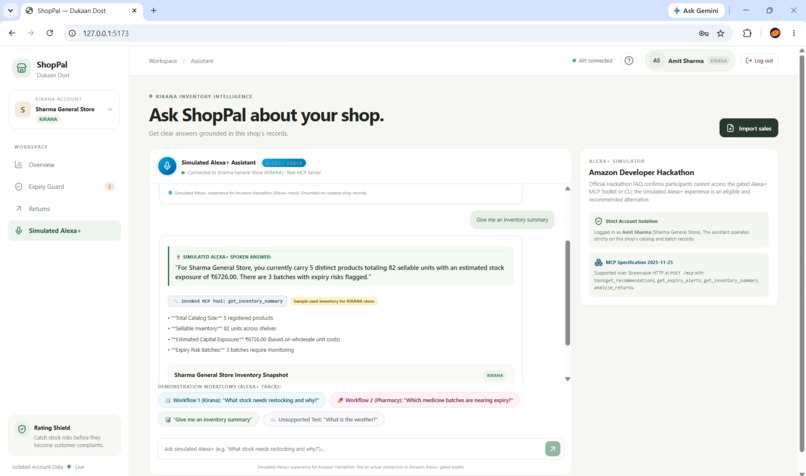
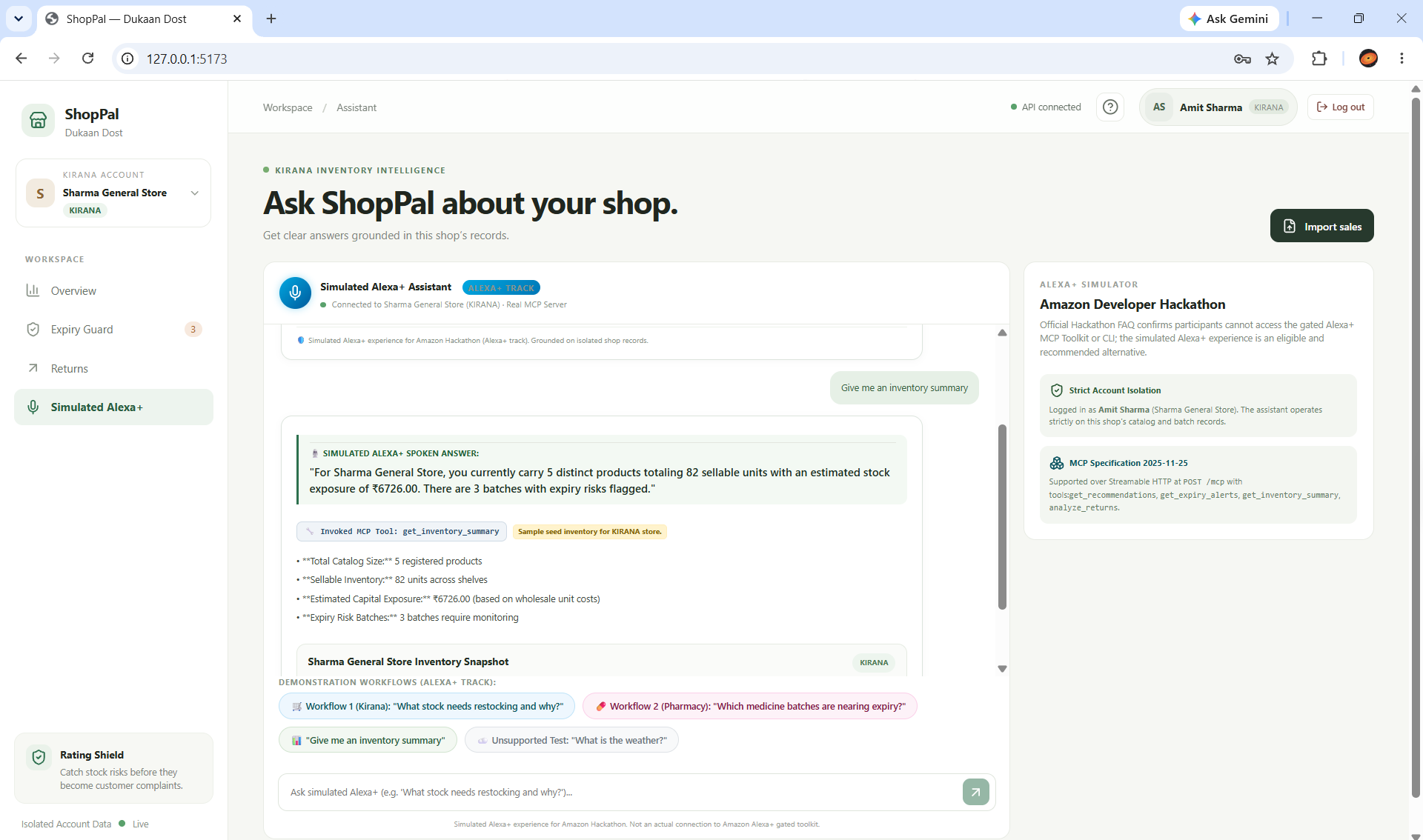
how Alexa+ simulation answering the question { for Kirana Store}
Inspiration
Small business owners often struggle to manage inventory, decide what to restock, track medicines nearing expiry, and understand product returns. These tasks can take time and lead to avoidable losses.
We wanted to build a simple assistant that helps shopkeepers make better inventory decisions without requiring advanced technical knowledge.
What it does
ShopPal (Dukaan Dost) is a conversational inventory assistant designed for small businesses. It turns inventory data into practical insights through a simple interface.
Key features include:
Smart Restocking Recommendations: Helps shopkeepers identify products that may need restocking.
Medicine Expiry Alerts: Highlights medicine batches that are nearing or past their expiry dates.
Return Analysis: Helps businesses explore product return patterns.
Footwear Insights: Provides inventory-related insights for footwear businesses.
Conversational Assistant: Lets users ask questions in natural language and receive responses based on available shop data.
Multiple Business Types: Demonstrates different workflows for Kirana stores, pharmacies, and footwear shops.
How we built it
We built ShopPal using:
Java 21 and Spring Boot for the backend.
React, TypeScript, and Vite for the frontend.
H2 Database for storing and managing application data.
Simulated Alexa+ Experience to demonstrate conversational interactions with ShopPal's inventory features.
The application connects the user interface with backend services to retrieve shop data and provide relevant inventory insights.
Challenges we ran into
One of our main challenges was connecting the frontend, backend, database, and authentication into one working application. We also worked on keeping shop data separated by account and making the conversational interface respond to different types of inventory questions.
Another challenge was deciding how to demonstrate useful business workflows within a limited hackathon timeframe.
Accomplishments that we're proud of
We are proud to have developed ShopPal into a working full-stack application that addresses practical inventory challenges faced by small businesses.
Some of our key accomplishments include:
Building a functional application: Connecting the frontend, backend, database, and account-based authentication into one application.
Supporting different business types: Demonstrating tailored inventory workflows for Kirana stores, pharmacies, and footwear shops.
Turning data into useful insights: Implementing features for restocking recommendations, medicine expiry alerts, and return analysis.
Creating a conversational experience: Building a simulated Alexa+ interface that allows users to ask inventory-related questions in natural language.
Bringing the idea to life: Transforming an initial concept into a demonstrable application within a limited hackathon timeframe.
Our biggest accomplishment is creating a practical starting point for making inventory management simpler and more accessible to small business owners.
What we learned
Building ShopPal helped us understand full-stack application development, database integration, account-based data access, and the process of turning business data into practical recommendations.
We also explored how conversational interfaces can make software easier to use for people who may not be comfortable navigating complex dashboards.
What's next for ShopPal
We plan to improve ShopPal with:
Budget-aware restocking recommendations for small shop owners.
More flexible conversational queries.
Improved inventory forecasting and business insights.
Additional small-business workflows and real-world testing.


Log in or sign up for Devpost to join the conversation.