-
-
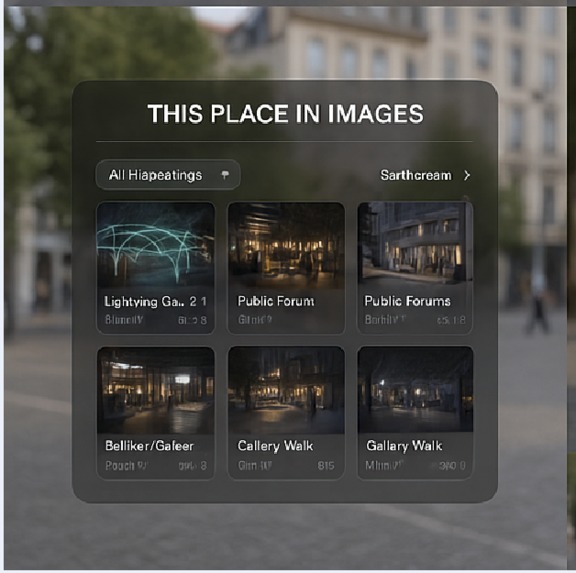
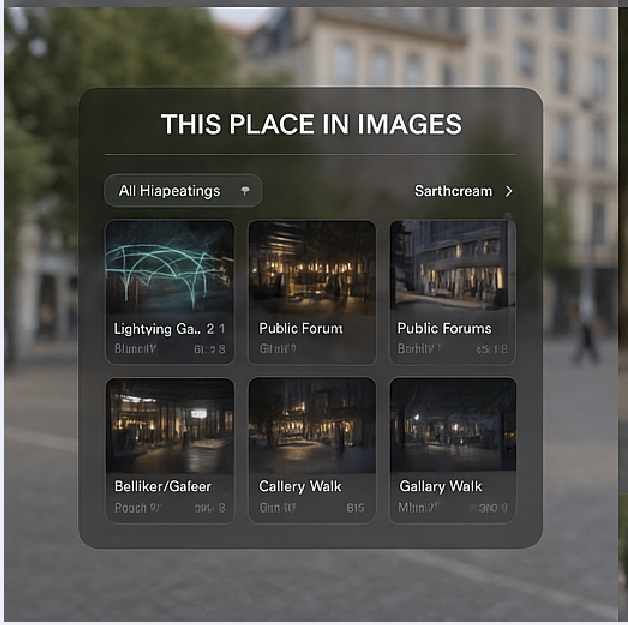
Existing Place Tags
-
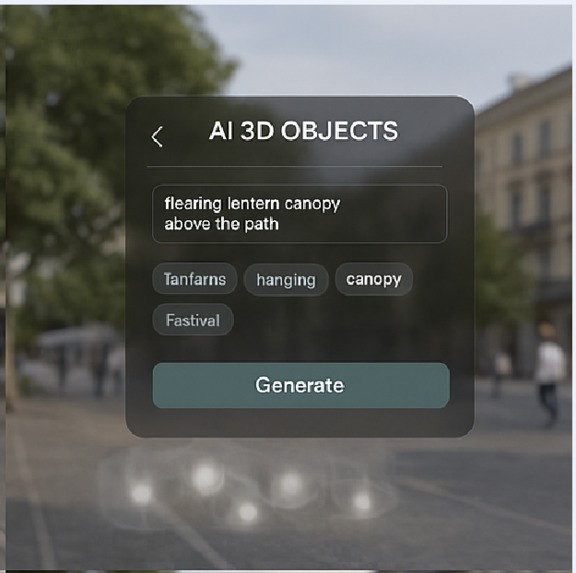
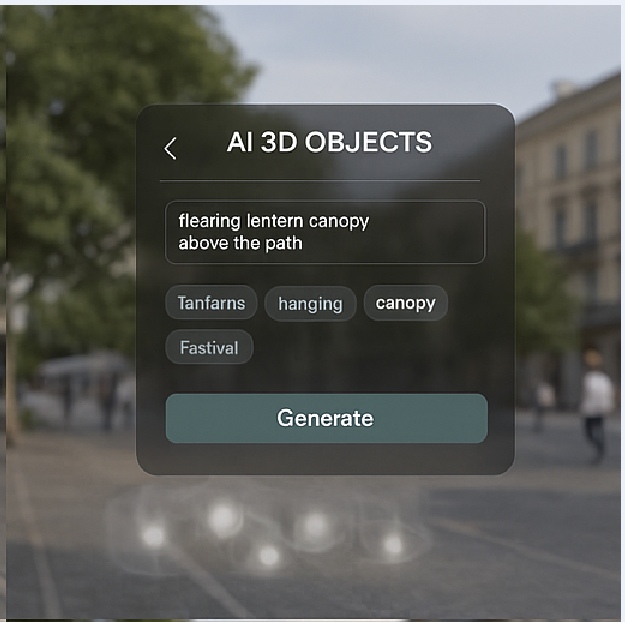
Add text-to-3D Objects with AI
-
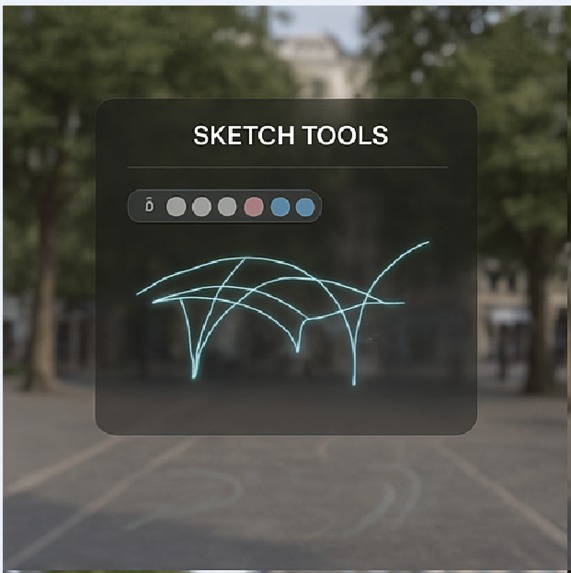
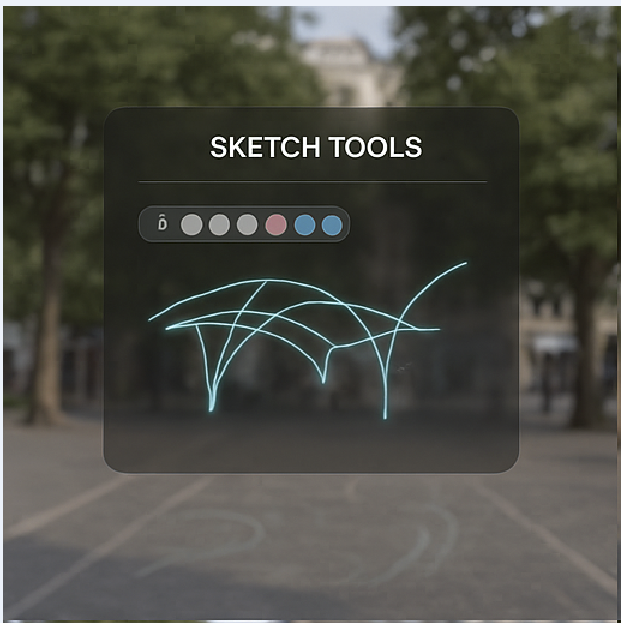
Add hand sketches
-
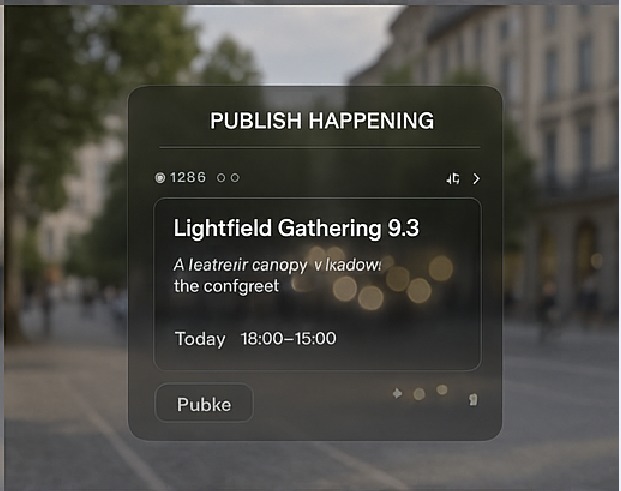
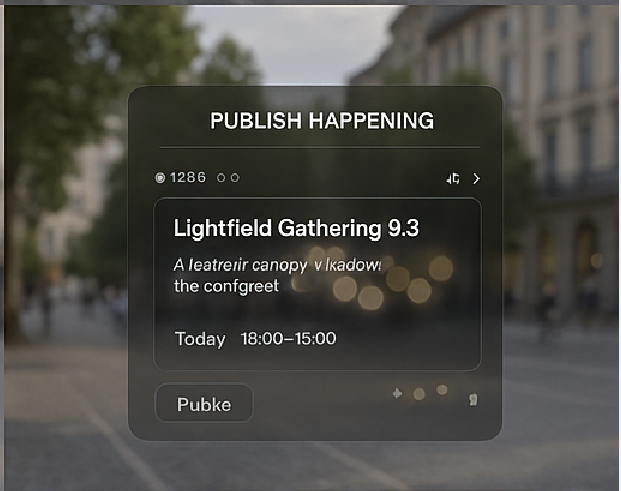
Publish a Happening
Inspiration
Reality Overlap was inspired by the gap between how people actually experience space and how XR applications usually treat it. Most XR experiences replace reality with a virtual world; my interest is in augmenting reality without overwriting it. Coming from an architectural and spatial-computing background, I wanted to explore how real spaces—campuses, streets, interiors—can become shared digital surfaces that hold social memory and interaction.
The project builds conceptually on my earlier work Space Hackers, where the city is treated as a hackable interface. Reality Overlap brings this idea into Mixed Reality on Meta Quest.
What it does
Reality Overlap is a co-situated mixed reality experience that lets users place and rediscover persistent, spatially anchored digital traces inside real spaces using passthrough MR.
Users can leave digital content tied to physical locations and revisit it across sessions. The experience is designed to work asynchronously, meaning spaces accumulate meaning over time even without real-time multiplayer, turning physical environments into evolving social layers.
How we built it
The prototype was built in Unity (C#) using Meta Quest and the Meta XR stack, including:
- Passthrough Mixed Reality
- SLAM-based Spatial Anchors
- Meta Interaction SDK (hands & controllers)
- Room / environment-relative positioning Because Meta Quest currently has no native GPS, all localization relies on on-device spatial mapping. This limitation intentionally shaped the design toward place-based XR rather than global geospatial AR.
Challenges we ran into
The biggest challenge was working at the edge of current XR capabilities:
- No GPS makes true geo-anchored AR difficult without external devices
- Spatial anchors are powerful but sensitive to lighting, rescans, and boundaries
- Designing meaningful social XR without synchronous multiplayer required rethinking interaction Balancing architectural-scale ambition with standalone hardware constraints required constant iteration.
Accomplishments that we're proud of
- A functioning mixed reality prototype built entirely on Meta Quest
- A shared spatial experience that works even with a single headset
- Translating architectural theory into practical XR interaction
- Exploring XR beyond games, toward learning and place-based social experiences
What we learned
This project reinforced that shared space matters more than shared time in XR. Platform limitations like missing GPS are not just technical constraints, but design drivers. XR becomes significantly more meaningful when digital content is tied to real places people care about.
What's next for Reality Overlap
Next steps include exploring hybrid localization (paired mobile devices), expanding interaction types, scaling from rooms to campus-scale environments, and using the system for education and research. Long-term, Reality Overlap aims to contribute to XR as shared spatial infrastructure, not just immersive content.
Built With
- c#
- hand-tracking
- meta-horizon-os
- meta-quest
- meta-xr-sdk
- mixed-reality
- passthrough-mr
- slam
- spatial-anchors


Log in or sign up for Devpost to join the conversation.