-
-
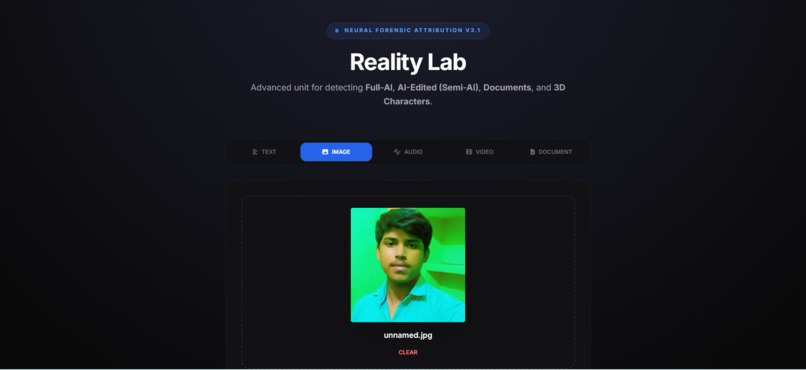
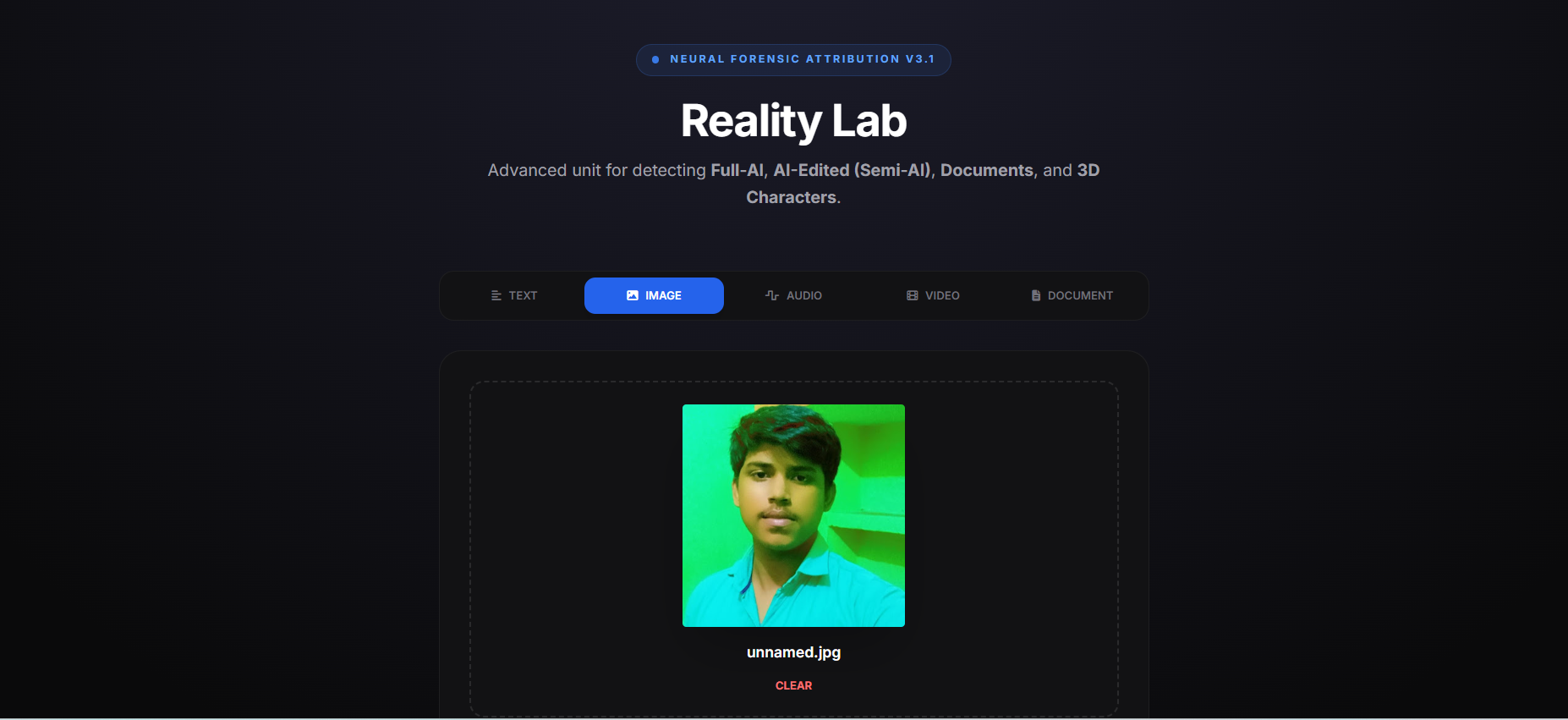
picture clicked by human with camera
-
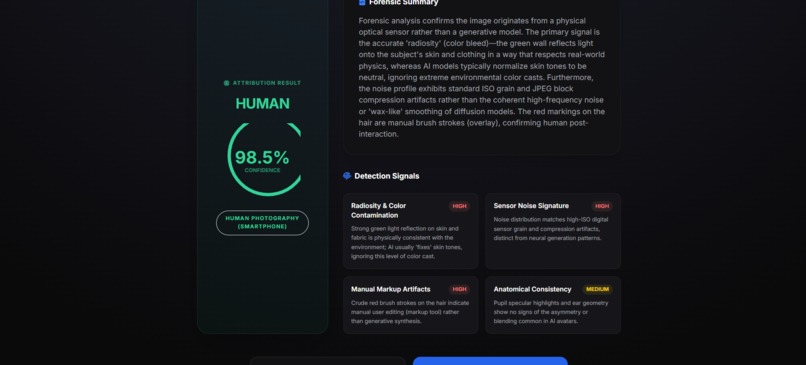
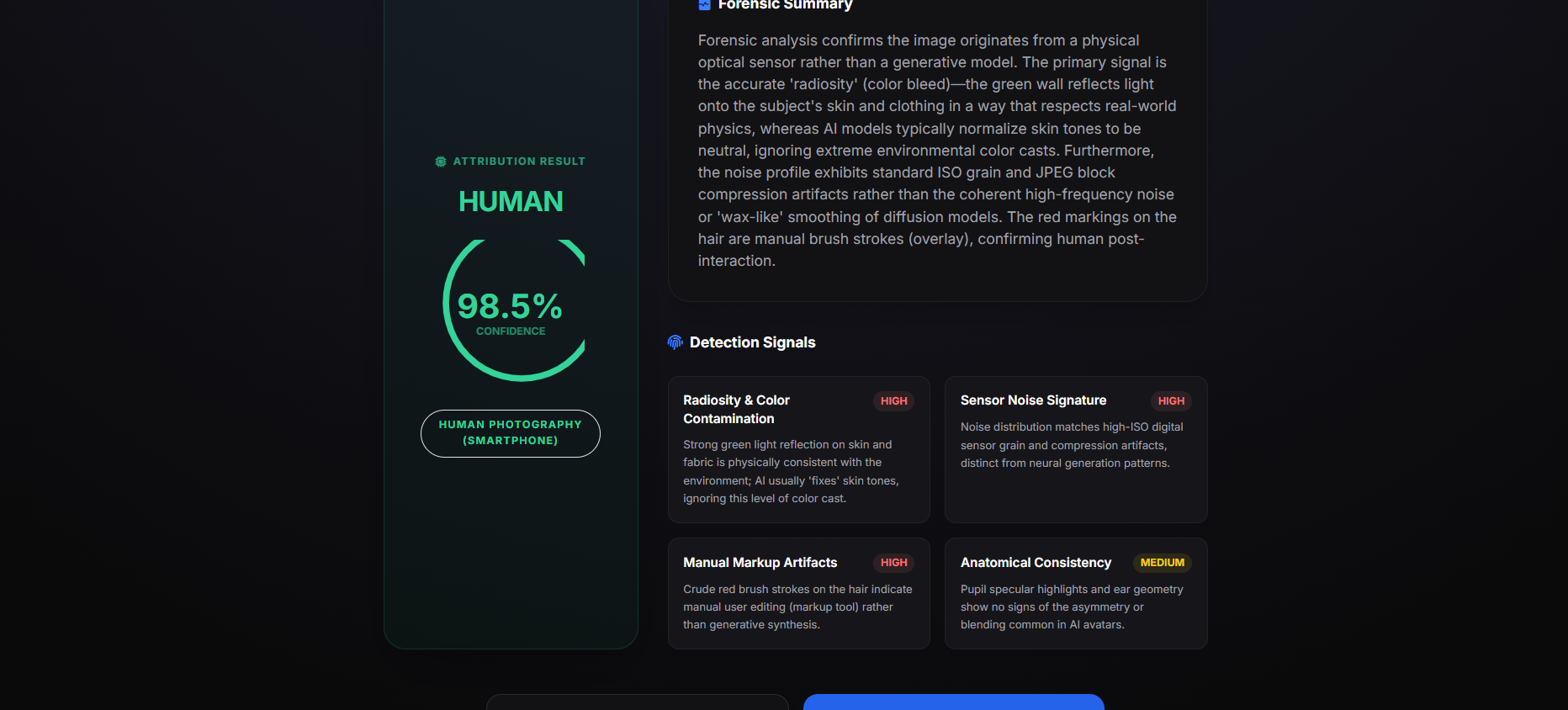
pic clicked by human ai detection report
-
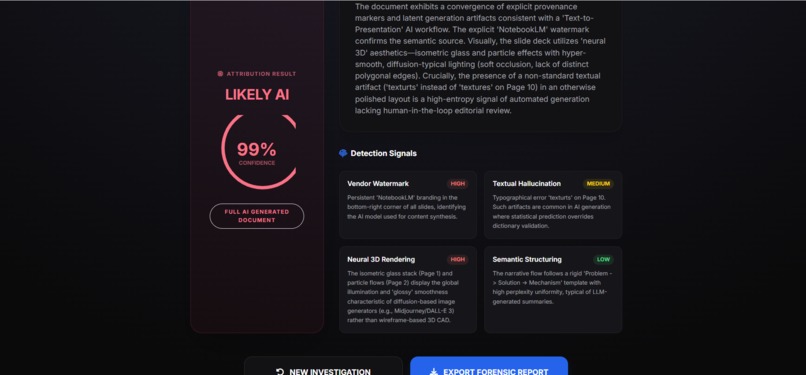
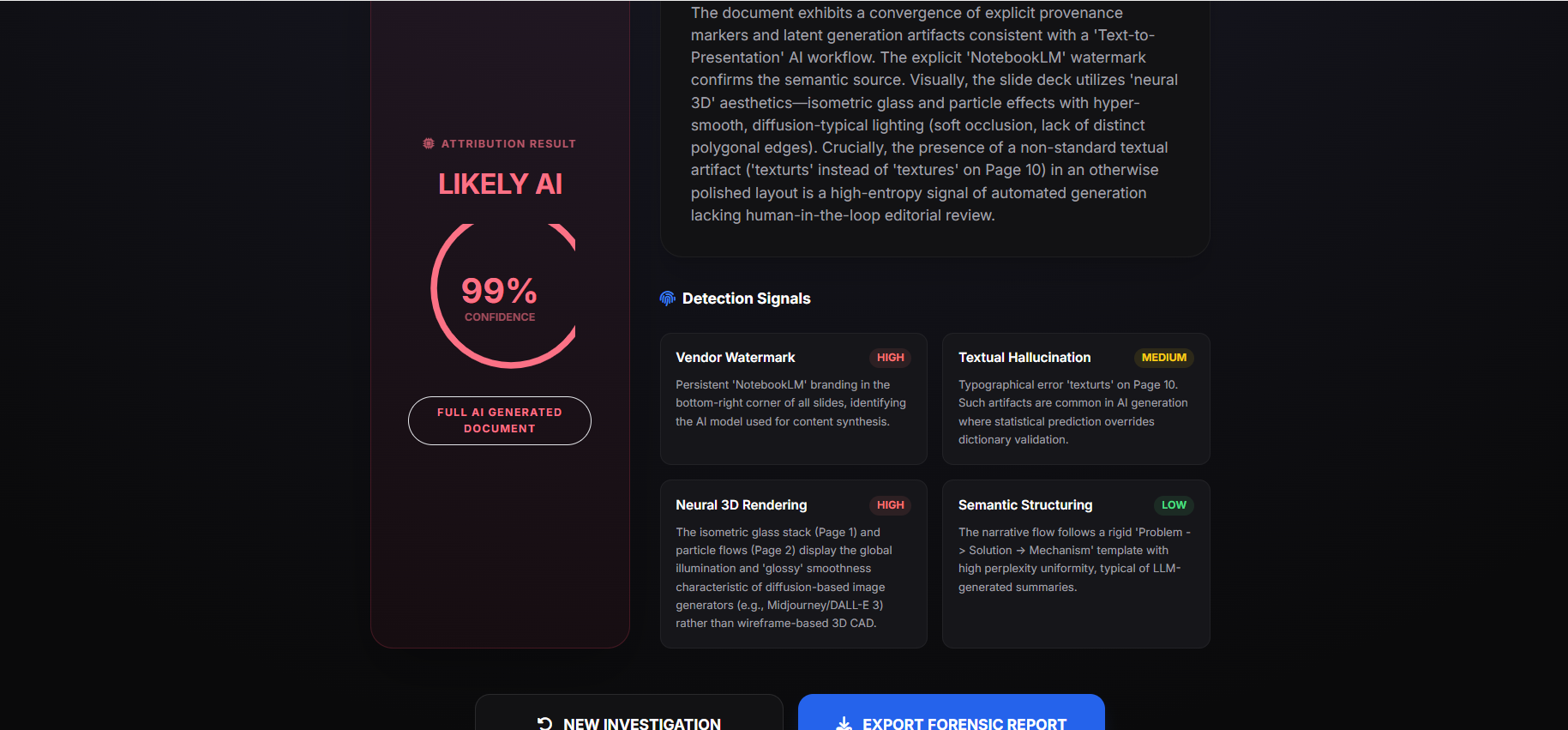
notebooklm ppt ai detection report
-
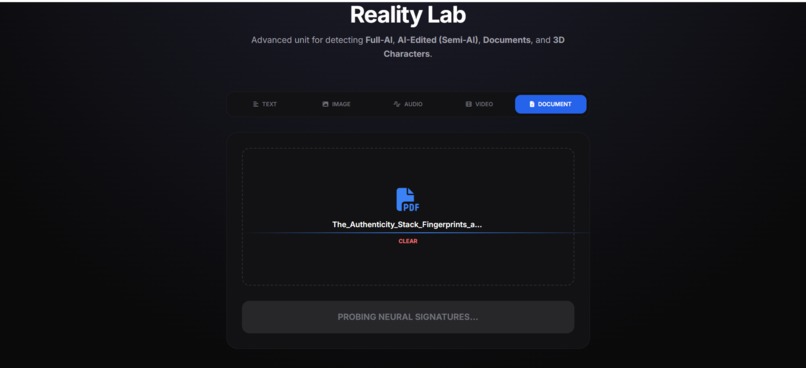
presentation build by notebooklm
-
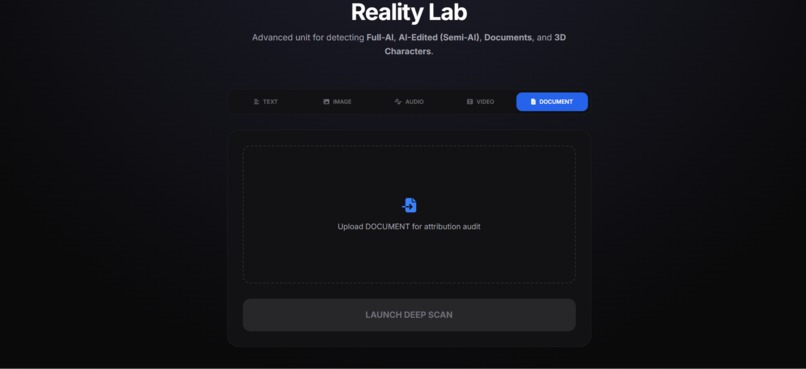
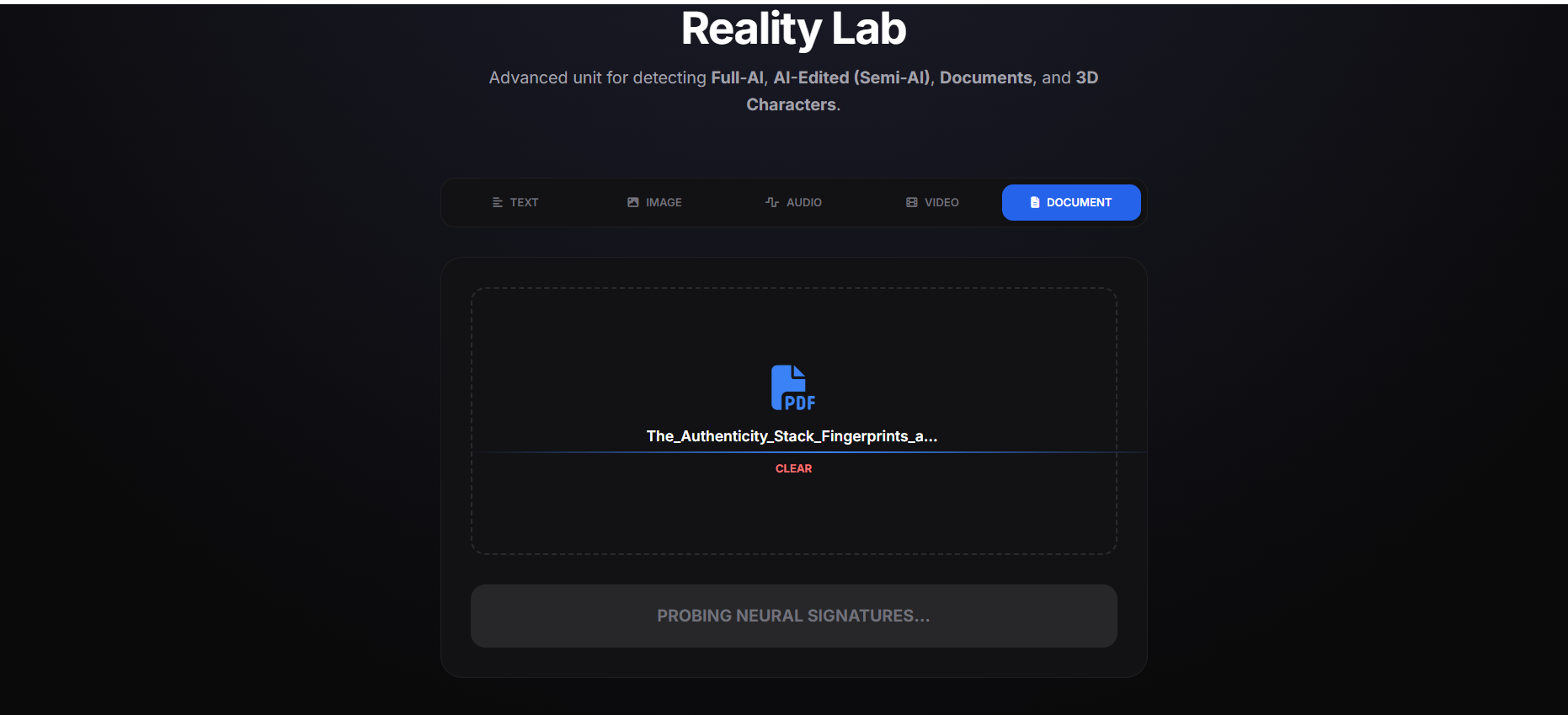
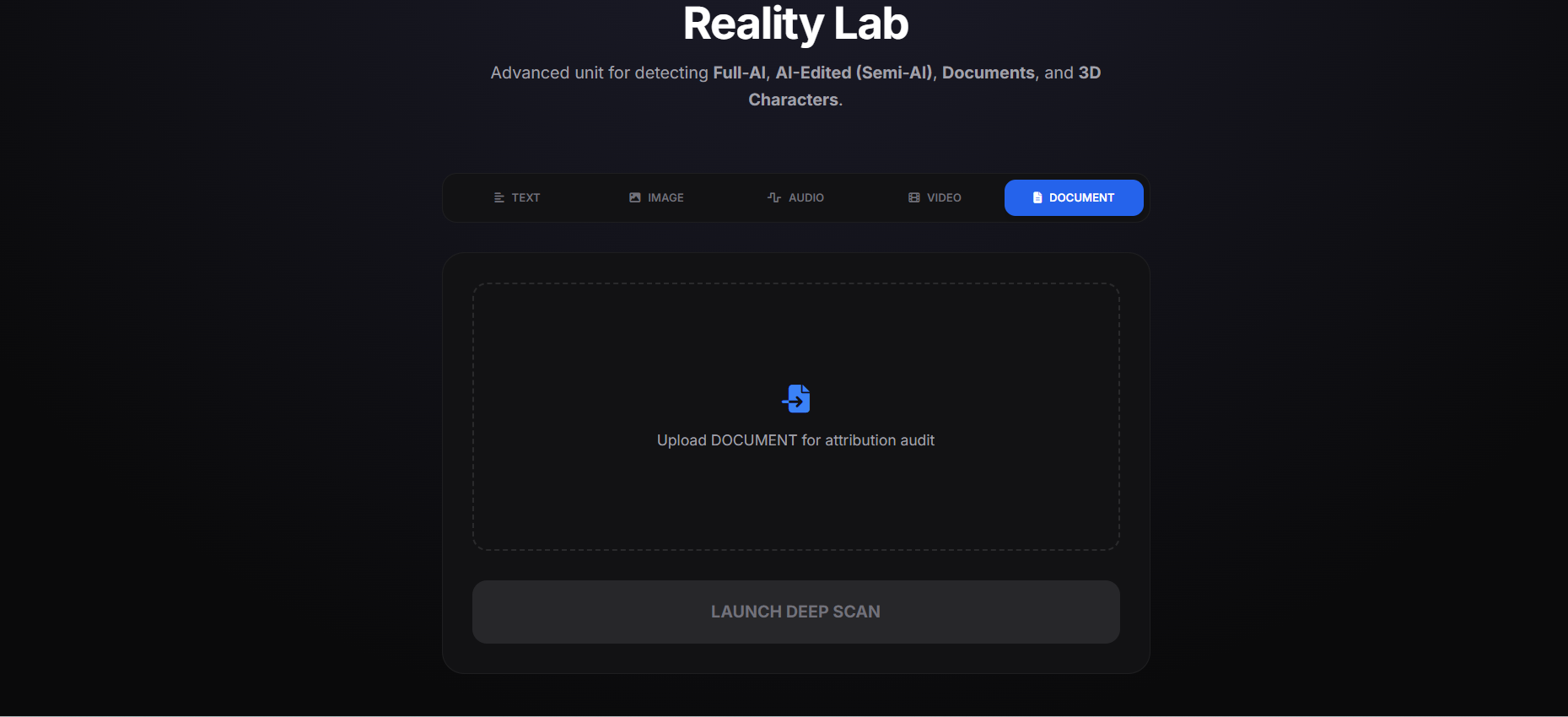
document ai detection system
-
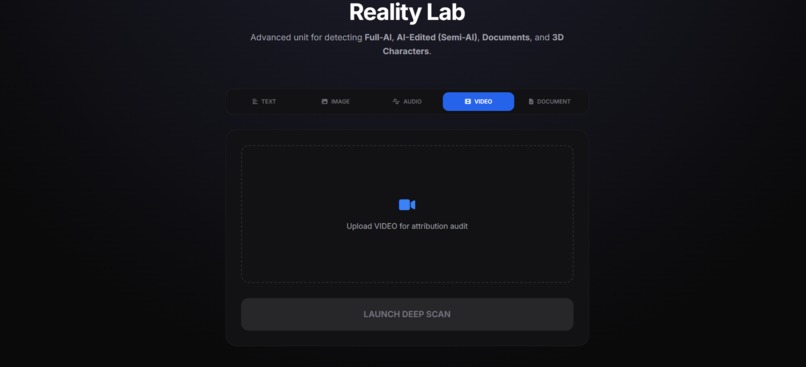
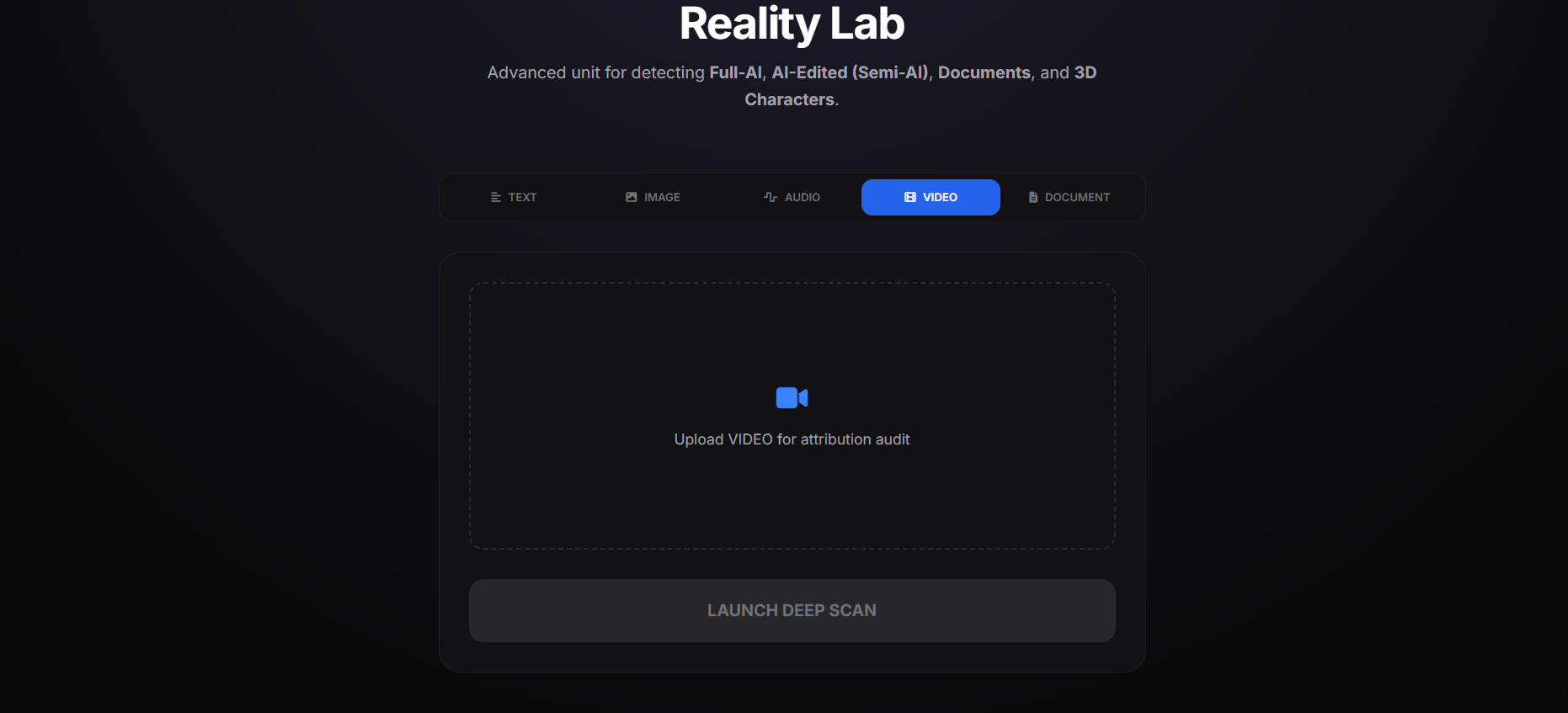
video ai detection system
-
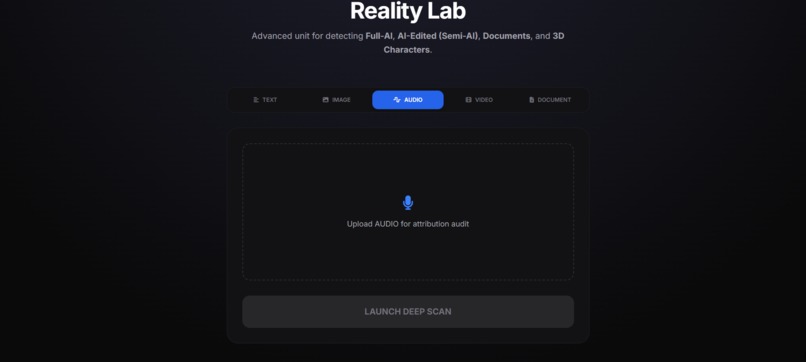
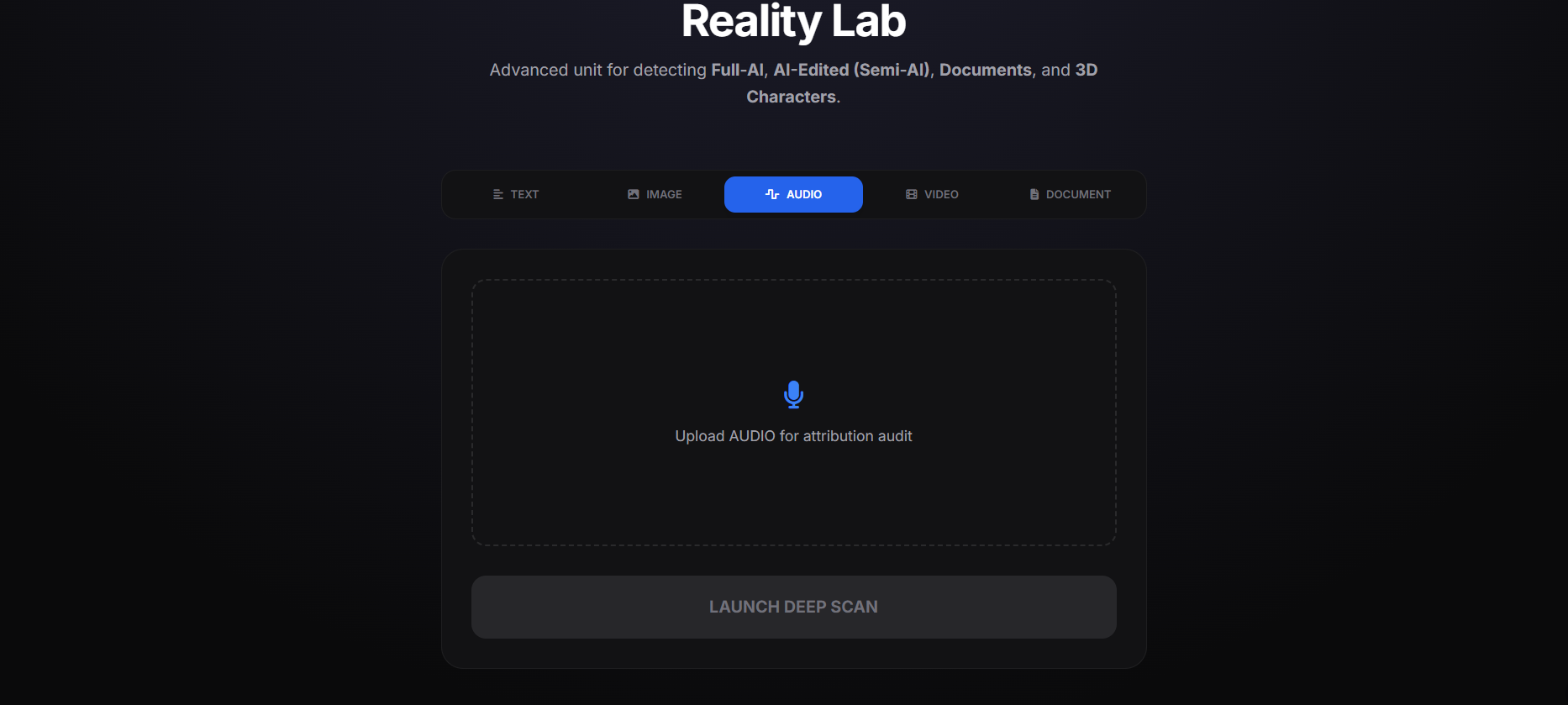
audio ai detection system
-
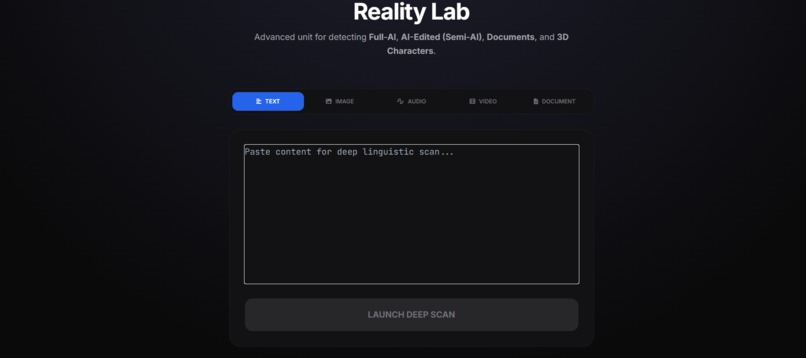
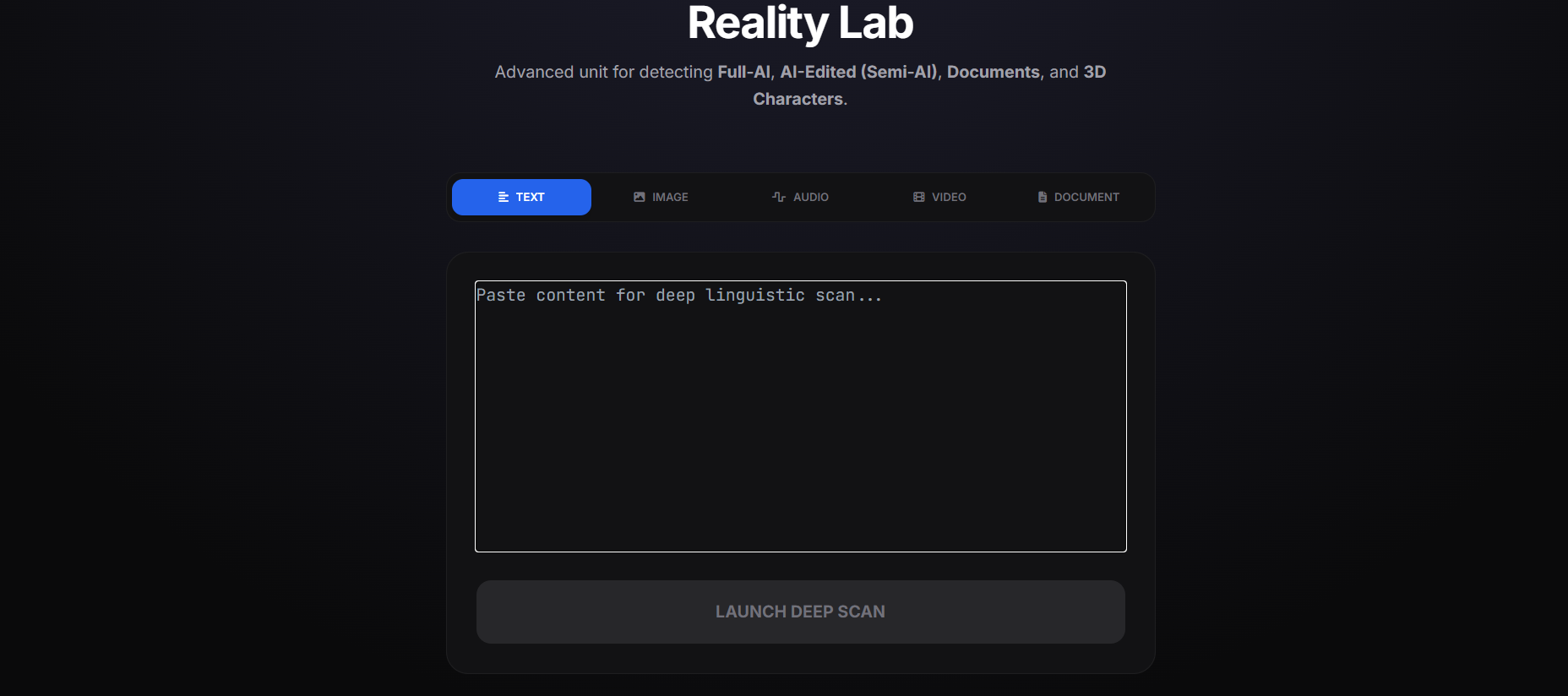
text ai detection system
-
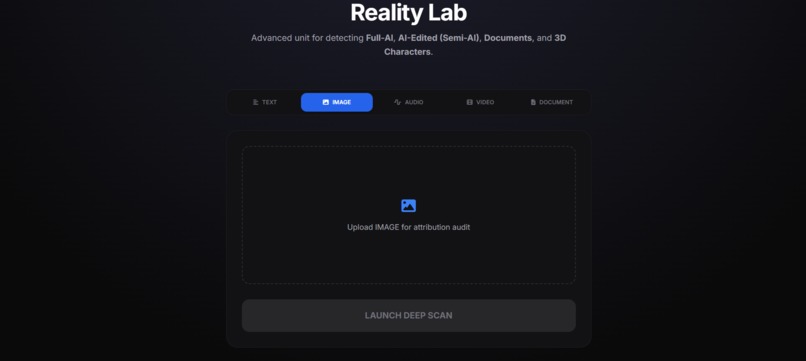
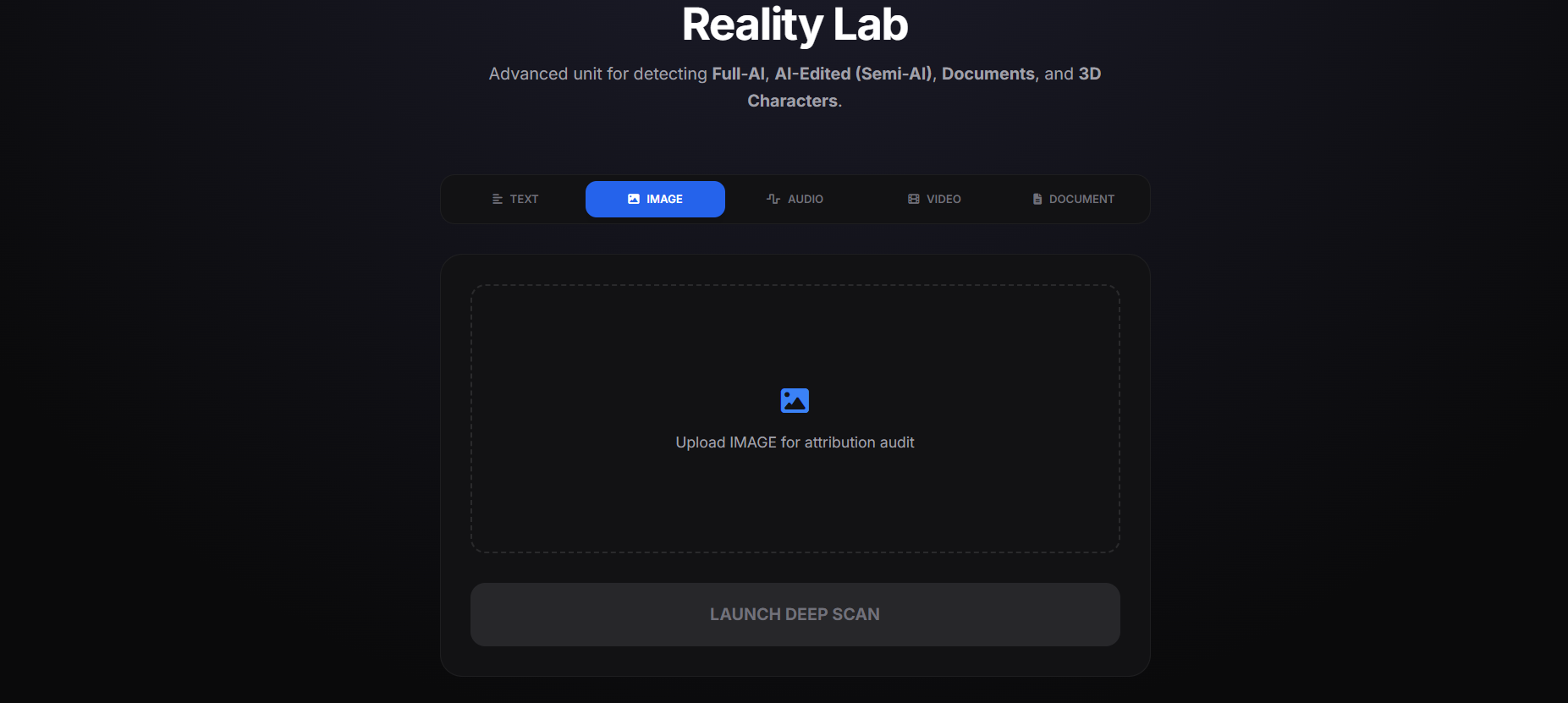
image ai detection system
Inspiration
Generative AI can now produce text, images, voices, and videos that are difficult to distinguish from real content. Most existing “AI detectors” rely on narrow heuristics, work for only one modality, or make absolute claims they cannot justify. Reality Lab was inspired by the need for a single, transparent system that treats authenticity as a multimodal reasoning problem rather than a binary label.
What it does
Reality Lab is a public web application that analyzes text, images, audio, and short videos to estimate whether the content was created by a human or generated by AI. For every input, it produces an AI-generation probability, the most likely generation method, a confidence level, a concise technical reasoning summary, and explicit limitations when results are inconclusive.
How we built it
Reality Lab is built around the Gemini 3 API, which performs multimodal reasoning across language, vision, and audio. Inputs are preprocessed by type, analyzed for modality-specific signals, and then jointly reasoned over by Gemini 3 to produce a structured, probabilistic result. A minimal frontend handles uploads and display, while a lightweight backend manages validation, inference, and result aggregation.
Challenges we ran into
The hardest challenge was avoiding false certainty. AI-generated content evolves rapidly, and detection is inherently probabilistic. Designing outputs that are informative without overstating confidence required careful prompt design, structured outputs, and explicit uncertainty handling.
Accomplishments that we're proud of
Built a fully functional, zero-login, multimodal analysis tool
Made Gemini 3 essential to the core logic, not an add-on
Delivered explainable results instead of opaque labels
Avoided overengineering while keeping the system robust
What we learned
The real power of advanced models like Gemini 3 lies in cross-modal reasoning, not simple classification. Treating authenticity as a reasoning problem — and clearly communicating uncertainty — leads to more trustworthy AI systems.
What's next for Reality Lab
Next steps include expanding model attribution coverage, improving robustness against emerging generation techniques, and adding batch analysis for journalists, educators, and researchers while preserving transparency and user privacy.
Built With
- audio
- css-(minimal-ui)-node.js-/-fastapi-(backend)-media-preprocessing-tools-(image
- documents
- gemini-3-api-(multimodal-reasoning)-javascript-/-python-html
- video)

Log in or sign up for Devpost to join the conversation.