-
-
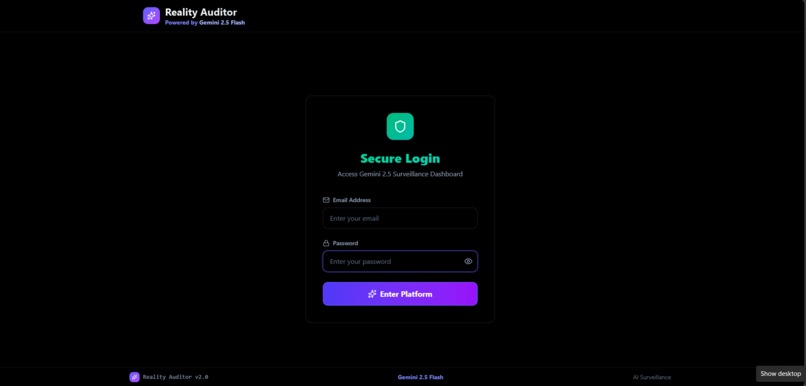
User Login Page
-
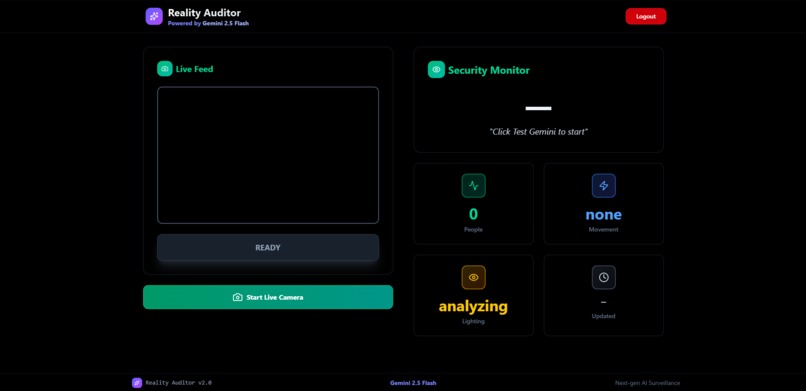
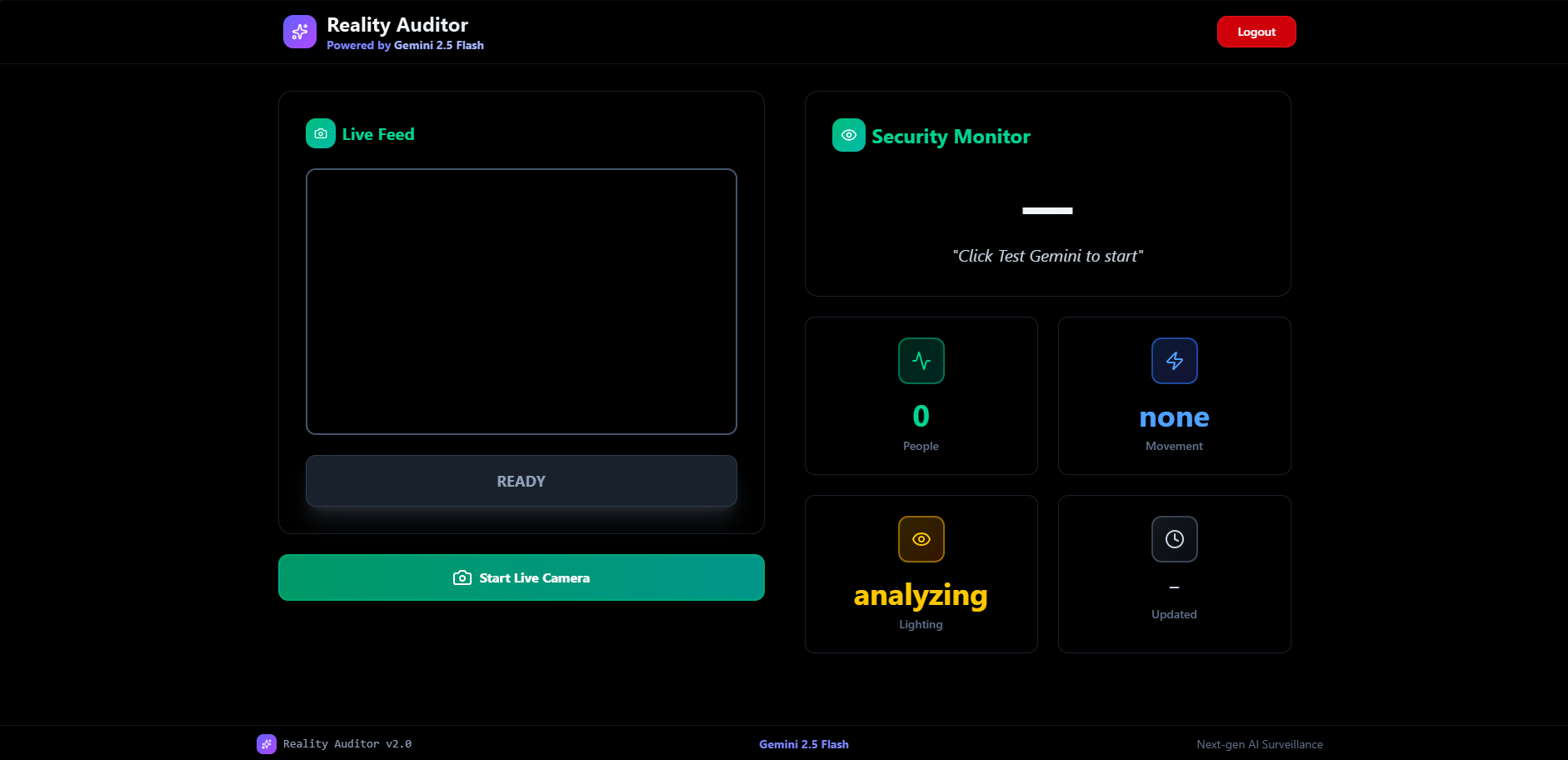
User Dashboard Page
Inspiration
Modern surveillance systems often rely on passive monitoring or manual review, which makes real-time decision-making difficult during critical situations. I wanted to explore how AI vision models could actively interpret live environments and surface security risks instantly rather than after the fact.
The idea for Reality Fabric Auditor v2.0 came from observing how environments like exam halls, offices, and events require continuous awareness of people count, movement, and visibility conditions, yet lack intelligent, explainable tools.
What it does
Reality Fabric Auditor v2.0 is an AI-powered security surveillance dashboard that analyzes live camera feeds and converts them into real-time environmental intelligence.
The system detects:
- Number of people in frame
- Movement intensity (none / low / high)
- Lighting conditions (well lit / low light / very dim)
- A confidence-based security score with a 25% critical alert threshold
It also generates JSON and CSV audit reports with timestamps and frame history for compliance and review.
How I built it
The project is built as a full-stack, production-ready system:
- Frontend: React 18 + Vite + TailwindCSS for a responsive, high-performance dashboard
- Backend: Node.js + Express handling AI requests and security logic
- AI Layer: Gemini 2.5 Flash Vision for real-time image understanding
- Pipeline:
Live Camera → Canvas Frame Capture → Base64 Encoding → Gemini Vision → Structured Metrics → Alert Engine
The frontend is deployed on Vercel, while the backend runs on Render, simulating a real-world cloud architecture.
Challenges I ran into
- Handling real-time camera access securely across browsers
- Balancing AI confidence thresholds to avoid false positives
- Designing alerts that are clear, explainable, and actionable
- Managing environment variables and deployments across multiple platforms
- Ensuring performance while processing frequent image frames
Each challenge helped refine both the system architecture and the user experience.
What I learned
This project deepened my understanding of:
- AI vision model integration in production environments
- Designing confidence-based decision systems
- Frontend–backend communication at real-time speeds
- Secure deployment practices and environment management
- Building software that is not just functional, but auditable and trustworthy
Use cases
- Exam proctoring and anti-cheating systems
- Office and facility surveillance
- Event and crowd monitoring
- Personal safety and anomaly detection
- Compliance and security auditing
What’s next
Future improvements include:
- Multi-camera support
- Role-based access control
- Persistent event storage
- Historical trend analysis
- Edge-device optimization for lower latency
Reality Fabric Auditor v2.0 demonstrates how AI can move surveillance from passive observation to active, intelligent security analysis.
Built With
- express.js
- javascript
- node.js
- react
- tailwind

Log in or sign up for Devpost to join the conversation.