-
-
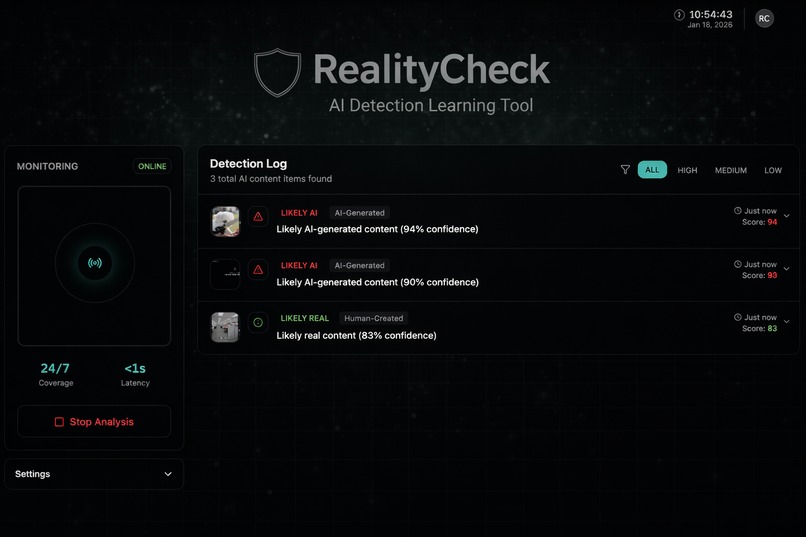
-
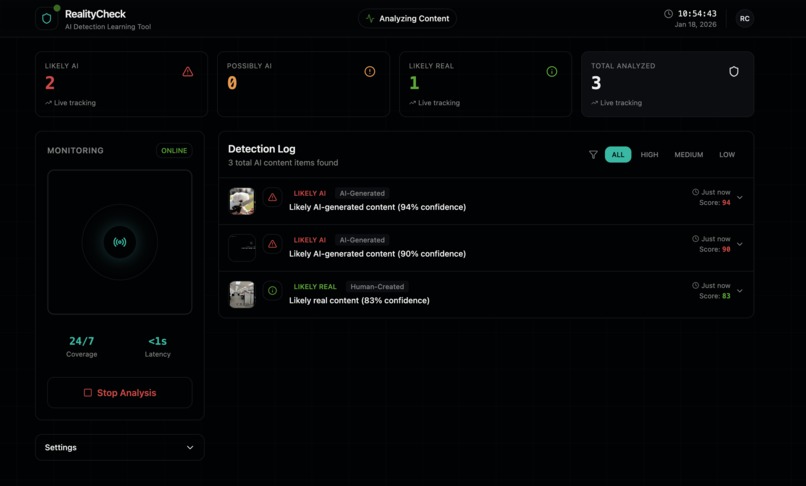
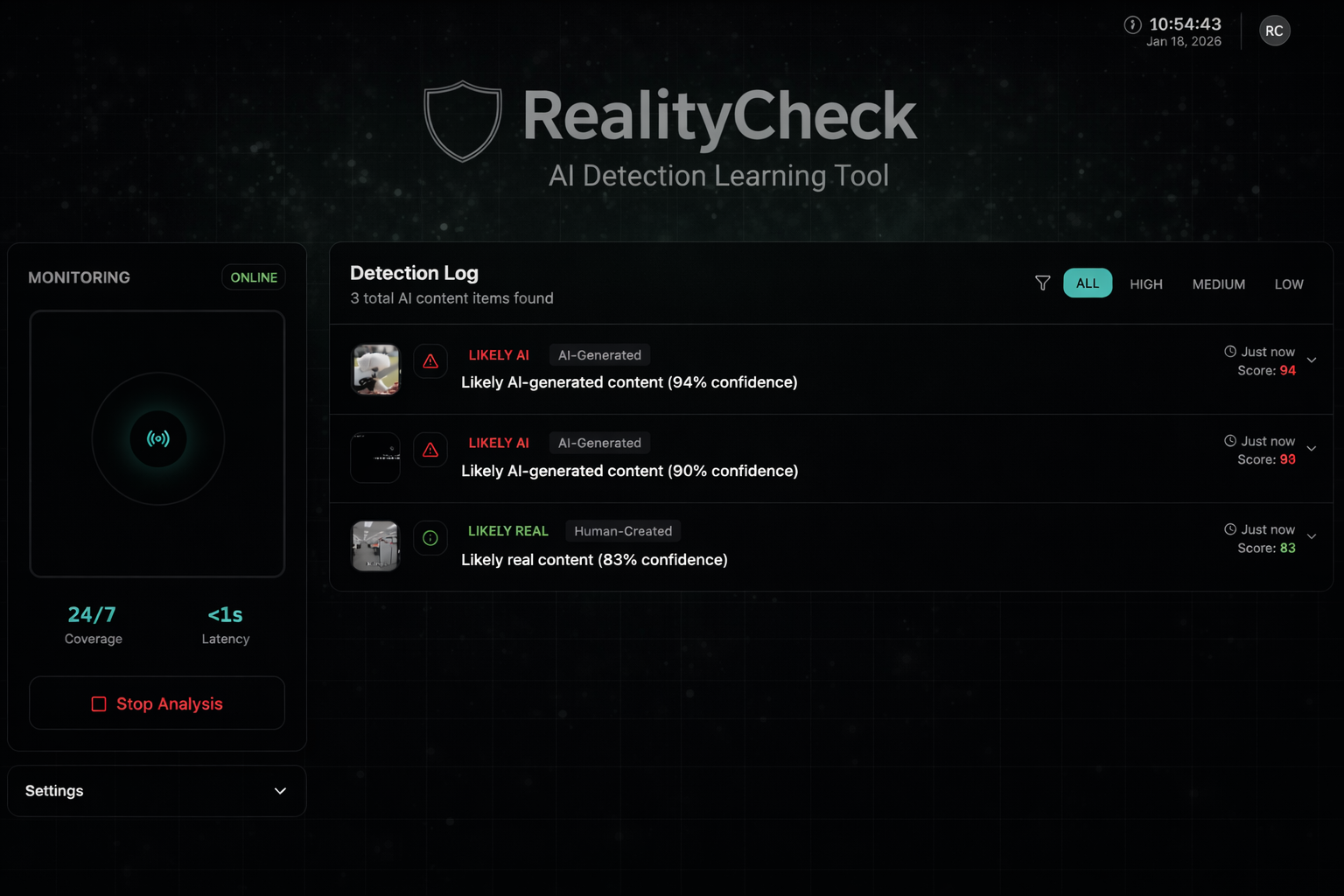
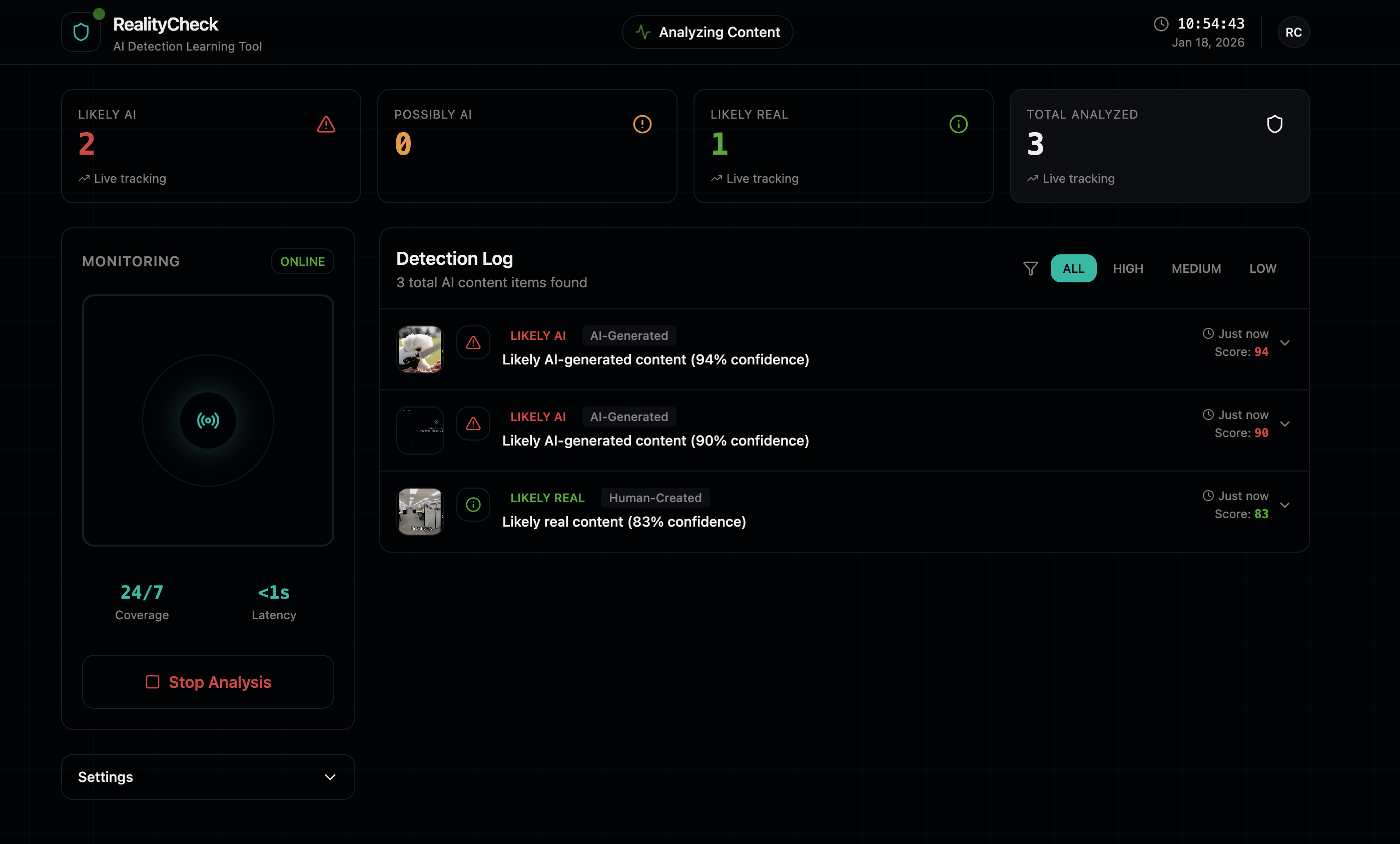
RealityCheck Dashboard
-
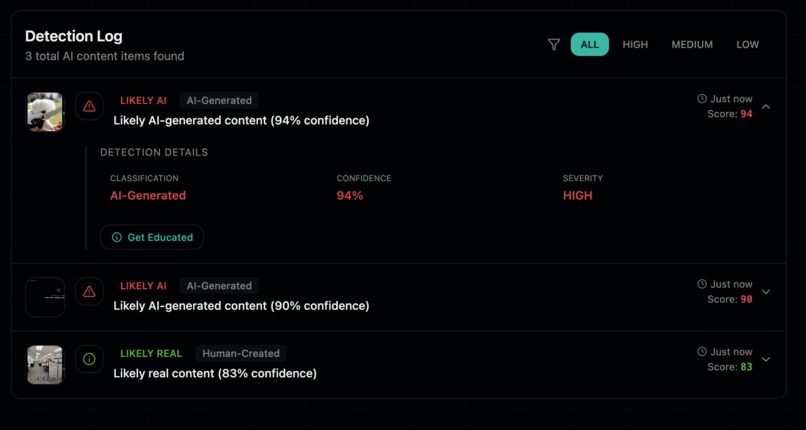
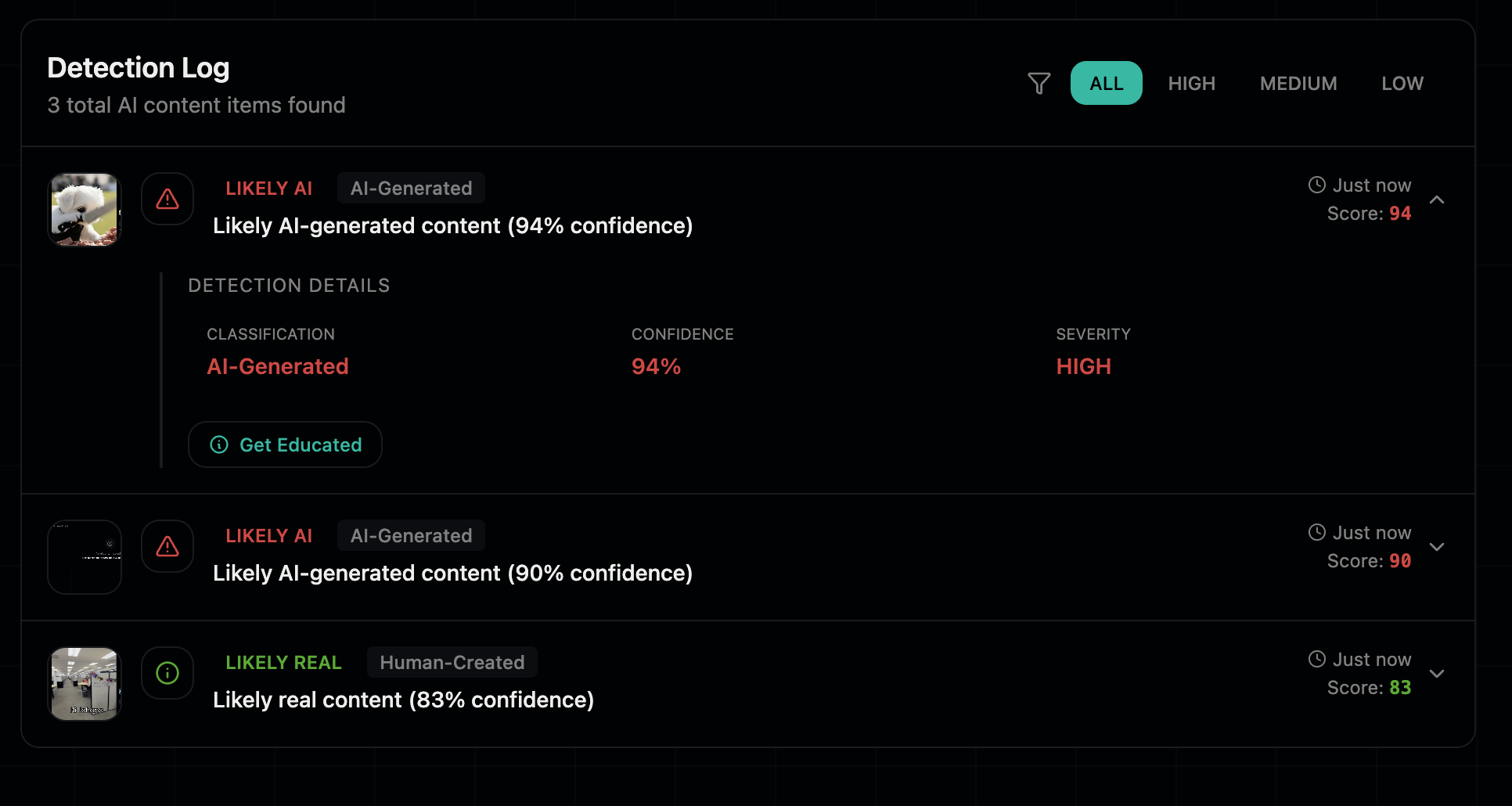
Detection Log
-
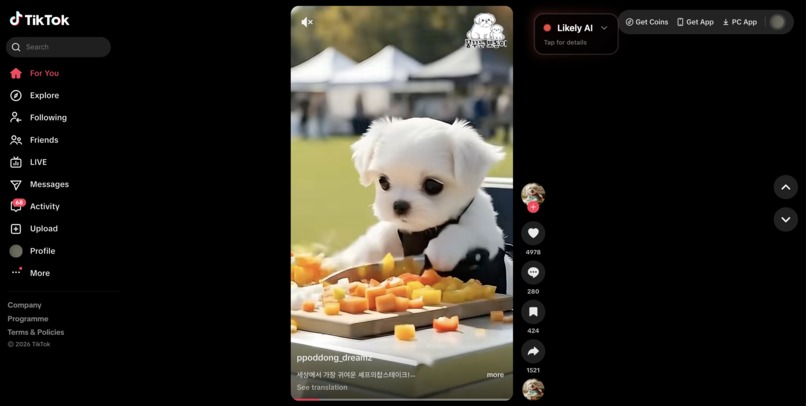
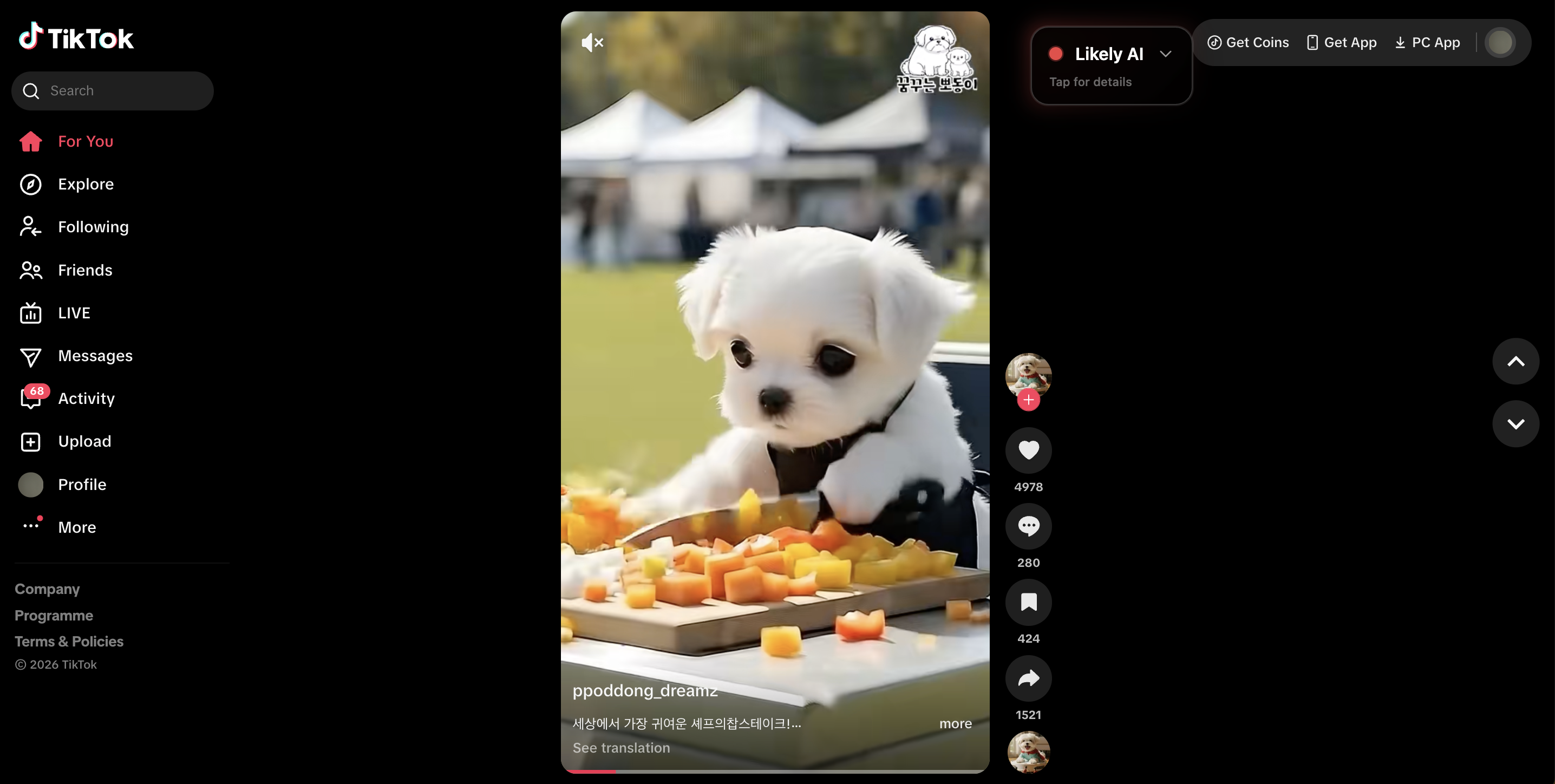
Likely AI Tag Generated
-
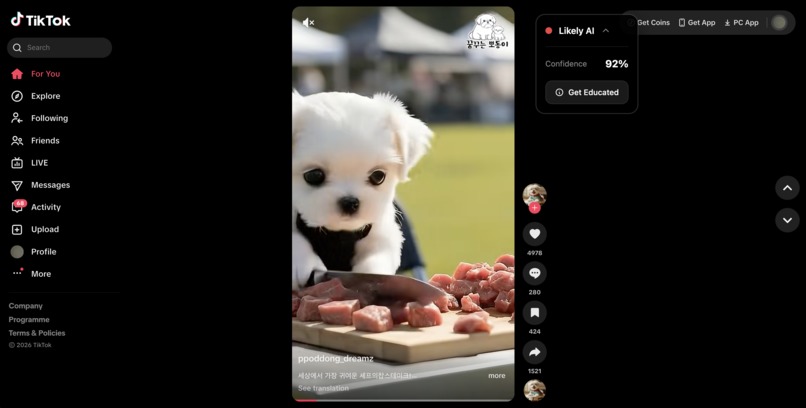
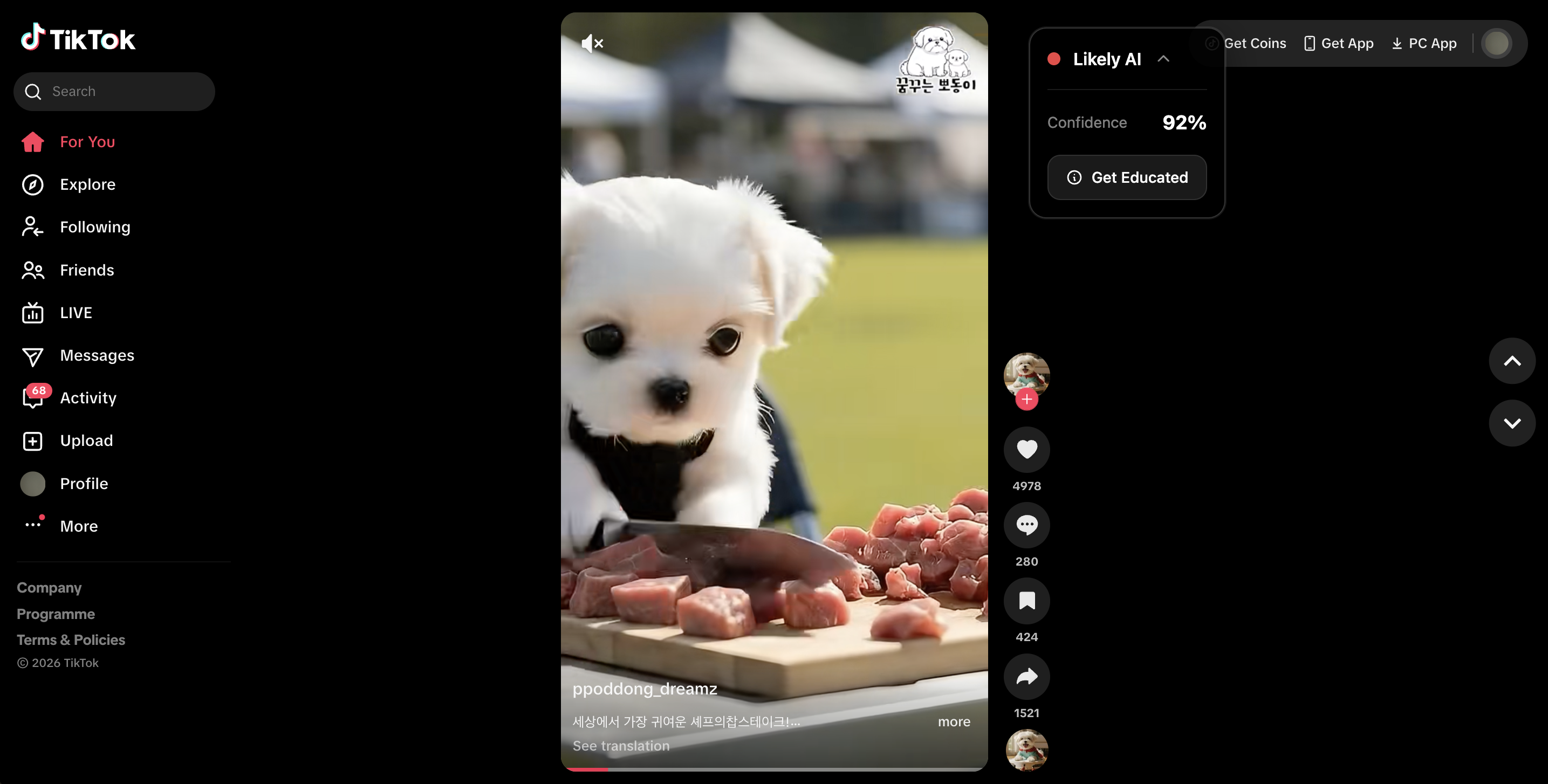
Likely AI Tag Expanded
-
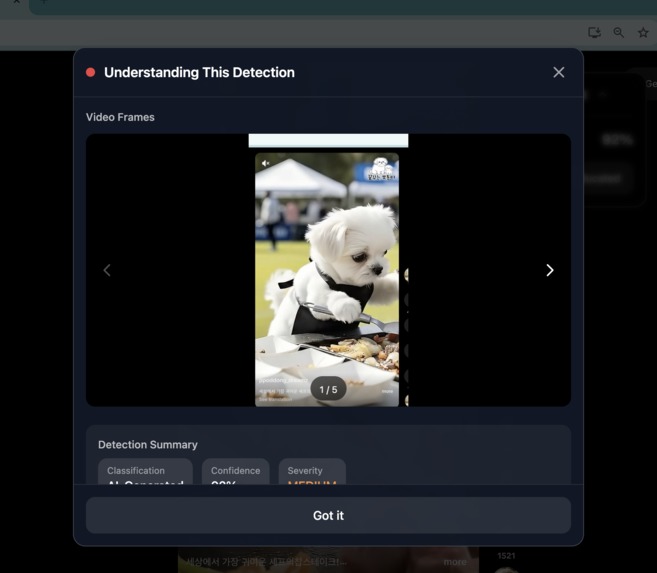
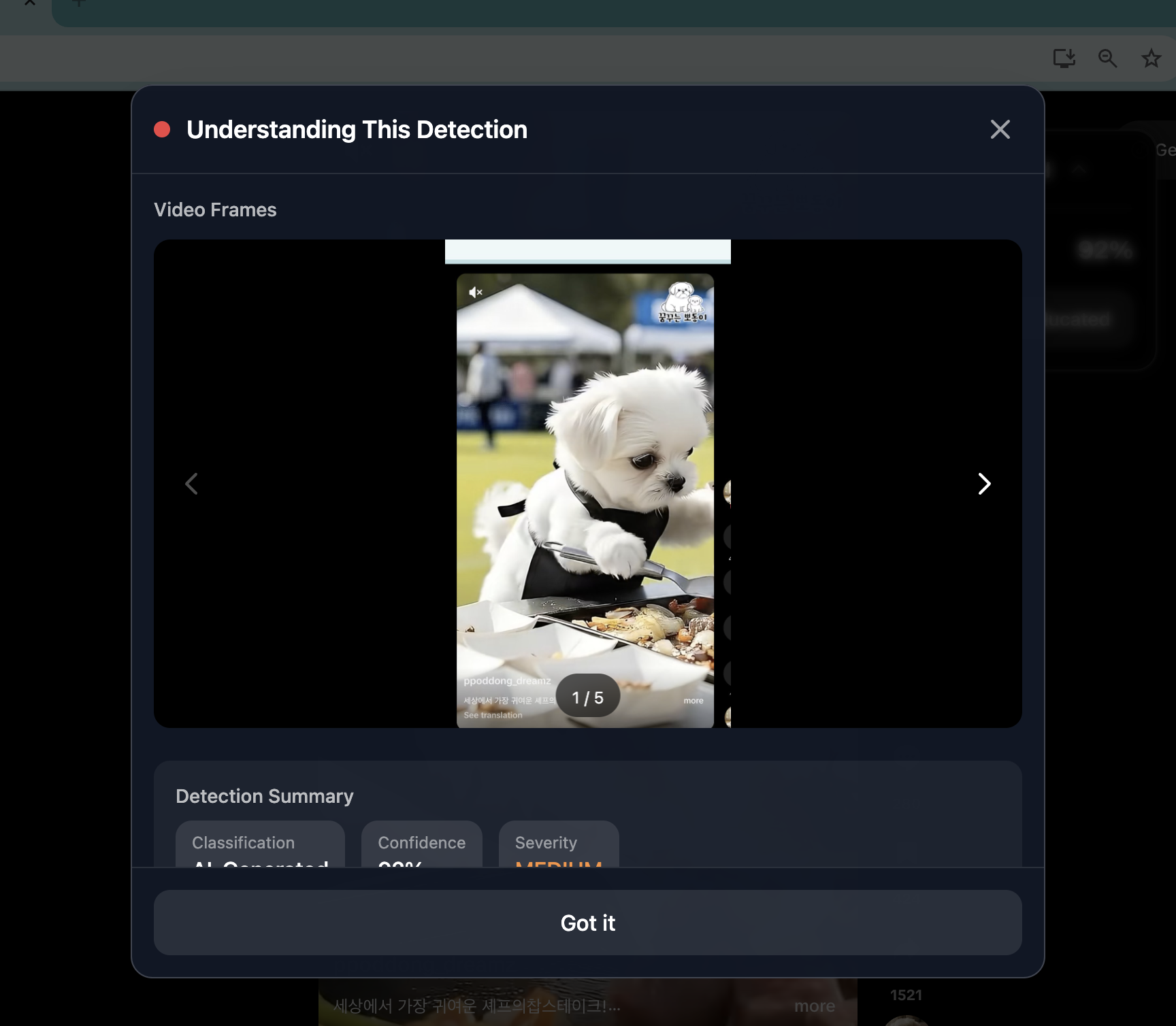
Understanding the Detection
-
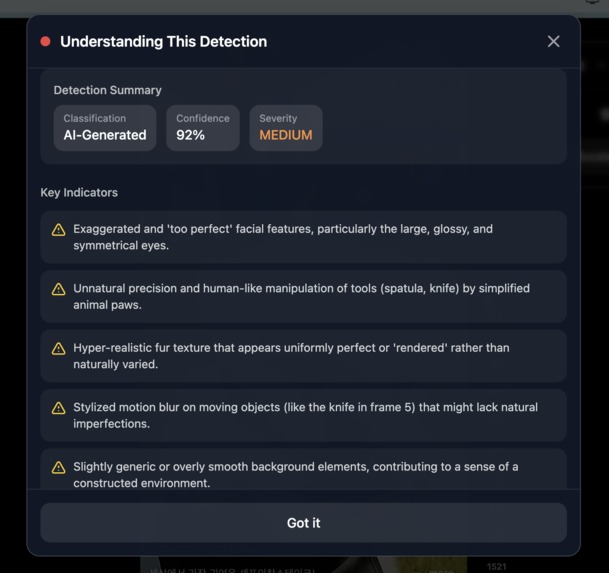
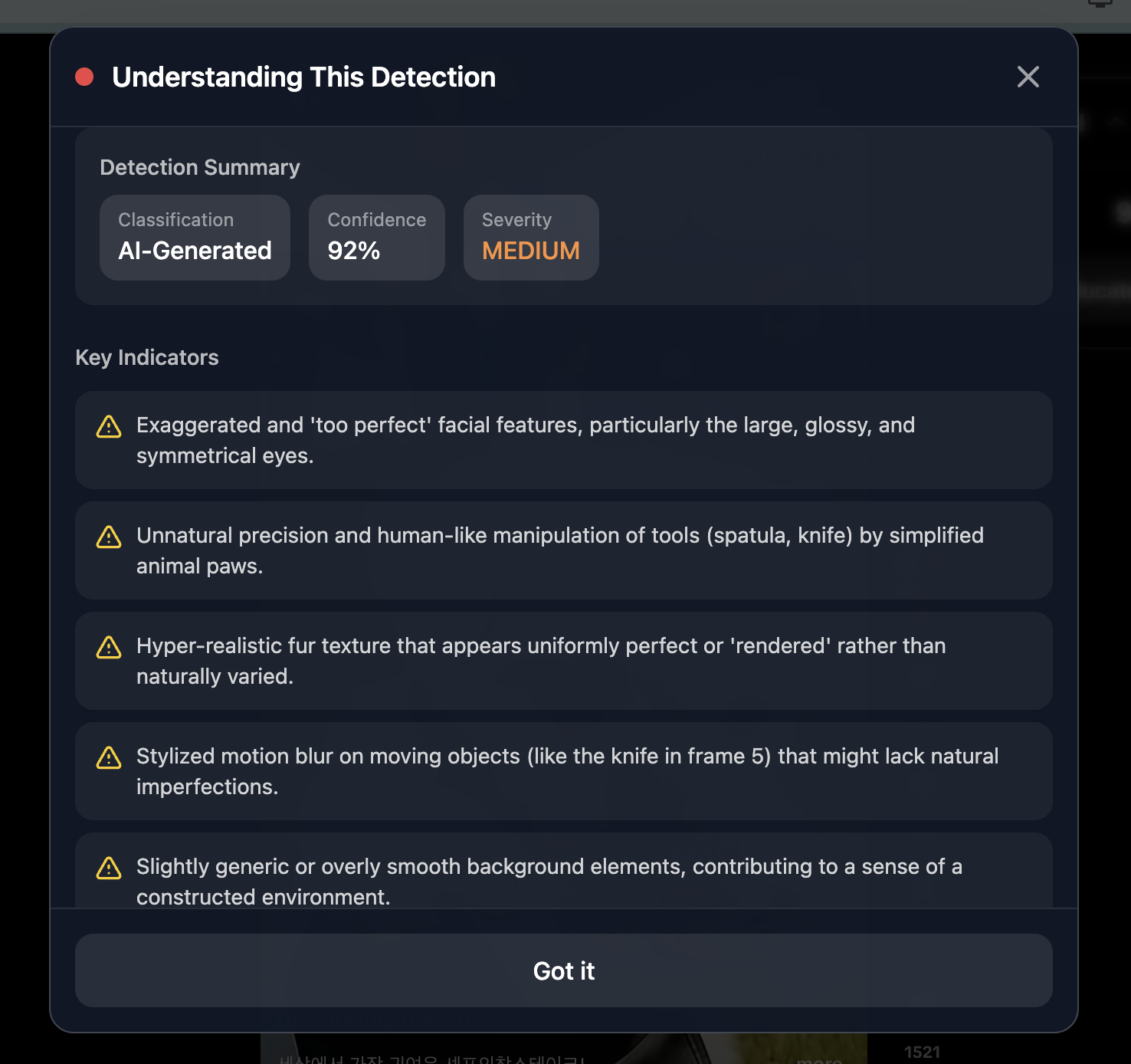
Key Indicators of the Detection
-
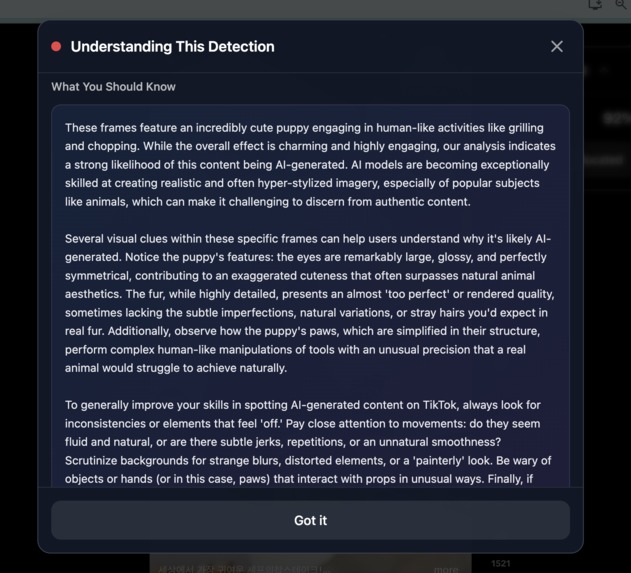
Summarized Lesson
-
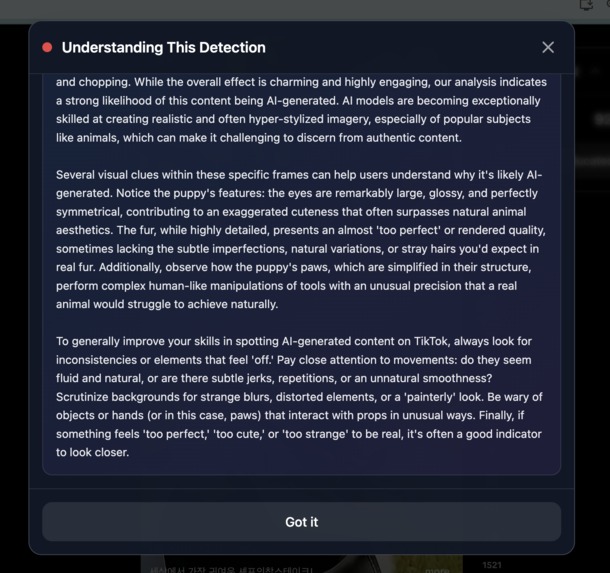
Summarized Lesson Continued
RealityCheck: Real-Time AI Detection That Teaches You to Spot the Fakes
The Story
According to a 2025 study by SEO firm Graphite, over 52% of written content on the internet is AI. As generated content becomes increasingly sophisticated and pervasive on social media, vulnerable populations, especially children and elderly users, face growing risks from misinformation, scams, and deceptive content. Current solutions either detect AI content behind the scenes (leaving users in the dark), require users to manually upload content for analysis (too slow and inconvenient), or require users to mark their own content as generated (which relies on trust and vulnerable to bad actors).
We built RealityCheck to bridge this gap: a real-time detection system that not only alerts users to potentially AI-generated content but also teaches them how to identify it themselves. Every detection becomes a learning opportunity, building media literacy skills that protect users long after they close the app.
The mission is clear: Empower users, not just protect them. By combining cutting-edge AI detection with educational explanations, we're creating a generation of more informed digital citizens who can navigate the information landscape safely and confidently.
What It Does
RealityCheck is a desktop overlay application that monitors TikTok in real-time as you browse, automatically analyzing video content for AI generation indicators. Here's what makes it powerful:
Real-Time Detection
- Instant Analysis: As soon as a TikTok video appears, RealityCheck screenshots the content and analyzes it using multiple detection models
- Visual Overlay: Color-coded badges appear directly on TikTok posts:
- 🔴 Likely AI (High confidence AI-generated content)
- 🟠 Possibly AI (Medium confidence)
- 🟡 Unclear (Low confidence, ambiguous)
- 🟢 Likely Real (Appears authentic)
- Confidence Scores: Each badge shows the detection confidence percentage, giving users transparency about the certainty of each assessment
Educational Features
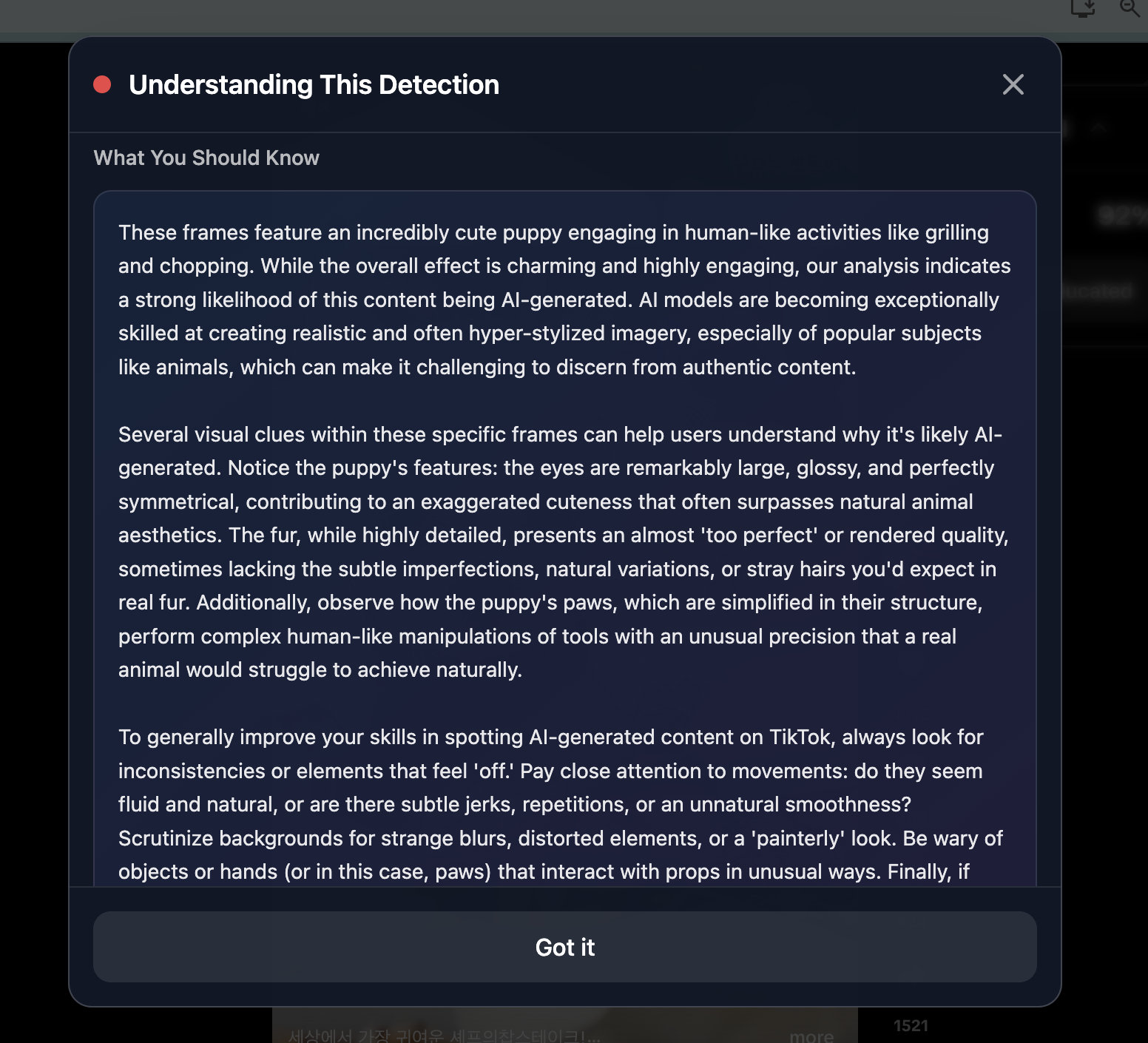
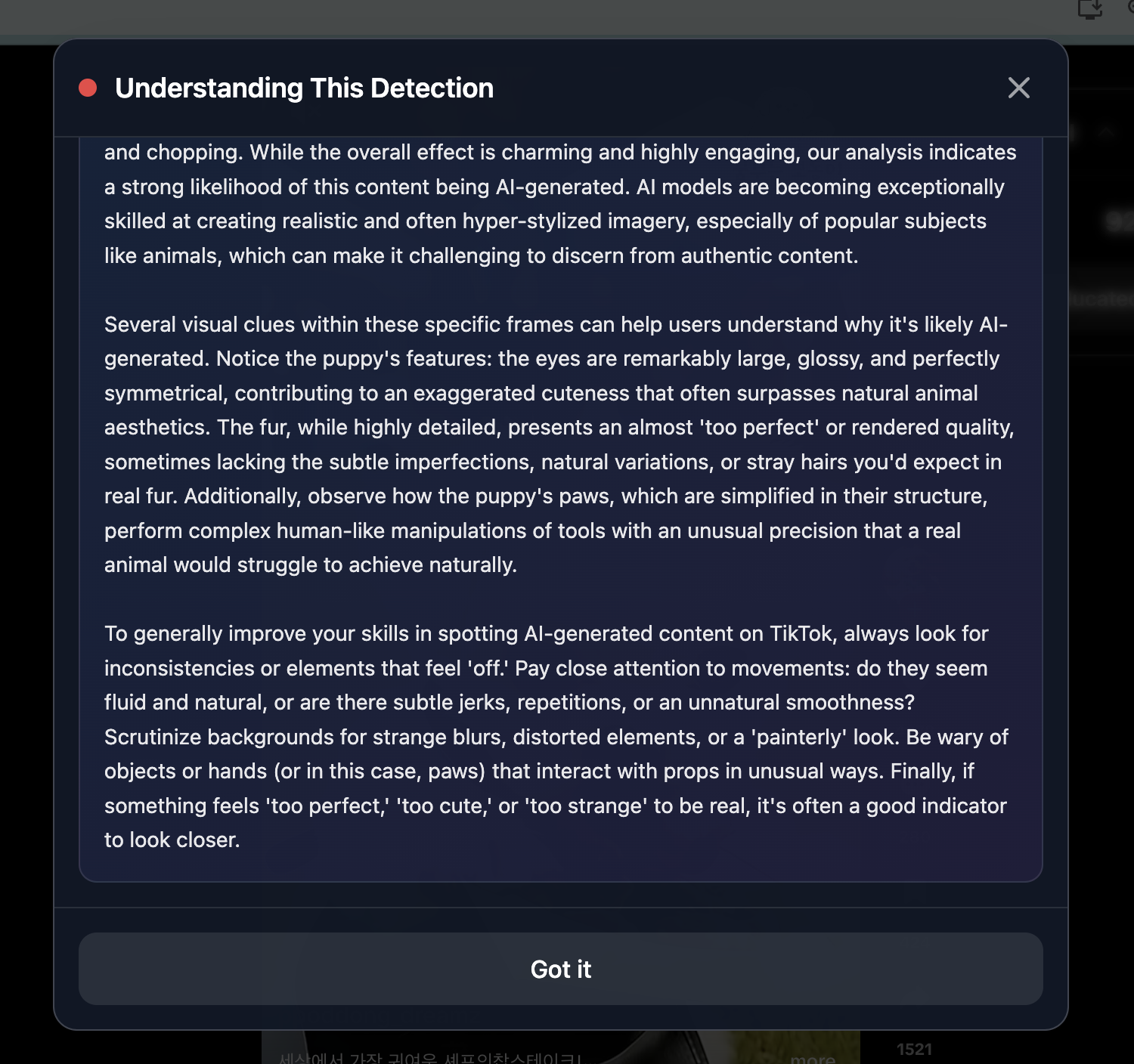
- "Get Educated" Button: Click any badge to access detailed educational content
- Frame-by-Frame Analysis: View multiple frames from the video with visual indicators highlighted
- AI-Generated Education: Powered by Google's Gemini API, each detection includes:
- Specific visual clues that suggest AI generation (unnatural skin textures, inconsistent lighting, distorted hands, etc.)
- General skills for spotting AI content on TikTok
- Key indicators list showing what the system detected
- Detection Summary: Clear breakdown of classification, confidence, and severity levels
Intelligent Analysis
RealityCheck doesn't just classify content, it analyzes:
- Visual patterns: Aesthetic similarity to AI-generated imagery
- Semantic errors: Unnatural features common in AI content (distorted text, impossible physics)
- Intent detection: Identifies potentially malicious intents (scams, misinformation)
- Severity scoring: Categorizes risk levels (LOW, MEDIUM, HIGH) to help prioritize attention
User Experience
- Non-Intrusive: Overlay appears only when AI content is detected or when hovering
- Click-Through Enabled: Doesn't interfere with normal browsing
- Control Panel: Separate window for monitoring status, viewing detection history, and adjusting settings
- Real-Time Updates: Results pushed via WebSocket for instant feedback
How We Built It
RealityCheck consists of three main components working together:
1. Electron Desktop Application
- Frontend: React + TypeScript for the overlay UI and control panel
- Overlay Window: Transparent, always-on-top window that positions badges directly over TikTok content
- Screenshot Capture: Automatically captures video frames from TikTok as users browse
- WebSocket Client: Receives real-time detection results from the backend
2. FastAPI Backend Service
- ML Classification: Uses a vision transformer model running locally via PyTorch
- Multi-Stage Pipeline:
- Screenshot quality analysis
- AI aesthetic similarity classification
- Visual analysis (OCR, face detection, semantic error detection)
- Intent detection (identifying scam/misinformation patterns)
- Severity calculation with risk scoring
- WebSocket Server: Pushes detection results in real-time to connected clients
- REST API: Endpoints for analysis requests and educational content generation
3. Educational System
- Gemini Integration: Uses Google's Gemini API for generating educational explanations
- Multimodal Analysis: Sends video frames to Gemini for context-aware explanations
- Structured Responses: Parses JSON-formatted explanations with key indicators and detailed explanations
- Fallback System: Template-based educational content if API is unavailable
Technology Stack
Frontend:
- Electron
- React
- TypeScript
- TailwindCSS
- Vite
Backend:
- Python
- FastAPI
- PyTorch
- Transformers (Hugging Face)
- Google Generative AI (Gemini)
- WebSocket
ML Models:
- Organika/sdxl-detector (SDXL aesthetic similarity detection)
- OpenCV (face detection, image processing)
- Tesseract OCR (text extraction and analysis)
Communication:
- WebSocket for real-time push notifications
- REST API for request/response patterns
- File watching for screenshot detection
Challenges We Ran Into
1. Real-Time Screenshot Synchronization
Problem: TikTok videos change rapidly, and we needed to capture the exact frame at the right moment without missing content or taking duplicate screenshots.
Solution: Implemented a DOM sensor browser extension that detects when TikTok posts are visible and stable, triggering screenshots at optimal moments. Added frame deduplication logic to prevent analyzing identical frames multiple times.
2. Overlay Positioning and Click-Through
Problem: Positioning badges precisely over TikTok content required pixel-perfect coordinates, but Electron's click-through functionality conflicted with user interaction needs.
Solution: Developed a dynamic positioning system that tracks TikTok post positions using DOM coordinates. Implemented selective click-through (enabled when not hovering) so badges don't interfere with normal browsing but remain interactive when needed.
3. Multi-Model Detection Accuracy
Problem: Single detection models can have false positives/negatives. We needed high accuracy without being overly conservative or missing AI content.
Solution: Built a multi-stage pipeline combining:
- Aesthetic similarity scoring (ML classifier)
- Visual feature analysis (semantic error detection)
- Intent-based risk assessment
- Context loss penalties for screenshot limitations
This ensemble approach provides more reliable detection than any single model alone.
4. Educational Content Quality
Problem: Generic explanations aren't helpful. Users need specific, actionable insights about the content they're viewing.
Solution: Integrated Gemini API with multimodal capabilities, sending actual video frames along with detection results. This allows Gemini to provide frame-specific explanations pointing out exact visual anomalies (e.g., "Notice how the left hand has six fingers in frame 3").
6. Performance with Large Models
Problem: Running ML models locally can be slow, especially on CPU-only systems, creating noticeable delays.
Solution:
- GPU acceleration detection (auto-fallback to CPU)
- Async processing pipeline to avoid blocking
- Model initialization only once at startup
- Optimized image preprocessing
Accomplishments That We're Proud Of
Educational Integration: Successfully combined AI detection with AI-powered education, users don't just see "this is AI" but learn "why and how to spot it yourself"
Non-Intrusive UX: Created an overlay system that provides protection without disrupting the TikTok browsing experience
Multi-Layer Analysis: Built a comprehensive detection pipeline that considers aesthetic similarity, visual errors, and malicious intent, not just basic classification
Accessibility: Designed for non-technical users, children and elderly users can understand and benefit from the system without technical knowledge
Production-Ready Architecture: Implemented proper error handling, fallbacks, WebSocket management, and result caching for reliable real-world use
What We Learned
Technical Insights
- Vision Transformers are powerful but need careful interpretation, SDXL detectors provide "aesthetic similarity" scores, not definitive proof of AI generation
- Screenshot analysis is inherently limited, we lose temporal context (video motion) and platform metadata (account age, engagement patterns),
- WebSocket communication requires careful connection management and fallback strategies for production reliability
- Overlay positioning needs to account for dynamic DOM changes, viewport scrolling, and window resizing
Domain Insights
- Education is as important as detection: Teaching users to identify AI content themselves creates lasting protection beyond the app
- Vulnerable users need simplicity: Overly technical explanations overwhelm rather than help
- False positives are costly: Labeling real content as AI can erode trust, so we prioritized precision over recall
- Real-time protection is essential: Offline analysis tools miss the moment when misinformation is consumed
Project Management
- API integration complexity: Gemini API integration required handling timeouts, retries, and JSON parsing edge cases
- Multi-repo coordination: Managing Electron frontend, FastAPI backend, and browser extension required careful architecture planning
- Testing with real content: TikTok's dynamic nature made testing challenging, we needed robust detection of post visibility and stability
What's Next
Short-Term Improvements
- Expand Platform Support: Extend beyond TikTok to Instagram Reels, YouTube Shorts, and other short-form video platforms
- User Feedback System: Allow users to report false positives/negatives to improve model accuracy
- Detection History: Save and review detection history with search and filtering capabilities
- Custom Sensitivity Settings: Let users adjust detection thresholds based on their preferences
Educational Enhancements
- Interactive Tutorials: Guided walkthroughs teaching users to spot common AI indicators
- Quiz Mode: Challenge users to identify AI content themselves before revealing the detection result
- Trending Indicators Dashboard: Show statistics about AI content patterns over time
- Community Sharing: Let users share educational insights from interesting detections
Technical Improvements
- Edge Device Optimization: Port to mobile platforms (iOS/Android) for broader reach
- Model Fine-Tuning: Train custom models on TikTok-specific content for better accuracy
- Privacy Enhancements: Add option for fully local processing (no API calls) for privacy-conscious users
- Batch Analysis: Support analyzing saved videos or multiple posts at once
Built With
- Electron - Desktop application framework
- React - UI library for overlay and control panel
- TypeScript - Type-safe development
- FastAPI - High-performance Python web framework
- PyTorch - Deep learning framework
- Transformers (Hugging Face) - Pre-trained ML models
- Google Gemini API - Educational content generation
- WebSocket - Real-time communication
- OpenCV - Computer vision processing
- Tesseract OCR - Text extraction
- TailwindCSS - Utility-first CSS framework
- Vite - Fast build tool
Acknowledgments
We'd like to thank:
- The NWHacks 2026 organizers for creating this platform
- Hugging Face for providing open-source ML models
- Google Gemini team for the powerful multimodal API
- The open-source community for the incredible tools that made this project possible


Log in or sign up for Devpost to join the conversation.