-
-
-
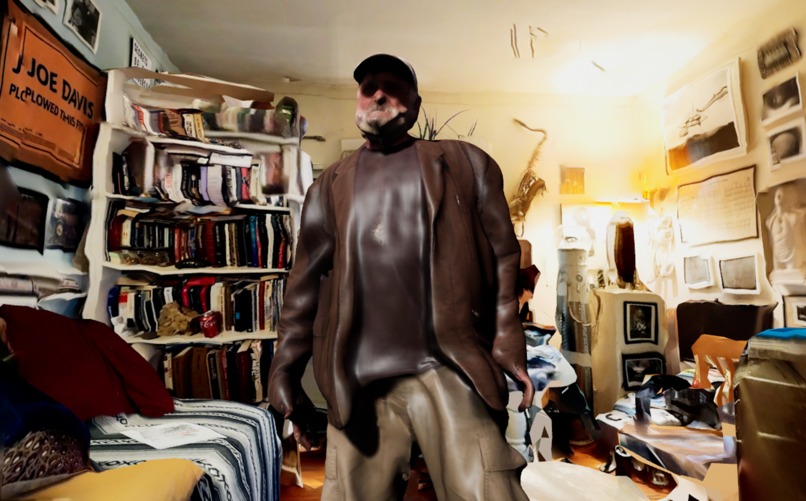
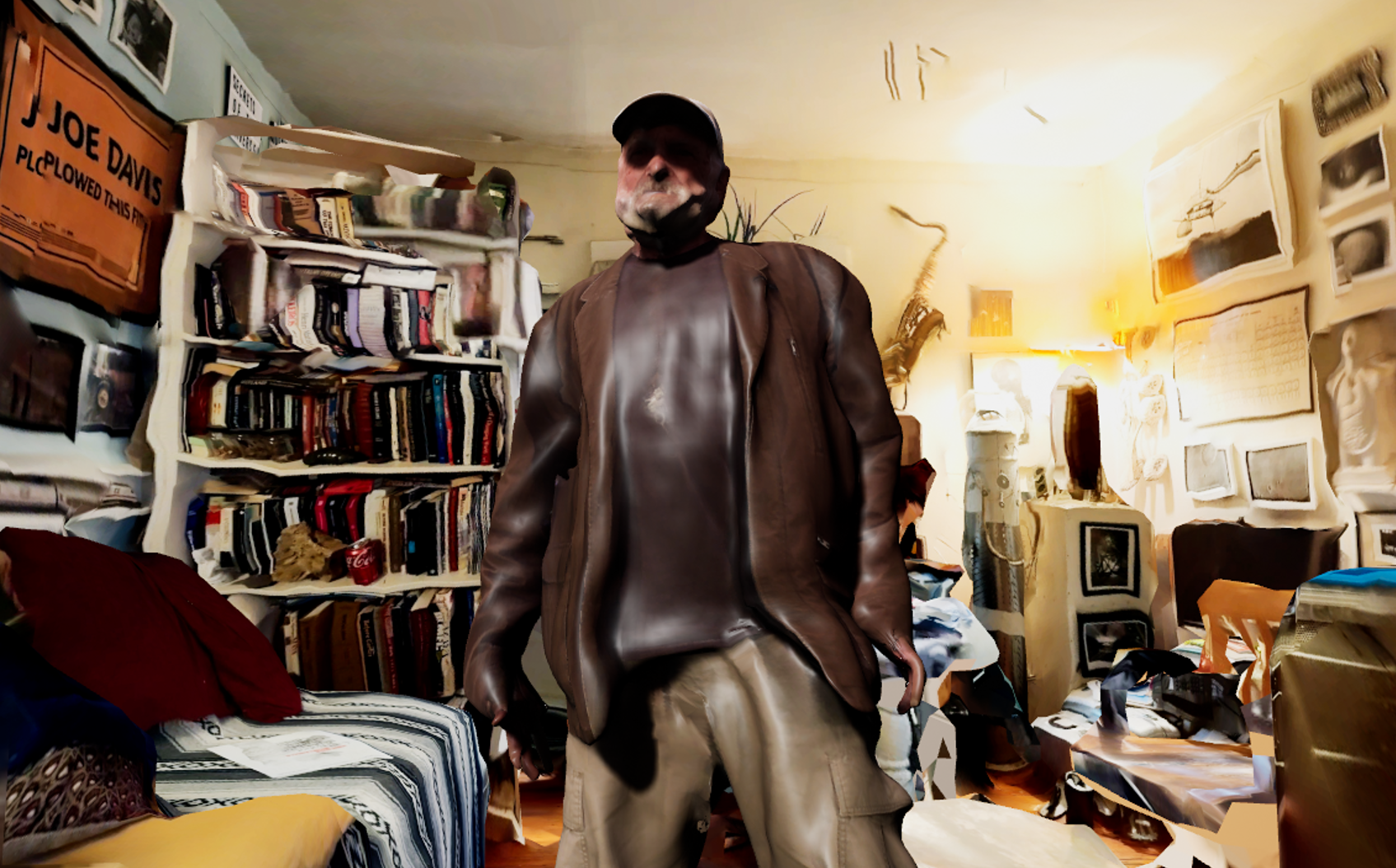
Joe Davis's Avatar
-
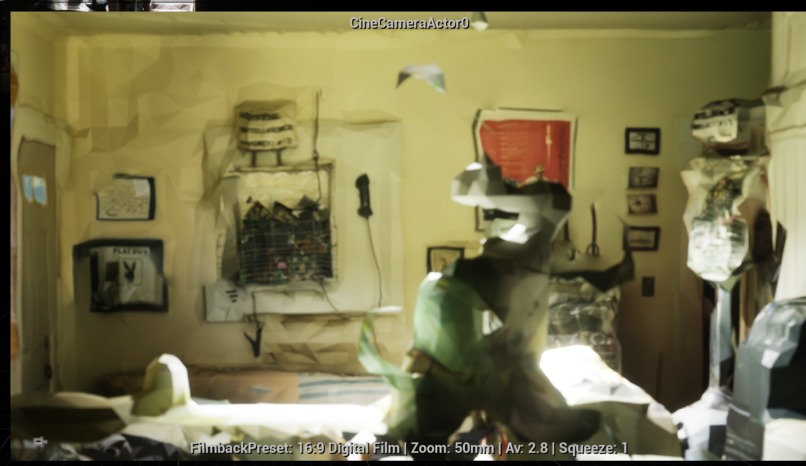
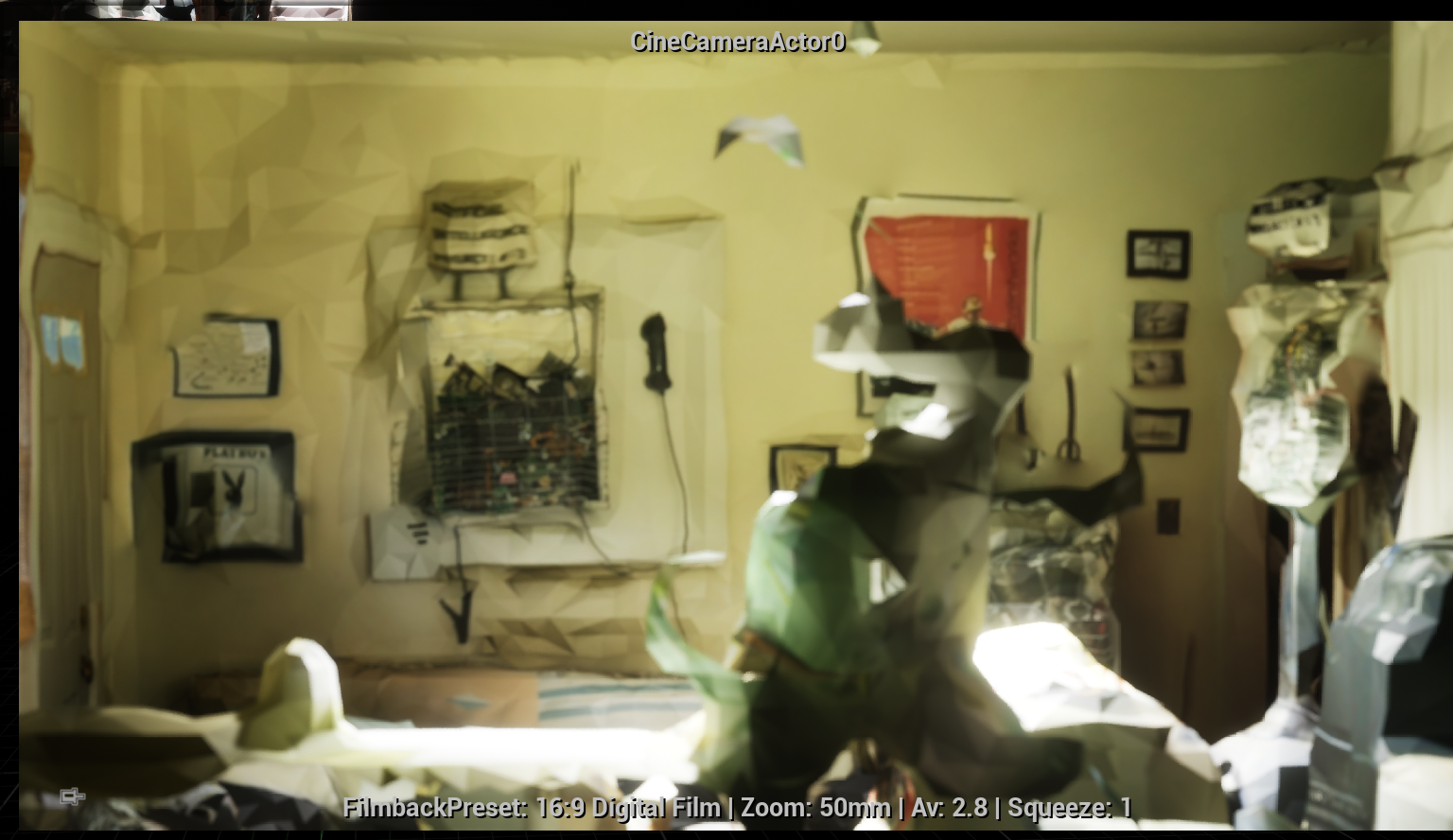
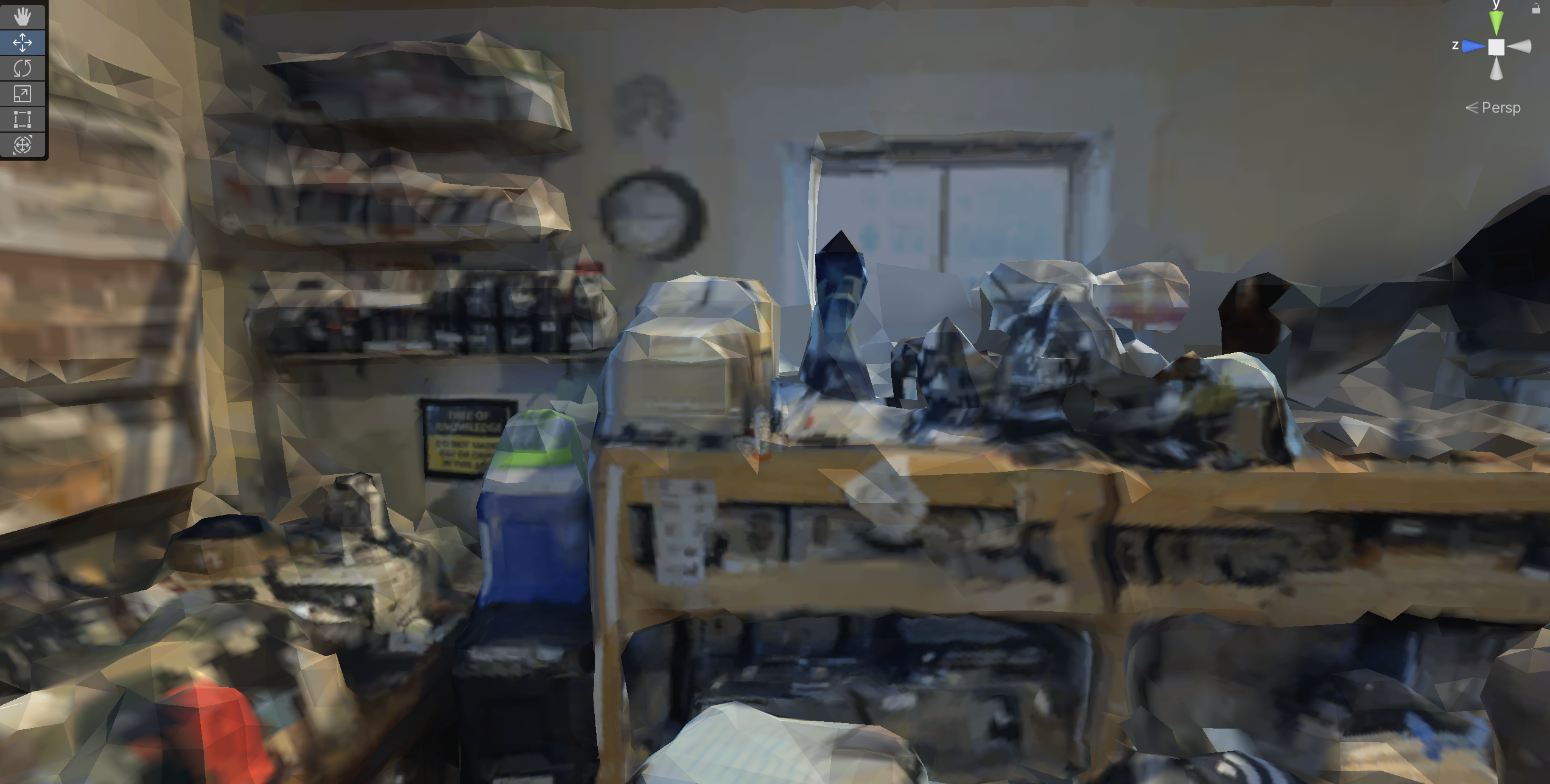
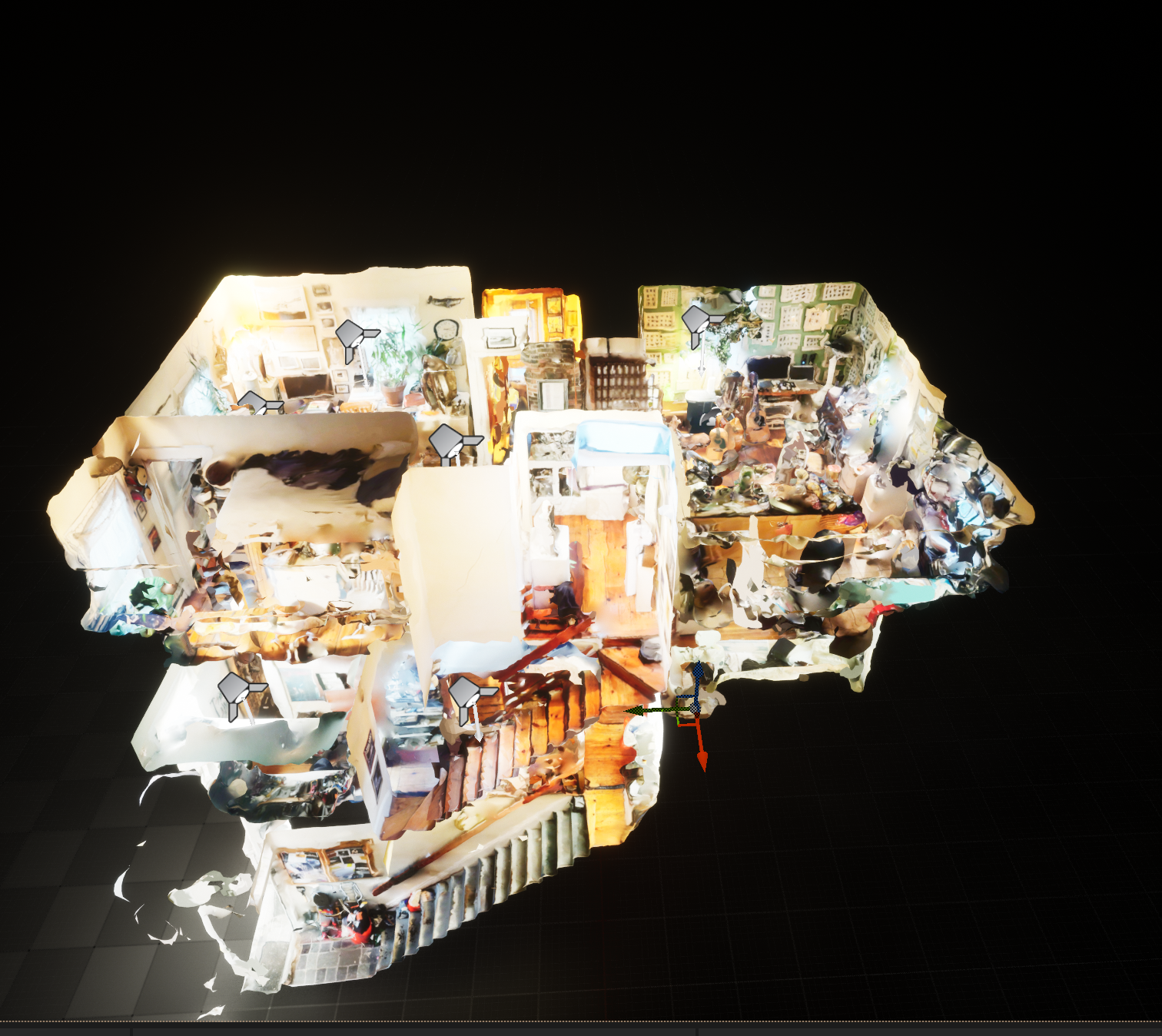
3d scan of Joe Davis's studio
-
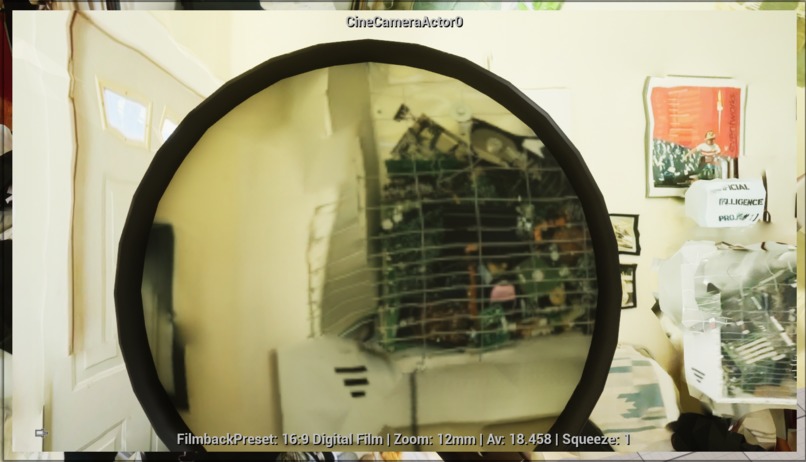
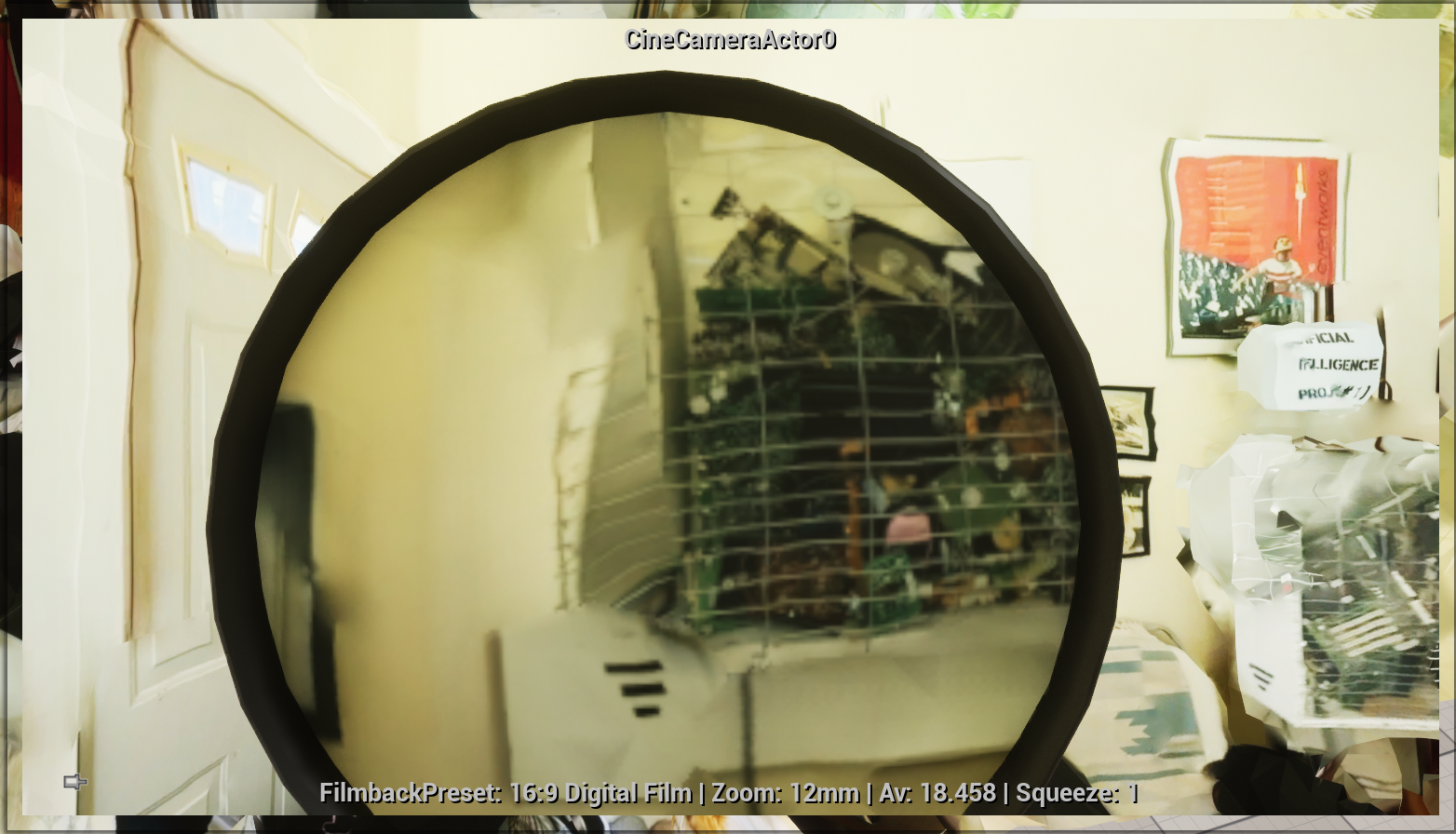
zoom in for low-vision people
-
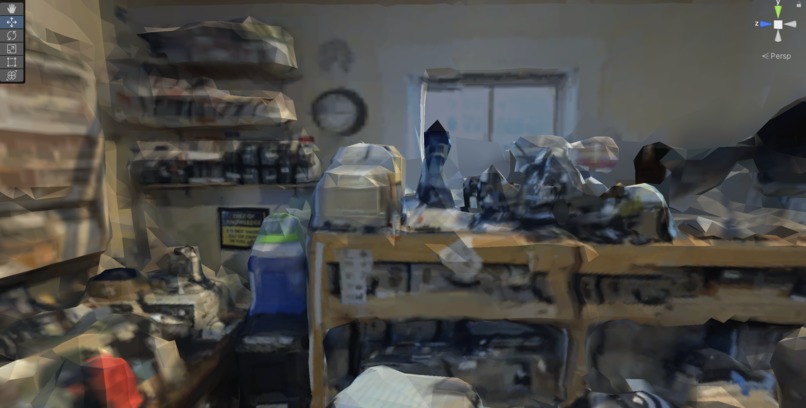
3d scan of Joe Davis's studio
-
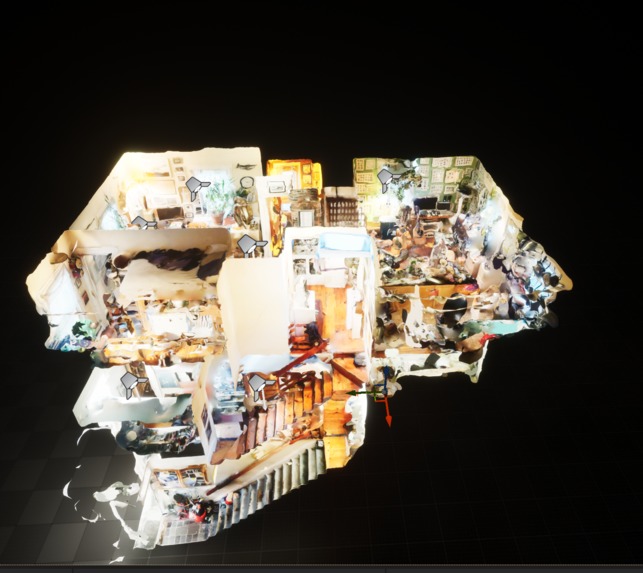
3d scan of Joe Davis's studio
-
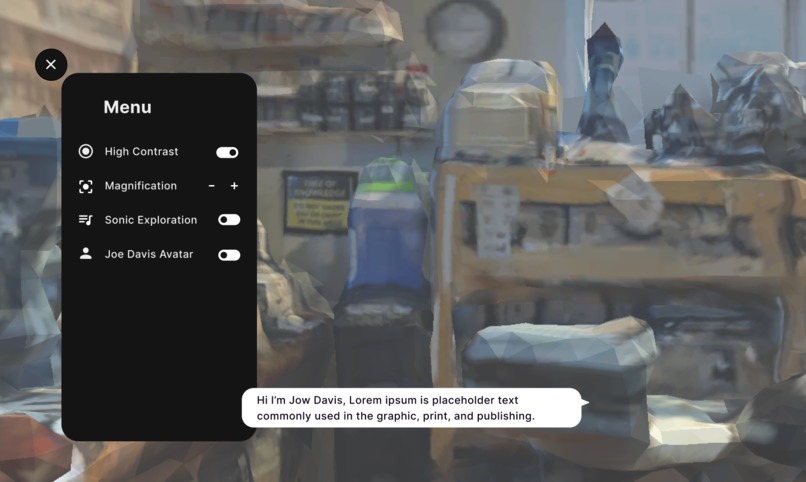
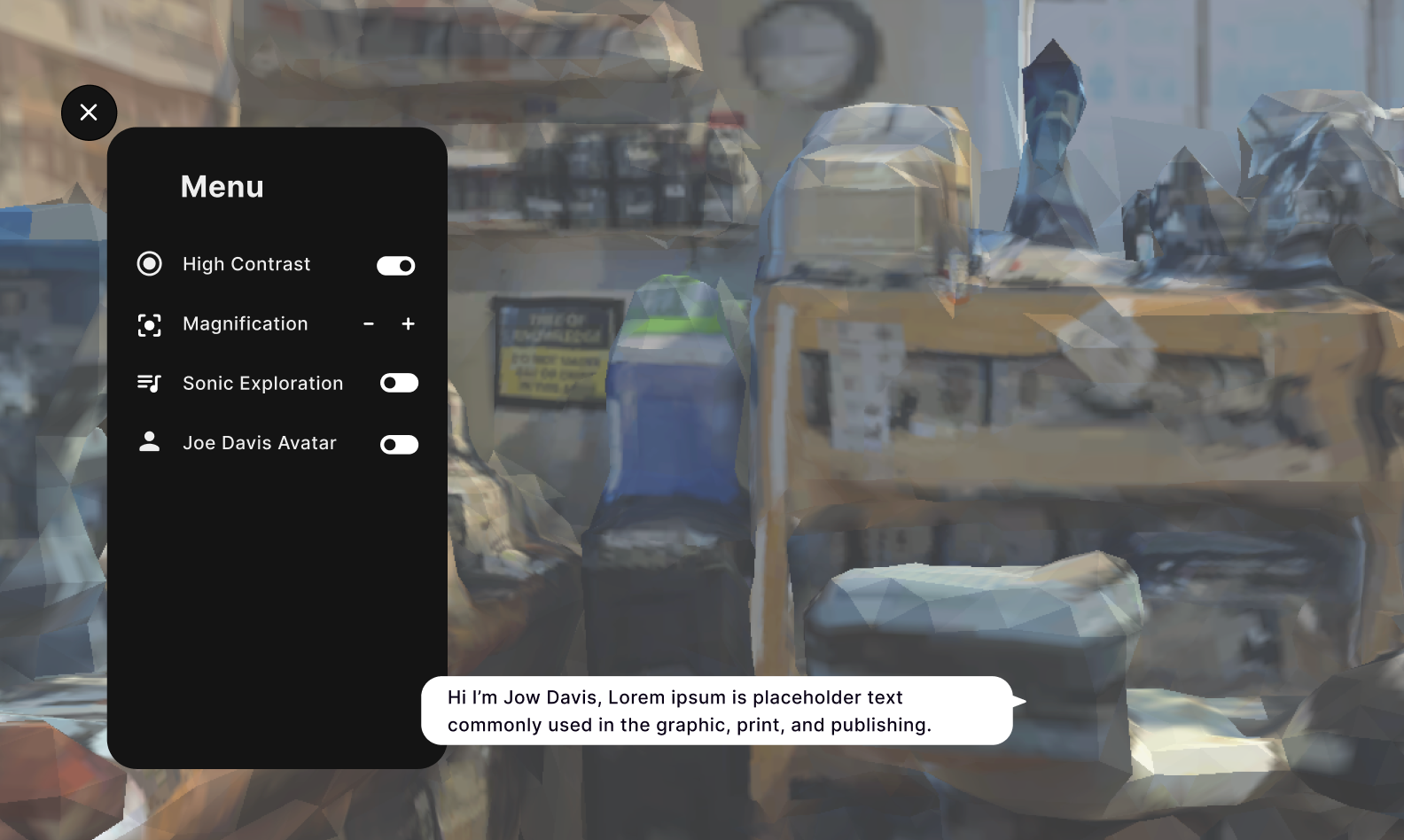
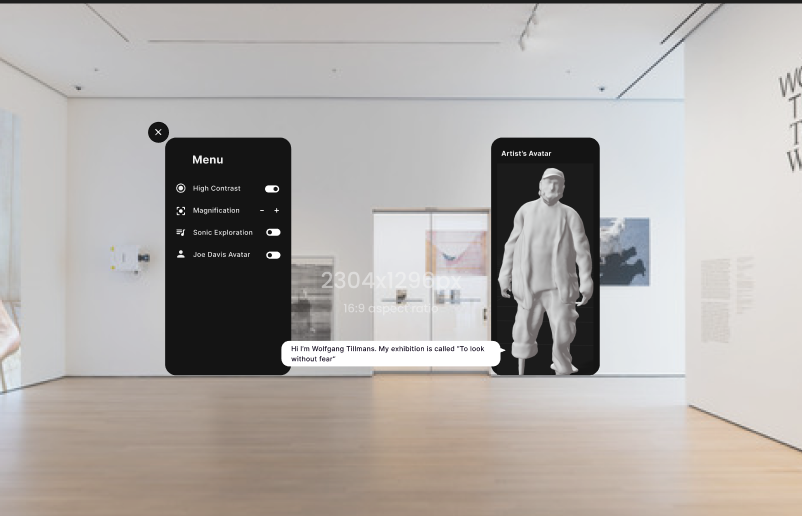
UI design
-
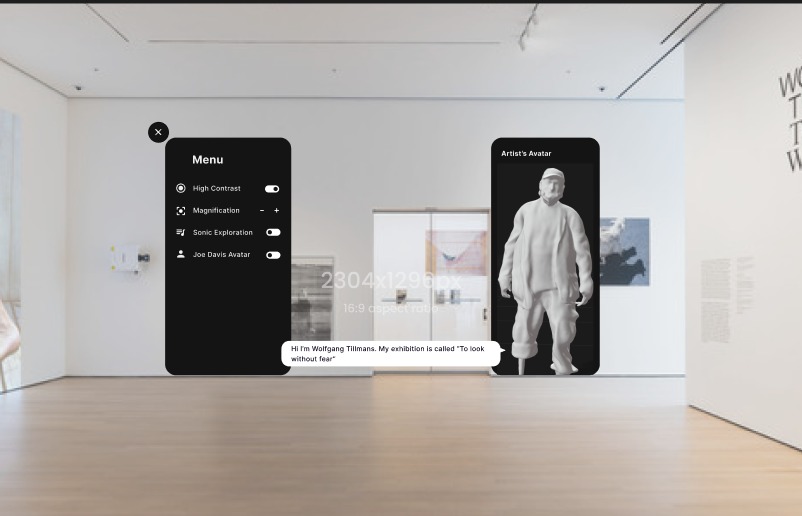
UI design
Inspiration
VR and MR today lack accessibility for people with disabilities due to their heavy reliance on visual content, limited customization for visual impairments, challenging environment navigation lack of sensory cues of spatial awareness, and insufficient alternative inputs like audio or haptic feedback. Additionally, there's a lack of established accessibility standards and guidelines.
What it does
As the visitor enters the VR environment they find themselves at the studio of Joe Davis’s House. They see an AI avatar of Joe Davis in front of them and the environment gives visual descriptions of the avatar and the studio. The visitor can interact with Joe Davis using speech and text by asking questions about bioart. The avatar replies in speech with subtitles. The Joe Davis Avatar then invites the visitor to tour his house. As users get close to the boundaries they get a synesthetic sonic experience near collision with boundaries objects. As the visitor explores the artist’s residence they can change the contrast by pressing the button on the left-hand controller, and use the magnifying glass for magnifying within the environment.
How we built it
Having access to Joe’s apartment we produced several volumetric scans and experimented with the real sense volumetric scanner. We used accuRIG to create, rig and animate Joe’s avatar and import it to Unreal Engine 5. After talking to Joe, reaching out to his closest friends, we gathered data about his personality that we later enriched with examples of work, his research papers, interviews and Wikipedia to create his virtual AI personality.
Challenges we ran into
The mindset and methods to approach art and accessibility are very different from each other. In a team that has designers and artists, we managed to build a project that incorporates two perspectives.
Accomplishments that we're proud of
We designed our way to approach the artist's work and the accessibility issue together in this project within limits.
What's next for RealAccess.VR
- Implement the accessibility tool for MR and AR.
- It could be a universal tool for museums and daily life.
Built With
- accurig
- quest3
- unreal-engine


Log in or sign up for Devpost to join the conversation.