-
-

Feel the ICON
-
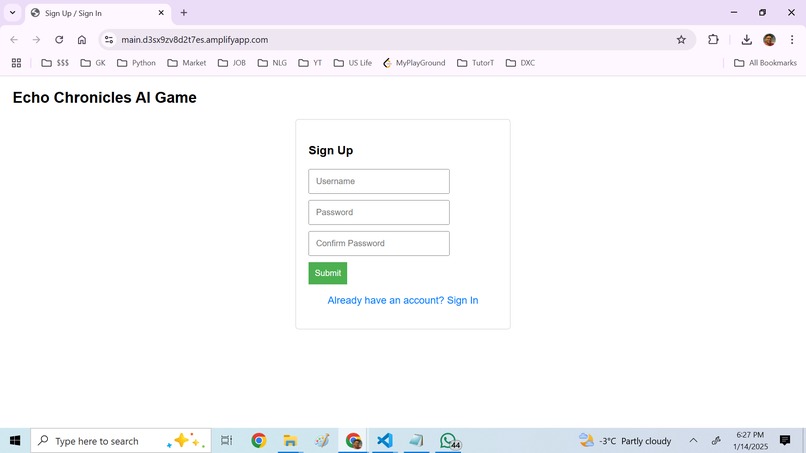
Sign up/Sign in
-
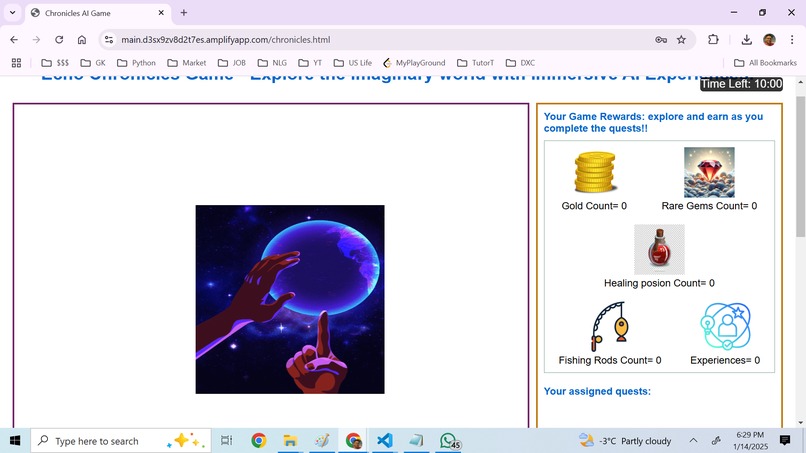
Please wait... Bedrock is working for you to create your world to explore.
-
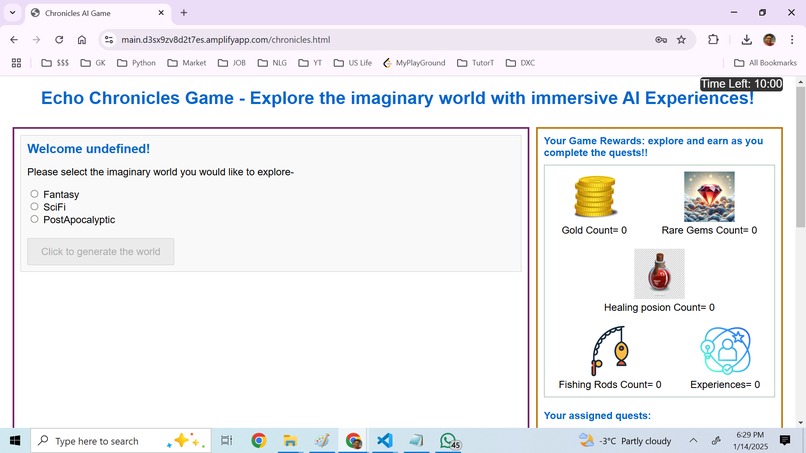
Select the categories of your interest.
-
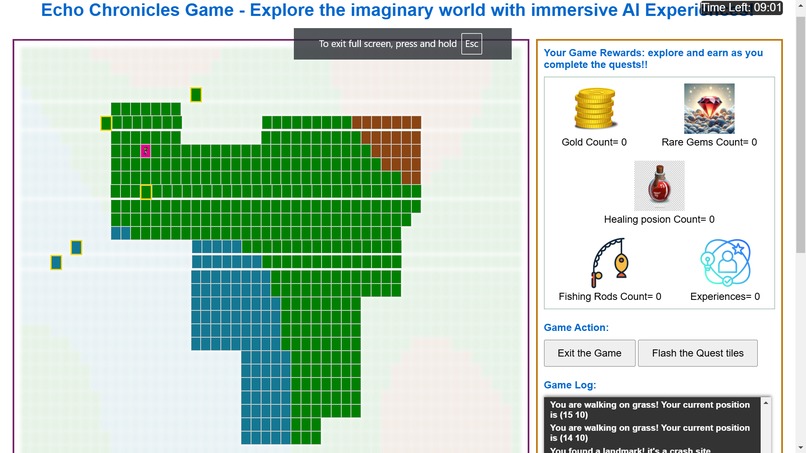
Focus on Game... it is in progress. Enjoy!

Inspiration
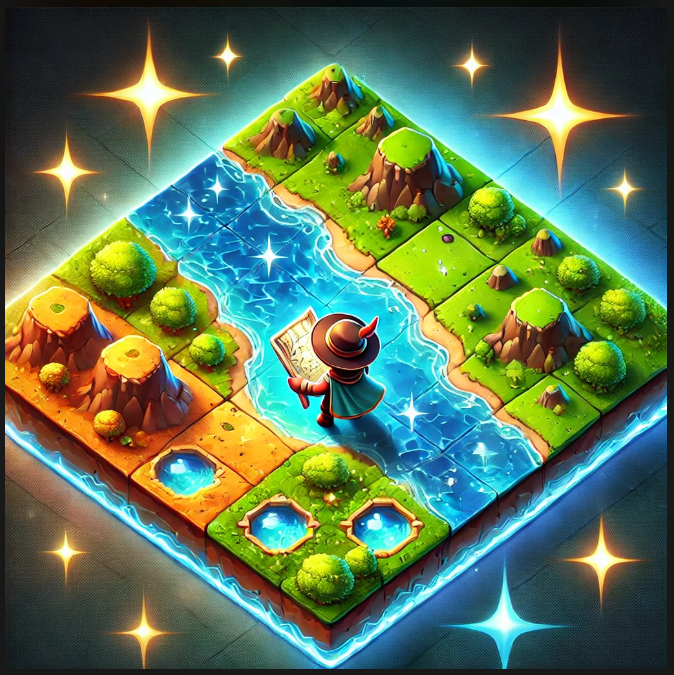
The inspiration for the Echo Chronicles game stems from the desire to merge advanced AI technologies with interactive gameplay. The idea is to create dynamic, procedurally generated worlds that adapt to players' choices and actions, offering unique experiences every time. By blending fantasy, sci-fi, and post-apocalyptic themes, the game seeks to captivate a broad audience with a mix of creativity, strategy, and engagement.
What it does
The Echo Chronicles game offers players an immersive, AI-driven adventure in procedurally generated worlds. Key features include:
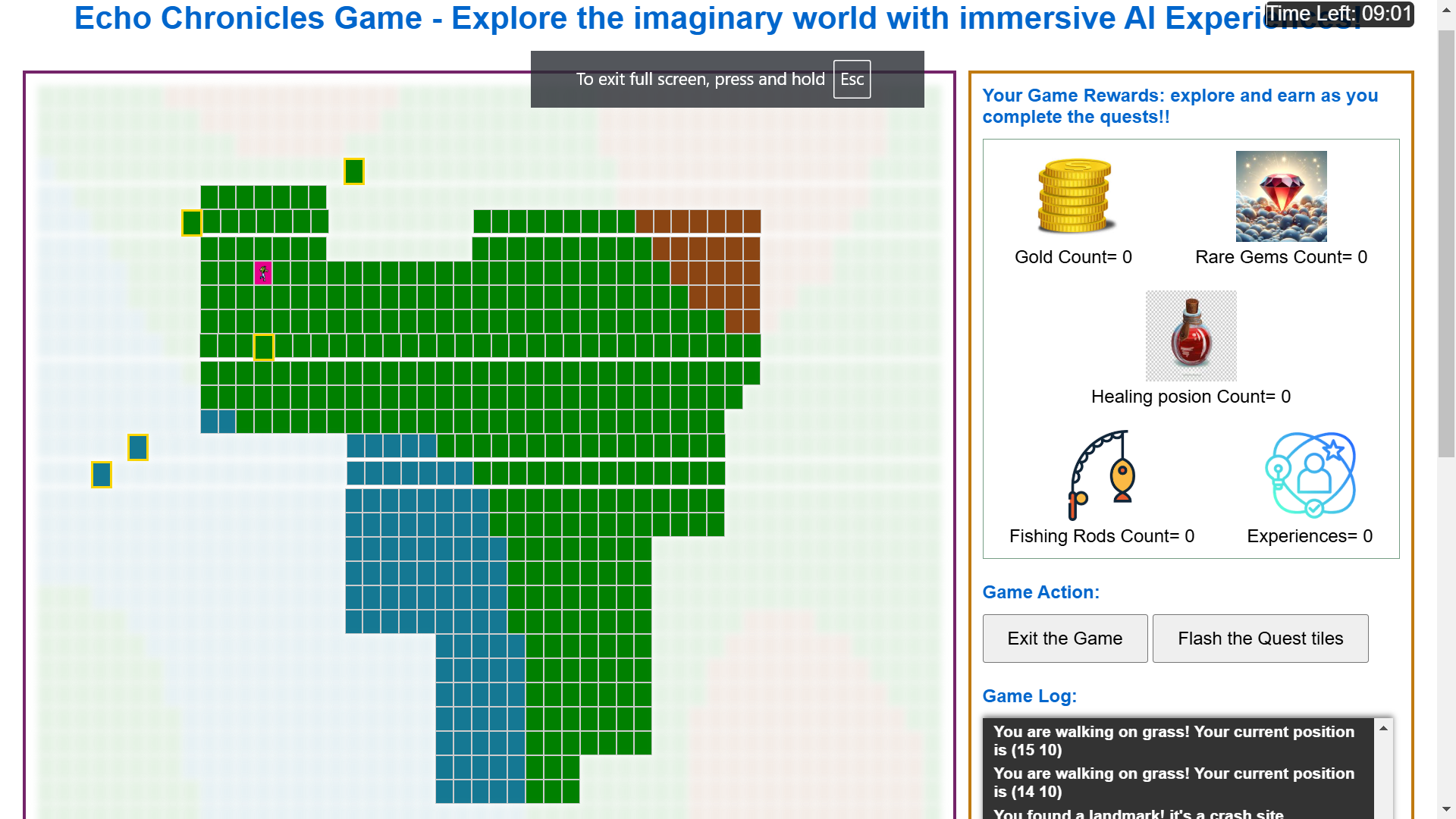
- Dynamic Terrain Generation: AI algorithms create unique terrains for each session, complete with landmarks, quests, and merchants.
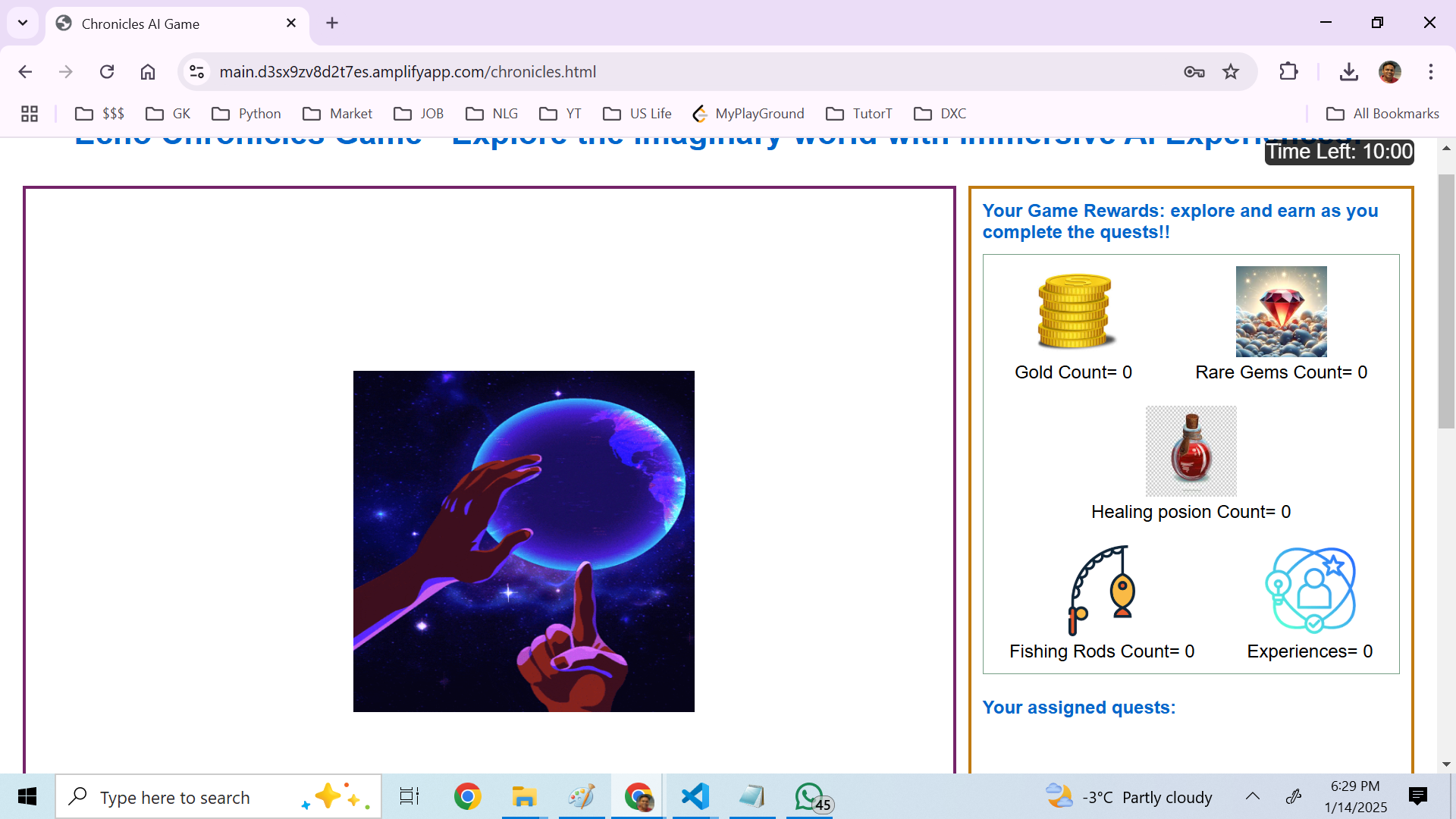
- Interactive Gameplay: Players explore these worlds, interact with NPCs, and complete quests for rewards like gold, items, and experience points.
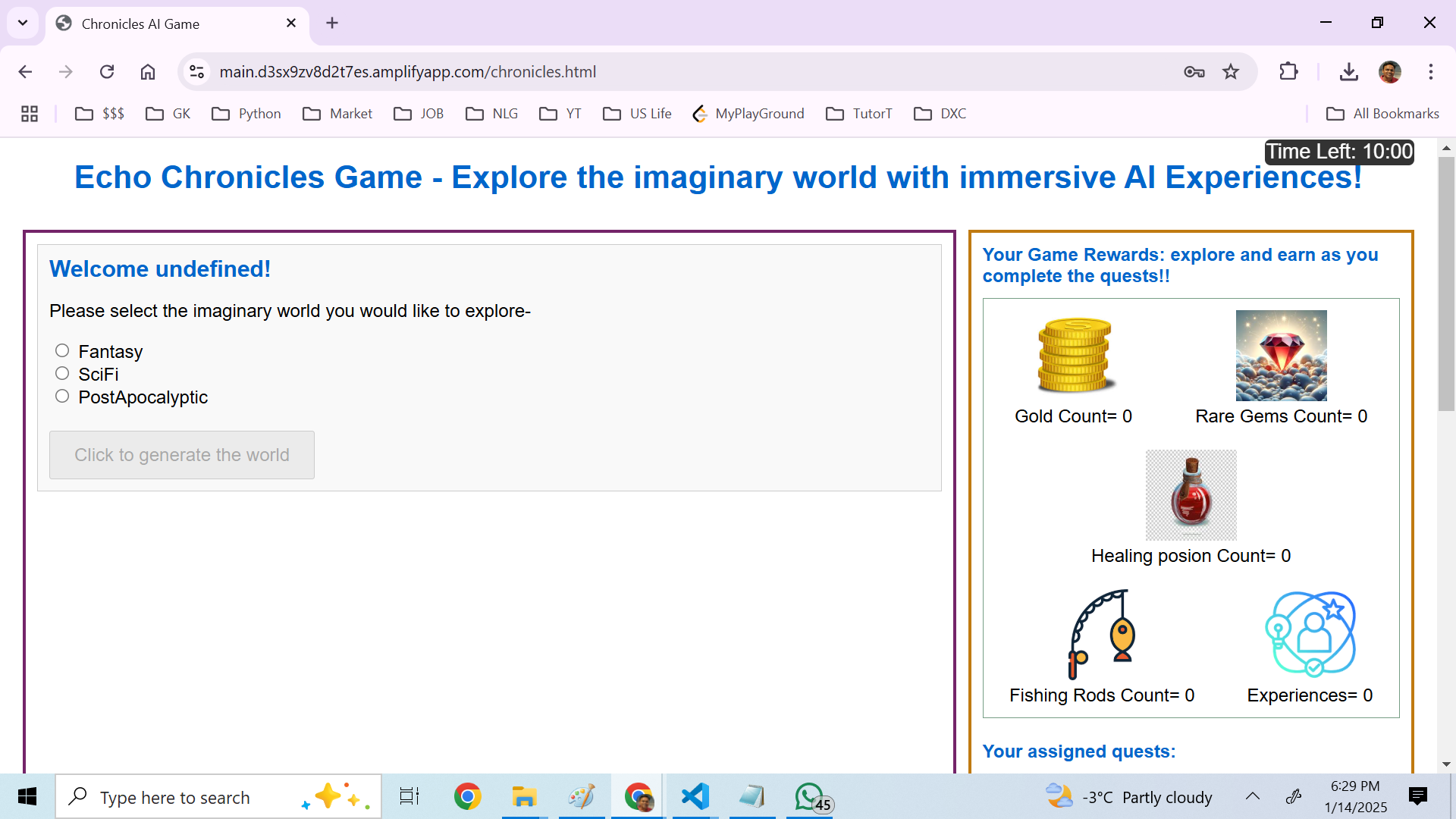
- Customizable Experiences: Players can select from three distinct world types: Fantasy, Sci-Fi, or Post-Apocalyptic.
- Strategic Exploration: Visibility is limited to nearby tiles, encouraging thoughtful navigation.
- Session Management: The game allows for saving progress and resuming later, ensuring continuity.
How we built it
The game integrates multiple technologies and platforms:
- Frontend: HTML, CSS, and JavaScript (with jQuery) for the user interface, providing responsive terrain visualization and real-time updates for player actions.
- Backend: AWS Lambda functions written in JavaScript power the backend, handling terrain generation, state management, and quest assignment.
- AI Integration: AWS Bedrock AI generates terrain and dynamic content like landmarks and quests.
- Database Management: DynamoDB stores game states and player progress, ensuring persistent gameplay.
- Development Tools: AWS SDK, the Simplex Noise library for procedural terrain, and the Serverless Framework for seamless backend deployment.
Challenges we ran into
- Balancing AI Terrain Generation: Ensuring that terrains generated by AI are both diverse and logical required careful tuning of parameters and algorithms.
- Seamless Frontend-Backend Integration: Maintaining smooth communication between the client interface and backend services presented challenges, especially for real-time updates.
- Persistent Game States: Implementing reliable save and resume functionality demanded robust data handling in DynamoDB.
- Dynamic Quests and Interactions: Designing a system where quests adapt to the terrain and player actions added complexity.
Accomplishments that we're proud of
- Successfully implementing AI-driven dynamic terrain generation.
- Creating an engaging gameplay loop with quests, merchants, and rewards.
- Building a scalable architecture using AWS services, enabling potential multiplayer features.
- Designing an intuitive interface that blends functionality with aesthetics.
- Ensuring persistent game states that allow players to pause and resume seamlessly.
What we learned
- The potential of AI in procedural content generation, and the challenges of integrating such systems into interactive applications.
- Efficient use of AWS services like Lambda and DynamoDB for real-time applications.
- Techniques for balancing game mechanics to ensure fairness and engagement across different player styles.
- Strategies for handling data flow between frontend and backend to create a responsive gaming experience.
What's next for Echo Chronicles
- Multiplayer Functionality: Expanding the game to support cooperative or competitive multiplayer modes.
- Enhanced AI: Incorporating more sophisticated AI models for dynamic storytelling and character interactions.
- Additional Themes: Adding more world types or allowing custom themes based on player preferences.
- Expanded Quest Systems: Introducing complex quests with branching narratives and higher stakes.
- Mobile Optimization: Adapting the game for mobile platforms to reach a wider audience.
- Community Features: Enabling players to share terrains or collaborate on quests.
- Game Analytics Pipeline: It would bring significant benefits by leveraging data insights to improve gameplay, player engagement, and overall game performance. Here’s an in-depth look at its advantages. We will use GLUE Zero-ETL Integration services for Chronical game database to database integration.
Built With
- amazon-web-services
- aws-lambda
- aws-sdk
- bedrock-ai
- css
- dynamodb
- express.js-?-development-tools:-aws-sdk
- html
- javascript-(es6+)
- jquery-?-backend:-aws-lambda
- s3
- serverless
- signin/signup
- simplex-noise-library
- visual-studio


Log in or sign up for Devpost to join the conversation.