-
-
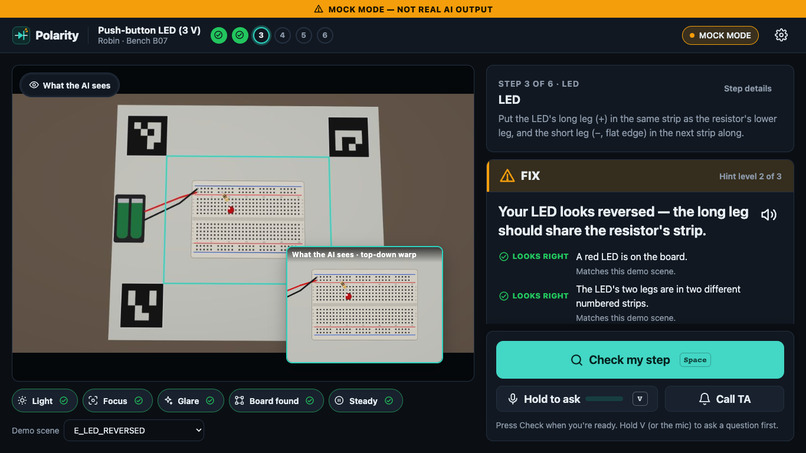
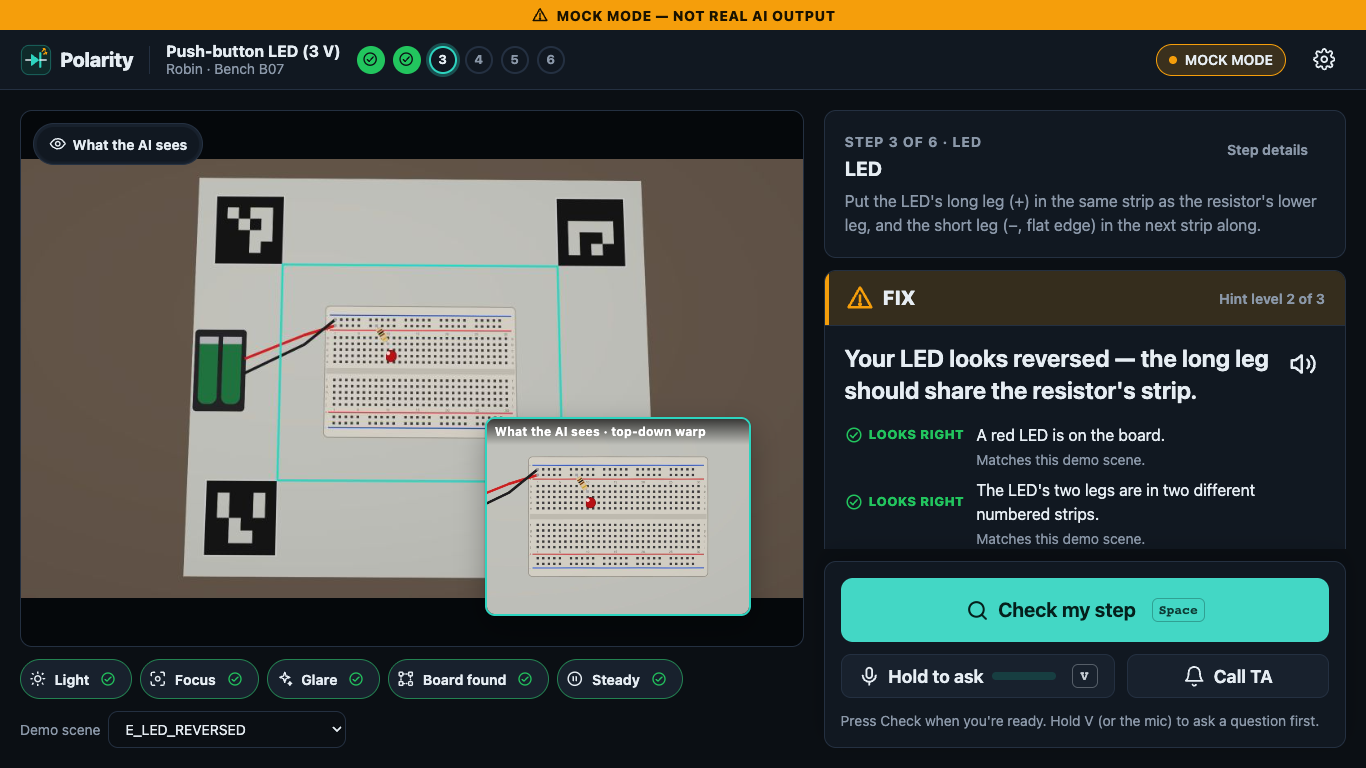
Our bench demo
-
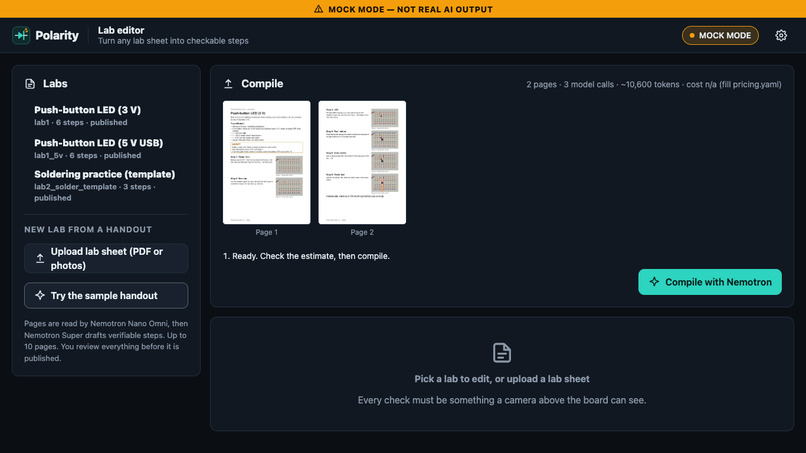
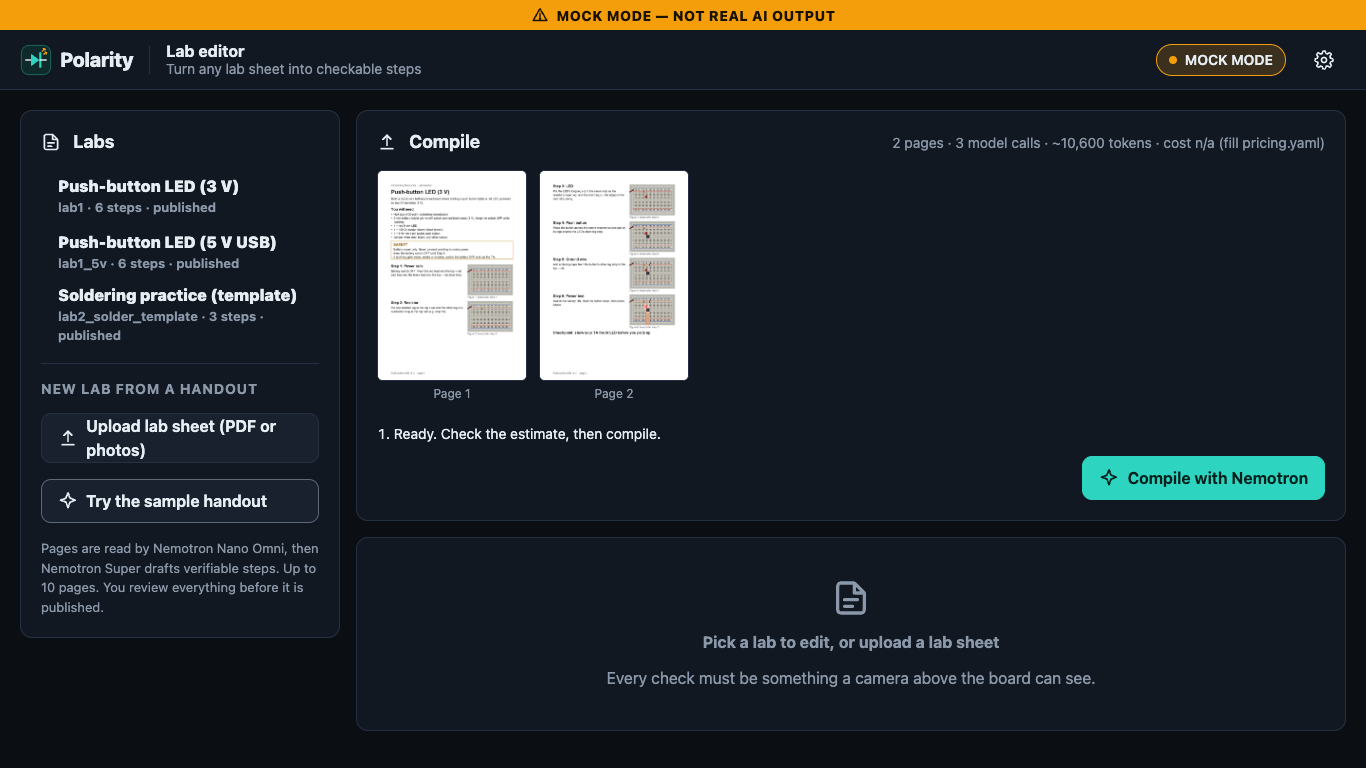
The editor demo
-
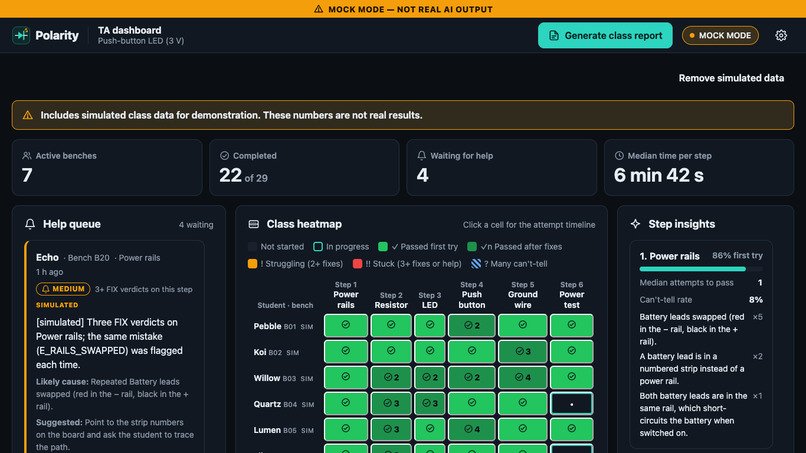
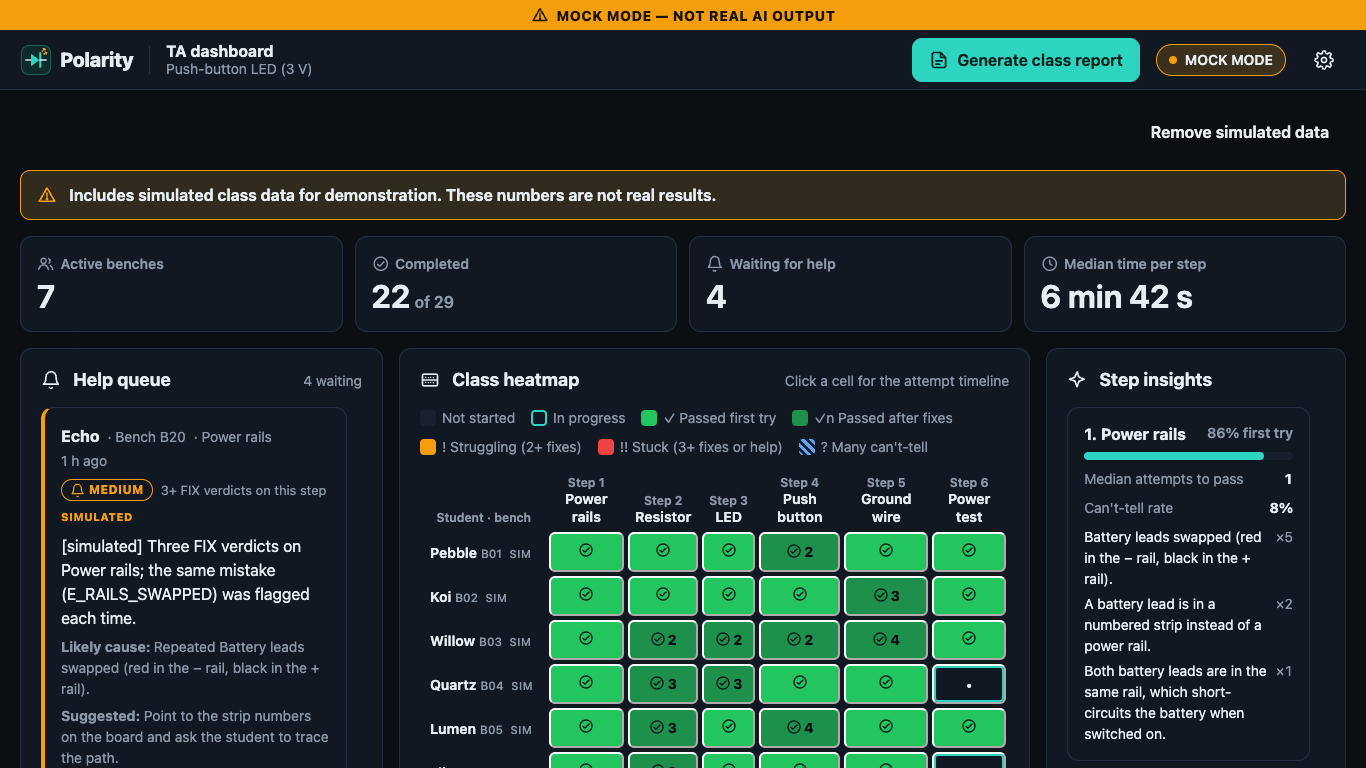
What the TA will see
-
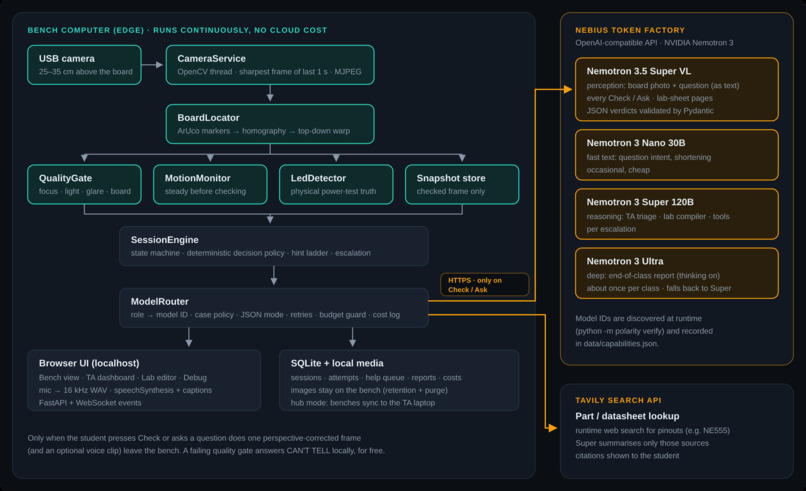
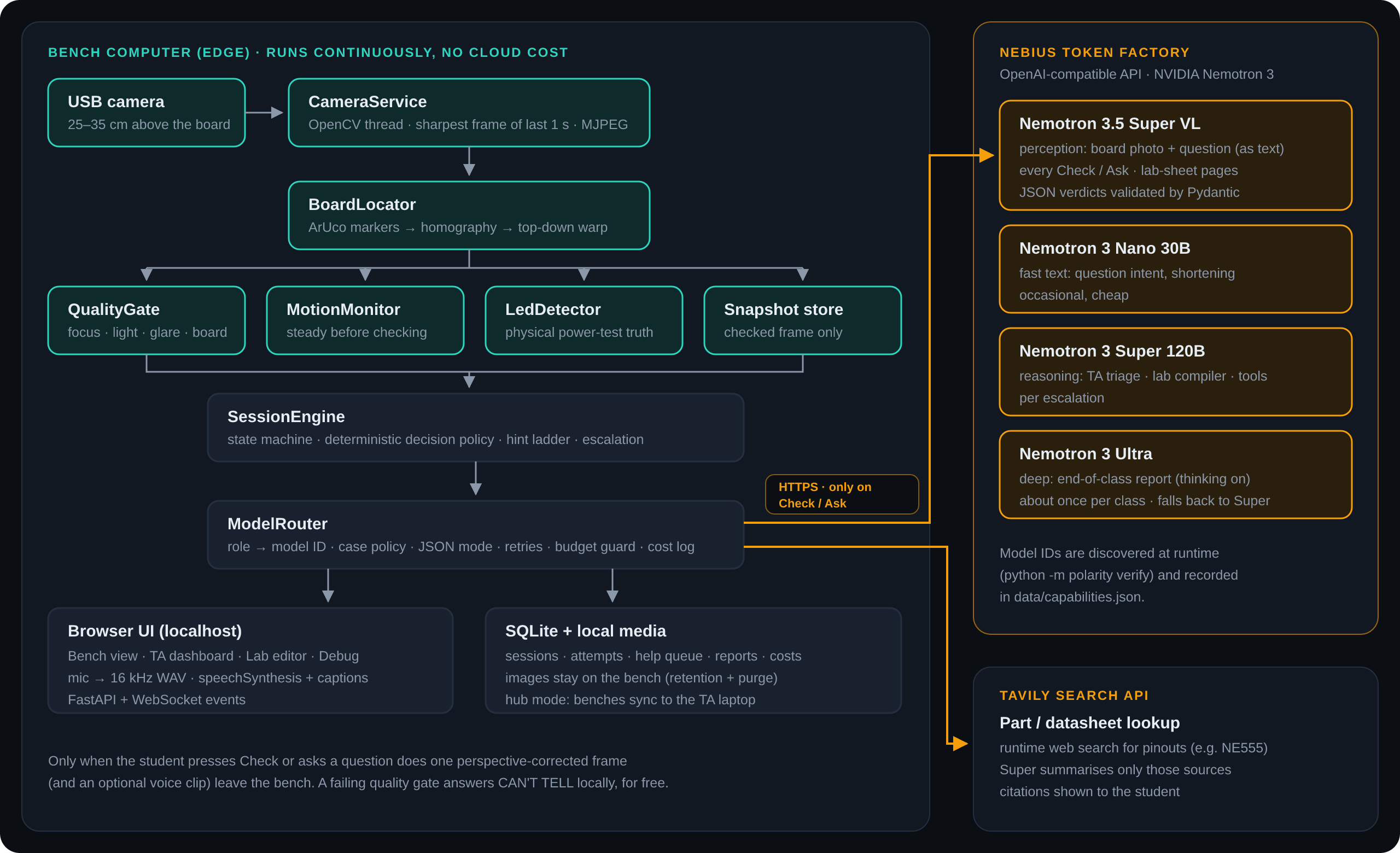
The architecture
Inspiration
Our inspiration for PoLARRYt, or formally, Polarity was mainly from my idea. As I was tinkering with electronics, I came to the idea of an AI assistant that could view and guide my work while I was self-studying Arduino basics like how to wire up a circuit. As a complete beginner, it definitely can feel very daunting when being faced with an Arduino or ESP32 with 15 different pins, a breadboard with hundreds of tiny holes, very tiny written labels and manuals that give you the bare information on which wire goes to which pin socket or to which breadboard hole. So the idea of Polarity came to be. But of course, our product cannot simply just target myself, we decided to expand Polarity's use cases outwards to include Y1 Electronic Engineering students picking up a Digital Logic module or another module of that equivalence.
What it does
Checks each step, not just the end result. A camera above the breadboard and a deterministic state machine walk the student through the lab one step at a time. A Nemotron vision model returns schema-validated judgments per check; code, not the model, decides PASS / FIX / CAN'T TELL.
Says "I can't tell" honestly. An on-device quality gate (focus, light, glare, board found, steadiness) answers before any cloud call. The model must mark checks not_visible instead of guessing, and a second, closer look runs when confidence is borderline. A CAN'T TELL always comes with one specific retake instruction.
Teaches instead of telling. Feedback follows a hint ladder (where to look → what is wrong → exact fix), spoken aloud with captions always on screen. Students can hold V and ask a question about the step.
** It trusts physics for the power test.** At power-on an on-device LED detector compares the board with a baseline frame. A dark LED cannot be talked into a pass.
Shows the TA where the class is stuck. A live dashboard with a help queue (each request summarised by Nemotron Super), a steps × students heatmap, step insights and an end-of-class report from Nemotron Ultra. TAs can also turn any lab handout into checkable steps with the lab compiler.
How we built it
Polarity is one Python process per bench: a FastAPI server, a camera thread, an edge-monitor thread and a browser UI on localhost. Perception that can run on the bench runs continuously and for free. The cloud (Nebius Token Factory) is called only when a student presses Check or asks a question, and only after the on-device quality gate has accepted the image. We also incorporate NVIDIA's open source Nemotron models to help reason the expected output. Balancing cheaper and fast models to handle frequent calls to and from Nebius Token Factory while using heavier models for deep reasoning and thinking.
Challenges we ran into
- Finer details are harder to view from above. A definitive challenge we faced was that the model would throw us back a "double-check this yourself" instead of a confident verdict. This can be attributed to the quality of the webcam and just how small the holes on the breadboard or components are.
- Timing. We entered in late, only having less than a month to work on the idea itself.
Accomplishments that we're proud of
We are definitely proud of being able to successful produce a working product with a time limitation.
What we learned
We have learned how to use NVIDIA's open source models and Nebius's Token factory in tandem with our project. We also learned how to effectively use Nebius's Token Factory to accelerate our workflow.
What's next for Polarity
What's next for Polarity is definitely to increase its provided Lab materials and its training data capabilities so as to improve its reliability.
Built With
- batchfile
- css
- html
- javascript
- nebiustokenfactory
- nemotron
- powershell
- python
- shell
