-
-
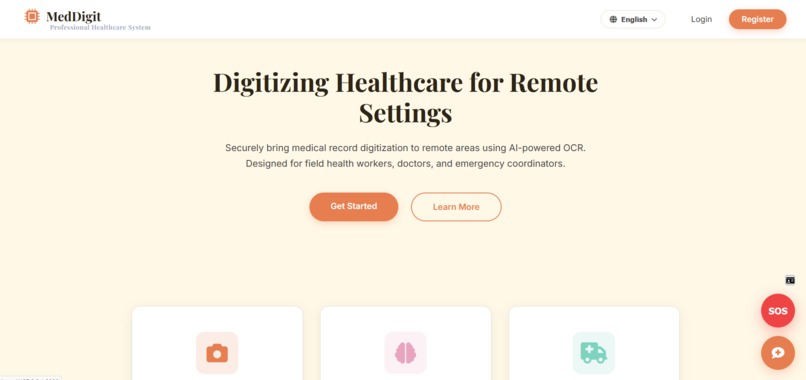
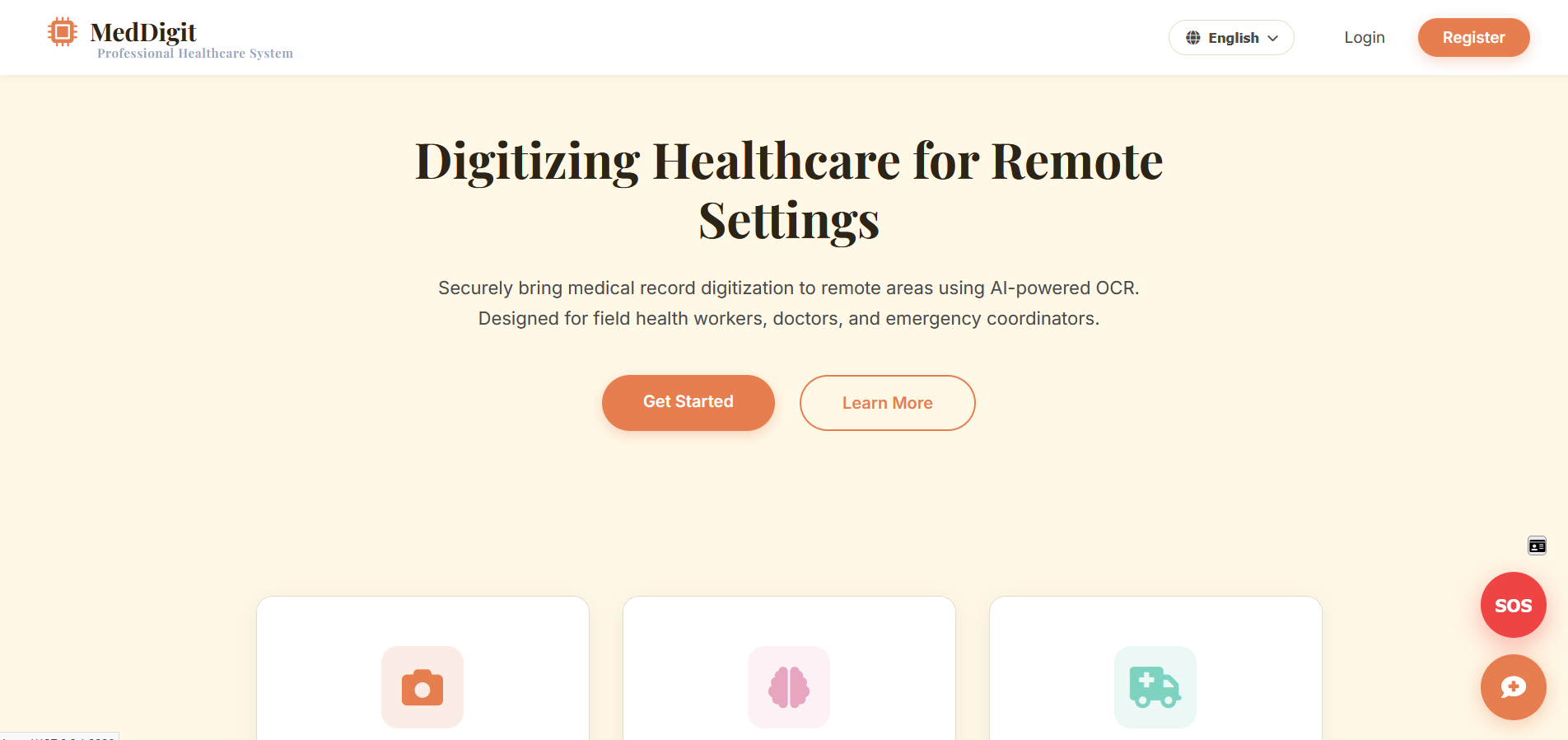
home page,register doctors,patients,healthcare workers,umbulance drivers.it will ask email otp verificationsmtp protocols and auth login
-
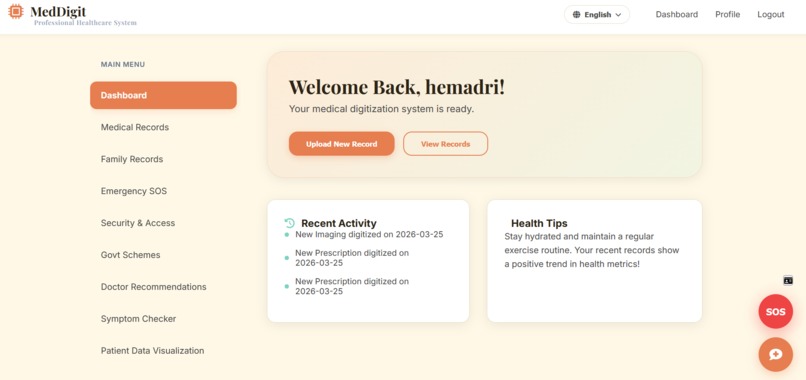
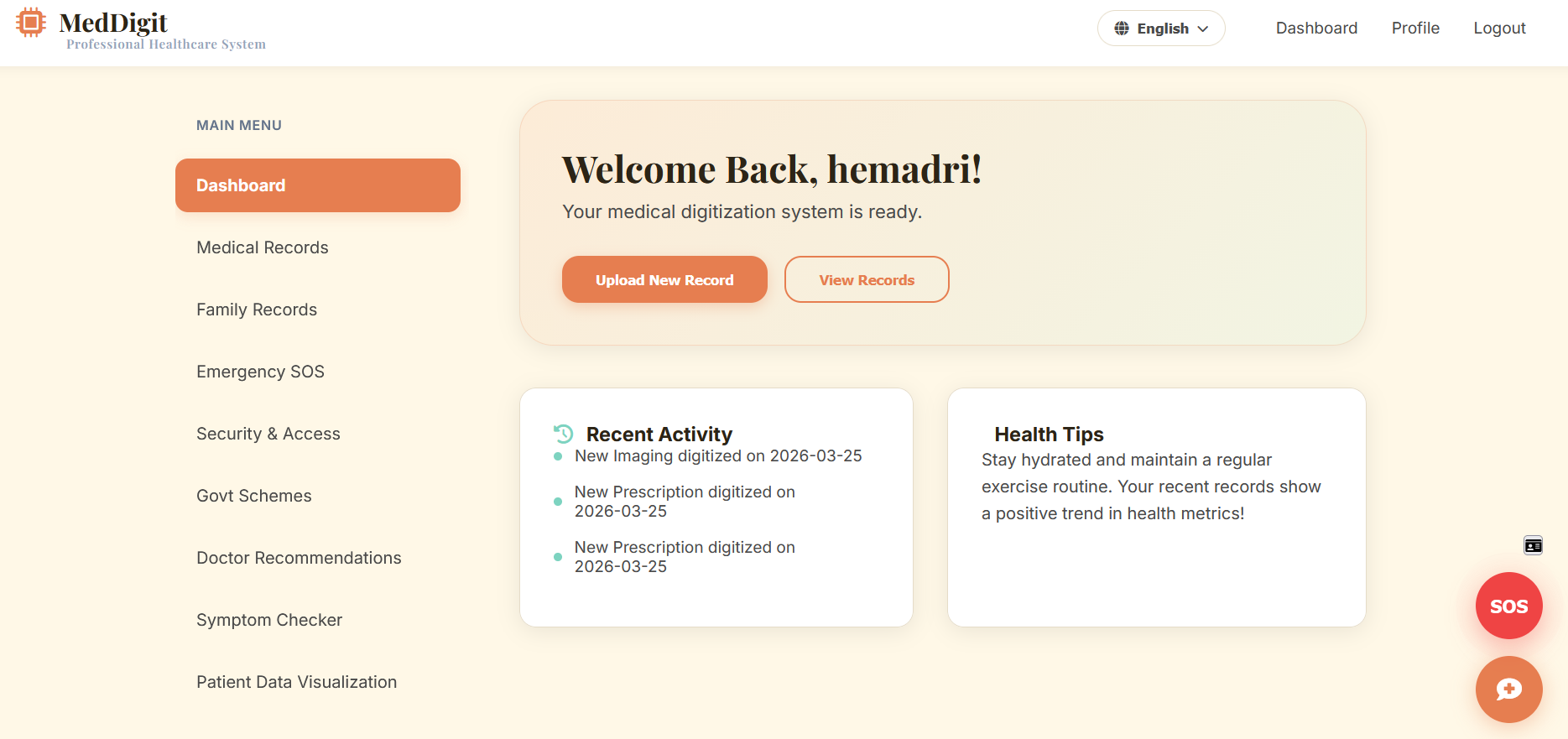
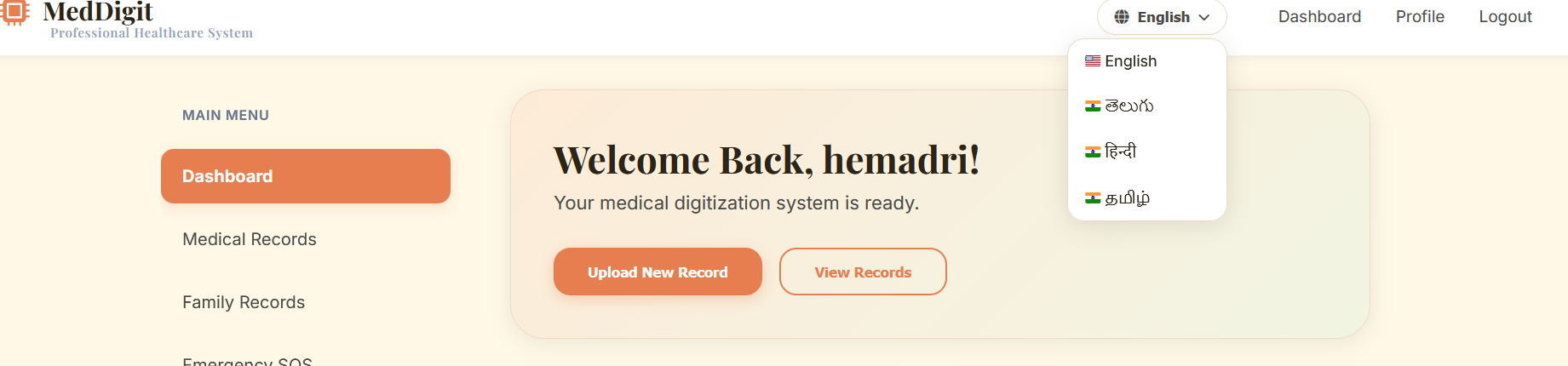
patient dashbord with multi language support
-
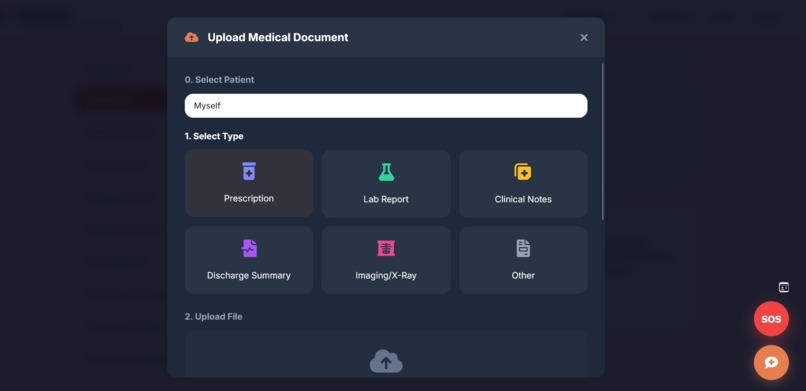
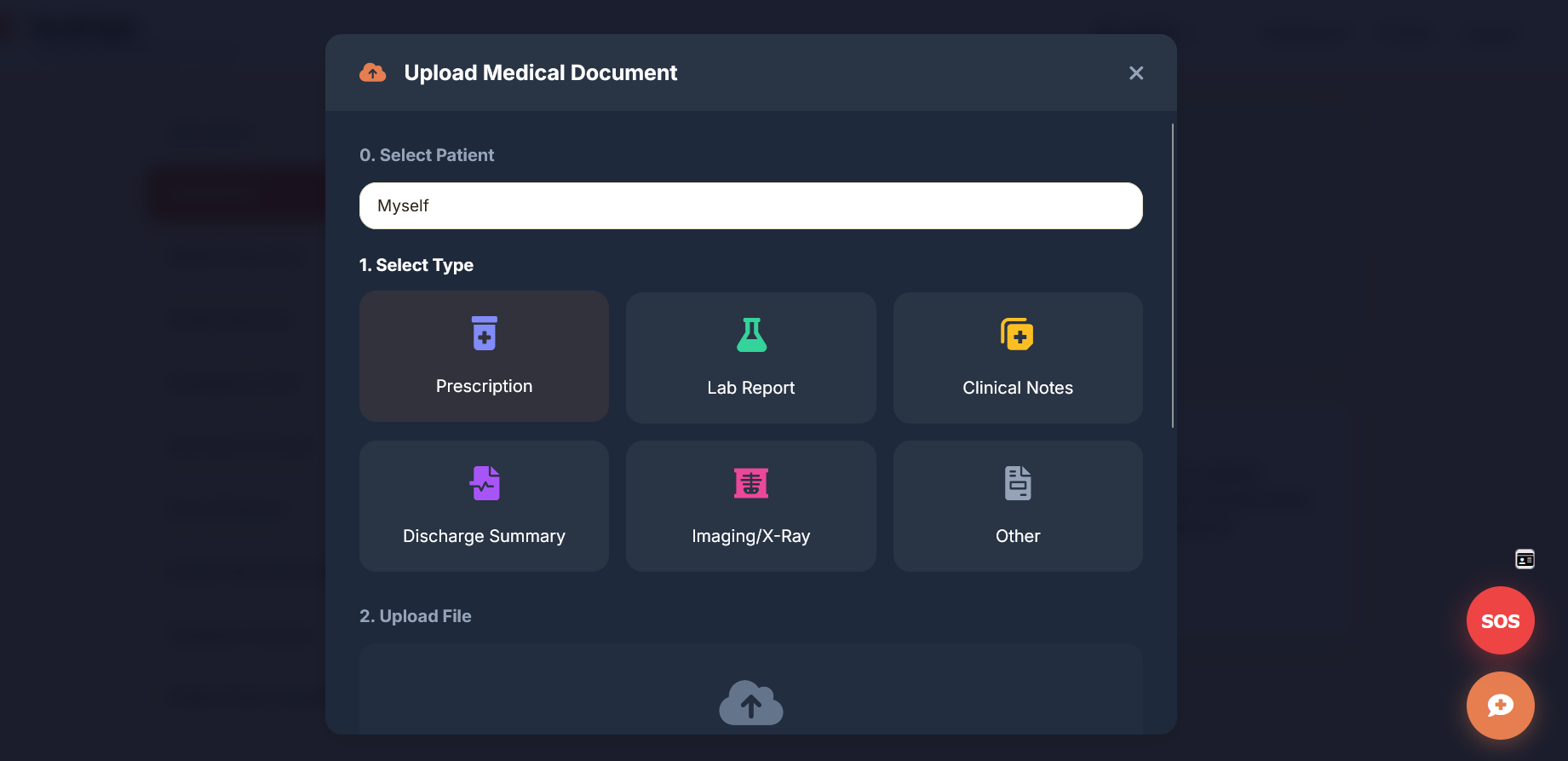
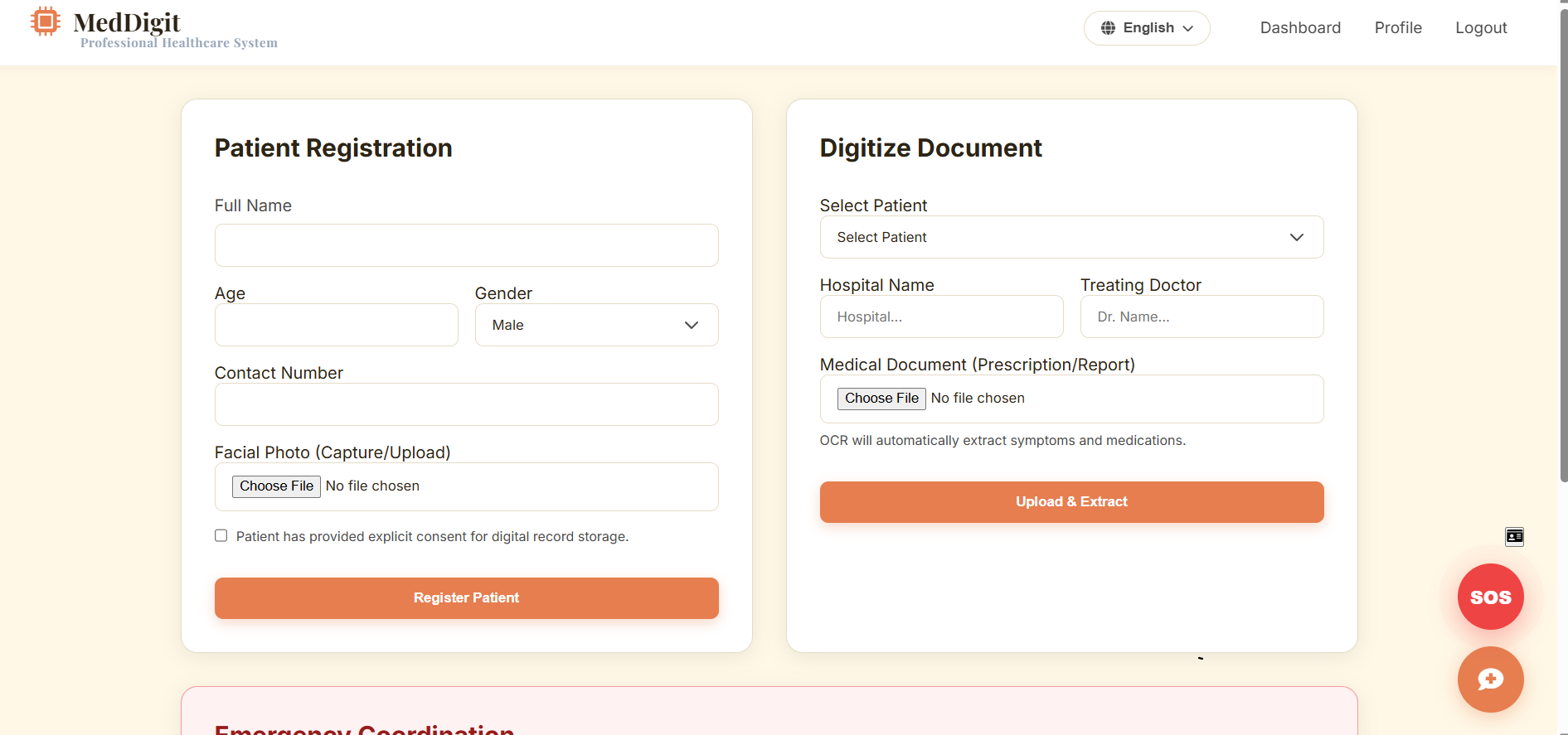
to upload medical reecords
-
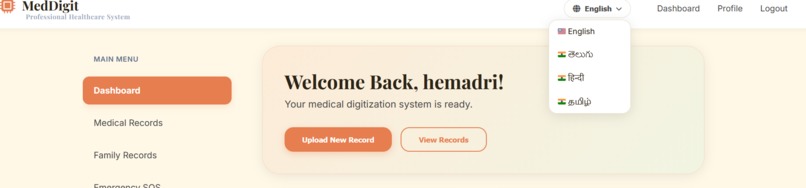
multi language support
-
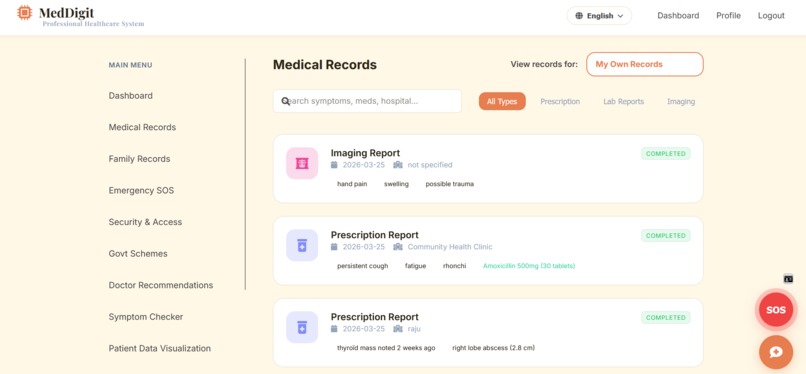
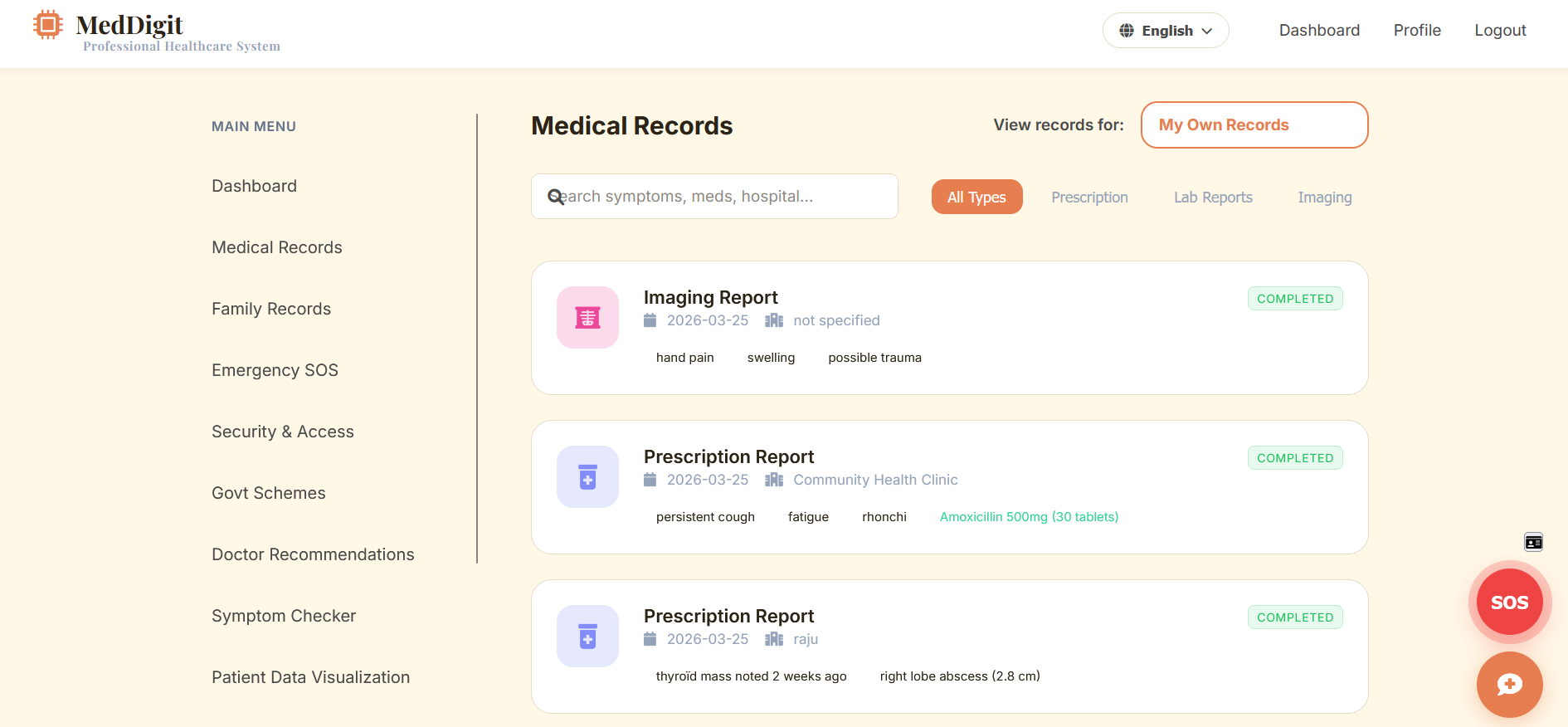
view stored records with ai summarization
-
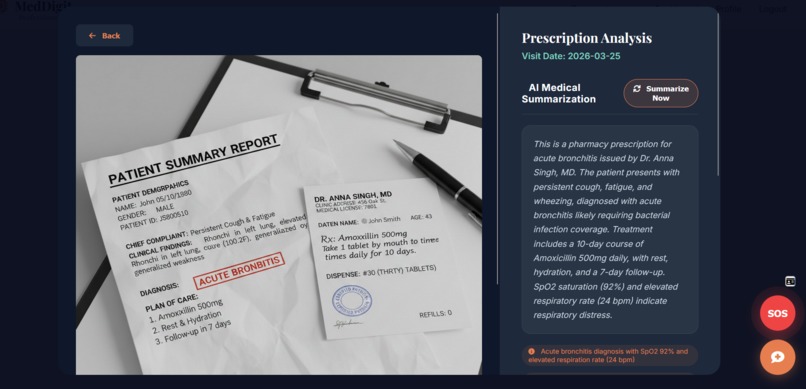
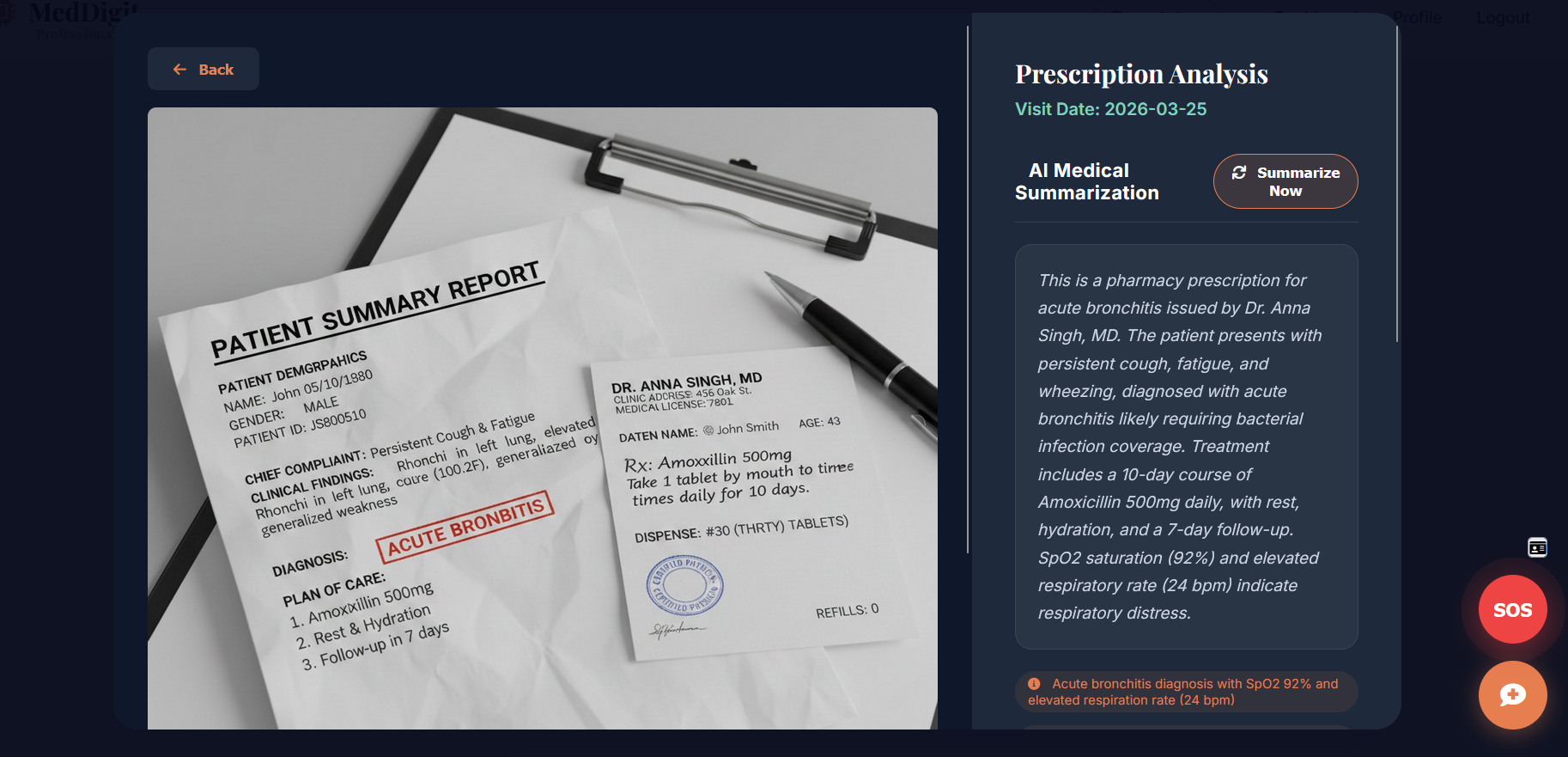
medical recors after uploading ai summarization
-
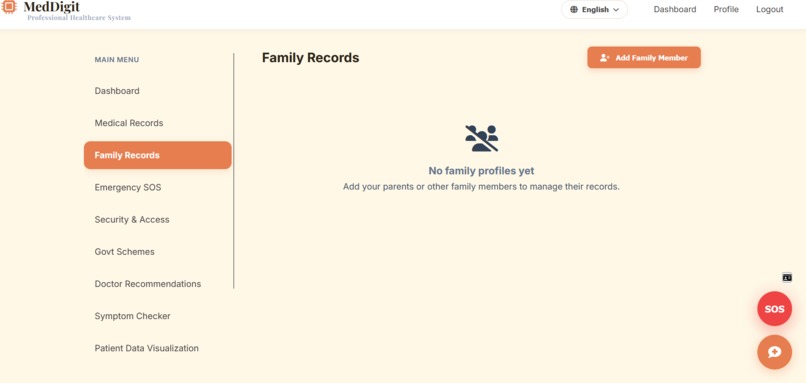
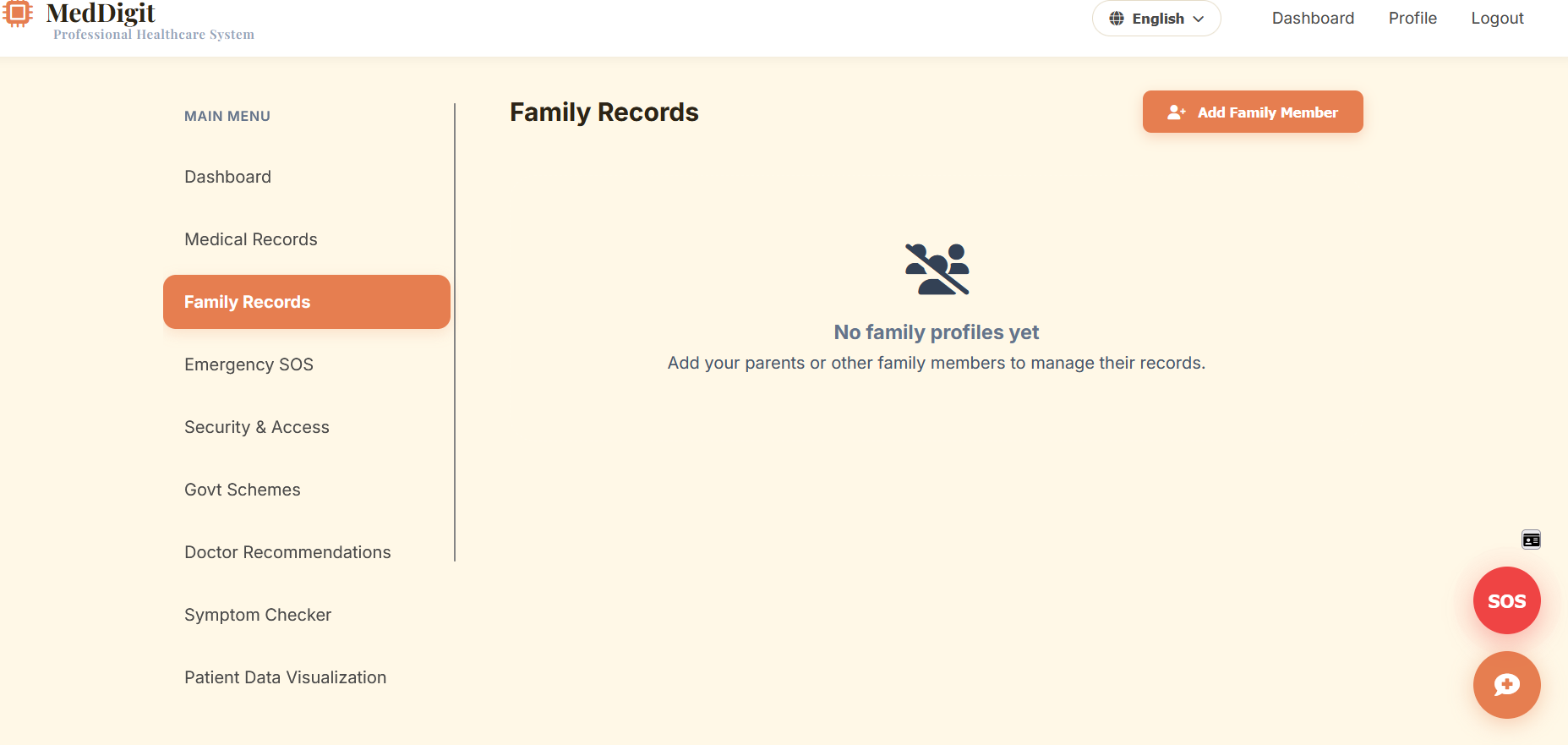
family records also store in this website
-
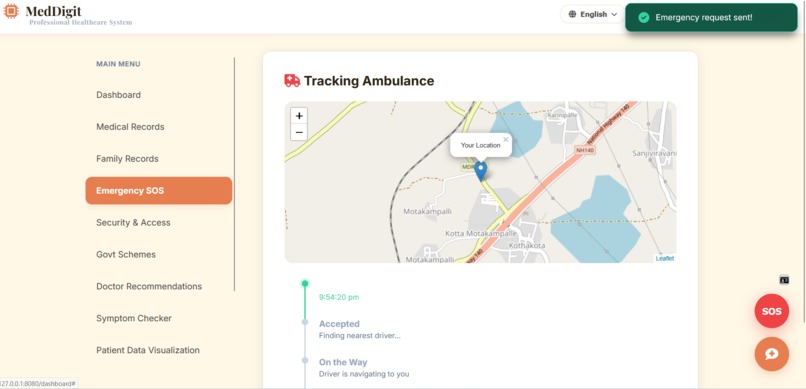
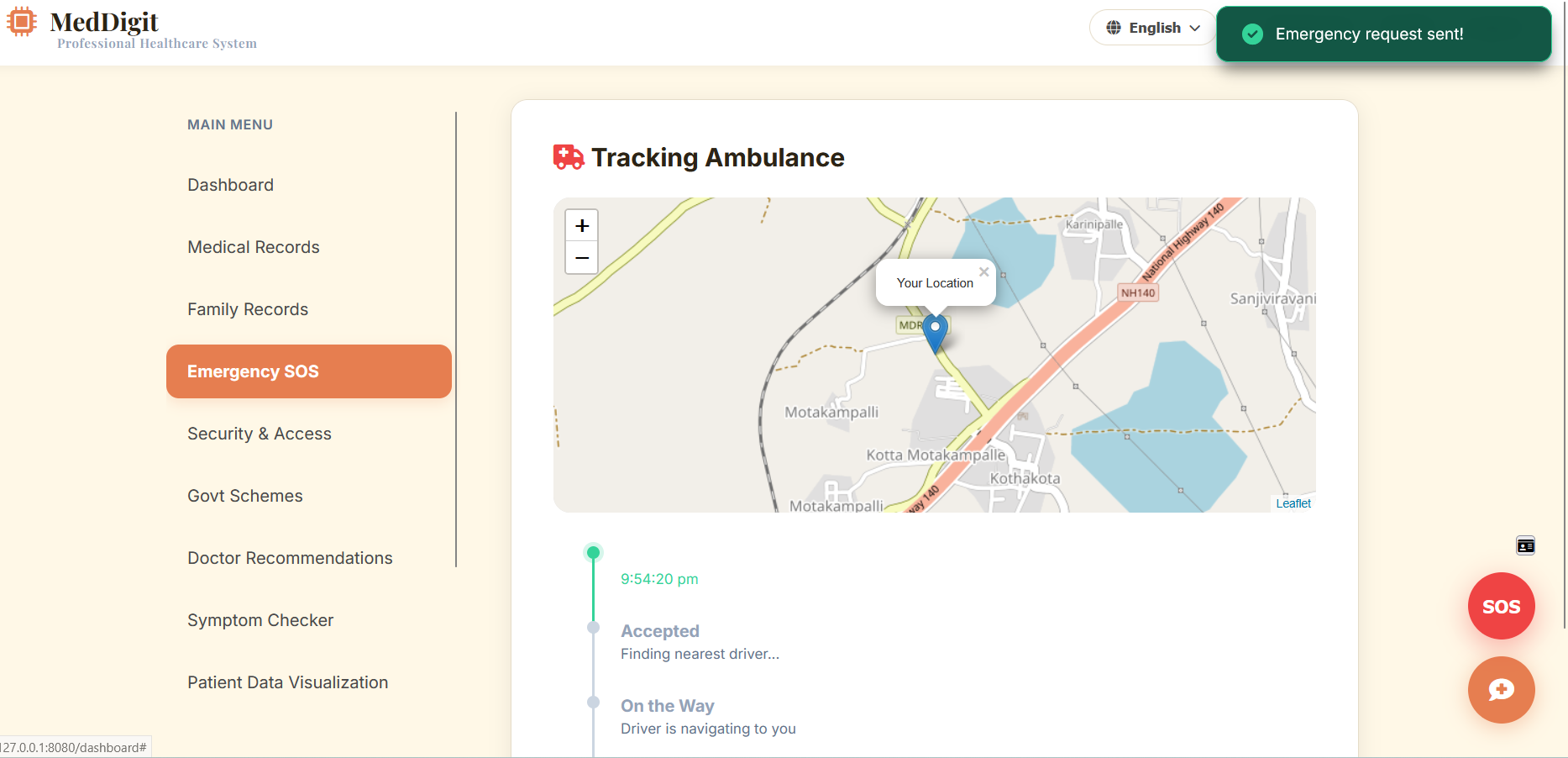
emergency umbulance request.it will share request in emergency situations nearby umbulance going to request.
-
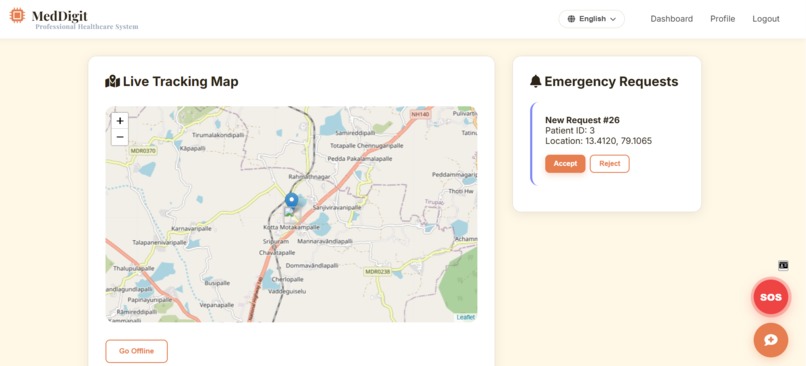
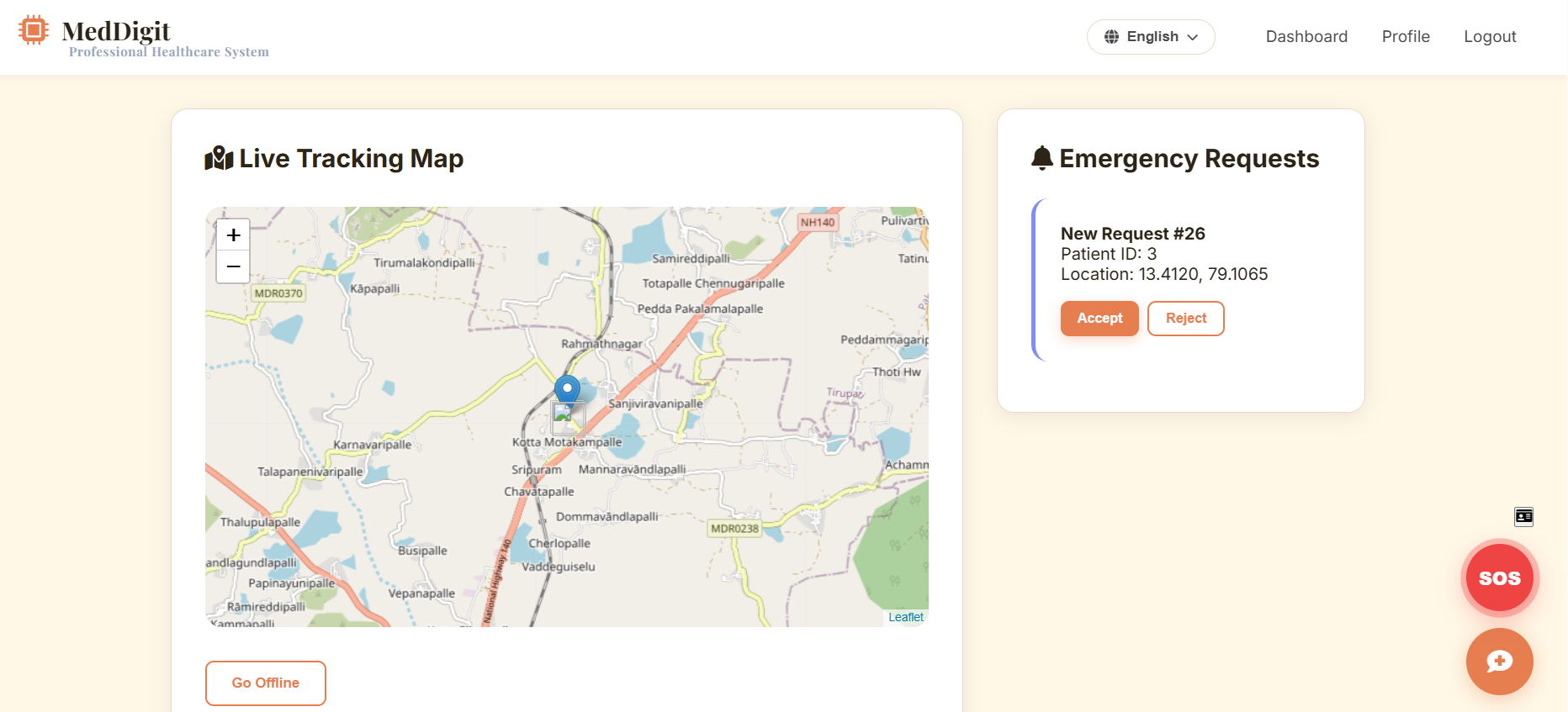
this is umbulance driver login dashbord.emergency request visible like this
-
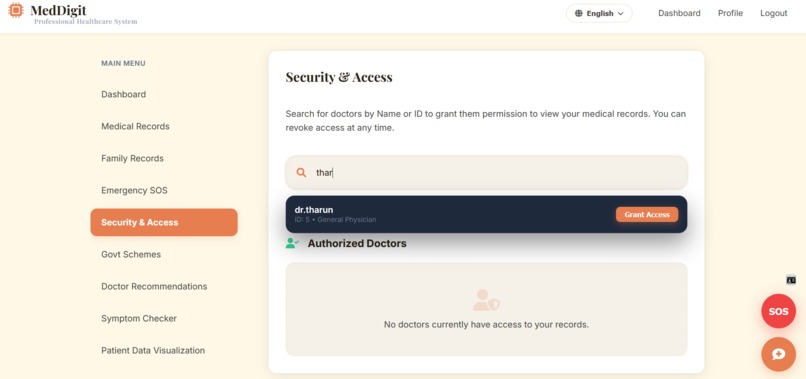
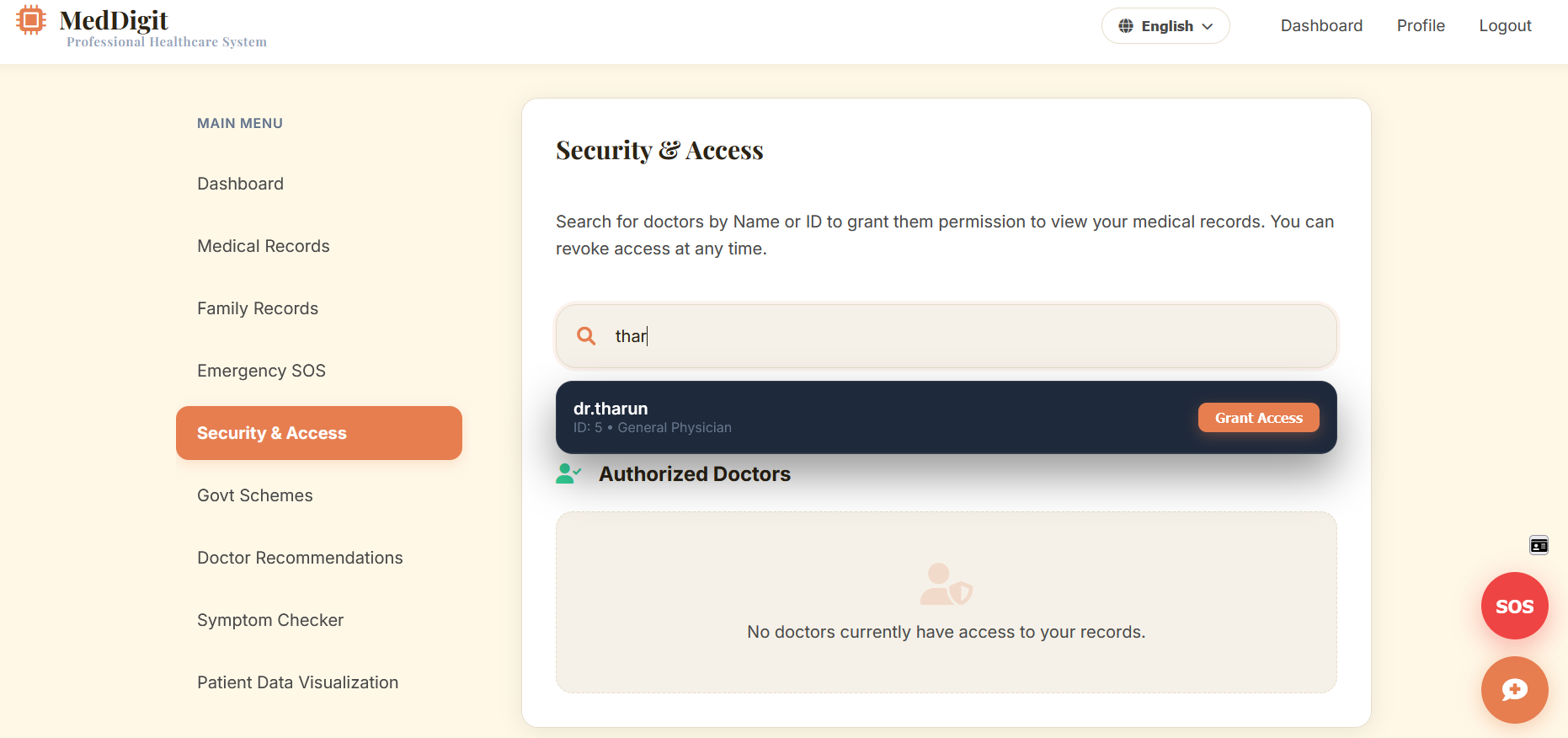
security and access giving patient specific doctors and specificic hospitals after revoke it.
-
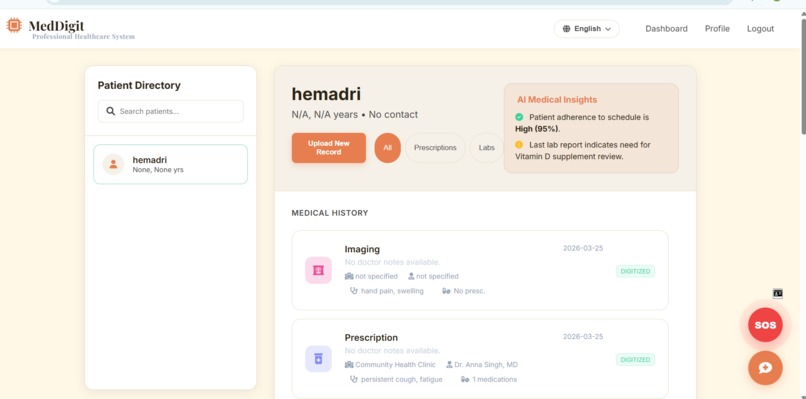
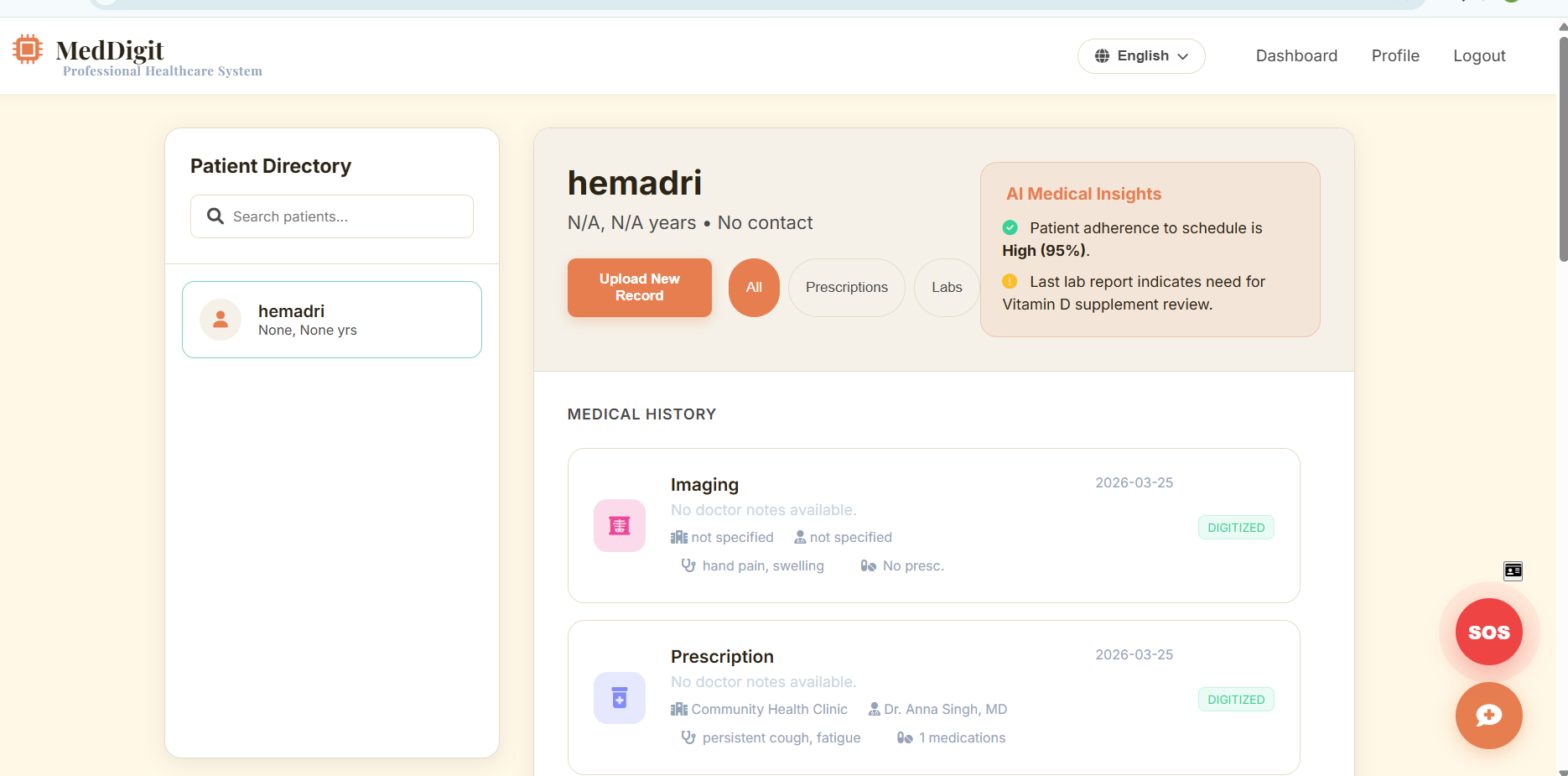
doctor dashbord visible like this our recods
-
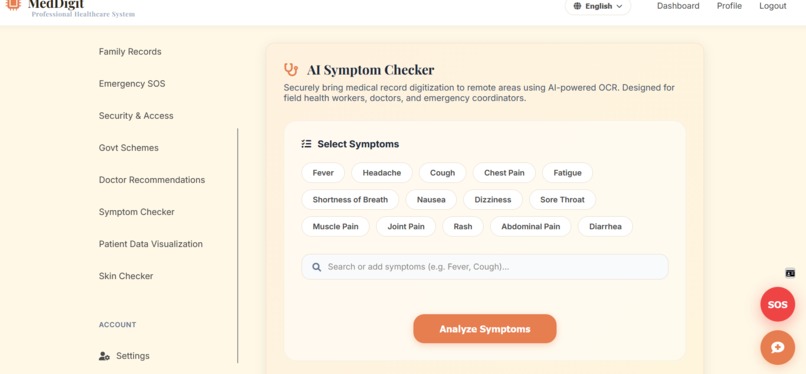
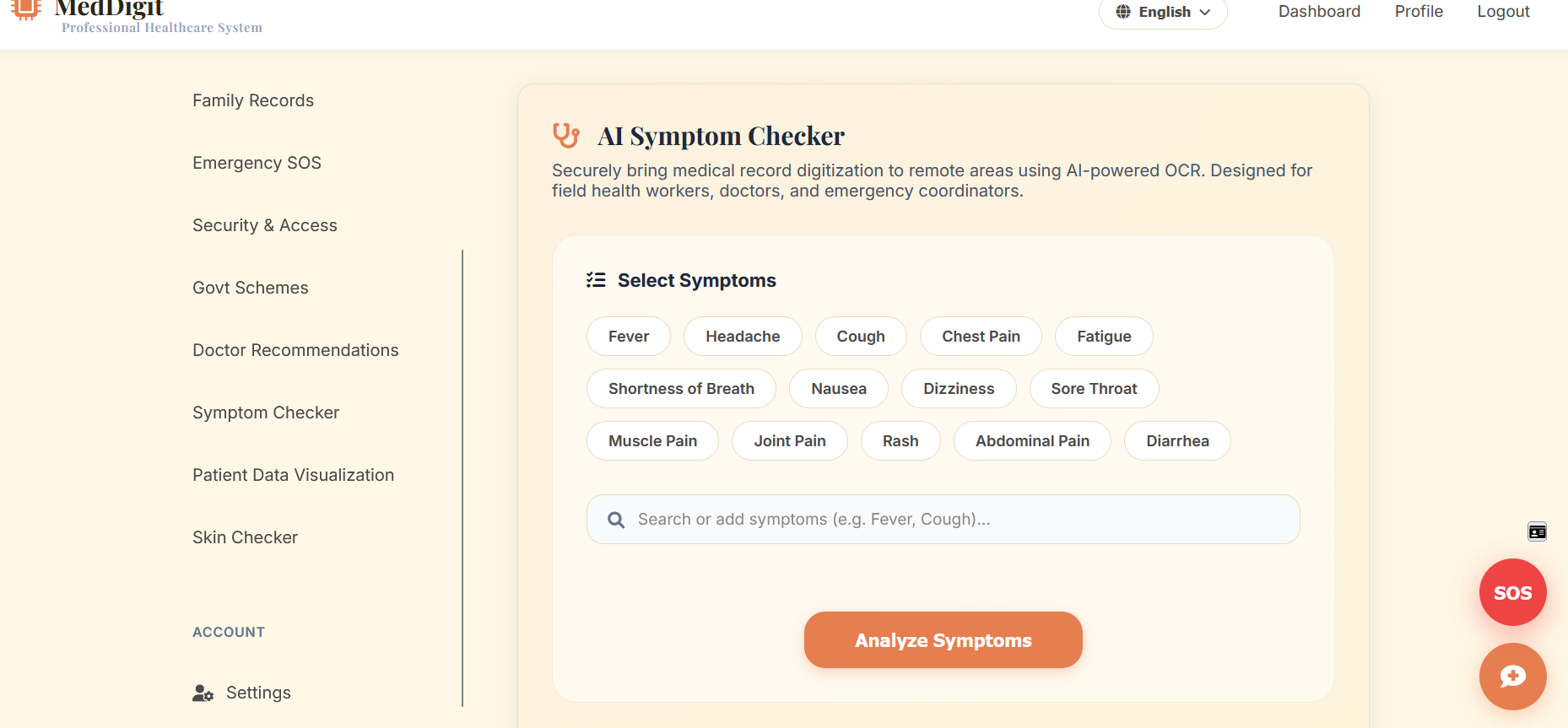
analyze symtem checker
-
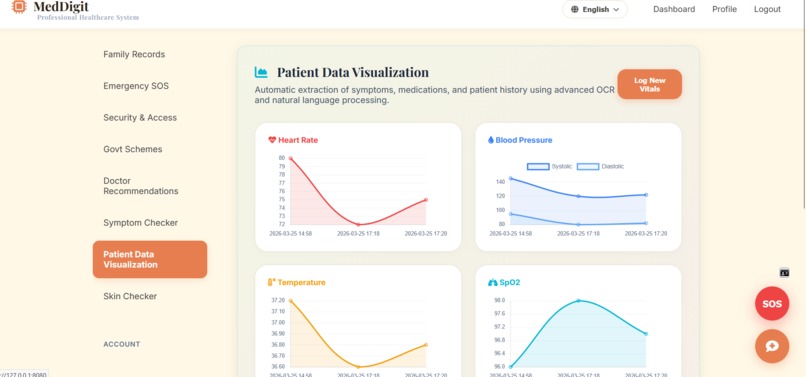
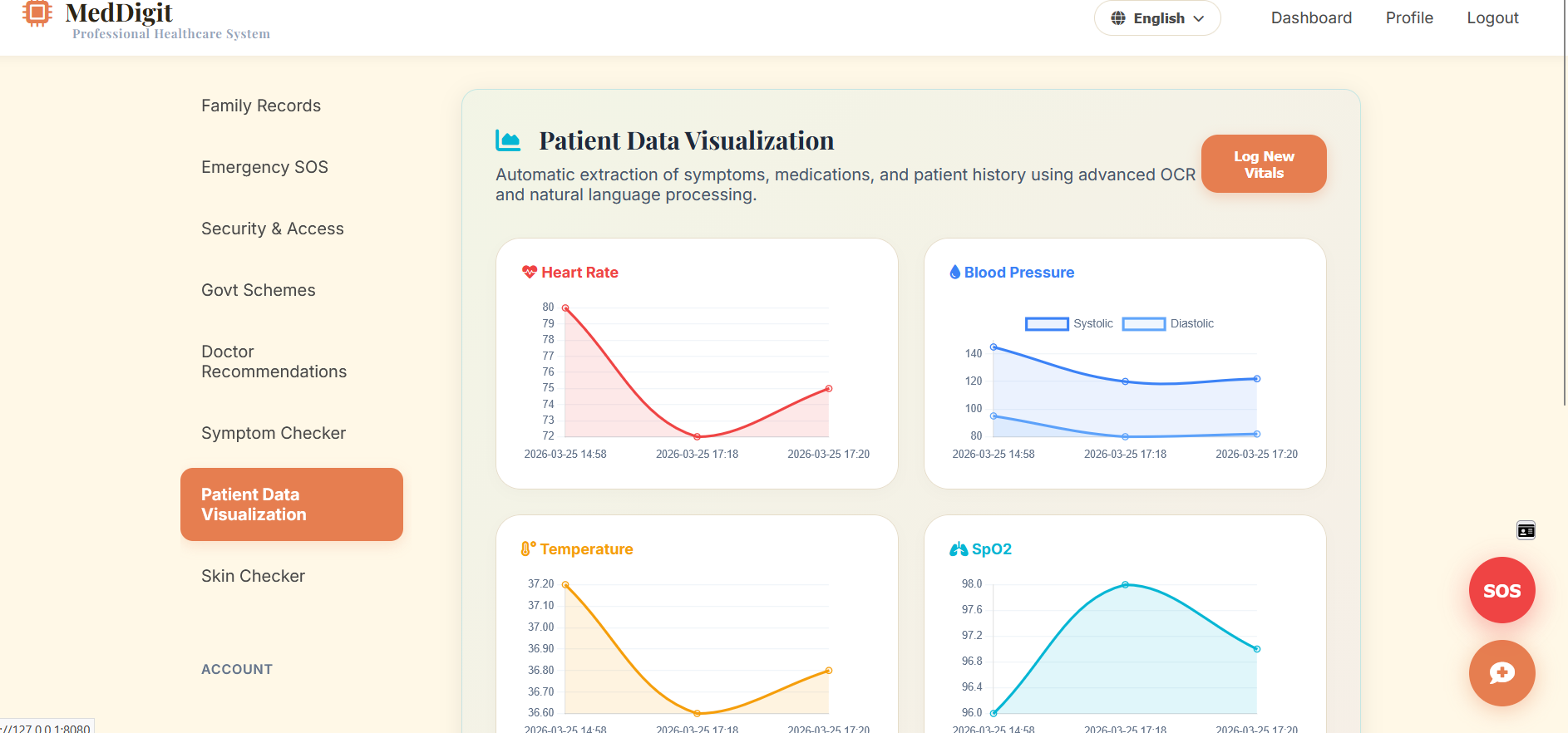
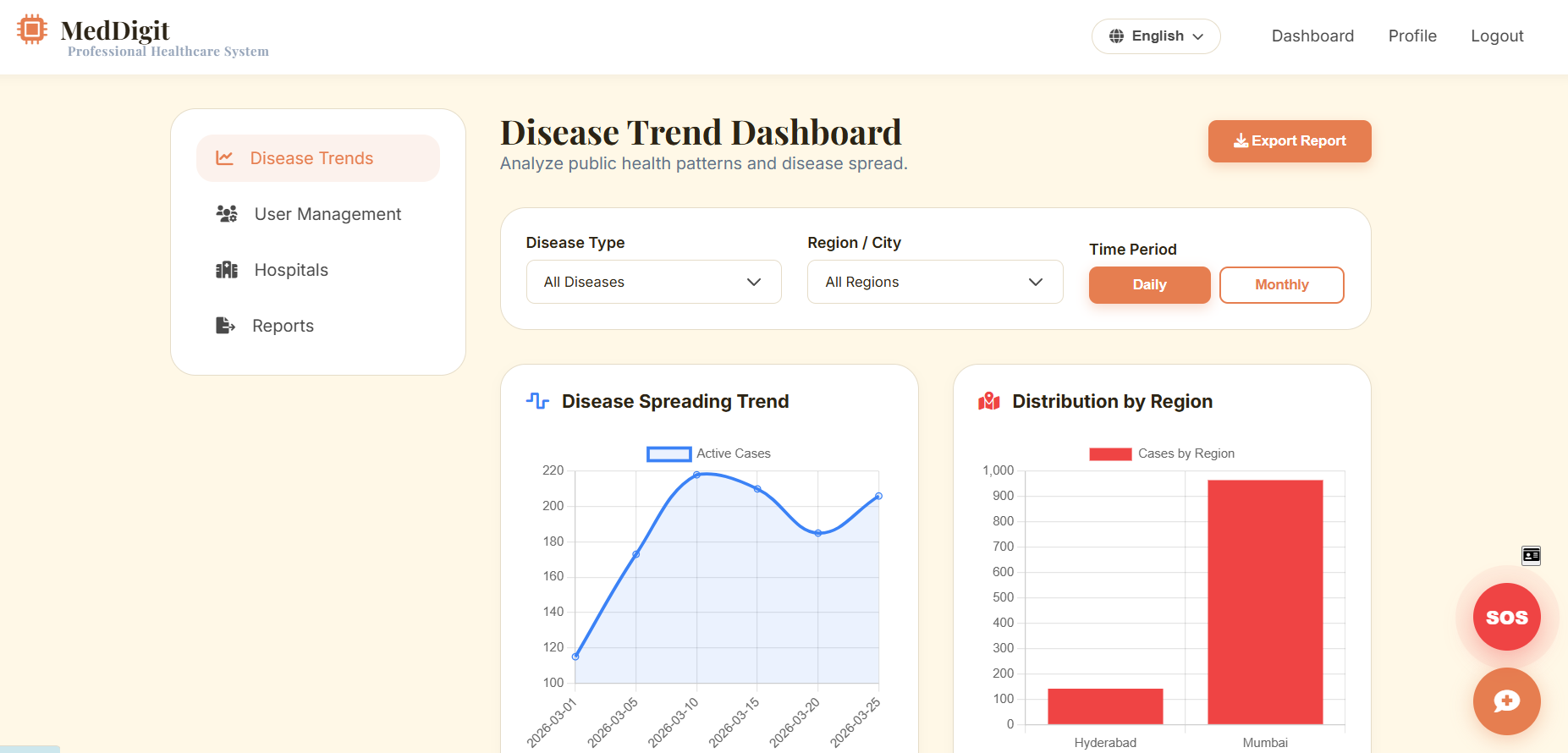
patient data visualization
-
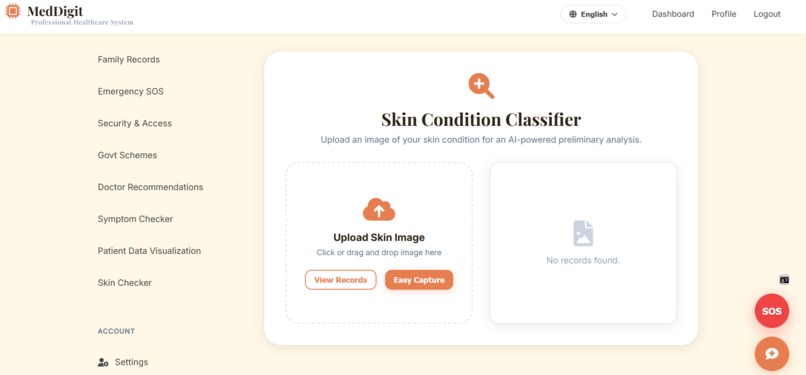
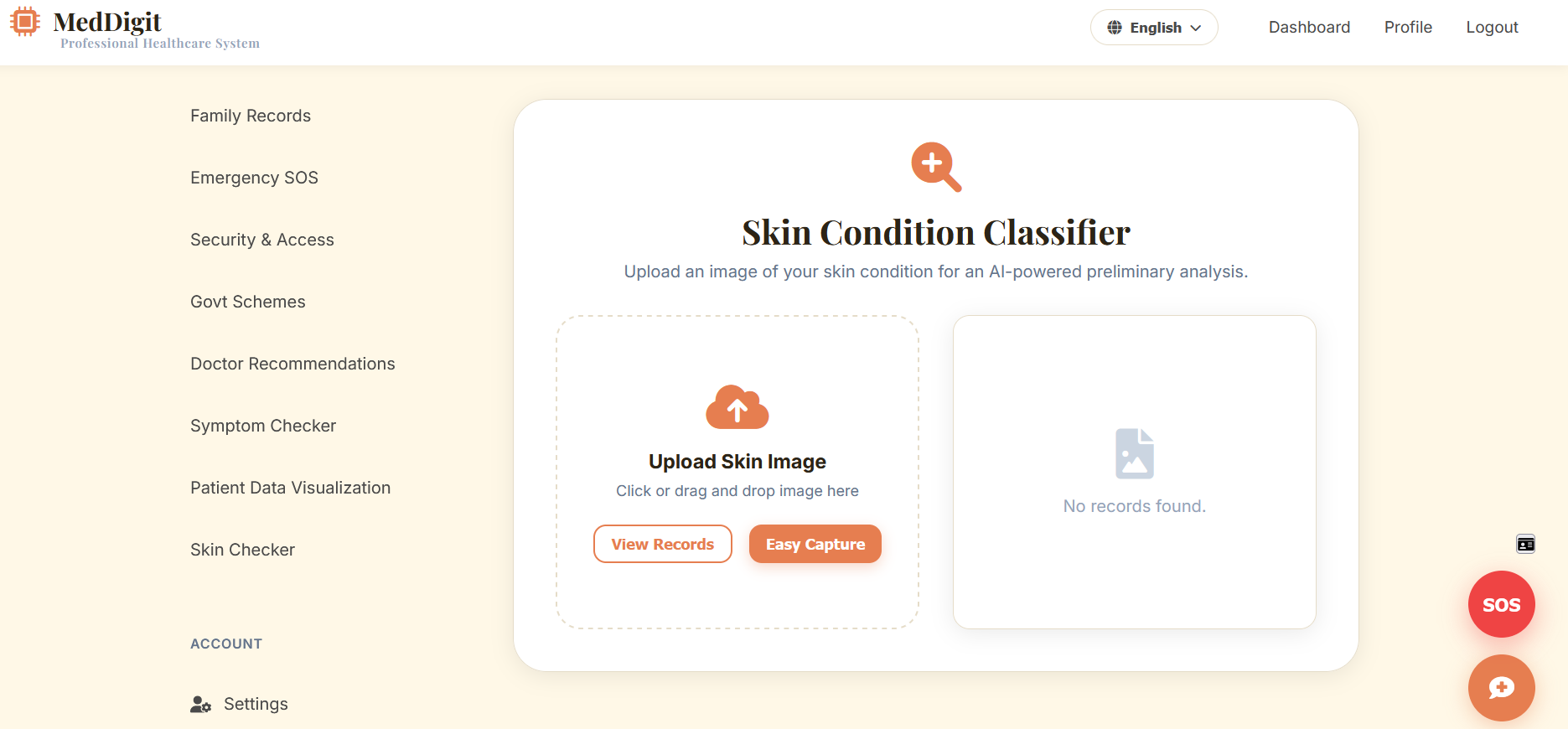
skin disease checker
-
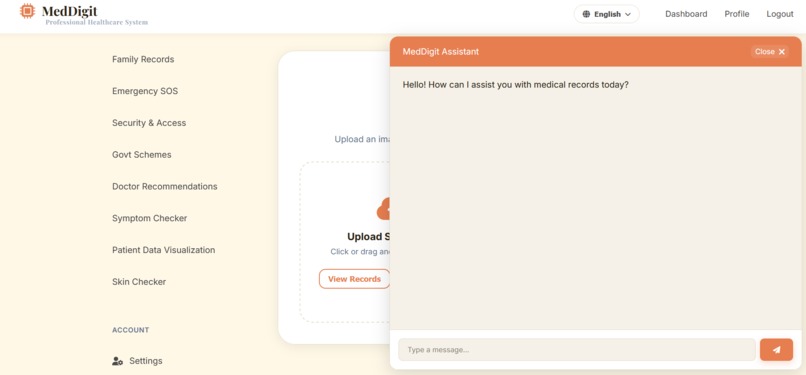
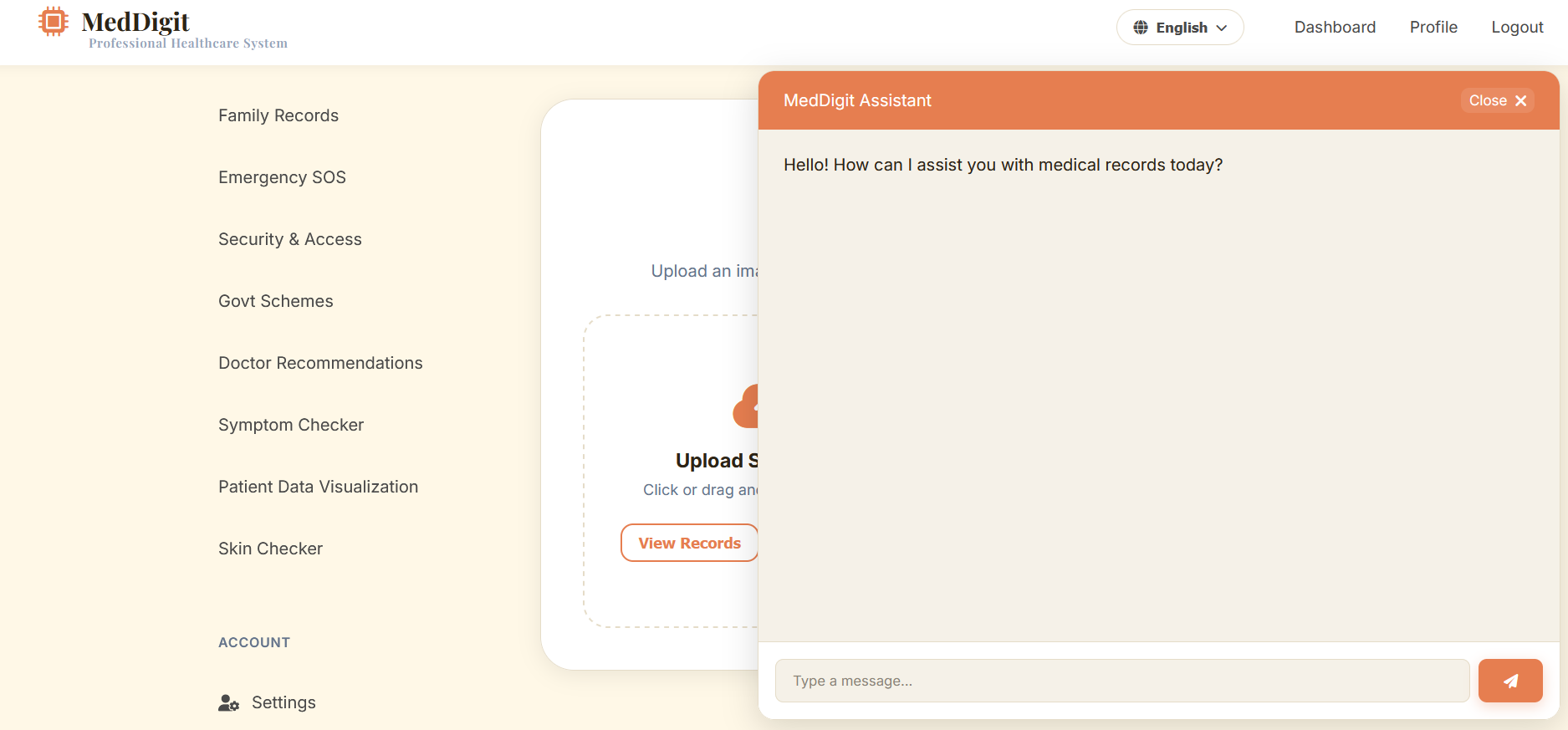
ai chatbot
-
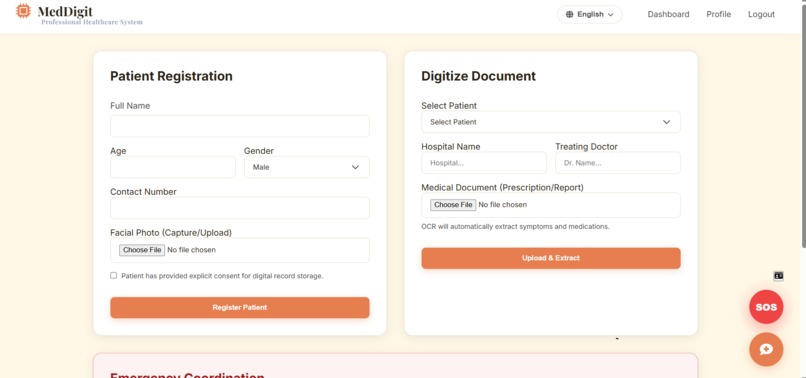
healthcare worker like sisters can access
-
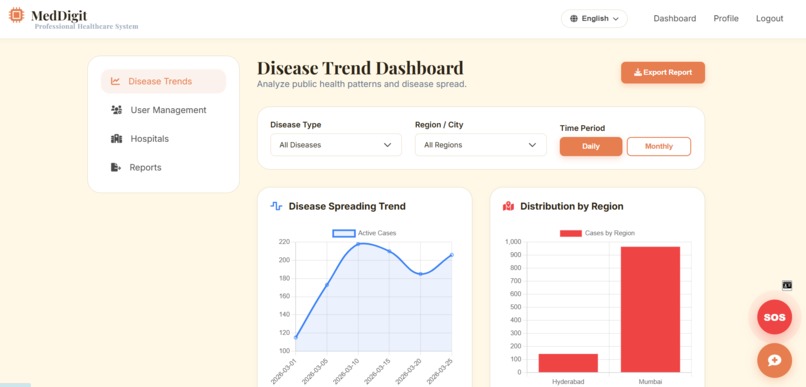
admin login having where deseases monitoring where.
Inspiration
Healthcare systems, especially in rural and semi-urban areas, often suffer from delayed emergency response, lack of real-time coordination, and dependence on paper-based medical records. We observed that during emergencies, even a delay of a few minutes can cost lives. Additionally, doctors struggle with unstructured patient data, making diagnosis slower and less efficient. This inspired us to build a smart, AI-powered healthcare system that connects patients, ambulances, and hospitals while digitizing medical records and enabling intelligent health analysis.
What it does
MedDigit AI is a real-time medical digitization and emergency support system that: 🚑 Provides one-tap SOS and real-time ambulance tracking 📂 Converts medical reports into digital records using OCR + AI 🤖 Offers AI-based symptom checking, disease detection, and chatbot assistance 📊 Visualizes patient health data and tracks trends over time 🔐 Ensures secure access with role-based authentication 👨👩👧 Manages family medical records 💊 Recommends government healthcare schemes It creates a connected and intelligent healthcare ecosystem
How we built it
We built the system using a combination of web technologies, AI, and real-time communication systems: Backend: Python, Flask, Flask-SocketIO AI & OCR: OpenCV, Tesseract, AI models via APIs Database: SQLAlchemy with SQLite Real-Time: WebSockets for ambulance tracking Security: JWT authentication and role-based access We designed modular components such as: Emergency response system Medical digitization engine AI health intelligence modules Secure data management system
Challenges we ran into
⚡ Implementing real-time communication between multiple users (patient, ambulance, hospital) 📄 Extracting accurate data from low-quality medical documents using OCR 🔐 Ensuring secure handling of sensitive medical data 🤖 Designing AI systems that provide reliable medical guidance 🔄 Integrating multiple features into a single unified platform
Accomplishments that we're proud of
Successfully built a real-time emergency response system Integrated AI + OCR + healthcare features into one platform Created a multi-user system (patient, doctor, ambulance) Developed a secure and scalable architecture
What we learned
How to design and implement real-time systems using WebSockets Practical integration of AI in healthcare applications Importance of data security and privacy in medical systems Building scalable and modular architectures Working as a team under hackathon pressure
What's next for Real-Time Medical Digitization & Emergency Services
📱 Develop mobile applications (Android/iOS) ⌚ Integrate wearable health devices 🌐 Expand to rural healthcare networks 🧠 Improve AI models for more accurate diagnosis 🔗 Add blockchain for secure medical data sharing 🌍 Scale the platform for national-level deployment
Built With
- authlib
- css3
- flask
- flask-jwt-extended
- flask-login
- flask-mail
- flask-socketio
- flask-sqlalchemy
- google-generativeai
- html5
- httpx
- itsdangerous
- javascript
- jinja
- numpy
- opencv-(opencv-python-headless)
- pandas
- pillow
- pyjwt
- pymongo[srv]
- python
- python-dotenv
- scikit-learn
- socket.io
- sqlalchemy
- sqlite
- tesseract-ocr-(pytesseract)


Log in or sign up for Devpost to join the conversation.