-
-
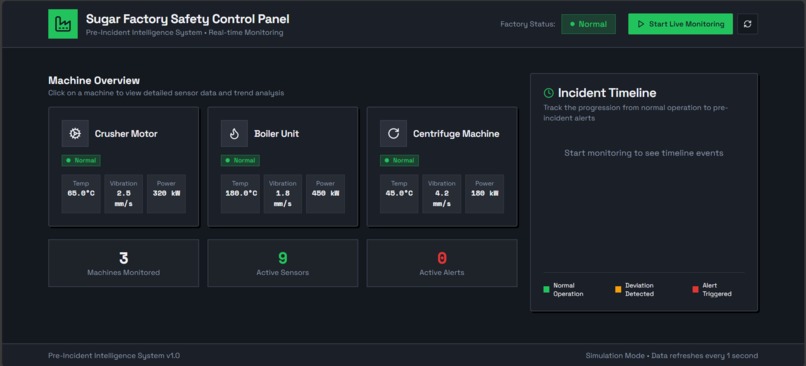
Real Time Industrial Safety Monitoring with GridDB Cloud => Sugar Industry Dashboard
-
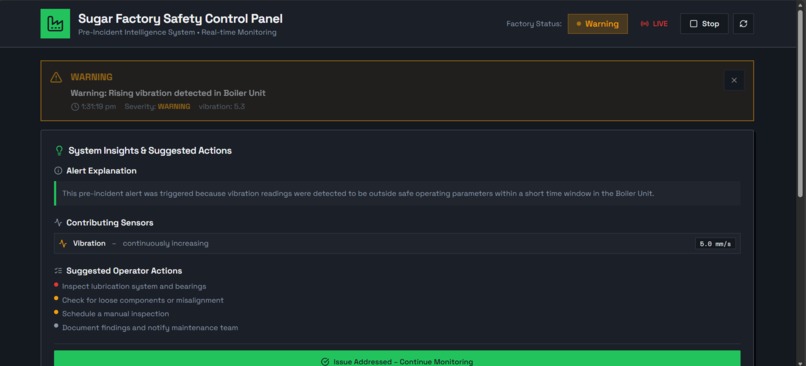
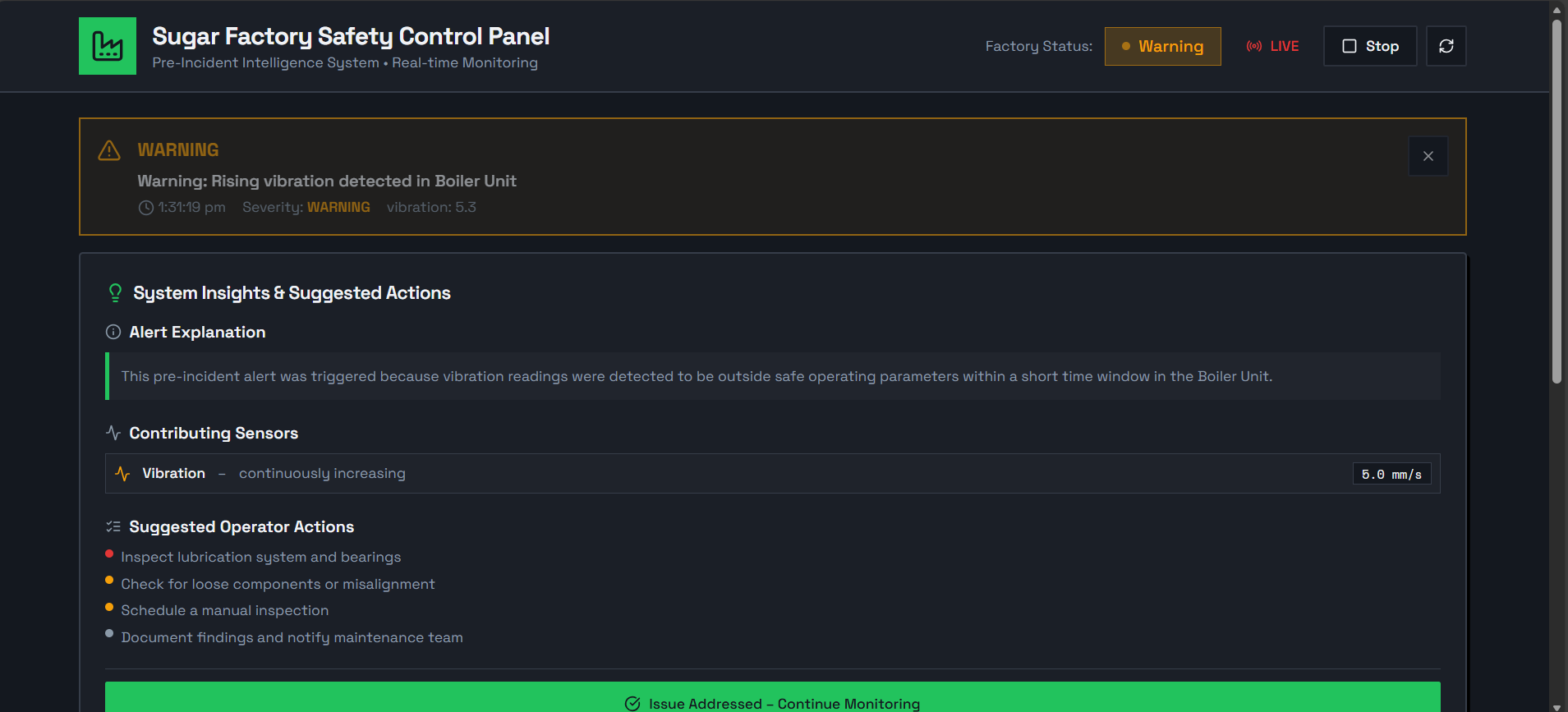
Warning Generated
-
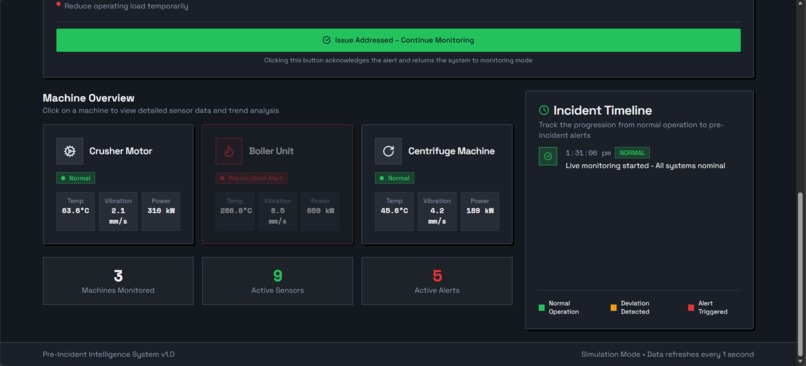
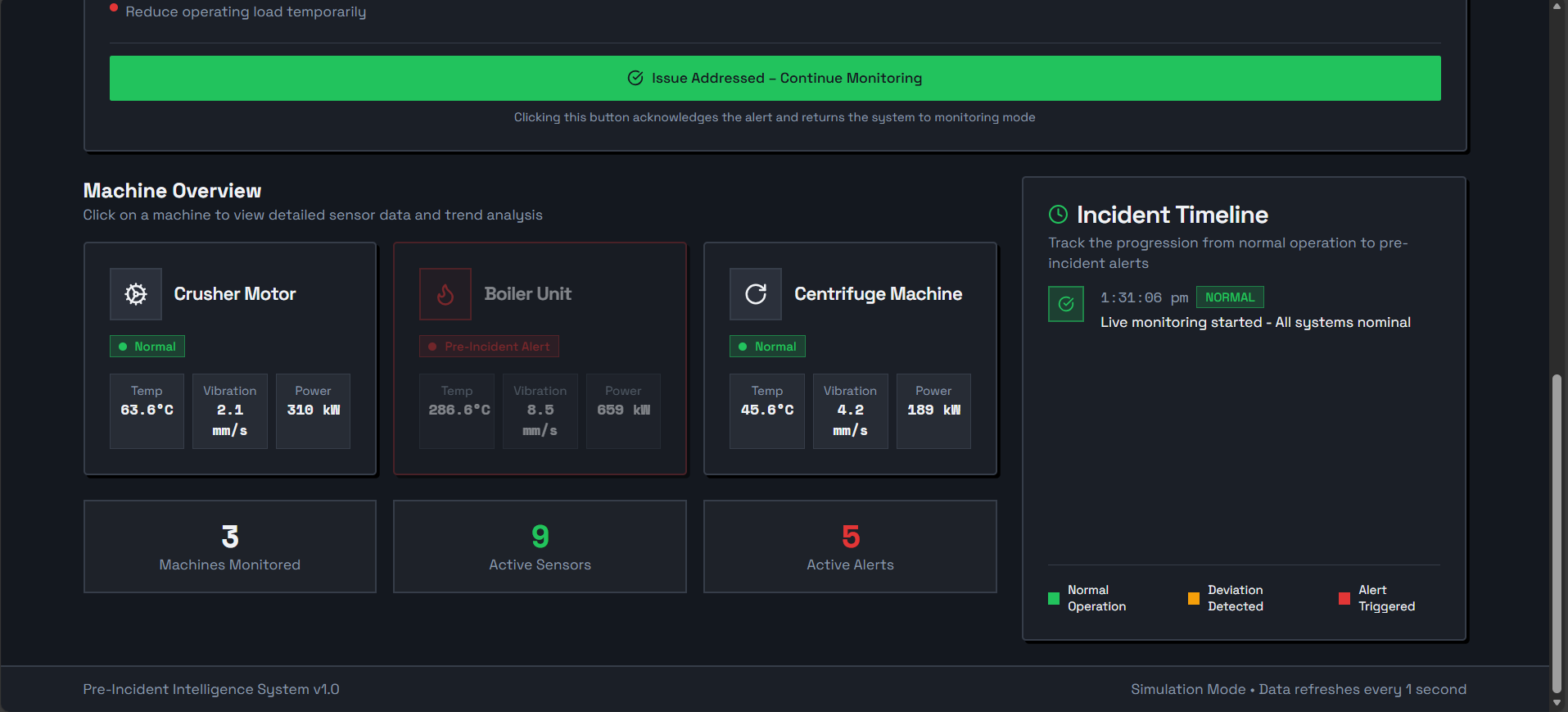
Warning Turned Critical
-
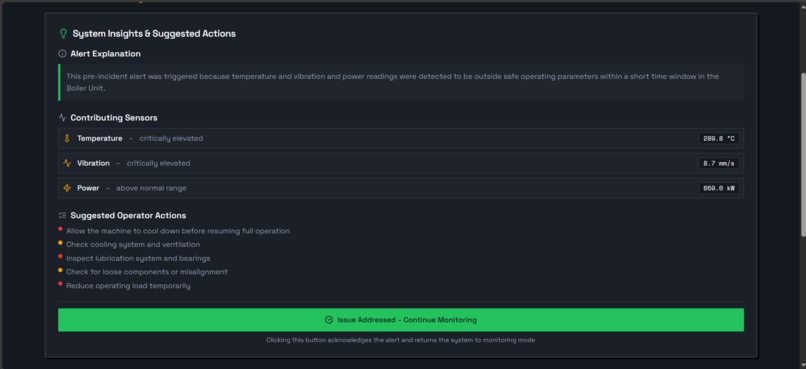
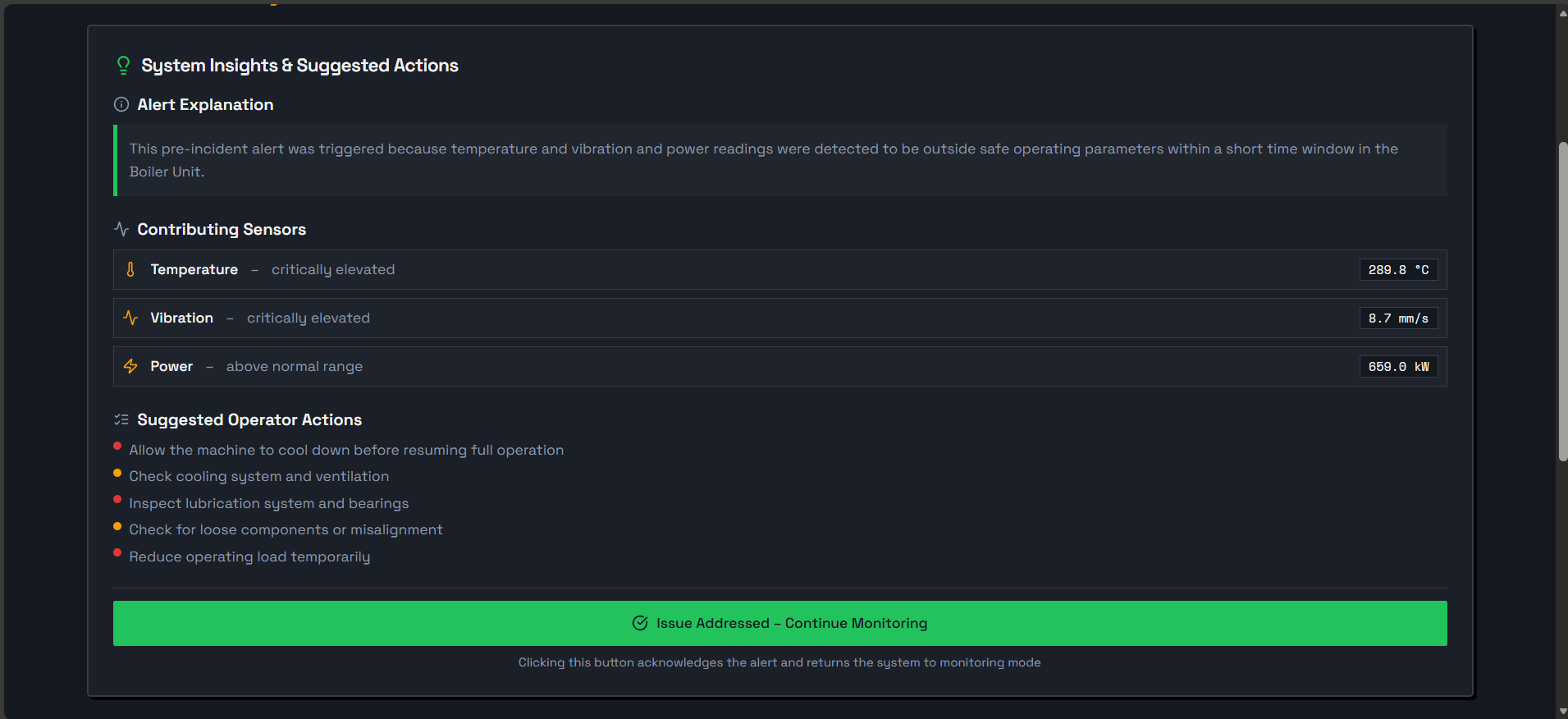
Insights and Suggestions to avoid accidents
-
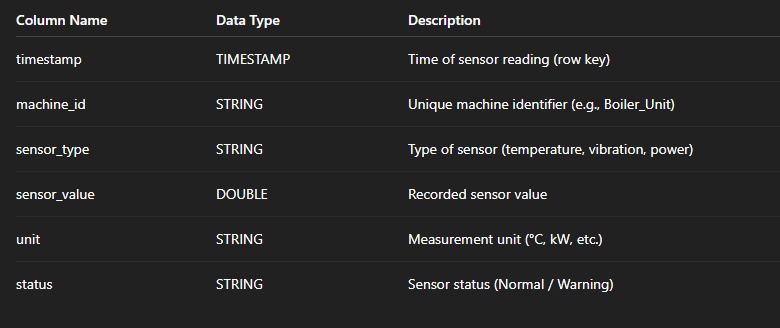
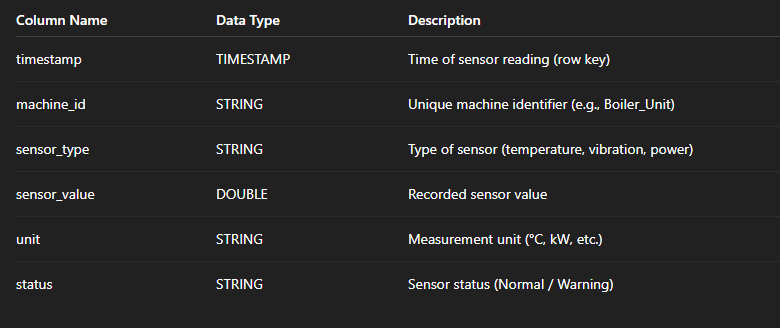
Demo Table Structure
-
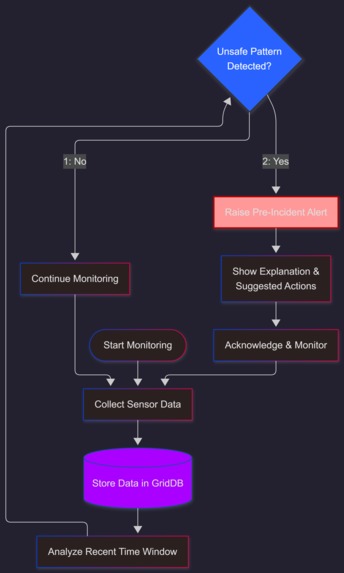
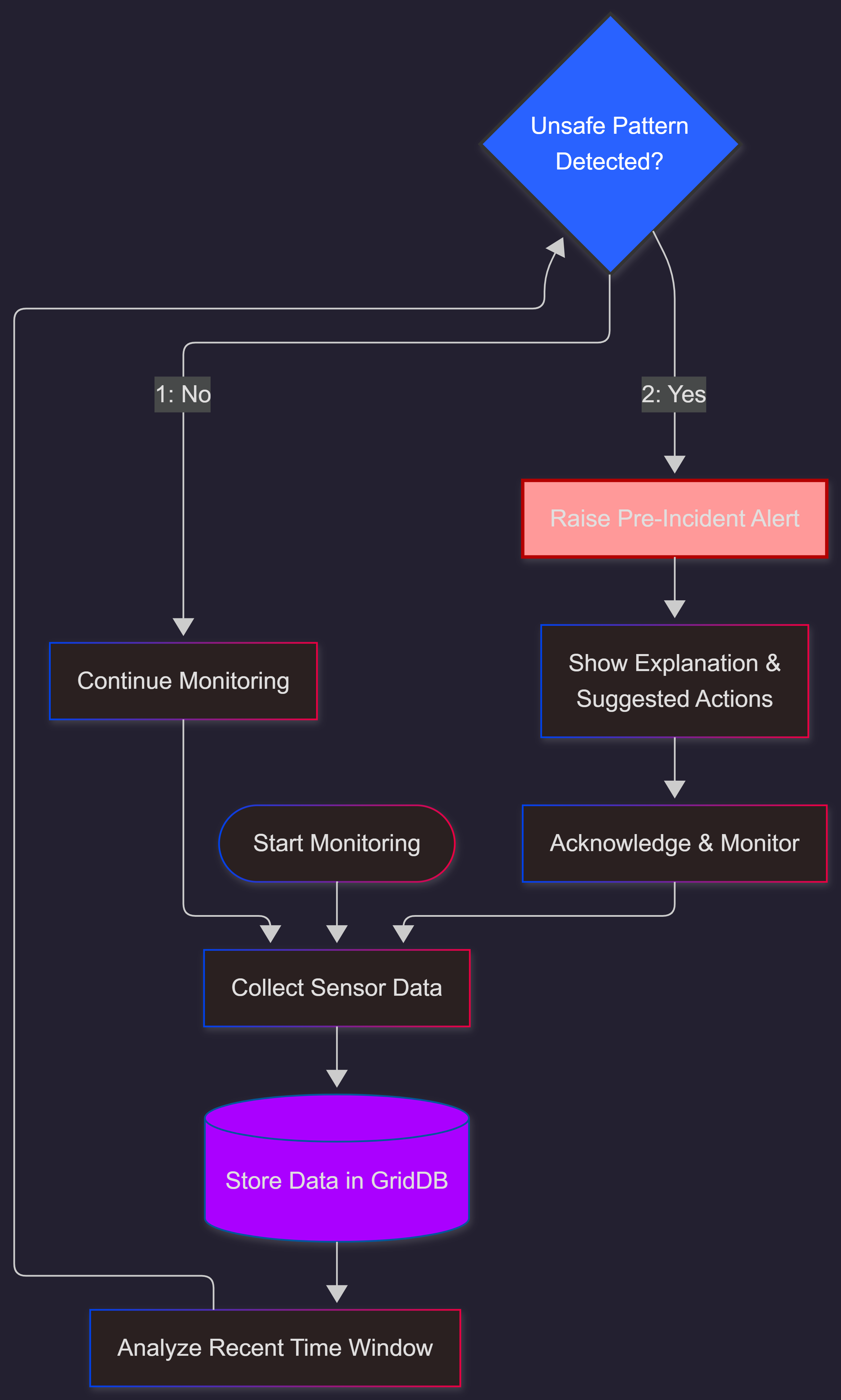
Functional Flow Diagram
-
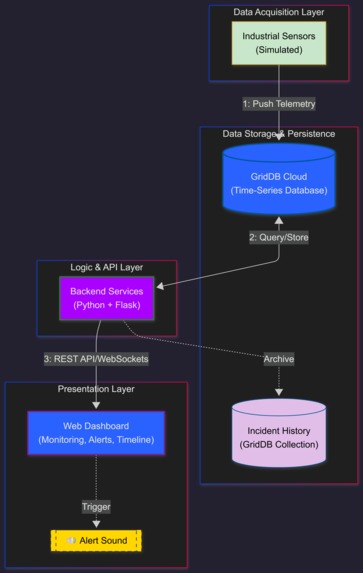
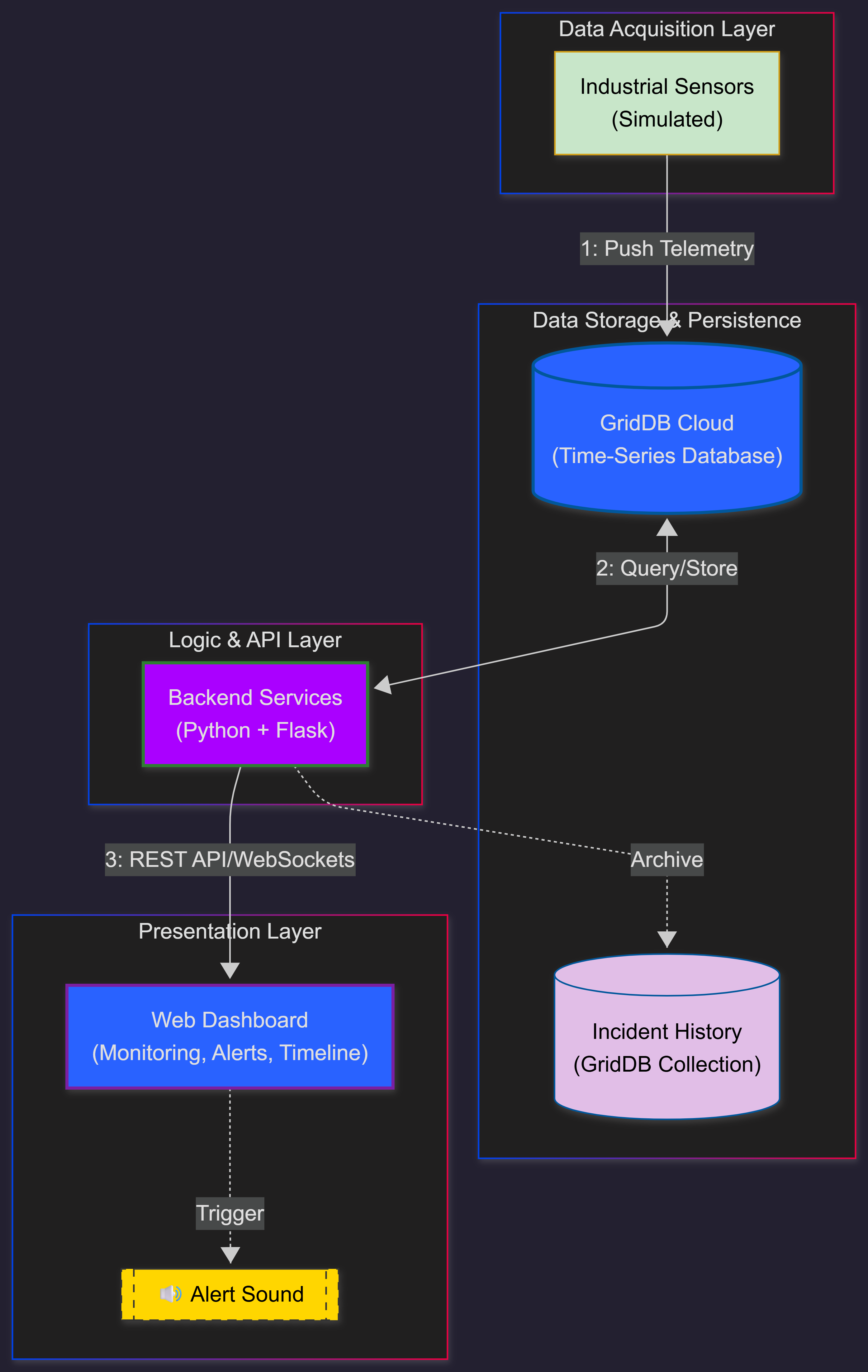
System Architecture Diagram
-

Data Diagram

Inspiration
In many factories, accidents do not happen suddenly they build up over time.
For example, Ram, a factory worker, was operating a motor machine during a normal work shift. At first, everything appeared fine. However, over time, the machine started getting slightly hotter, and its vibration levels began to increase gradually.
Each of these changes, when viewed individually, was still within the allowed limits, so no alarm was triggered. Since the signals were not analyzed together, these early warning signs went unnoticed.
The problem was not lack of sensors : the problem was that small warning signs were never connected together. This inspired us to build a system that can detect early danger signs before an accident happens, not after.
What it does
Our project is a real-time industrial early warning system. It: 1- continuously collects data from multiple machine sensors
2- analyzes sensor behavior together over short time windows
3- detects unsafe patterns before standard alarms trigger
4- raises a pre-incident warning so operators can act early
5- provides clear alert explanations and suggested actions to help operators respond safely and restore normal conditions
The goal is incident prevention, not just monitoring.
How we built it
1- Simulated industrial sensors (temperature, vibration, power) send data continuously
2- Data is stored in GridDB Cloud time-series containers
3- Backend logic checks recent sensor data using simple rules and correlations
4- If multiple sensors show unsafe behavior together, an early-warning is generated
5- A web dashboard shows:
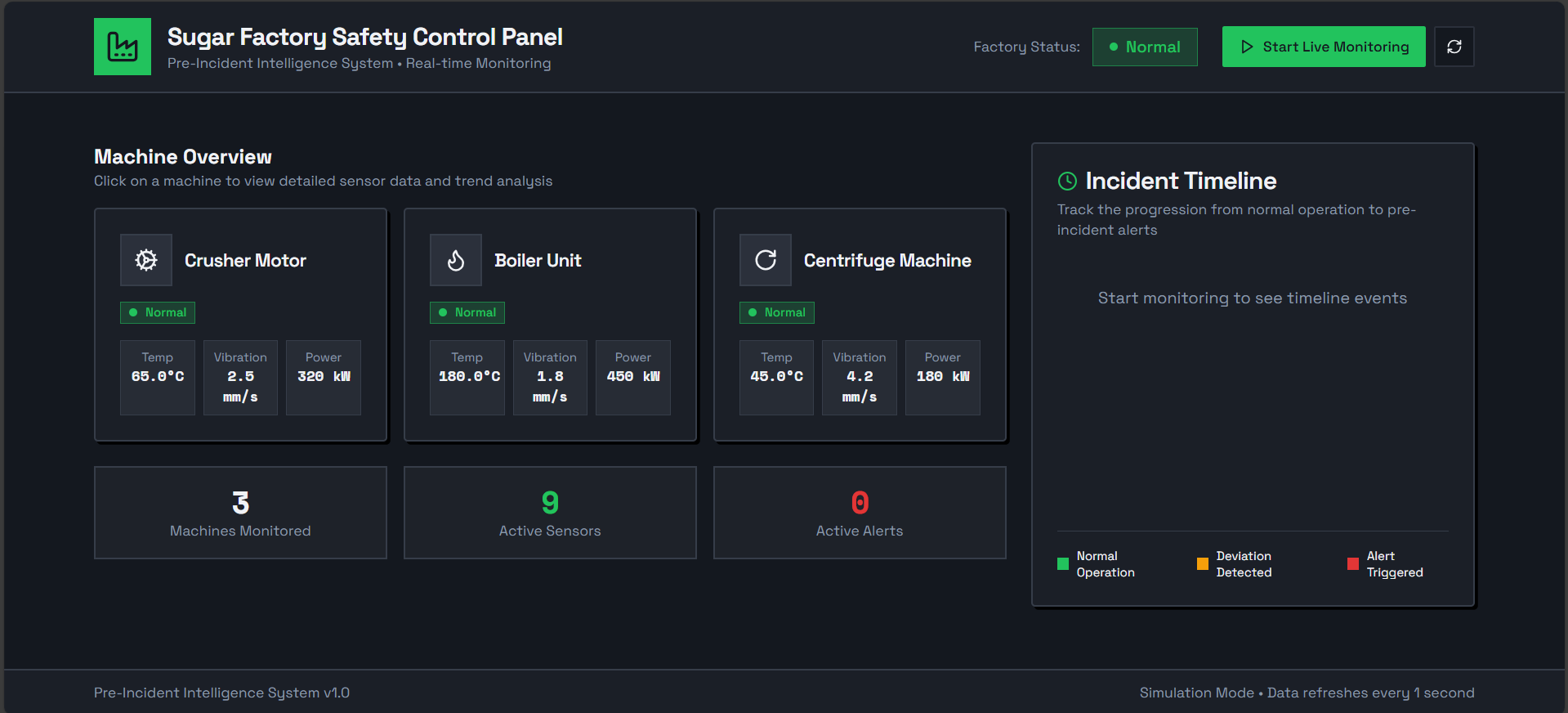
  Live sensor values

  System status (Normal / Warning / Pre-Incident)

  Recent alerts and timelines

  An option to acknowledge the issue and continue monitoring
How GridDB is used, why GridDB, and why it is irreplaceable
GridDB Cloud is the core of our system.
GridDB is a highly scalable, memory-first NoSQL database designed specifically for high-frequency time-series data, making it well-suited for industrial IoT workloads.
We use GridDB Cloud to:
  1- store continuous sensor data using time-series containers with timestamp-based row keys

  2- maintain a fixed schema for predictable and fast reads/writes

  3- ingest data in memory first and persist it safely to disk

  4- query recent time windows efficiently for early-warning detection

  5- correlate multiple sensor streams in real time

  6- replay sensor data before an alert for incident analysis

  7- support explainable alerts by allowing fast access to recent sensor history used for alert explanations
Without GridDB:
  1- real-time correlation would be slow

  2- high-frequency ingestion would be difficult

  3- incident replay would be inefficient
That’s why GridDB is not optional — it enables the entire idea.
Challenges we can run into
1- Designing correct thresholds that avoid false alerts
2- Simulating realistic industrial sensor behavior
3- Keeping the system simple and explainable
4- Ensuring smooth real-time data flow during demo
Impact
This system helps reduce industrial accidents by detecting unsafe conditions early, before failures or alarms occur. By giving operators timely warnings and clear explanations, it improves worker safety and provides valuable time to respond before incidents escalate. The system also creates clear incident timelines, making it easier to understand what happened and learn from past events. Overall, it helps factories move from reactive safety measures to a more proactive and preventive safety approach.
What we learned
1- How time-series data behaves in real-world systems
2- How GridDB Cloud handles high-speed sensor data efficiently
3- Why simple, explainable logic is powerful in safety systems
4- How early patterns matter more than single sensor values
What's next for Untitled
At this stage, our focus is on presenting a clear and feasible prototype concept. The next steps involve validating the idea using simulated sensor data, defining simple safety rules for different machine scenarios, and refining the dashboard to clearly visualize sensor data, alerts, and explanations. We also aim to demonstrate how this approach can be extended to support multiple machines and locations in a real industrial environment.
Built With
- flask
- griddb
- griddbcoud
- griddbpythonclient
- javascript
- matplotlib
- python