-
-
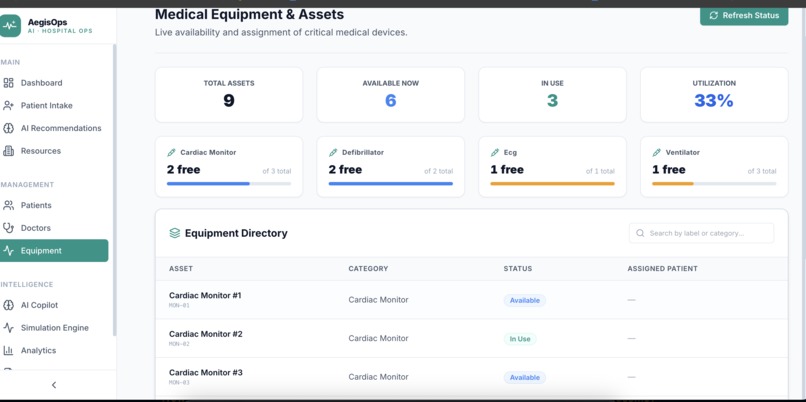
-
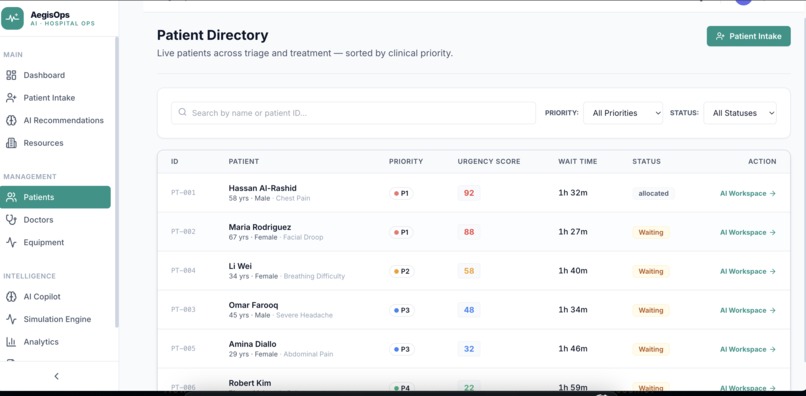
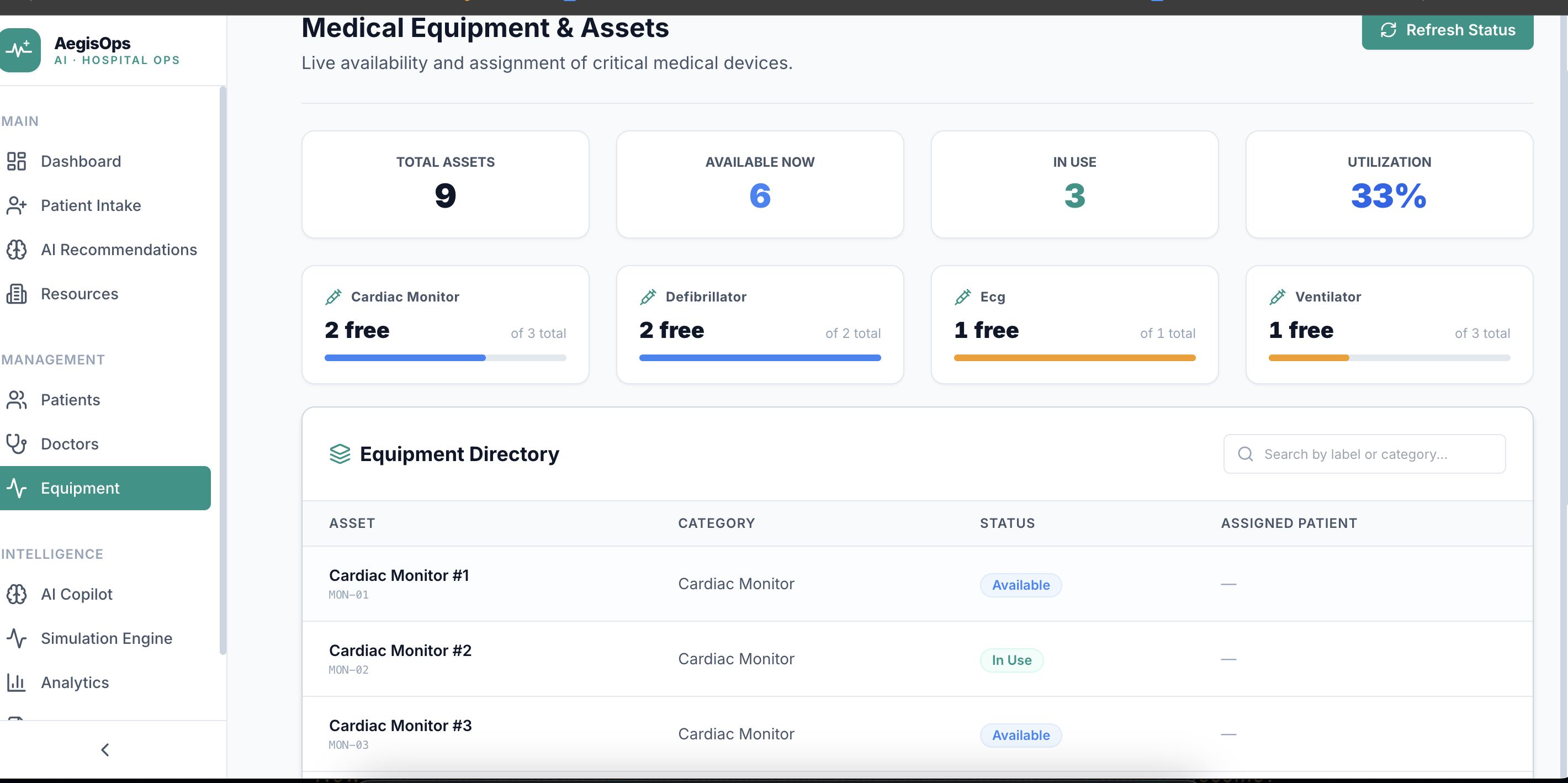
Resources Present
-
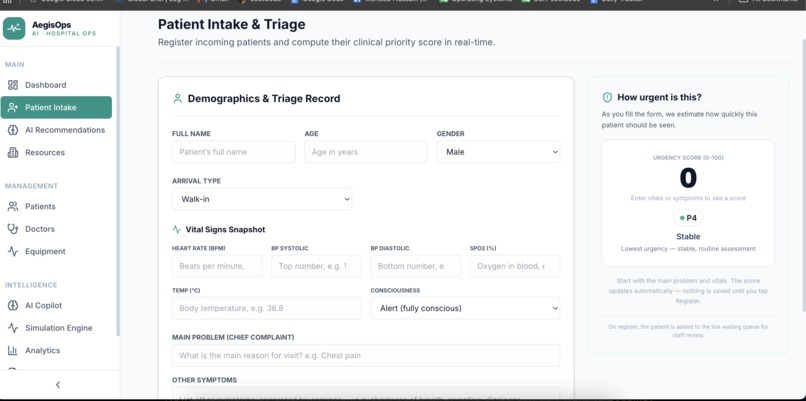
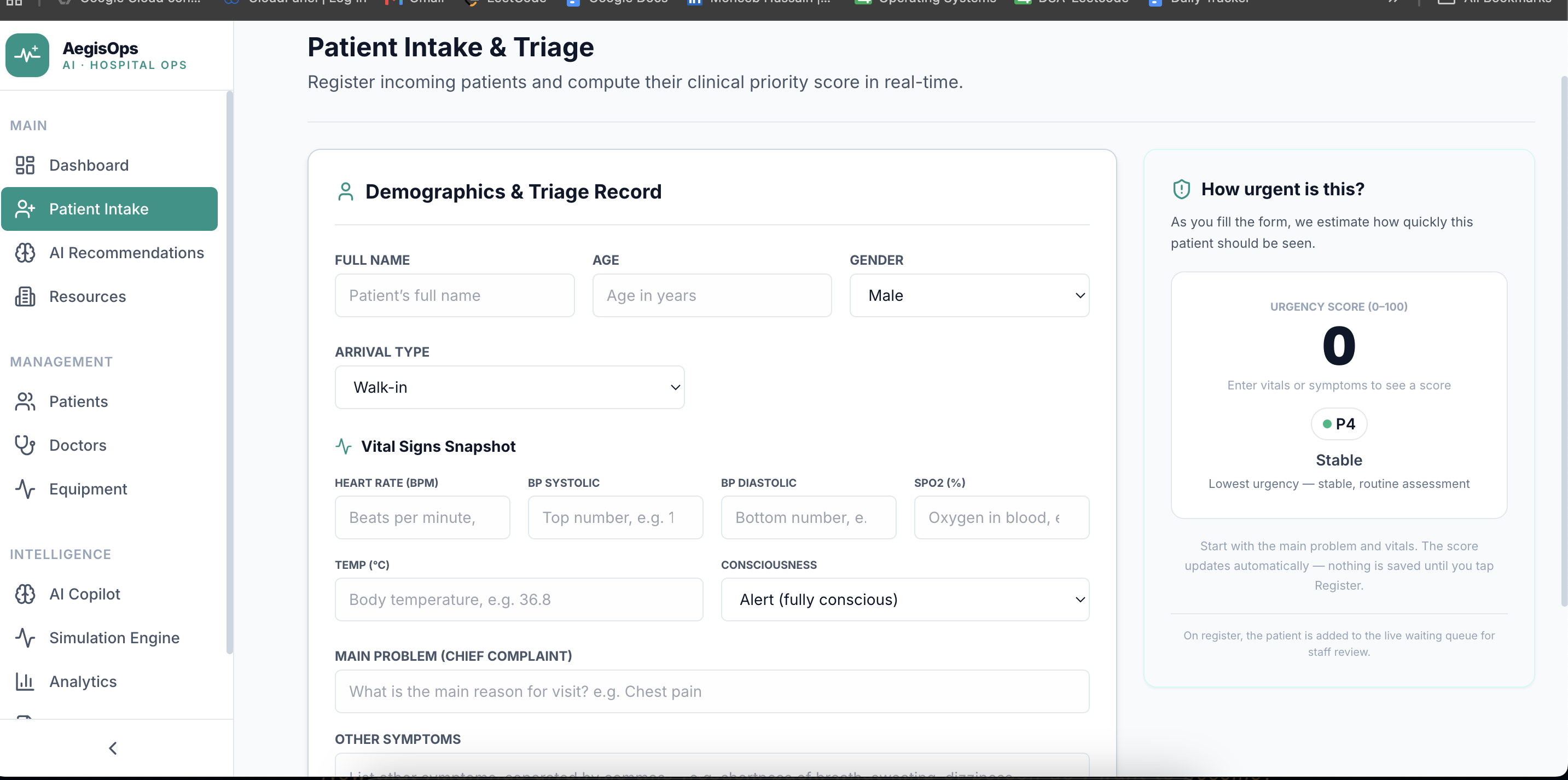
Patint Entry
-
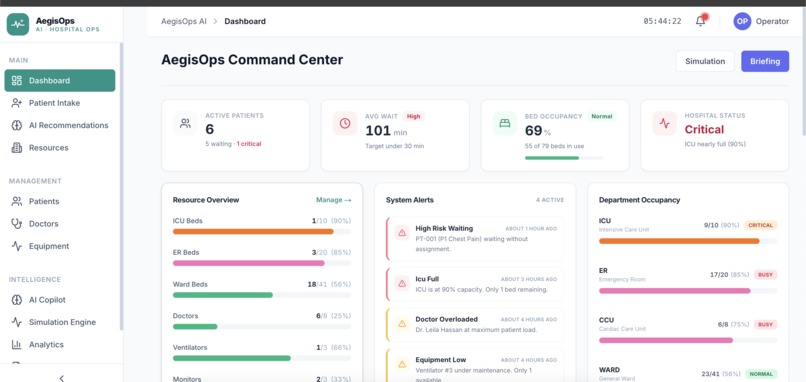
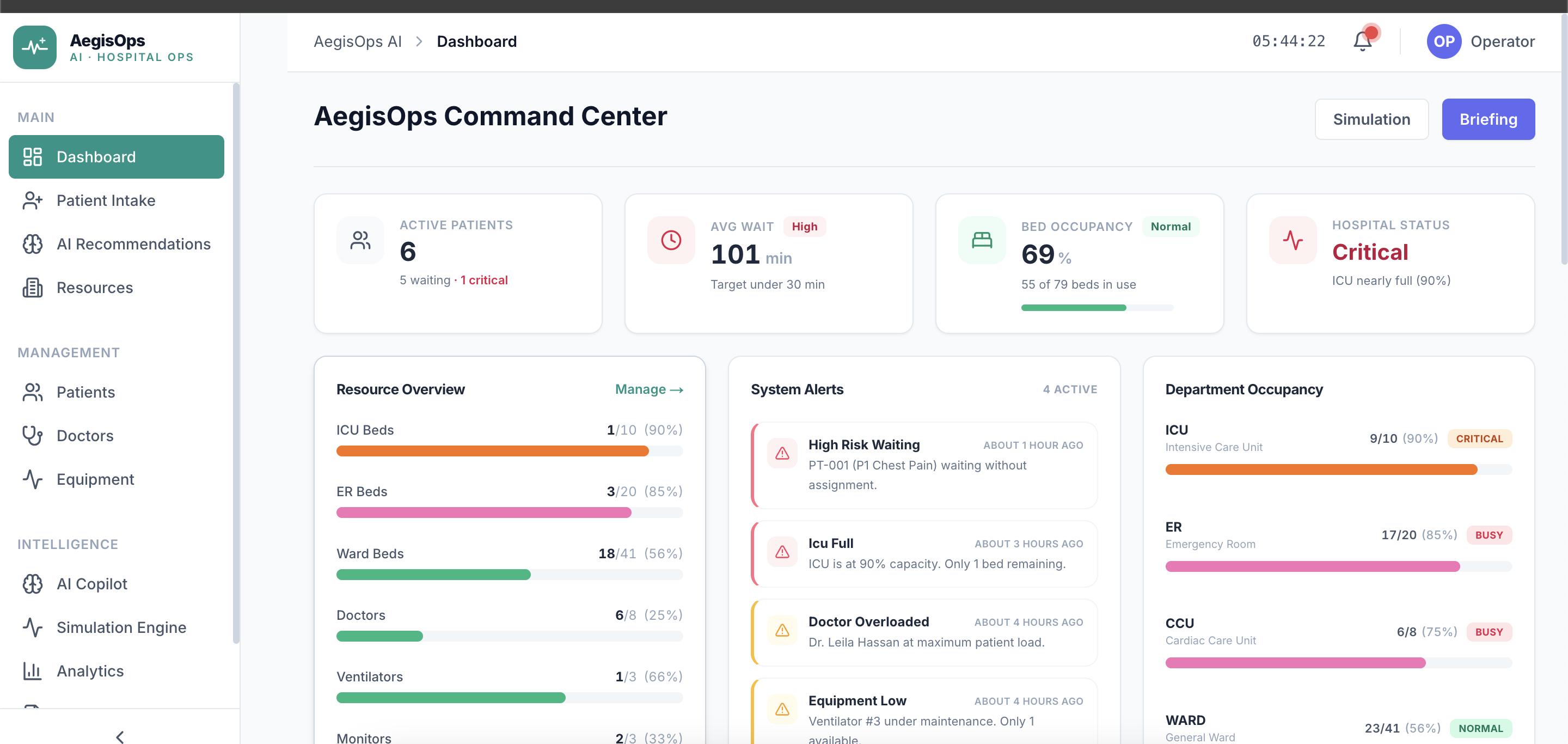
Dashboard AegisOps AI
-
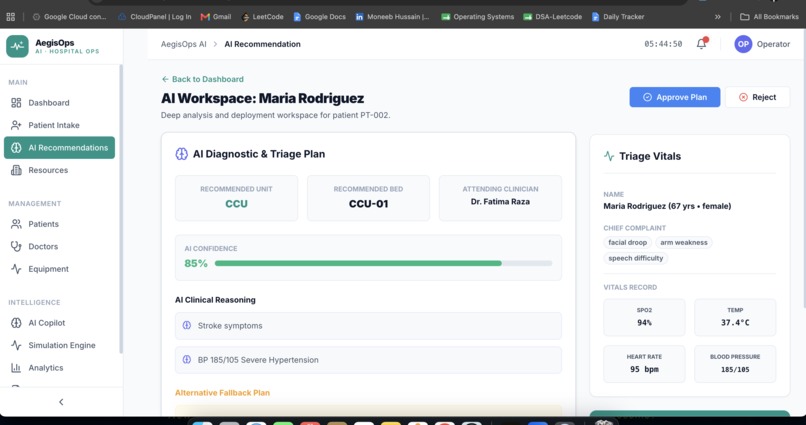
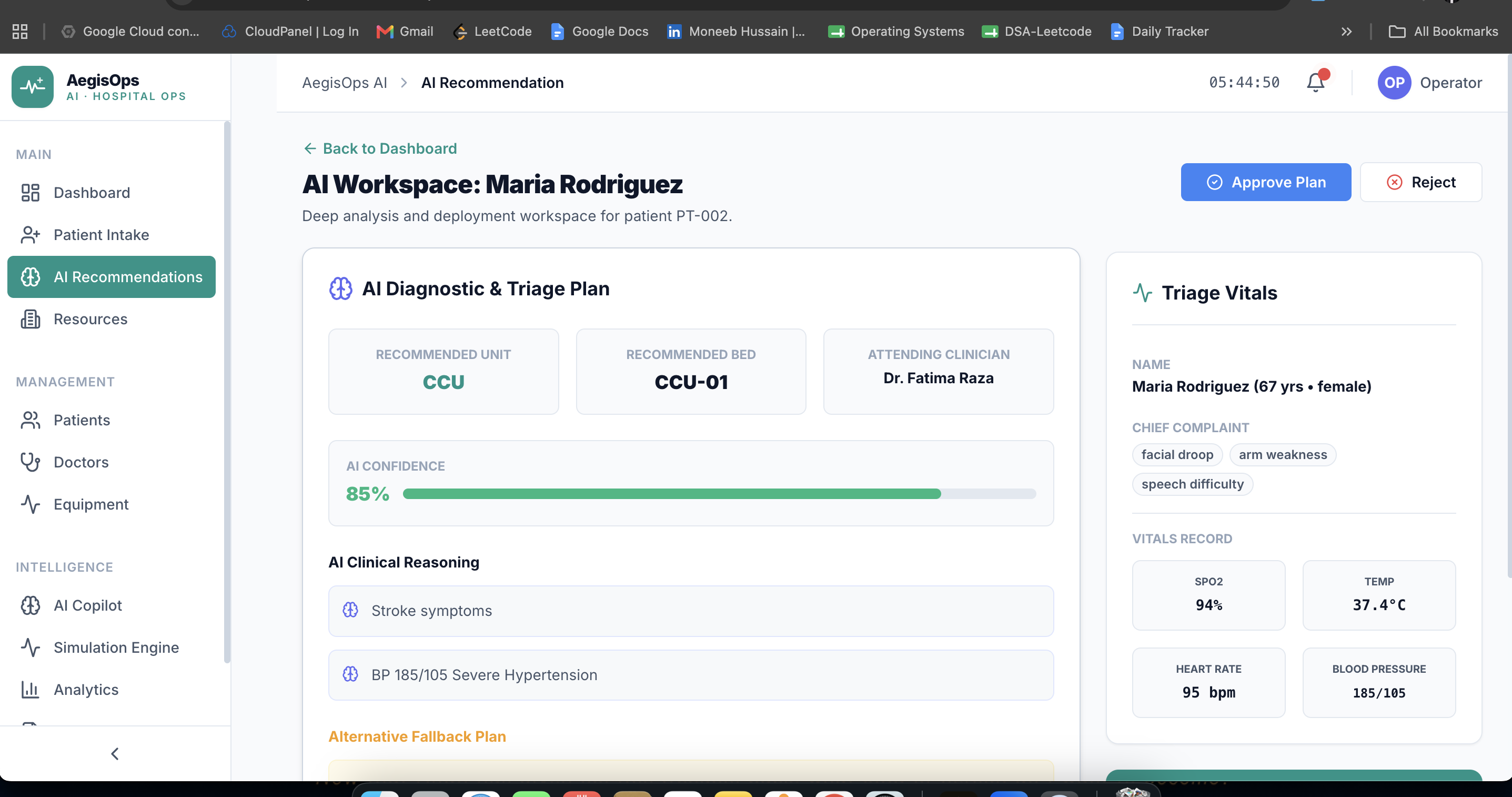
AI Recommendations
-
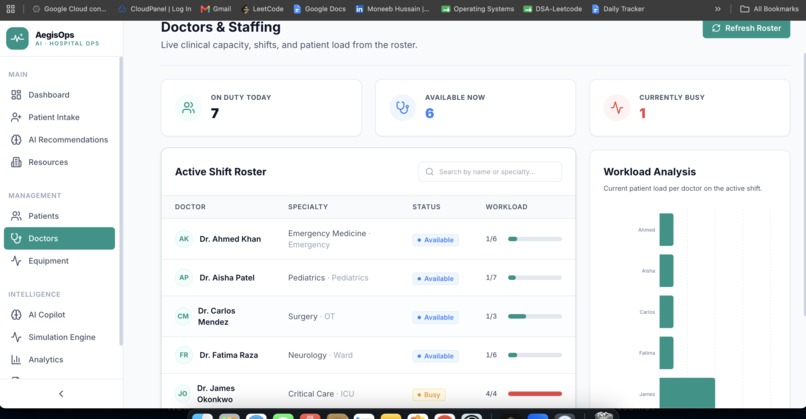
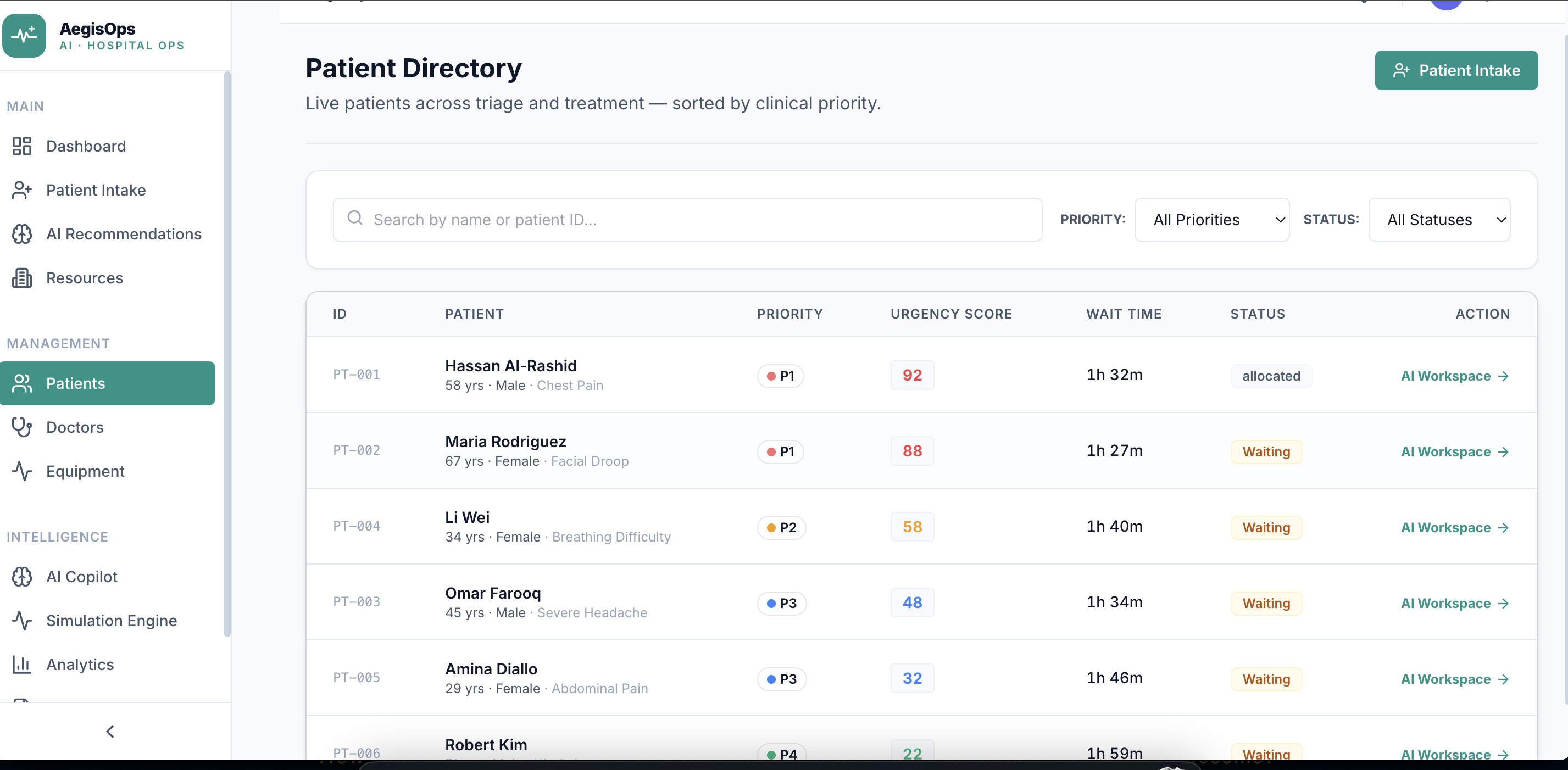
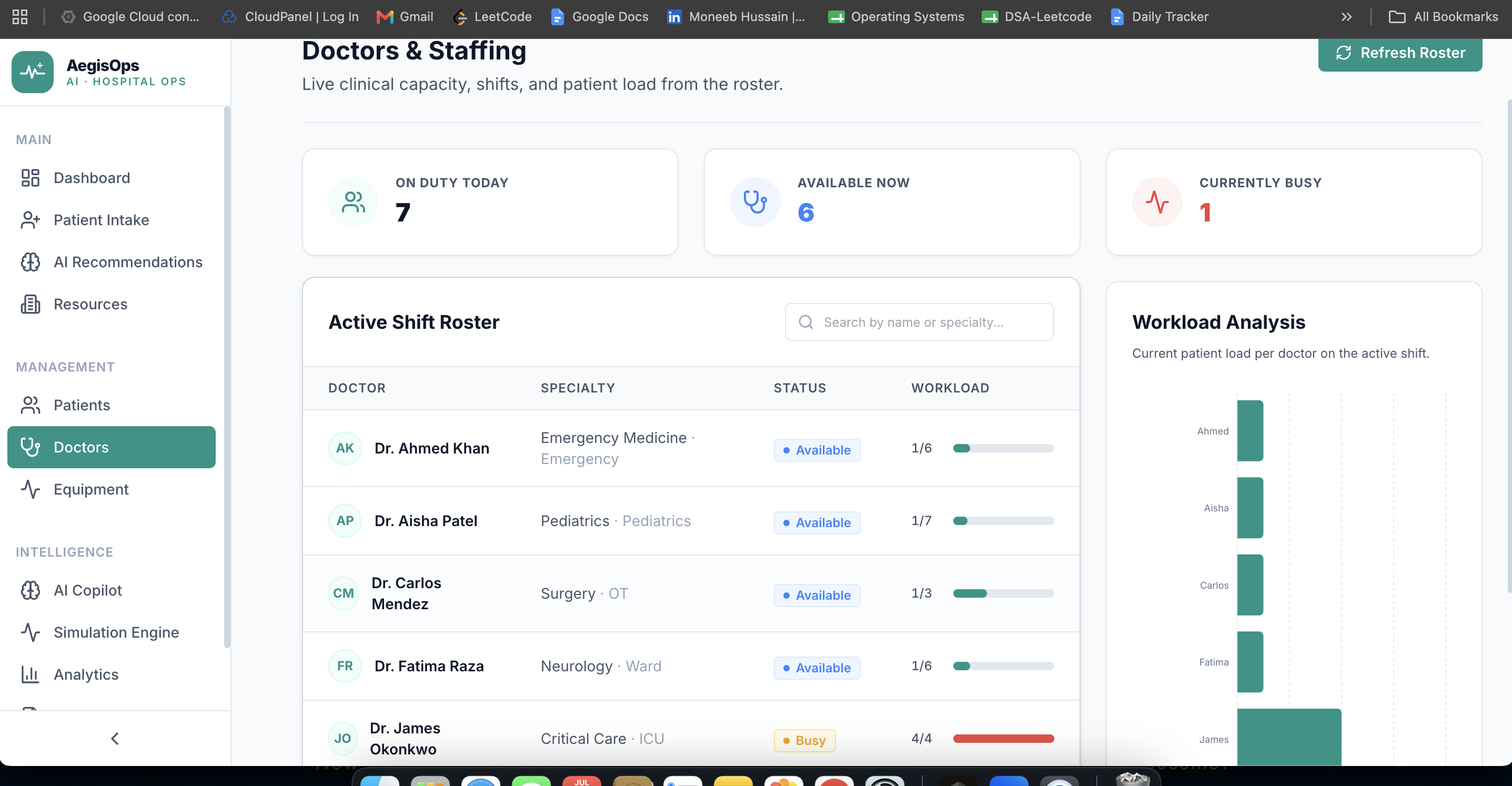
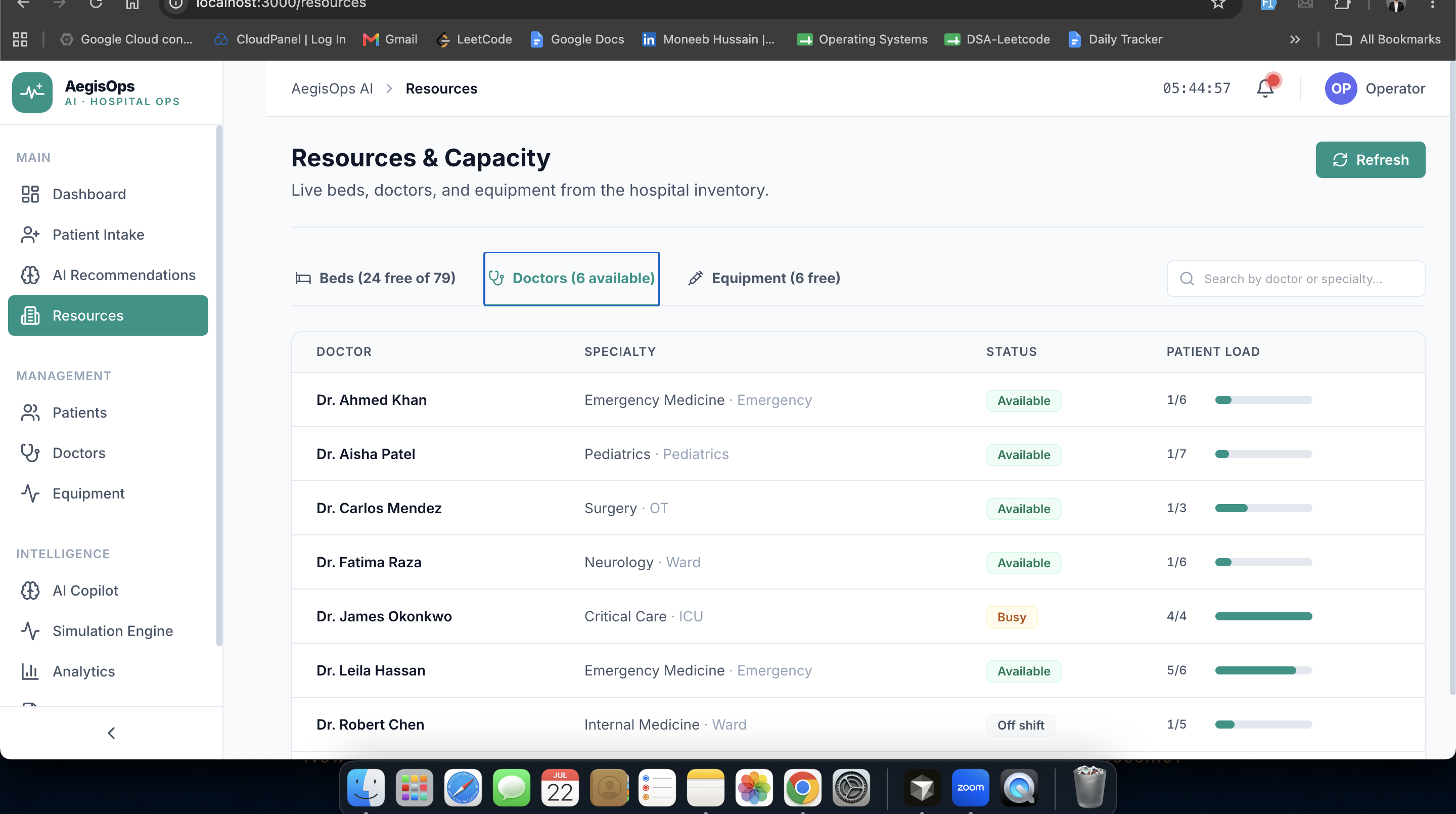
Doctors Available
-
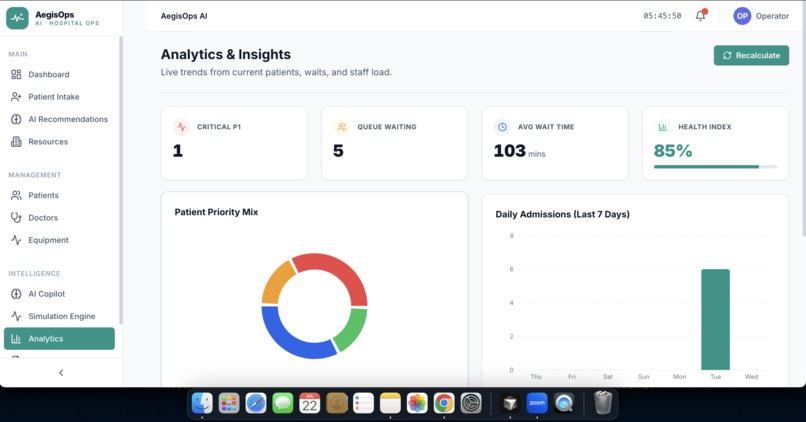
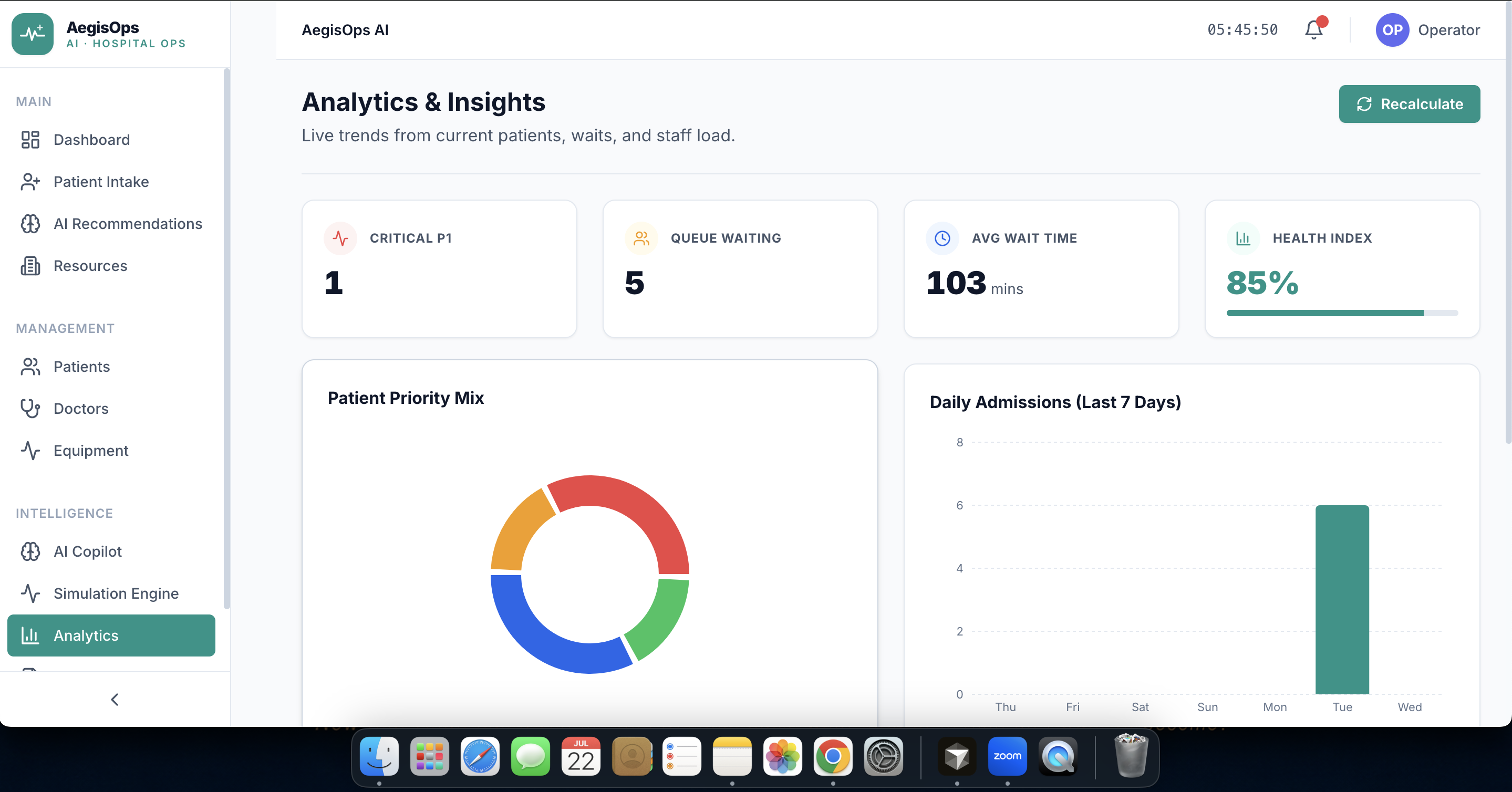
Analytics
-
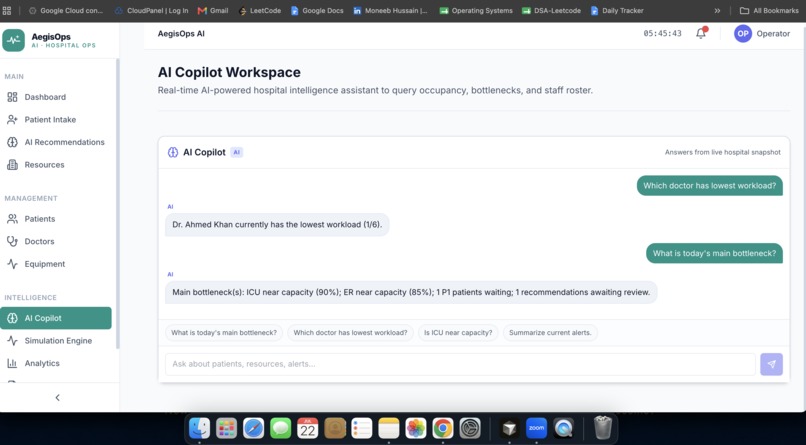
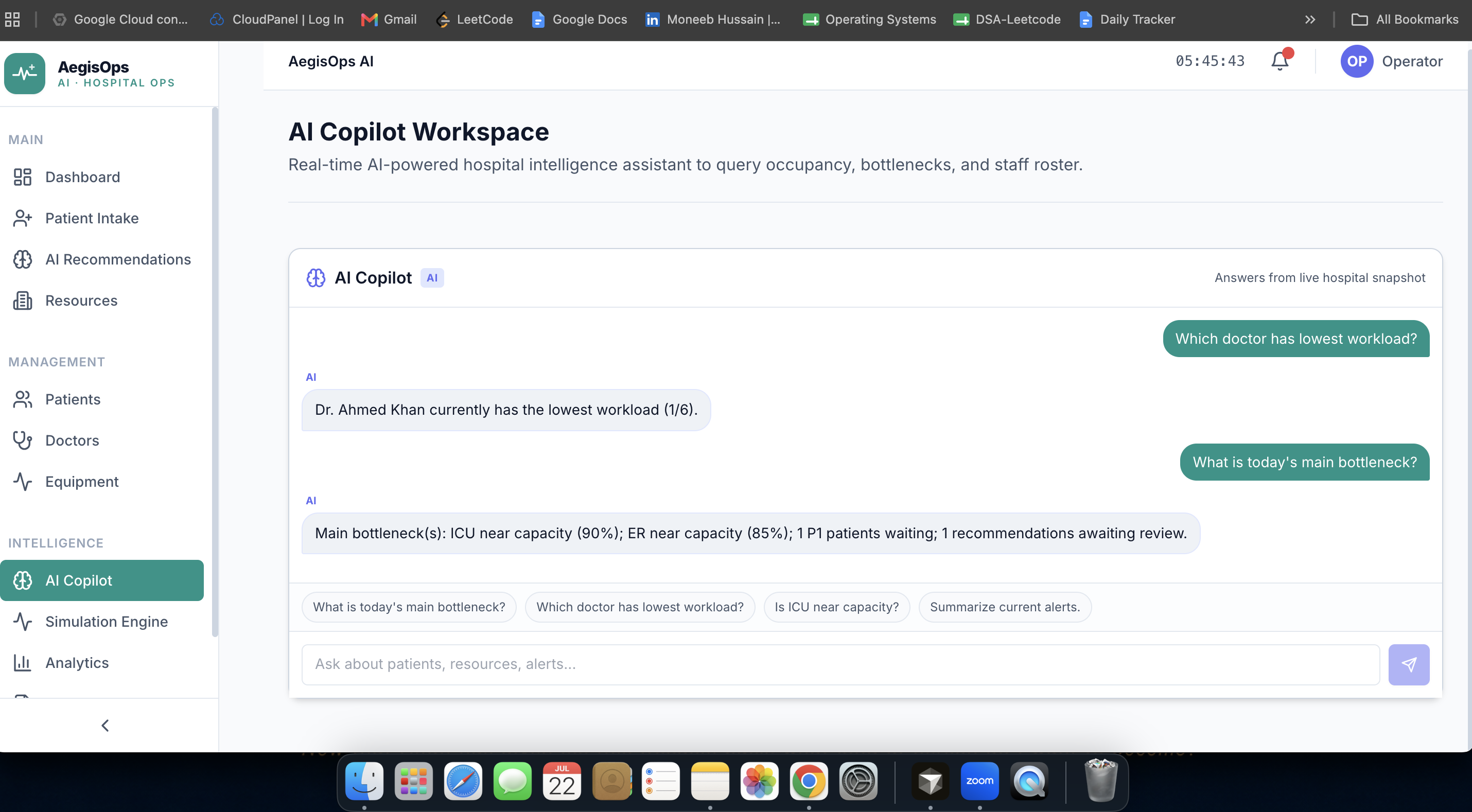
AI Copilot, Smart Analysis
-
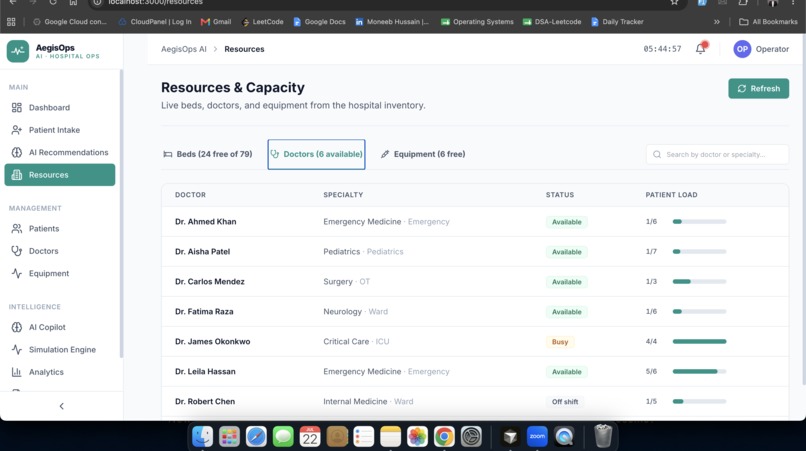
Resources Available and capacity
-
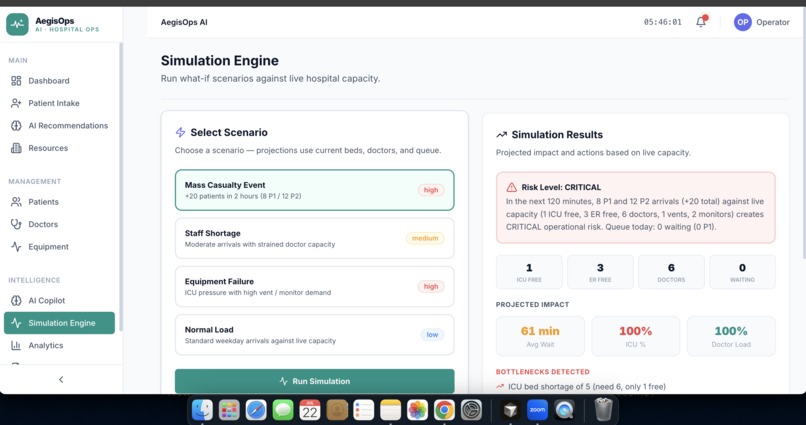
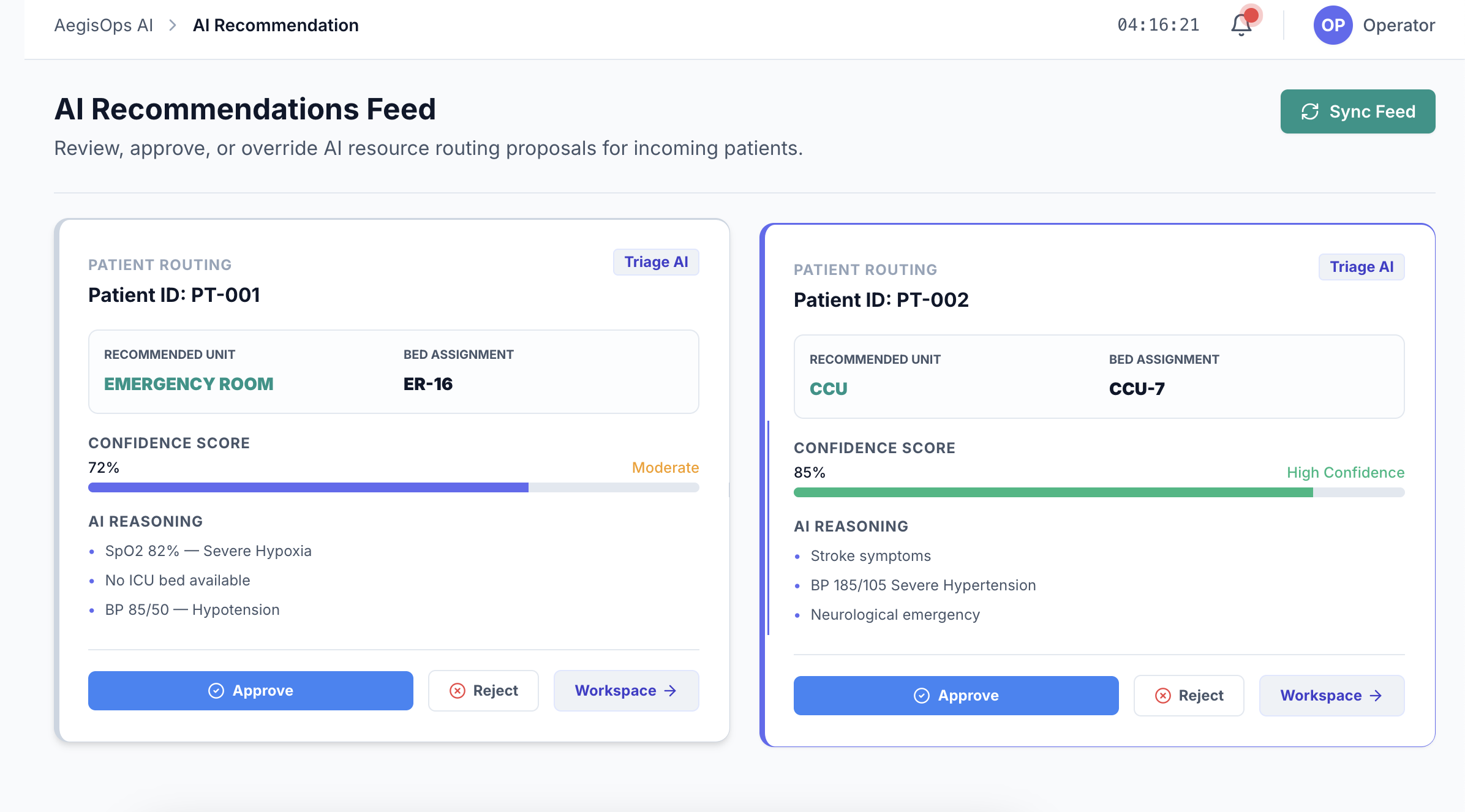
Recommendation Preview
-
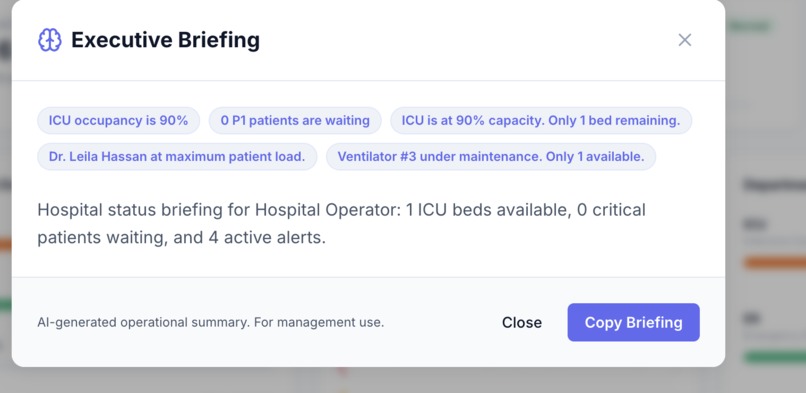
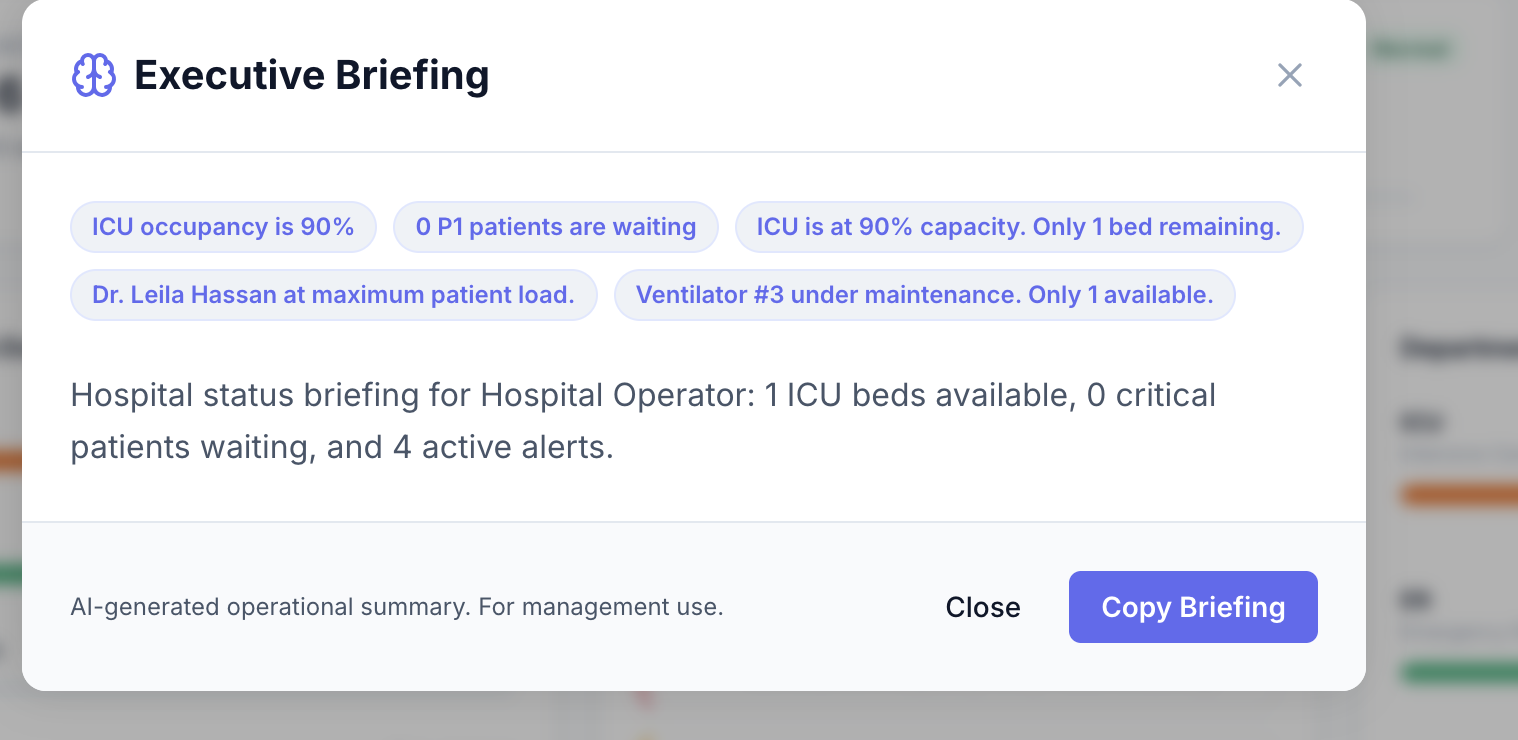
Brief Overview
-
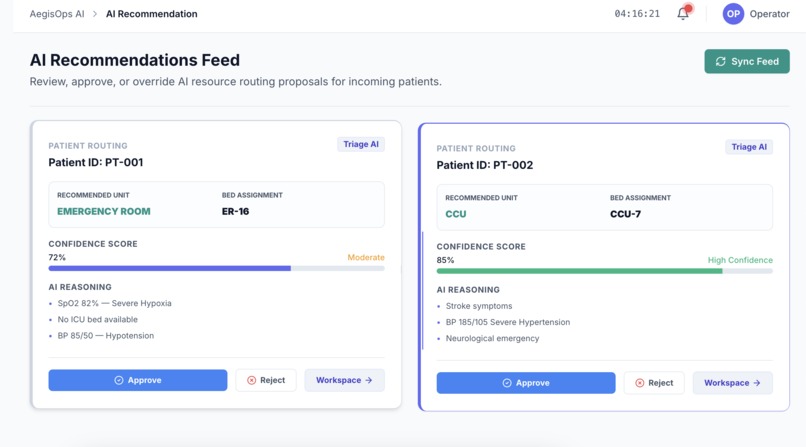
Recommendation Feed
AegisOps AI
Inspiration
Hospitals operate in fast-changing, resource-constrained environments where every minute matters. During peak hours or emergencies, staff must continuously balance patient urgency with limited beds, doctors, equipment, and treatment spaces. Existing hospital systems are excellent at storing information, but they often provide limited real-time decision support for managing operational complexity.
We wanted to explore how modern AI could help hospitals make better operational decisions—not by replacing healthcare professionals or diagnosing patients—but by acting as an intelligent assistant that provides recommendations, explains its reasoning, predicts operational impact, and keeps humans in complete control of every critical decision.
What it does
AegisOps AI is a human-in-the-loop hospital operations decision intelligence platform designed to support real-time operational decision making.
The platform enables hospitals to:
- Register patients quickly using a rapid triage intake.
- Import multiple patients at once for emergency scenarios.
- Automatically prioritize patients using a deterministic rule engine.
- Monitor live availability of beds, doctors, departments, and medical equipment.
- Generate AI-assisted operational recommendations.
- Validate every AI recommendation before it reaches hospital staff.
- Suggest alternative allocation plans when resources are unavailable.
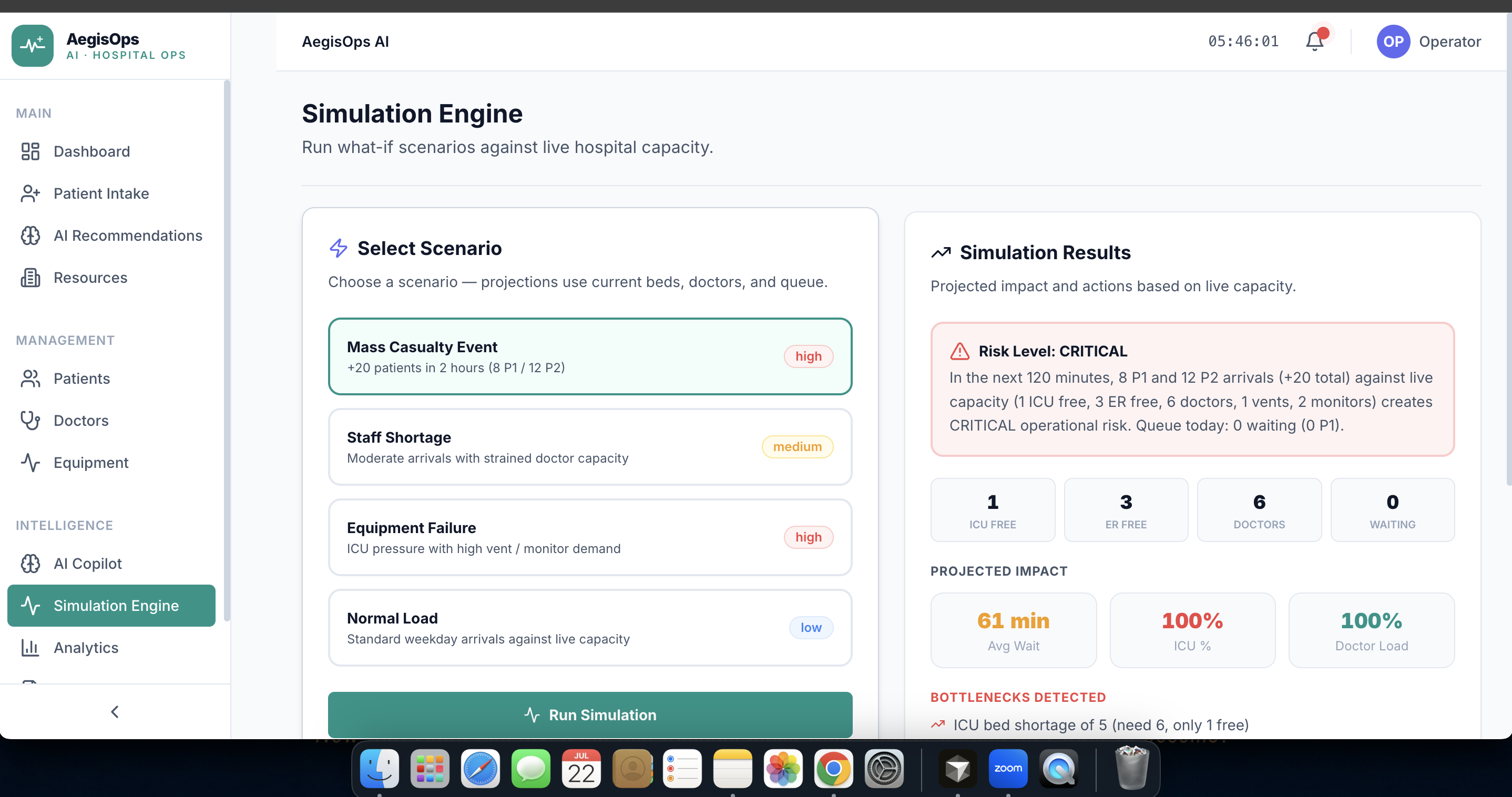
- Simulate operational impact before decisions are approved.
- Maintain a complete audit trail for transparency.
- Keep healthcare professionals in full control through mandatory human approval.
Unlike traditional hospital dashboards, AegisOps AI continuously combines patient urgency with live hospital capacity to recommend the most appropriate operational workflow.
AI Decision Intelligence
Our AI does not diagnose diseases or prescribe treatments.
Instead, it acts as an operational decision-support system.
Using structured information about:
- patient priority,
- current hospital occupancy,
- available doctors,
- available beds,
- available equipment,
- and the current waiting queue,
the AI recommends:
- where a patient should be managed,
- which doctor should be assigned,
- which resources are required,
- whether resource conflicts exist,
- alternative plans if resources are unavailable,
- and a clear explanation of why the recommendation was made.
Every recommendation is validated by the backend before being presented to hospital staff.
AI Operations Copilot
We also built an AI Operations Copilot that understands the hospital's current operational state.
Instead of navigating multiple dashboards, staff can simply ask questions such as:
- How many ICU beds are available?
- Which emergency doctors are currently free?
- How many critical (P1) patients are waiting?
- Which department has the highest occupancy?
- Why was this patient given the highest priority?
- Which equipment is currently unavailable?
- What is the current emergency room occupancy?
- Show the current patient flow across departments.
The copilot retrieves live operational data and provides clear, context-aware answers, making hospital information instantly accessible through natural conversation.
Operational Simulation
One of our favorite features is the Simulation Engine.
Before approving a patient allocation, hospital staff can simulate its operational impact without affecting live hospital data.
For example, staff can ask:
"What happens if this patient is assigned to Emergency Room 3?"
The system predicts:
- department occupancy,
- doctor workload,
- waiting time changes,
- equipment availability,
- potential bottlenecks,
- resource shortages,
- and operational risks.
Instead of simply displaying numbers, the AI explains the consequences and recommends proactive actions, such as assigning another doctor, reserving equipment, or preparing for ICU transfer.
This allows hospitals to evaluate different scenarios before committing to operational decisions.
How we built it
Our platform combines deterministic backend logic with large language models to build a trustworthy AI workflow.
The complete pipeline is:
- Patient arrives through rapid intake or batch import.
- The rule engine calculates an urgency score and assigns a priority level.
- The backend gathers the current hospital context, including live resources and queue information.
- This structured context is sent to our AI service to generate operational recommendations.
- The backend validates every recommendation against current hospital resources.
- If conflicts are detected, the system generates alternative operational plans.
- Staff review and approve or override recommendations.
- The dashboard updates in real time.
- The Simulation Engine predicts operational impact before changes are applied.
To improve reliability, we implemented an AI provider fallback mechanism. The platform primarily uses the OpenAI API, and if it is unavailable or encounters an error, requests automatically fall back to other model, helping maintain continuity during demonstrations and improving overall resilience.
Challenges we ran into
One of our biggest challenges was ensuring that AI remained an assistant rather than an autonomous decision-maker.
Instead of allowing the model to directly allocate hospital resources, we designed a validation layer that checks every recommendation against current hospital availability before presenting it to staff.
Another challenge was balancing speed with realism. We introduced rapid patient intake for emergency situations while allowing more detailed registration later. We also developed an operational simulation engine that predicts the impact of proposed decisions without modifying live hospital data.
Finally, we designed our AI architecture to remain reliable even if an external model provider becomes unavailable by implementing automatic model fallback between OpenAI and other models.
What we learned
This project reinforced that building trustworthy AI requires much more than connecting a language model to an application.
We learned the importance of combining deterministic rules, structured backend validation, explainability, fallback strategies, human oversight, and operational reasoning to build systems that users can trust.
We also gained hands-on experience with multi-agent workflows, AI orchestration, operational simulations, structured outputs, and real-time decision support.
What's next for AegisOps AI
We plan to expand AegisOps AI by adding:
- Integration with Electronic Health Record (EHR) systems.
- Live ambulance and emergency dispatch integration.
- Real-time IoT and medical device connectivity.
- Predictive resource demand forecasting.
- Multi-hospital coordination during emergencies.
- Reinforcement learning for operational optimization.
- Department-specific AI copilots.
- Advanced analytics for hospital administrators.
- Support for additional critical infrastructure domains such as disaster response, emergency management, and public safety.
Our long-term vision is to build a trustworthy operational intelligence platform that helps organizations make better decisions when resources are limited and every second counts.
Built With
- codex
- fastapi
- gpt-4.1-mini
- gpt-5.6
- next.js
- openapi
- python
- supabase
- tailwind
- typescript
- vercel


Log in or sign up for Devpost to join the conversation.