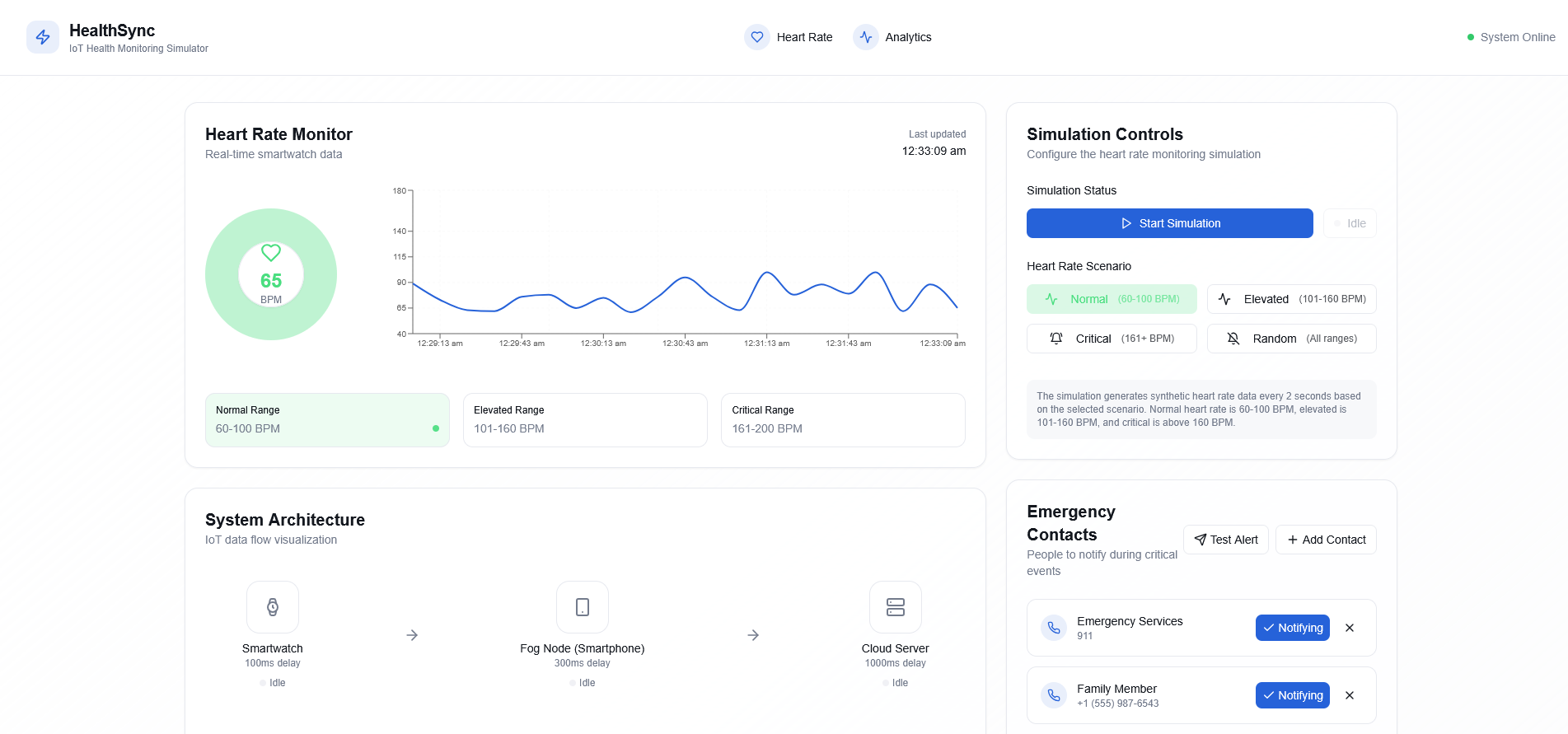
Inspiration COVID-19 exposed gaps in remote healthcare. We built a fog computing–based system to enable low-latency, reliable, real-time health monitoring.
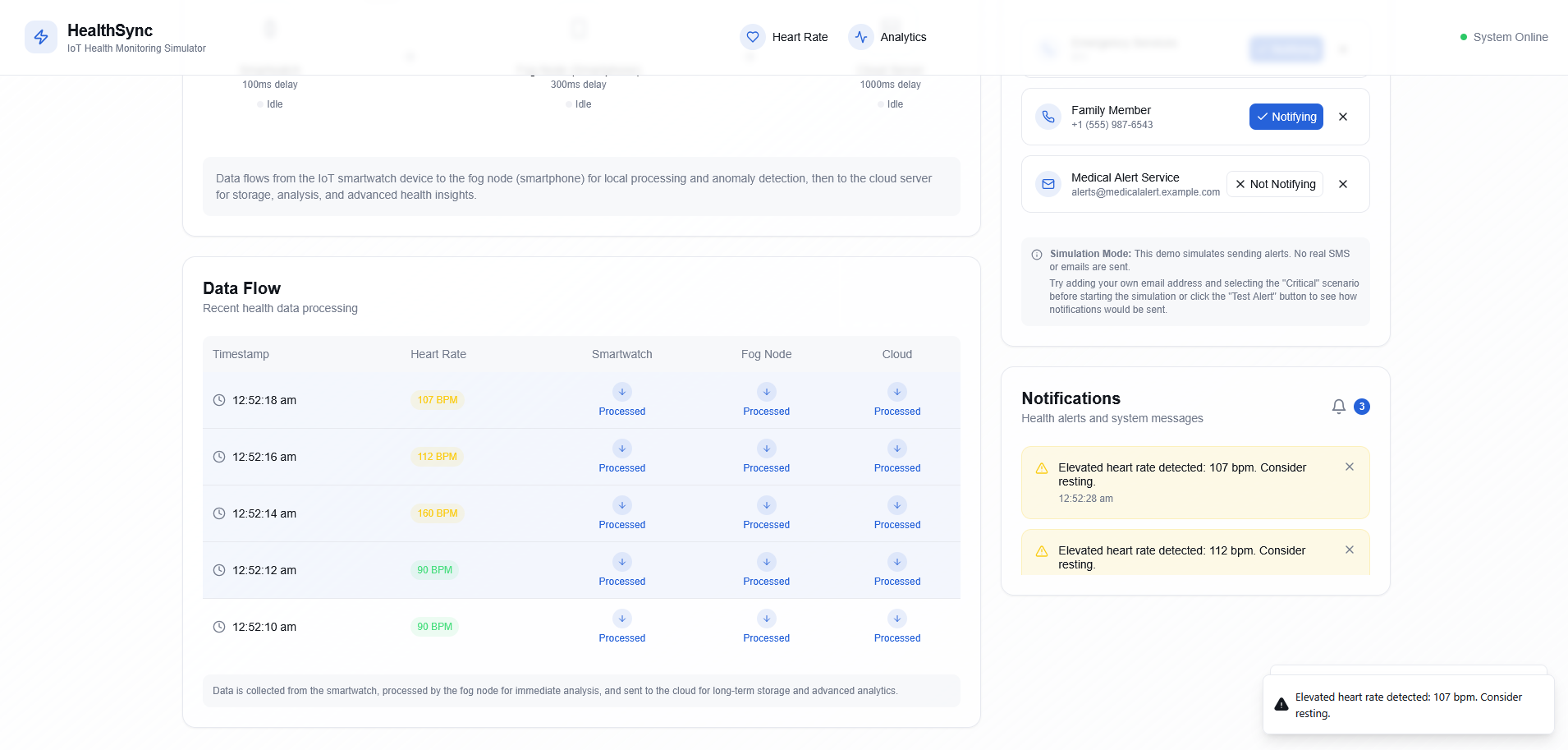
What it does Simulates multi-patient health data (HR, SPO2, temp, RR) Processes data at edge nodes (iFogSim + MQTT) Provides a live dashboard with real-time updates Sends smart alerts for anomalies (tachycardia, hypoxia, fever) Stores and visualizes historical health trends
How we built it iFogSim → MQTT → Flask (API + WebSocket) → React Dashboard Free-tier cloud (Railway + Vercel) Real-time anomaly detection and visualization Challenges MQTT disconnections → added auto-reconnect & fallback WebSocket CORS issues → fixed via headers iFogSim complexity → built custom sensors Free-tier limits → optimized resource usage
Accomplishments End-to-end system with <200ms latency Zero-cost deployment, 95%+ uptime Scalable, modular, and responsive design
What we learned Fog/edge computing and MQTT pub-sub patterns Real-time sync across distributed systems Cost-efficient cloud deployment strategies
What’s next ML-based predictive analytics Mobile app with push alerts Hardware integration (IoT devices, wearables) Blockchain medical records + compliance readiness
Built With
- flask
- ifogsim
- java
- javascript
- mqtt
- react
- vercel


Log in or sign up for Devpost to join the conversation.