-
-
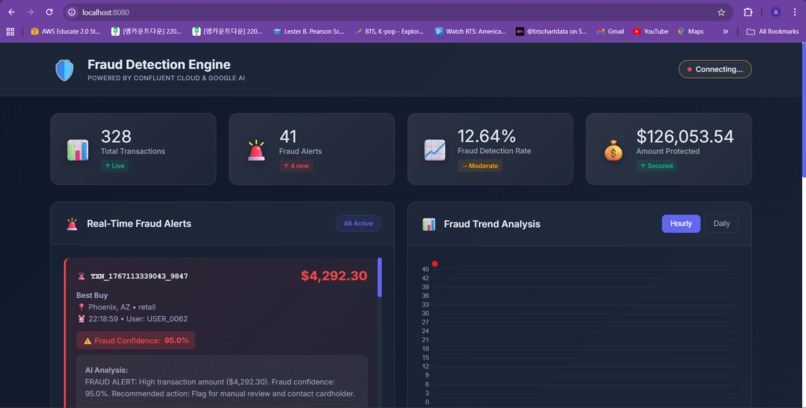
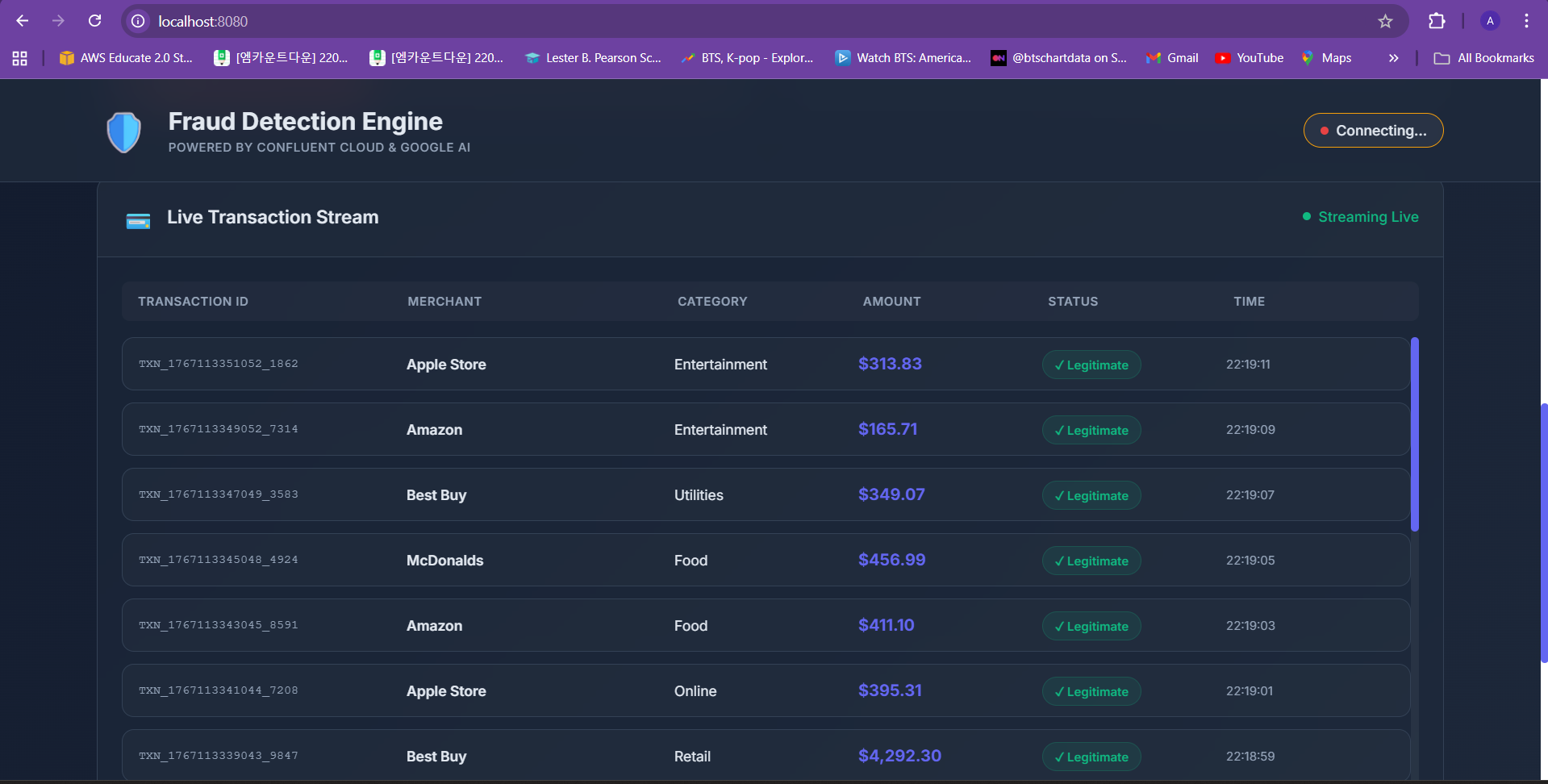
Fraud Detection Engine Dashboard
-
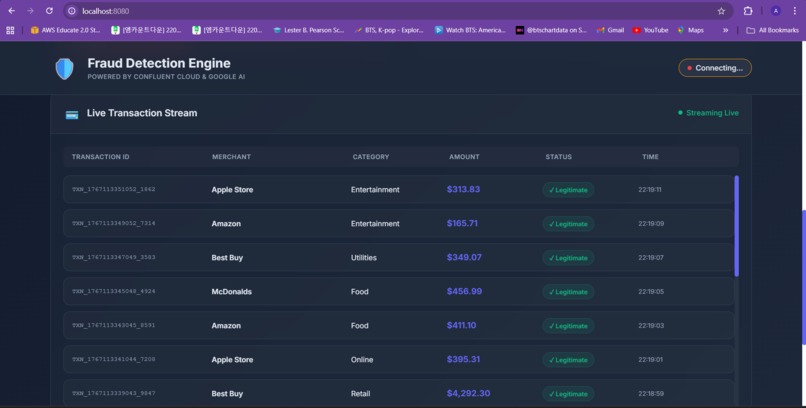
Fraud Detection Engine Dashboard
-
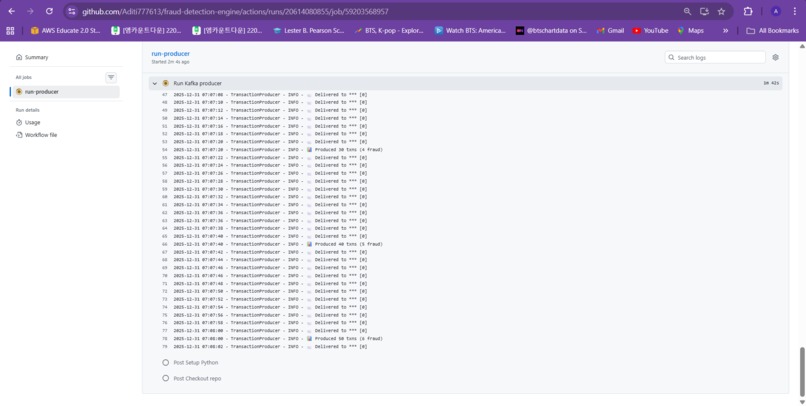
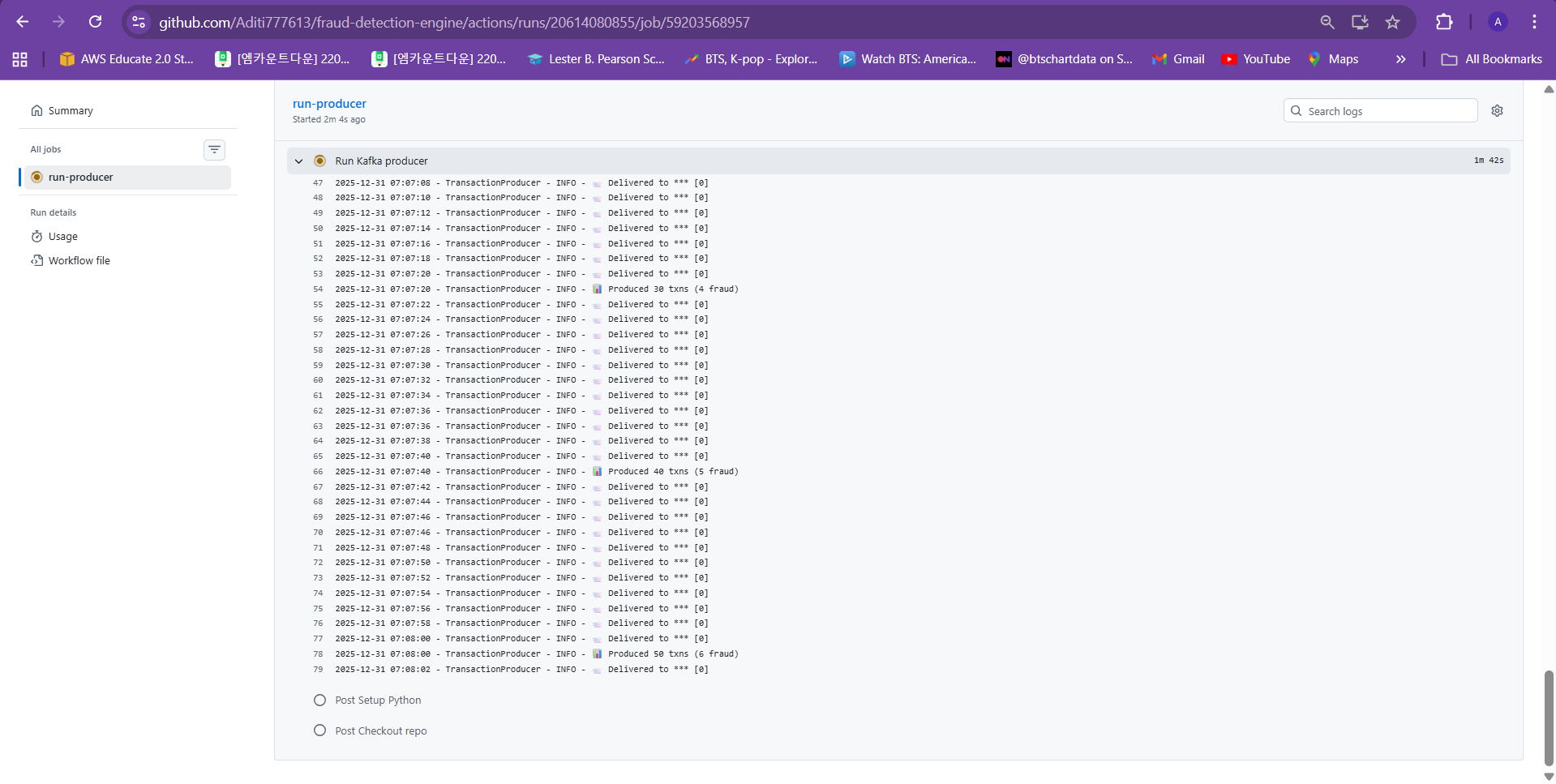
Kafka Producer running
Inspiration
Financial fraud often goes unnoticed until significant damage is already done. Many existing fraud systems rely on batch processing or delayed analysis, which is ineffective for modern, high-volume transaction streams.
We wanted to build a system that detects fraud as transactions happen, provides real-time alerts, and explains why a transaction is suspicious using AI — not just a binary flag.
What it does
Fraud Detection Engine is a real-time fraud detection platform that continuously processes transaction streams, identifies suspicious activity, and pushes instant alerts to a live dashboard.
Key features include:
- Live transaction ingestion and processing
- Real-time fraud alerts via WebSockets
- AI-generated explanations for flagged transactions
- Live metrics and fraud trend visualization
- Automatic fallback logic when AI services are unavailable
How I built it
The system is built as an end-to-end streaming architecture:
- Kafka (Confluent Cloud) streams transaction events in real time
- FastAPI serves as the backend API and WebSocket server
- WebSockets push live updates to the frontend without refresh
- Google Vertex AI (Gemini models) generate human-readable fraud explanations
- Rule-based + ML scoring determines fraud likelihood
- HTML, CSS, JavaScript power the real-time dashboard UI
- Docker orchestrates services for local development
The backend consumes transactions from Kafka, evaluates fraud risk, triggers alerts, and broadcasts updates instantly to connected clients.
Challenges I ran into
- Real-time synchronization: Keeping REST-based metrics and WebSocket updates consistent without UI flicker or duplicate counts.
- WebSocket stability: Handling disconnects, reconnects, and connection state flickering in the frontend.
- Gemini model compatibility: Adapting to evolving Gemini model versions and API availability within Vertex AI.
- Fault tolerance: Ensuring the system continues working when external AI services fail.
- Streaming complexity: Managing Kafka consumers and producers reliably in a local development setup.
Each challenge required iterative debugging and architectural adjustments.
Accomplishments that we're proud of
- Built a fully real-time fraud detection pipeline from ingestion to visualization
- Implemented live WebSocket updates with stable reconnect handling
- Designed a graceful AI fallback system when Gemini is unavailable
- Created a clean, production-style dashboard with live analytics
- Integrated multiple cloud services into a single cohesive system
What we learned
- Real-time systems require careful state management across multiple data sources
- WebSockets introduce edge cases that don’t exist in traditional REST APIs
- Cloud AI APIs evolve rapidly and must be handled defensively
- Observability and logging are critical in streaming architectures
- Building resilient systems matters more than perfect models
What's next for Real-Time Fraud Detection Engine
- Deploying the system on cloud infrastructure for scalability
- Adding adaptive fraud thresholds based on behavior patterns
- Supporting multiple AI models for explanation comparison
- Introducing role-based dashboards for analysts and admins
- Expanding detection beyond transactions (logins, behavior, anomalies)
Built With
- apache-kafka
- confluent-cloud
- css
- docker
- fastapi
- gemini-ai
- google-vertex-ai
- html
- javascript
- python
- websockets

Log in or sign up for Devpost to join the conversation.