-
-
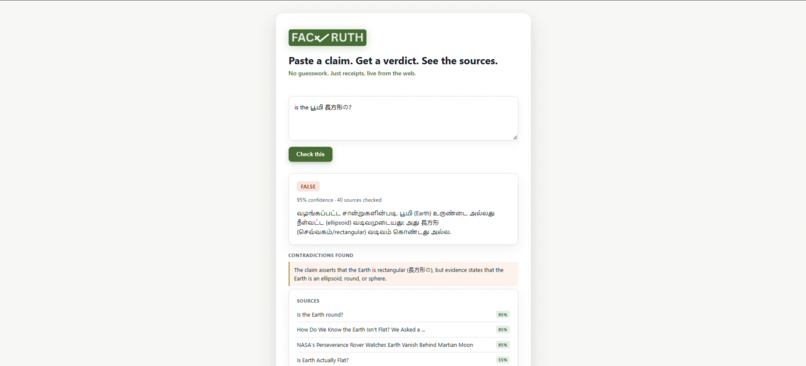
web application
-
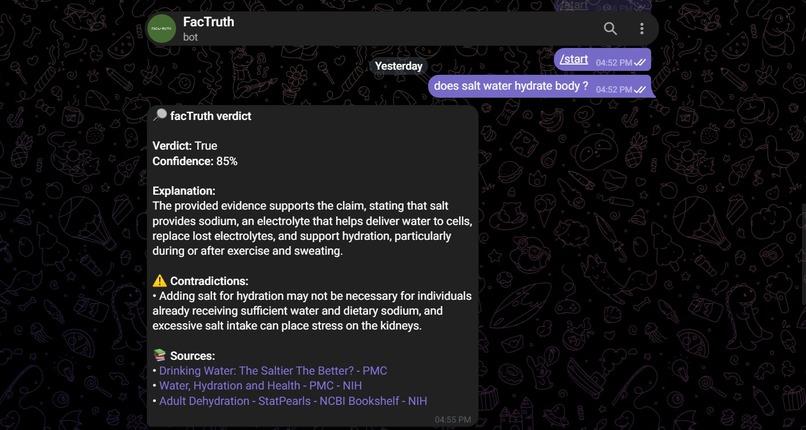
Telegram bot (bot name: FacTruth_bot)
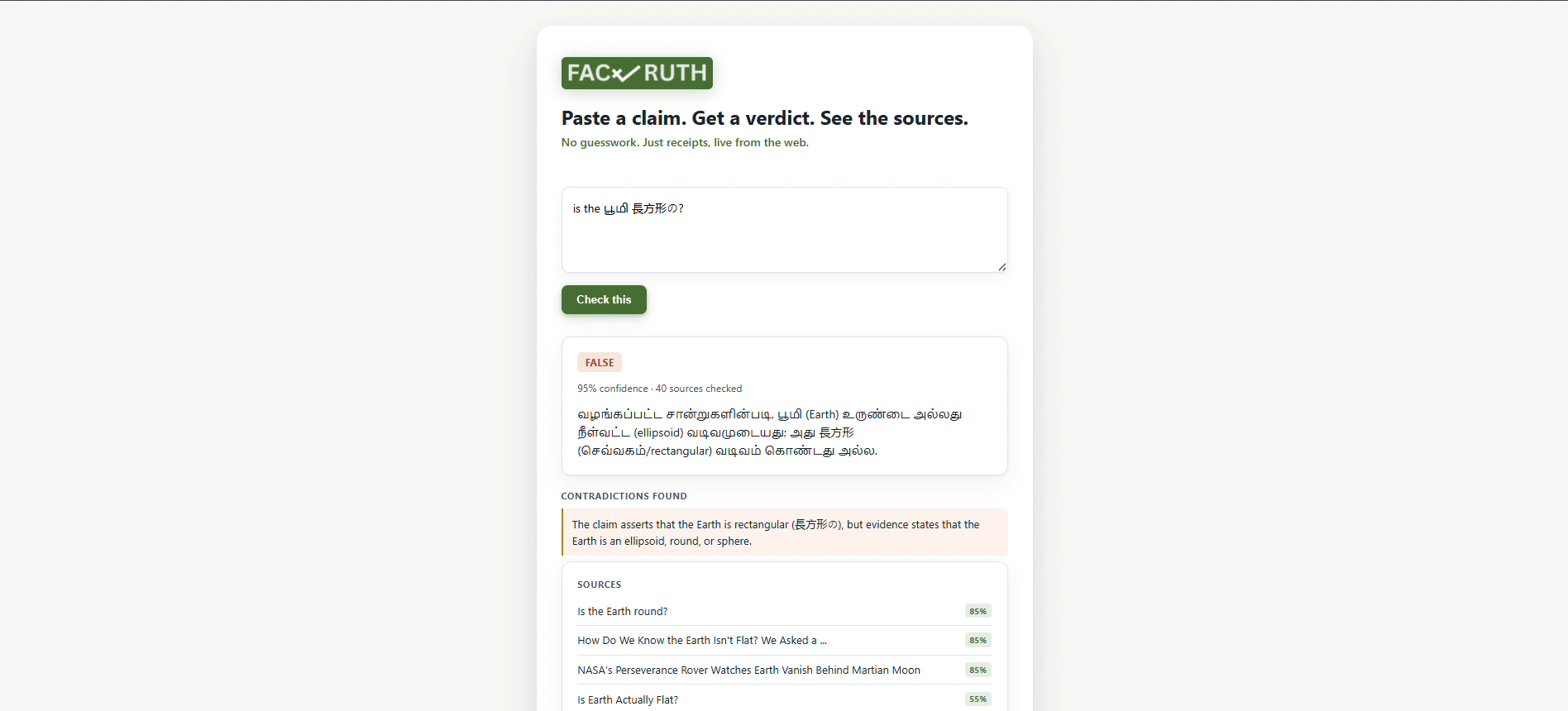
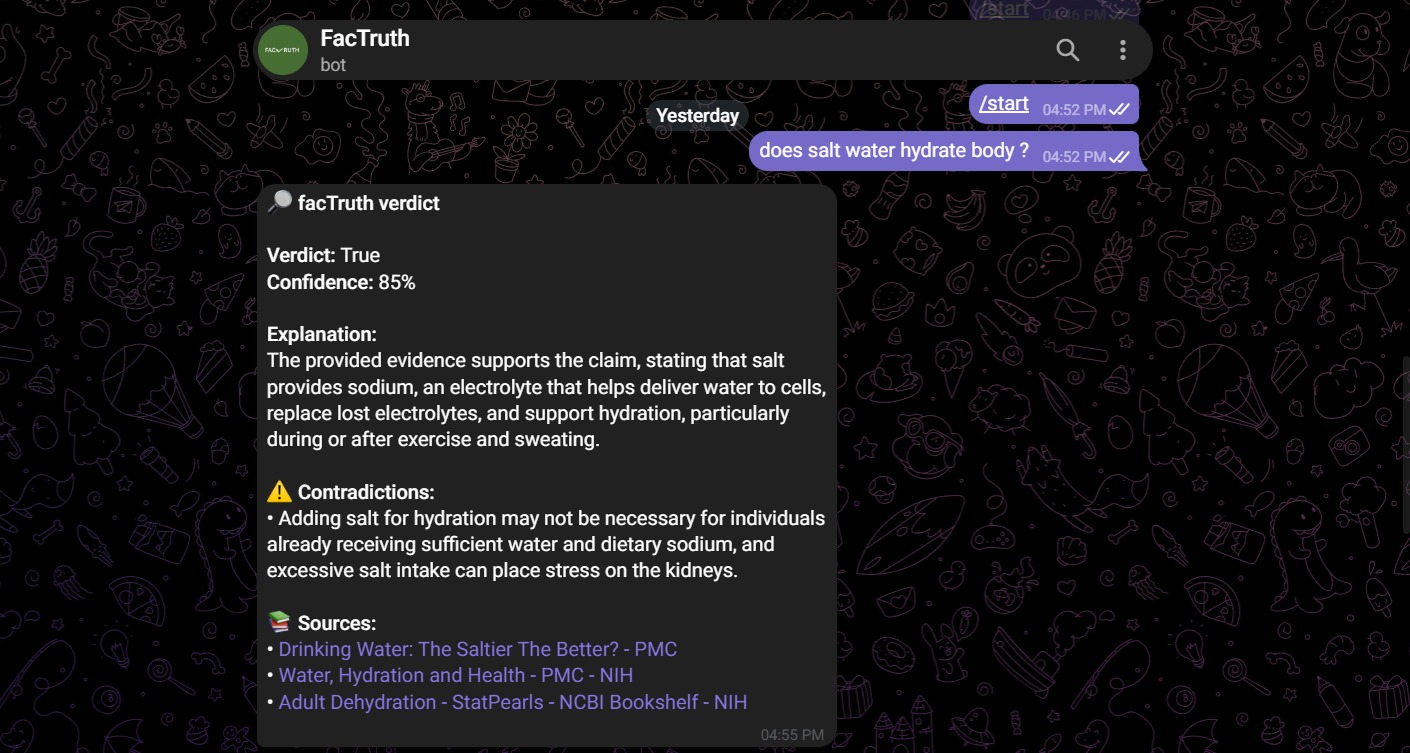
Inspiration Misinformation spreads faster than most people can verify it. We wanted to build something that closes that gap — a tool that lets anyone check a claim's accuracy in seconds, without needing research skills or specialized knowledge.
What it does FacTruth takes a claim, pulls in relevant evidence from live web and news searches, and uses AI to weigh that evidence into a verdict — complete with a confidence score, a plain-language explanation, any conflicting information found, and links back to the original sources.
How we built it The backend runs on Python and Flask, with Gemini AI handling the reasoning layer and SerpAPI supplying real-time search results. We built both a web interface and a Telegram bot as front ends, and deployed the whole system on Render.
Challenges we ran into Getting live search results to feed cleanly into the AI's reasoning process took some iteration, especially when sources disagreed with each other. We also had to work through secure API key management and the added complexity of deploying two separate interfaces — the website and the Telegram bot — from one backend.
Accomplishments that we're proud of We shipped a fully working fact-checking system end to end: live evidence gathering, AI-driven analysis, a functional web app, and a Telegram chatbot, all deployed and operational.
What we learned This project taught us how to tie AI reasoning together with external APIs, work with real-time data, design a conversational bot interface, and manage the full deployment pipeline for a multi-front-end application.
What's next for FacTruth Looking ahead, we want to add support for multiple languages, extend verification to images and video, build in source credibility scoring, keep a history of past verifications, and expand detection to broader categories of misinformation.

Log in or sign up for Devpost to join the conversation.