-
-
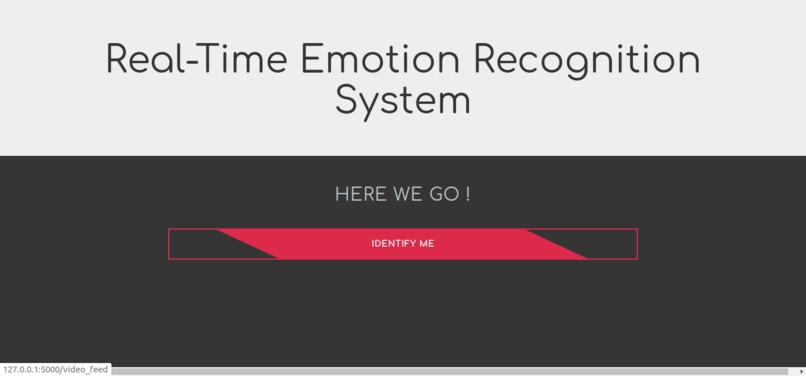
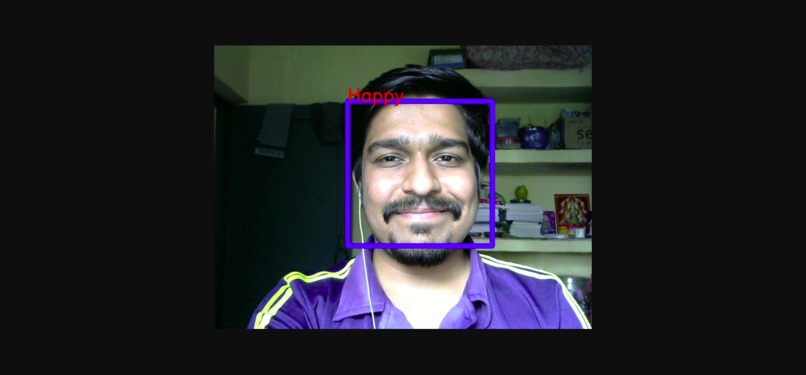
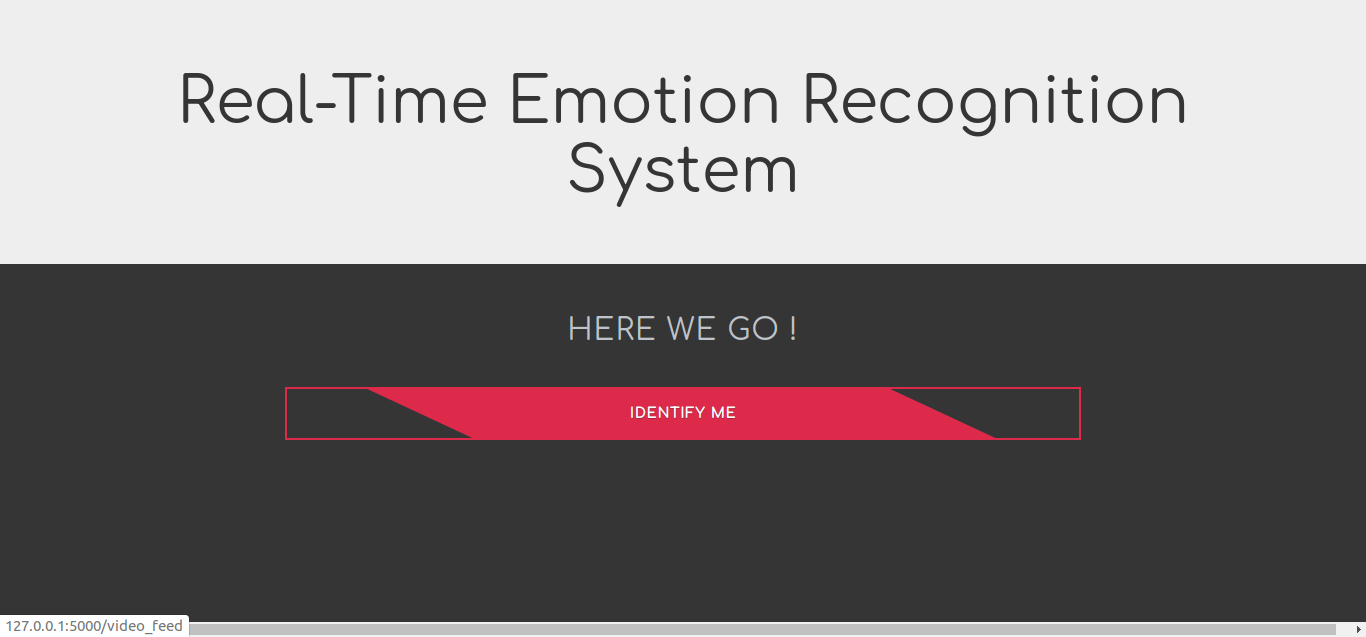
Web Application
-
-
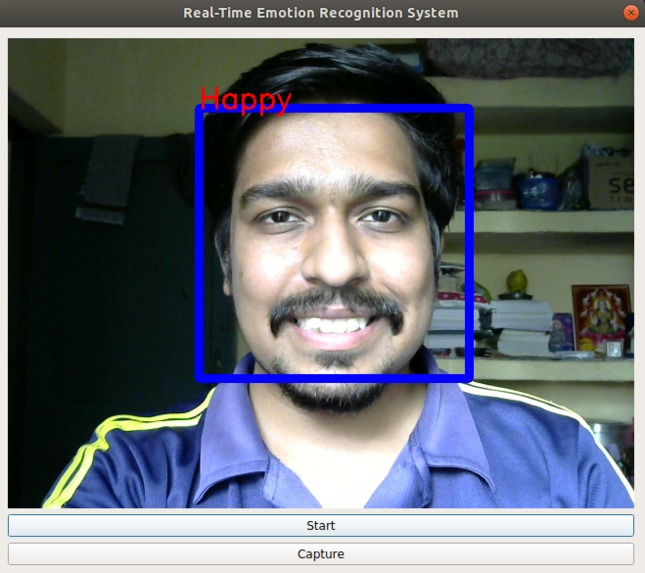
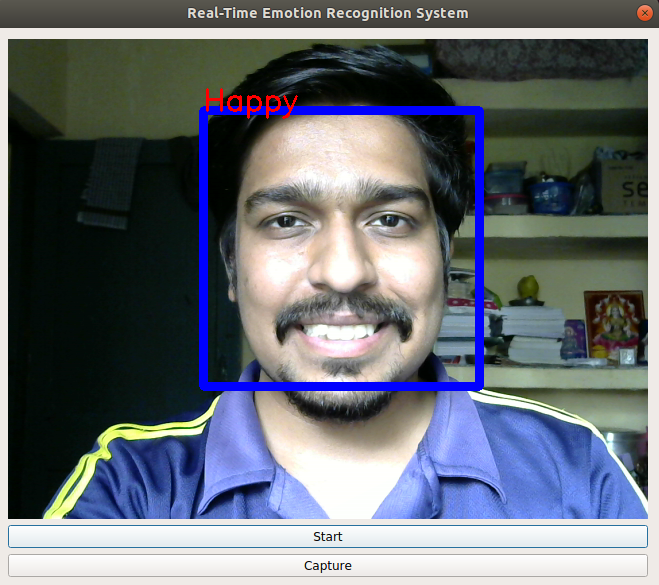
Desktop Application
-

Angry
-

Disgust
-
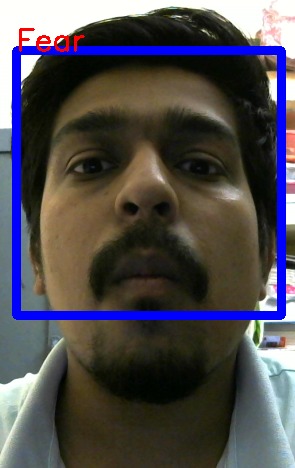
Fear
-

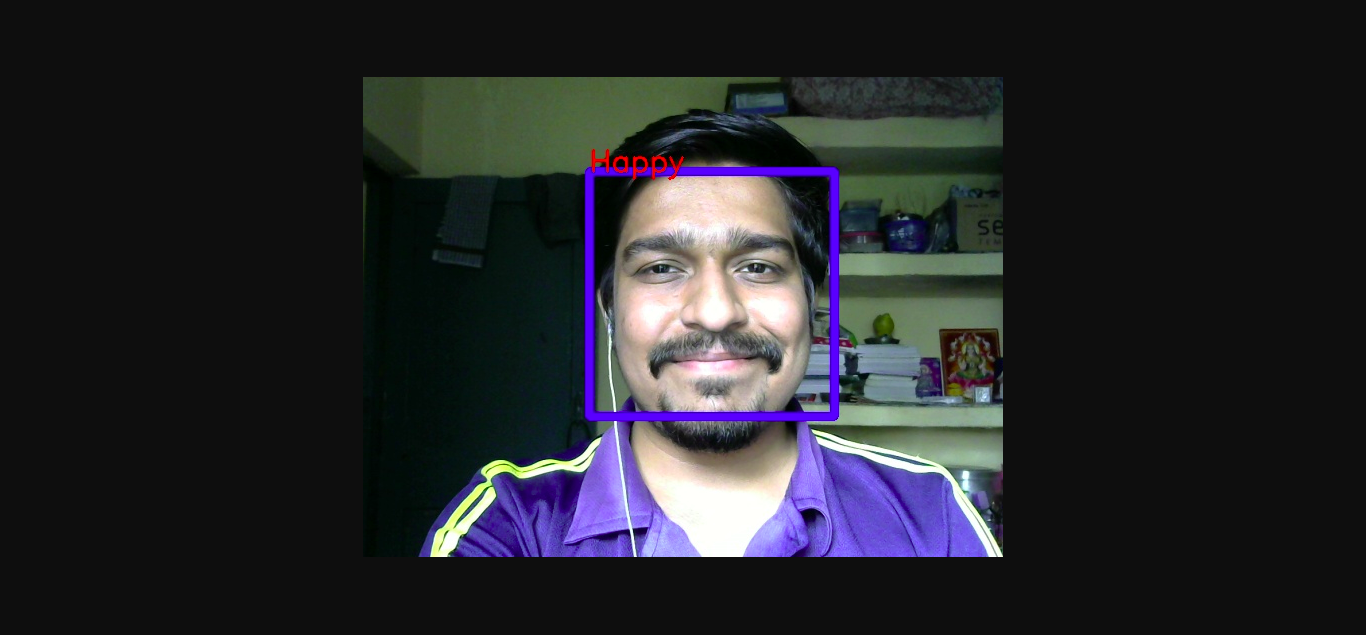
Happy
-

Neutral
-

Sad
-

Surprise







Inspiration
The identification system has undergone great development since its invention. Related techniques are widely utilized and have many applications, such as the robot obstacle avoidance, the robotic arm system learning from human demonstrations, the recognition of handwritten characters, the classification of cats and dogs, the classification of flowers, etc.
Emotion recognition plays a significant role in recognizing one’s effect and in turn, helps in building meaningful and responsive Human-Computer Interface (HCI), ATM Security, Lie Detection, Face Detection in Interviews, etc.
What it does
This Project takes Real-Time images (i.e. from user web-camera) and predicts its emotion simultaneously. It gives seven basic emotion (Happy, Angry, Sad, Fear, Disgust, Surprise and Neutral).
How we built it
Built using the Python programming language.
Algorithm for the model is Convolutional Neural Networks (CNNs).
For Web Application: Flask is used and Desktop Application: PyQt5 is used, both are python based frameworks.
Challenges we ran into
The Challenge to build-up this project was to have better accuracy of the CNN model.
Accomplishments that we're proud of
Got Accuracy up to 91%. Accuracy is increased due to Google Colab Platform that provides inbuilt GPU and CUDA features.
What we learned
Convolutional Neural Networks (CNNs)
Flask
PyQt5.
What's next for Real-Time-Emotion-Recognition
The future scope of this project:
- Can Predicts Depression Level using Emotion Recognition.
- In the future, input for the model will be 3D format so, this project can be used for 3D input images.
Instructions
Already CNN model is trained. Just need to run Emotion_Recognition.py (Desktop Application) and app.py (Web Application).


Log in or sign up for Devpost to join the conversation.