-
-
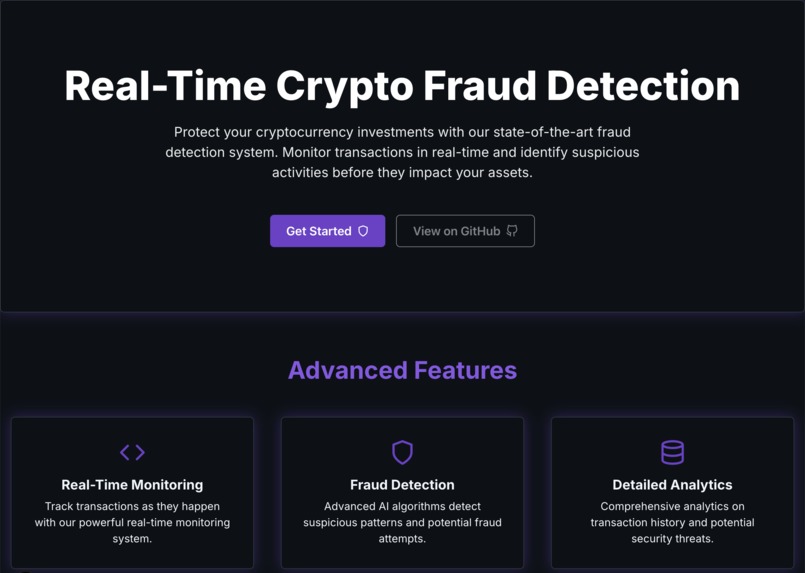
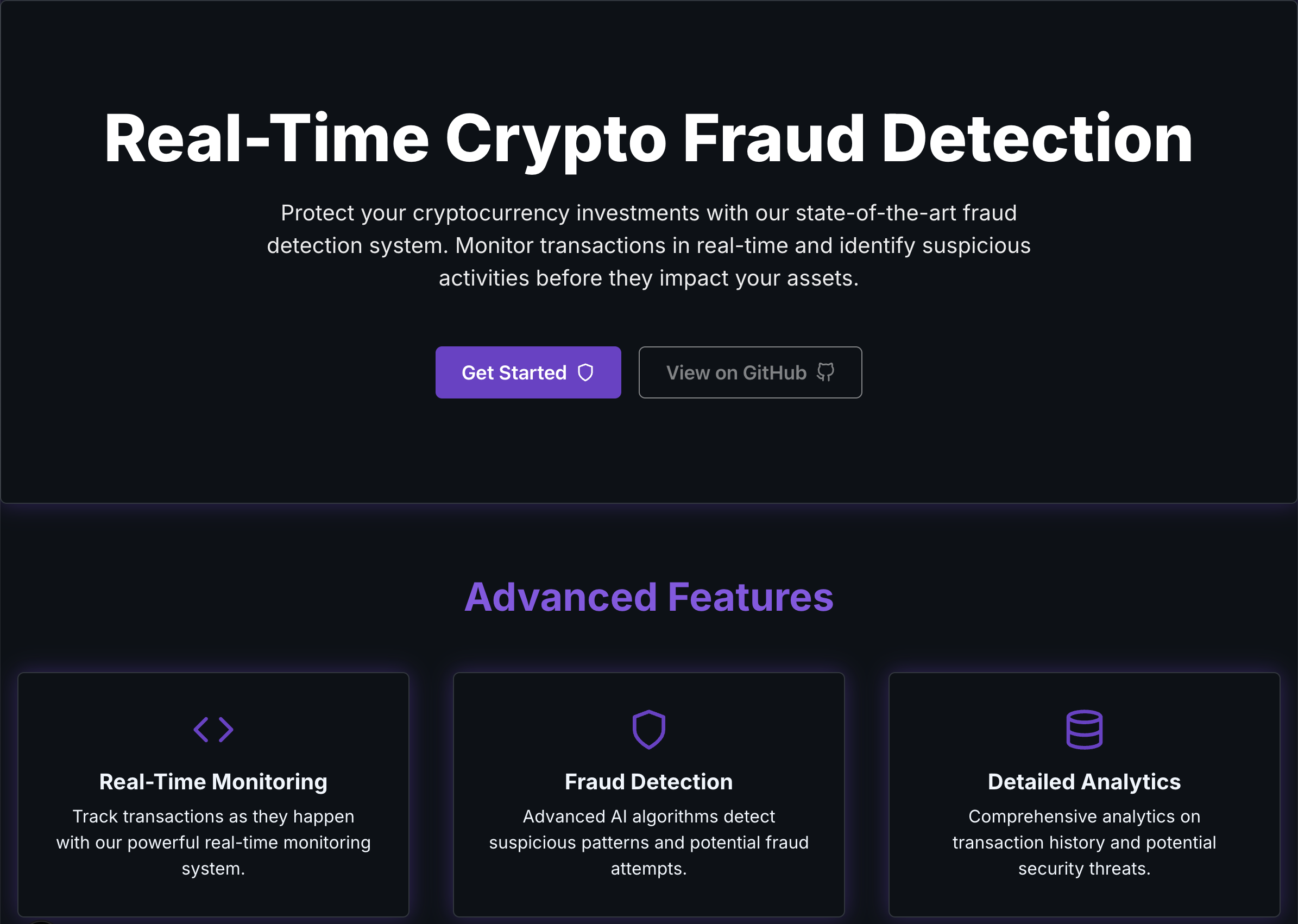
Landing Screen
-
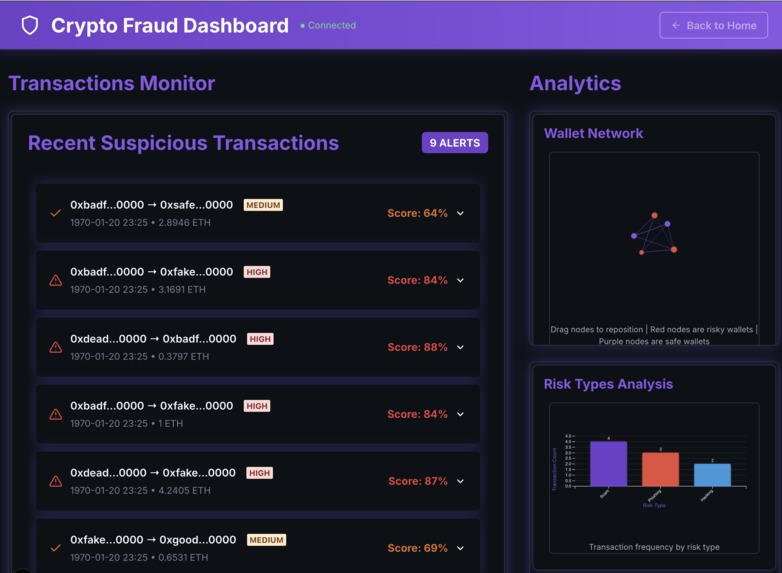
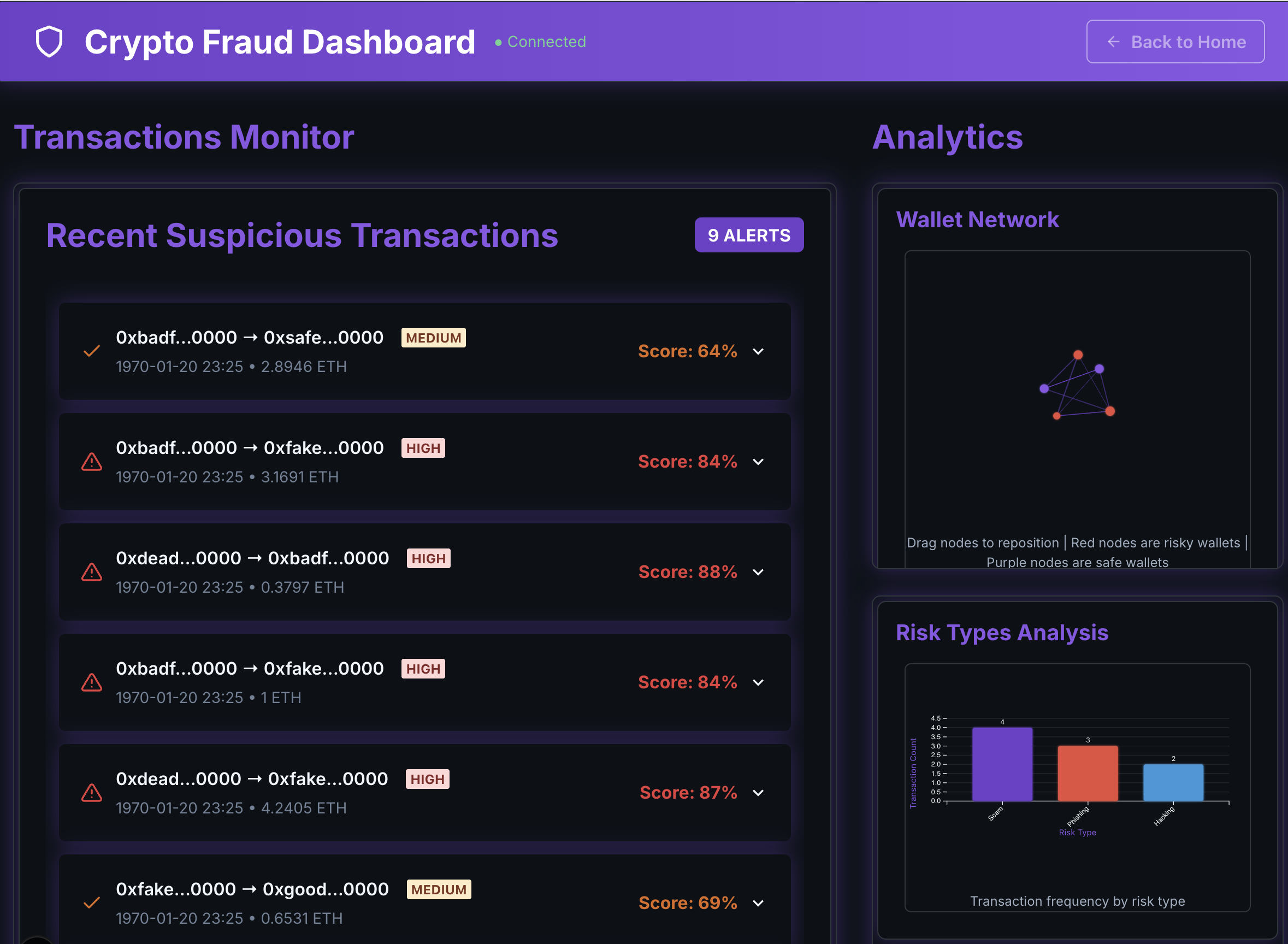
Dashboard
Project Story: Real-Time Crypto Fraud Detection Dashboard
About the Project
In the world of crypto, fraudulent transactions and scam wallets cost users billions of dollars every year. Our project was born out of the need to provide small platforms and developers with an affordable, real-time solution to detect and prevent such fraud. We built a dashboard that ingests live blockchain data, detects risky transactions by cross-referencing against known scam wallets, and immediately alerts users through a real-time interface.
Inspiration
The inspiration for this project came from witnessing the growing number of crypto scams and realizing that many existing fraud detection tools are designed for large enterprises and are both expensive and slow to adopt. We wanted to democratize fraud prevention by creating a solution that is:
- Developer-first: Easy to integrate and customize.
- Real-time: Providing immediate alerts to stop fraud before it escalates.
- Scalable: Built with a microservice architecture that can grow with demand.
What We Learned
- Real-Time Data Handling: We deep-dived into Flask-SocketIO and eventlet to handle concurrent, real-time data streams effectively.
- Subprocess Integration: Integrating multiple Python subprocesses (one for simulating transactions and another for detecting fraud) taught us a lot about inter-process communication and how to manage output buffering.
- WebSocket Communication: We learned the nuances of establishing and maintaining a stable WebSocket connection between a Python backend and a Next.js frontend.
- Developer Experience: Designing a solution that’s both powerful and easy for developers to integrate was a key takeaway. We focused on making our code modular and extensible, with clear inline comments and a simple API.
How We Built the Project
Backend Development:
- Flask-SocketIO & Eventlet: We used Flask-SocketIO with eventlet to support real-time WebSocket connections.
- Subprocess Pipeline: We set up a pipeline where
simulator.pygenerates transactions and pipes them intodetector.py, which checks for risky wallets. - Real-Time Alerting: The backend then emits alerts to the frontend whenever a risky transaction is detected.
Frontend Development:
- Next.js 13+ App Router: We built a modern, responsive dashboard using Next.js.
- Socket.IO Client Integration: The frontend listens for real-time alerts via a Socket.IO connection, displaying them immediately to the user.
- User Interface: The UI is designed to be clean and intuitive, allowing both developers and non-technical stakeholders to quickly grasp the situation.
Challenges Faced
- Subprocess Management: Ensuring that the simulator’s output was correctly piped into the detector without blocking or buffering issues was a major challenge.
- Real-Time Communication: Establishing a reliable WebSocket connection between the backend and frontend required careful configuration, especially around handling different versions and ensuring proper event handling.
- Debugging Asynchronous Code: Debugging the asynchronous background tasks in Flask-SocketIO, especially with eventlet, was a steep learning curve.
- Integration & Deployment: Making the system easily deployable and ensuring that it was developer-friendly demanded numerous iterations on both the code and the user interface.
Overall, this project pushed us to learn new technologies and hone our skills in real-time data processing, asynchronous programming, and full-stack integration. It’s a solution designed not only to address an urgent real-world problem but also to empower developers with the tools they need to protect users from crypto fraud.

Log in or sign up for Devpost to join the conversation.