-
-
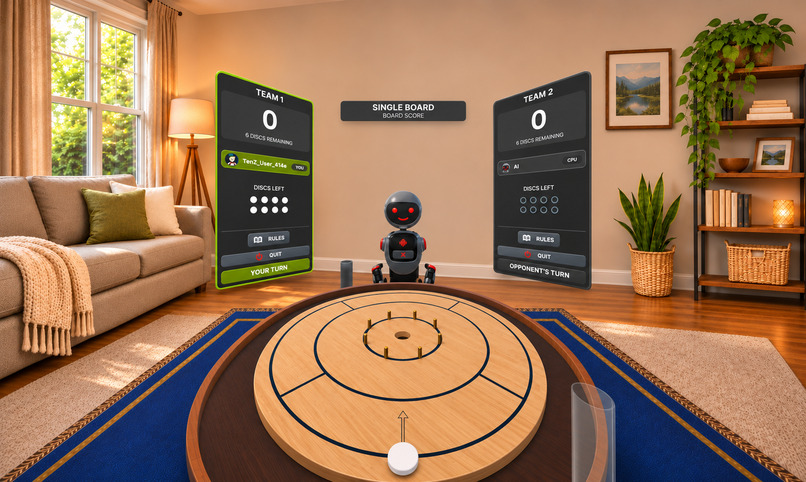
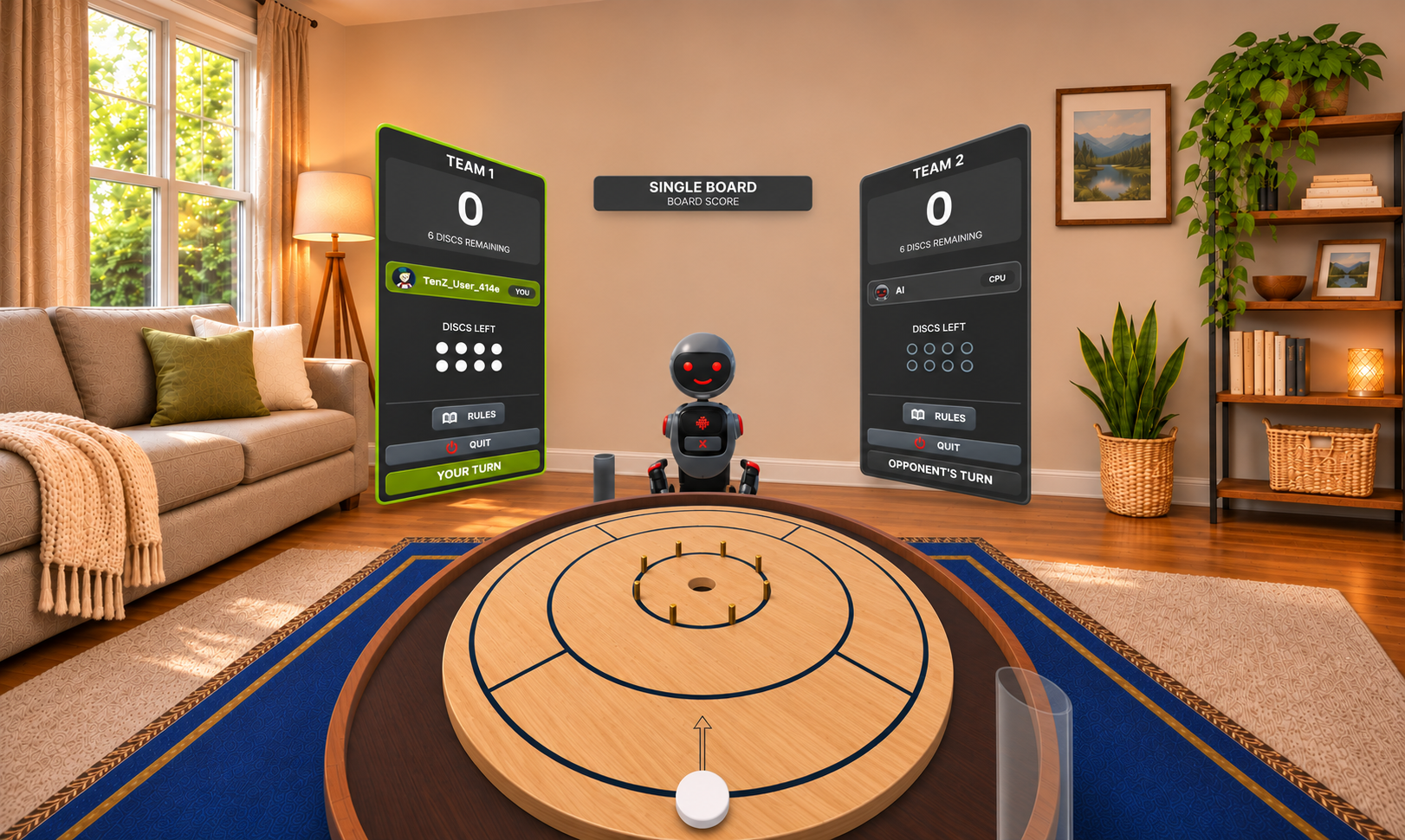
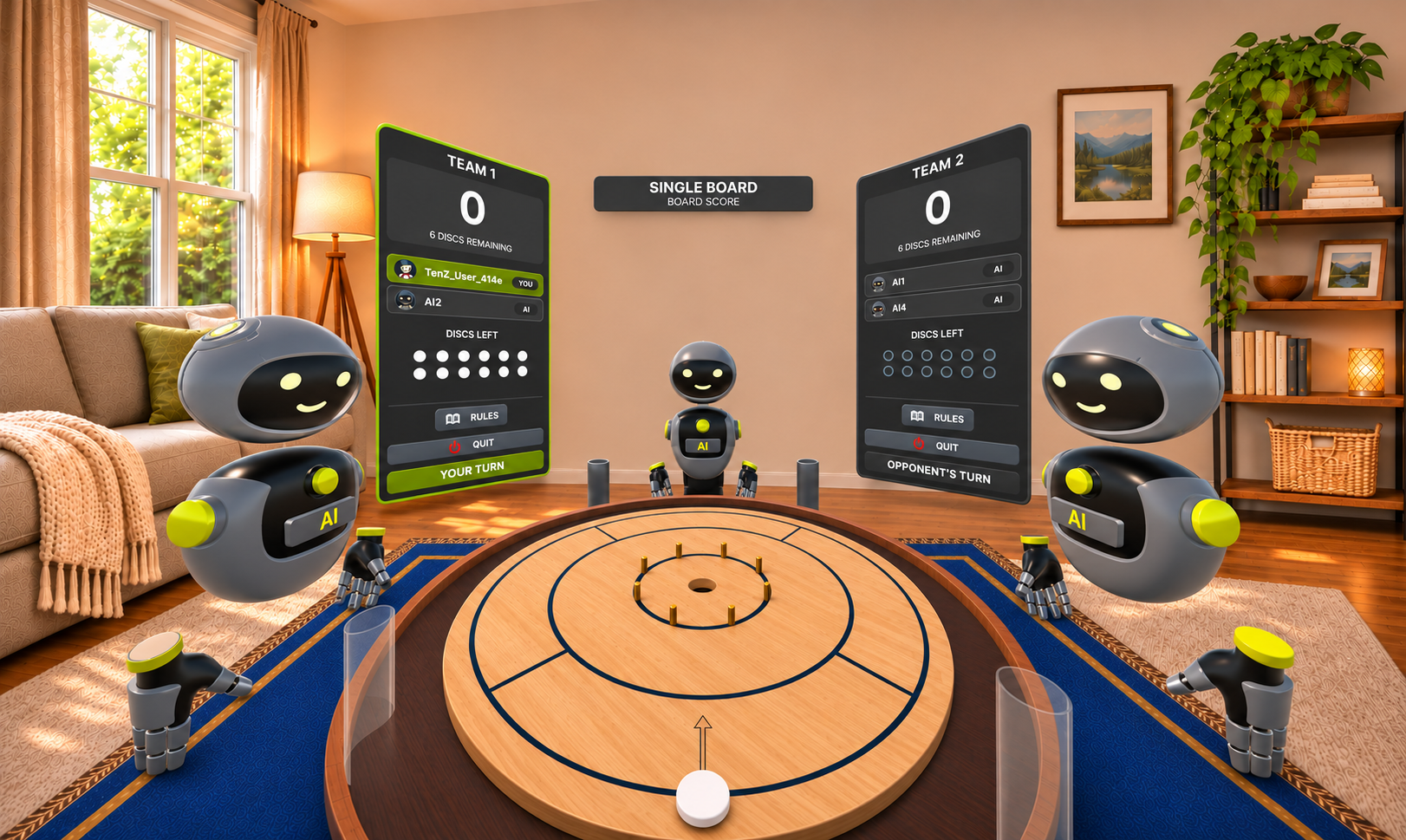
Playing with Hard AI in Single Match
-
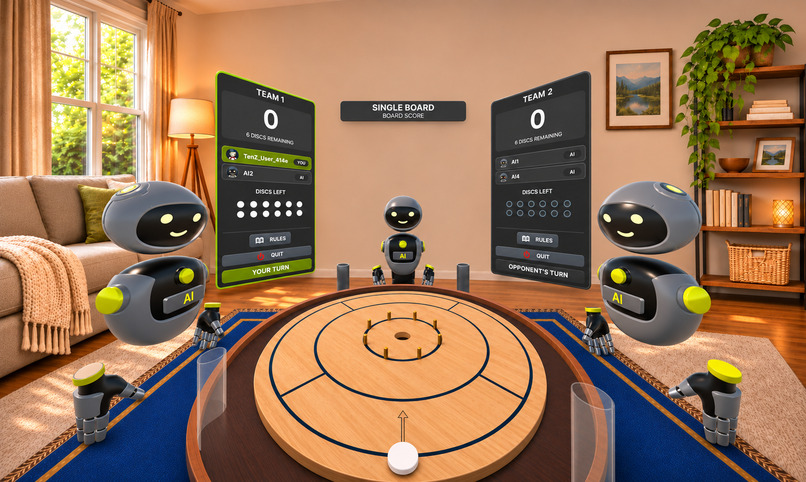
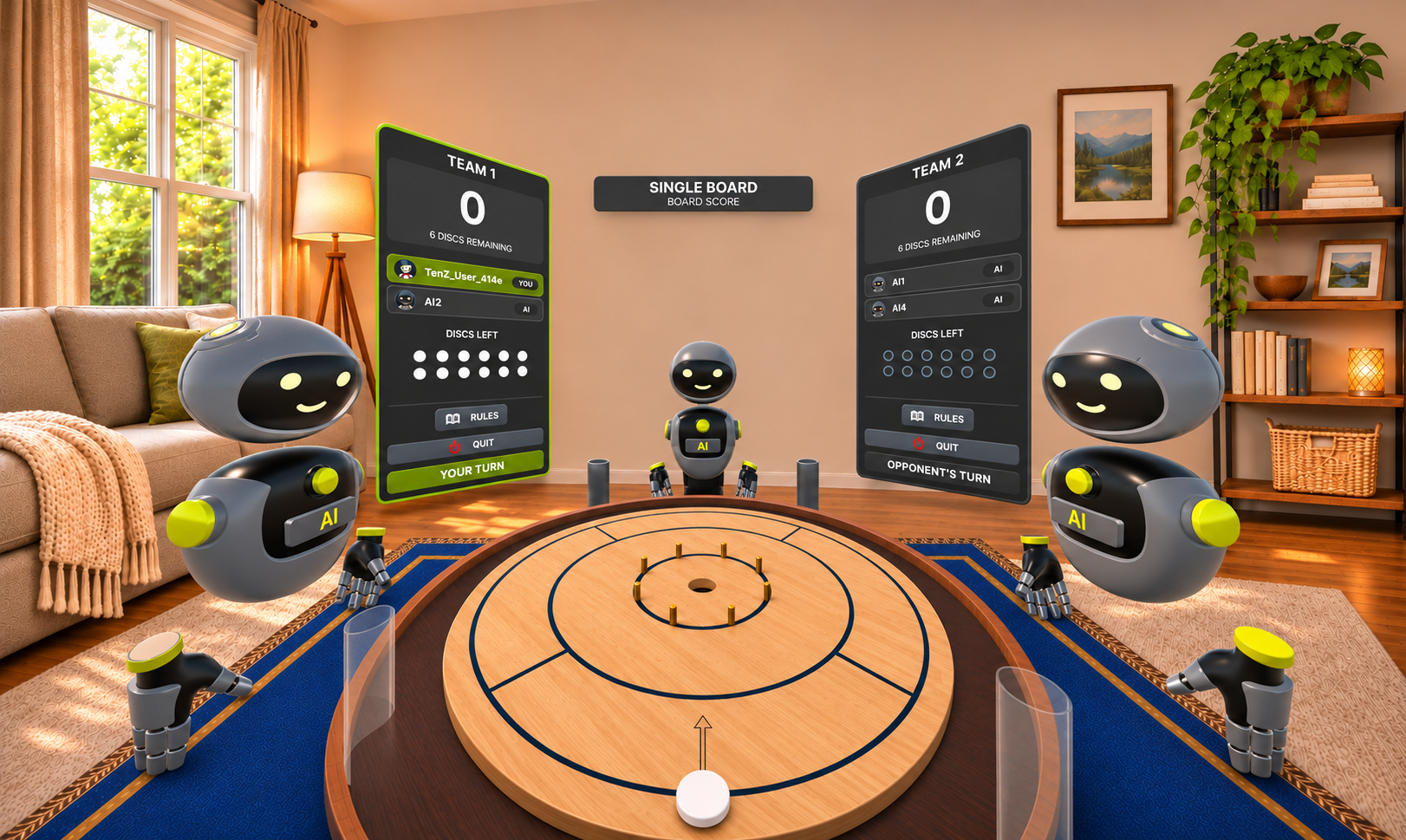
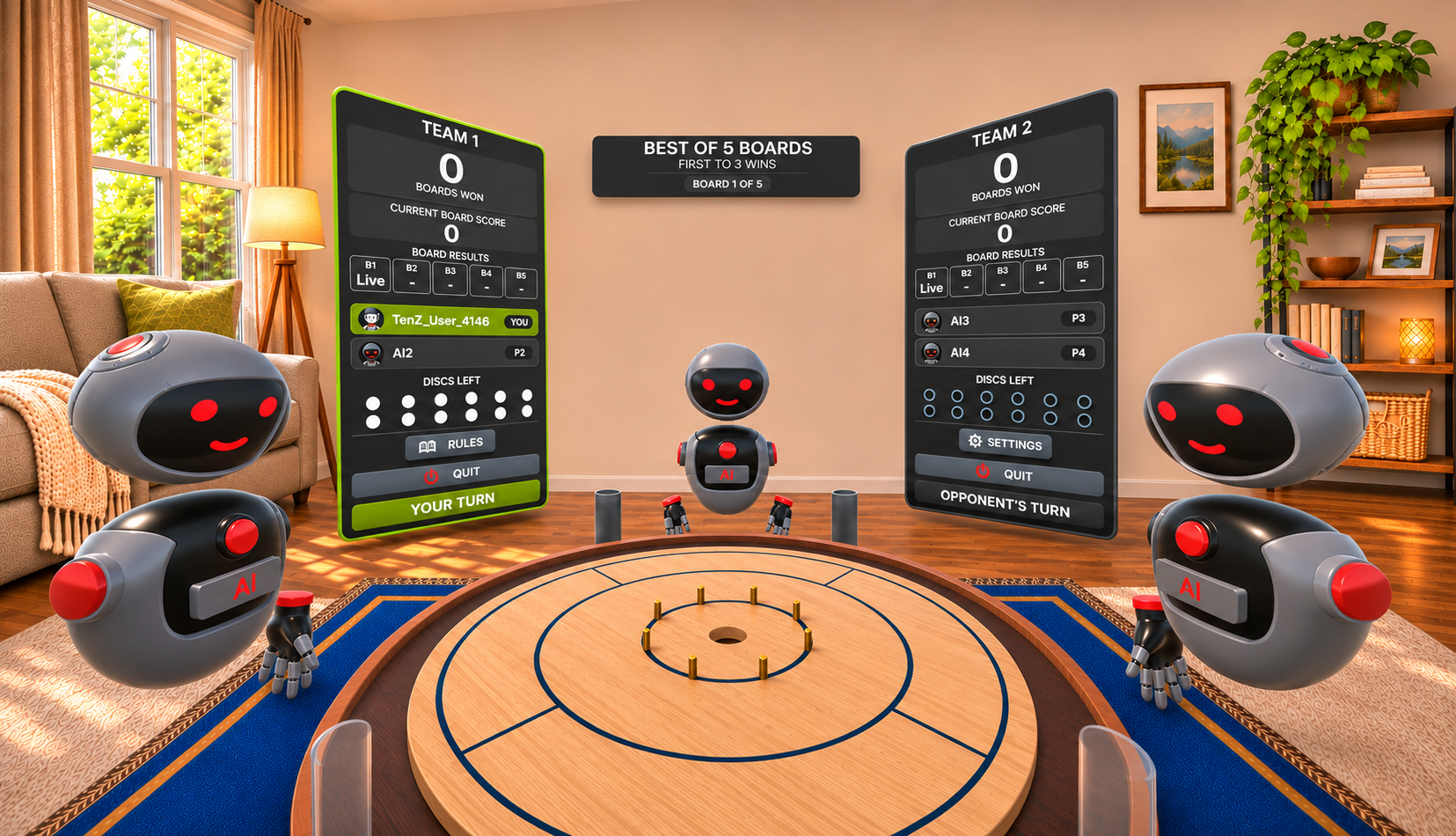
Teamup with AI against 2 AIs on a Single Board Match
-
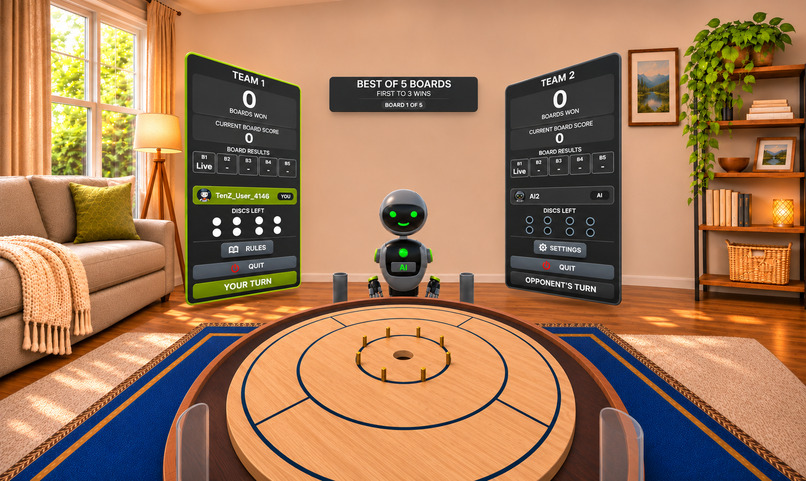
Best of 5 against Easy AI
-
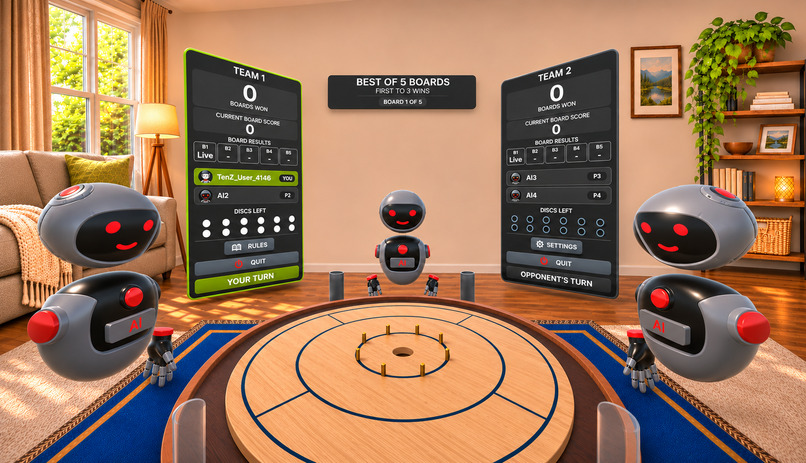
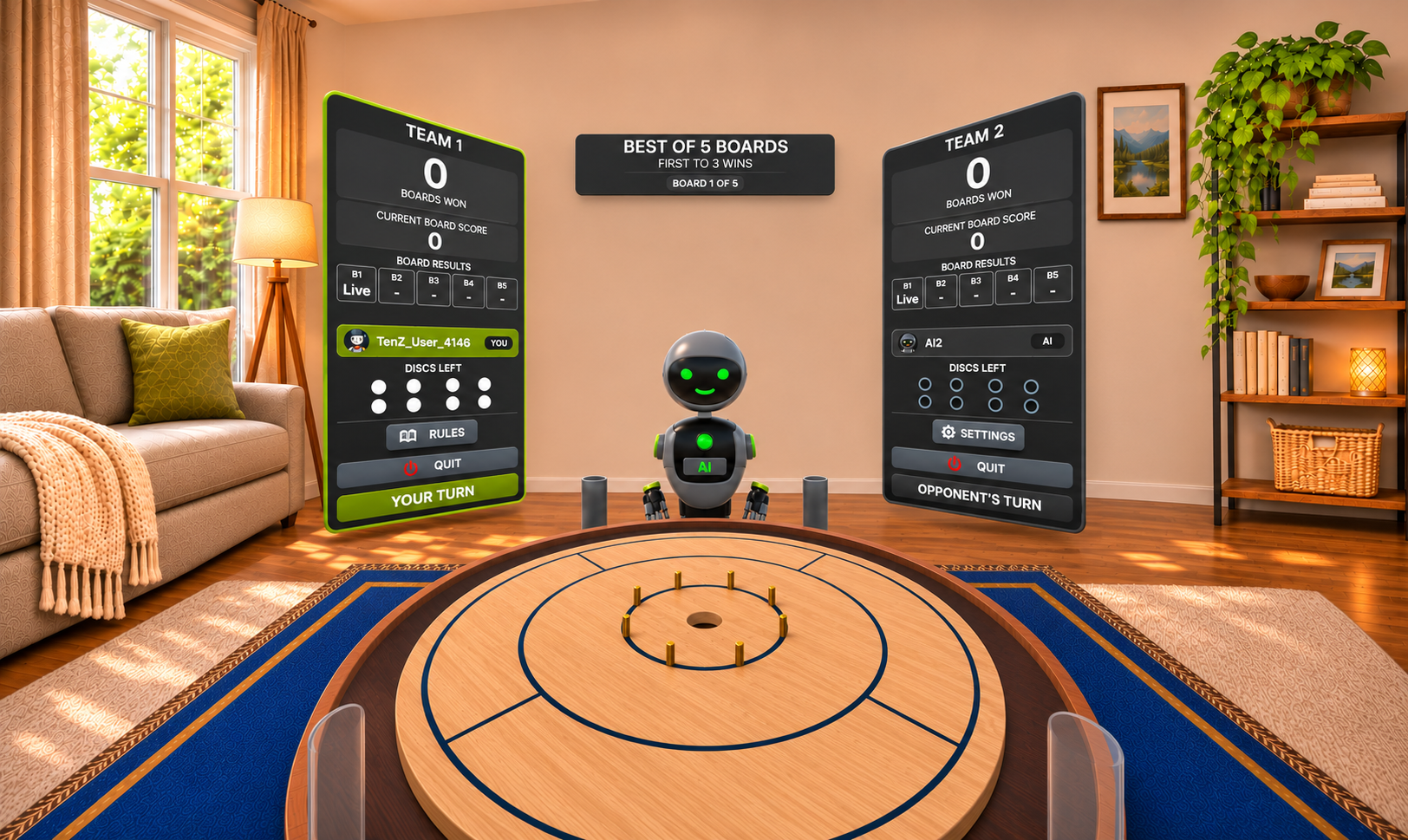
BestOf5 against Hard AI, team up with AI
-
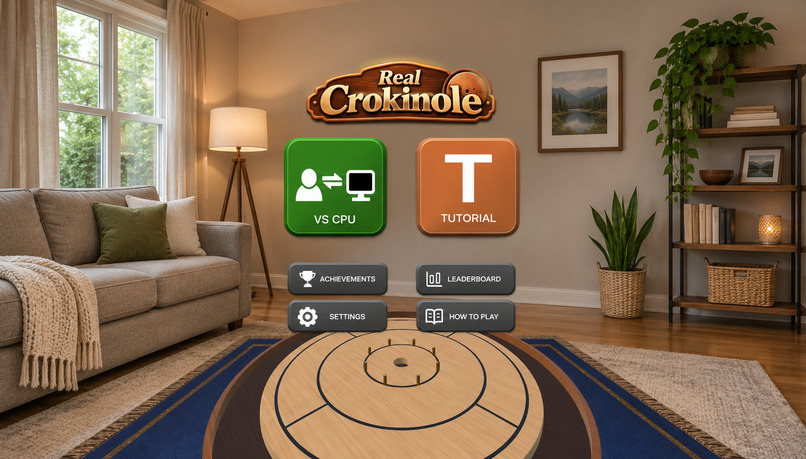
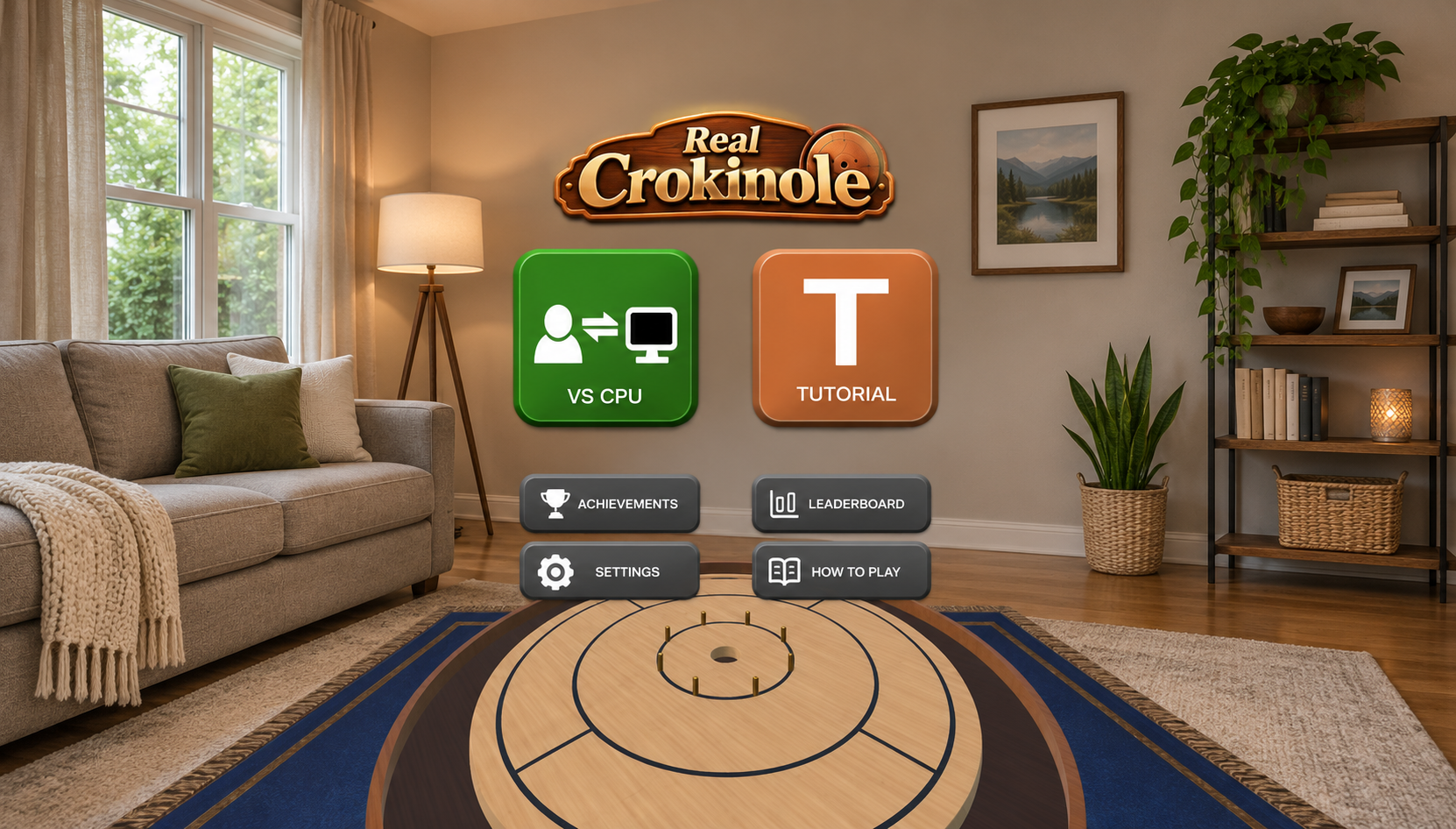
Home Screen
-
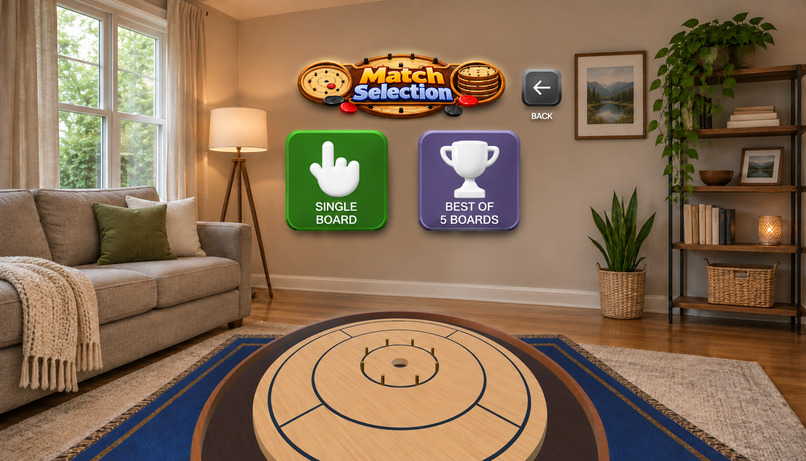
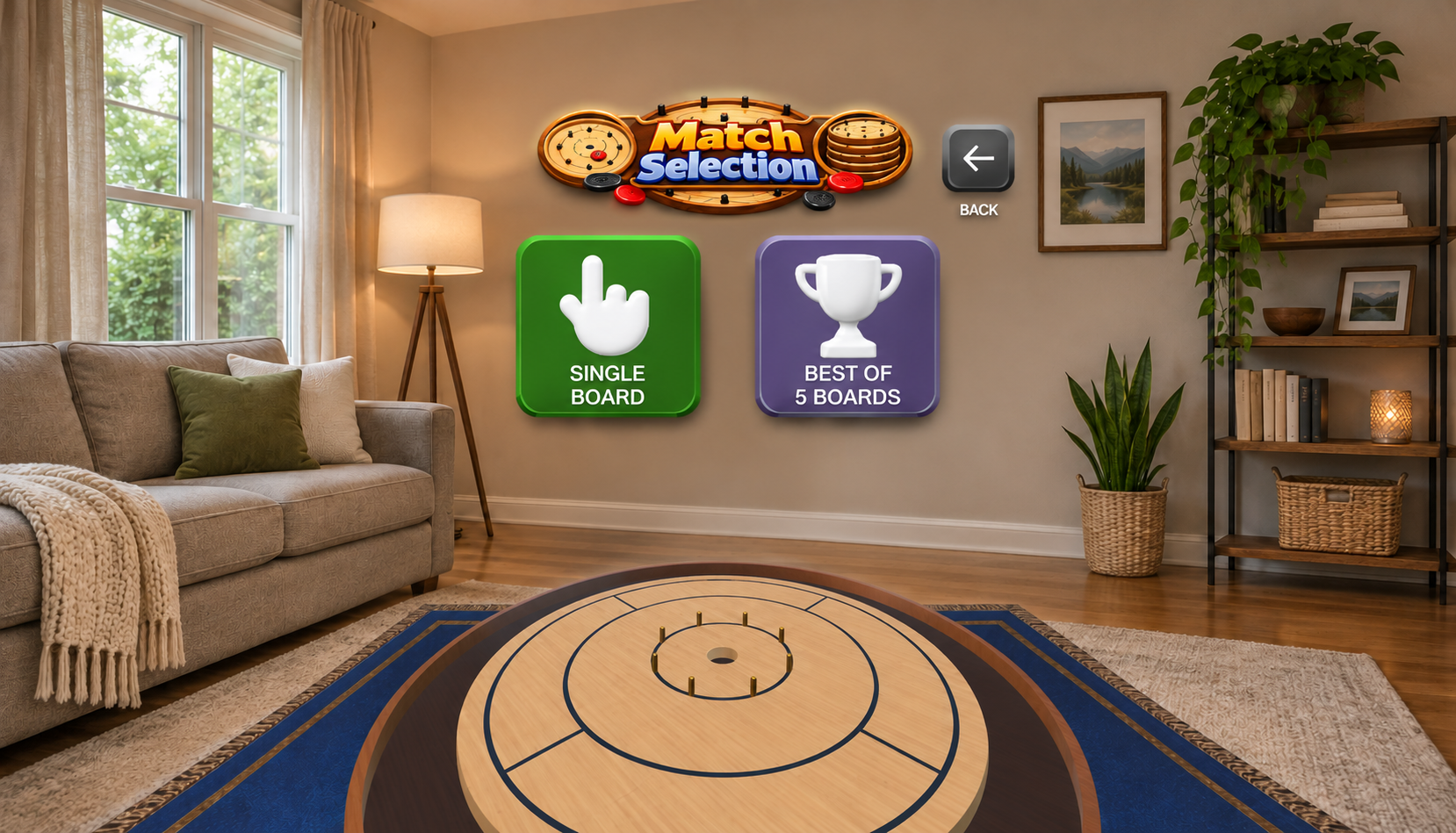
Match Selection
-
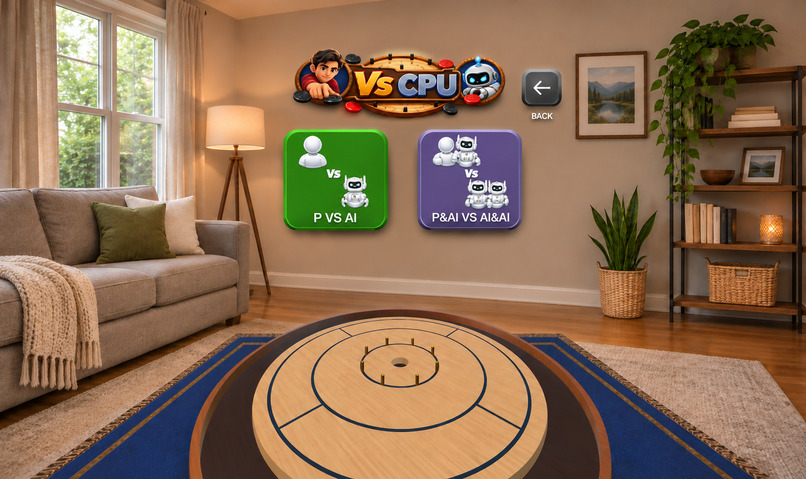
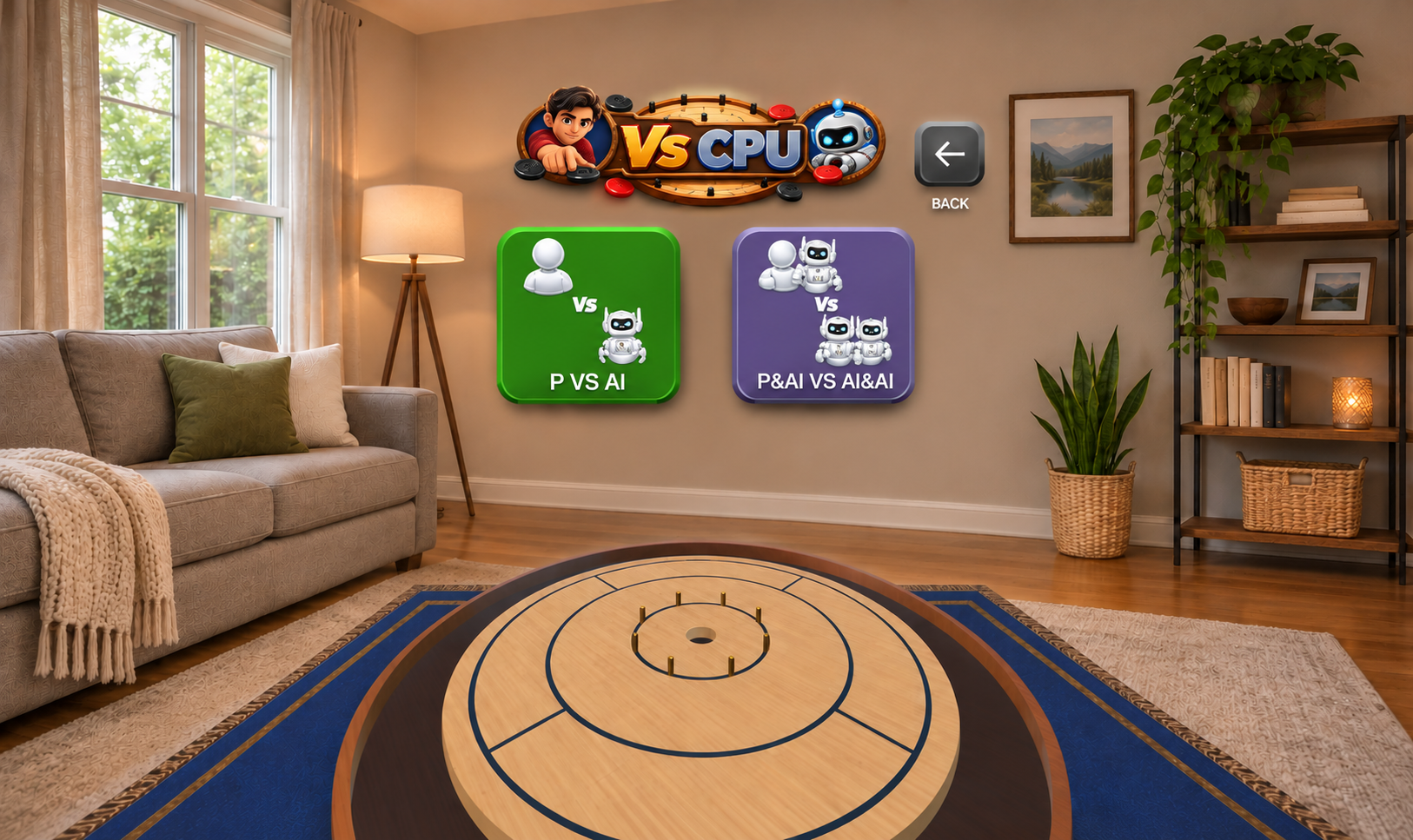
Vs CPU Selection
-
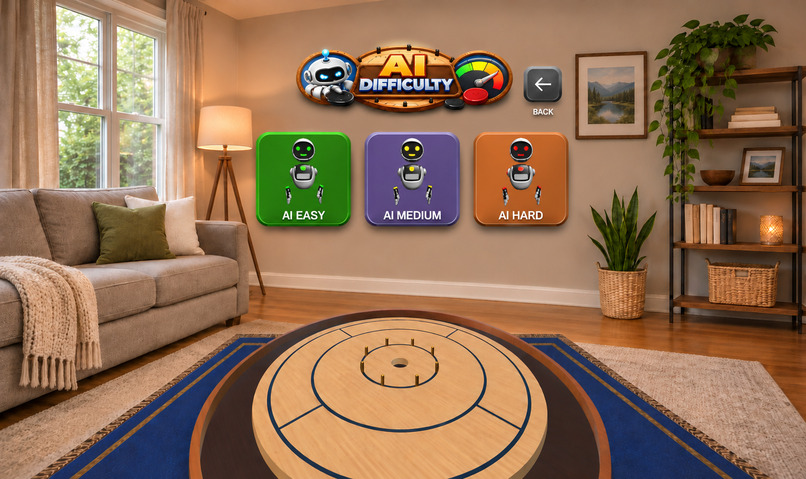
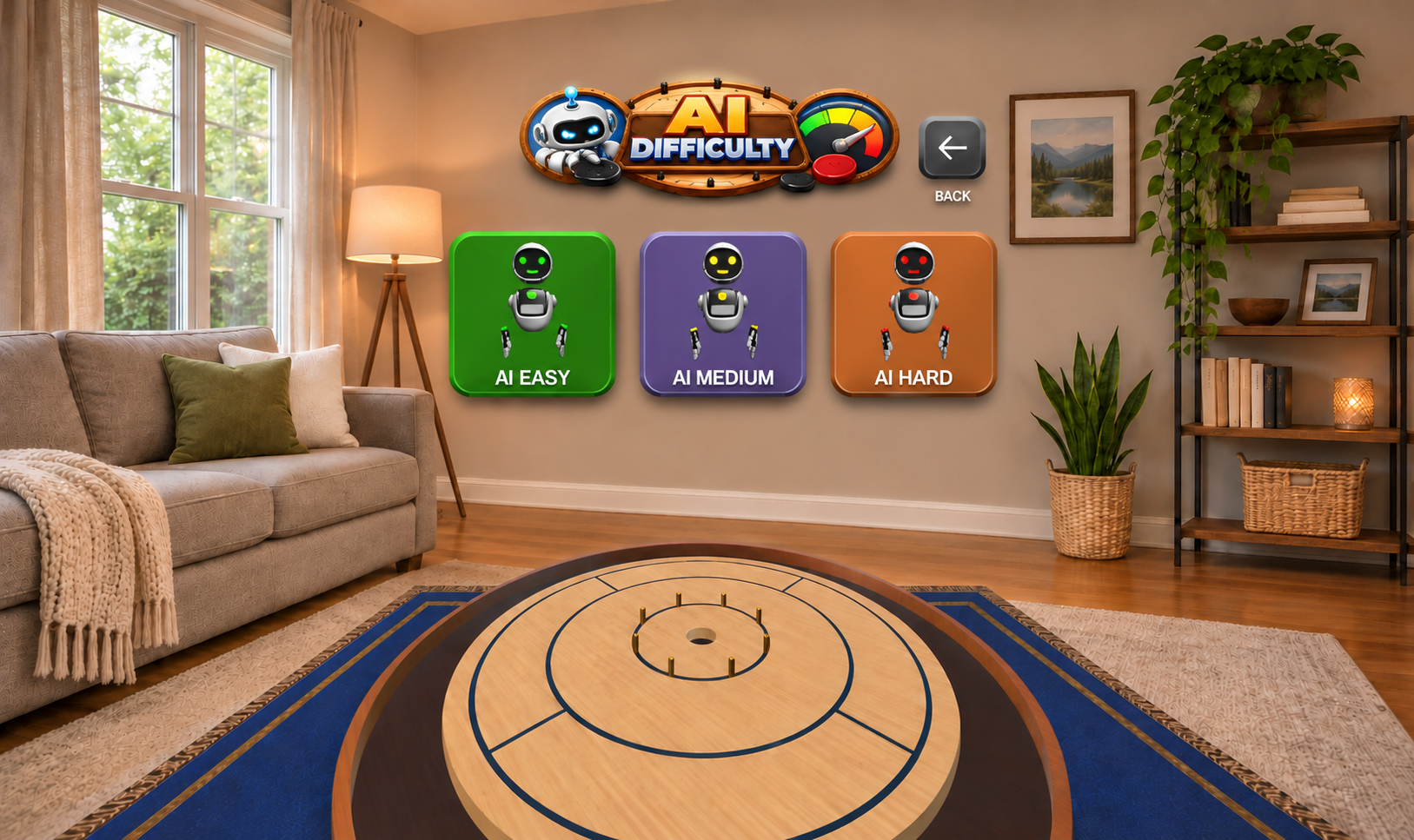
AI Difficulty Selection
-
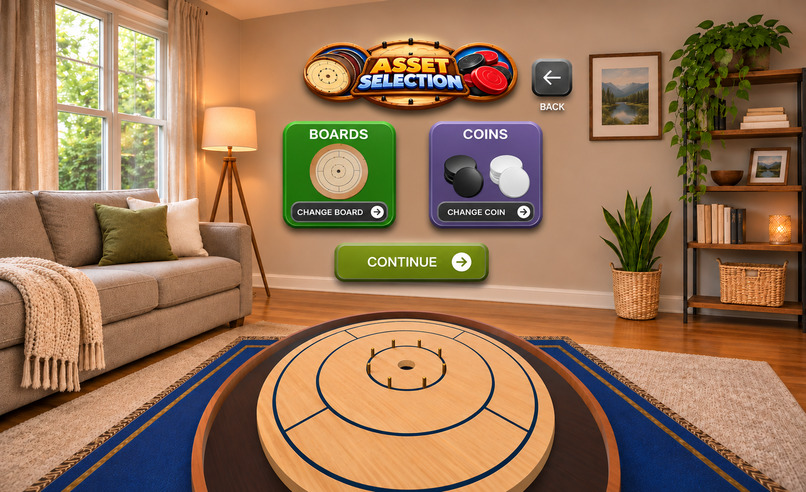
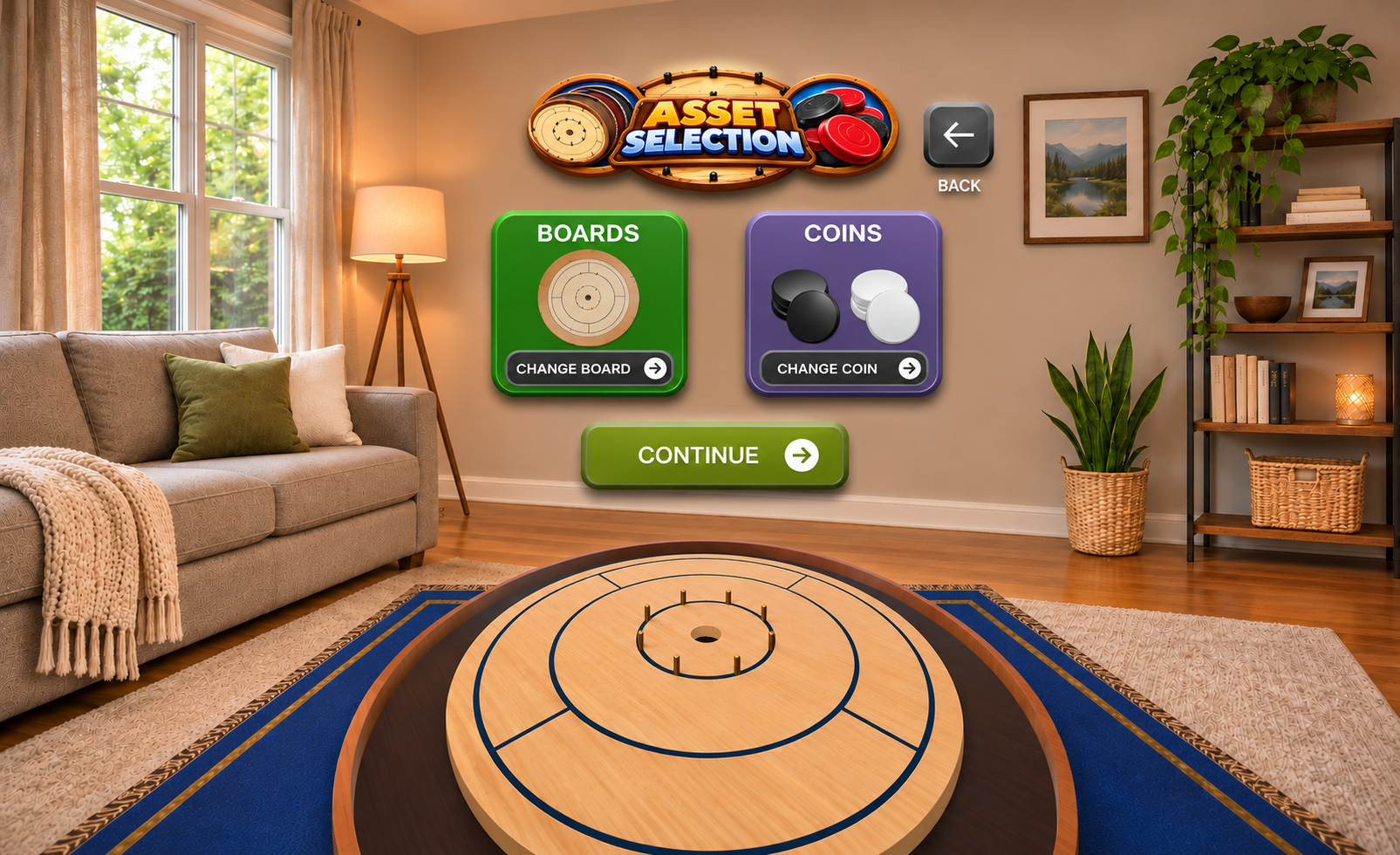
Boards and Selections Selection
-
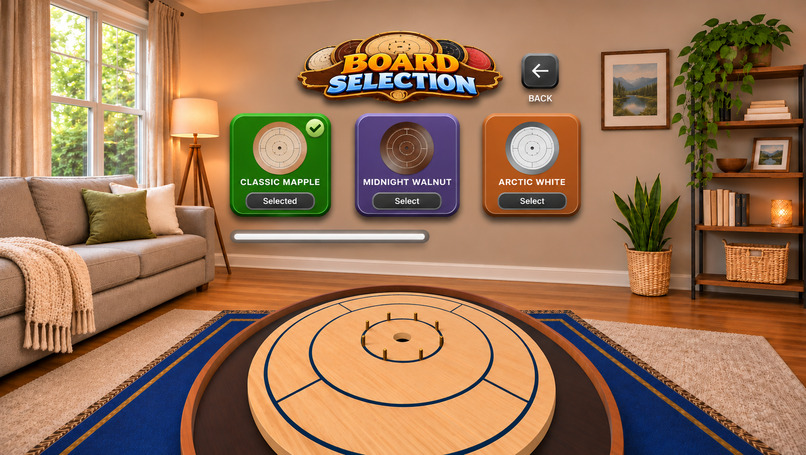
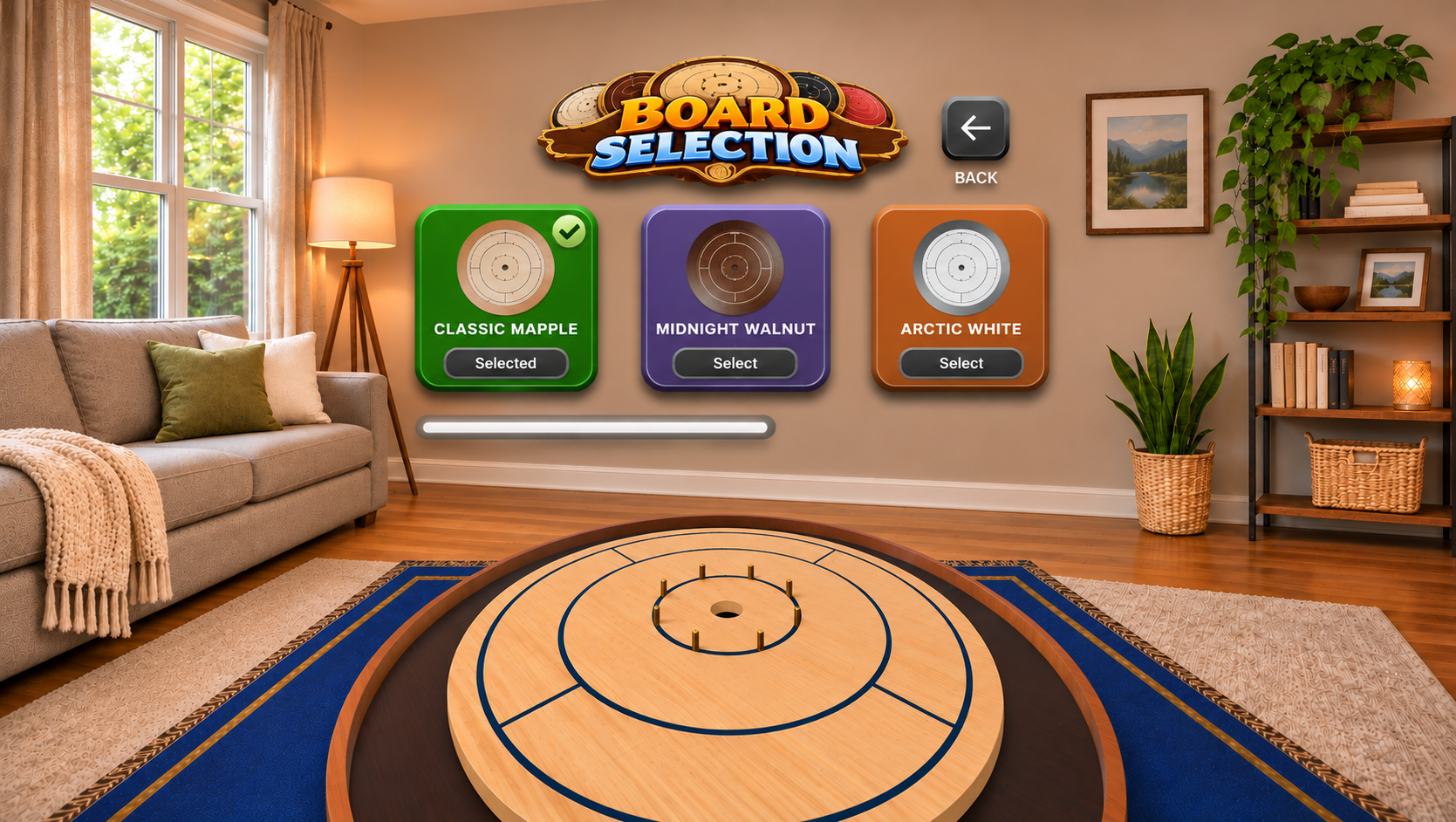
Boards Selection
-
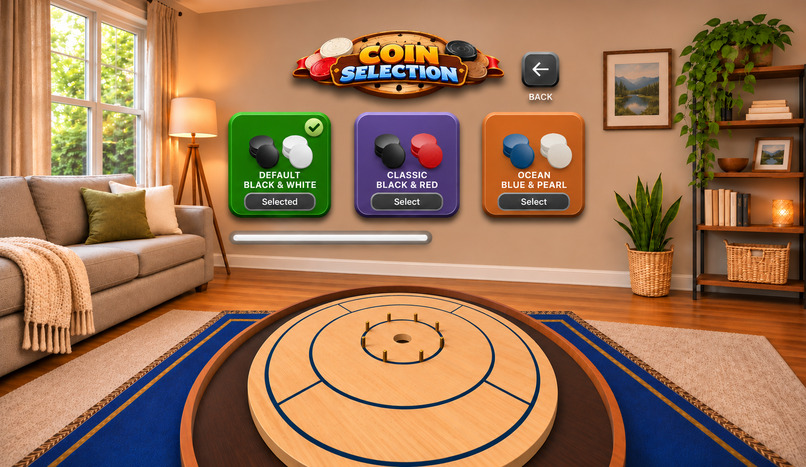
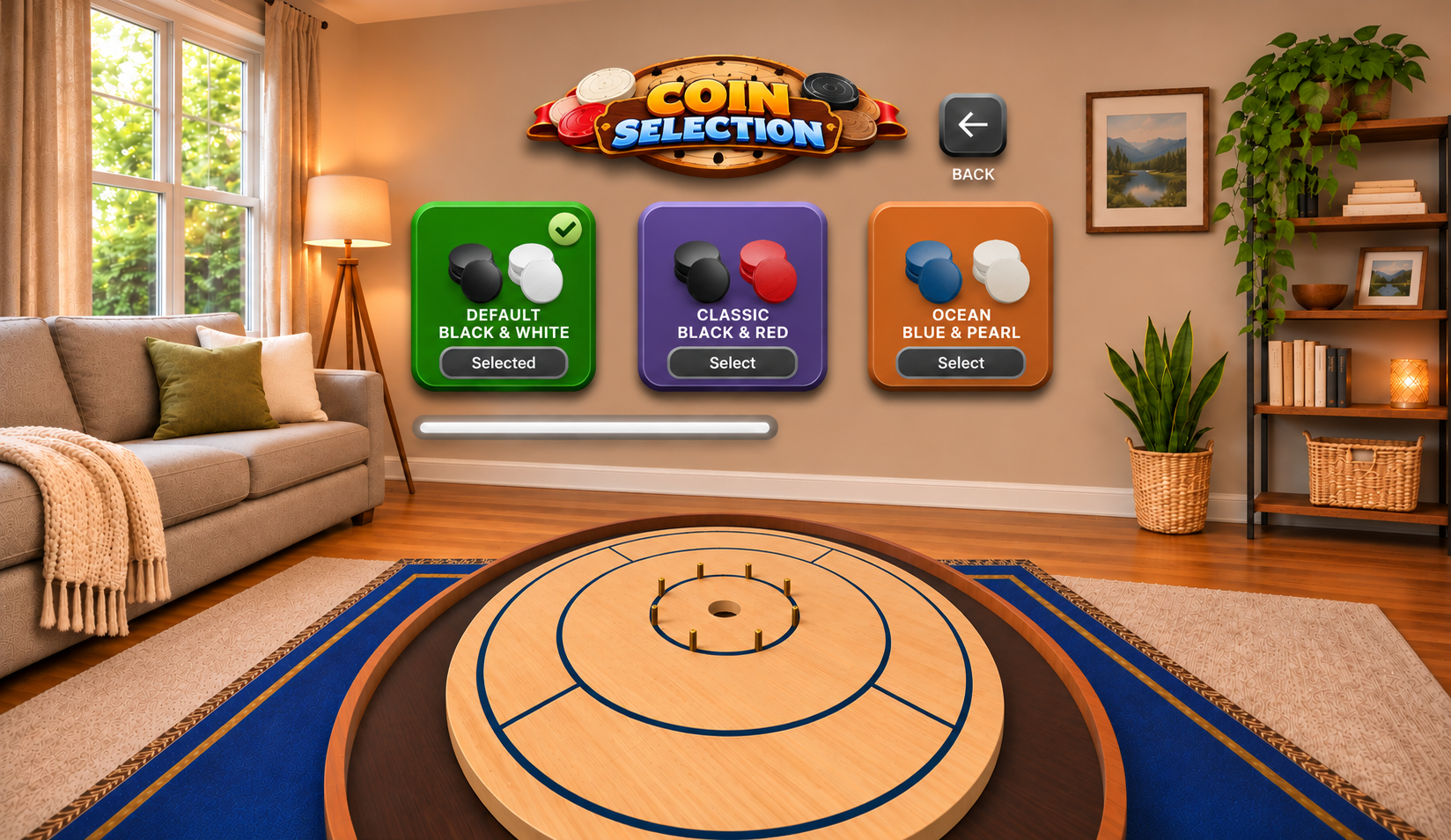
Coin Selection
-
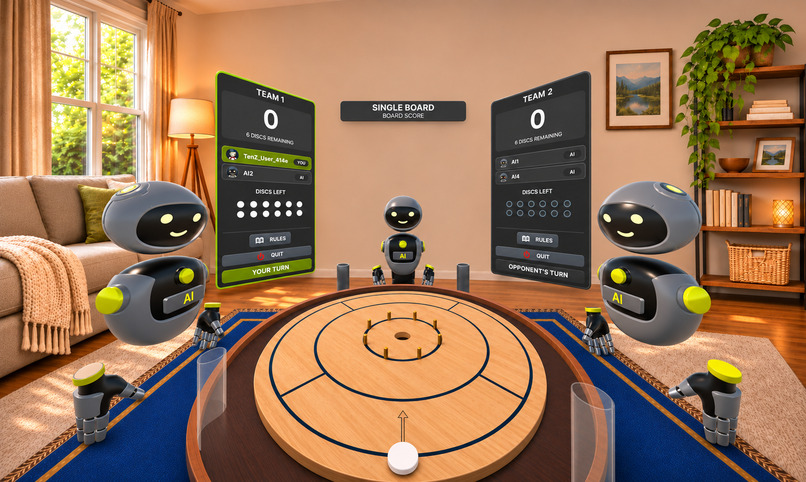
Best of Five, Teaming up with Hard AI
-
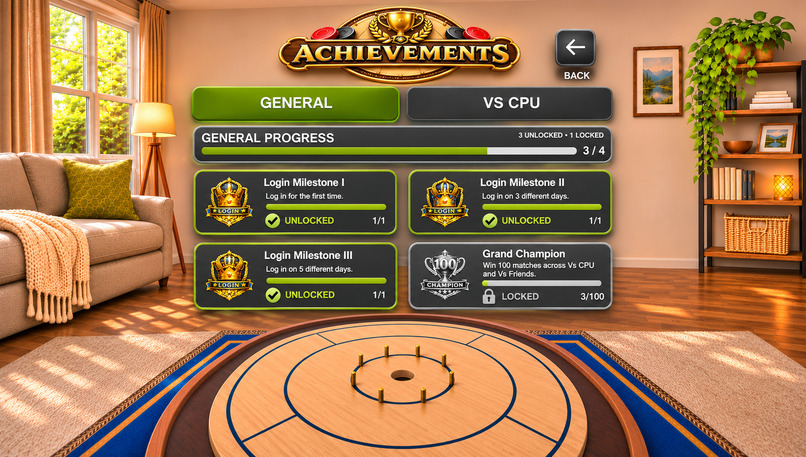
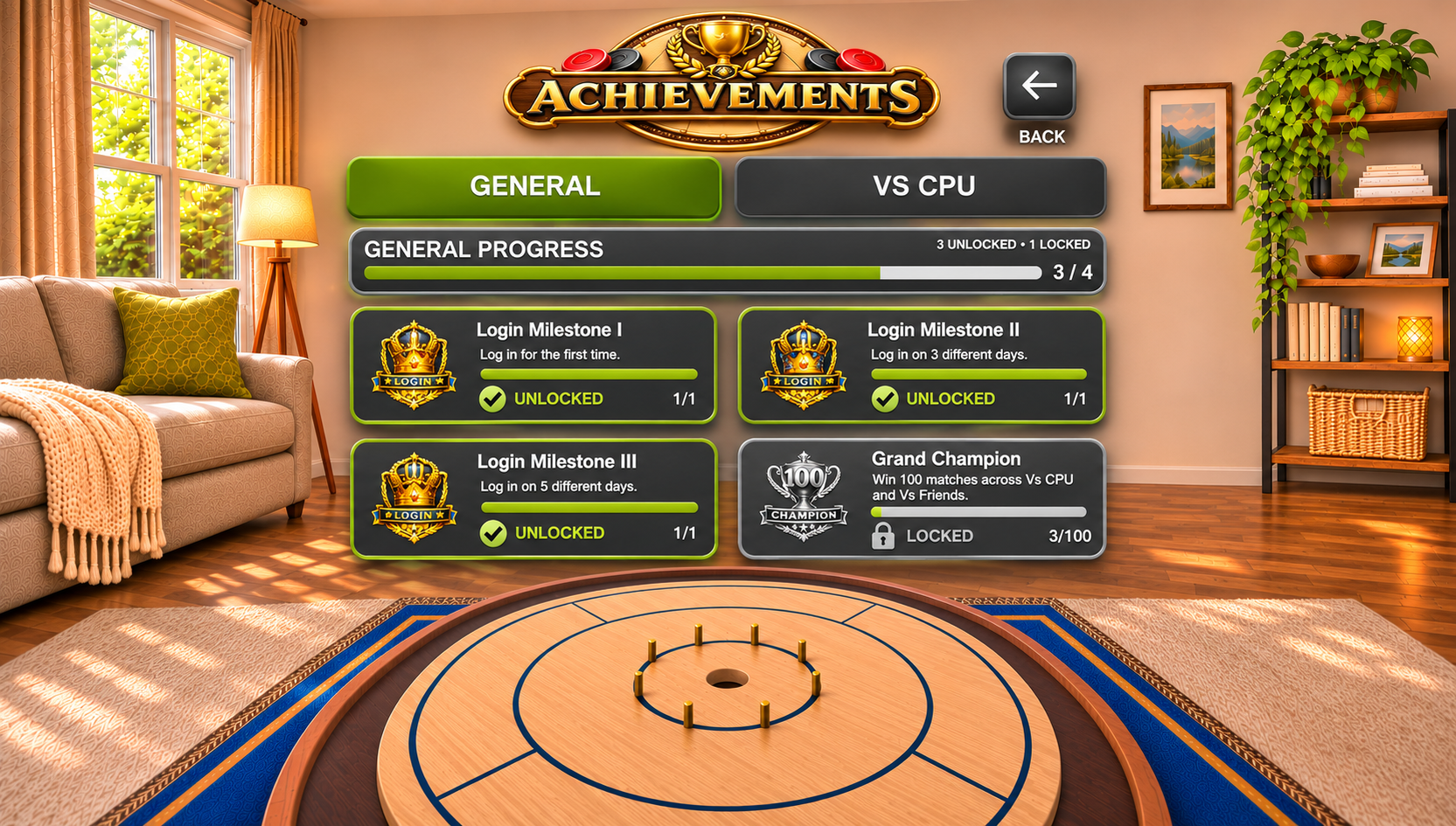
Achievements
Inspiration
Crokinole turns a simple flick into a game of precision, strategy, and friendly competition. We wanted to bring that experience to virtual reality, allowing people to sit around a shared board and play together regardless of physical distance.
As a two-person team at VisionXR, we were inspired by the challenge of making a traditional tabletop game feel natural on Meta Quest. With Real Crokinole, our goal is to capture both the satisfaction of a well-placed shot and the social connection of playing across the table from someone.
What it does
Real Crokinole brings the classic tabletop game to Meta Quest with:
- Realistic disc physics: Precision flicking, accurate collisions, and satisfying board interactions.
- Single-player practice: Easy, Medium, and Hard AI opponents for learning and improving.
- Hand tracking and controller support: Two ways to interact with the board and take your shots.
- Achievements and leaderboards: Goals to work toward and opportunities for friendly competition.
- Immersive environments: A welcoming space designed for comfortable tabletop play in VR.
How we built it
We built Real Crokinole around three priorities: **convincing physics, intuitive interaction, and social play.
Our responsibilities complement each other. Shivaji focuses on game design, 3D assets, UI, and visual polish, while Vikram focuses on programming, gameplay systems, AI, and multiplayer.
We approached the board and disc interactions as the foundation of the experience, refining how shots translate into movement and how discs respond to collisions. We designed hand-tracking and controller interactions around the same core goal: helping players aim and flick with confidence.
Alongside the gameplay, we developed AI opponents for solo practice and multiplayer features that let friends share a match and talk naturally while playing. Throughout development, we balanced visual detail with the performance demands of standalone VR.
Challenges we faced
Making controller-free shots feel precise Our biggest challenge was translating a physical flick into a reliable hand-tracking interaction. We refined disc positioning, thumb gestures, wrist-based aiming, and force selection so players could control their shots with clear visual feedback.
Balancing realistic physics and approachable gameplay Small differences in disc movement can change a shot’s outcome. We worked on collisions, sliding, centre-hole detection, and foul handling while keeping the experience understandable for new players.
Creating challenging AI Designing Easy, Medium, and Hard opponents meant balancing accuracy with believable mistakes. We wanted players to have room to learn while still finding a satisfying challenge as their skills improved.
Teaching through interaction Explaining unfamiliar rules alongside hand gestures required careful pacing. We built a tutorial that lets players practise positioning, aiming, and striking, with demonstrations and success or retry feedback.
Delivering a comfortable standalone MR experience We balanced visual detail and performance on Meta Quest while making menus, score panels, and tutorial content readable and accessible around the board.
Prioritising as a two-person team With limited time, we focused the competition submission on single-player gameplay and tutorials. We kept online multiplayer on our roadmap so we could give the core experience the attention it needed.
Making a virtual flick feel natural
A physical board gives players tactile feedback. In VR, the interaction must communicate control through motion and visual response. One of our central challenges was making aiming and shot strength feel understandable and consistent.
Balancing realism and accessibility
Crokinole rewards precision, but new players should still enjoy their first match. We worked to balance realistic disc behavior with approachable controls and multiple AI difficulty levels.
In a physics-driven game, small differences in disc positions can affect the outcome. Keeping both players' views of the board consistent is an essential part of making online matches feel fair and reliable.
Supporting Hand tracking
Hand tracking offer different strengths. Designing for both challenged us to think carefully about gestures, feedback, and how players learn to take a shot.
Working as a two-person team
Building the gameplay, art, interface, AI required careful prioritization. We kept the core match experience at the center of our decisions.
What we learned
This project reinforced how much small details matter in MR. The response of a disc, the readability of the interface, and the placement of the board all influence whether an interaction feels comfortable and convincing.
We also learned to treat physics and interaction design as one connected problem. Realistic movement alone is not enough; players need controls that let them use that physics intentionally.
Most of all, we learned that the appeal of a tabletop game extends beyond its rules. Sharing a space, talking between turns, and celebrating an unexpected shot are central to the experience.
What we are proud of
We are proud of bringing a traditional tabletop game into an immersive, social format as a two-person team. Real Crokinole combines skill-based play with the simple pleasure of spending time across a board from another person.
What's next for Real Crokinole
Next, we plan to introduce online multiplayer, trick-shot challenges, and timed-shot modes, giving players new ways to test their precision and compete with friends. Guided by player feedback, we’ll continue refining shot control, improving onboarding, and tuning AI. Our goal is to make Real Crokinole easy to pick up, rewarding to master, and a game players enjoy returning to.
Built With
- 3d-modeling
- artificial-intelligence
- board-games
- crokinole
- hand-tracking
- meta-quest
- physics-simulation
- tabletop
- turn-based
- virtual-reality


