-
-
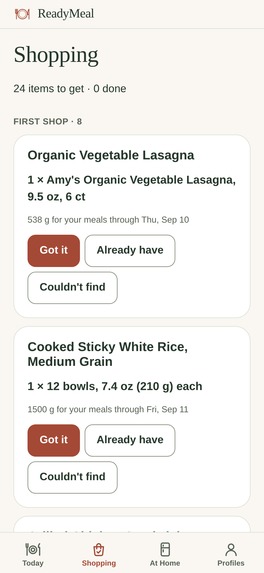
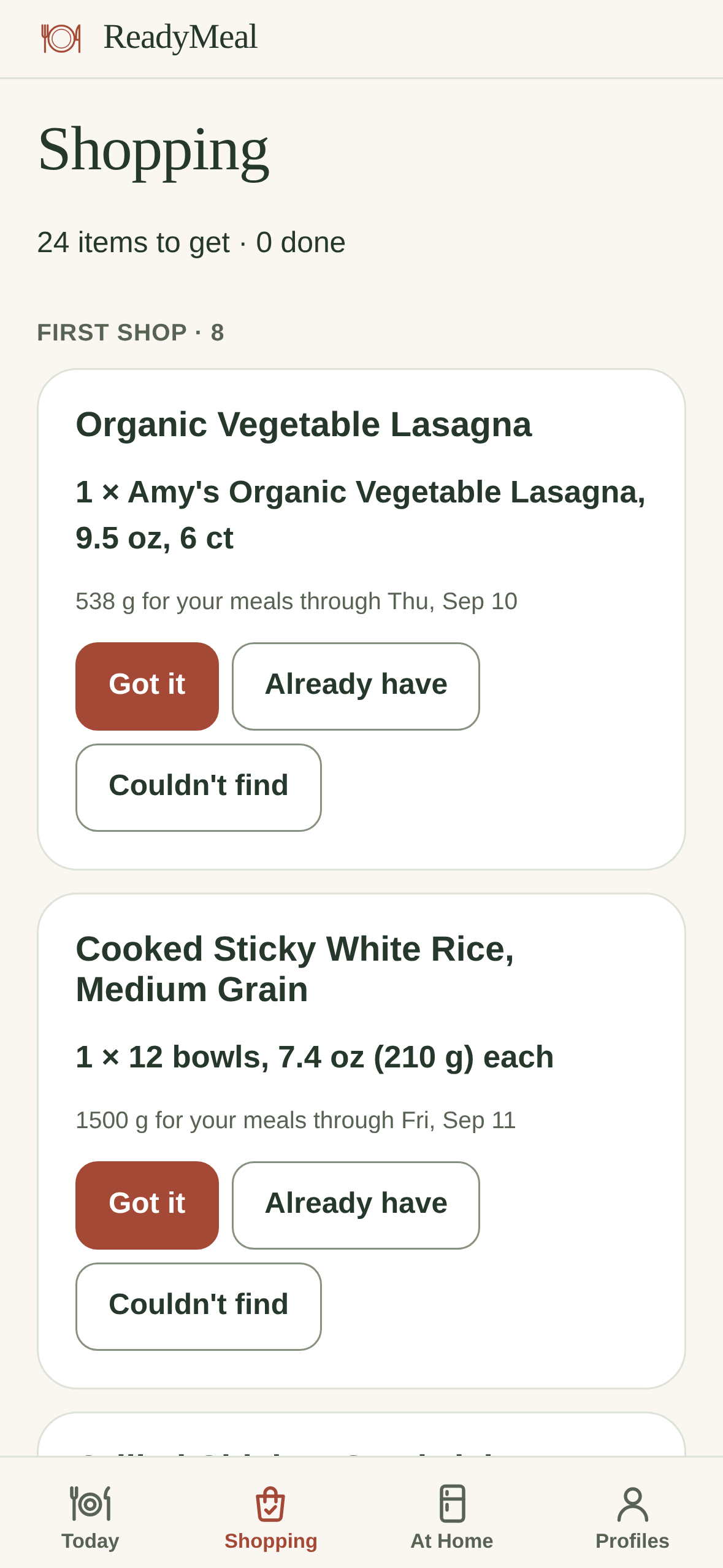
Shopping: one list in whole packages, with the labelled RevenueCat Ads slot
-
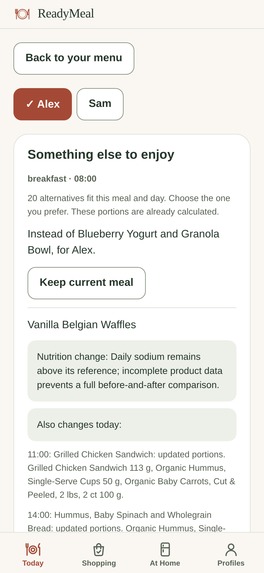
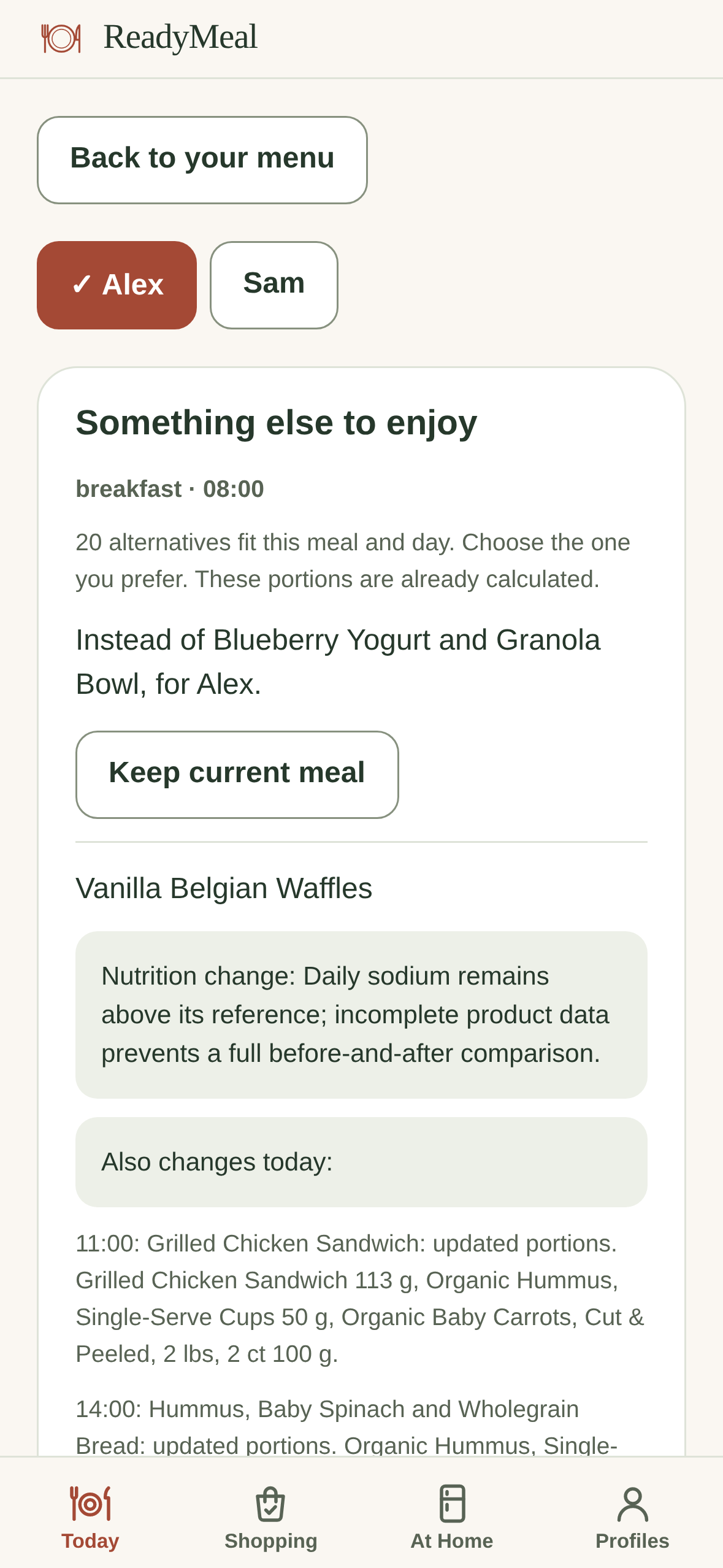
Swap a dish: calculated alternatives, the day rebalances
-
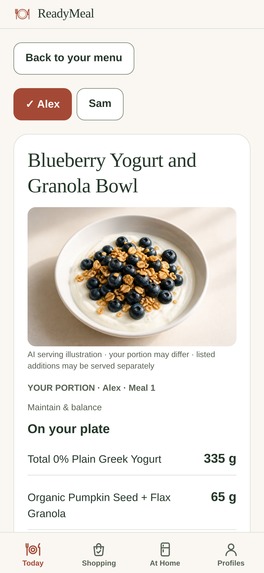
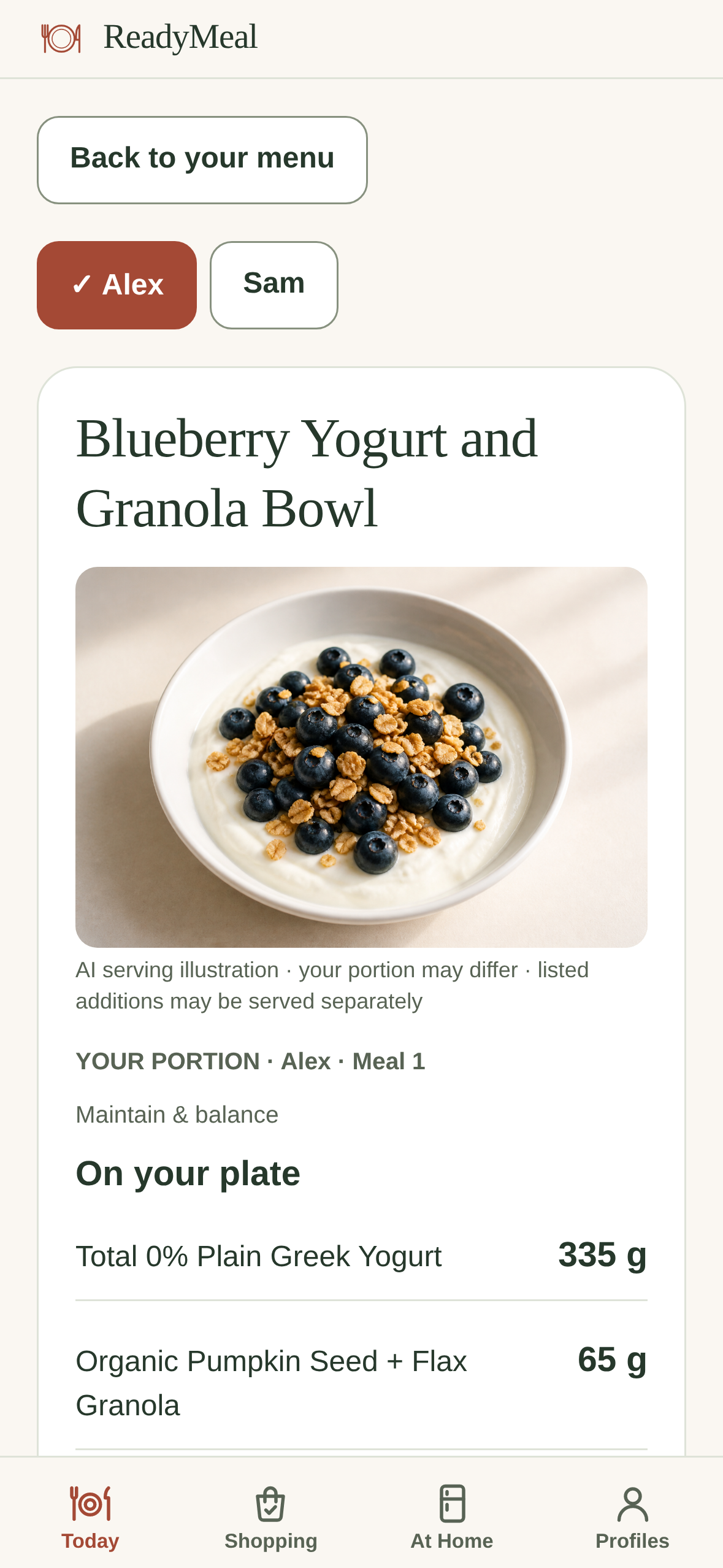
Your portion of every dish, in grams
-
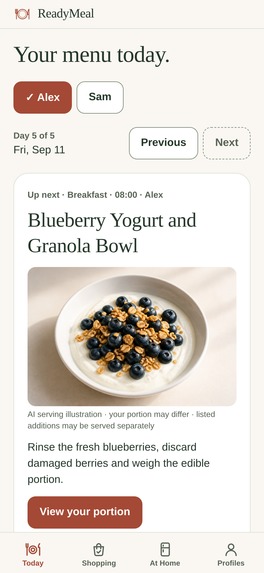
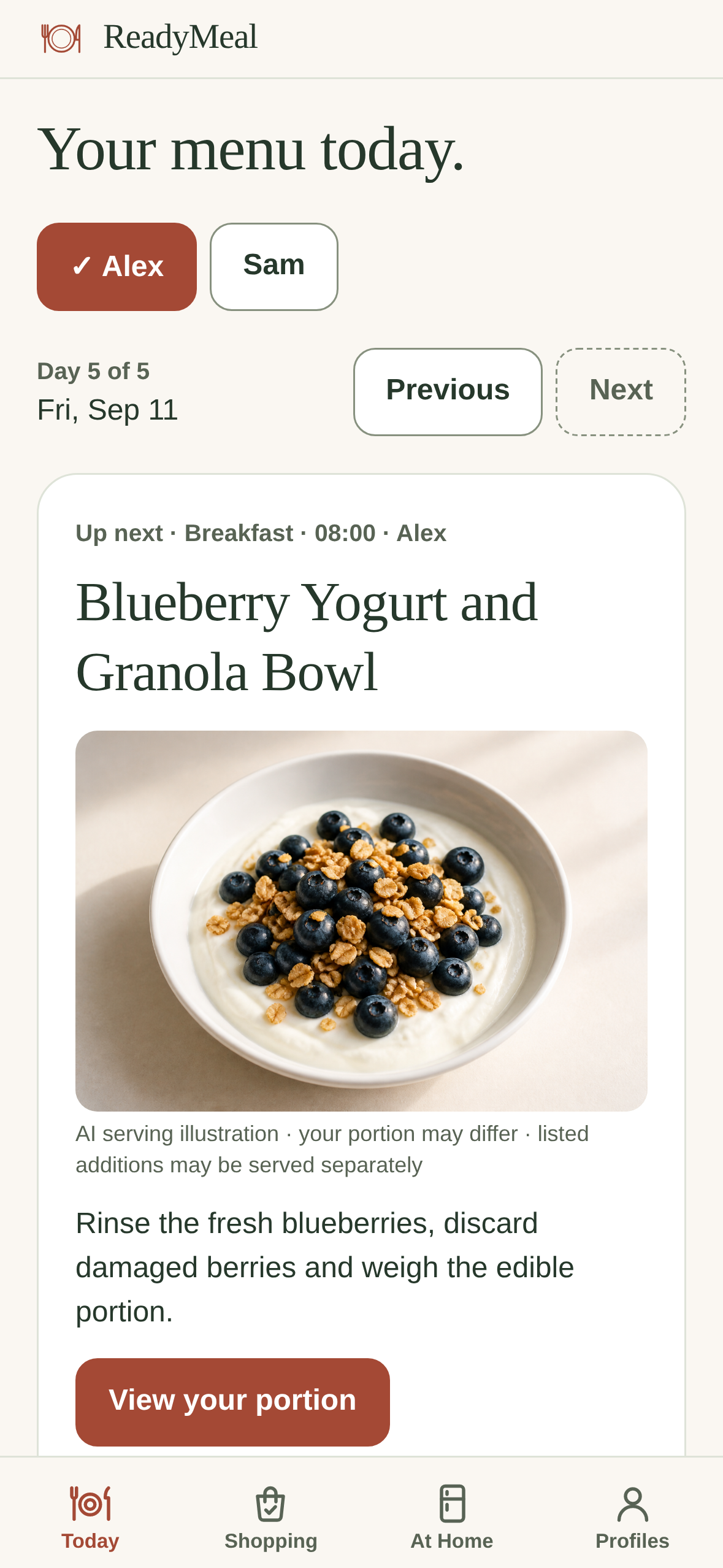
Today: the day's menu built from ready-to-eat food
-
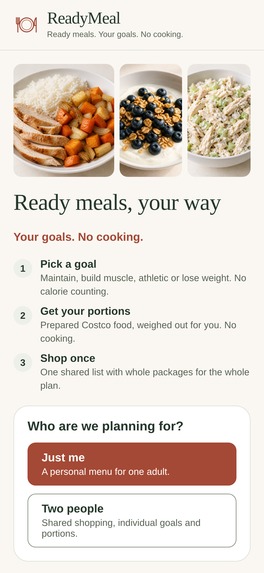
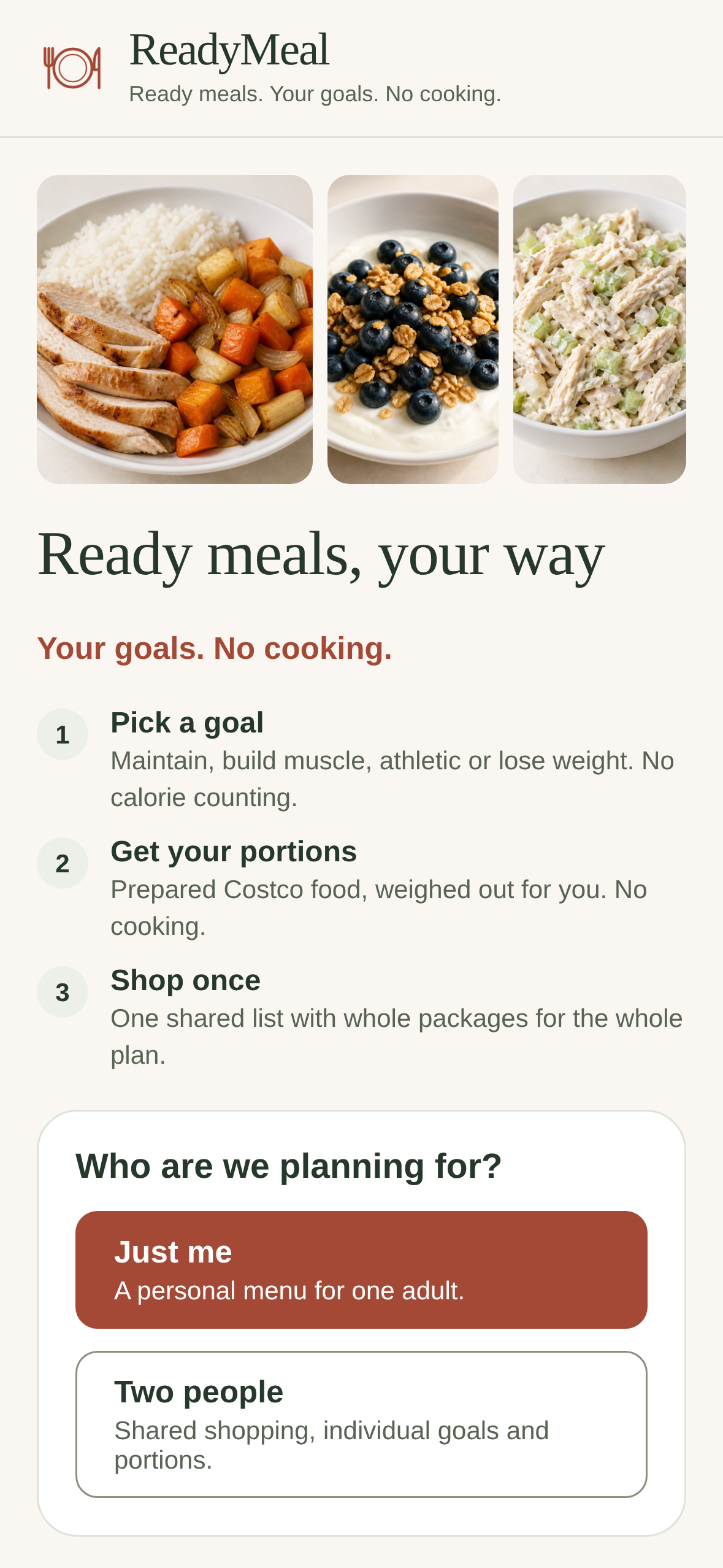
First run: one person or two people, no account
-
App icon, 1024 x 1024, uncropped
Inspiration
Millions of people eat prepared food every day because they don't cook and still have no idea whether it fits their goal or how much of it they should eat. Trackers ask them to weigh, log and count. Meal-plan apps hand them recipes. Neither helps at 10:47 PM in front of an empty fridge. ReadyMeal started as one student's answer to that evening: what if the food you can already buy ready-to-eat came with a plan?
What it does
You choose one of four goals (Maintain & balance, Build muscle, Athletic / high protein, Lose weight), your exclusions and tastes, how many meals a day you eat, and a planning period of 1–30 days. Optionally you connect Apple Health (read-only, one profile). ReadyMeal then:
- builds a daily menu from ready-to-eat and already-cooked products with sourced nutrition labels (Costco US catalog; the app is independent of Costco),
- calculates an individual portion in grams for every dish from the Mifflin-St Jeor equation and your goal — no calorie targets to type in,
- lets you swap any dish for calculated alternatives and rebalances the rest of the day,
- produces one shared shopping list in whole packages for the whole plan (two-person households get individual portions and a shared list),
- tracks what is at home, and lets you record Ate / Ate some / Skipped.
No cooking, no calorie counting, no account.
Honesty by design
Unknown label data stays unknown the app never shows a made-up nutrient. Allergen screening treats missing labels as a hard restriction. The optional AI helper only chooses between options ReadyMeal has already validated and never receives Health data.
How we built it
Expo / React Native (iOS), a deterministic TypeScript planner (no model calls on the critical path), SQLCipher-encrypted local storage, HealthKit, and a small Express backend on Render for catalog updates and the optional AI helper. All planning works offline. Every product in the catalog is versioned and source-backed; a plan never silently changes when the catalog does.
RevenueCat
ReadyMeal is free with no locked features. It is supported by a single labelled banner on the Shopping screen served through RevenueCat Ads (Google Mobile Ads with UMP consent, non-personalized requests, no tracking permission). Health, profile, plan and inventory data never reach the ad SDK.
Challenges
- Building an assortment wide enough for real breakfasts, lunches and dinners from label-sourced prepared food only, without inventing nutrition.
- Keeping portions honest: profile-based and Apple Health-based estimates are alternatives, never added together.
- App Review asked for a full walkthrough; we recorded it on a physical iPhone and fixed the first-run and stale-replacement bugs the recording exposed.
What we learned
A planner people trust needs fewer features and more guarantees: versioned data, explicit unknowns, and no hidden rebalancing.
What's next
More label-sourced products for wheat- and milk-free plans, Android, and the Shipaton judges' feedback.
Video credits
Lifestyle scenes are AI-generated stills (Higgsfield) with camera motion added in post; the app screens are the real application; narration is AI-synthesized; music is an original synthesized bed. No stock footage or licensed music is used.
Built With
- expo.io
- express.js
- google-mobile-ads
- healthkit
- openai
- react-native
- render
- revenuecat
- sqlcipher
- typescript
- zod

Log in or sign up for Devpost to join the conversation.