-
-
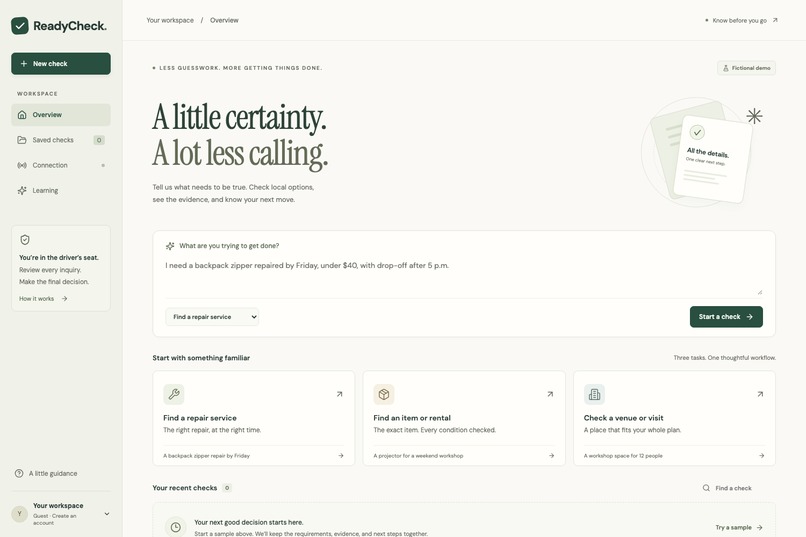
Know before you go. Start with what you need, what you can spend, and when it has to happen.
-
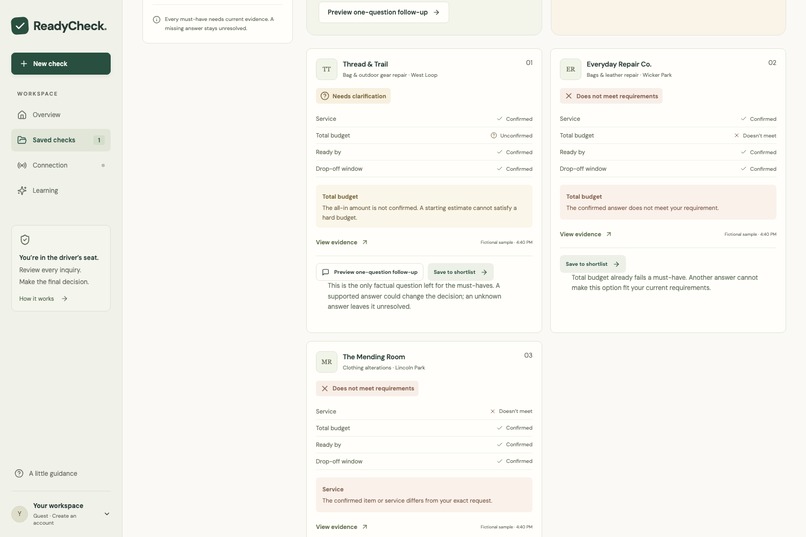
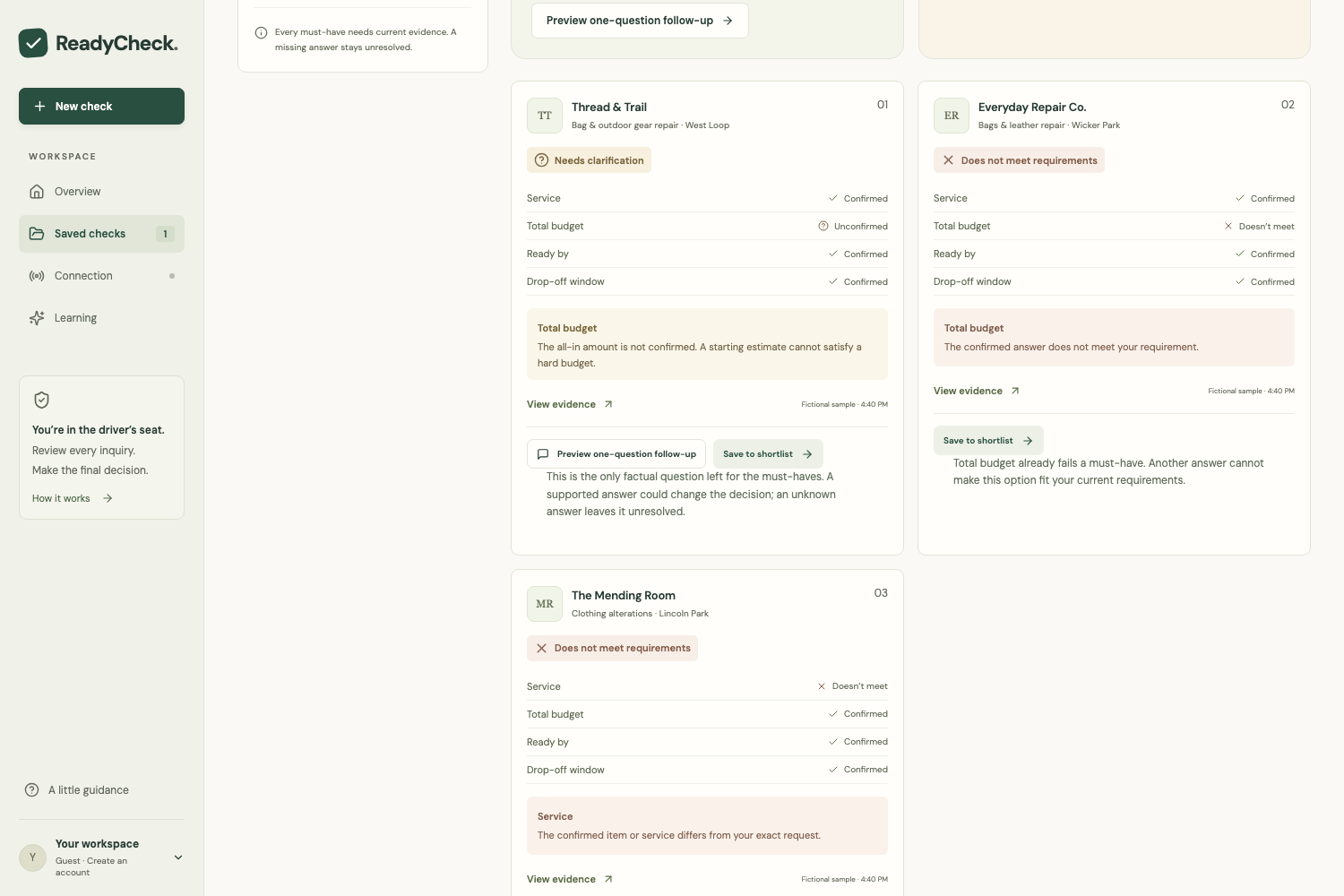
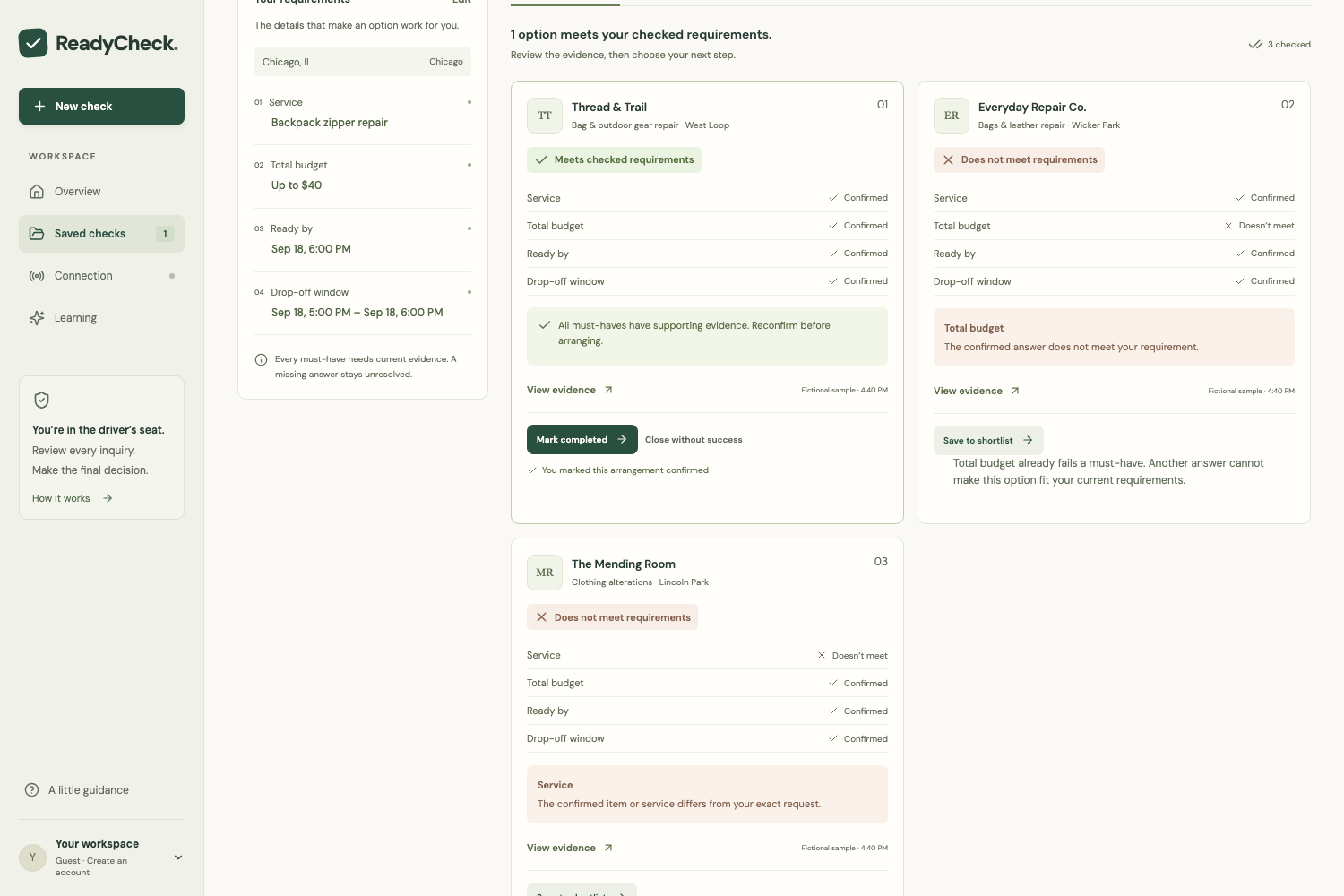
Compare each business against your must-haves, with clear matches, blockers, and unanswered questions.
-
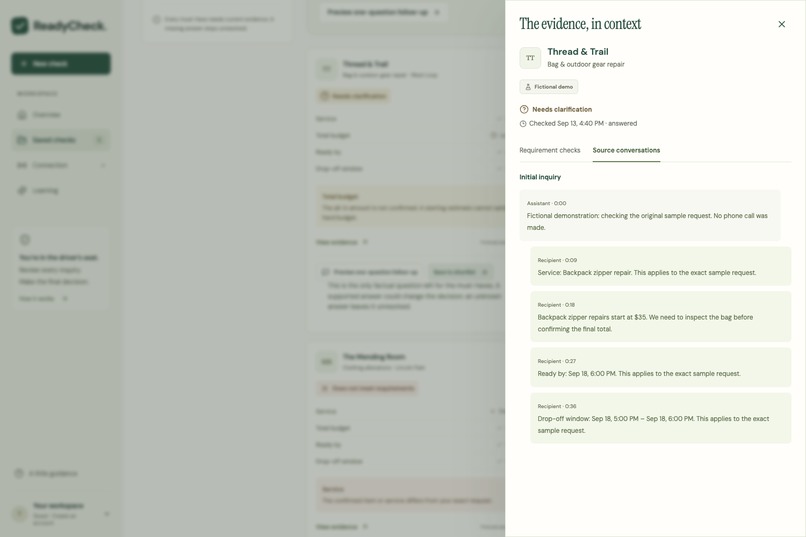
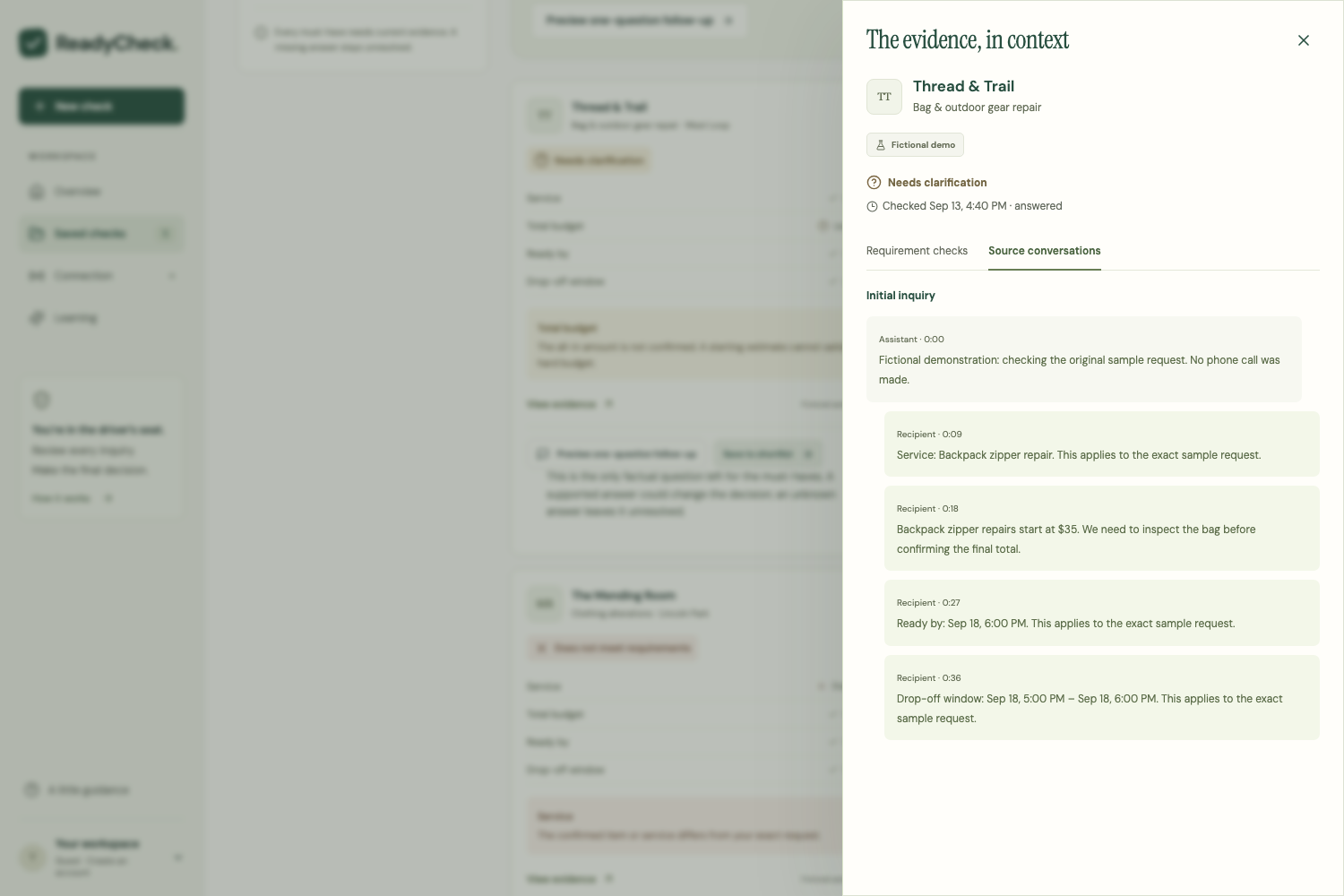
See what the business actually said, with the original conversation behind each answer.
-
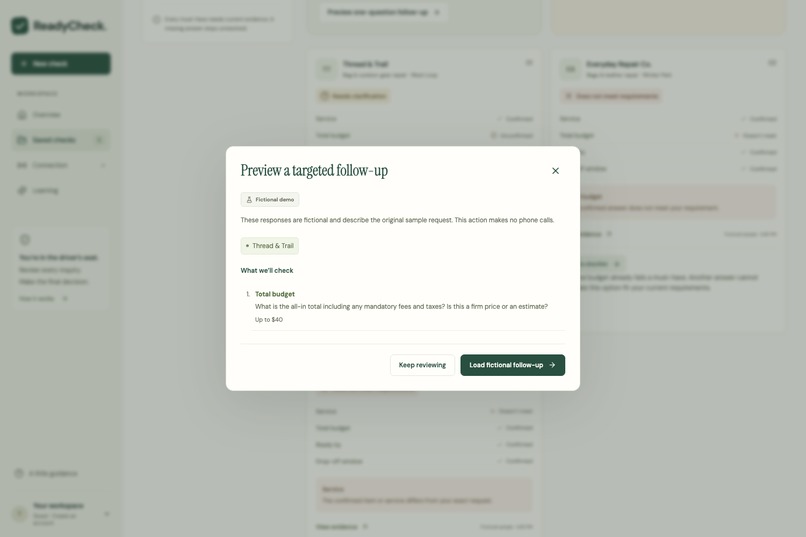
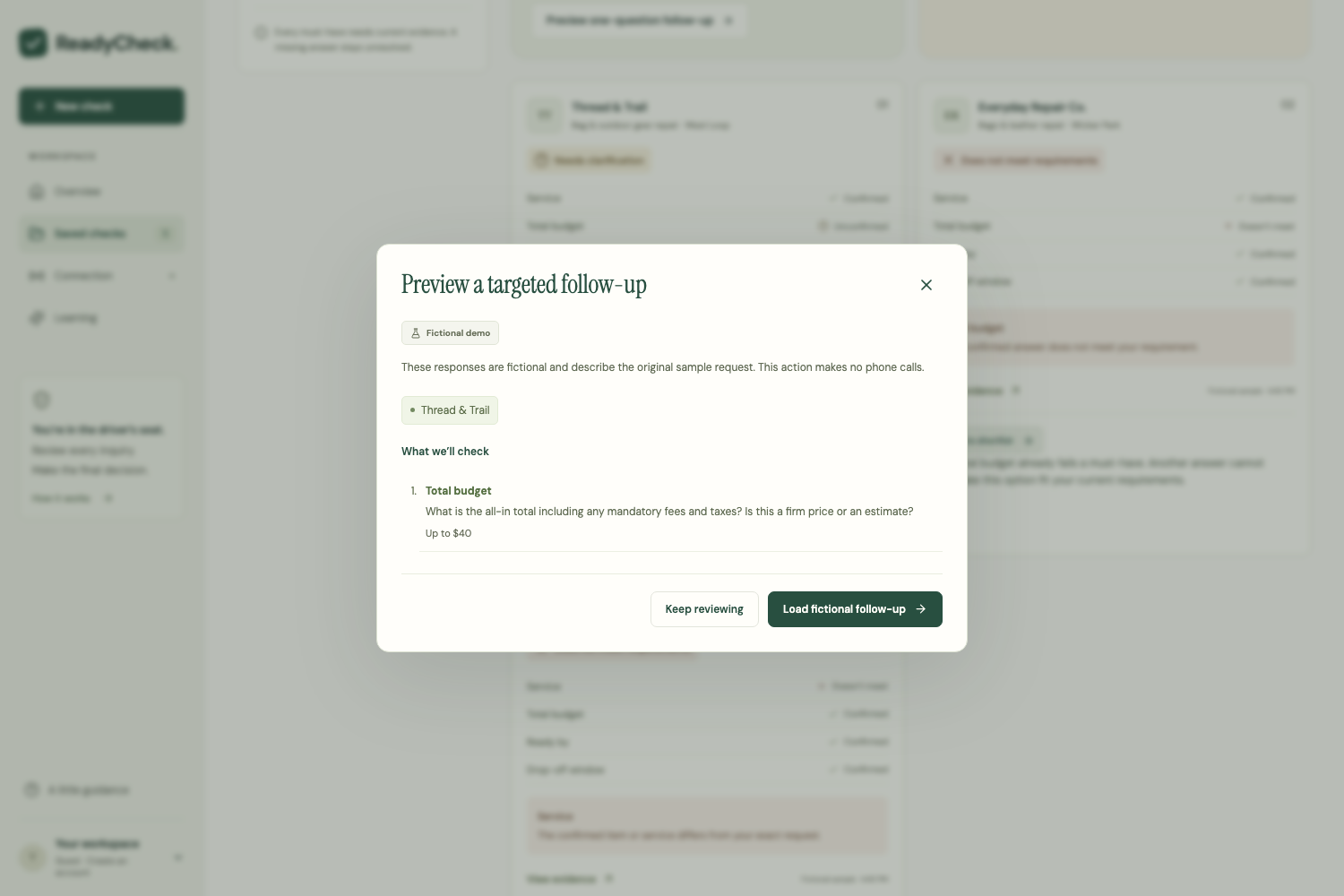
Ask the one missing question that could change your decision, without repeating the whole inquiry.
-
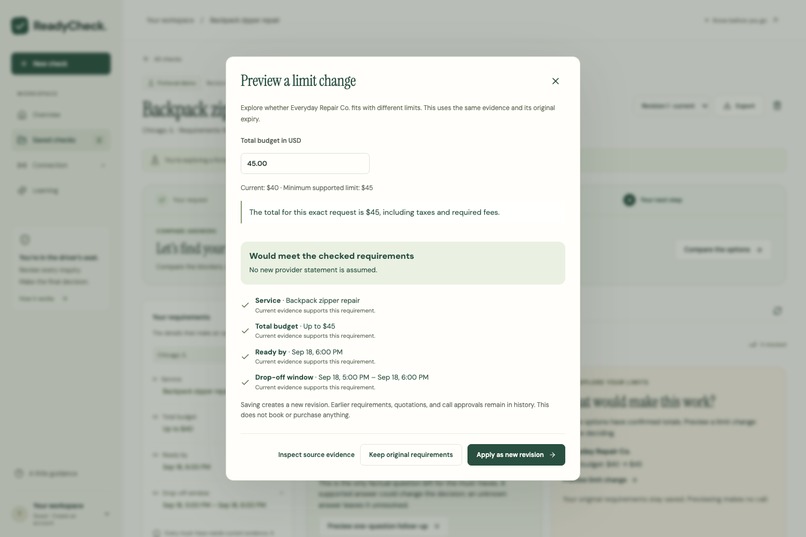
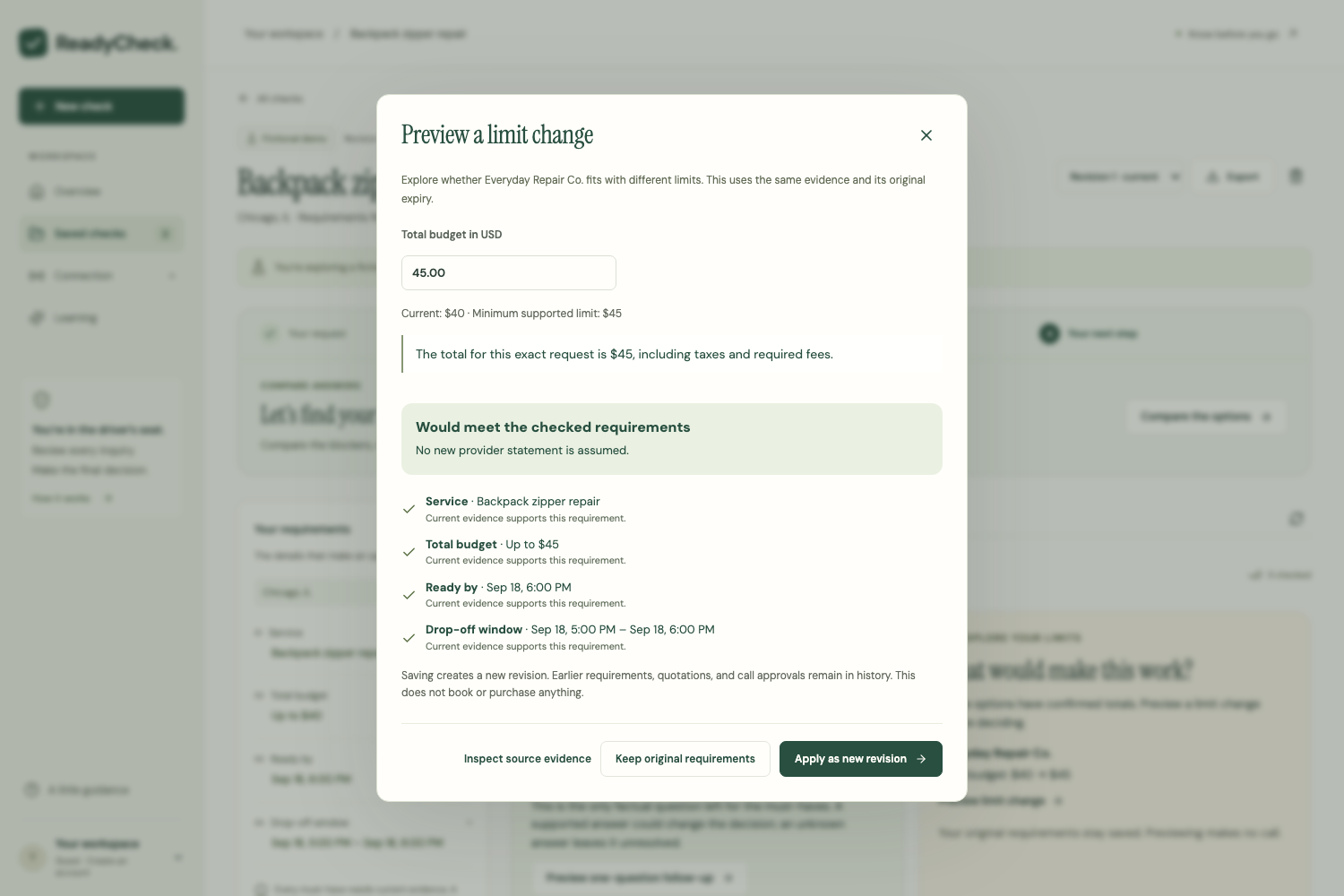
Explore a budget change before committing. Your original request stays saved.
-
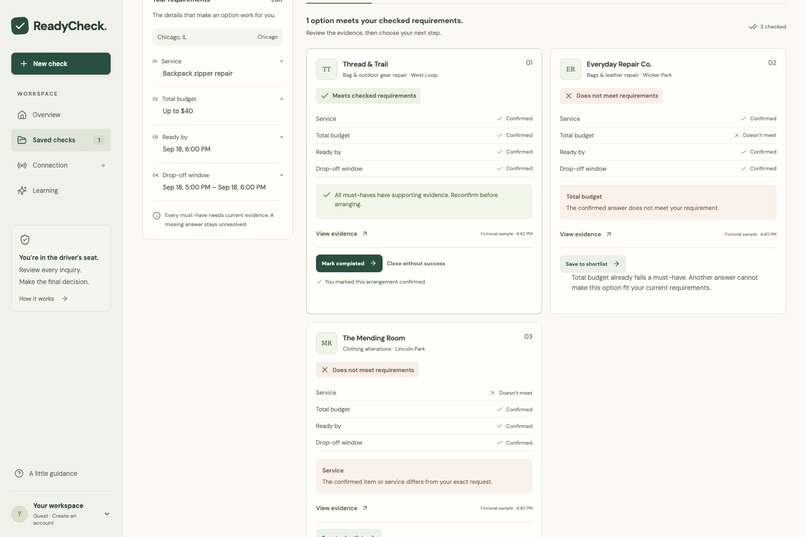
Keep your next step in one place: shortlist an option and record the arrangement you made.
Inspiration
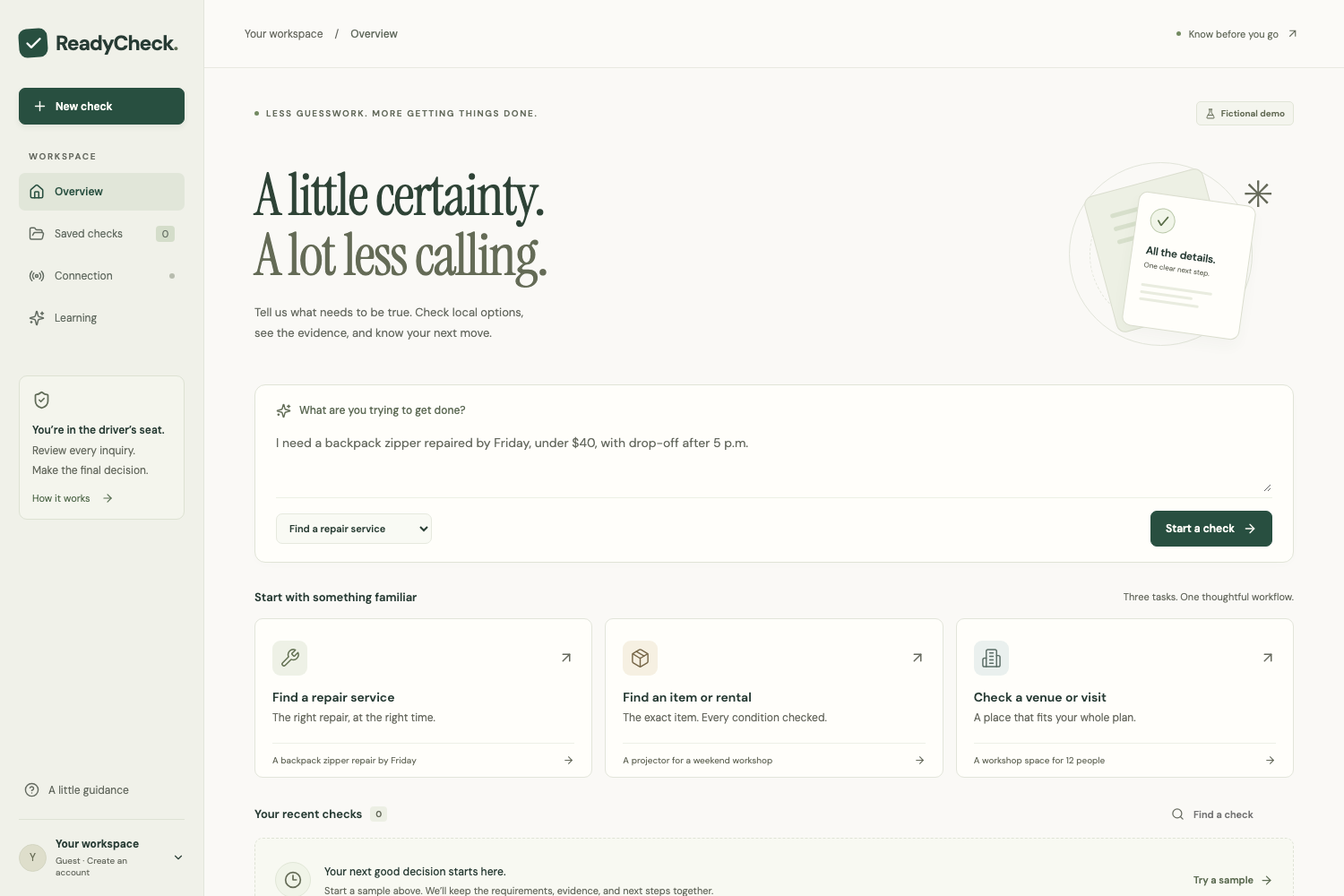
Finding a repair shop is easy. Finding one that can fix your bag before Friday, within your budget, and during a drop-off window you can actually make takes more work.
You call one place, leave a message at another, and try to remember who quoted what. Sometimes you make the trip only to discover that an important detail was never confirmed.
We built ReadyCheck to make that process easier: keep the request together, get the missing answers, and help people decide before they head out.
What it does
ReadyCheck checks whether a business can meet the details that matter to you, including the right service, total price, availability, and timing.
You describe what you need and review the recipients and questions before approving a call. CALL-E handles the phone conversation. ReadyCheck brings the answers together in a comparison you can inspect.
Each answer stays connected to what the business actually said. A starting estimate remains an estimate. An unanswered question stays open. If one missing detail could change your decision, ReadyCheck helps you preview a focused follow-up.
You can explore a budget change without losing your original request, save an option to your shortlist, and record what you arranged. The final decision stays with you.
The public demo lets anyone try this journey with clearly labeled fictional businesses and responses, without placing a call.
How we built it
We built the interface with React and TypeScript, with an Express backend and SQLite for saved requests, accounts, conversations, and review history. The application runs on Railway with persistent storage.
CALL-E’s Calls API powers approved phone inquiries and returns transcripts and structured answers. ReadyCheck checks those answers against the request, validates their source references, and requires review of live evidence before it can support a match.
We also built recovery for interrupted requests. If a call-creation response gets lost, the application retains the original request and tracking key so recovery can refer to the same operation.
Reviewed corrections feed account-specific memory that helps select or pause supported interpretation fixes.
Challenges we ran into
Phone conversations exposed details that were easy to miss in a clean demo.
A quoted price could be an estimate. A reply could answer only part of a question. An extracted fact could point to the wrong transcript segment. Early live calls also exposed awkward screening behavior, missed negotiation opportunities, and confusion about who would drop off an item.
Those findings shaped the product. We added clearer question context, correction history, tighter extraction rules, and checks for recurring conversation problems. We revised the caller instructions too; those revisions still need another controlled live test.
Accomplishments that we're proud of
ReadyCheck carries a request through comparison, evidence review, follow-up, and a saved next step. People can see why an option fits and what remains unresolved.
The current build passes 175 unit, API, and fault tests, 45 evaluator cases, and 17 browser workflows. These are regression checks, not an independent accuracy benchmark.
On the hosted app, we verified that a saved account and arrangement survived a service restart and could be reopened after signing in.
We also opened a contribution PR to the CALL-E community repository with the runnable application, a credential-free walkthrough, and documentation of its current limits.
What we learned
The most useful answer is often the one that explains its conditions.
“Repairs start at $35” and “Your repair will cost $35 in total” can lead to very different decisions. Preserving that distinction matters throughout the experience, from the conversation to the comparison screen.
We also learned how much a focused follow-up can help. Sometimes the next useful step is simply getting one clear answer.
What's next for ReadyCheck
Our next milestone is testing the revised caller with consenting participants across more realistic conversations, including interruptions, refusals, uncertain quotes, and negotiation.
We then want to put ReadyCheck in people’s hands for actual errands and understand whether it saves them calls, repeat explanations, and unnecessary trips.
That feedback will guide better business discovery and broader calling access. The product should earn trust by helping people finish the tasks they already need to do.
Built With
- call-e
- docker
- express.js
- github-actions
- node.js
- playwright
- railway
- react
- sqlite
- typescript
- vite
- zod


Log in or sign up for Devpost to join the conversation.