-
-
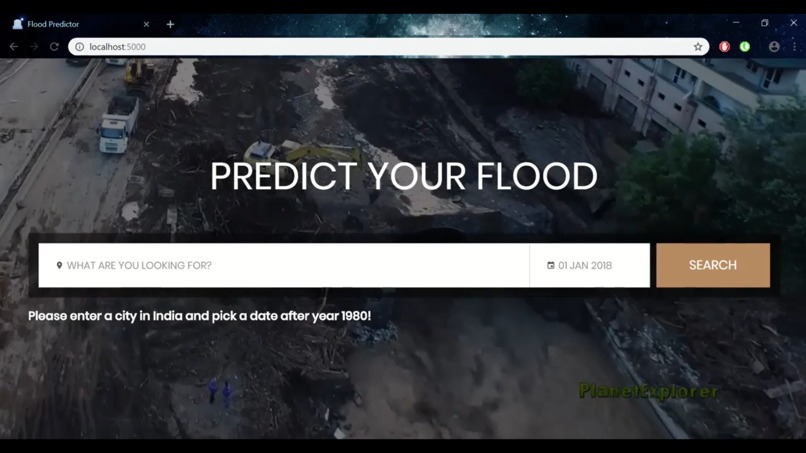
Homepage 1
-
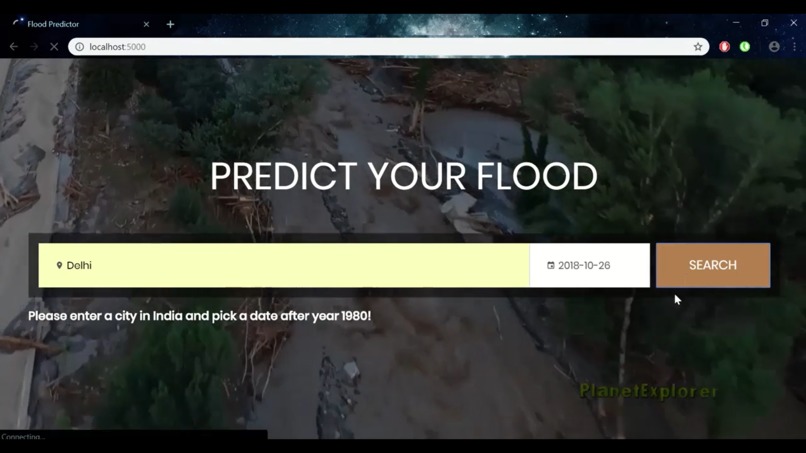
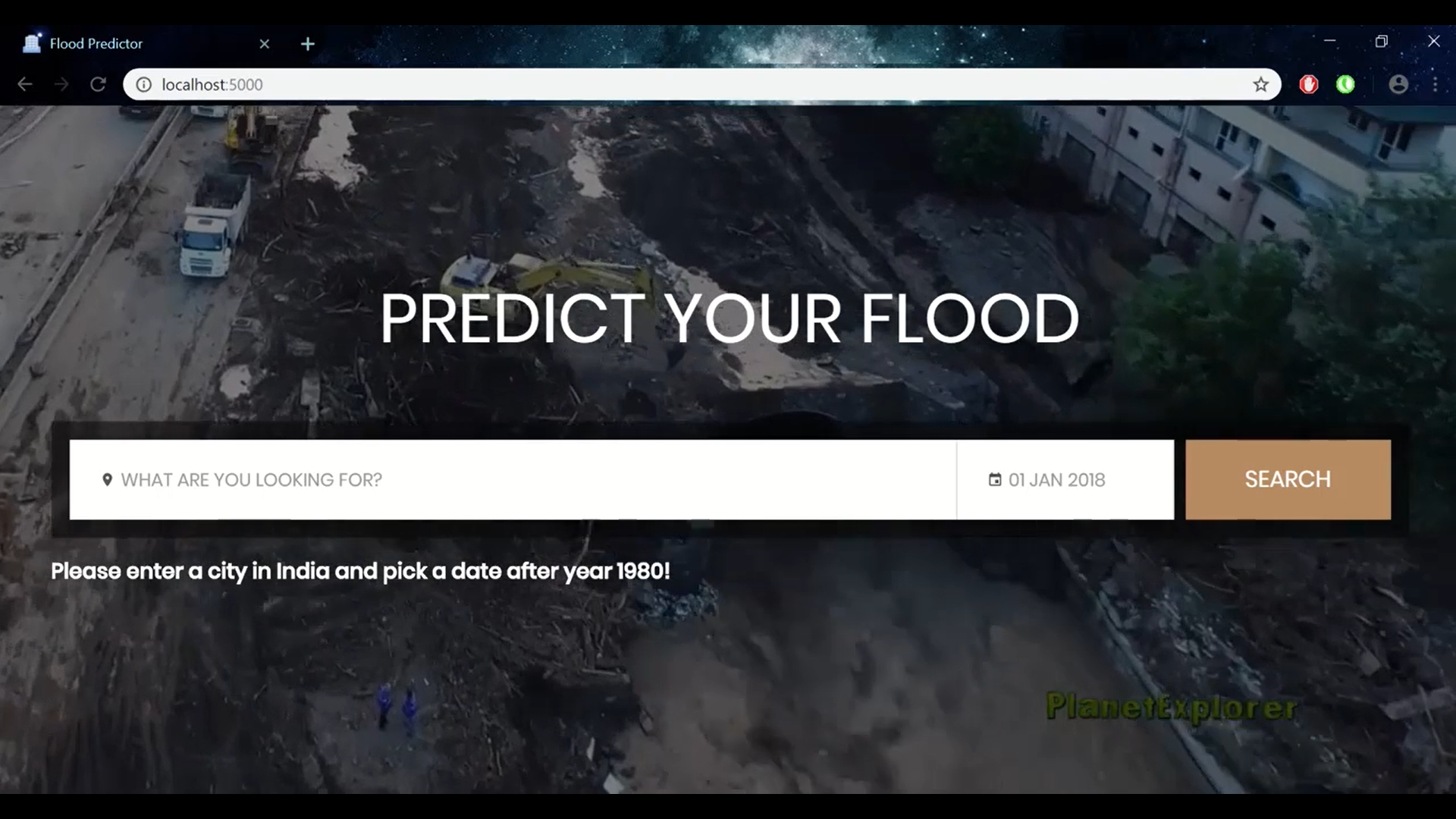
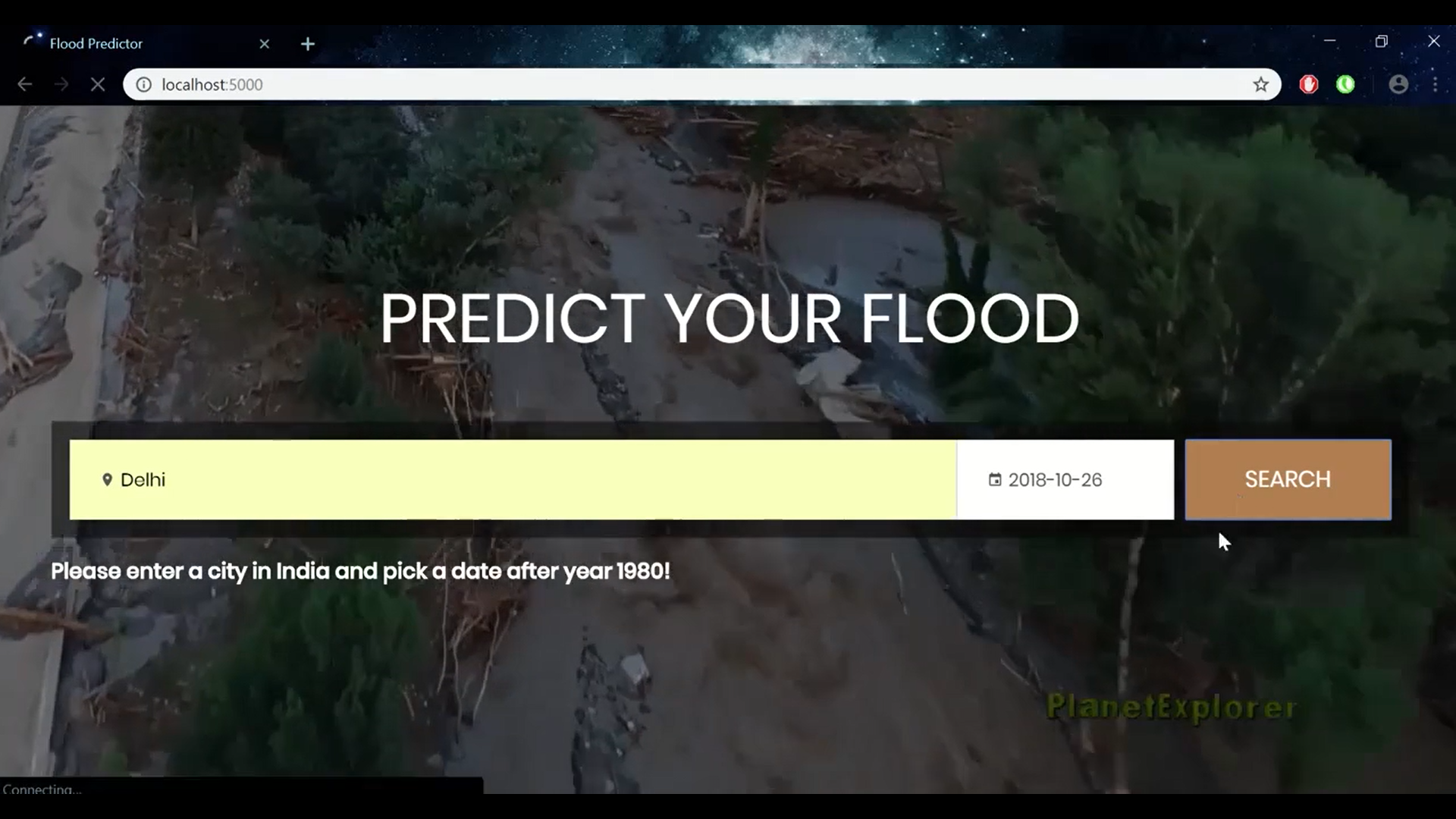
Location Entered
-
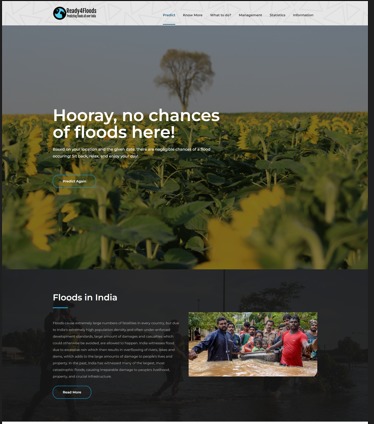
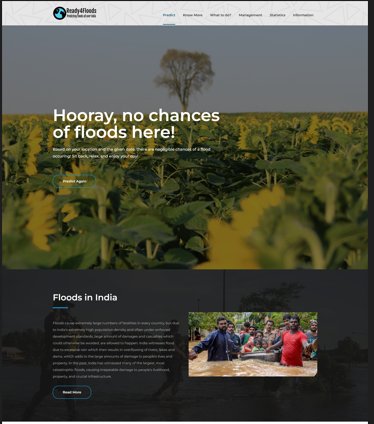
No Flood Predicted
-
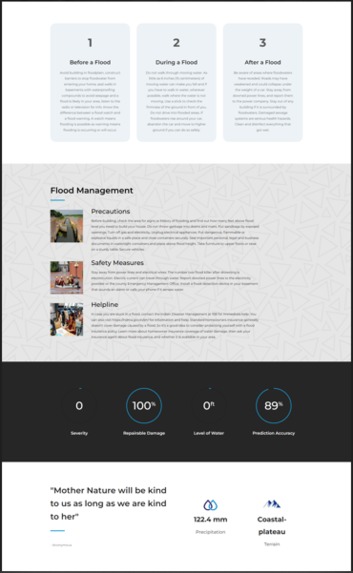
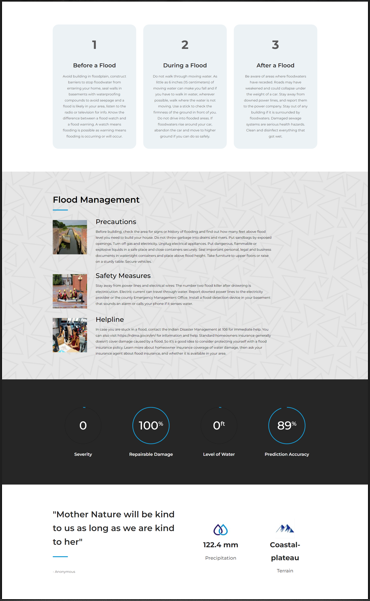
Prediction Accuracy
-
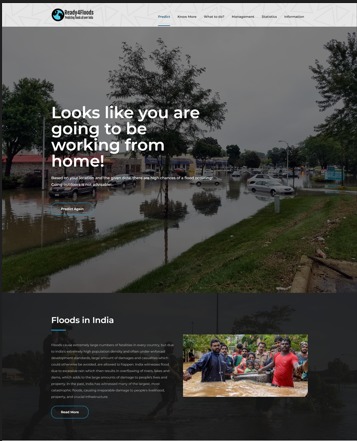
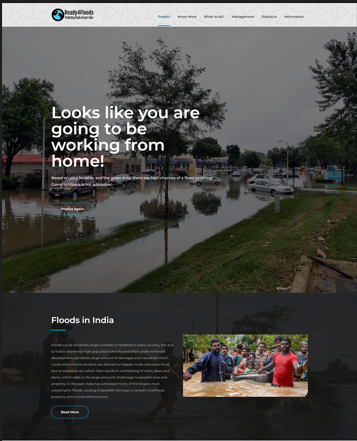
Flood Predicted
-
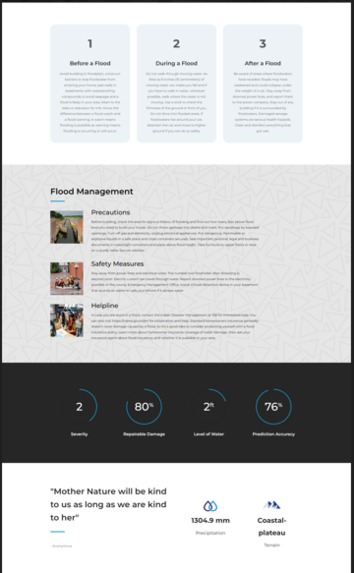
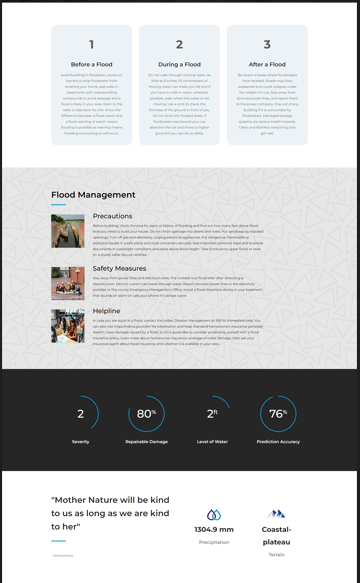
Prediction Accuracy
Inspiration
Flooding is a major climate change phenomenon that occurs when a large amount of water is carried by rivers, creeks, and other topographical features into places where the water cannot be efficiently drained. During heavy rains, drainage systems in residential areas are frequently insufficient, or unmanaged civil development substantially impairs the performance of an otherwise effective drainage system. This pressing need for attention drove us to create something that could alleviate the damage.
What it does
Our system provides Real-time and near real-time disaster information services. It is a robust and responsive website that uses machine learning to predict the probability and severity of flooding in a certain region over a given time period, which can help mitigate the financial and life crises that may occur.
User will be prompter with a GUI to enter a particular location and a specific date on which the prediction is needed and the application will generate the result by showing an alert message, a severity level from 1 to 5 where 1 being no severity to 5 being the most severe situation, repairable damage and the accuracy of the prediction.
How we built it
The machine learning model is a neural network that uses the Keras library to predict the chances of flood based on various environmental and geographical factors including but not limited to precipitation, location, and climatic conditions. The model has been trained on a data set expanding over the years 1990 to 2015 of India's climate data.
The website will include a user interface that accepts location and date input and then uses the Google Maps API to produce an accurate location in the Python Flask backend. This location, together with the date, is passed to the Machine Learning Model, which returns the flood severity and other parameters. The user is presented with the possibility of a flood and the precautions to take based on the return data from the Machine Learning Model. If the date is prior to 2015, the Machine Learning Model returns the data of the actual event.
Challenges we ran into
The first and foremost challenge we ran into was the availability of an ideal dataset to train this model on. So we've initially taken data from Indian weather reports and then looked at several parameters including but not limited to rainfall, precipitation and the terrain of the location entered and we have written a script keeping a certain threshold according to average conditions of a flood and created our own dataset which spans over 4000+ entries on which we train and test our model.
Built With
- flask
- gcp
- keras
- python
- weatherapi


Log in or sign up for Devpost to join the conversation.