
Inspiration
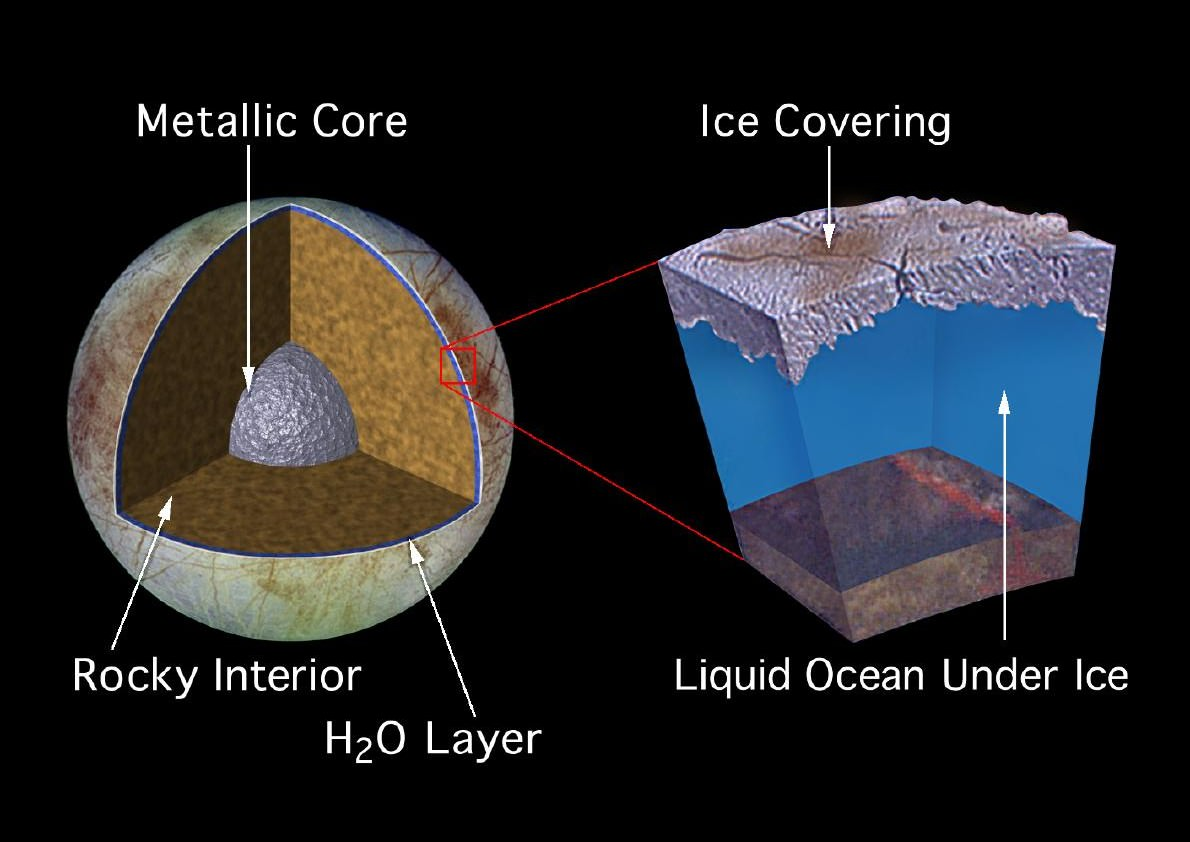
Europa has an induced magnetic field due to periodic oscillations in flux in Jupiter's magnetic field. From this coupling we can deduce the existence of conductive materials below Europa's icy surface. This is theorized to be a salty ocean which may be an ideal breeding ground for extra-terrestrial life. This CHIPSAT mission will leverage the ability to swarm small satellites to more precisely measure Europa's magnetic field in order to constrain the conductivity of the subsurface ocean. in doing so the concentration of salts, and therefore the viability of life, in these oceans can be determined.
What it does
This project will launch two swarms of CHIPSATS armed with magnetometers and radio transmitters towards Jupiter. One swarm will surround the gas giant and measure the temporal changes in the magnetic field of Jupiter from the orbit, while sending their position back to the . The other swarm will land on the icy surface of Europa, taking the same measurements. The data will be sent to a local satellite to be transmitted to earth for processing. Once the data is back on earth, a we can determine the spacial distribution of the two magnetic fields throughout the time of the experiment. The relationship between the two magnetic fields used to determine the conductivity of the Europa's liquid ocean shell. This conductivity will enable us to determine the salinity, and whether there are any known life forms on earth that could exist on earth. Could Europa be a worthwhile place to search for extraterrestrial life?
How we built it
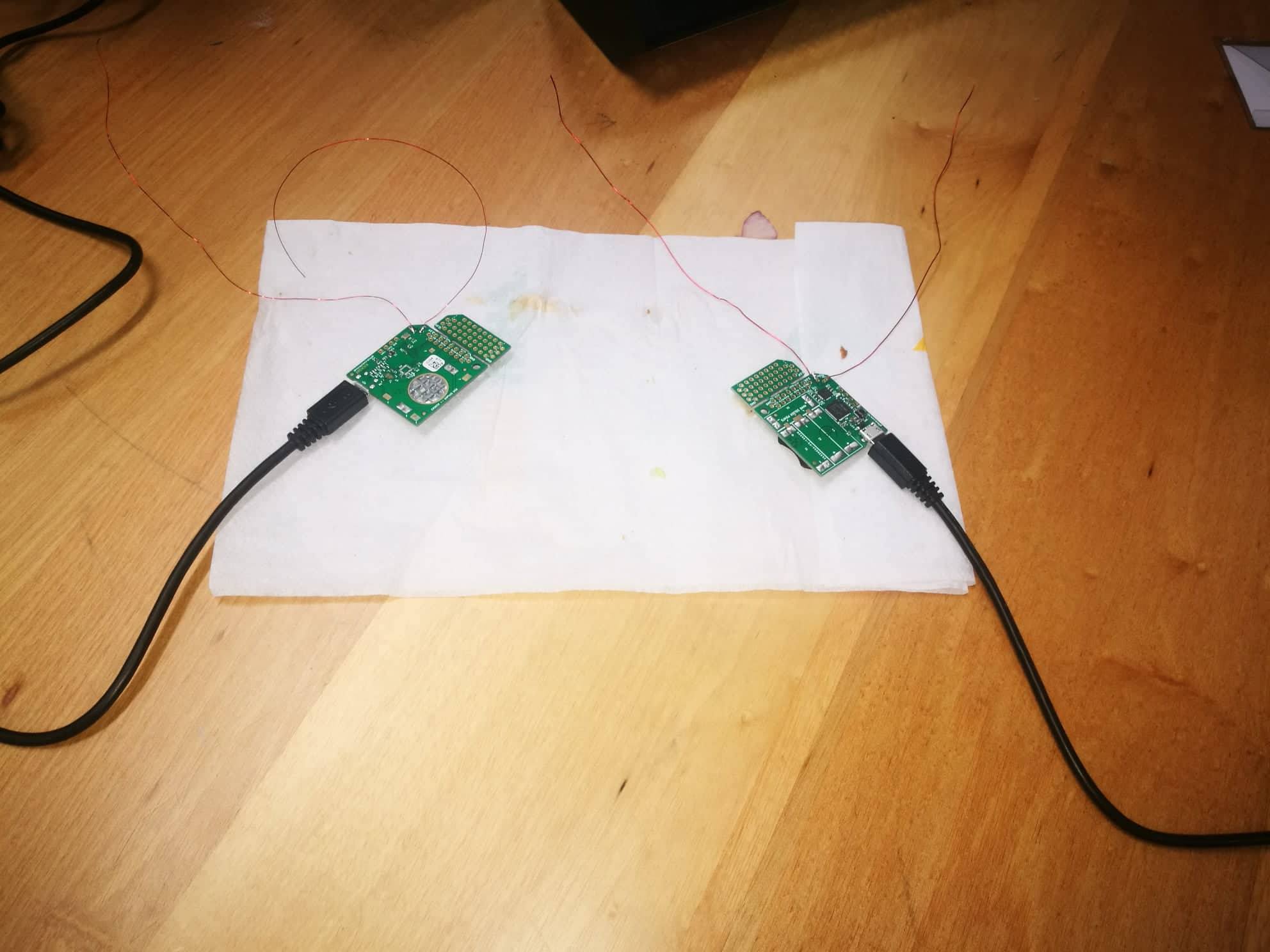
During the build, we weren't able to procure our own magnetometer, so instead of trying to share with another team we were fortunate enough to receive a chip-sat with an integrated magnetometer. We attached an antenna to the radio component and this is what we intended to use in our proof of concept demonstration at the end of the Hackathon Weekend. We were able to send commands to and from a second chipsat, however due to technical difficulties, the we were unable to send the magnetic information from the magnetometer to the second chipsat to a computer output. For the demonstration we used only the chipsat with the magnetometer and a hard link to output real time data from our magnetometer in our chipsat.
On the software front, we started by taking readings from our magnetometer and using PuTTY to connect the data to a PC. Once the data was on the computer a python script was used to live plot these reading to a 3 component magnetic field vector plot. This will be used in our demonstration to show the changing magnetic field caused by a swinging neodymium magnet as measured by our chipsat in real-time. Scripts were also formulated to send and receive radio signals between chipsats.
Challenges we ran into
Our initial plan for the demonstration was to record the magnetic field on one chipsat, send it to a second using radio and then plot this output live to show the changing magnetic field vector. We had problems sending the data between the two chipsats. To over come this we removed the second chipsat and just did a hard link to send the data to the computer for the demo.
Accomplishments that we're proud of
We created a tiny satellite, along with scripts and code to record, transmit and plot this data in real time! Pretty cool stuff and in done in only a day!
What we learned
We also learnt a lot about the geophysics behind how planets and moons like the Jupiter-Europa system operates. It has also opened our minds to extreme and hostile a places like Europa, which may have to potential to harbor extraterrestrial life! It been an exciting opportunity for the physicists in the group to see and apply Maxwell's equations to a large system as well as an opportunity to partake in some ground-breaking research.
What's next for Ready Salted Chips
Europa offers an exciting opportunity for detecting extra-terrestrial life in our solar system. We would need to add a solar cell, as well as design a larger satellite to help rely data from the chipsats on jupiter to the team on Earth. The casing would need to be designed to survive the harsh conditions of outer space and keep our baby chips safe. Further development on the chipsat software will enable the magnetic field data to be sent to the larger satellite and then to earth would need to be produced, but there are tonnes of exciting opportunities waiting for team Ready Salted Chips
