-
-
-
-
-
-
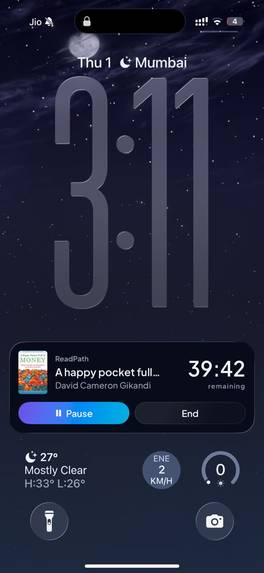
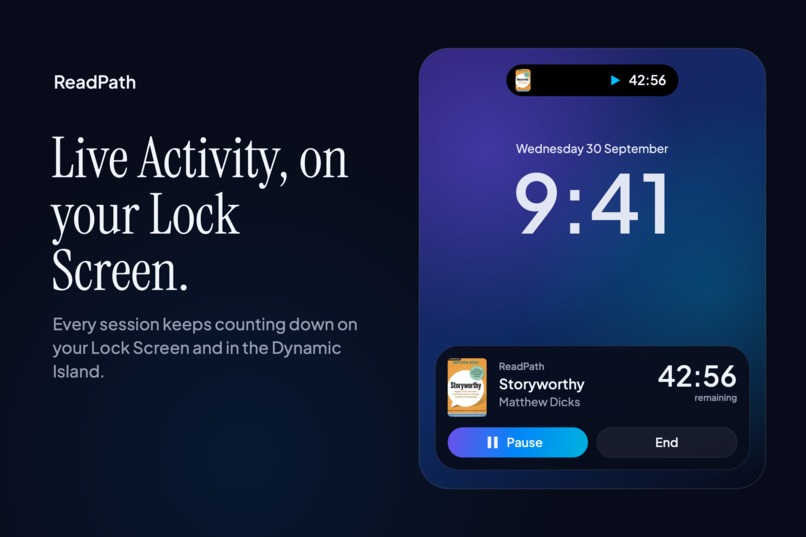
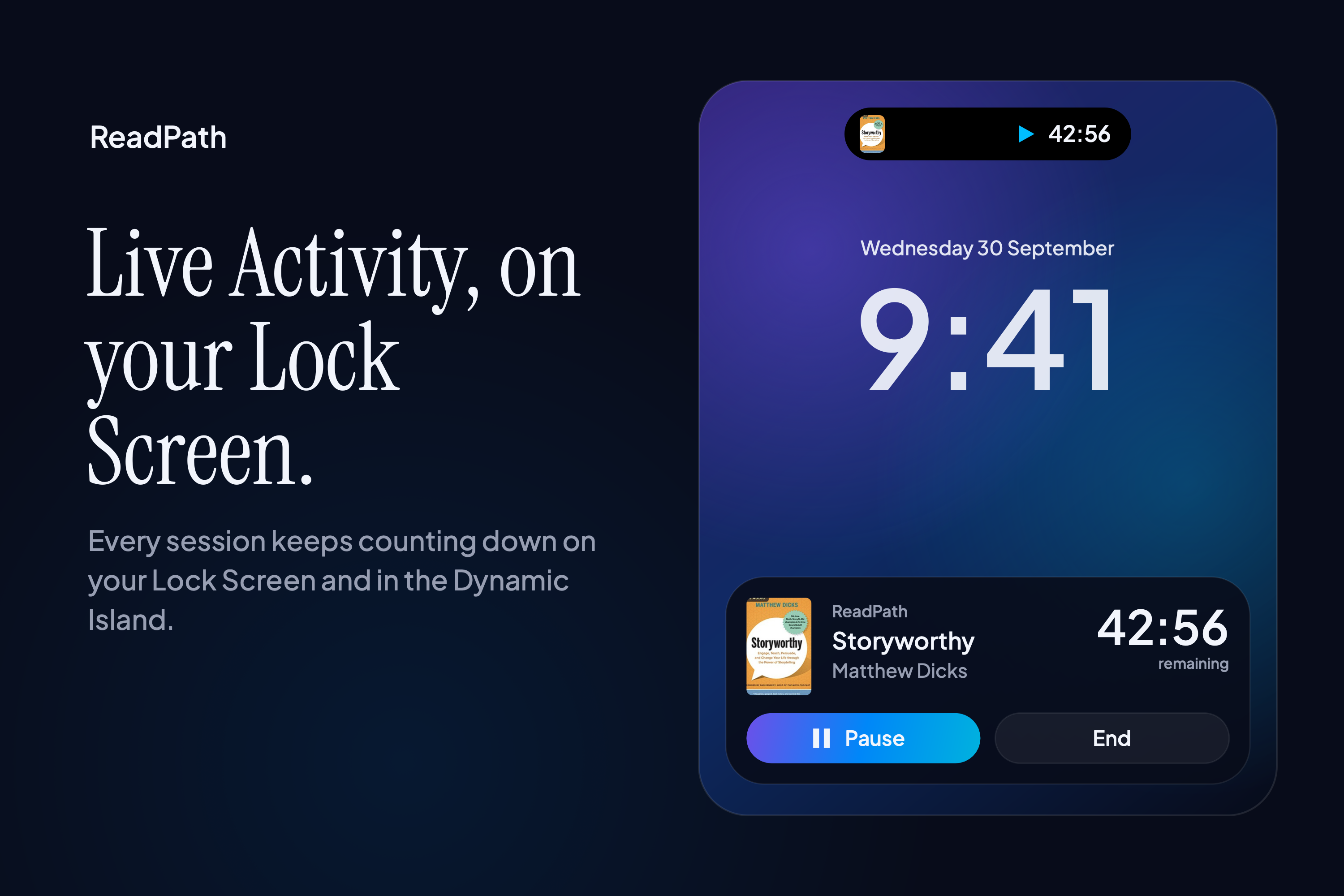
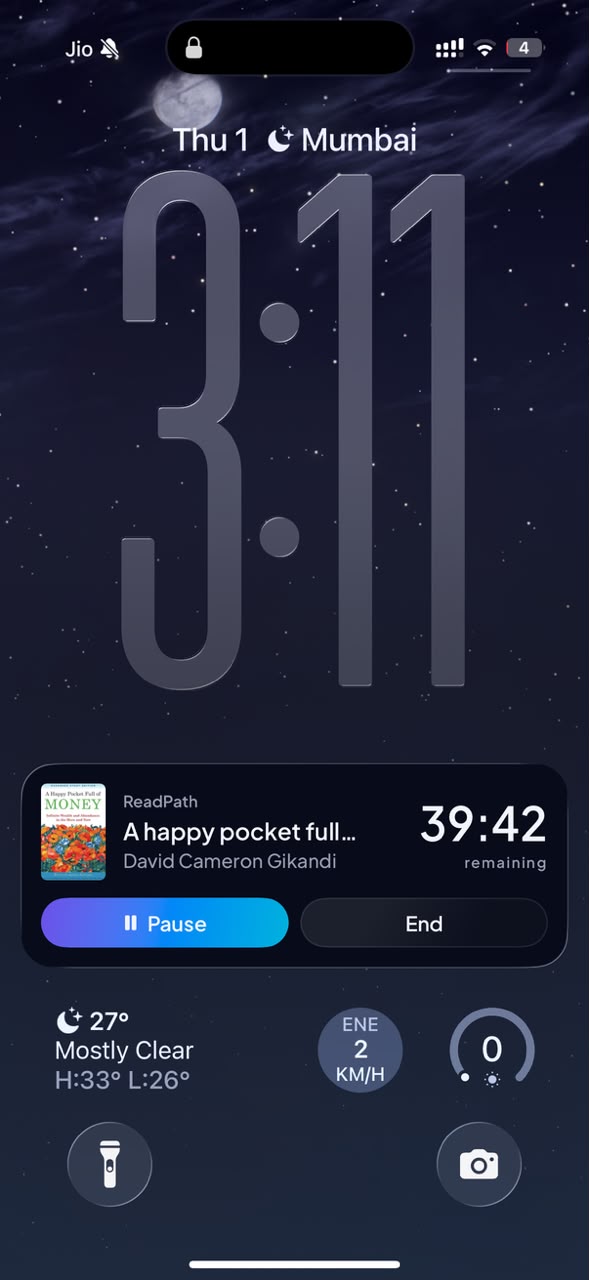
Your reading session stays as Live Activity on your Lock Screen and in the Dynamic Island.
-
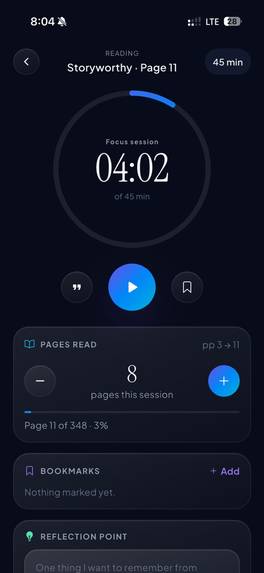
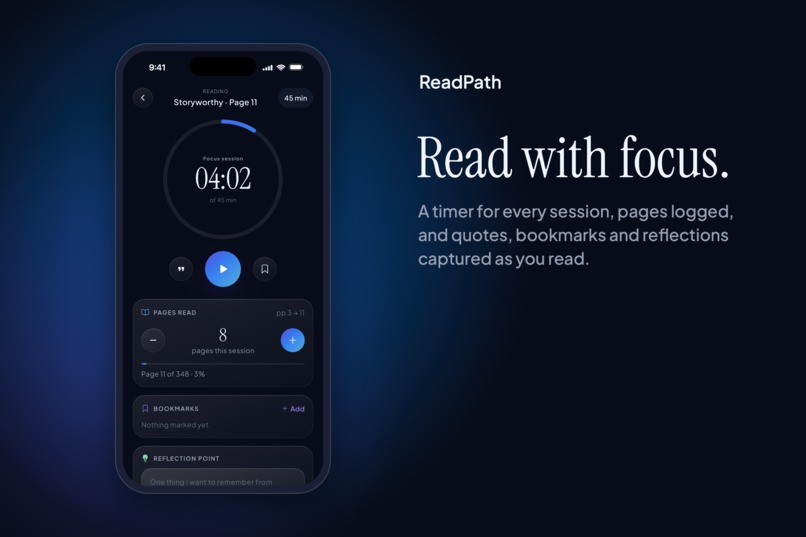
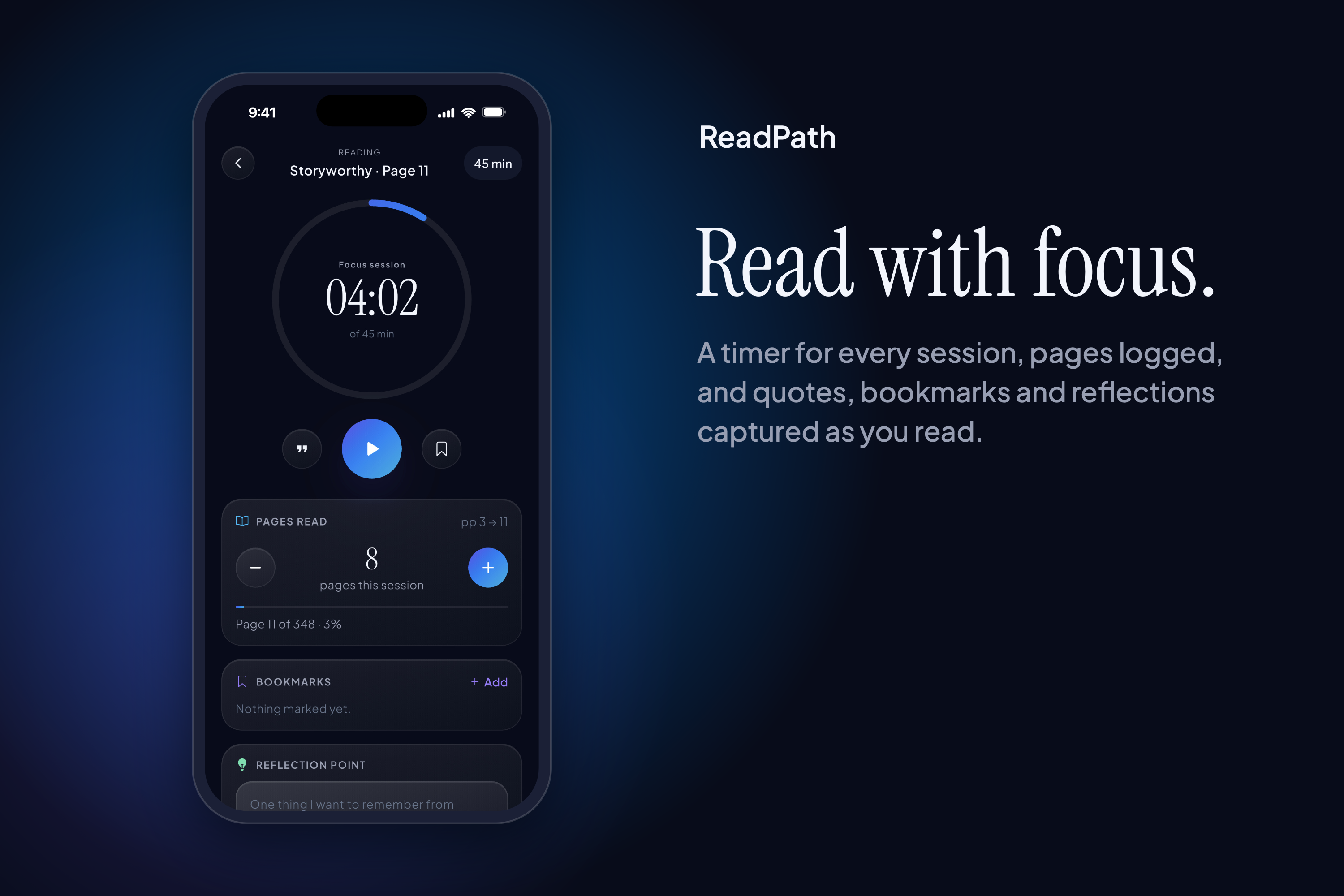
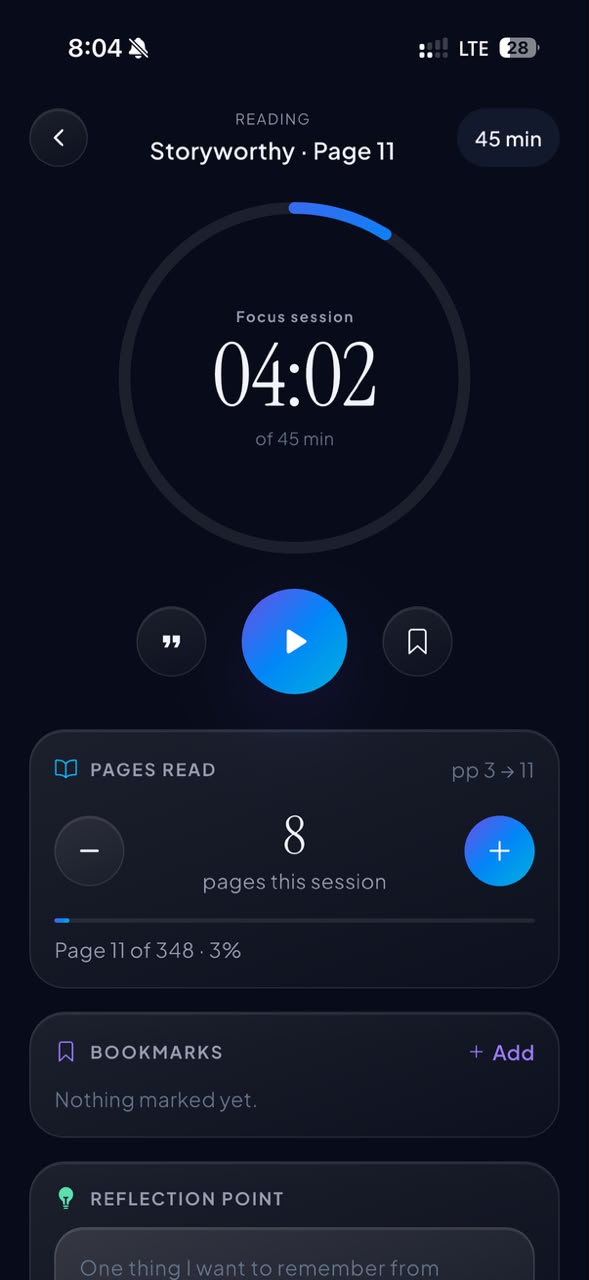
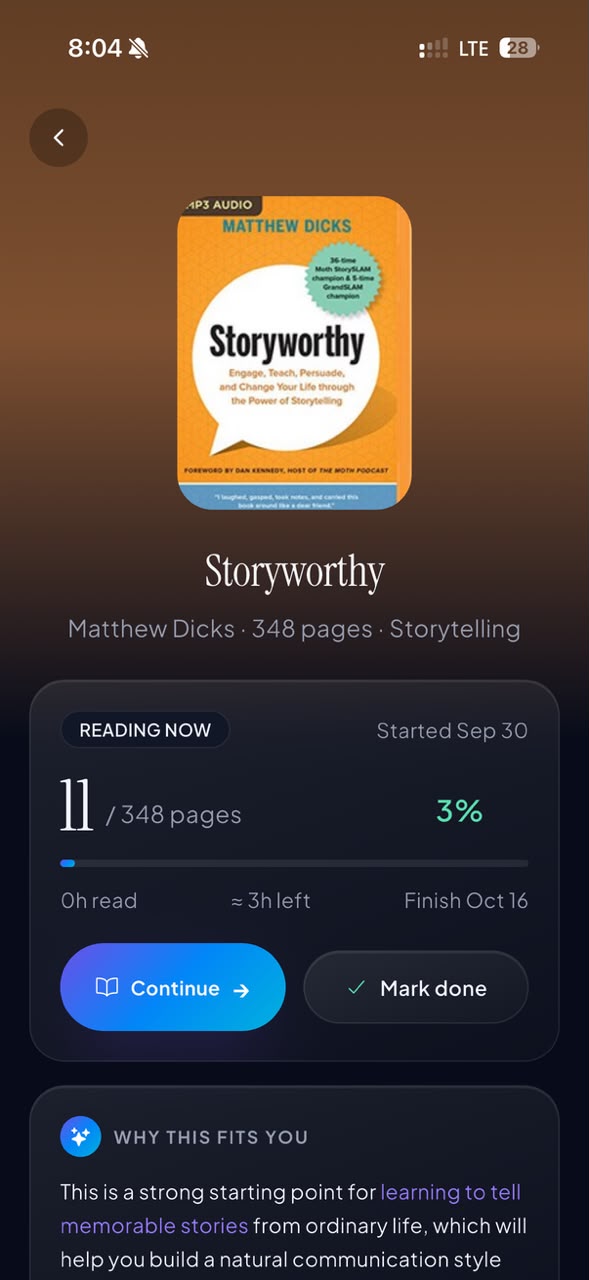
Start your reading session, log your quotes, bookmarks, and reflections!
-
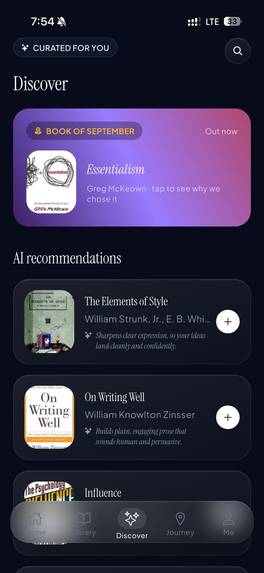
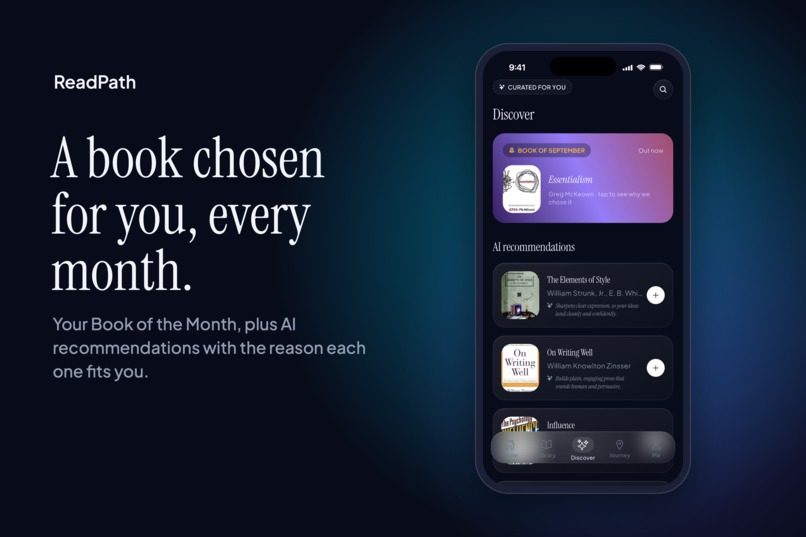
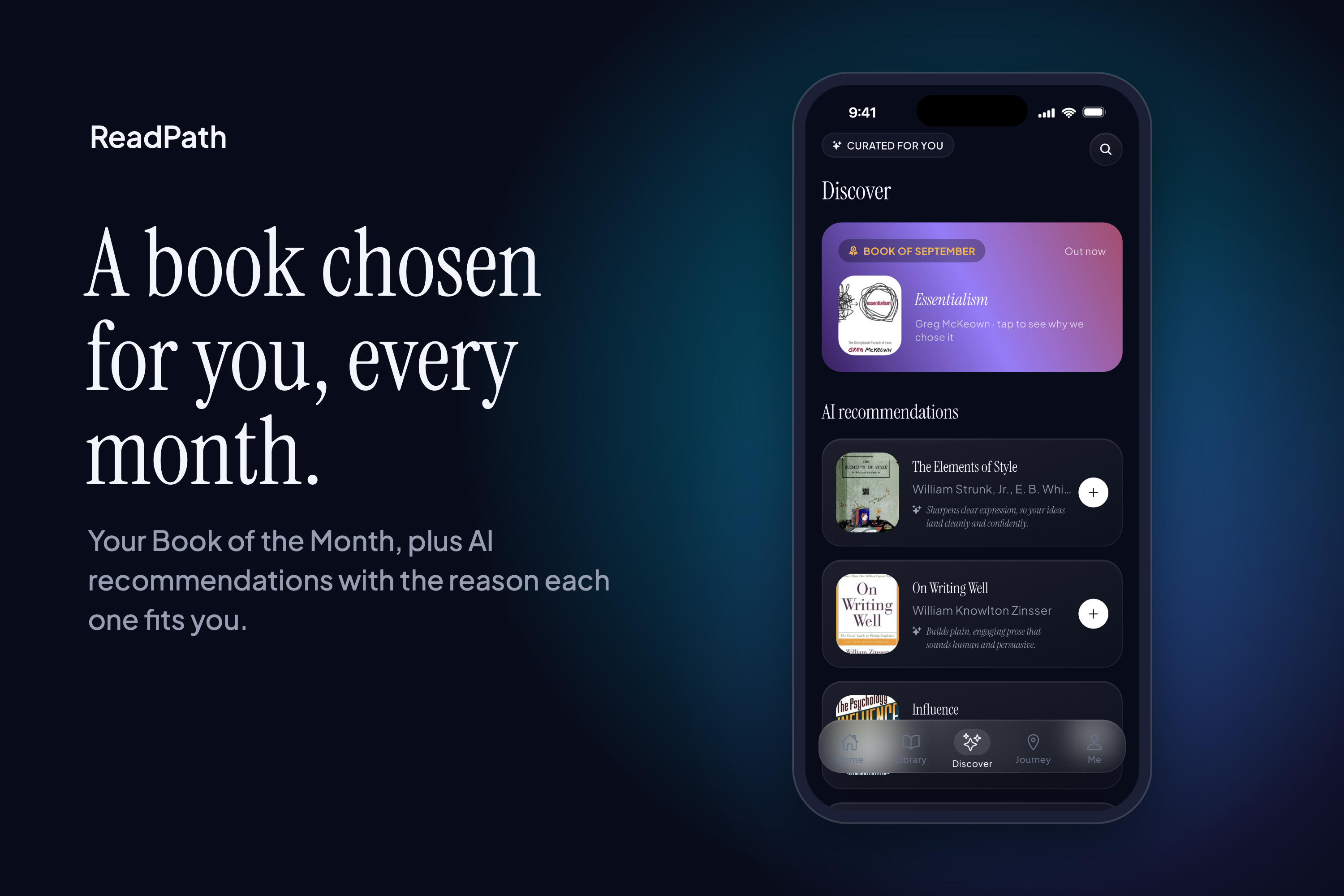
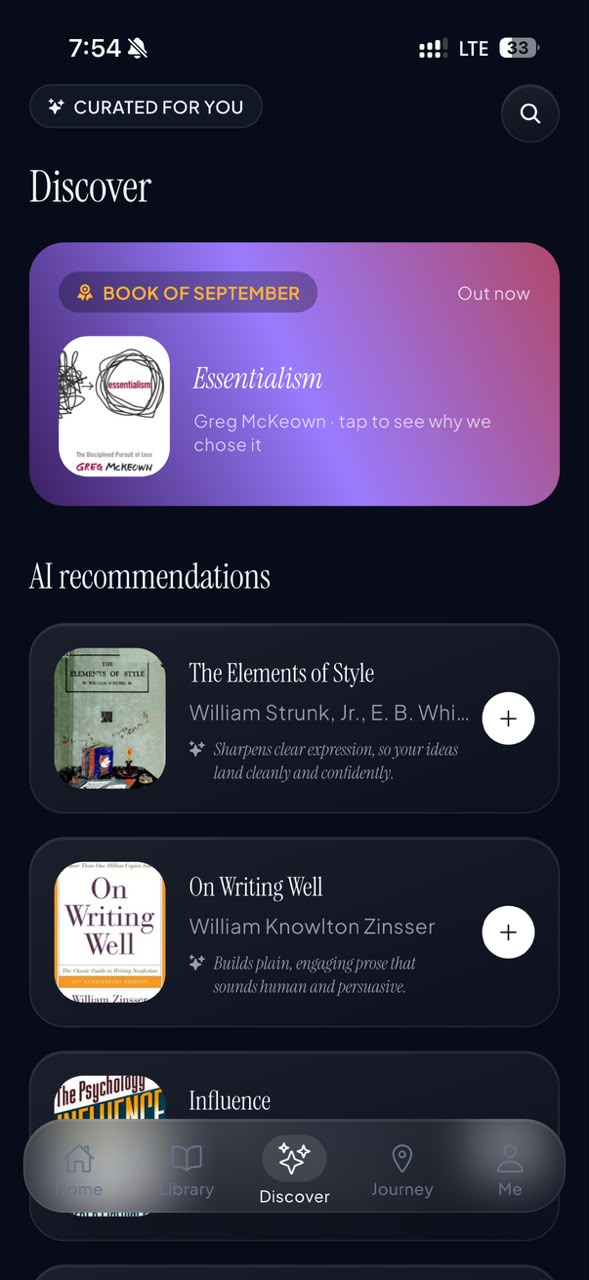
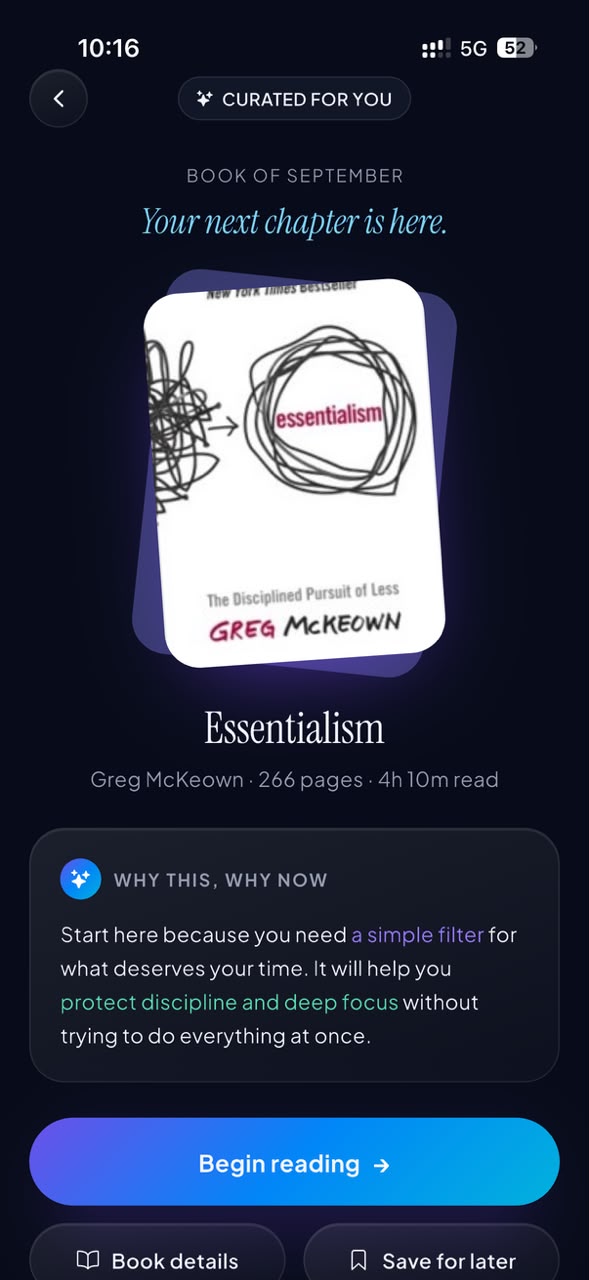
Get a book of the month, personalised for your goals! Book reveals on the 1st of every month!
-
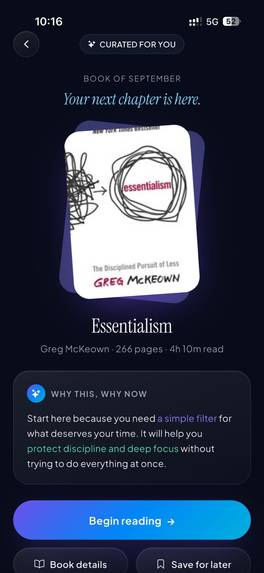
That's the book reveal! A book for you, and the reason why we picked it for you!
-
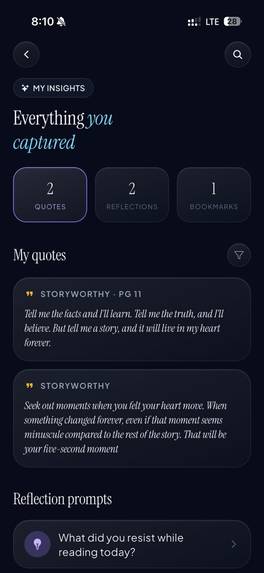
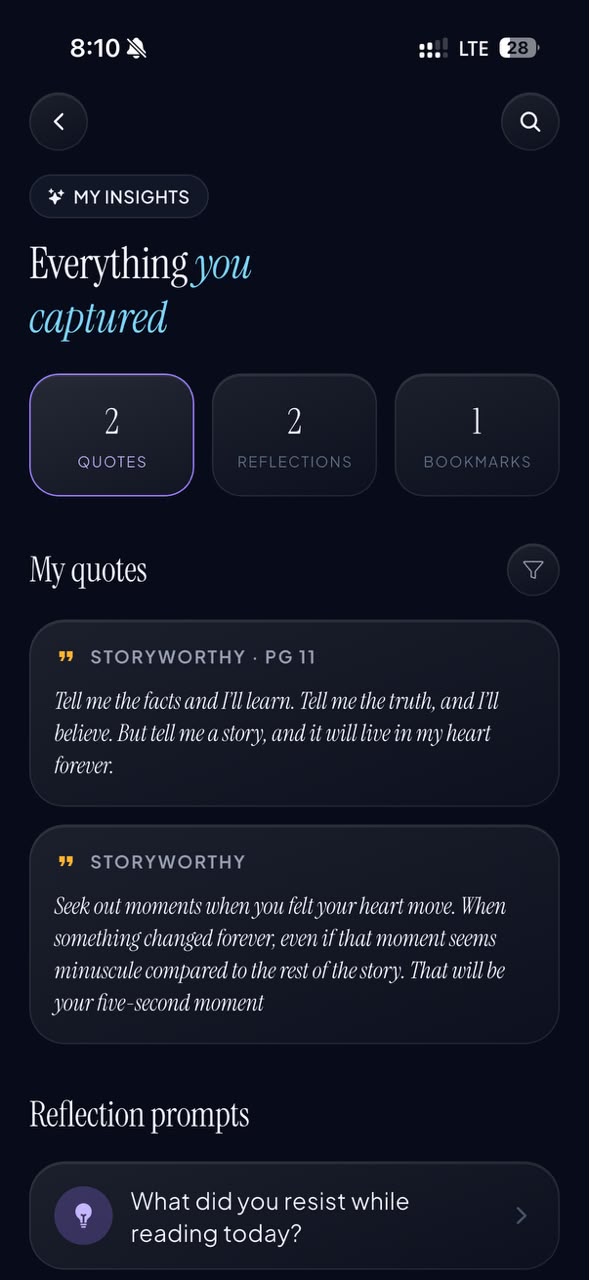
All your reflections, quotes and bookmarks saved in your insights!
-
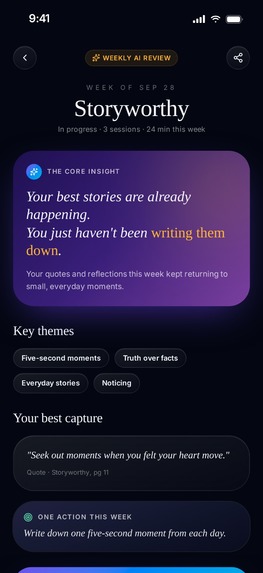
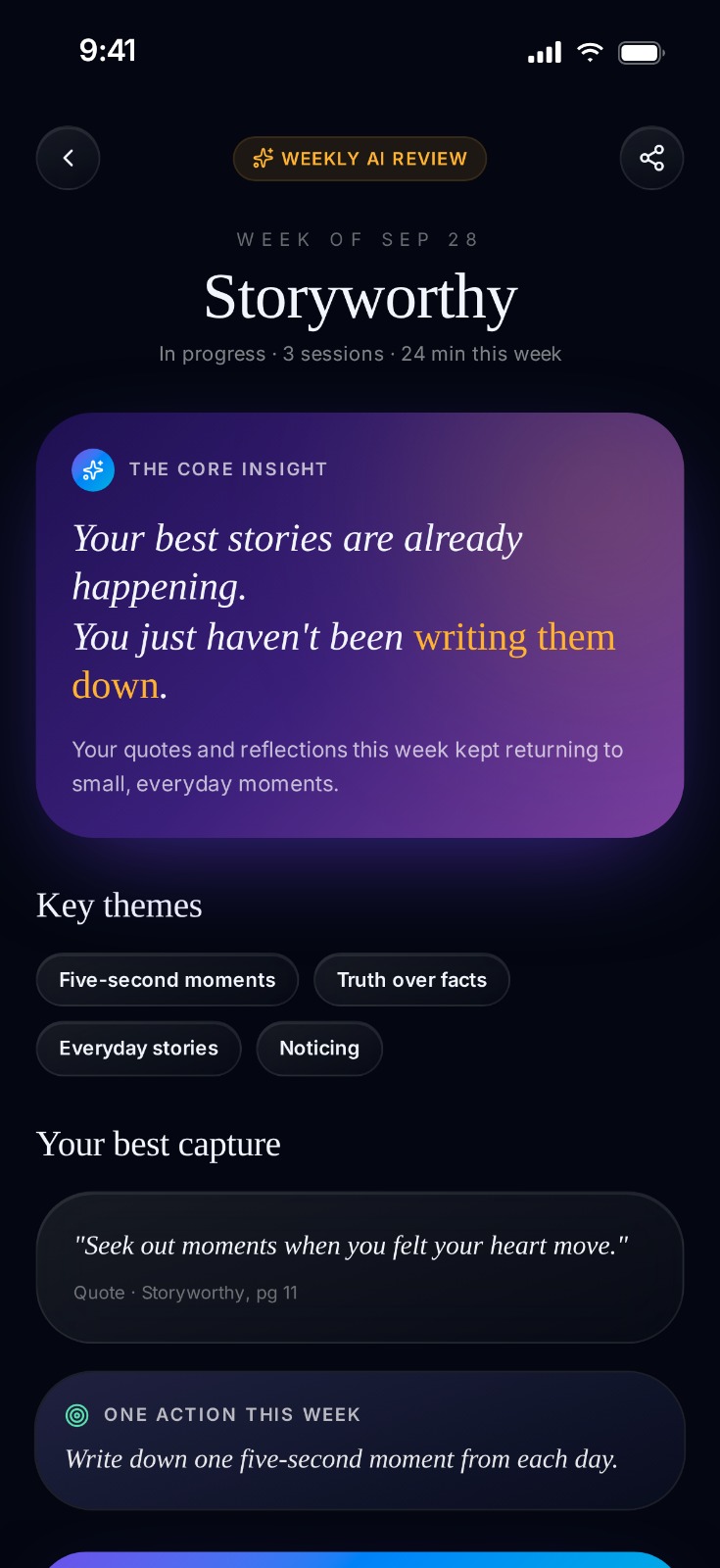
Get Weekly AI Insights every Sunday from your reading reflections!
-
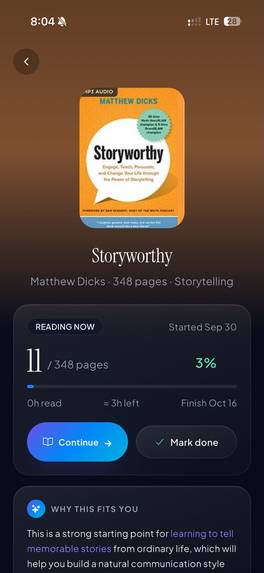
Explore the book, save, start session, find out more about the book!
-
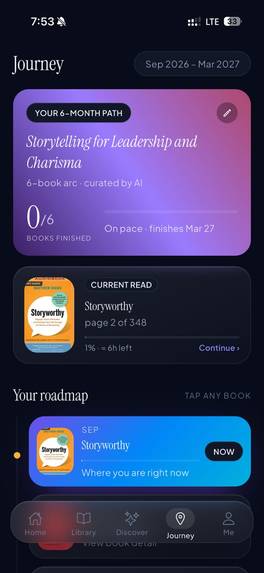
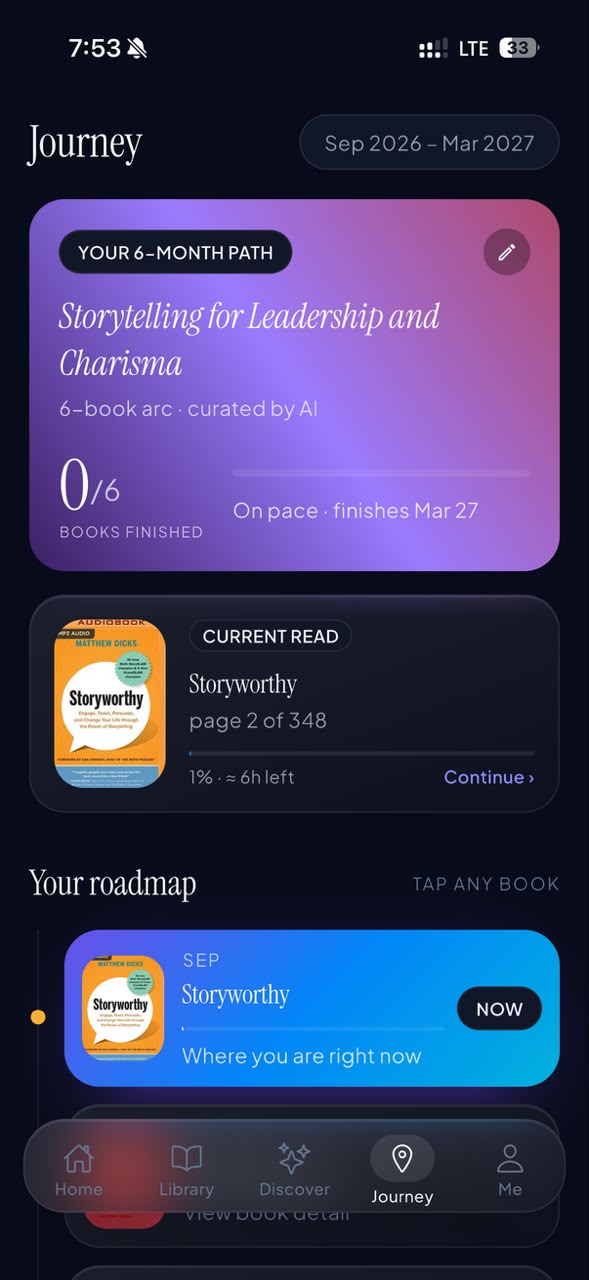
Your personalised reading plan! Know your next 2 reads, upcoming books stay a secret!
-
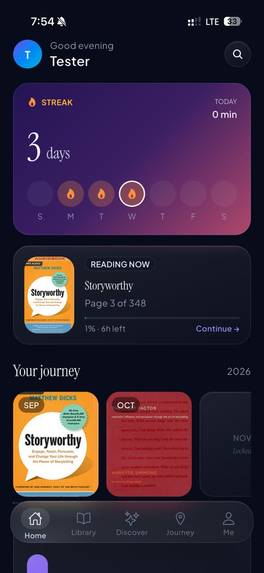
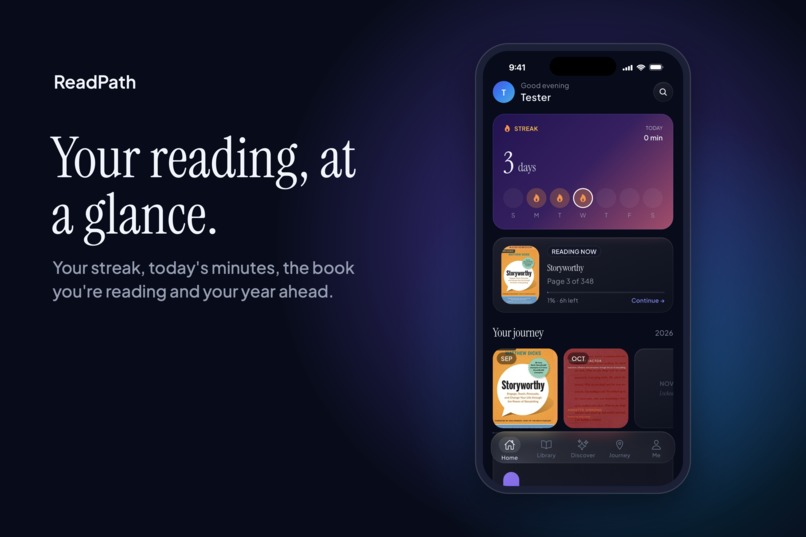
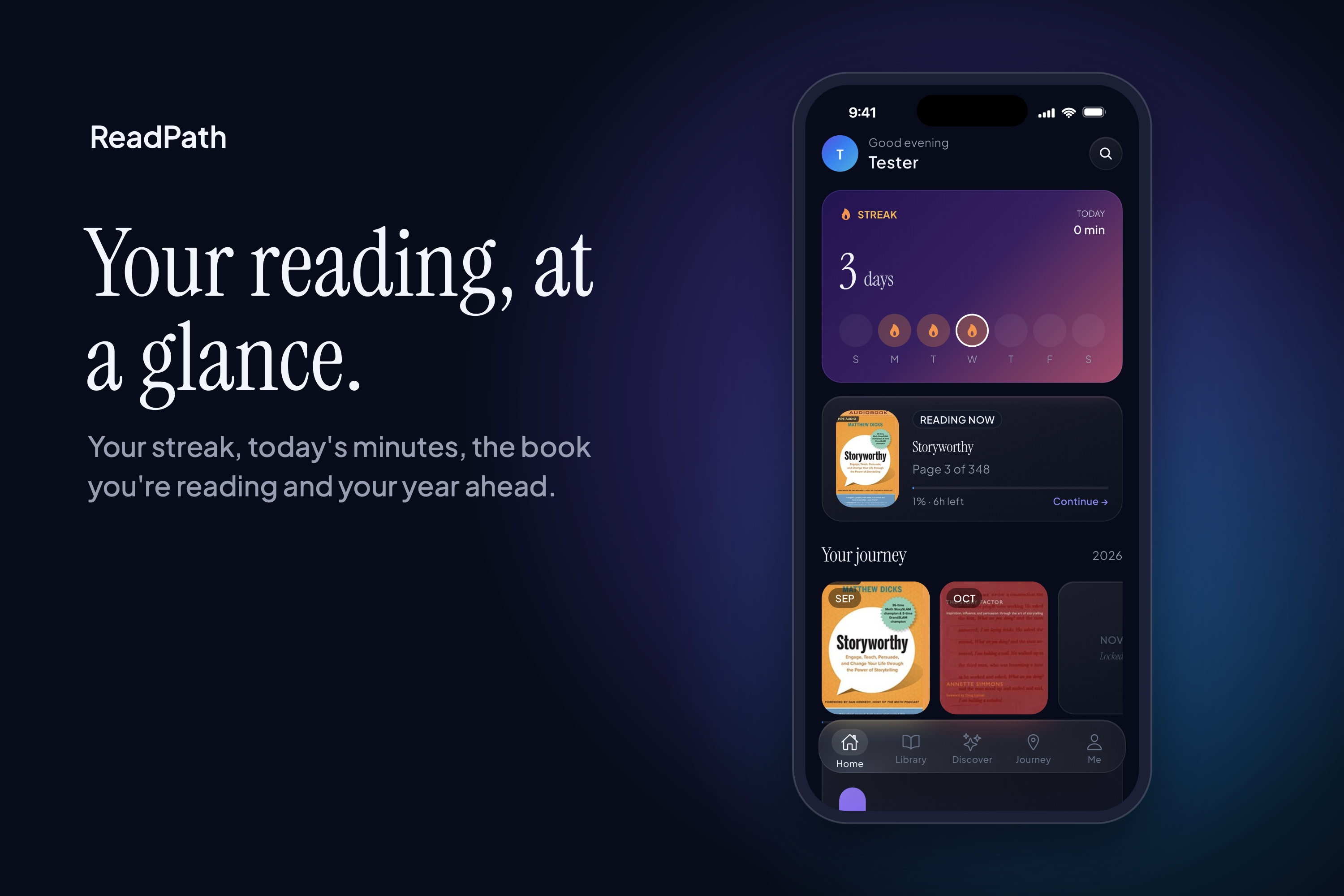
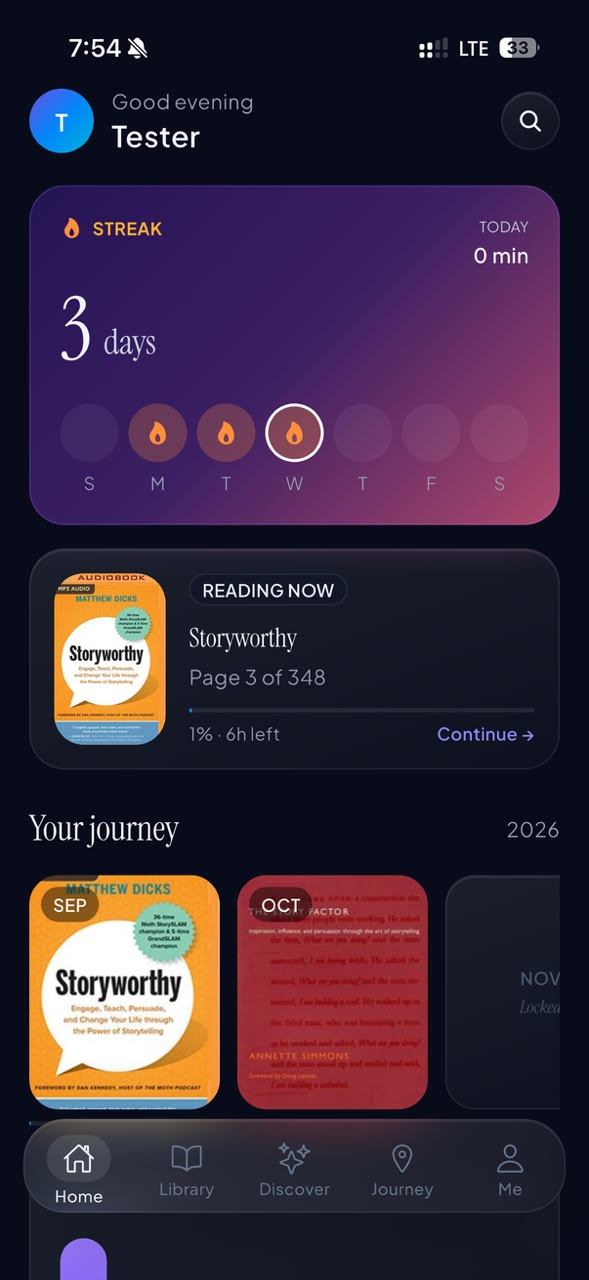
Home Screen capturing your current read, streak and stats!
-

App's Logo

Inspiration
ReadPath started as a project between two childhood best friends who wanted to build something together. Our ideas have always resonated with each other, so once we decided to do it, the brainstorming came quickly.
We started with our own interests and the everyday problems we face that other people might face too. As regular readers, we always found it hard to find new books, or a set of books that would help us learn a new subject, idea or skill. That's where the idea of ReadPath was born: what if an app could give people a reading plan for the subject they want to learn or the skill they want to master?
We listed the features we'd want: book tracking, an AI reading plan, tracked reading sessions, and a way to capture reflection points while reading. Then we researched the niche across social media and the App Store, and used App Store Optimization tools to study real search intent and keywords. And we found them: a group of people across the app stores who love reading trackers and want to know what to read next. We decided to build for that audience.
A month passed, and the project was still an idea. With our busy schedules, we never found the time to start. Then one day, one of us saw RevenueCat's Shipaton 2026, the biggest mobile app hackathon. We discussed it immediately and saw it as our chance to launch. Laughing, we said, "That's a sign from the universe!"
What it does
ReadPath is an AI reading planner and book tracker. It helps you build a better reading habit, know exactly what to read next, and remember what you learn.
Our core differentiator: a reading plan built for you. Type the subject or skill you want to learn, choose your pace (1, 2 or 3 books a month), and set how long you want the journey to last and your daily reading goal. ReadPath's AI builds a personalised reading plan around your goal, and tells you why each book is on it.
Then, every day, every week and every month:
- Reminders at your reading time. ReadPath reminds you at the exact minute you chose to read, on the days you chose.
- Reading sessions that stay with you. Start a session and it stays on your Lock Screen and in the Dynamic Island as a Live Activity. Every session is tracked, with your pages and time.
- Capture your key moments. Save quotes, bookmarks and reflection points while you read, all gathered in My Insights.
- A weekly AI review, every Sunday. ReadPath reads back what you reflected on that week and gives you your core insight, your key themes, your best capture and one action for the week ahead.
- A Book of the Month, chosen for you. Every month, a book picked around your goals, with why it's right for you now. Start reading it or save it to your shelf.
- Your library. Search over 20 million books through Open Library, save books for later, and organise what you're reading, want to read and have finished.
- Recommendations with the reason each one fits you, and a streak that keeps your habit visible.
How we built it
We're the founders, Malhar and Aryan. We graduated from the same university with a B.Tech in AI and ML, so we come from a tech background. Aryan works as a software engineer, and Malhar runs his startup, HappyMe. We used what we knew best: Flutter for the app and Firebase for the backend, with Cloud Functions on the server. We built with Claude, from planning to code.
While choosing awards, we quickly decided to enter OneSignal's Keep Them Coming Back award. For an app like ReadPath, where readers are meant to come back to their reading session every single day, smart retention was vital if ReadPath was going to become a habit-forming product. We built around the Hook Model: a trigger, an action, a variable reward and an investment. Notifications became our trigger, so the app stays in touch with readers and they feel part of it.
We used OneSignal extensively to keep readers engaged and improve retention:
- The REST API, called from our Cloud Functions, sends reminders at each reader's own minute in their own time zone, the weekly review notice on Sunday evening, and the Book of the Month reveal.
- Journeys run a 7-day trial arc, a trial-ending reminder, a paywall win-back and a missed-day sequence with an A/B-tested first message.
- Segments and personalised templates, built through the OneSignal MCP, fill every message with the reader's own book and numbers.
- In-app messages celebrate progress inside the app: a streak milestone and a finished book, each with a button that takes the reader straight back to reading.
- Intelligent Delivery lands the Book of the Month at each reader's usual active hour.
- Live Activities keep every reading session on the Lock Screen, with click tracking.
- Deep links make every notification open the exact screen it's about: the book in progress, the streak, the weekly review, the Book of the Month or the paywall.
RevenueCat powers the paywall and subscriptions. We connected RevenueCat to OneSignal, so trial, renewal and cancellation events flow into OneSignal and fire our journeys and notifications, and a RevenueCat webhook triggers our trial-cancel win-back.
By mid-September we were short on time, so we went all in for the next 15 days. Wireframes and design came first, then code in parallel. On a parallel track, the logo was finalised and the OneSignal and RevenueCat projects were set up. And finally, at full pace, we began building and shipping the app!
Challenges we ran into
The most frightening question was whether the app would even be live on the App Store by the deadline.
We submitted our first version on 26 September. From experience, Apple used to approve our apps within 48 hours, but this time they didn't, and the deadline was nearing. More importantly, we hadn't shipped our most important feature: Live Activities. After submitting build 1, we started working on Live Activities and UI polish, and we made a plan: if version 1 still wasn't in review by the 28th, we'd push build 2, remove build 1, and ask Apple to expedite the review. It was our last resort, and we did exactly that.
Late at night on 28 September, at 10 pm, we shipped build 2 with Live Activities, tested on a real iPhone, compliant with Apple and built with OneSignal, and discarded build 1. We weren't sure the app would be live before the submission, and part of us felt our earlier lack of effort was about to cost us. But there was still hope. We requested an expedited review, and the very next night ReadPath was live on the App Store. We couldn't believe it. This time we really did feel it was a sign from the universe, with full faith.
Accomplishments that we're proud of
- Going from an idea to a live App Store app in about 10 days of building, including Apple's review.
- Shipping a complete retention system on OneSignal: journeys driven by RevenueCat subscription events, reminders at each reader's own minute, in-app messages, and a Live Activity for every session.
- Building our first Live Activity from scratch in a single day, and getting it into the build that went live.
- Keeping our design consistent from wireframe to the App Store while moving this fast.
What we learned
A lot of this was new to us: Live Activities and the native iOS code behind them, OneSignal Journeys, the OneSignal API and MCP, sending RevenueCat subscription events (trials, expiries, renewals, cancellations) into OneSignal to fire journeys and notifications, and Cloud Functions that call the OneSignal and RevenueCat APIs.
From building new technical architecture, working with a newer stack and SDKs, crafting notification and retention strategies and keeping the design good, we learned a lot. Most of all, we learned how to ship a working app fast and get it through Apple's review, all in about 10 days. We had built apps before, but in 10 days? That was new.
How ReadPath makes money
ReadPath is free to download, with a Premium subscription built on RevenueCat. Premium unlocks the tools that make the plan work day to day: focus sessions, quotes and reflections, the weekly AI review and the Book of the Month.
- Plans: monthly, or annual at $59.99 with a 7-day free trial.
- Why a subscription: ReadPath delivers new value every week and every month (a new review each Sunday, a new book each month), so recurring pricing matches how readers actually use it.
- The paywall and entitlements run on RevenueCat, so offerings and prices can change without an app update.
- Win-backs: if a reader dismisses the paywall, a OneSignal journey follows up. If someone cancels during their trial, a RevenueCat webhook triggers a one-time offer of 40% off the annual plan, sent once per reader, ever, and only to readers who opted in to offers.
How we're growing it
- App Store Optimization from day one. We researched search intent before writing any code, and built our title and subtitle around what readers actually type: book reading tracker, book recommendations, books to read, book of the month. We also placed English keyword clusters in additional App Store localizations so ReadPath can rank for more searches.
- Apple Search Ads. In launch week we started a focused exact-match campaign in the US on our core keywords, with a fixed daily budget. We read the results after four days and scale what converts.
- Retention as growth. Our OneSignal system is designed so the readers we win keep reading, and a reader who keeps reading is the one who subscribes.
What's next for ReadPath: AI reading planner & book tracker
We want to grow ReadPath in the right order. First, we'll prove the funnel: that the readers we acquire activate, subscribe and stay. Then we'll add features strategically, one at a time, each building on what's working. Throughout, we'll keep improving monetisation and retention, reducing churn, and finding new ways to acquire readers. We're looking at ReadPath as a whole: product, acquisition and growth together.
Acquisition: capture intent first
Apple Search Ads will be our primary source of new readers. The people searching for a reading tracker or their next book already have the intent, so we'll capture them first, at a steady, meaningful volume, and scale the keywords that convert.
First, prove the funnel
The current version is a strong MVP, and getting readers to pay for it is the right first move. Before we add new features, we'll make sure the readers who arrive actually become paid subscribers:
- Fix and refine onboarding and the first-time experience.
- Run monetisation experiments with RevenueCat: test paywalls, pricing plans and trial lengths.
- A/B test until we find the sweet spot between value and conversion.
Measure everything
To measure the funnel properly, we'll add Mixpanel and connect it with RevenueCat and OneSignal. RevenueCat will send revenue events to Mixpanel, just as it already sends them to OneSignal to fire our journeys and notifications. That gives us one connected view from install to subscription to retention.
Then, new features, one at a time
Once the funnel is proven, we'll roll out features one by one, measuring each before the next:
- iOS widgets, so a reader's book and streak live on their Home Screen.
- A TBR list and bookshelf management, so readers can organise their books by theme.
- A book journal that brings everything a reader has written into one place.
- AI reflection on their notes, quotes and reflection points, so what they captured comes back to them as insight.
Our vision
We want ReadPath to be the go-to app for readers: the place to track your books, find your next one, record your reading sessions, get recommendations, learn more about every book, and follow a reading plan that always tells you what to read next.
And we want it to hold on to what reading gives you. ReadPath captures your key learning moments through smart, reflective journaling, and doesn't just store them: it gives them back to you, like the weekly insights it already delivers, so your memories and learnings from every book stay stronger.


Log in or sign up for Devpost to join the conversation.