-
-
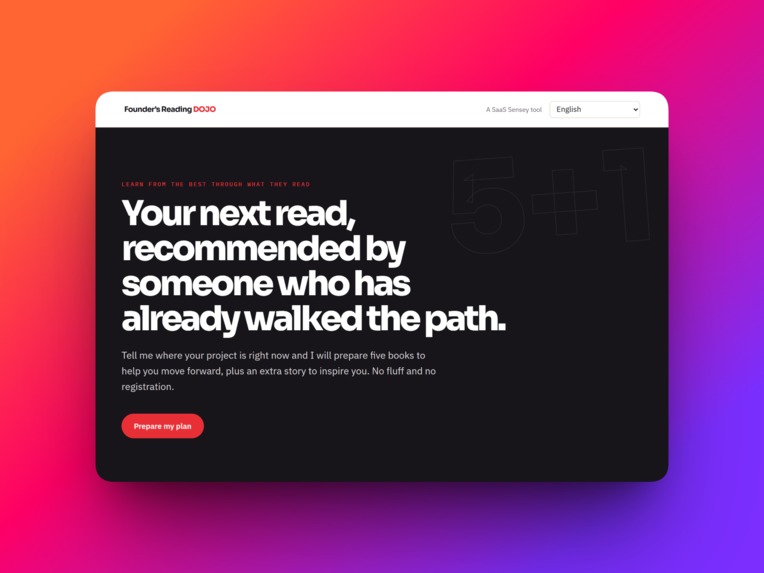
Home
-
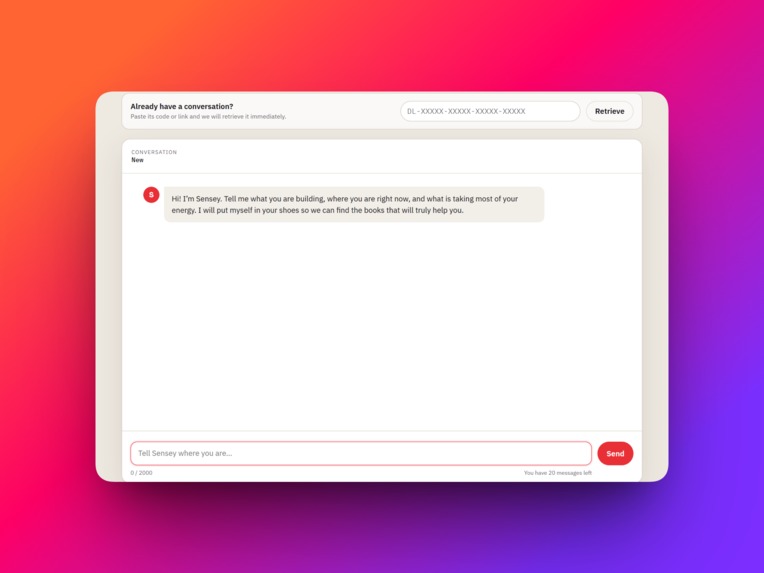
Chat interface
-
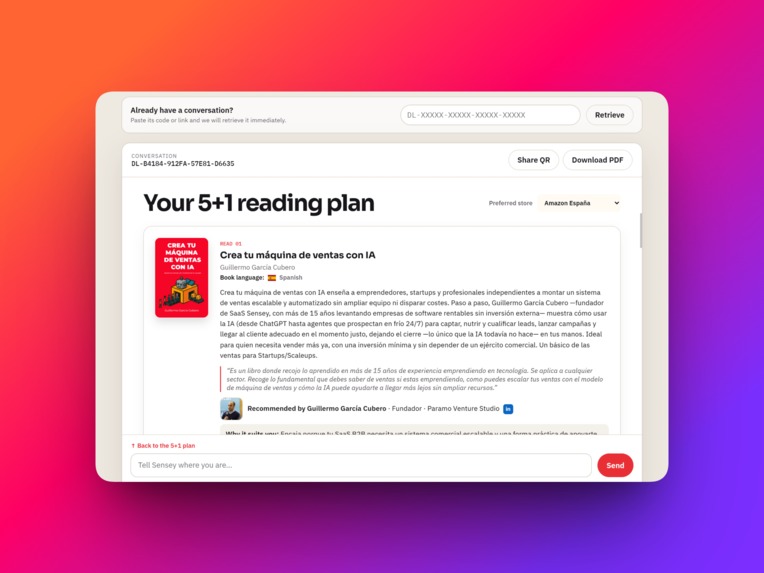
Recomendations
-
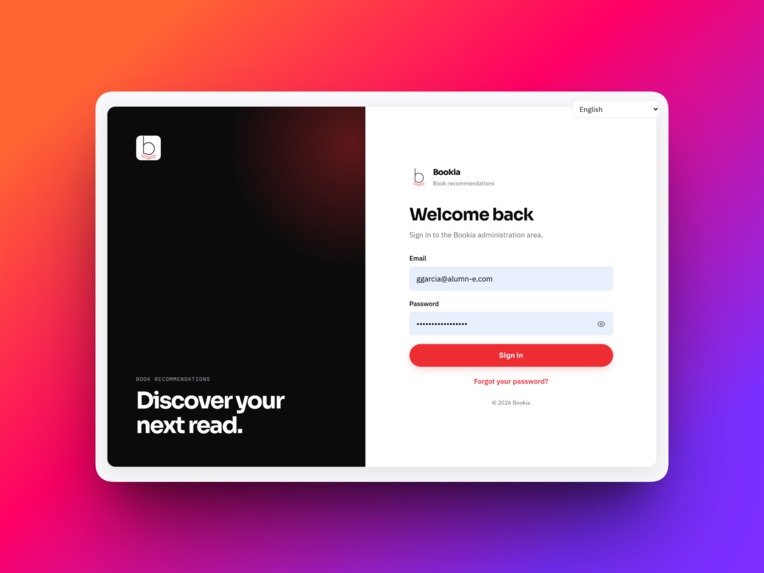
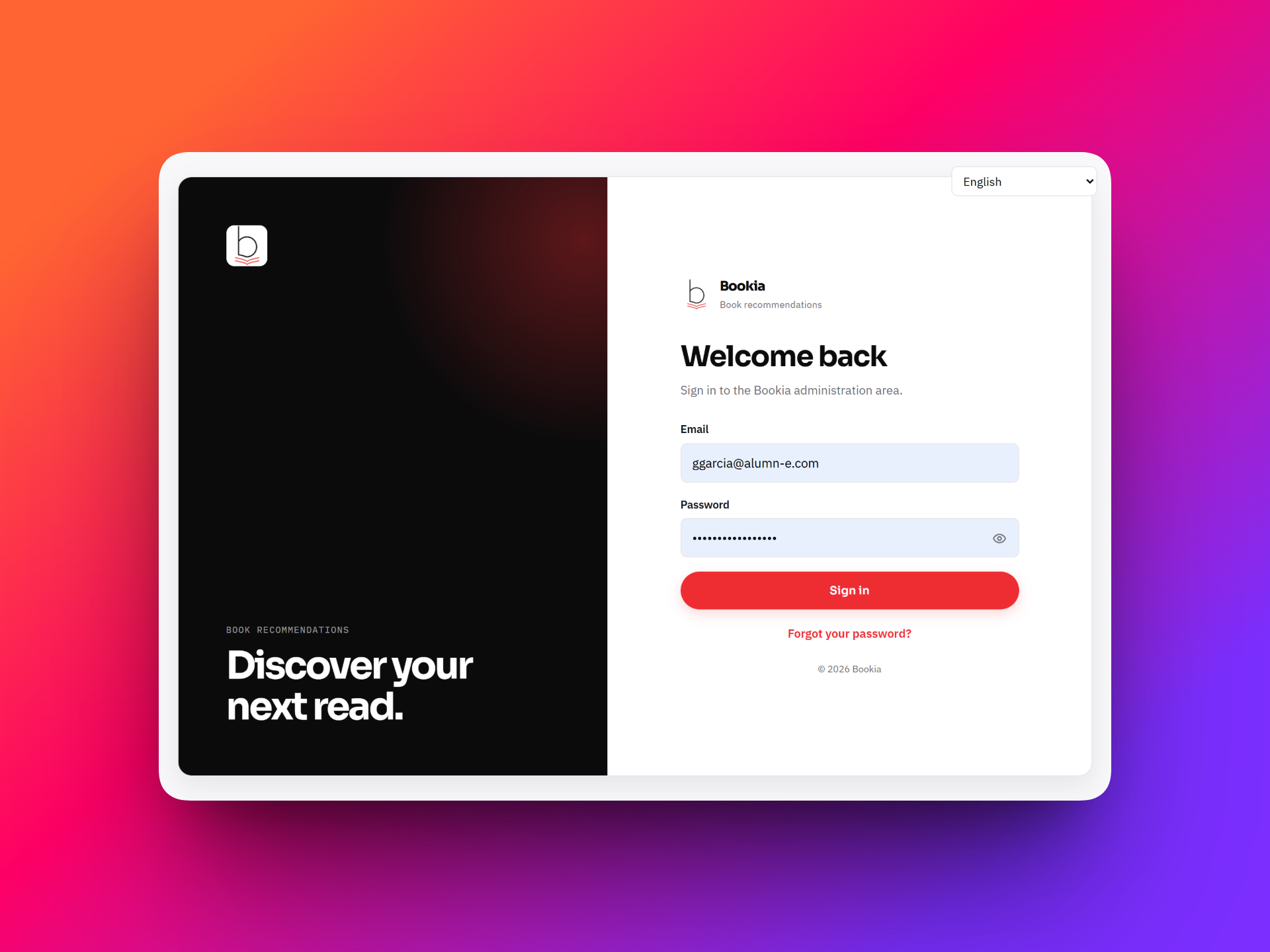
Login bookia
-
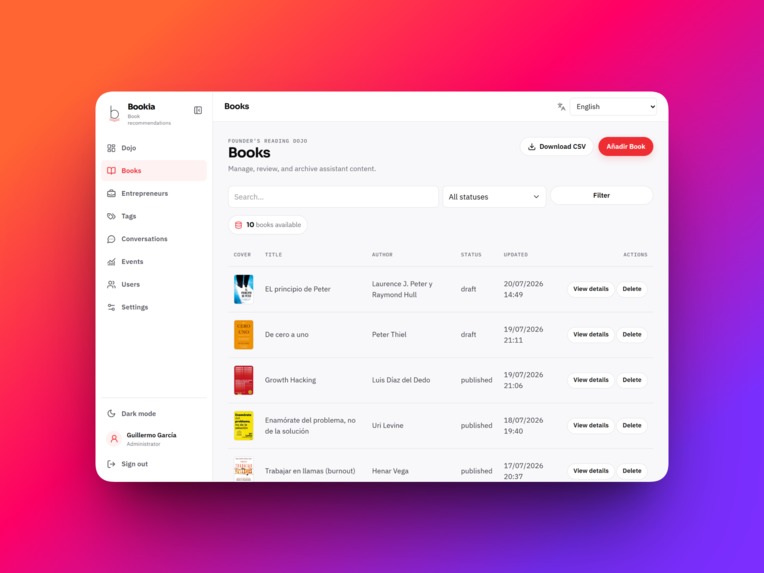
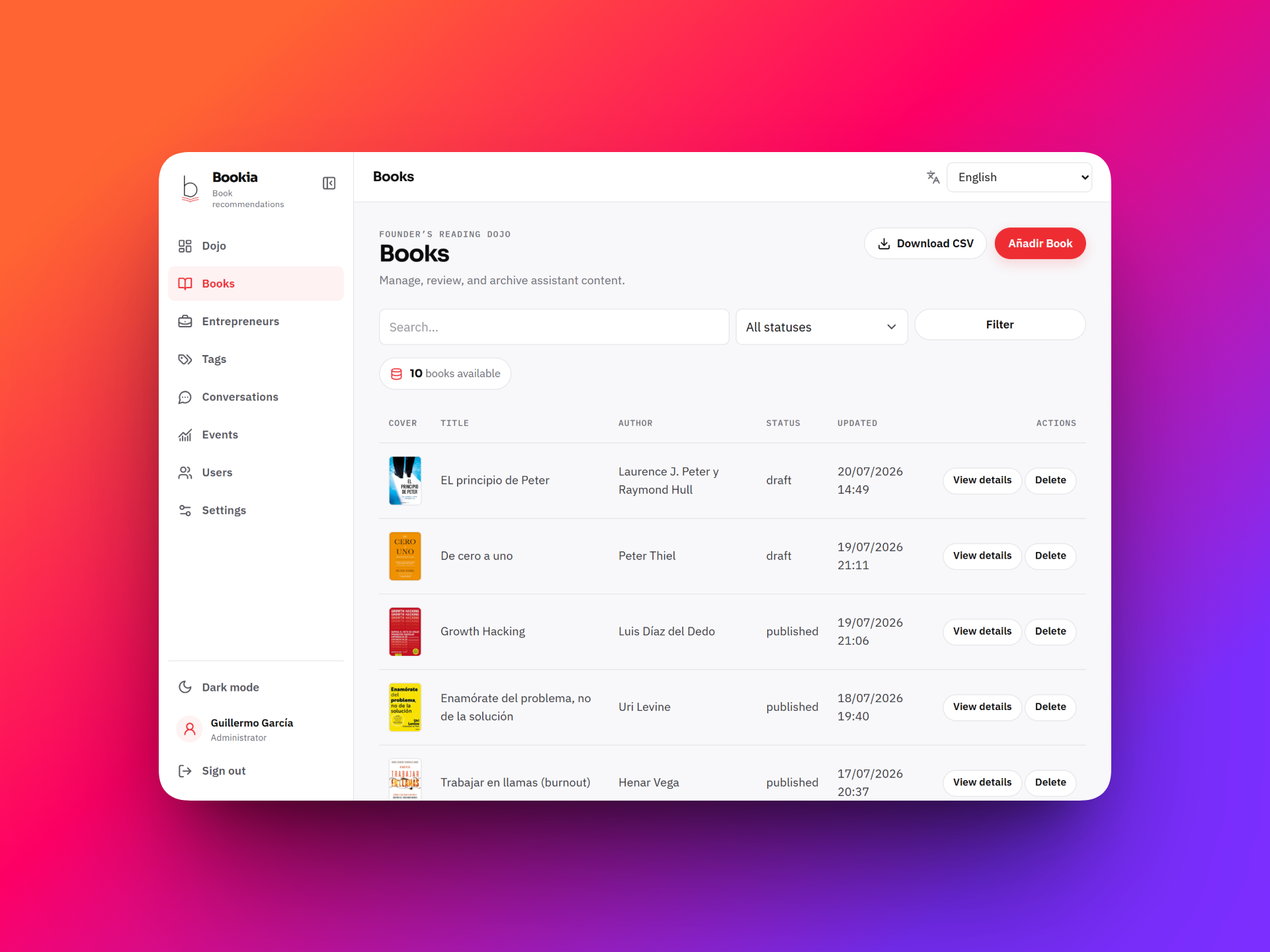
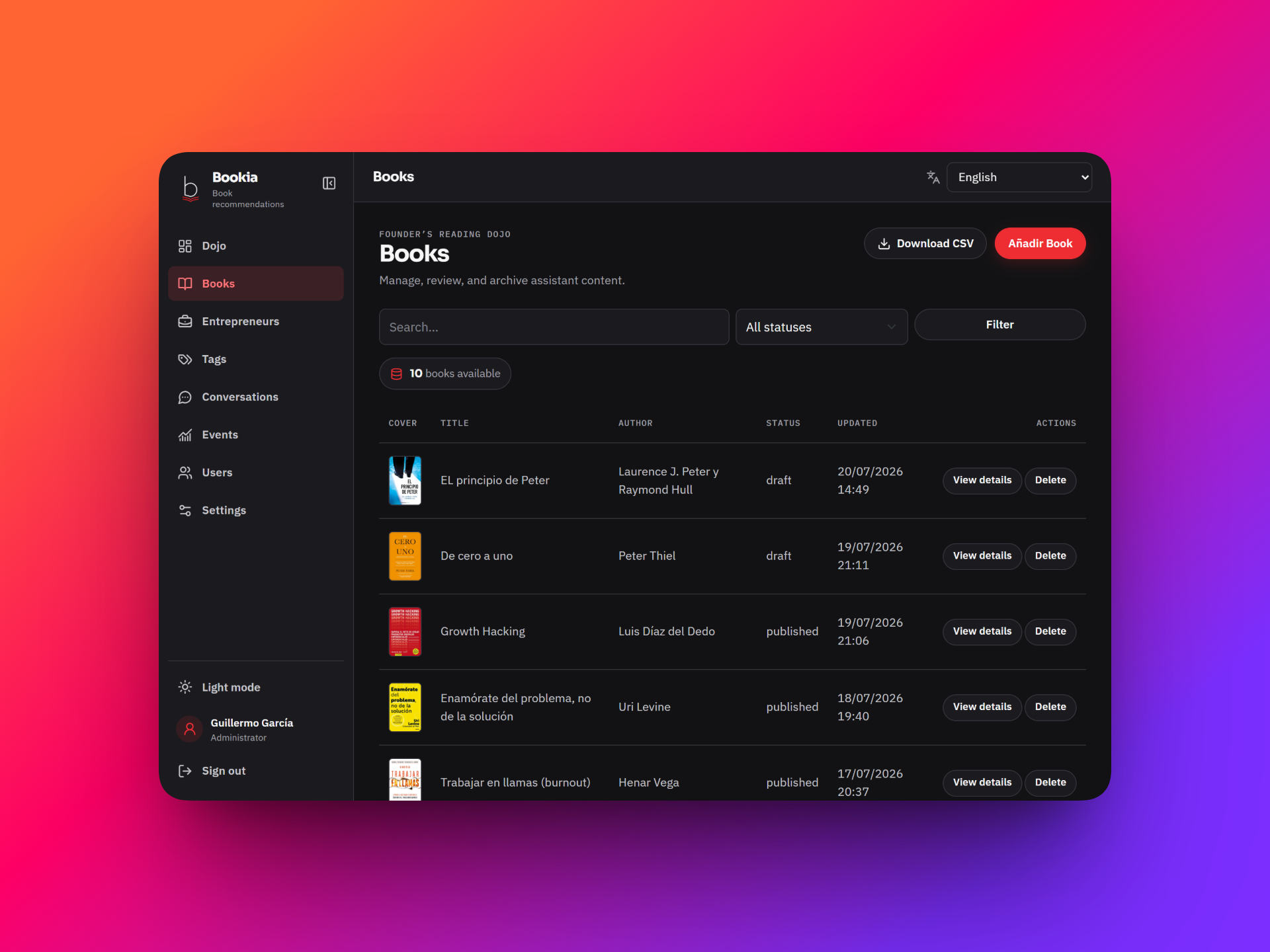
Admin panel - books
-
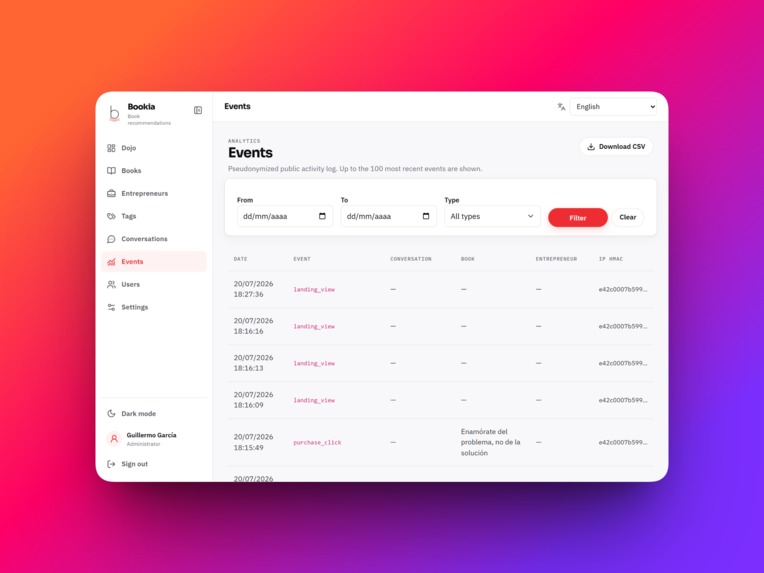
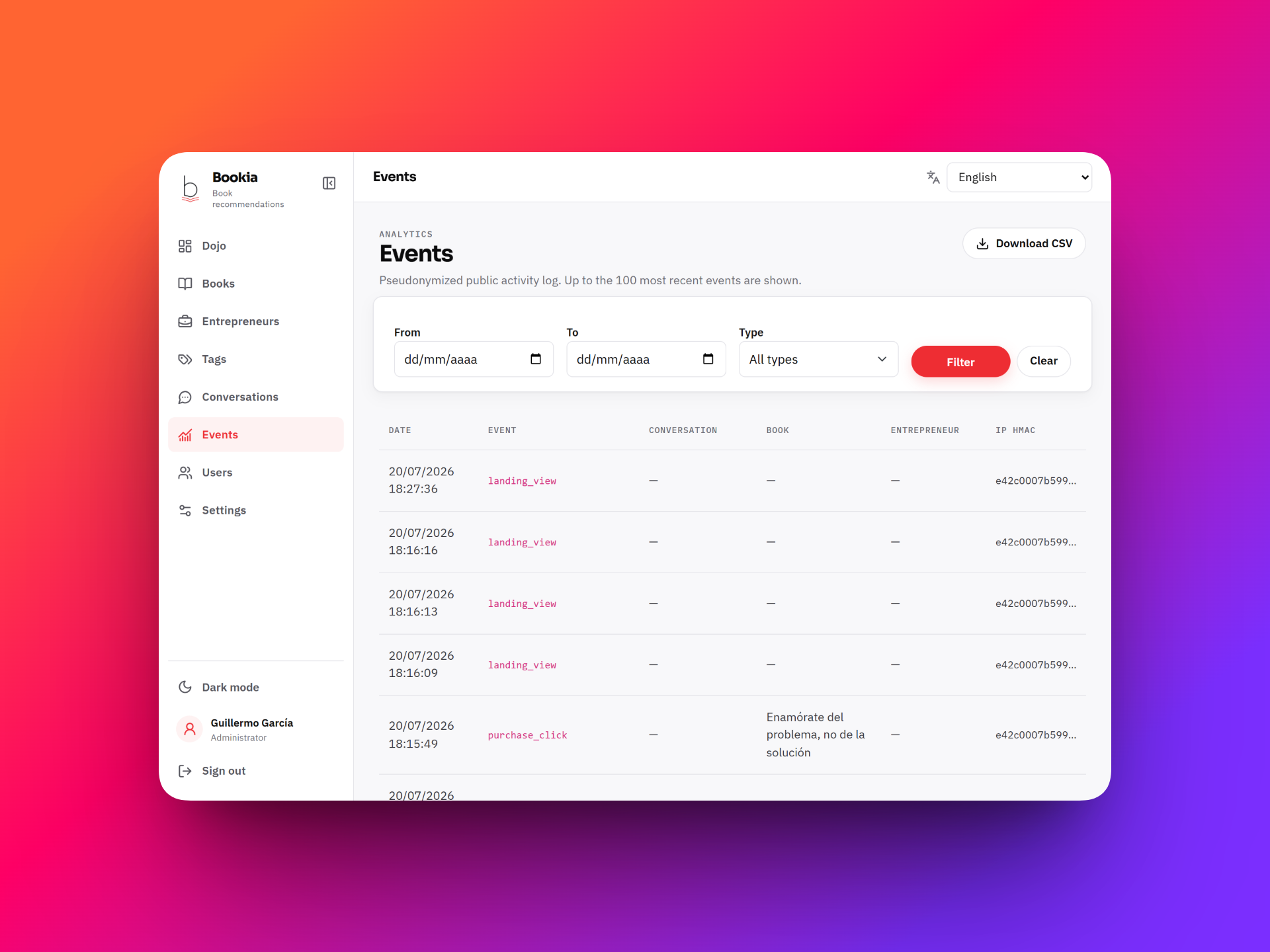
Admin panel - events
-
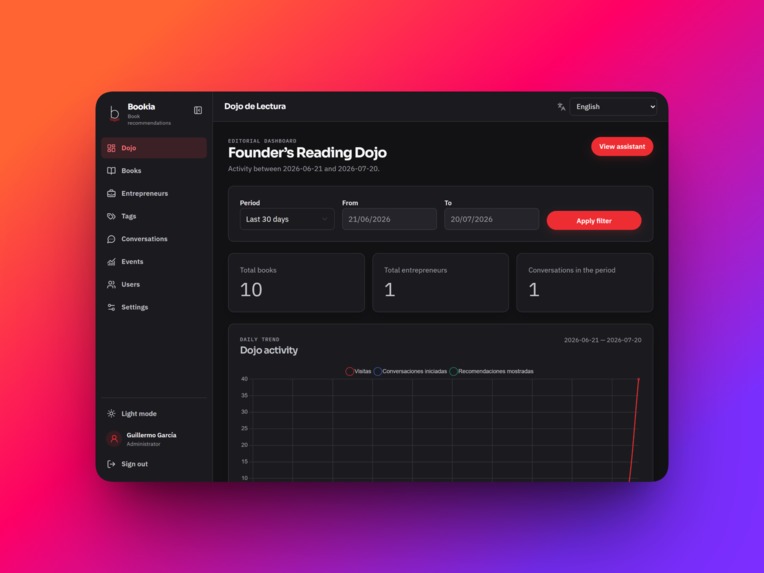
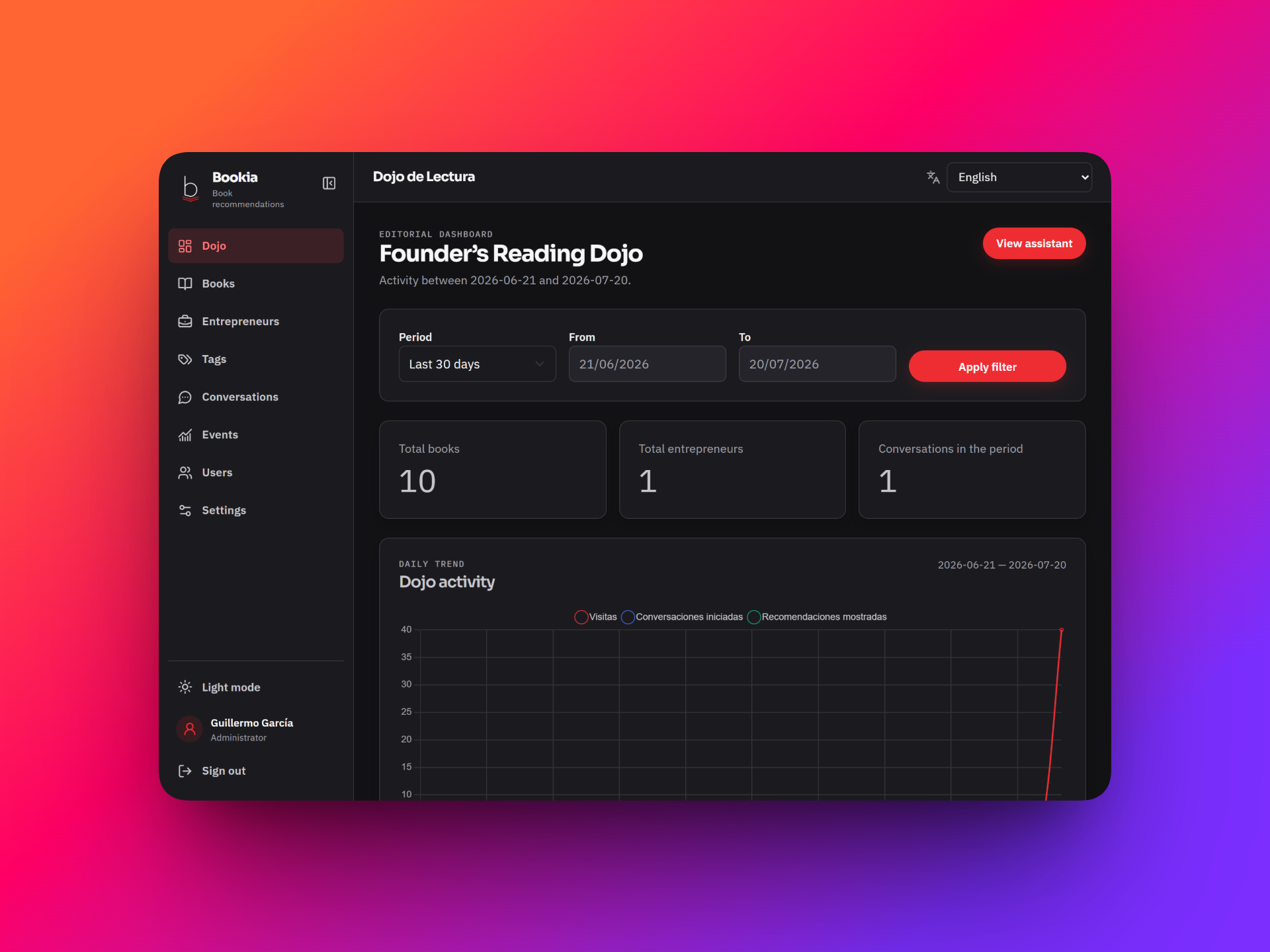
Admin panel - dark mode
-
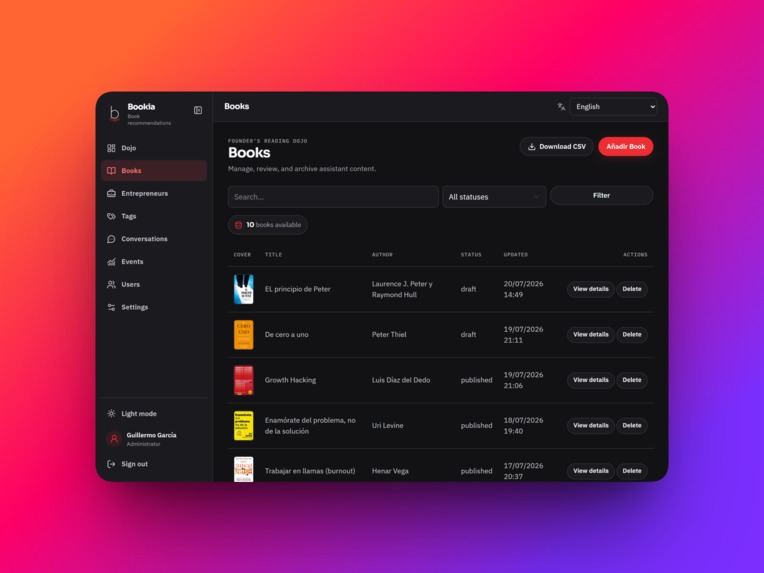
Admin panel- books - dark mode
-
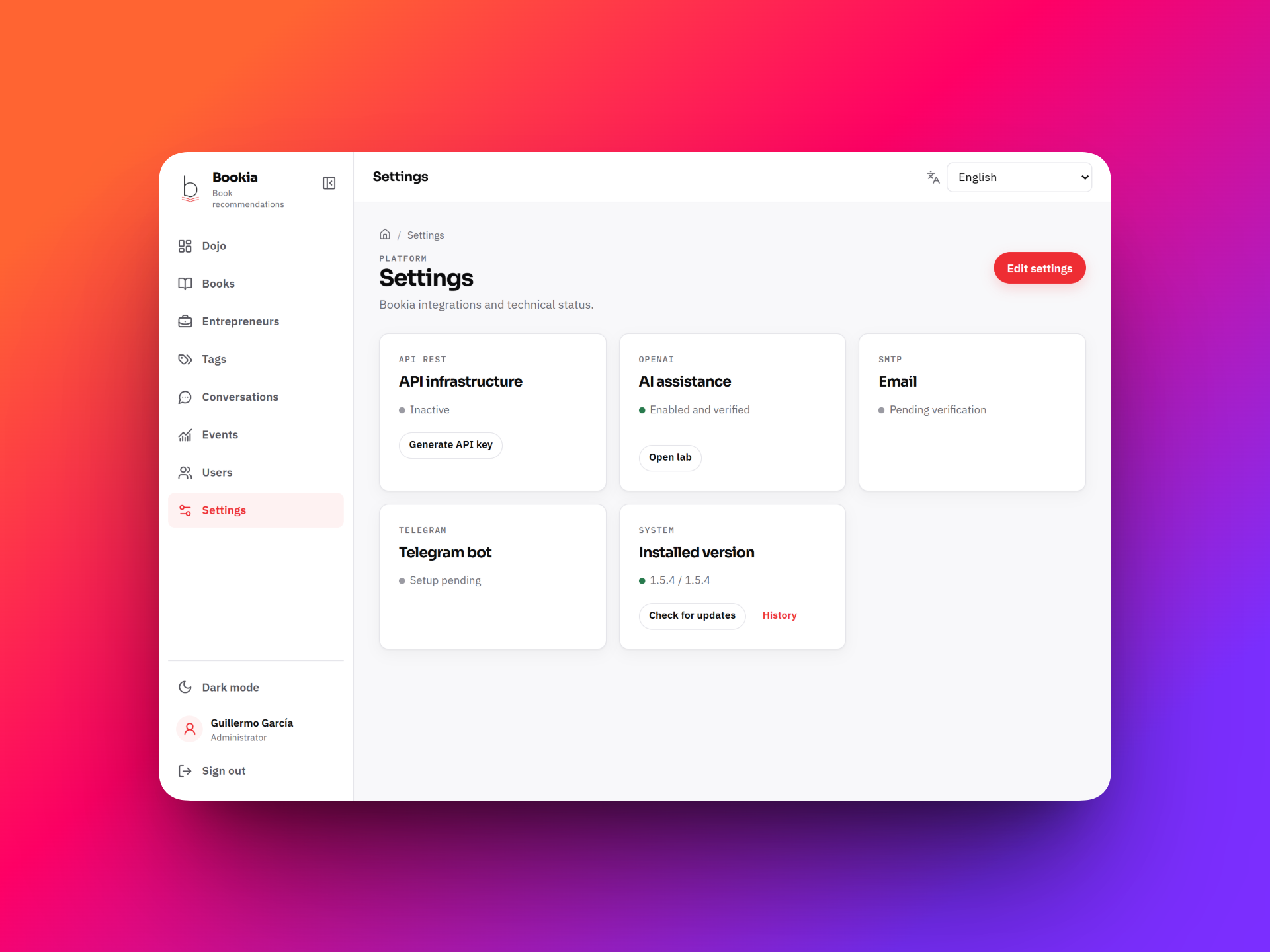
Admin panel - setup
Inspiration
Founder’s Reading Dojo was born from a situation that comes up again and again: young founders asking what they should read to navigate the specific stage their project is going through.
As a serial entrepreneur with more than 15 years of experience, I have read many books about entrepreneurship and spent years exchanging recommendations with friends and peers who have also built companies. Some of those books helped us make better decisions, overcome roadblocks, find inspiration, or simply sharpen our focus.
The problem is that this knowledge usually travels informally: through a conversation, a message, a one-off recommendation, or a generic reading list shared during an entrepreneurship program. Not every founder has access to that network, and the same book is not equally useful for every person or every stage.
The question that sparked the project was simple:
What if any entrepreneur could receive personalized reading recommendations at any time, based on the collective experience of dozens or even hundreds of founders?
What it does
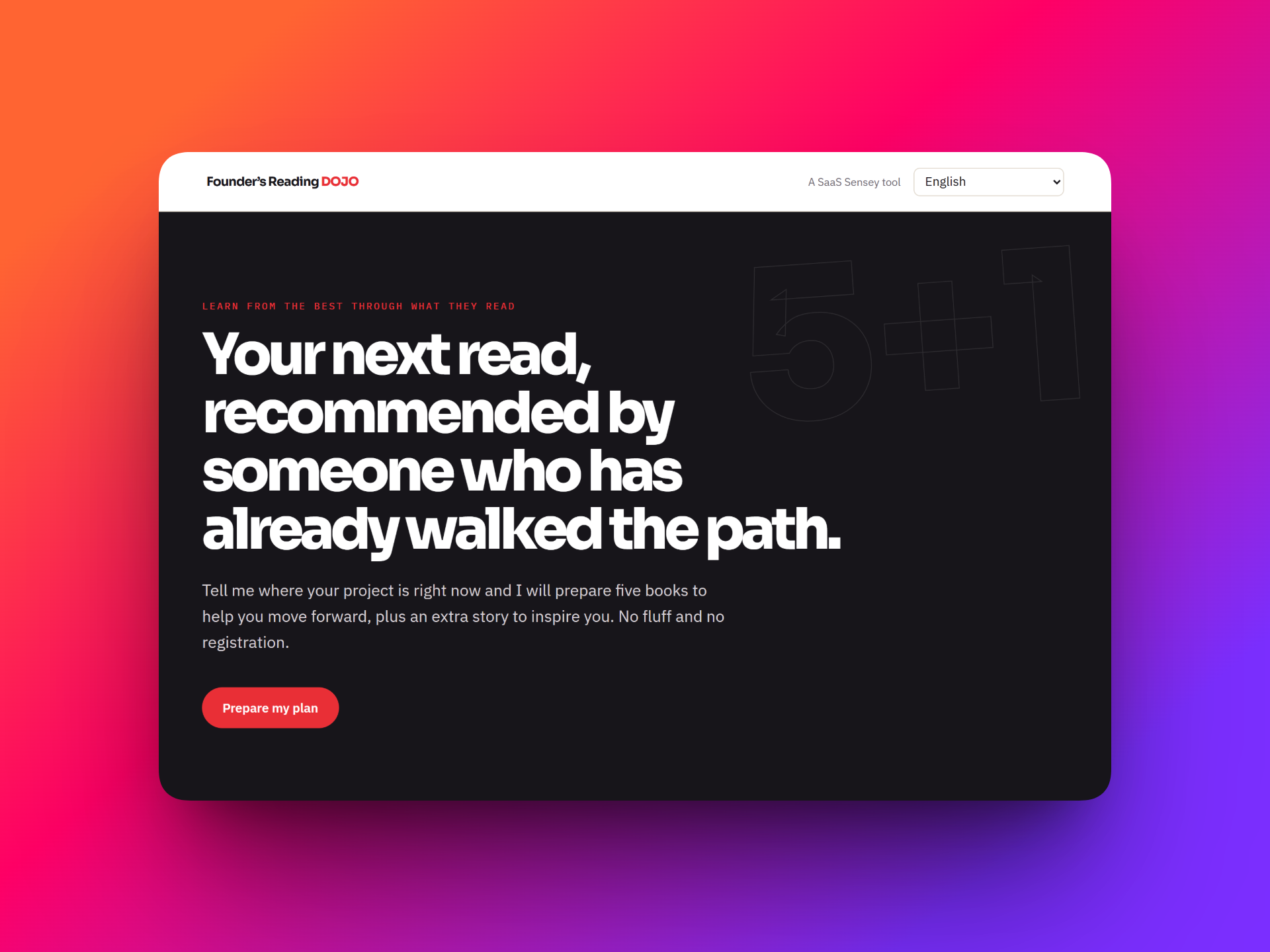
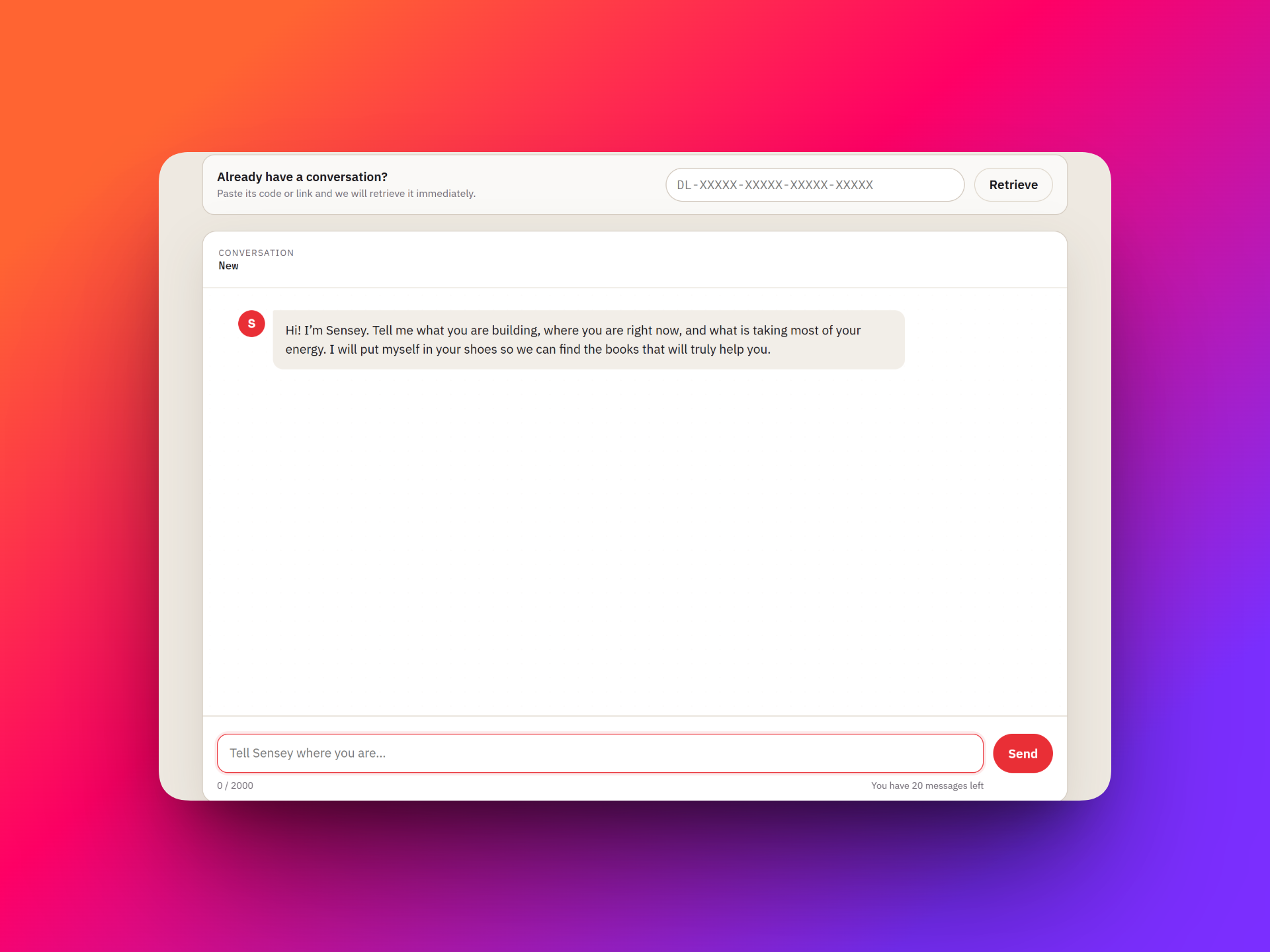
Founder’s Reading Dojo is an AI-powered platform that talks with entrepreneurs to understand their context: the stage of their project, their role, interests, current challenges, and the areas where they need to make progress.
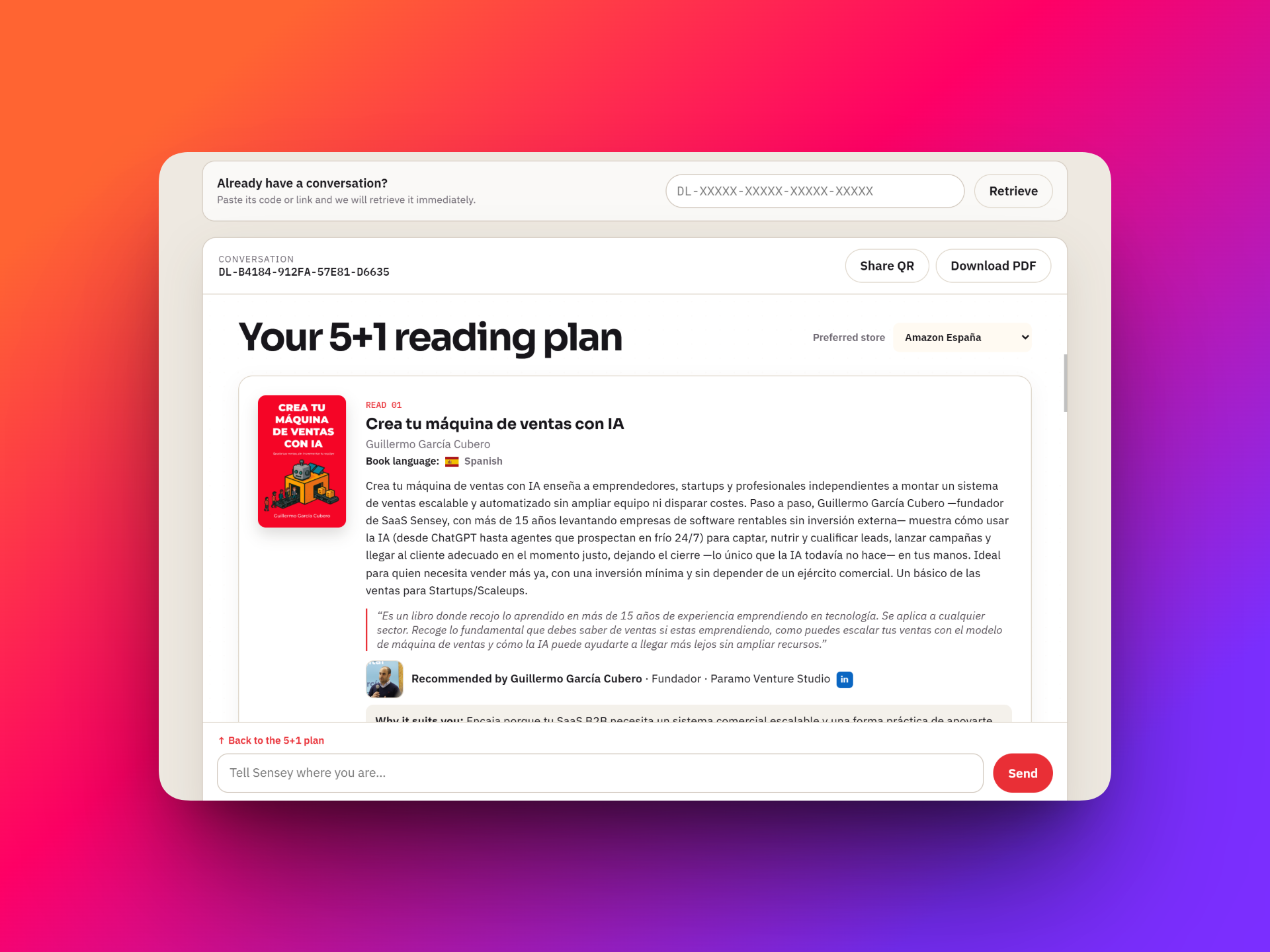
Based on that conversation, it creates a personalized 5+1 reading plan:
- Five practical or technical books.
- One more inspirational book.
The Dojo does more than display a list of titles. Like a good teacher, it explains why each book is relevant to that specific person and how it may help them at that particular point in their entrepreneurial journey.
The recommendations come from a library curated by real founders. The AI interprets the user’s context and connects it with the most relevant books in a knowledge base built by people with firsthand entrepreneurial experience.
How we built it
The entire project was developed in collaboration with AI, not only as part of the final product, but also as a core part of the creation process.
We started by discussing the idea with ChatGPT. That conversation helped us define the problem, refine the value proposition, design the user experience, and prepare a Markdown document describing the overall system, its components, and how it should work.
That document was then used as the initial context for Codex, which created the first functional version of the platform. From there, the development, improvement, and evolution of the product continued iteratively with Codex and GPT-5.6, covering the architecture, interface, conversational flows, recommendation logic, back office, and successive product improvements.
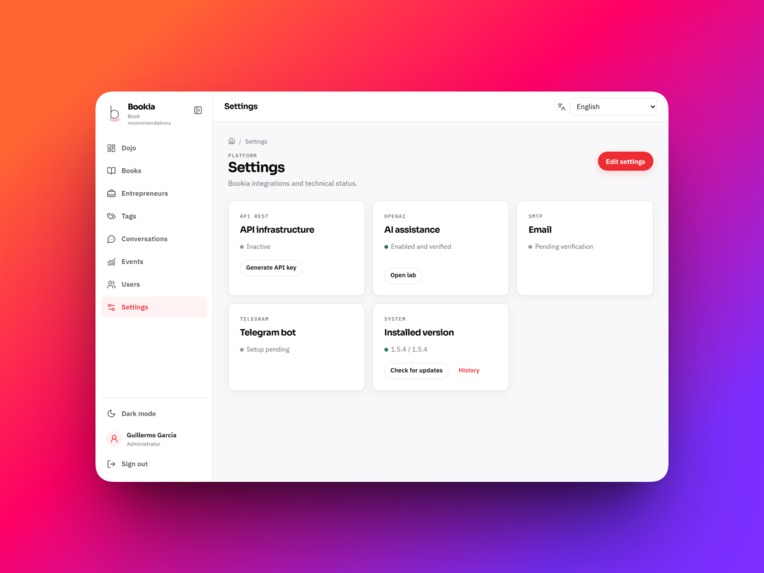
To manage the content and recommendation criteria, we developed Bookia, the back-office platform that powers the Dojo. Bookia makes it possible to manage the books, the knowledge associated with each title, and the rules that help generate relevant recommendations.
Bookia also separates the content infrastructure from the user-facing experience. This makes it possible to update and expand the library without rebuilding the product and to reuse the same foundation to create new reading dojos focused on other topics.
Challenges we ran into
One of the main challenges was finding the right balance between personalization and simplicity. We did not want to build a long, exhausting questionnaire, but we also did not want to provide shallow recommendations. The conversation had to feel brief and natural while still gathering enough context to create a genuinely useful plan.
We also had to define how to combine the analytical capabilities of AI with human judgment. The value of the project does not come from asking a model to recommend books freely. It comes from using AI to understand the user’s needs and connect them with a collection curated by founders.
Another challenge was avoiding an overwhelming experience. That is why we created the 5+1 format: broad enough to offer different perspectives, but focused enough to remain actionable.
It was also important to design an architecture that could evolve beyond a single use case. That is why Bookia was conceived as a reusable platform capable of powering other reading dojos centered on different areas of knowledge.
Accomplishments that we're proud of
We are especially proud of turning an idea based on informal conversations between entrepreneurs into a functional and accessible tool.
We are also proud of creating an experience that combines two elements that are usually kept separate:
- The availability and personalization of AI.
- The judgment and experience of real founders.
The project shows how AI can amplify valuable human knowledge instead of replacing it.
Another important achievement was building not only the visible Dojo experience, but also Bookia, the back-office platform that makes the entire content and recommendation system manageable, expandable, and reusable.
Finally, we are proud to have built the full project in collaboration with AI, from the initial definition to the first functional version, using ChatGPT, Codex, and GPT-5.6 as technical and creative collaborators.
What we learned
During development, we confirmed that the real value is not in recommending “the best books about entrepreneurship,” but in recommending the right book to the right person at the right time.
We also learned that AI is most useful when it amplifies human knowledge. In Founder’s Reading Dojo, technology provides availability, conversation, and personalization. The experience of founders provides judgment, context, and trust.
Another important lesson was seeing how much a person with a clear vision can reduce the distance between an idea and a real product by using tools such as Codex and GPT-5.6.
We also learned that curated content is just as important as the technology itself. The quality of the experience depends not only on the model, but also on the selection of books, the structure of the information, and the judgment used to build the knowledge base.
What's next for Founder’s Reading Dojo
The next step is to expand the library with recommendations from more founders, including not only the books themselves, but also the context behind why they mattered and the moments in their journey when they were most useful.
Founder’s Reading Dojo will be available for free through SaaS Sensey, my entrepreneurship community, so that any entrepreneur in the world can use it and receive a reading plan adapted to their situation.
SaaS Sensey is a space where I share experiences, lessons, and resources through a newsletter, while also providing access to some of the platforms I build to support other entrepreneurs.
In the medium term, we want to evolve Bookia so it becomes easier to create new reading dojos focused on other topics. The same platform could be used by universities, business schools, educational institutions, or professional communities to transform expert knowledge into personalized reading journeys.
The long-term vision is simple: to turn years of reading, learning, and conversations between experienced people into an accessible tool for anyone who needs to learn, decide, or move forward.
Built With
- cakephp
- codex
- css3
- gpt5.6
- html5
- javascript
- php


Log in or sign up for Devpost to join the conversation.