-
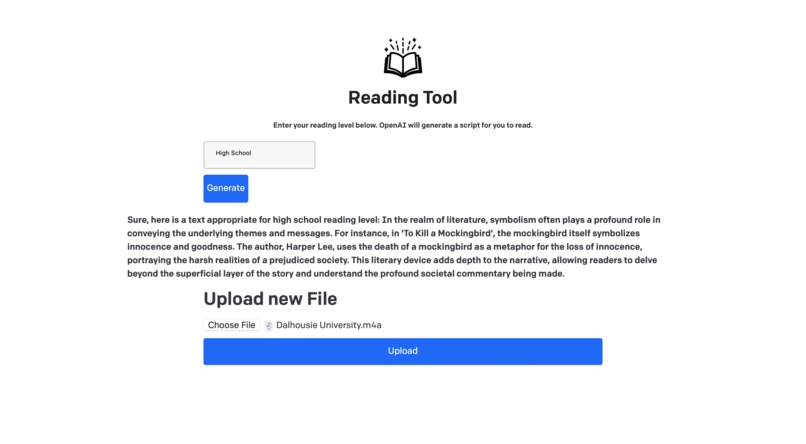
Screenshot of UI
My younger cousins are very kind and bright kids. However, there is one thing that stands between them and their full potential - dyslexia. Dyslexia is a neurodevelopmental disorder that affects the way individuals process language, particularly in relation to reading. People with dyslexia may experience difficulties in recognizing and decoding words, which can make reading challenging. Here are some common struggles that individuals with dyslexia may face when it comes to reading:
Phonological Processing Difficulties: Dyslexia often involves difficulties in phonological processing, which is the ability to recognize and manipulate the sounds of spoken language. This can affect the ability to connect letters to their corresponding sounds, making it challenging for individuals with dyslexia to sound out words. Difficulty with Decoding: Decoding involves translating written words into spoken language. People with dyslexia may struggle with this process, leading to difficulties in recognizing and understanding words on a page. They may have trouble breaking down words into their individual sounds and blending them together. Word Recognition Challenges: Individuals with dyslexia may have difficulty quickly recognizing and recalling common words, even those they have encountered frequently. This affects reading fluency and can slow down the overall reading process. Reading Comprehension Issues: Dyslexia can impact not only the decoding of words but also the comprehension of written material. Understanding the meaning of sentences, paragraphs, and longer texts may be more challenging for individuals with dyslexia. Visual Distortions and Reversals: Some individuals with dyslexia may experience visual distortions, such as seeing letters or words differently than they appear. Reversals of letters or words, such as confusing "b" with "d" or "was" with "saw," are also common. Difficulty with Sequencing: Dyslexia can affect the ability to accurately sequence letters, sounds, or words. This may lead to problems in reading and spelling words in the correct order. Working Memory Challenges: Working memory is crucial for holding and manipulating information during the reading process. People with dyslexia may have limitations in working memory, which can further contribute to difficulties in reading and processing information. It's important to note that dyslexia does not reflect a lack of intelligence; individuals with dyslexia often have average to above-average intelligence. With appropriate support, interventions, and strategies, individuals with dyslexia can develop effective reading skills and overcome many of these challenges. Early identification and tailored interventions are key to helping individuals with dyslexia build strong reading abilities.
Despite affecting over 15% of the population in North America, there are few resources that help students to develop their reading skills online. We believe that along with generative AI, we can help individuals with dyslexia reach their true potential, and also be well integrated into society.
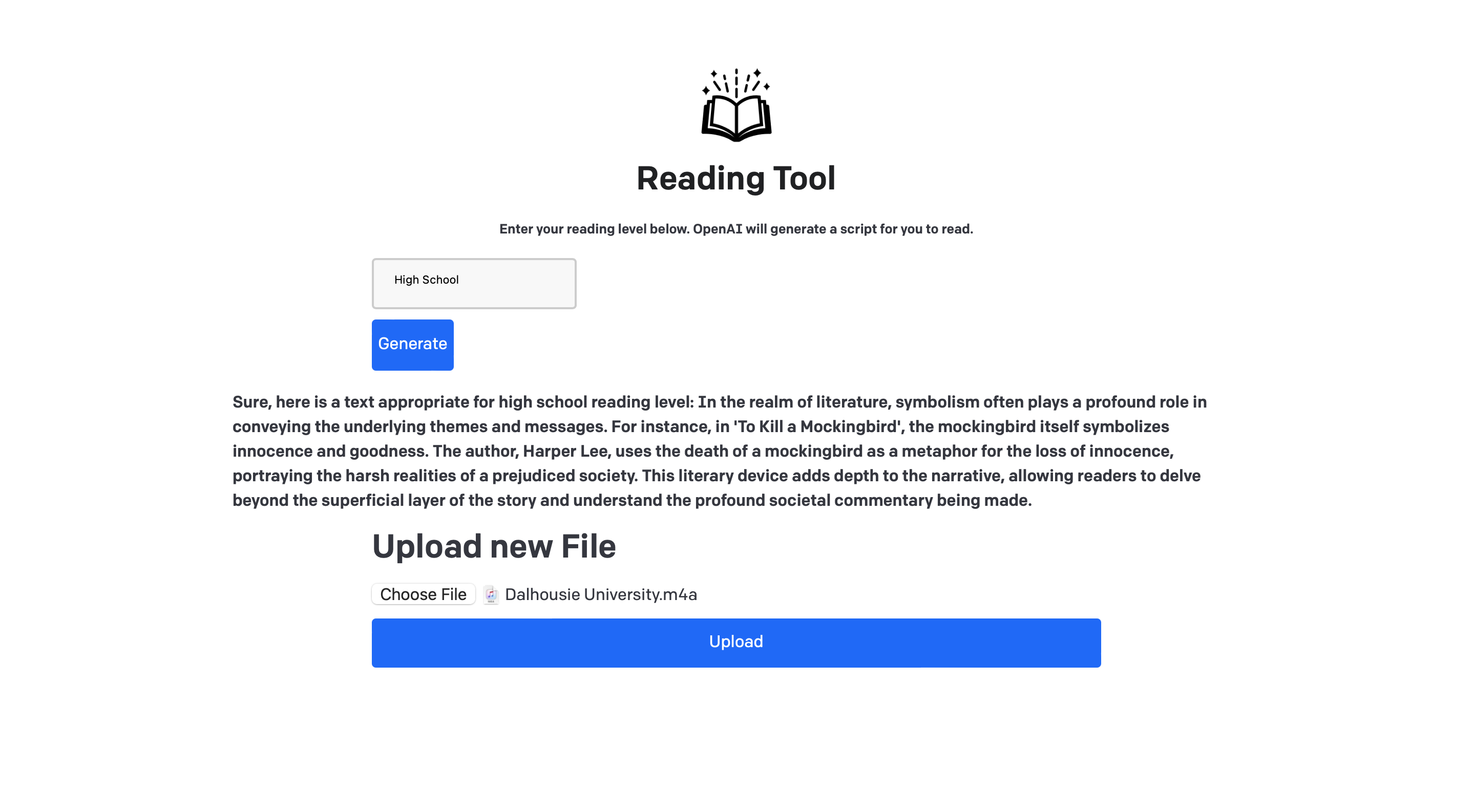
Our goal is to first use a Large Language Model (LLM) to display a small paragraph, along with other reading aids like pictures and videos about the paragraph being read to provide some context to the users, to help the individuals read more easily. All of this will be very intuitive and easy to read. The paragraph generated will have varying reading level difficulty, and using a real-time speech-to-text GPT model, track the user’s progress through the text. When a mistake is detected, stop the user and provide feedback, with a prompt. This application can be used for training those with reading impediments like dyslexia, through the production effect (speaking aloud and pronouncing words correctly improves learning over silently reading) and having a personal aid tracking your every word to make sure it’s spoken correctly.
In the future, we aim to enhance the capabilities of this application by incorporating features such as the ability to offer feedback on speech. This will involve analyzing various elements, including speech patterns, tone, and pacing. We believe that this functionality could serve as a valuable tool for public speaking training. Additionally, we plan to introduce a feature that provides images and videos as part of the feedback, thereby enhancing the overall user experience.

Log in or sign up for Devpost to join the conversation.