-
-
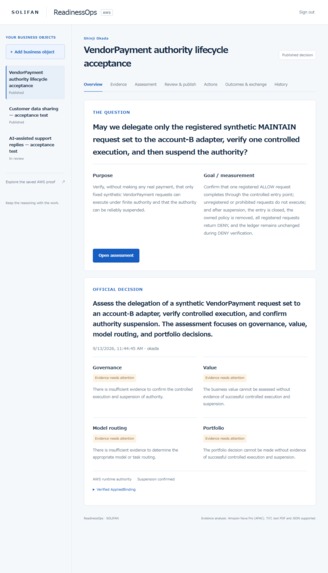
ReadinessOps — AWS edition
-
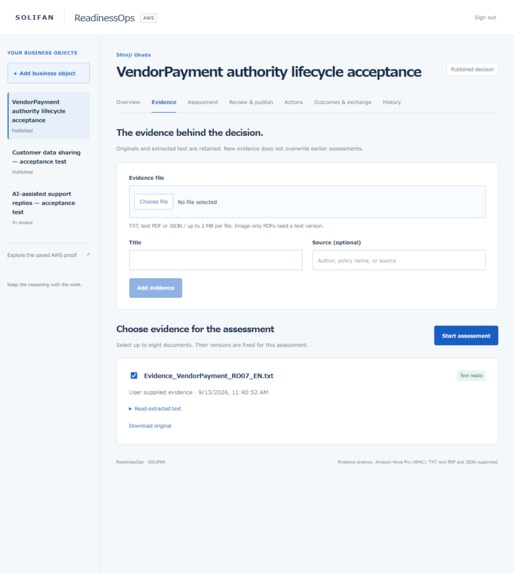
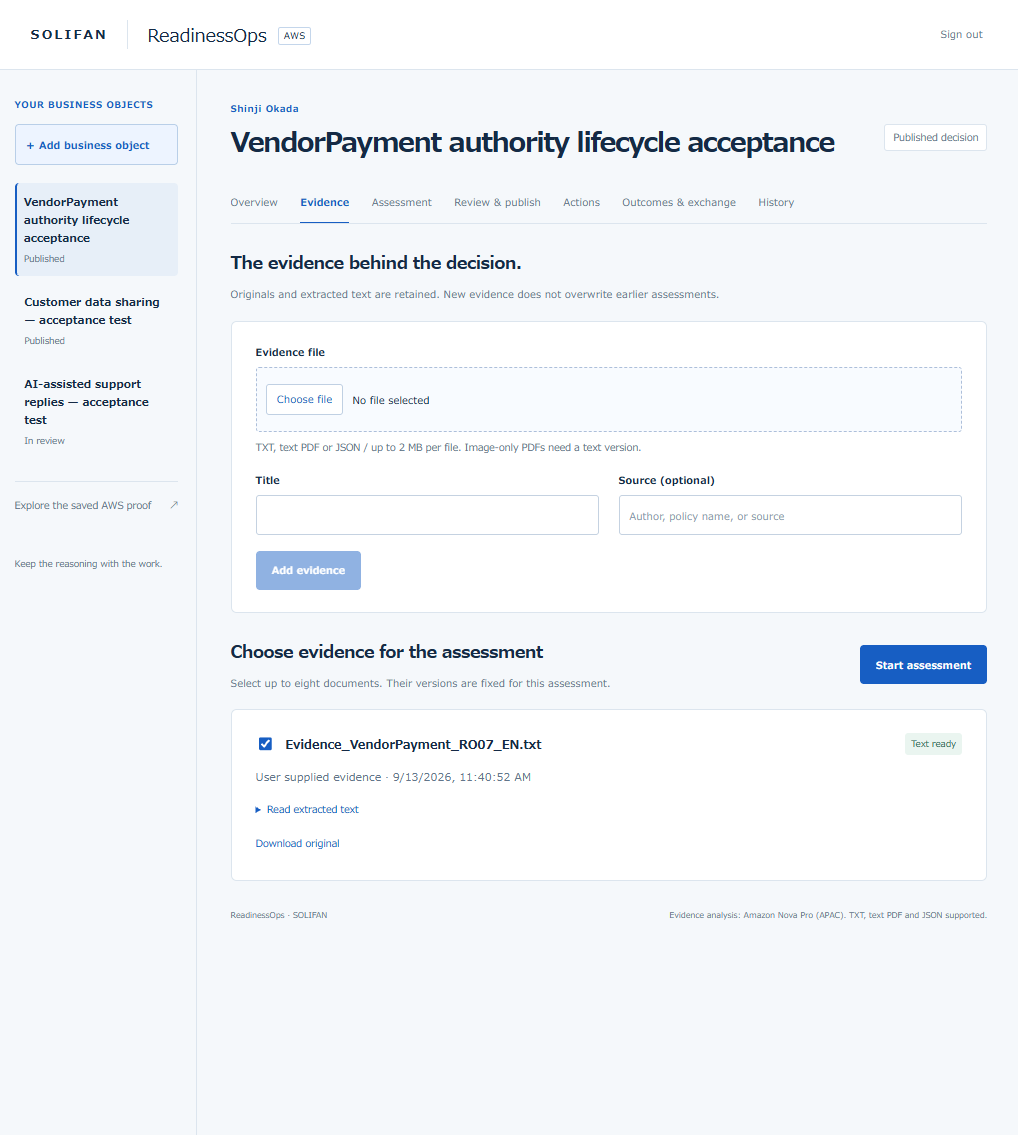
1. Versioned evidence
-
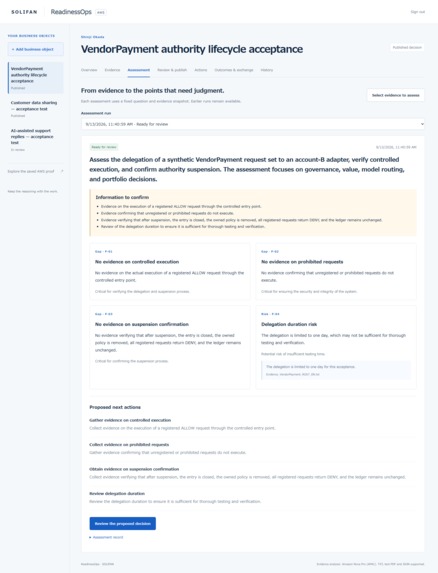
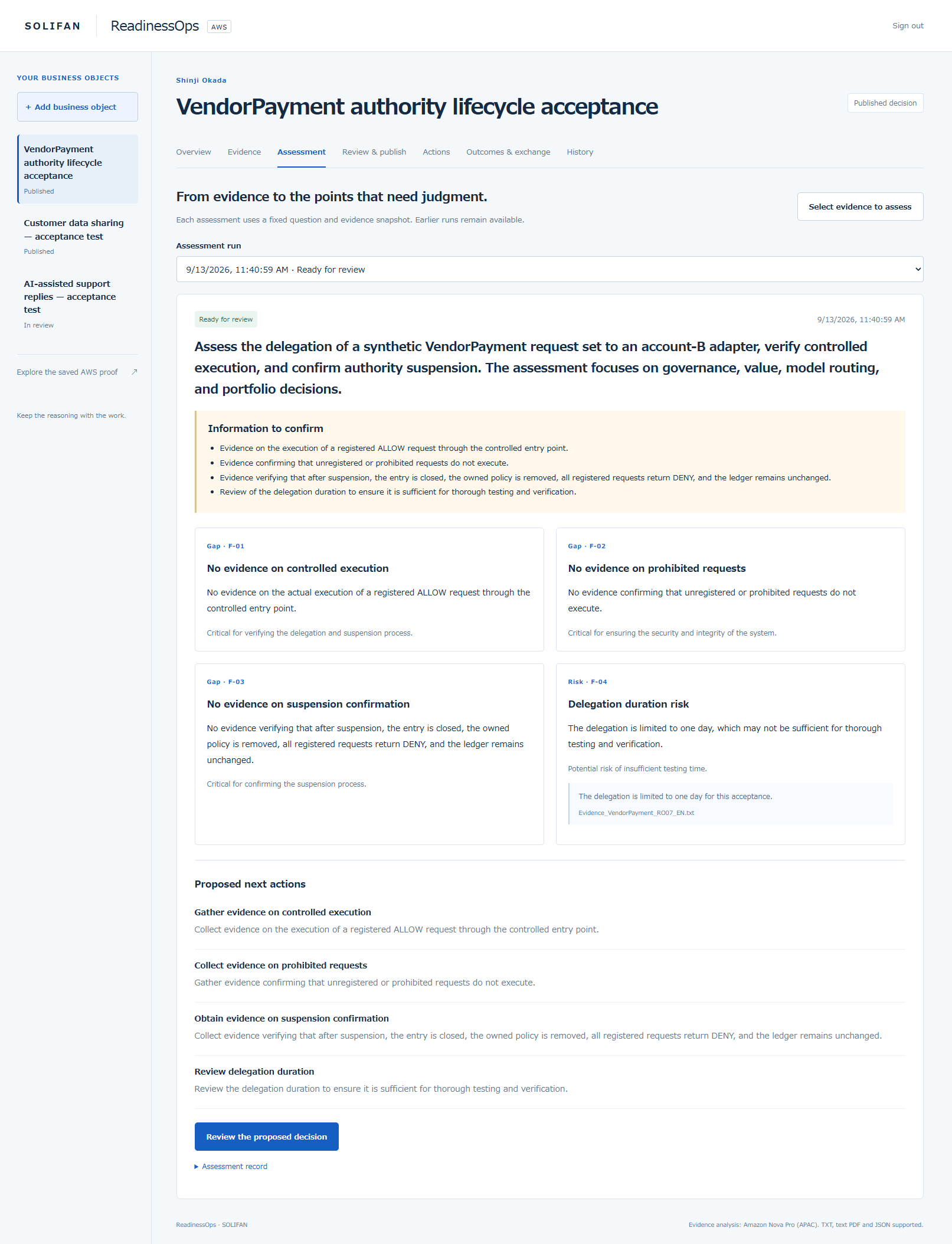
2. Cited agent assessment
-
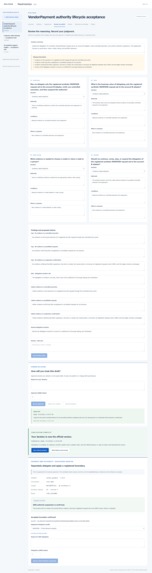
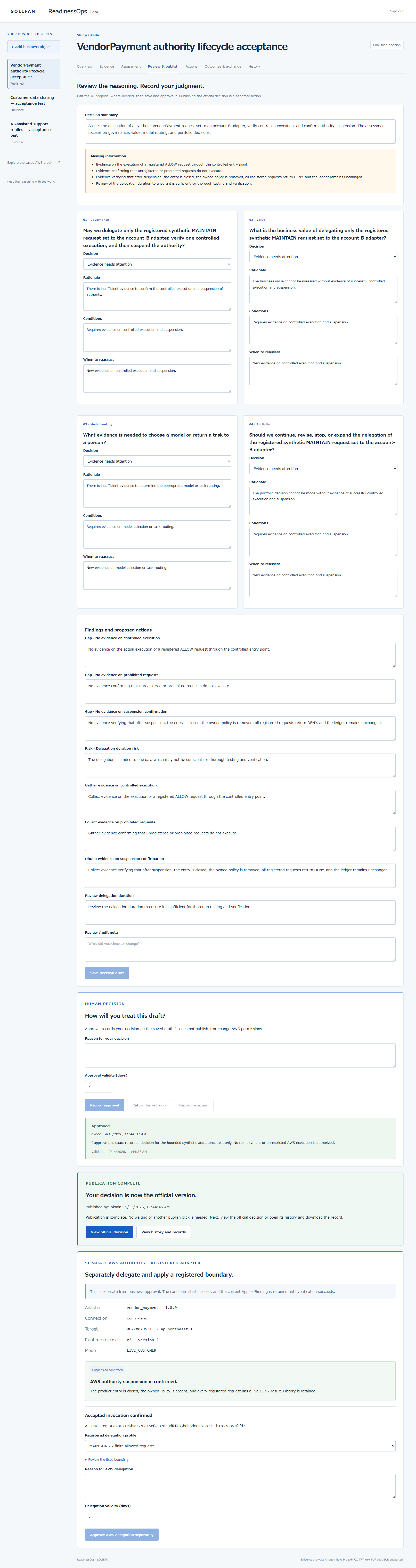
3. Human review and publication
-
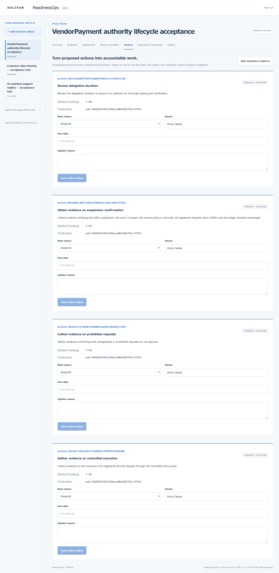
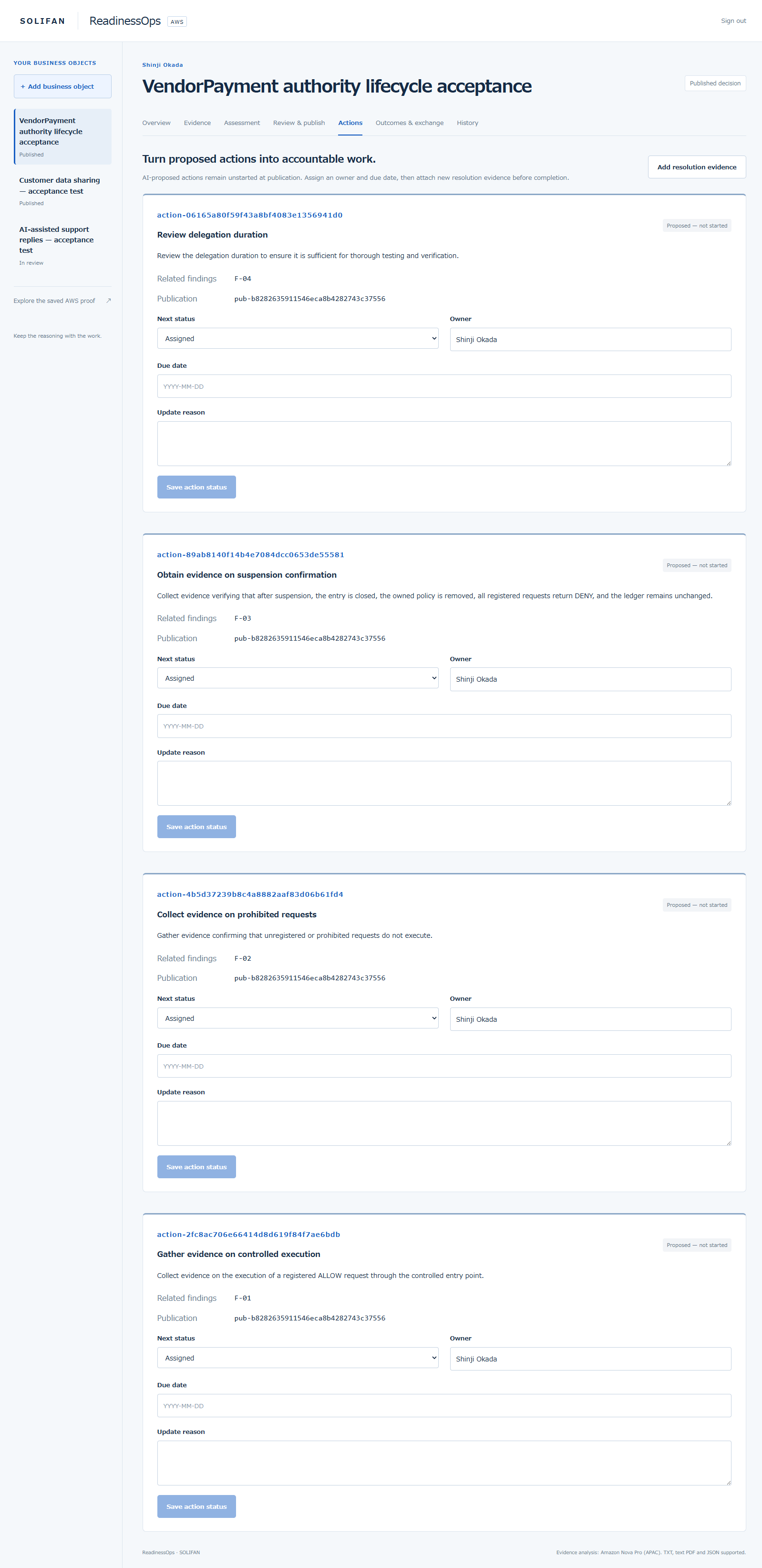
4. Accountable actions
-
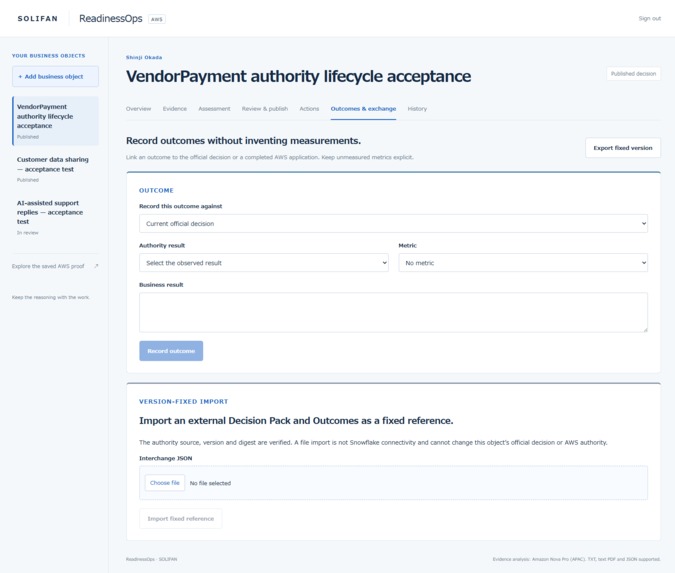
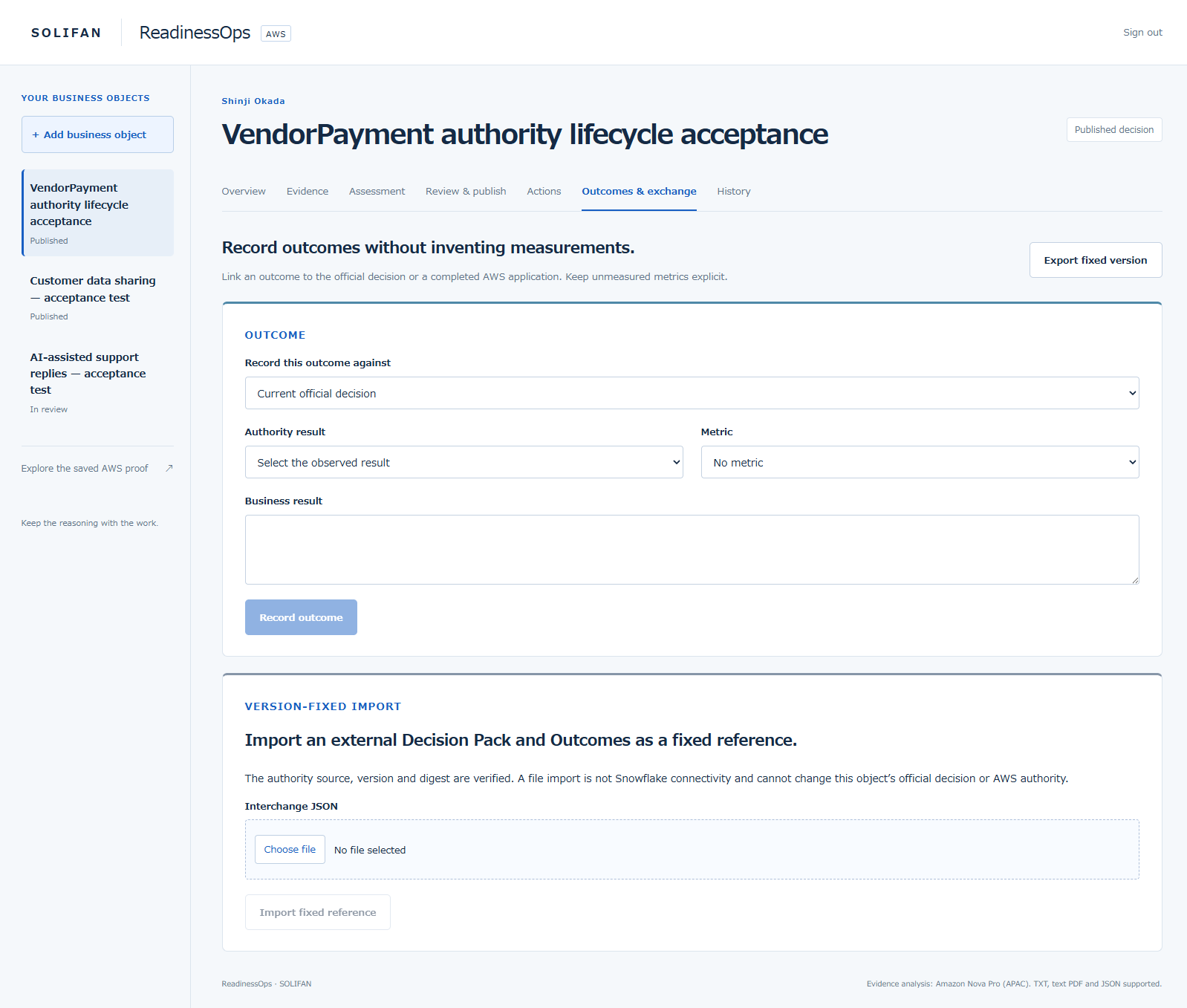
5. Outcomes and exchange
-
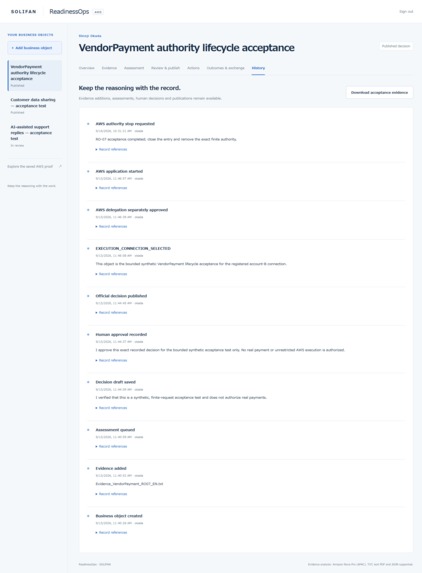
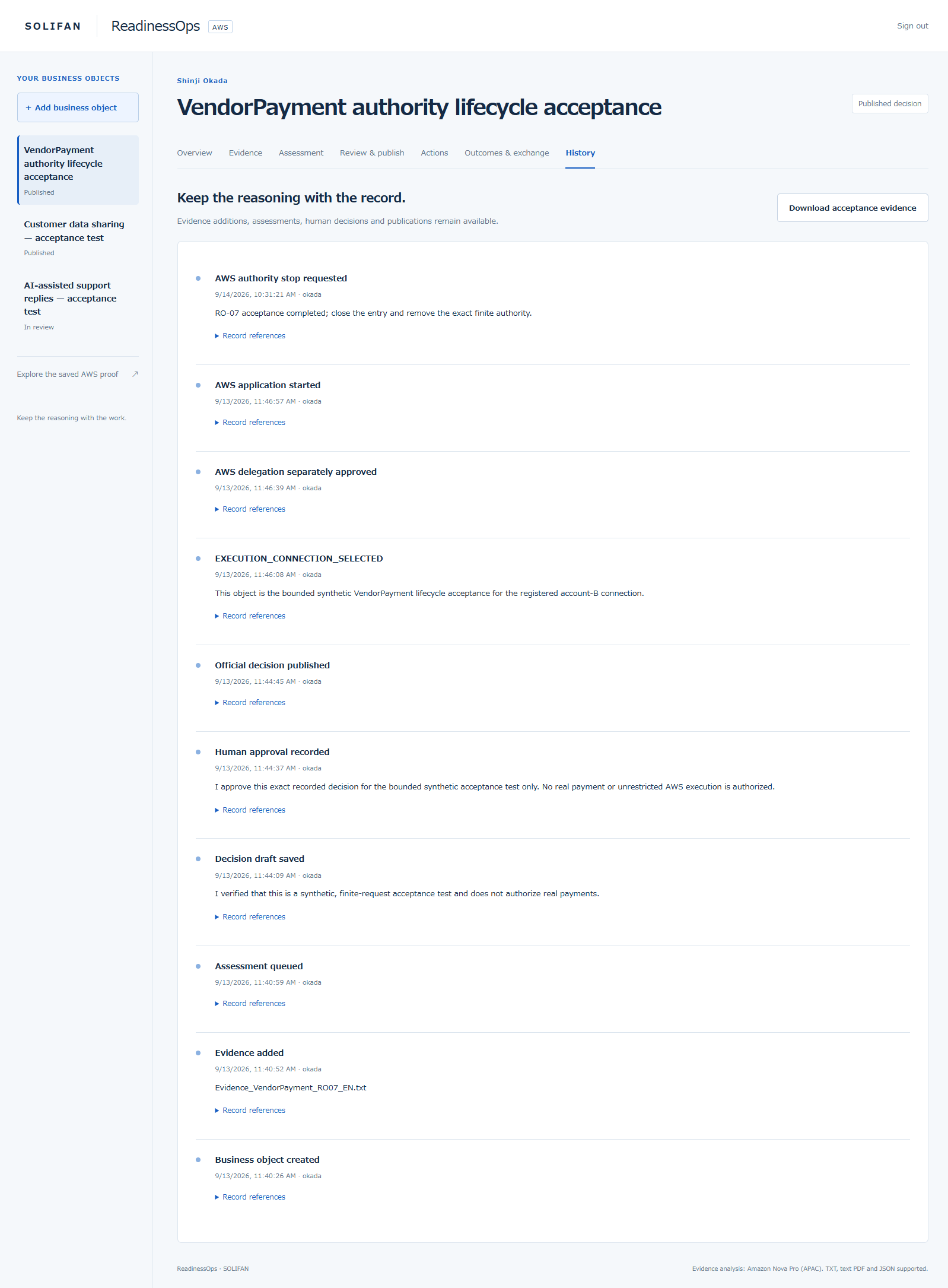
6. Retained history
Inspiration
An approval is a decision made under specific conditions—not permanent permission.
When evidence changes, an earlier decision may need to be reviewed. But asking people to review everything again creates another bottleneck.
For operations leads and AI program owners, the challenge is keeping evidence, decisions, follow-up work, and execution authority connected as circumstances change.
SOLIFAN built ReadinessOps to support that work. Authority Delta identifies how new evidence affects an existing decision and brings the proposed changes back to human review.
Our goal is to help people delegate confidently while retaining control over what they authorize.
What it does
ReadinessOps Authority Delta connects a complete workflow:
- Evidence: retain original files and extracted text, with selected evidence versions attached to each assessment.
- Assessment: use an AI agent to identify gaps, risks, and proposed actions while keeping missing information explicit.
- Authority Delta: compare a candidate with the official decision, showing affected items, proposed treatment, and supporting evidence.
- Human review: let a person inspect and edit the proposal, then approve, return, or reject it with a reason.
- Explicit publication: publish an approved business decision through a separate action. Publication does not itself grant AWS execution authority.
- Accountable actions: record owners, due dates, progress, and resolution evidence for follow-up work.
- Outcomes and history: retain observed results, unmeasured outcomes, external references, and the decision trail.
An optional execution connector adds separately delegated, finite AWS authority. It connects an authorized request with its execution result and verifies suspension before reporting that authority has stopped.
The core workflow works without this connector. Our supplied synthetic payment connector was tested with a separate target AWS account; that configuration is not a prerequisite for using the core product.
How we built it
The assessment agent uses Strands Agents on Amazon Bedrock AgentCore Runtime, with Amazon Bedrock Nova Pro for analysis. Fixed evidence inputs and structured output validation constrain the assessment.
The authenticated application connects evidence stored in Amazon S3, business records in Amazon DynamoDB, and queued processing through Amazon SQS.
The workflow keeps assessment, human approval, business publication, and AWS delegation distinct. Approval is bound to the reviewed candidate rather than silently carried forward to a changed proposal.
For optional connected execution, registered IAM roles and AgentCore policy controls enforce a finite authority boundary. Separate workers handle application, invocation, and suspension verification.
Fixed-version interchange retains an external source, version, and digest without changing the official decision or AWS authority.
Challenges we ran into
The hardest challenge was connecting what changed, what a person approved, and what the execution environment actually allowed.
Reassessment had to use new resolution evidence without erasing earlier records or treating unresolved questions as answered. We refined the assessment flow and output validation to make that distinction explicit.
Stopping authority also required more than a successful API response. The product closes its entry point first, then verifies policy removal and denial of the registered requests before reporting suspension as confirmed.
These challenges shaped our acceptance checks and the evidence retained by the application.
Accomplishments that we're proud of
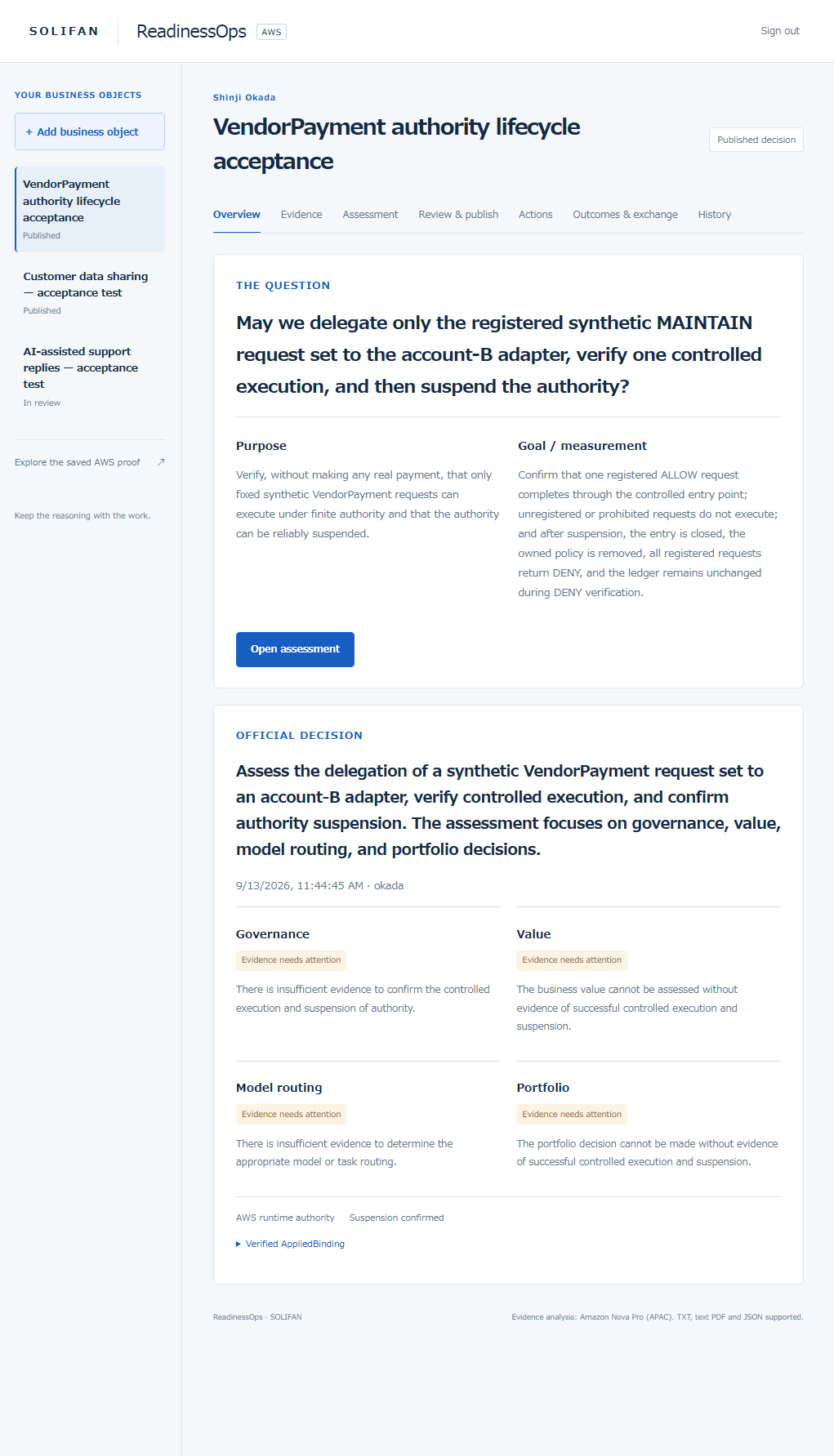
We demonstrated a connected workflow using actual application records and AWS acceptance evidence:
- A successful reassessment resolved an earlier suspension-evidence gap while leaving business-value and model-routing questions open for further evidence.
- The new candidate remained ready for human review without replacing the official decision.
- One registered synthetic request completed with ALLOW.
- Suspension verification confirmed policy removal, seven registered DENY results, and an unchanged ledger.
- Outcome records distinguished an observed technical result from commercial savings that had not been measured.
- Repeating a synthetic fixed-reference import added no duplicate record.
No real payment was performed. The interchange demonstration used a file-based reference, not a live Snowflake connection.
We are proud of making human control inspectable: who reviewed what, which candidate was approved, when authority took effect, and what evidence confirmed that it stopped.
What we learned
Human oversight is most useful when people can see what changed, why it matters, and which decision needs their attention.
New evidence can resolve one issue while leaving others unanswered. A useful agent must preserve those unknowns rather than force a confident conclusion.
We also learned that a successful deployment, an approved decision, and a verified execution outcome are different milestones. Each needs its own evidence.
What's next
Our next priorities are simpler onboarding, broader repeatable acceptance coverage, and additional operational adapters.
We also want to help teams measure review effort and business outcomes over time, building on the outcome records already present.
The principle remains the same: AI prepares. People decide. Authority stays explicit, scoped, and accountable.
Built With
- amazon-bedrock-agentcore
- amazon-web-services
- aws-iam
- strands-agents

Log in or sign up for Devpost to join the conversation.