About the Project
Inspiration
This project began with a conversation between my supervisor, Mark, and me about a challenge we had both seen repeatedly in legal practice: legal documents are often long, dense, and mentally demanding to read. We started discussing whether technology could make reading legal information more efficient without compromising accuracy.
Around the same time, I was diagnosed with ADHD, which gave me a new perspective on my own reading habits. I finally understood why I would often reread paragraphs, lose my place, or struggle to maintain focus when working through lengthy legislation, case law, contracts, and tribunal documents. We realised that these weren't isolated experiences, but part of a broader accessibility issue affecting many neurodivergent readers.
That conversation led us to ask:
How can we make legal reading more accessible and efficient, particularly for neurodivergent users?
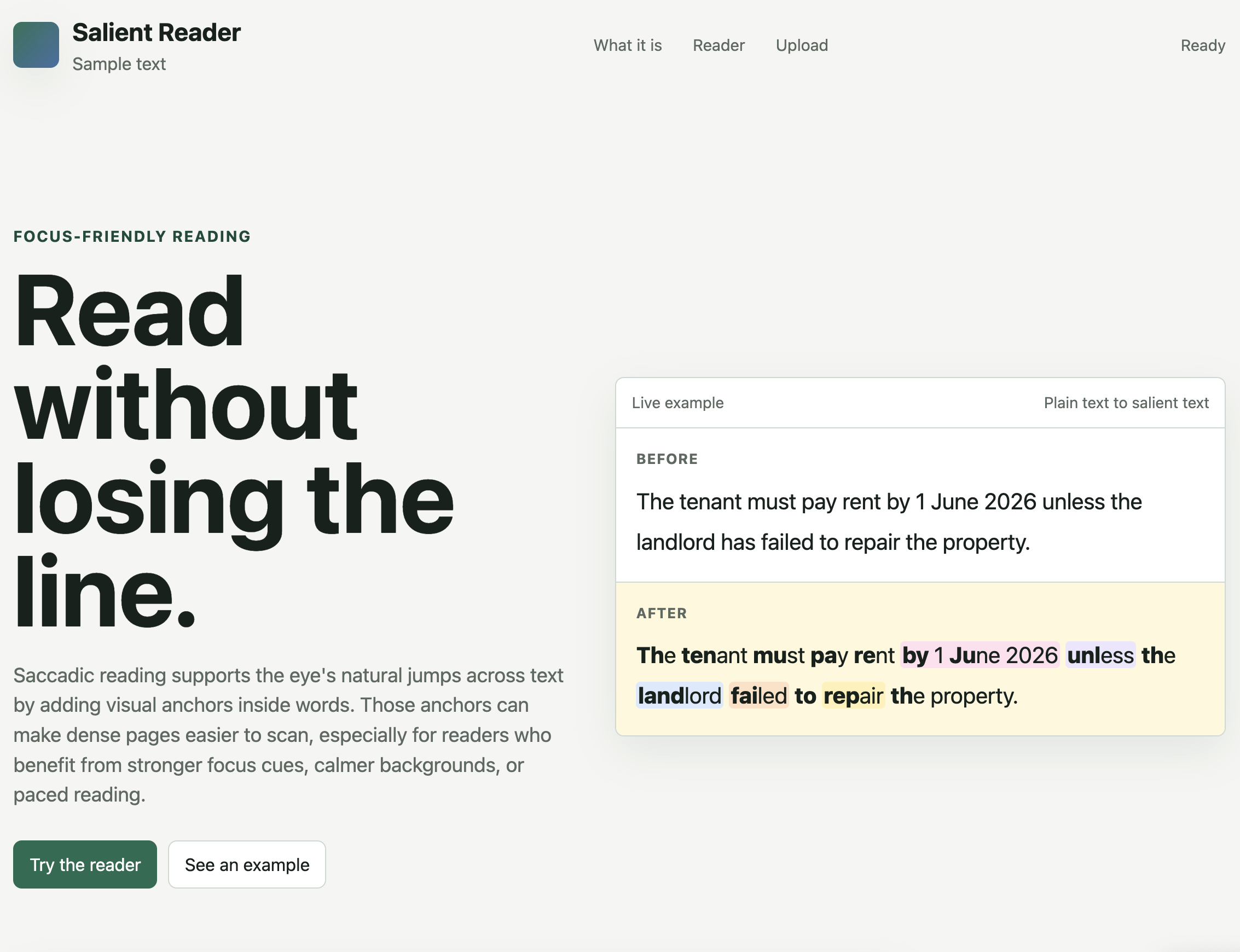
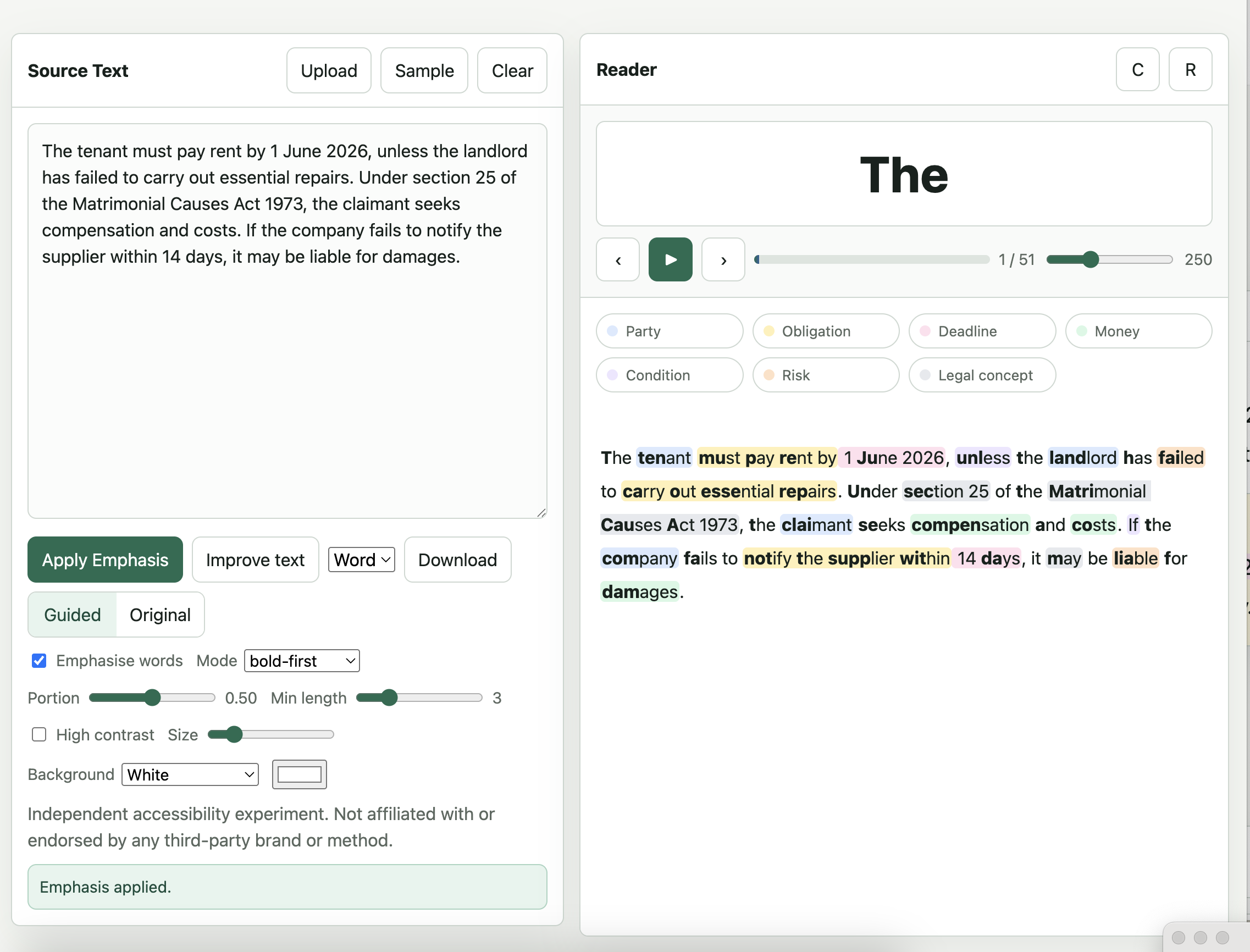
The Saccadic Guided Reader was born from that question. By combining legal experience, cognitive science research, and modern web technologies, we wanted to create a tool that supports the way people naturally read rather than expecting readers to adapt to traditional document formats.
How We Built It
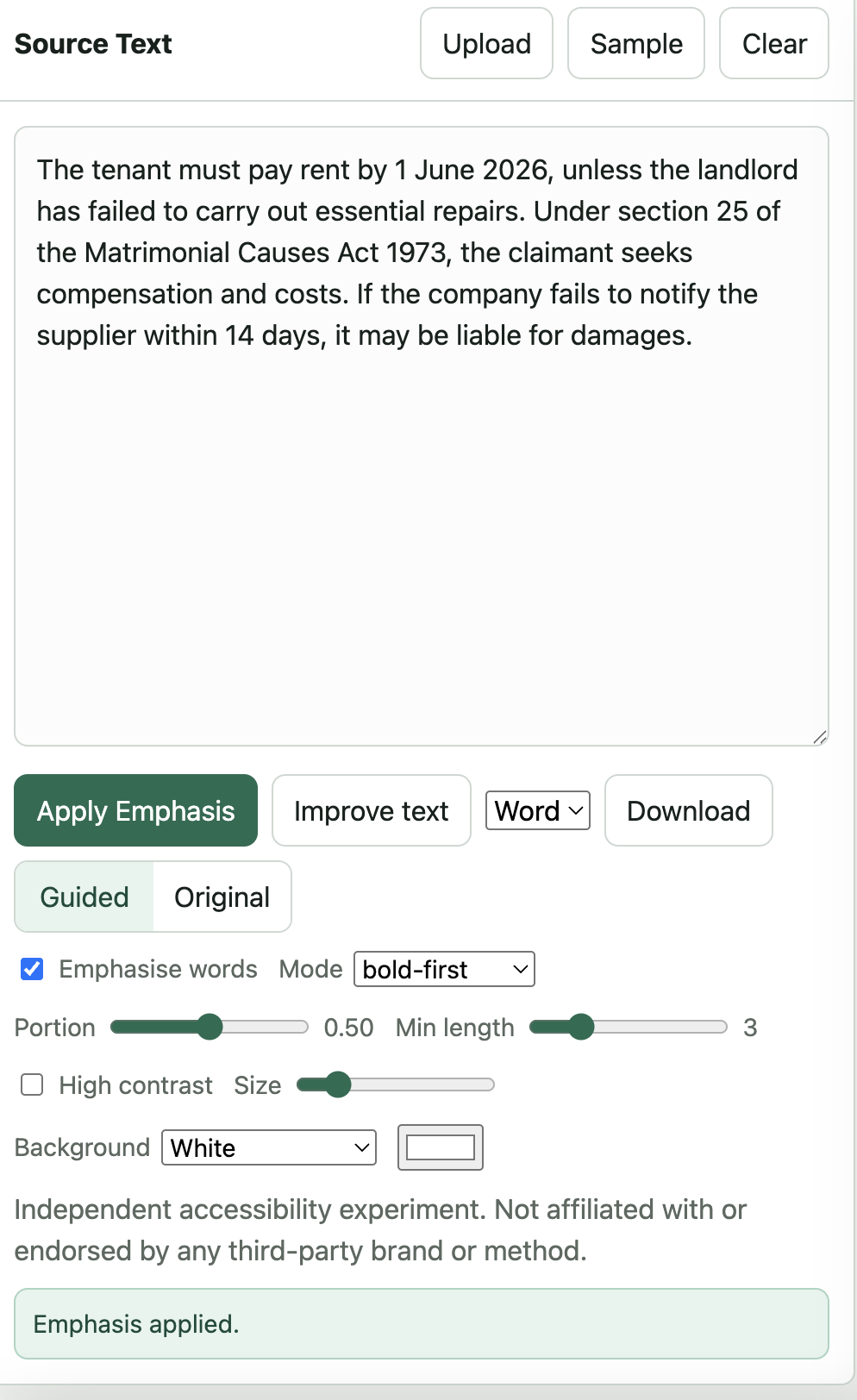
We built the application as a lightweight browser based web app using modern web technologies, allowing it to run entirely within the browser without requiring any installation.
The project combines:
- Responsive front-end development
- Dynamic text rendering
- JavaScript-based reading guidance
- Accessibility-focused interface design
- Deployment using Cloudflare Workers
Alongside development, we explored research into saccadic eye movements, visual attention, and reading cognition to understand how guiding eye movements could reduce cognitive effort while reading. We experimented with different approaches to pacing, highlighting, and presentation, continually refining the experience to make it feel intuitive rather than distracting.
Although the application can be used with any text, we designed it with legal documents in mind. Legal information is often complex and intimidating, particularly for people already dealing with stressful situations such as workplace disputes or tribunal claims. Our aim was to make these documents feel more approachable without changing their content.
Challenges
One of the biggest challenges was translating academic research into a practical, user-friendly application.
Reading is highly individual, particularly for neurodivergent people, so there is no universal solution. Finding the right balance between providing visual guidance and avoiding unnecessary distraction required extensive experimentation and testing.
Another challenge was working across disciplines. Coming from a background in law, we had to learn about accessibility, cognitive psychology, browser technologies, and front-end development while ensuring the project remained grounded in the real-world needs of legal professionals and the people they support.
We also wanted to avoid making assumptions about neurodiversity. Instead of creating a tool that claimed to "fix" reading difficulties, we focused on building something flexible that could support different reading styles and cognitive needs.
What We Learned
This project reinforced how valuable interdisciplinary thinking can be.
By bringing together legal knowledge, accessibility research, and software development, we were able to approach a longstanding problem from a different perspective. We also learned that accessibility is most effective when it is considered from the very beginning of the design process rather than being added as an afterthought.
Perhaps most importantly, we learned that lived experience can inspire meaningful innovation. My ADHD diagnosis provided personal insight into the challenges many neurodivergent readers face, while our legal backgrounds ensured that the solution remained focused on a genuine problem affecting access to justice and legal information.
Throughout the project, we gained new technical skills in web development, user interface design, accessibility, deployment with Cloudflare Workers, and translating academic research into practical software.
Looking Ahead
This project represents the first step towards a broader vision of making legal information more accessible through technology.
We hope to continue developing the Saccadic Guided Reader as part of a wider suite of AI-powered legal accessibility tools that help users understand employment rights, navigate tribunal procedures, interpret legislation, and engage with complex legal documents more confidently.
Ultimately, our goal is simple: to make legal information easier to read, easier to understand, and more accessible for everyone, particularly neurodivergent individuals, who are too often overlooked when legal technology is designed.
Built With
- codex
- gemma4
- ollama
- pdf-alchemy
- pypdf
- python


Log in or sign up for Devpost to join the conversation.