Inspiration
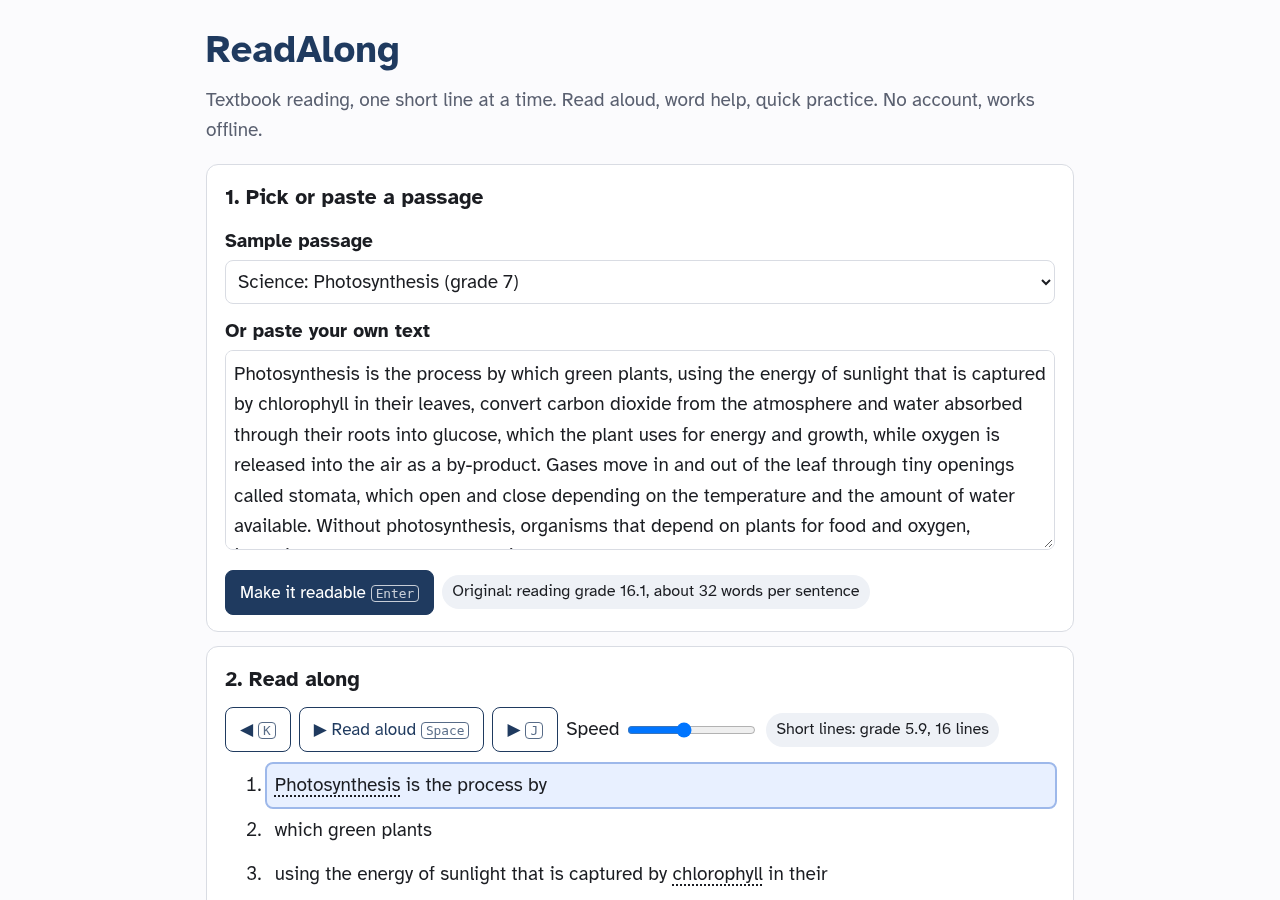
A grade-7 photosynthesis paragraph in the sample set scores reading grade 16 (college level) because its sentences run 30+ words. For a student with dyslexia or one still learning English, the barrier is often the sentence, not the science. Many reading aids need an account, fast internet or a subscription.
What it does
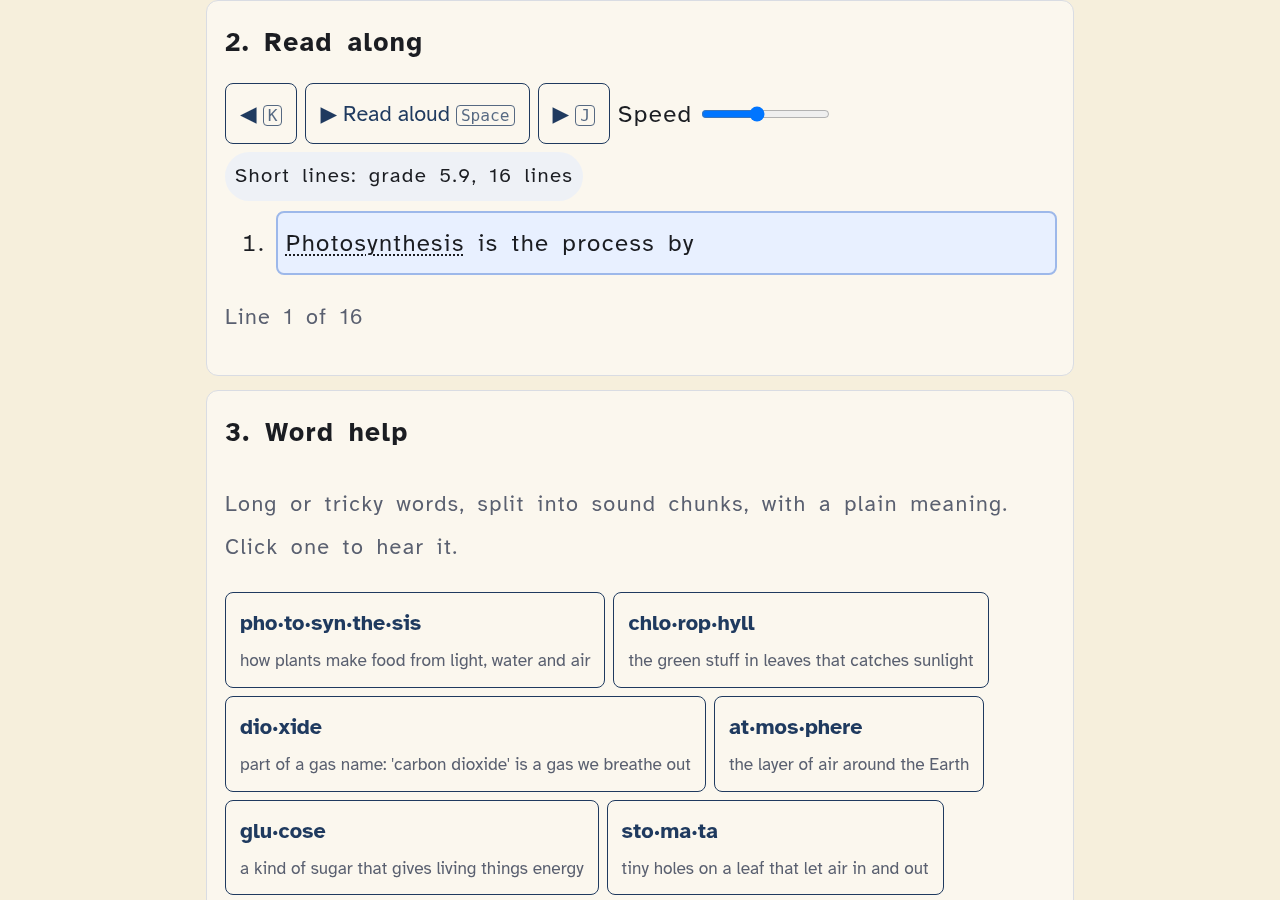
- Short lines: sentences are split at natural pauses into lines of at most 12 words.
- Read aloud with highlighting: the device's built-in voice reads line by line, highlighting each word; speed is adjustable.
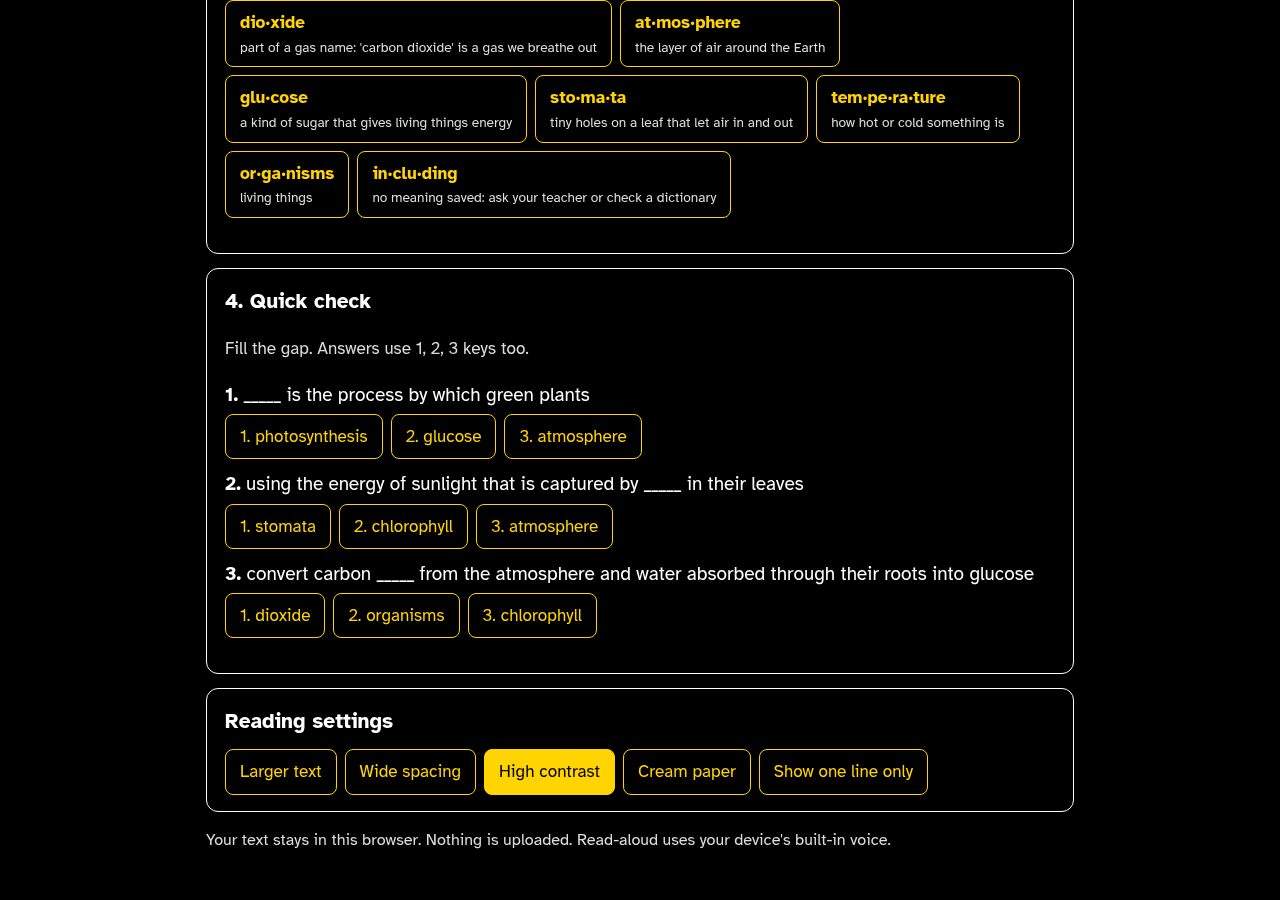
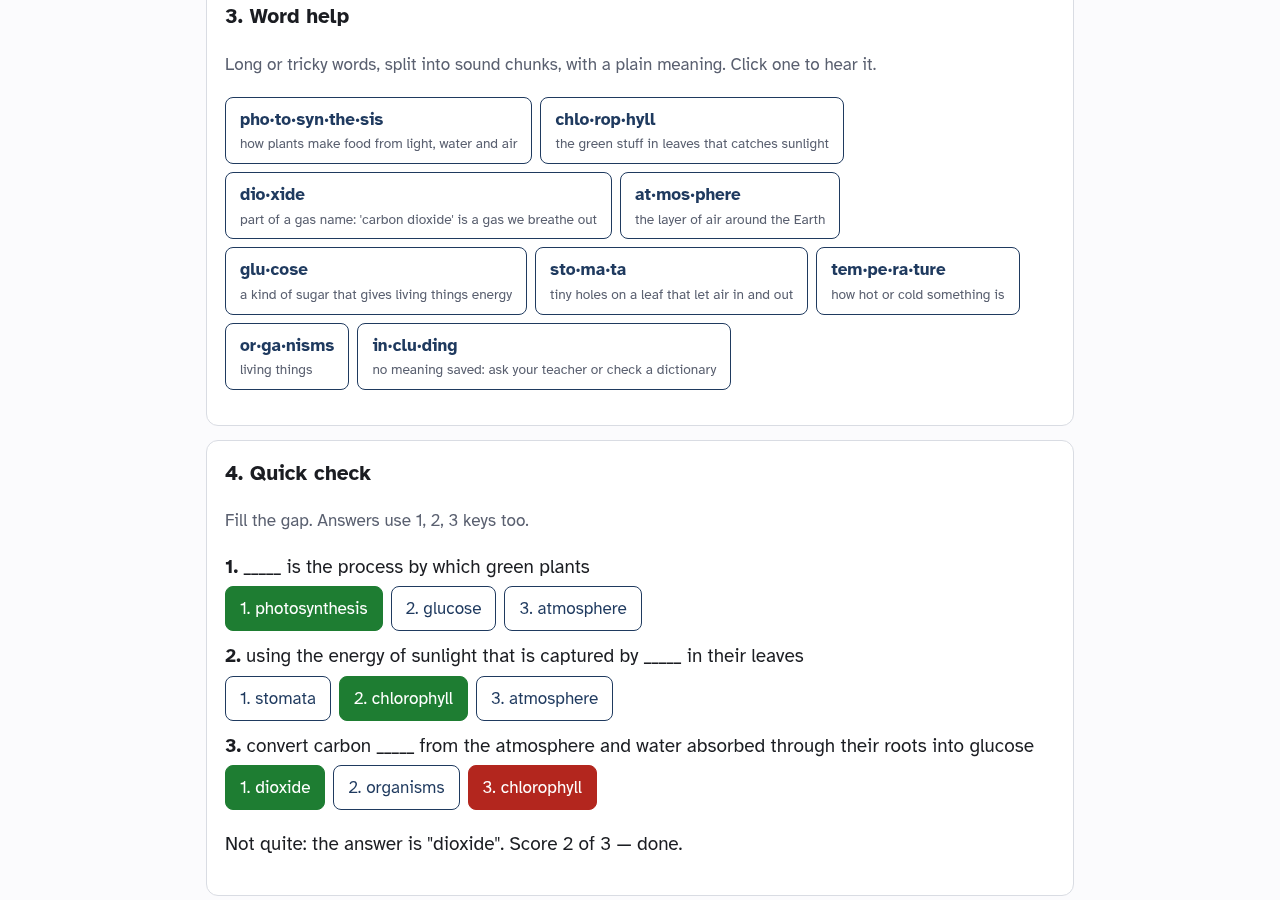
- Word help: long or tricky words are underlined, split into sound chunks (pho·to·syn·the·sis) with a plain meaning; click to hear.
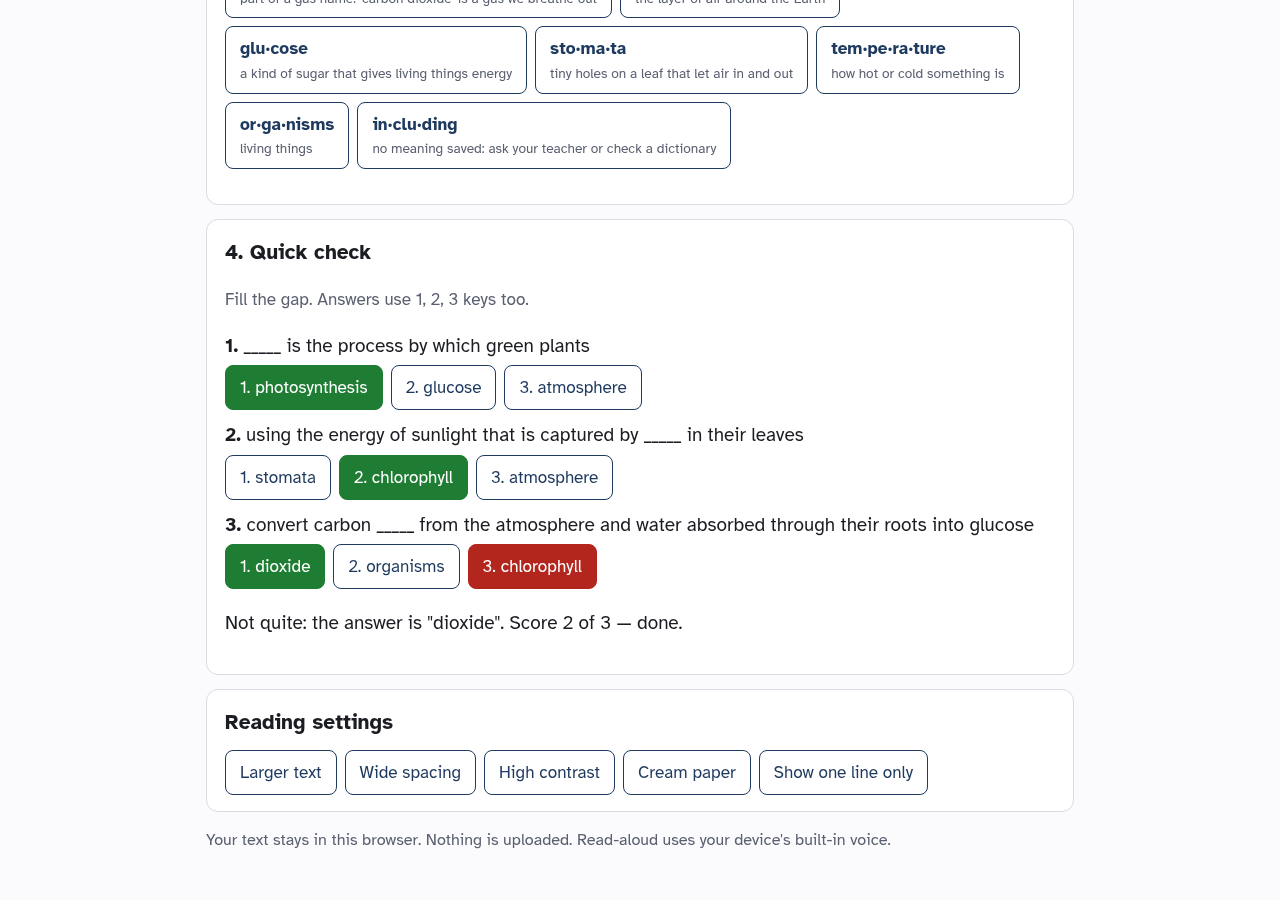
- Quick check: 3 fill-the-gap questions built from the passage, with instant feedback.
- Reading settings: larger text, wide spacing, cream paper, high contrast, one-line-at-a-time focus. Remembered on the device.
- Keyboard first: Space play/pause, J/K next/previous line, 1-3 to answer, visible focus rings, skip link, ARIA live regions.
- Low bandwidth and private: about 24 KB, works offline after the first visit, and text never leaves the browser.
Before and after
Before: one 85-word sentence, grade 16.1. After: 16 lines of 12 words or fewer, grade 5.9, each read aloud with the current word highlighted, tricky words explained ("stomata: tiny holes on a leaf that let air in and out"), then three fill-the-gap questions.
How it was built
Plain HTML/CSS/JS ES modules, no framework. Sentence chunking splits at commas, semicolons and clause words. Flesch-Kincaid grade and syllable heuristics are computed in the browser. The Web Speech API reads lines and boundary events drive the word highlight. A service worker caches the 7 files for offline use.
Challenges
Chunking without breaking meaning; quiz prompts that are short enough for the target reader but still give context (a too-short line is joined with its neighbour and distractors that appear in the prompt are dropped); syllable splitting with silent "e".
Accomplishments
Measured grade drop of 7-10 levels on all three samples; full keyboard operation; works offline; 24 KB.
What was learned / What's next
Formula scores measure sentence load, not understanding. Next steps: testing with real learners (with consent), a bigger plain-language glossary, Korean and Spanish UI, and teacher-shareable passage links.
Event contribution / pre-existing work
Everything was built during the event (Oct 22, 2026). No pre-existing code. AI coding assistance was used and is disclosed in the README.
Built With
- css3
- html5
- javascript
- service-worker
- web-speech-api

Log in or sign up for Devpost to join the conversation.