-
-
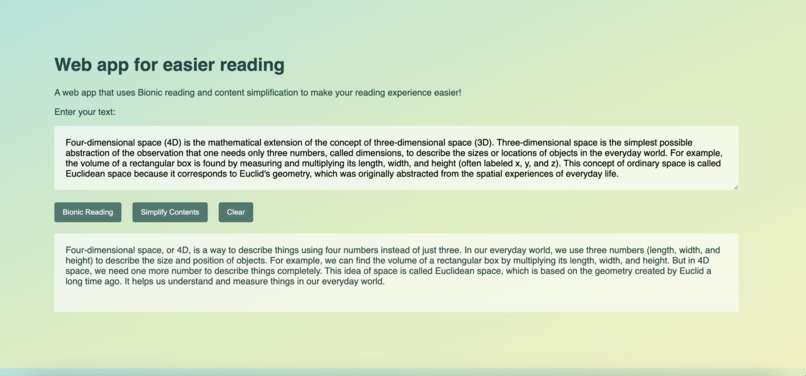
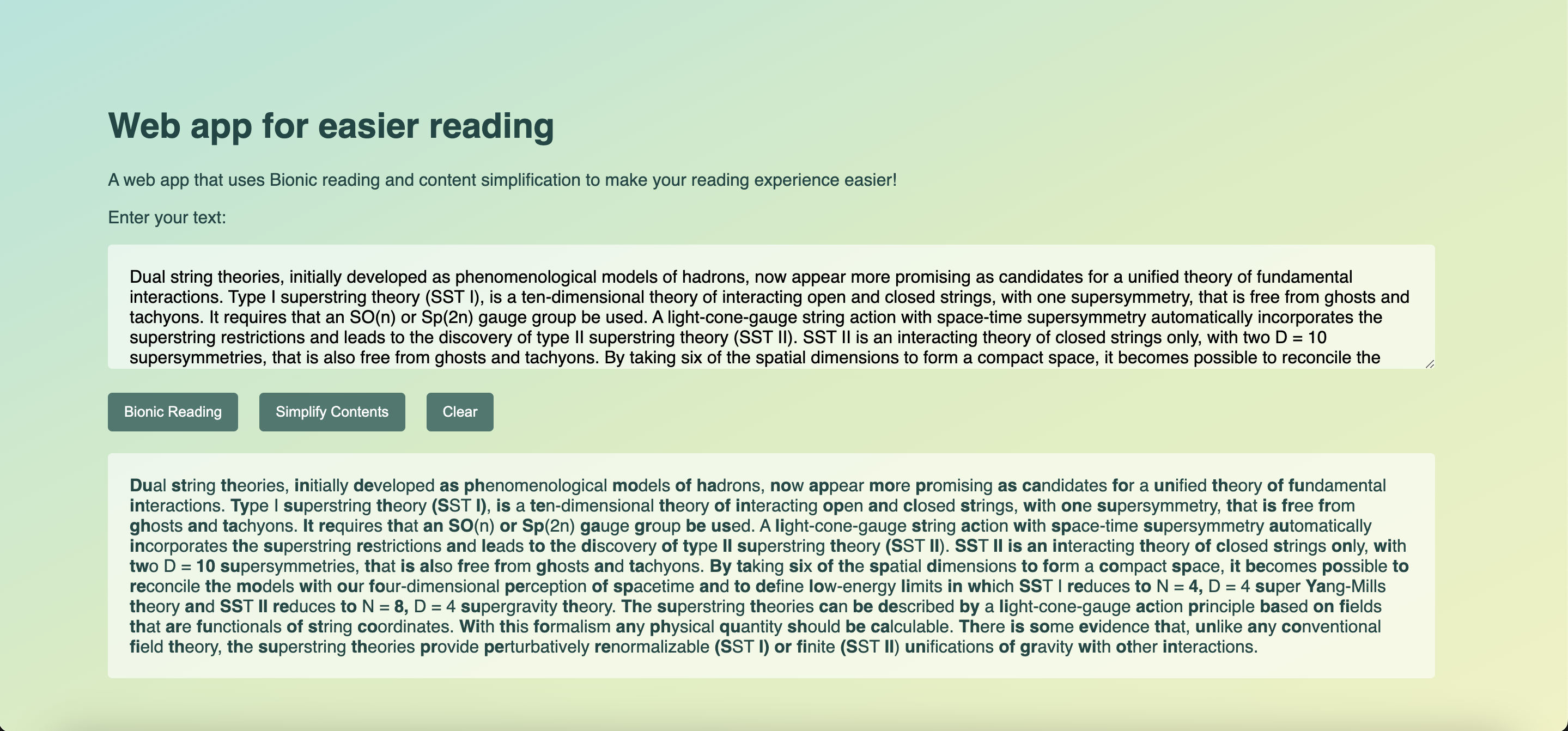
Simplification #2 (Physics!)
-
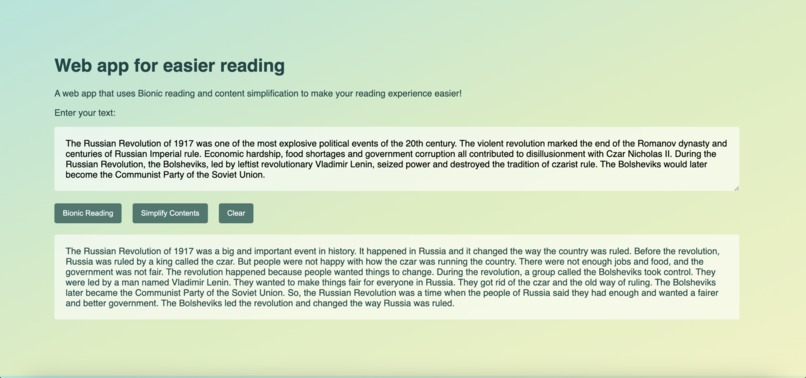
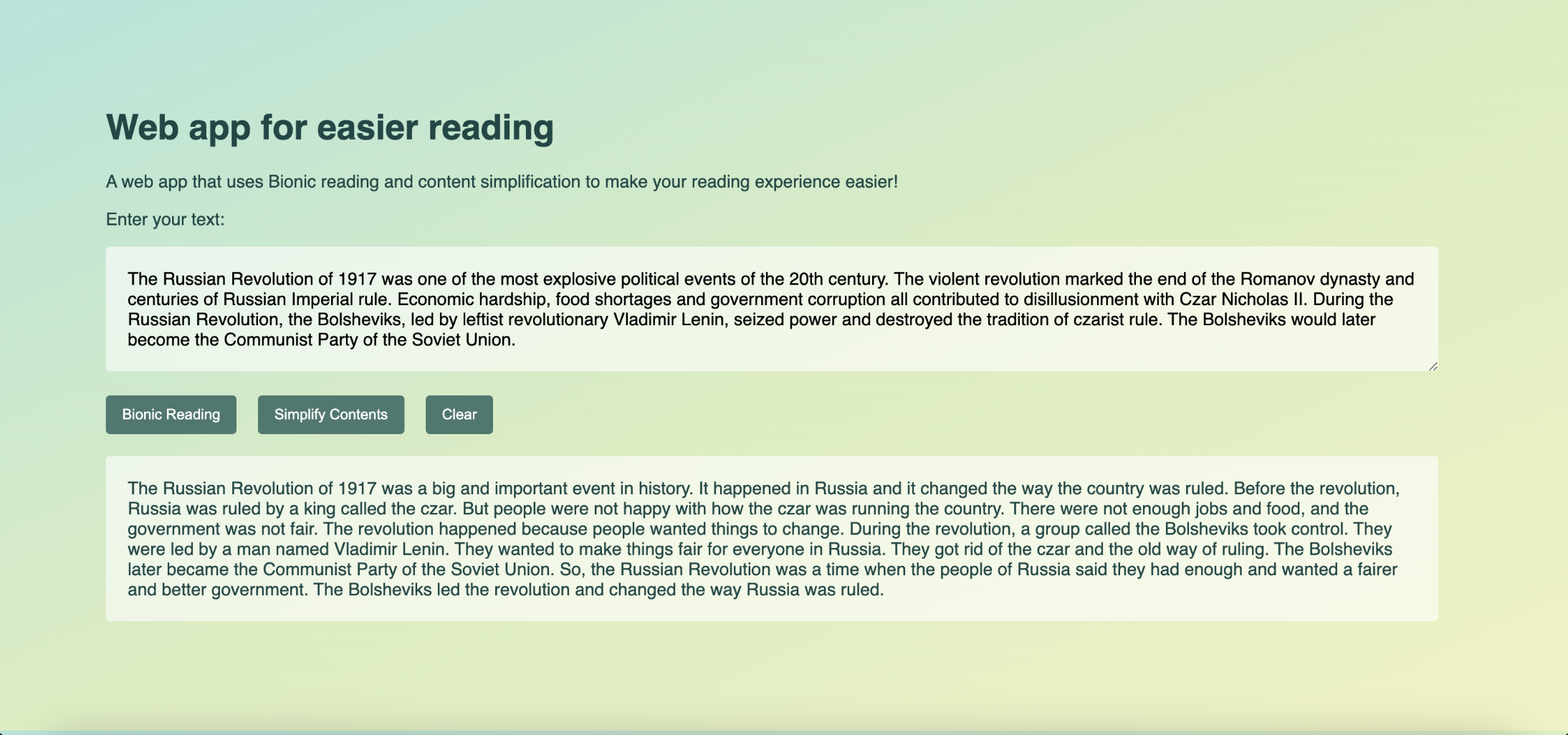
Simplification #1 (History!)
-
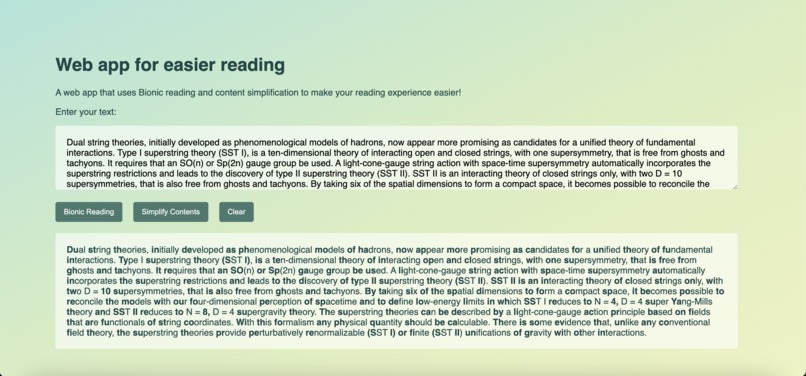
Bionic reading
Inspiration
The inspiration for our project is to break educational barriers - make learning easier and more accessible for individuals with reading disorders like Dyslexia and ADHD. We are motivated by the high dropout rates and challenges these individuals face in education due to limited support. We aim to transform educational content, making it more approachable and understandable, thus improving their learning experiences.
What it does
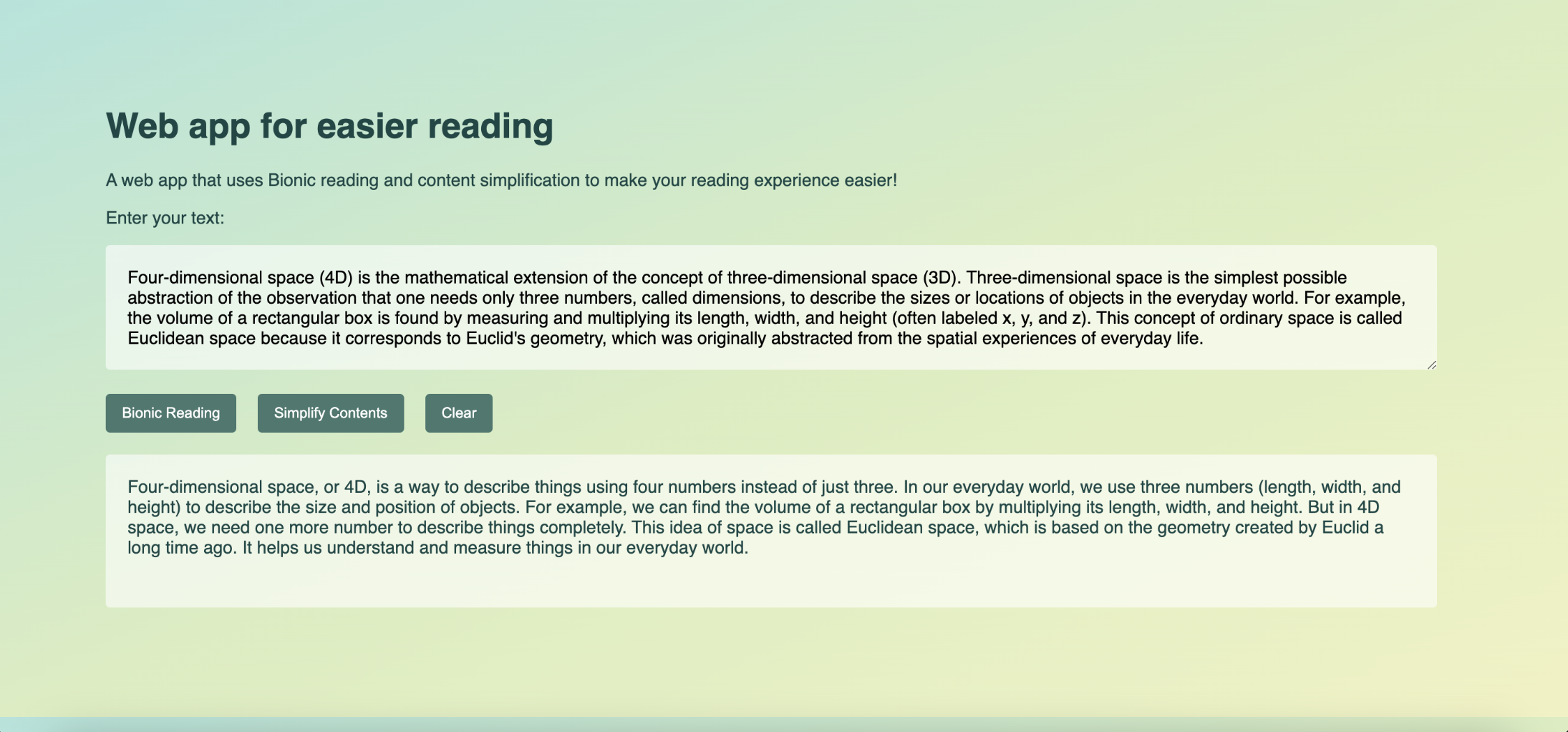
Our project uses the concept of bionic reading to transform standard texts into formats that are more approachable for individuals with reading disorders. Bolding parts of words guide the reader's eyes, enhancing reading speed and comprehension. It also offers a simplified version of texts, using more accessible vocabulary and shorter sentences to reduce cognitive load, making reading more accessible for those with ADHD and Dyslexia.
How we built it
Viewing given text in Bionic form simply involved using a for loop on the paragraph word list and bolding the first two letters of each. With an OpenAI API key and some reference to how to engineer effective prompts, we were able to use jQuery's Ajax to send requests to interact with the GPT-3.5 model with a system message that tells it to simplify content for an elementary student (for the effect!) and the user input provided through our web app.
Challenges we ran into
- Figuring out how to integrate the API response into our code - we tried Python at first, then settled with jQuery's AjaxAjax to send requests.
- The API quota limit was reached for one account we had, so we had to create a new one
- We tried to implement environment variables for the API key because it had to be kept secret and secure but we ended up just using a placeholder.
Accomplishments that we're proud of
We are particularly proud of developing a tool that has the potential to improve the educational experiences of individuals with reading disorders significantly. Our innovative approach to applying bionic reading concepts to assist reading comprehension and focus is a crucial accomplishment.
What we learned
We learned how to control the parameters of the GPT model in a conversation with it for a response specific to the user's needs - sampling diversity and randomness (temperature and top_p), and most importantly, setting a system role that will provide context and guidance on its behavior and tone of response.
What's next for Read with Ease
What's next for Read with Ease involves expanding our platform's capabilities to transform pure text into various forms of media, enhancing comprehension and engagement for users with reading disorders. We aim to enable AI to generate quizzes, flashcards, follow-up questions designed to reinforce learning and assess understanding, and comprehensive lesson plans tailored to different learning styles with more system prompts. These new features aim to provide a more interactive learning experience.
Built With
- ajax
- html5
- javascript
- openai-gpt-3.5-api


Log in or sign up for Devpost to join the conversation.