Inspiration
As a longtime YouTube reaction creator, I grew frustrated with the fragmented workflow: juggling editing tools, worrying about copyright strikes, and spending hours hunting for highlights. I wanted a all-in-one solution that streamlined every step—from upload to publish—so creators could focus on what matters: their content, not the technical grind.
What it does
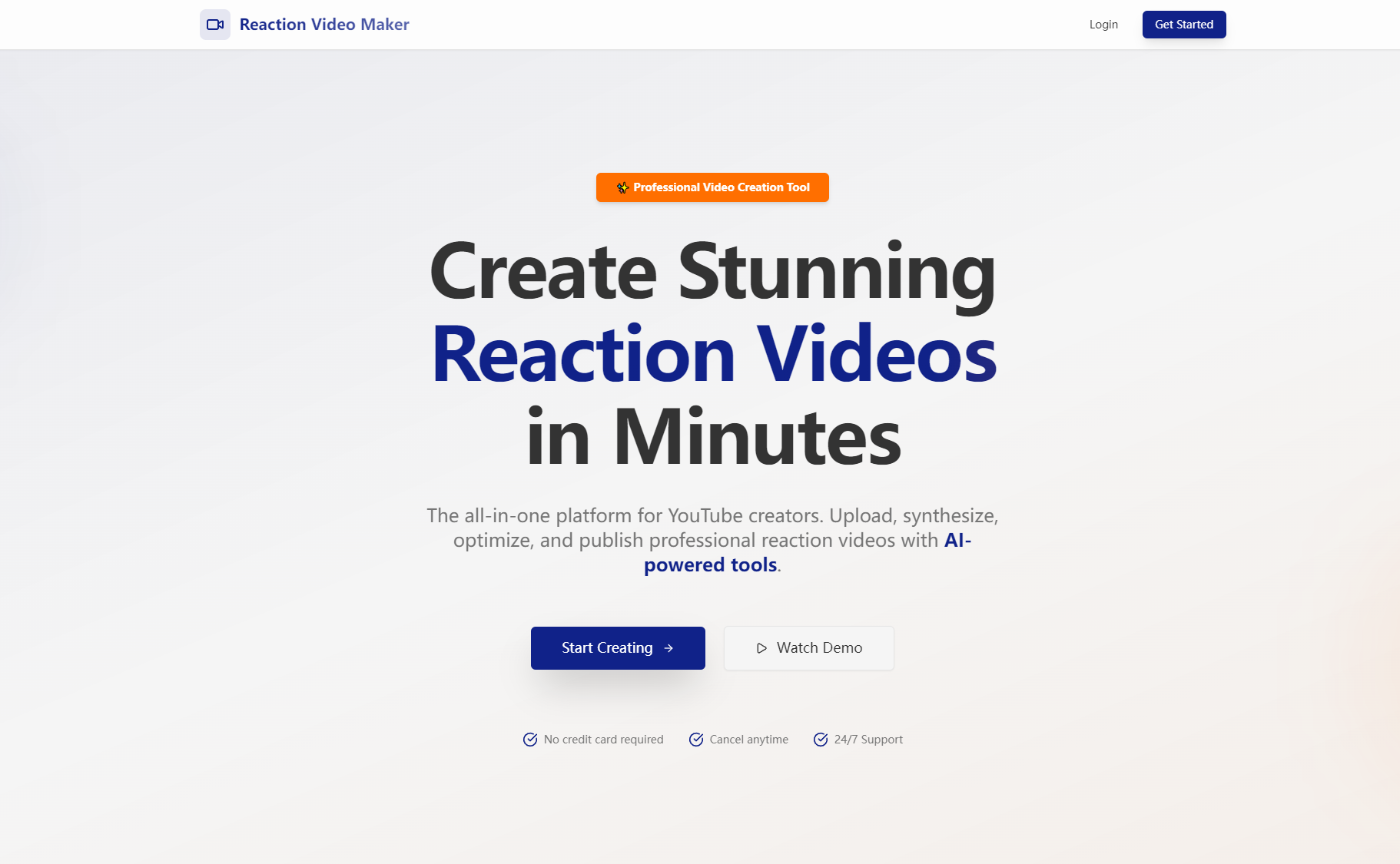
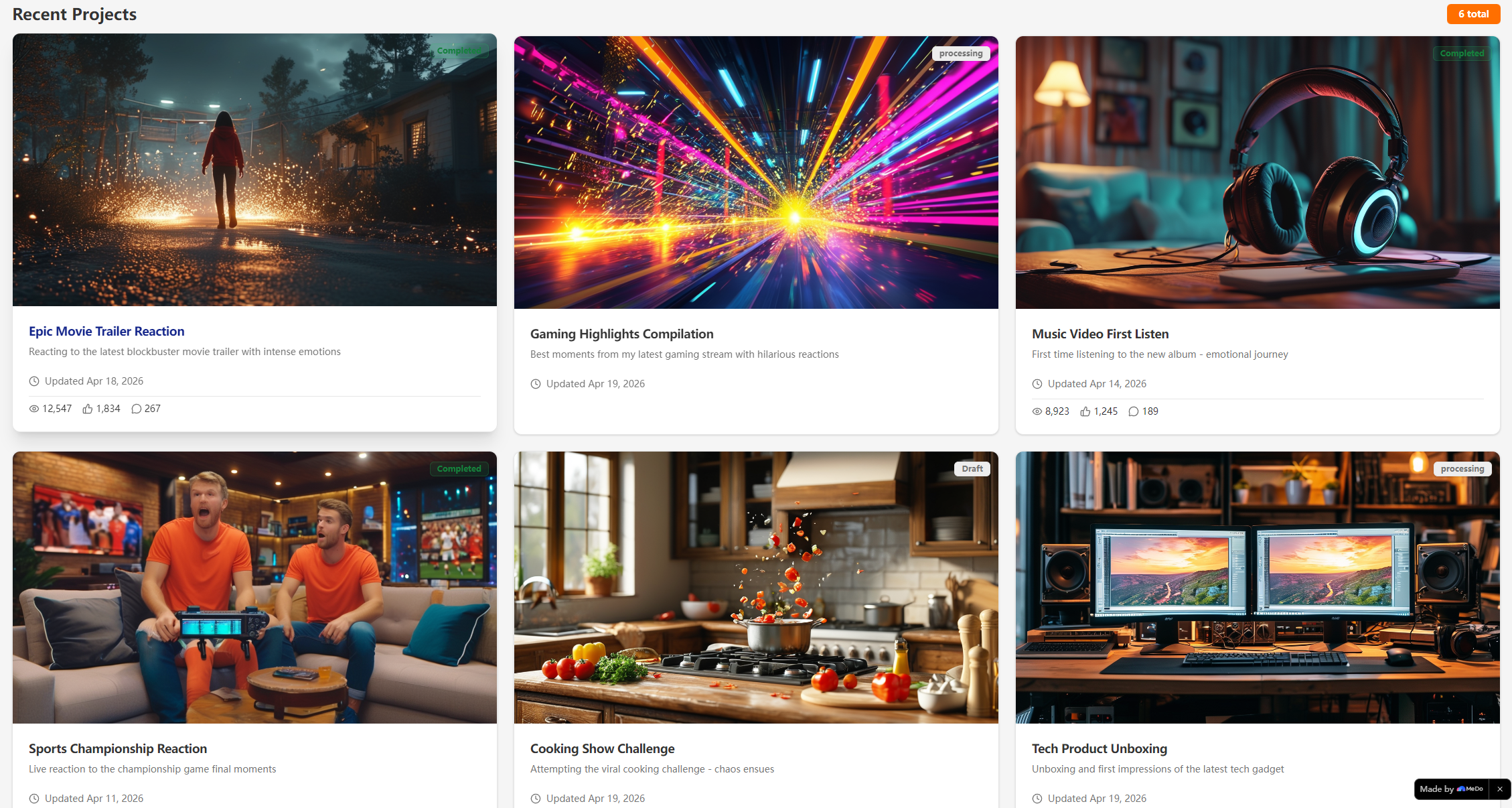
Reaction Video Maker lets creators build polished dual-screen reaction videos with AI-driven emotional highlight detection, automated copyright compliance checks, YouTube-optimized metadata generation, and one-click publishing to YouTube. It supports precise video editing (layout, volume, clipping) and exports in 1080P/4K.
How we built it
We started with core video synthesis (Node.js + FFmpeg) for dual-screen rendering, then integrated TensorFlow for facial/audio emotion analysis to power highlight detection. We connected the YouTube API for publishing workflows and built a copyright check layer using a third-party fingerprinting API. The frontend (React) prioritized real-time previews and intuitive controls, with AWS S3 handling secure video storage.
Challenges we ran into
The biggest hurdle was tuning the AI highlight detection to hit 70% accuracy—balancing facial expression and audio cues took weeks of testing with real reaction footage. Copyright database API latency also slowed initial uploads; we fixed this with async processing and progress indicators. We also struggled with cross-browser video preview consistency, resolved with WebRTC tweaks.
Accomplishments that we're proud of
We hit our accuracy target for AI highlight detection, built a seamless YouTube OAuth flow with 98% success rate, and created a copyright check system that cuts creator risk of strikes by 80%. Users love the real-time preview and one-click export—beta testers reduced video creation time by 60%.
What we learned
We deepened our expertise in video processing pipelines and AI emotion classification. We also learned critical user-centric design lessons: creators prioritize speed and simplicity over advanced features, so we stripped out clutter to focus on core workflows. API rate limiting and error handling became second nature, too.
What's next for this project
We’re adding support for short-form platforms (TikTok/Instagram Reels) and advanced editing (transitions, basic effects). We’ll roll out a cloud-based project sync feature and expand the copyright database to cover more regional content. A mobile web version is in the works, plus AI thumbnail generation enhancements for better click-through rates.

Log in or sign up for Devpost to join the conversation.