-
-
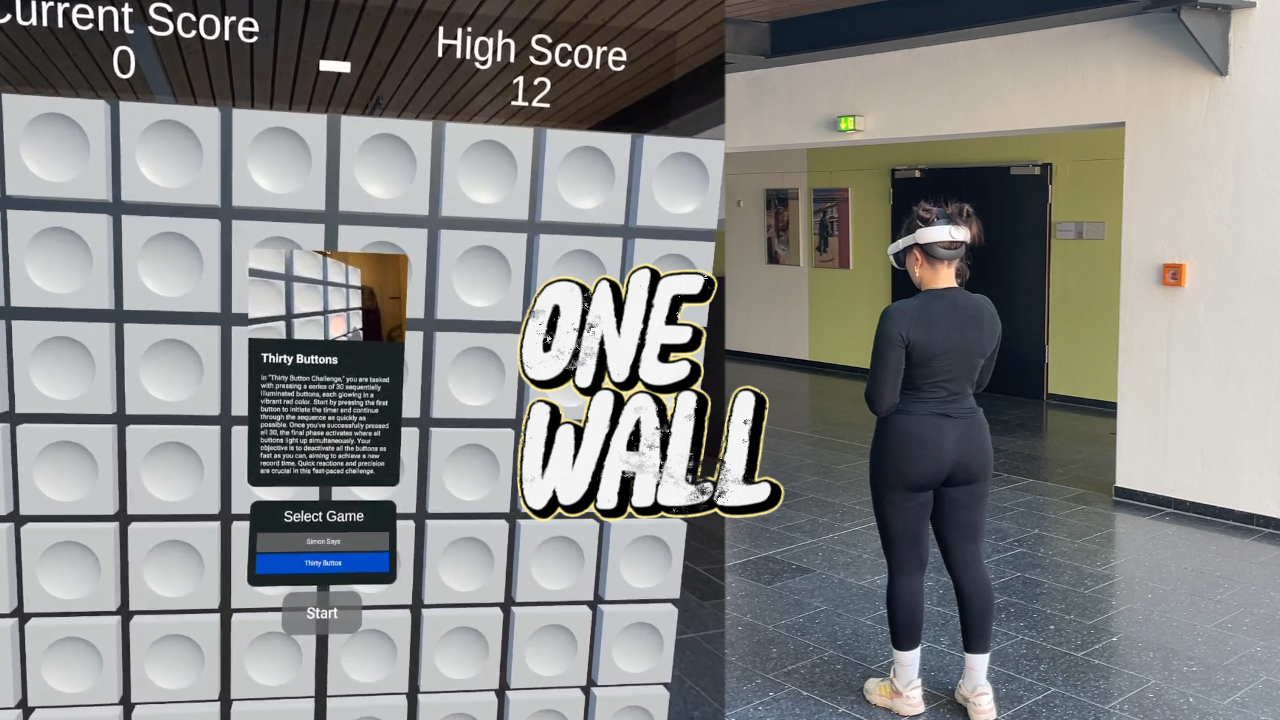
ONE WALL
-
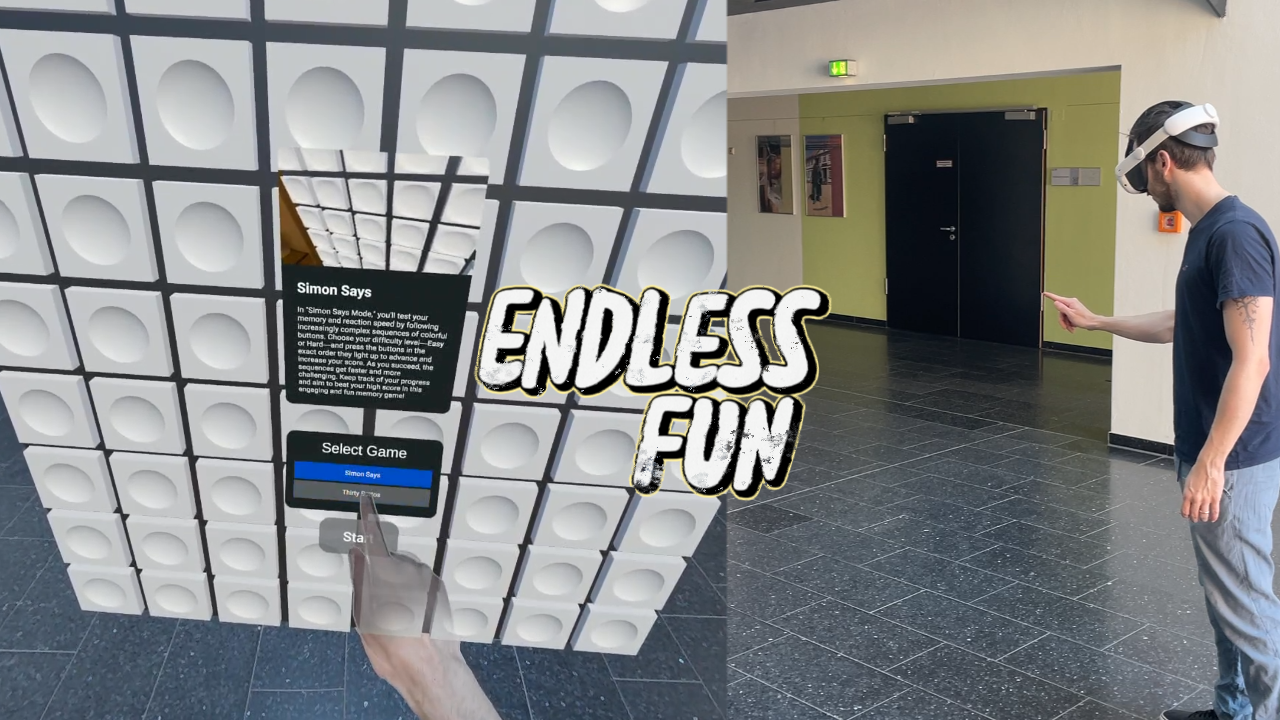
ENDLESS FUN
-
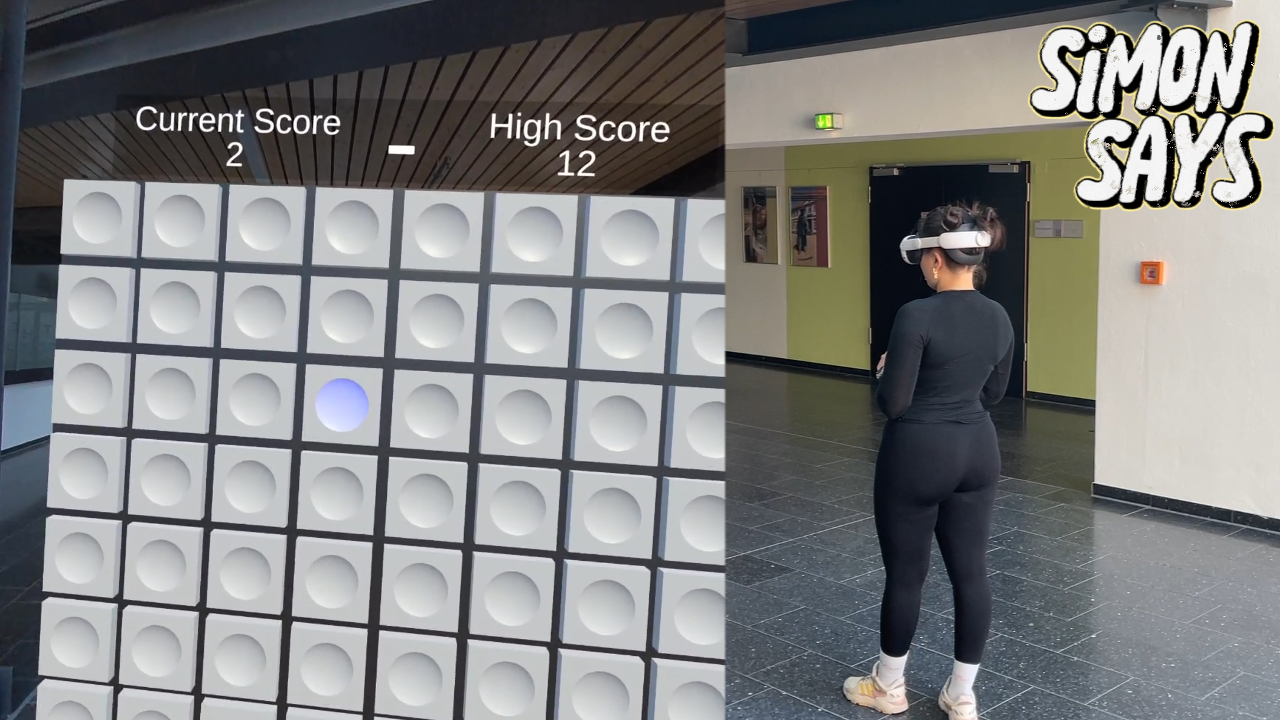
Game Mod 1: Simon Says
-
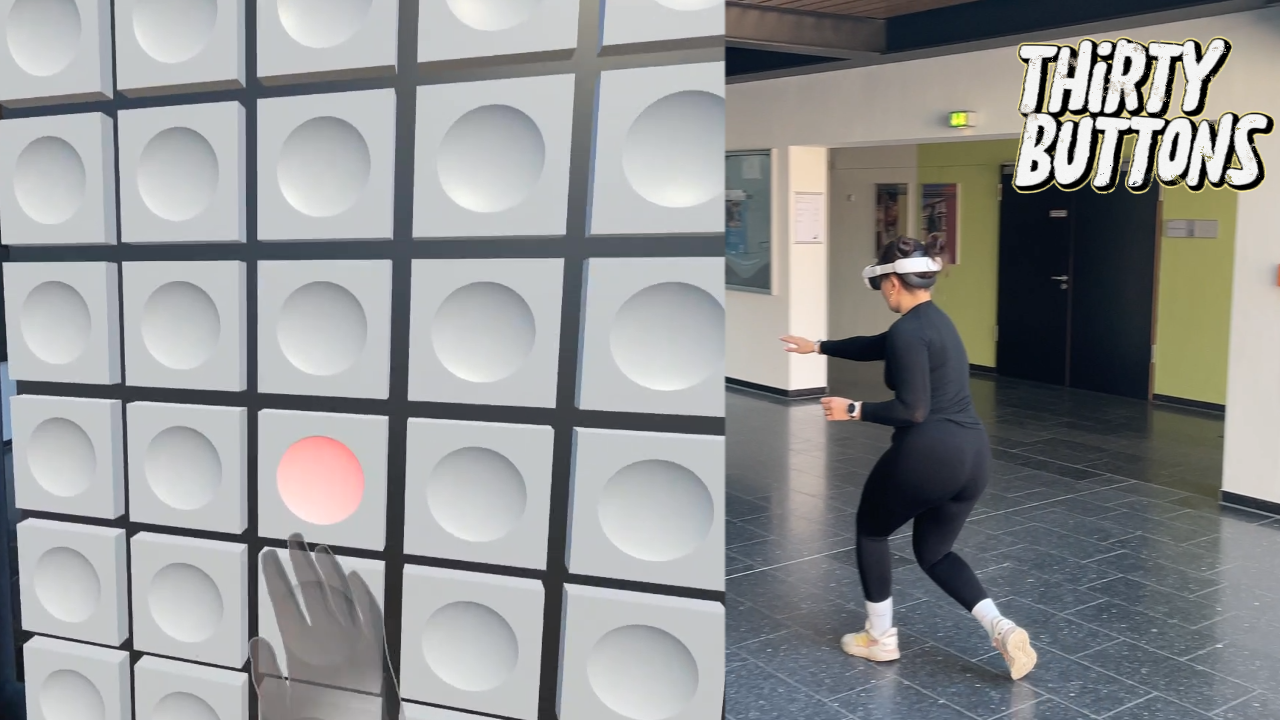
Game Mod 2: Thirty Buttons
Inspiration
The inspiration for our prototype began with a video by Ray Ng Jun Hui on LinkedIn, in which a dynamic mix of Beat Saber and Laser Dance can be seen. The idea of implementing interactive control elements in a game took root. In addition, the desire to incorporate elements from TV shows such as Takeshi's Castle into a game had been simmering in our heads for a long time. We combined interactive buttons and rotating walls to create our innovative “Punch Pad”.
Objectives (what it is)
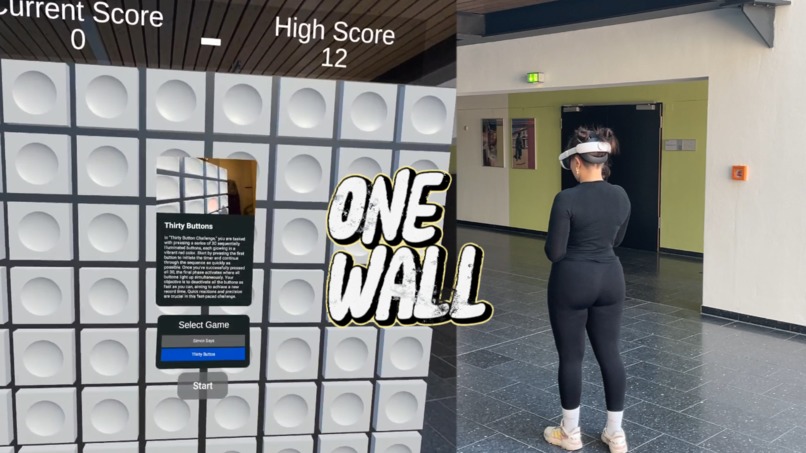
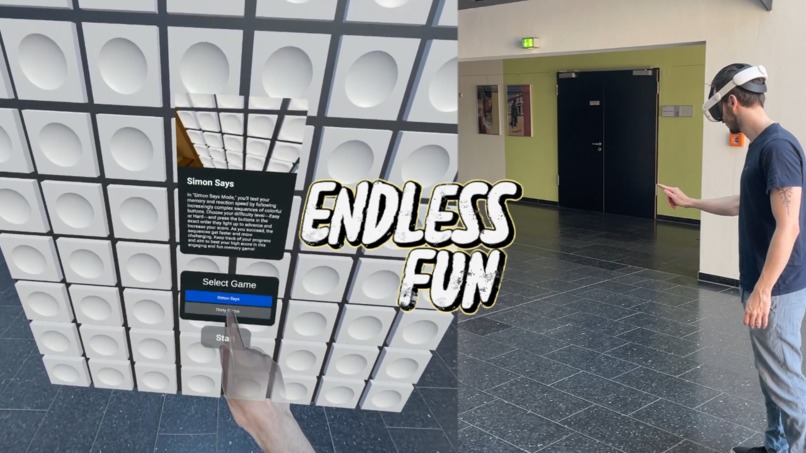
Punch Pad is a 2m x 2m wall equipped with 64 glowing buttons. This glow can be set in different colors to support different game modes.
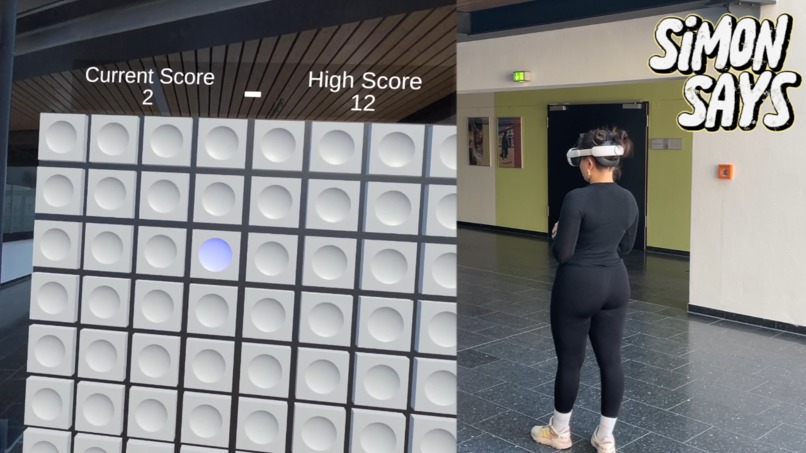
The “Simon Says” mode challenges players to memorize the buttons that light up in a predetermined order and press them in the same sequence.
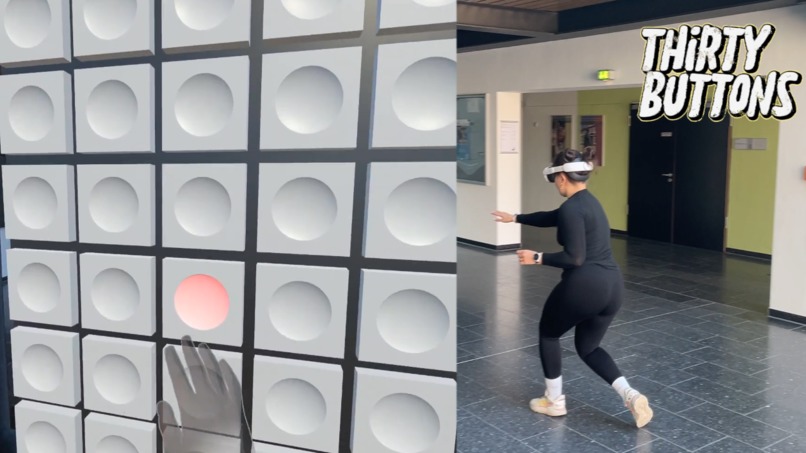
In “Thirty Buttons” mode, buttons light up one after the other and the players have to press them. A timer runs during this process. It ends with all buttons activated simultaneously. They must all be pressed as quickly as possible!
Our Users
Exercise und Casual Gamers.
How we built it
Roles within our team are defined. Once we agreed on a concept, we were able to start with the individual development processes simultaneously:
- Working on the Unity project,
- designing 3D assets in Blender and
- writing task texts and required documents.
Challenges we ran into
One obstacle that we have not yet been able to solve is the use of both hands for different colors (explicit problem: determining which hand pressed which button).
Originally, we wanted our buttons to look transparent in order to achieve a special visual aesthetic and immersion. We were unable to achieve this.
Nevertheless, we were able to develop a button that significantly improved the overall quality and flow of the game.
Accomplishments that we’re proud of
We are particularly proud of the optimization and modularity of our script system. By splitting the main functions into different manager scripts, we have created a flexible architecture. This allows us to easily implement new game modes by simply inheriting from the existing manager scripts. This structured approach makes it easier to extend and customize the game.
Also, this is the second prototype we've been able to submit here in the hackathon, and we're very proud of that! Our workflow and teamwork have received a huge boost from these completed projects, even if they are just prototypes. We have many ideas and learned new and essential things during the development of Punch Pad (e.g. the importance of acoustic resonance).
What we learned
- Background music contributes significantly to the atmosphere and immersion
- Importance of acoustic feedback (signaling the beginning, error or end)
- Videos are better than text for illustrating or conveying information. Videos help the player to understand the game mechanics faster and more intuitively.
- Image textures should primarily be used in XR applications. Working with “substance painter” and “designer” is necessary to render procedural textures.
- Movement creates immersion.
- The game flow can be hindered by an unfavorably designed UI presentation. It is essential for players to be fully immersed in the immersion.
What’s next
Further development offers numerous possible paths:
- Community development: Allow the community to add their own game modes to encourage interaction and engagement.
- Sports Modes: Develop a fitness game mode based on the “Thirty Buttons” mode, which provides workout instructions by pressing the buttons in a specific order.
- Two-Handed Mode: Introduce a new mode where players with two different colored hands must press different colored buttons.
- Customizable button properties: Allow players to customize the size and color of the buttons.
- Flexible wall positioning: Make the wall scalable and allow individual adjustments to body size.
- Variable difficulty levels: Introducing different difficulty levels through selectable number of buttons.
- Health-promoting development: Using the game to support people with health restrictions such as Parkinson's through rhythm-based movements.
- Rhythm game modes: Integration of game modes in which buttons have to be pressed in time to selected songs.
- Online leaderboard: Set up an online leaderboard to encourage competition and comparison between players.
- Local multiplayer: Implementation of local multiplayer with shared anchor points for collaborative play.
- VR mode: Introduction of a full VR mode for immersive gaming experience.
- Integration with streaming software: Develop a feature for content creators to integrate the wall and themselves into streaming software such as OBS.
- Vibration feedback.
- Controller support.
Acknowledgement
Special thanks to all our testers.
Built With
- Unity
- Blender
APIs used
- Passthrough API
- Hand Tracking
- Poke Interaction
- Virtual Hands
Sources
Project Members
- Dennis Joch – Coder (https://devpost.com/dennisjoch77)
- Lena Lotz - Narrative (https://devpost.com/bewtielie)
- Dorothee Kroll – 3D Design (https://devpost.com/chopinsuey)


Log in or sign up for Devpost to join the conversation.