-
-
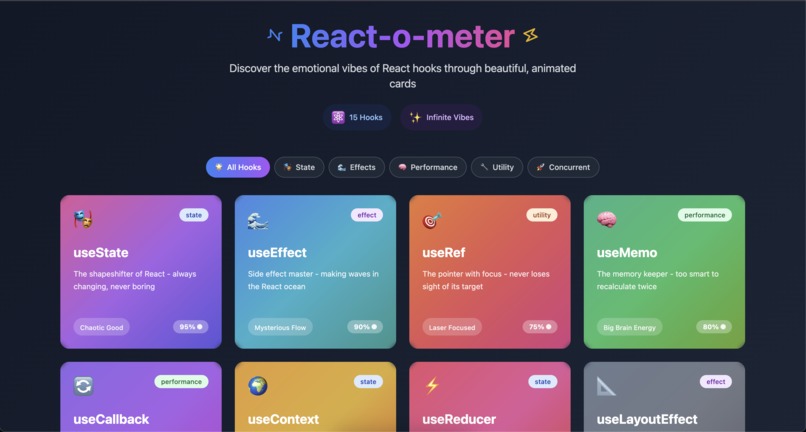
landing page
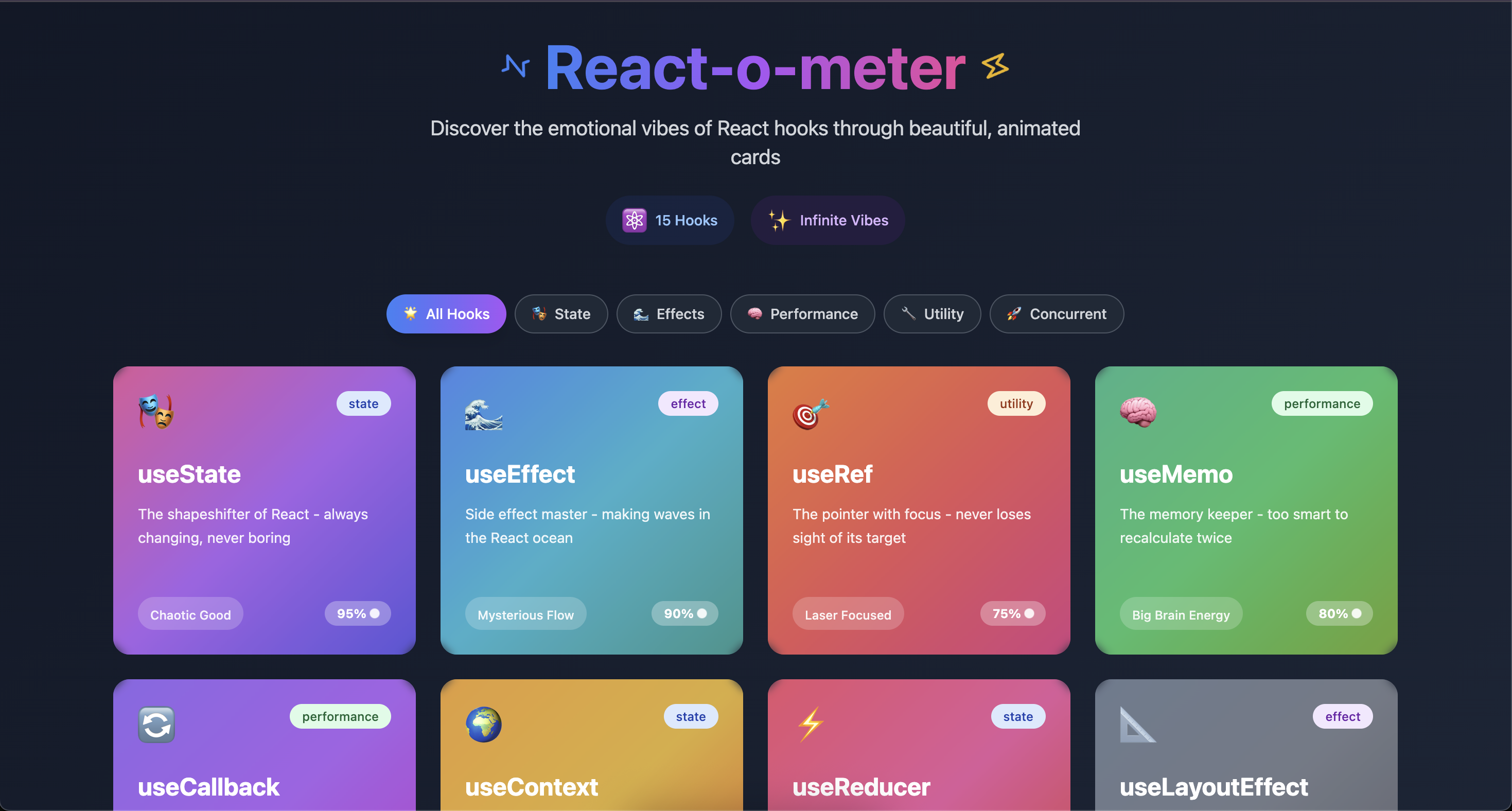
React-o-meter 🎛️
Inspiration
As frontend developers, we realized every React hook has a personality — sometimes helpful, sometimes chaotic, and often a bit emotional 😅. From useState’s calm to useEffect’s sneaky rerenders, we wanted to visually express the emotional "vibes" of hooks. Thus, React-o-meter was born — a fun, interactive way to feel your code.
This project was created for the Vibe Code Hackathon, where the goal wasn’t just functionality, but aesthetic + emotion + creativity. So we turned React’s most used APIs into mood boards.
What it does
React-o-meter lets developers:
- Select a React hook (
useState,useEffect, etc.) - See a unique animated vibe page for each one
- 🎨 Custom background + animations
- 💬 Witty one-liner quote
- 😵 Emoji or meme
- 🎵 Matching sound (optional)
- Bonus: Some hooks even have mood graphs or GIFs to reflect their mental toll 😂
It’s part meme, part tool, and all vibes.
How we built it
- Frontend: React + TailwindCSS for layout and styling
- Animations: Framer Motion for smooth transitions and "vibe shifts"
- Logic: Each hook maps to a config object with theme, quote, emoji, and animation type
- Audio: Optional sound FX tied to hook vibes using
useSound - No Backend: All vibes are frontend-only — portable and deployable anywhere
Challenges we ran into
- Making sure animations reflected the feeling of each hook without being overwhelming
- Balancing performance with dynamic visuals and audio
- Keeping it fun yet polished, especially under time pressure
- Deciding whether
useEffectshould look like an explosion or a loop of existential dread 😅
Accomplishments that we're proud of
- Created an app that’s fun, relatable, and demo-friendly
- Built a solid frontend-only experience with zero backend friction
- Nailed the vibe challenge with unique visual styles for each hook
- It makes devs laugh, reflect, and feel seen — that’s the goal 🙌
What we learned
- Aesthetic design + emotional storytelling = powerful tech experience
- Framer Motion can do a lot to enhance user emotion
- You don’t need a backend to build something that sticks
- Hackathons are not just about code — they’re about connection and expression
What's next for React-o-meter
We want to take this further by:
- Letting users submit their own hook vibes
- Adding more detailed "developer mood analytics" (charts, logs, theme tracking)
- Introducing Dark Mode Insanity Mode — for debugging at 2AM
- Maybe even building a VS Code extension that reacts to how your code changes feel in real-time
🌀 React is full of feelings. With React-o-meter, you don’t just code it — you feel it.
Built With
- react
- tailwind


Log in or sign up for Devpost to join the conversation.