
Inspiration
ReachOut was born out of frustration with traditional dating apps. Most platforms are filled with inactive profiles, ghost accounts, hidden paywalls, and a lack of transparency. We wanted to create a safer, more intentional space where people can connect genuinely—starting with a transparent dating experience and expanding into a broader ecosystem for career opportunities and content monetization.
What it does
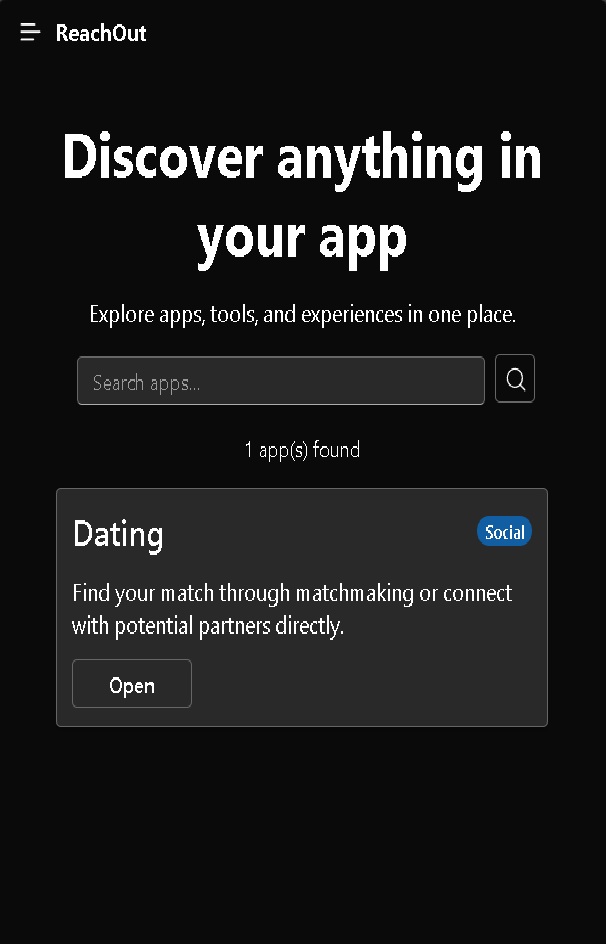
ReachOut is an all-in-one social platform launching first with a transparent dating experience.
- Active User Guarantee: Highlights candidates active within the last 3 days to reduce dead accounts and ghosting.
- Precise & Flexible Filters: Users can filter matches by age, distance, and financial preferences.
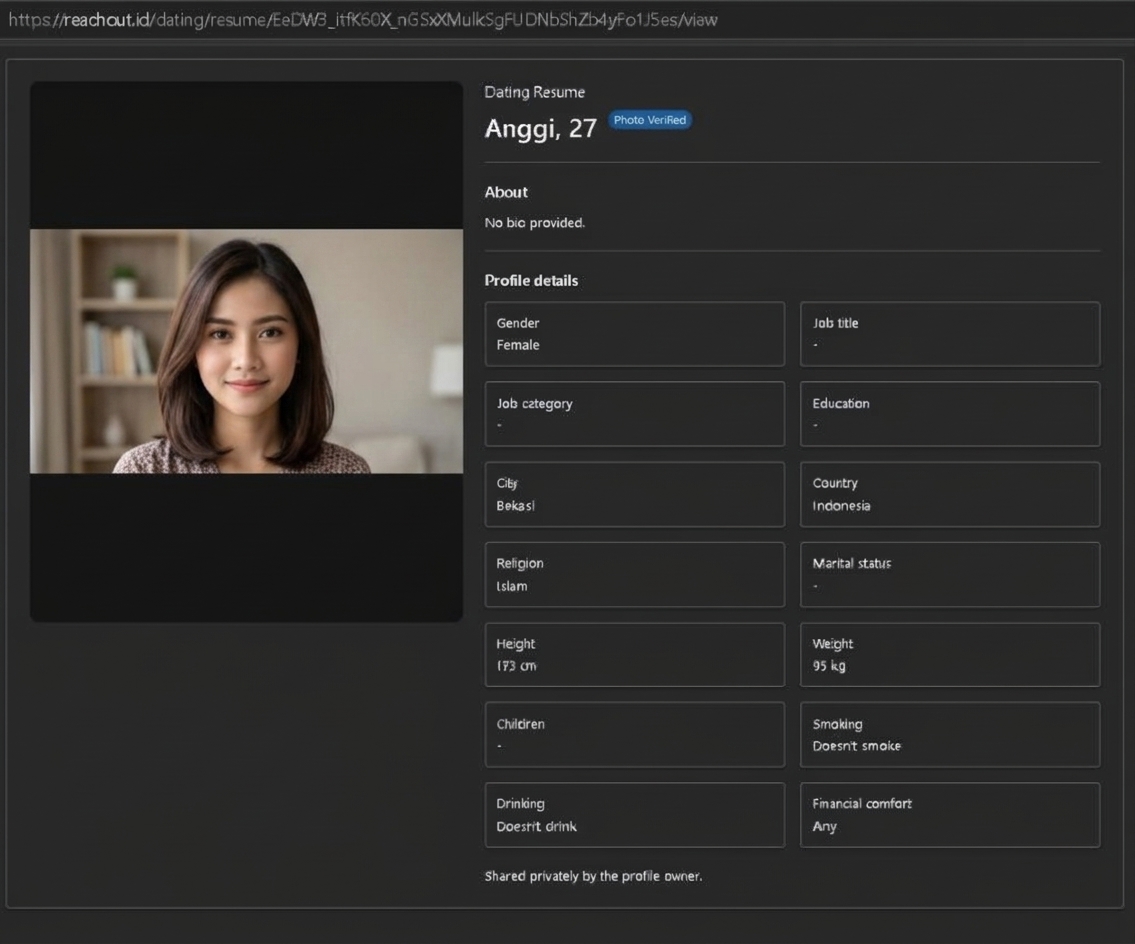
- Private Dating CVs: Users can create and securely share private, link-based Dating CVs for more efficient connections.
- Secure Face Verification: A guided selfie-and-liveness flow helps confirm that profile photos belong to a real, present person, reducing catfishing.
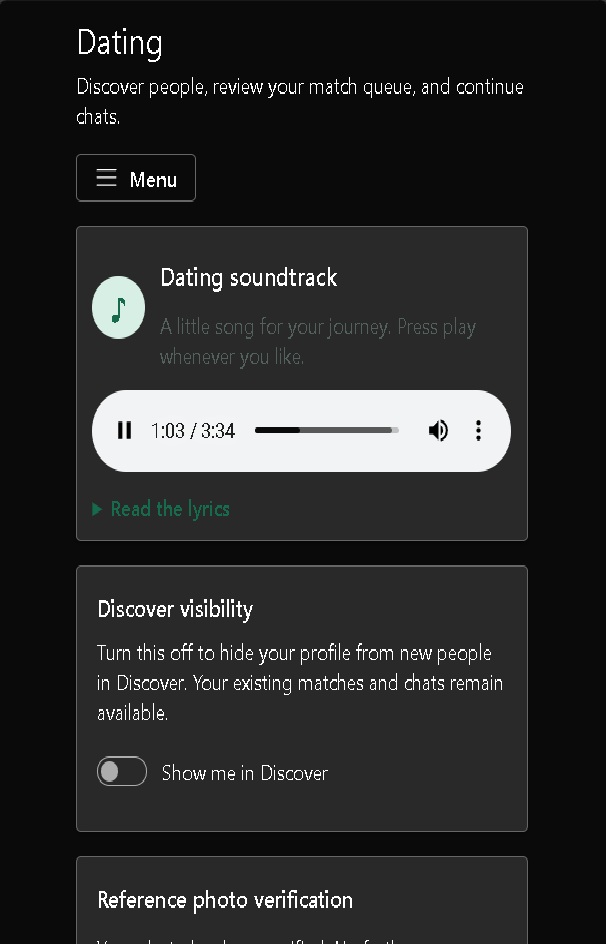
- Vibe Soundtrack: Built-in background audio makes browsing profiles feel calmer and more enjoyable.
- Future-Ready Platform: The current architecture is designed to support upcoming job discovery and creator monetization modules.
How I built it
ReachOut is built as a full-stack web application using C#, ASP.NET Core, and Blazor.
- Frontend: Built with Blazor Razor Components, using reusable UI components, responsive layouts, and a clean soft-flow visual style.
- Backend: Powered by ASP.NET Core services and C# business logic for user management, profile handling, matching filters, verification workflows, and secure link generation.
- Authentication: Uses ASP.NET Core cookie-based authentication to manage signed-in sessions and protect private pages and APIs.
- Face Verification: Implements a guided camera capture flow with real-time feedback for lighting, face positioning, and image quality. The submitted selfie is checked for liveness and compared against the user’s profile photo before verification status is granted.
- Security & Privacy: Verification media is handled through controlled upload endpoints, server-side validation, access checks, and limited retention practices. Users only see a verification badge or status—not other users’ raw verification media.
- Database: Stores user profiles, preferences, activity timestamps, Dating CV metadata, and verification status in a structured relational model.
Challenges I ran into
- Making face verification smooth: Early verification flows can feel invasive or fail often due to poor lighting, blurry images, or incorrect face positioning. ReachOut addresses this with step-by-step guidance, live camera feedback, clear retry prompts, and a short verification flow.
- Preventing spoofing: A normal photo upload is not enough to prevent impersonation. The verification process uses liveness-oriented checks to help ensure the face is captured from a live person rather than a static image or screen replay.
- Balancing safety and privacy: The platform needs strong verification without exposing sensitive biometric data. ReachOut separates the public verification result from private verification media and restricts access through authenticated, server-side checks.
- Improving match relevance: Filters alone can produce too many or too few results. ReachOut combines user preferences with recent-activity rules so the profiles shown are more relevant, available, and useful.
- Session security: Because ReachOut uses cookie authentication rather than JWT, protecting session cookies, enforcing authorization, and keeping authentication state consistent across Blazor pages were important considerations.
Accomplishments that I'm proud of
- Built a functional dating platform end-to-end with C#, from the Blazor interface to the ASP.NET Core backend.
- Designed a face verification experience that is secure but still fast and user-friendly.
- Improved match relevance by refining filters and activity rules: Combined age, distance, financial preferences, and the “active within the last 3 days” rule to surface profiles that are more likely to be relevant, available, and useful to users.
- Created the unique Dating CV feature, allowing users to introduce themselves more transparently and efficiently.
- Delivered a polished, free core dating experience with privacy-first verification.
What I learned
- Trust drives retention: In dating apps, verification, transparency, and privacy protections matter as much as matching.
- UX determines verification success: Clear instructions, instant feedback, and quick retries are essential for users to complete face verification successfully.
- Security must be layered: Camera guidance, liveness checks, server-side validation, authenticated access, and careful data handling work together to make verification trustworthy.
- Relevance matters more than volume: Showing more profiles is not always better. Combining meaningful filters with activity signals helps users discover people who are both compatible and likely to engage.
- Cookie authentication fits Blazor well: ASP.NET Core’s cookie authentication integrates naturally with Blazor’s authentication and authorization model.
What's next for Reachout
- Stronger Verification: Add passive liveness detection, risk-based re-verification, and clearer verification badges.
- Smarter Matching: Improve recommendations using activity signals, preferences, interaction patterns, and match-quality feedback.
- Job Discovery Module: Launch integrated job boards so users can explore career opportunities within ReachOut.
- Creator Monetization: Introduce viral video clipping and content monetization features.
- Community Expansion: Scale user acquisition and build social tools that unify dating, networking, and career growth.

