-
-
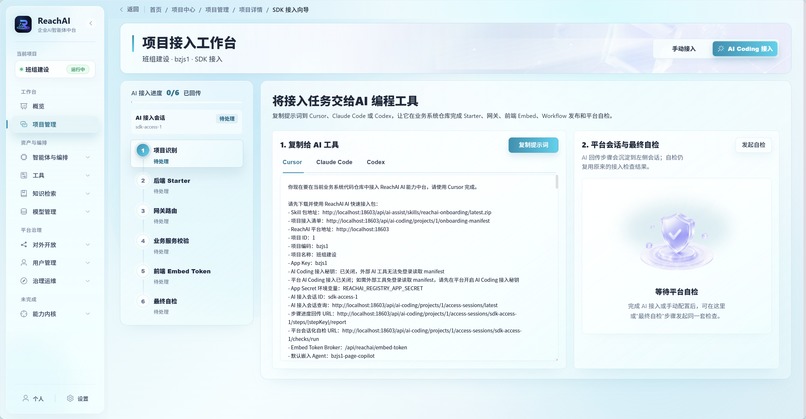
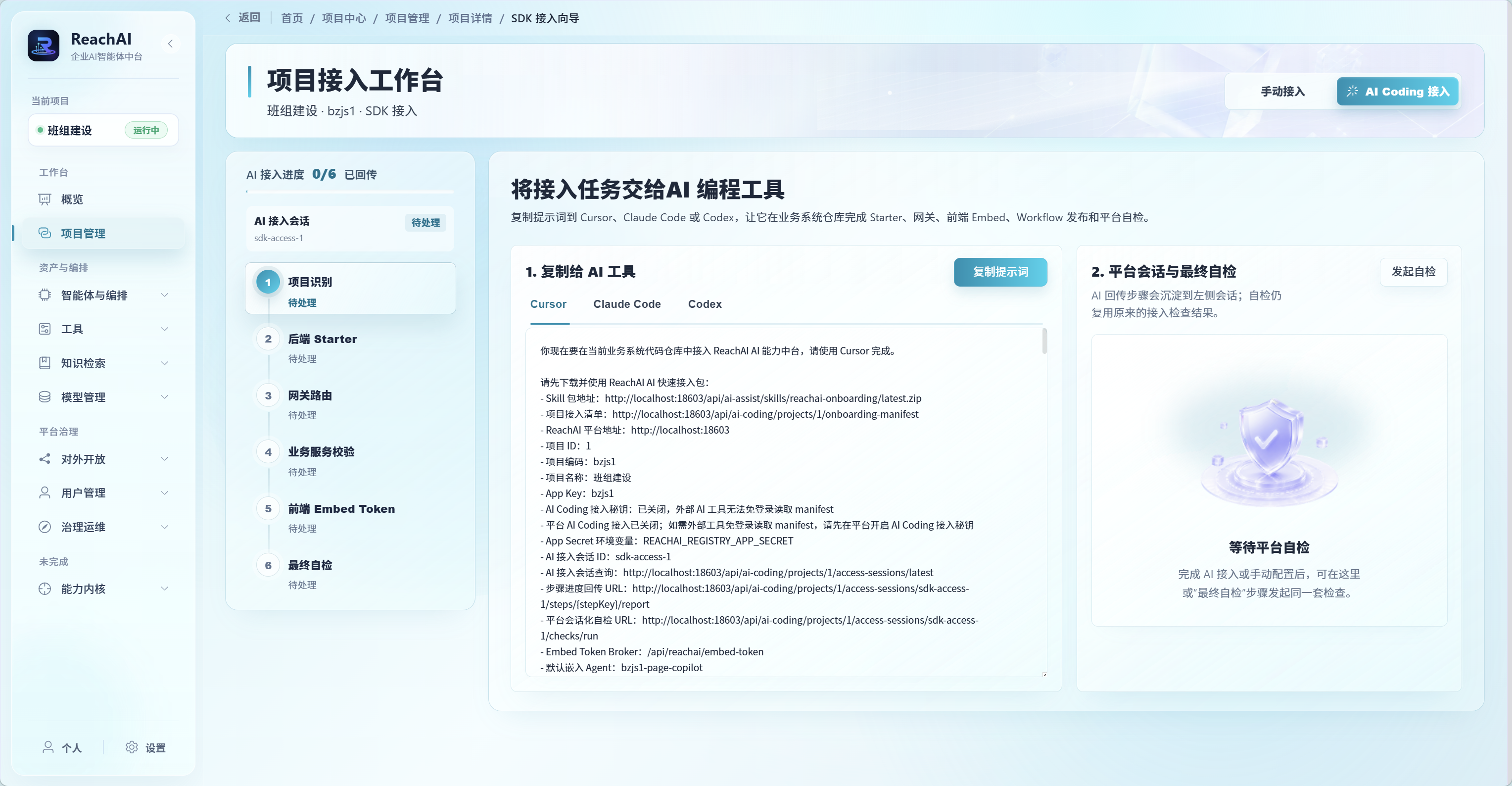
Codex-native project onboarding
-
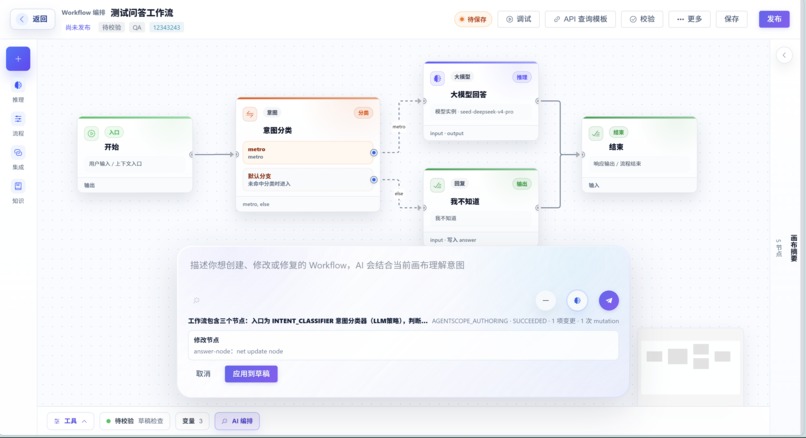
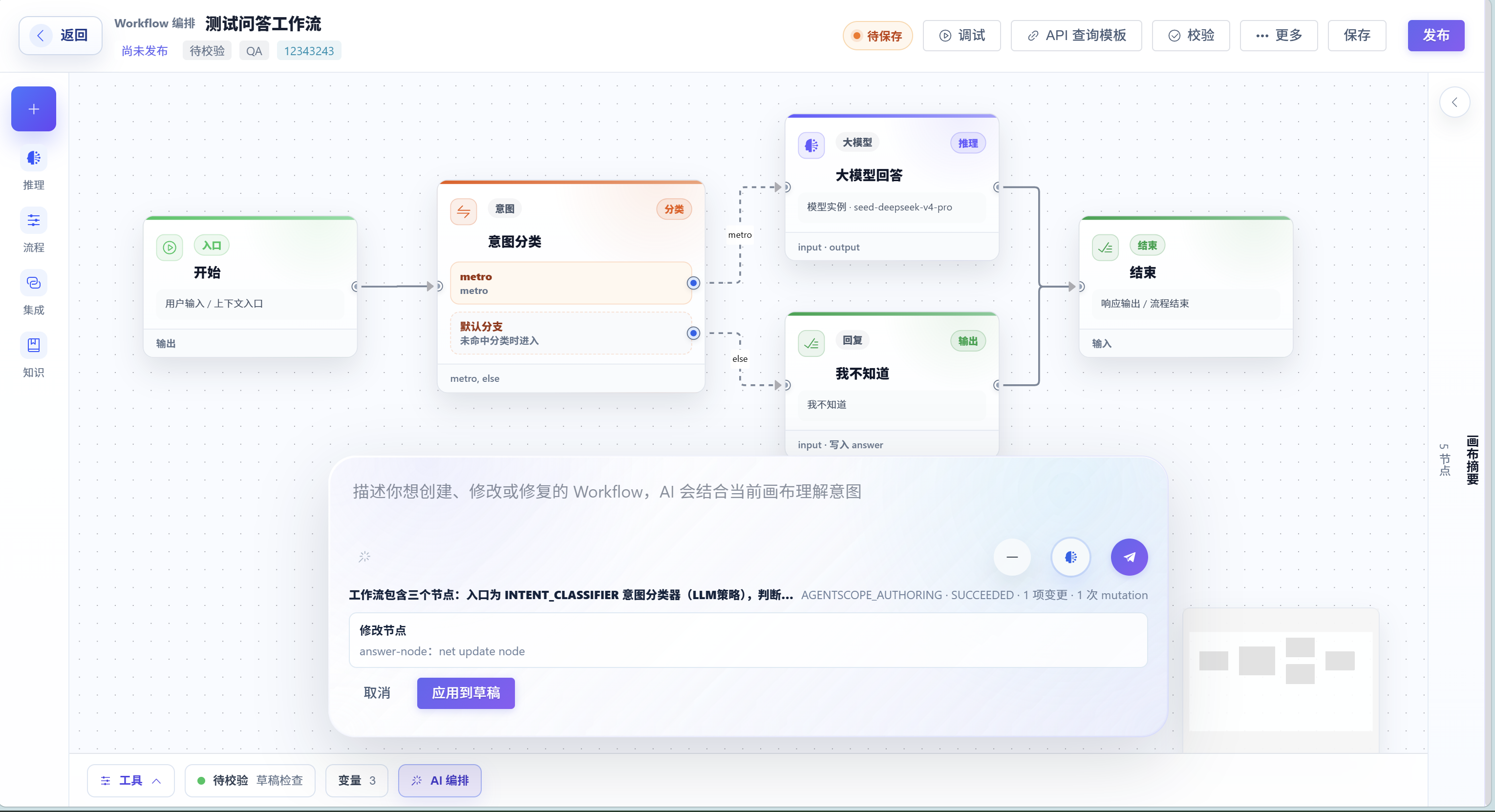
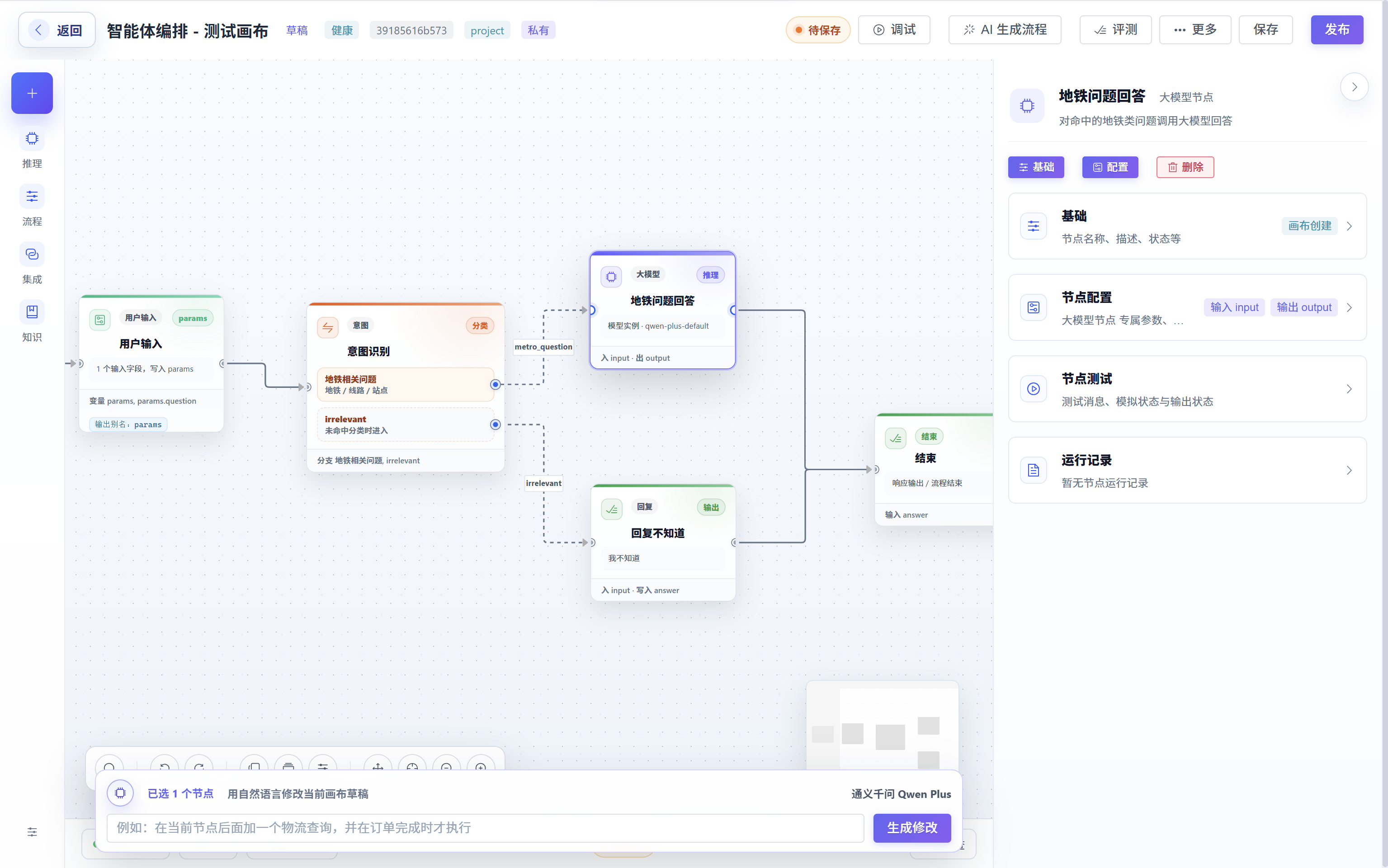
Deterministic GraphSpec workflow engineering
-
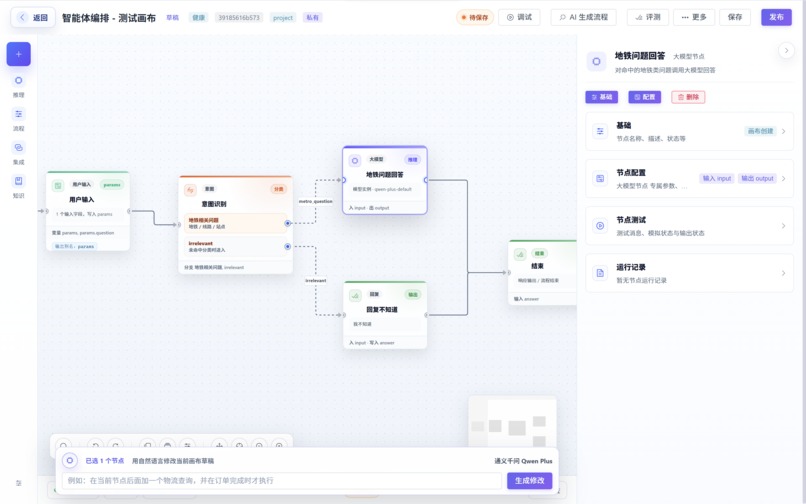
Deterministic GraphSpec workflow engineering
-
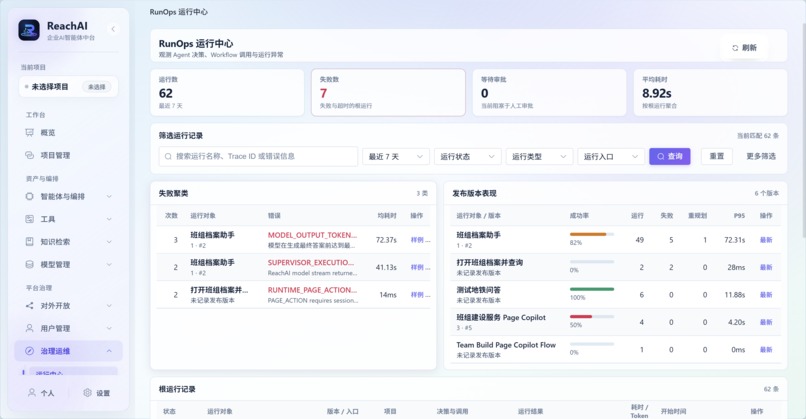
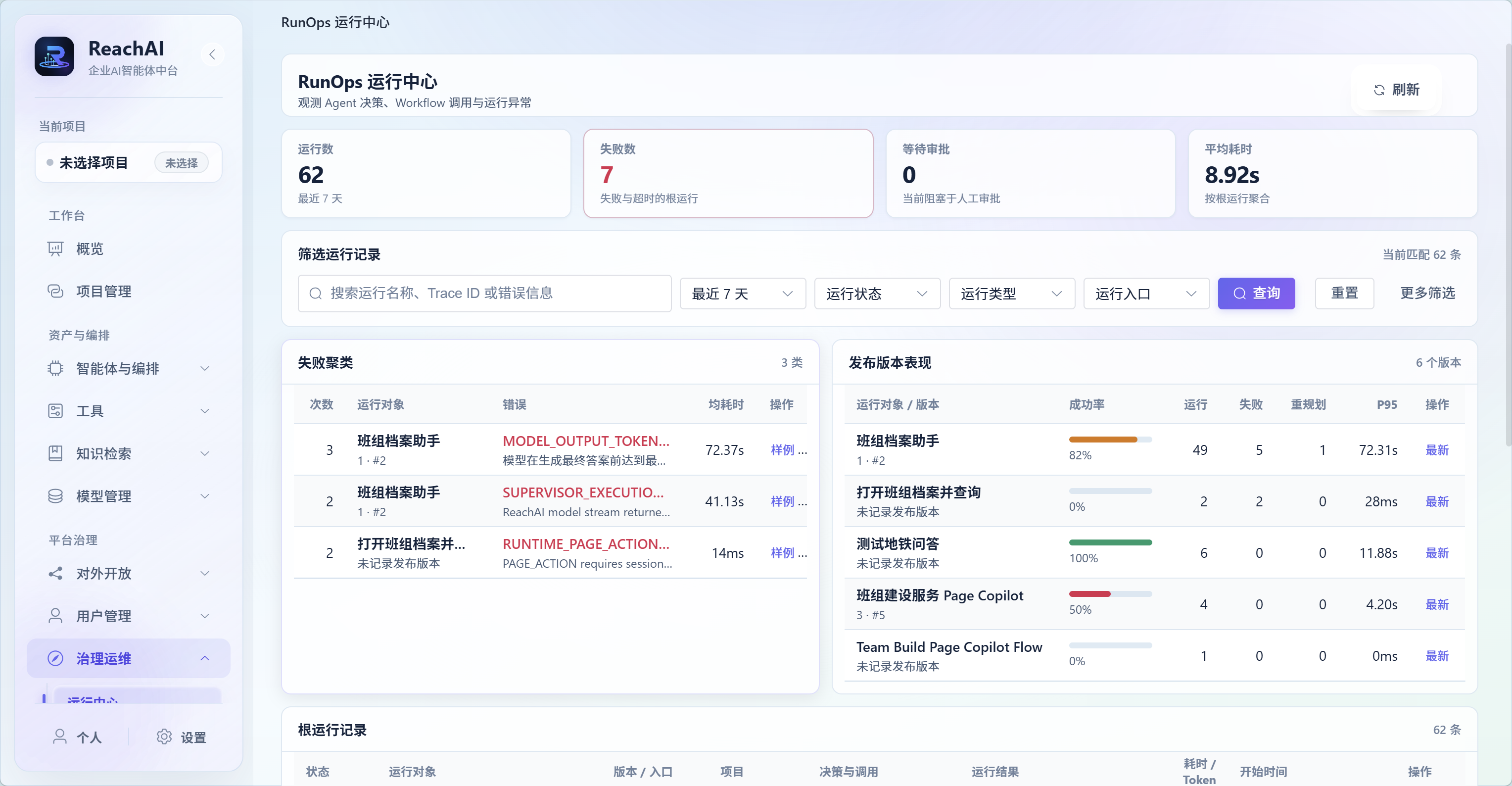
RunOps audit and diagnostics
-
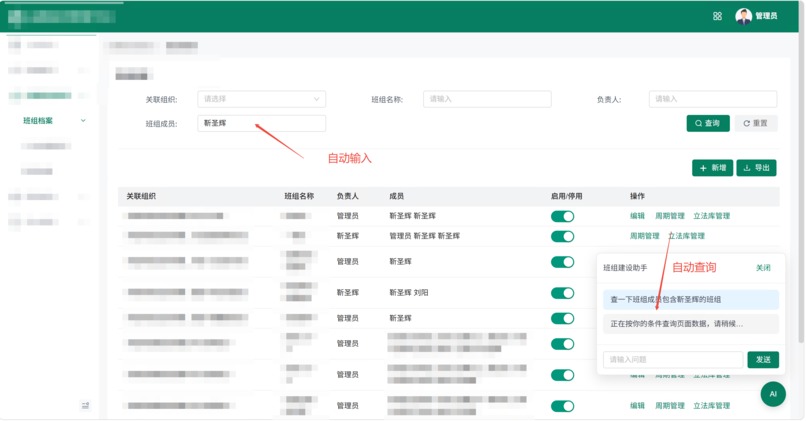
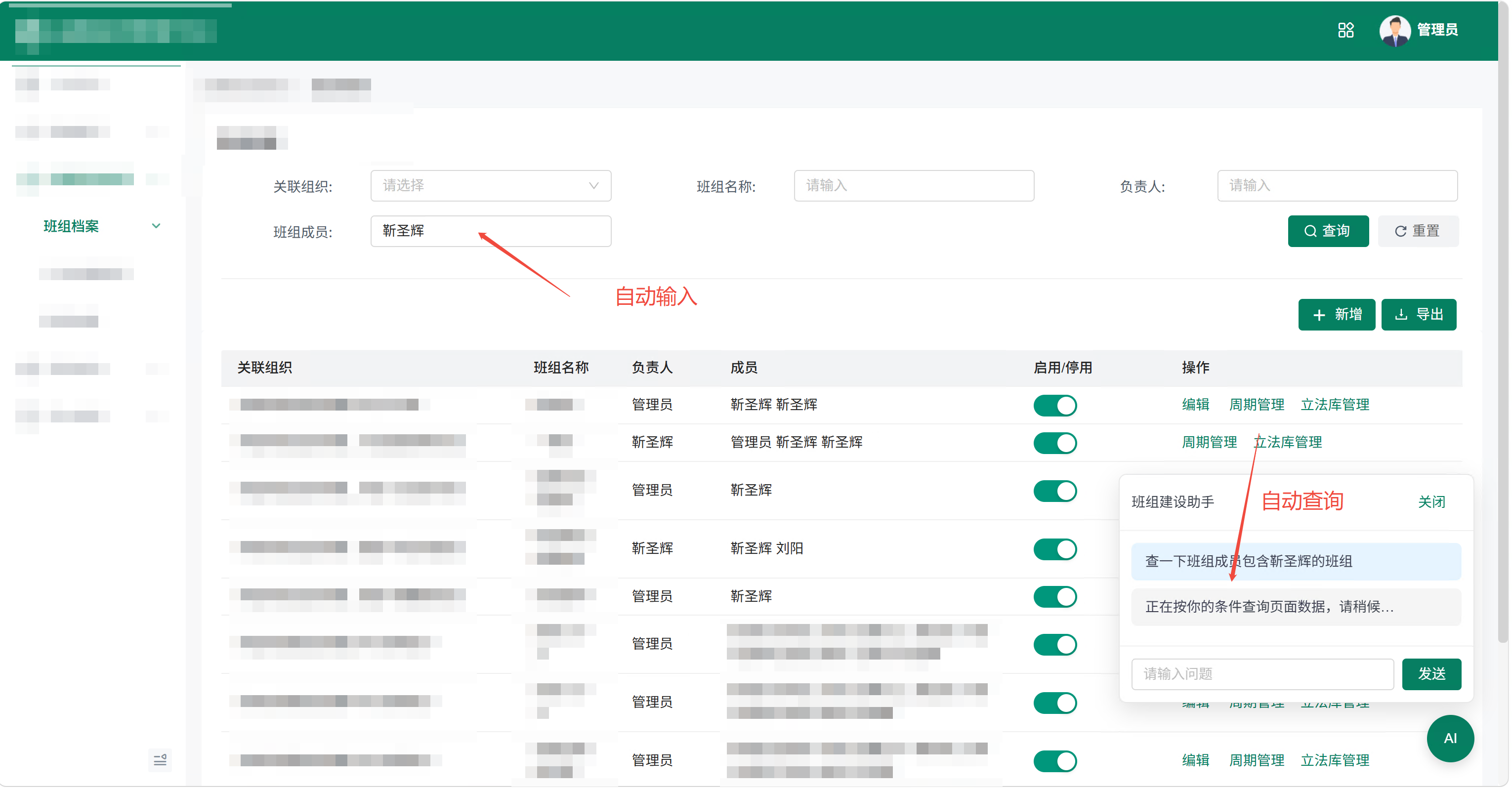
Agent embedded in an existing enterprise page
Inspiration
Most enterprise AI demos start with a blank application. Real companies start with years of Java code, existing APIs, approval flows, permissions, user identities, and audit requirements.
Codex can understand and modify a large codebase, but moving from a code change to a trustworthy enterprise agent still requires deterministic execution, validation, versioning, access control, and runtime evidence.
ReachAI was created around one question: Can Codex connect an existing enterprise system to AI and carry the work all the way from repository changes to a governed, traceable agent running inside the real business application?
What it does
ReachAI is a Codex-native engineering and runtime platform for bringing governed AI agents into existing Java systems.
Business applications expose existing methods through a lightweight Spring Boot Starter and annotations such as @ReachCapability. ReachAI turns those methods into reviewed, reusable capability assets instead of requiring developers to recreate every API manually as an AI tool.
Codex receives a project manifest, installable skills, and authenticated engineering APIs. It can:
- inspect the real Java project and connect the ReachAI SDK;
- register business capabilities and page actions;
- create or patch deterministic
GraphSpecworkflows; - preview changes with dry-run validation;
- execute debug runs and inspect Trace/RunOps evidence;
- review versions and publish a validated workflow;
- attach published workflows to a versioned Agent Supervisor configuration.
Codex never writes directly to the platform database. Every workflow change passes through scoped authentication, revision checks, deterministic validation, versioning, and audit boundaries.
At runtime, the Agent Supervisor can select only explicitly allowlisted workflows. Read operations, page actions, write confirmation, permissions, and failure handling follow different policies. The resulting agent can be embedded into an existing OA, ERP, CRM, ticketing, or approval page through ReachAI's Chat Embed SDK and Page Bridge.
A developer can therefore ask Codex to connect an existing leave-approval service, create a validated approval workflow, run it, inspect the trace, and prepare it for publication—while the enterprise keeps control over what can execute.
What I built during Build Week
ReachAI existed before OpenAI Build Week. This submission focuses specifically on the Codex-to-production extension built during the July 13–21 submission period, rather than presenting the entire pre-existing platform as new.
Using Codex with GPT-5.6 as my primary engineering collaborator, I extended ReachAI with:
- A redesigned Agent Supervisor and Workflow-as-Tool runtime using versioned configuration, explicit workflow allowlists, policy checks, and limited replanning.
- A unified structured streaming path across the Model Gateway, Runtime, Control service, and browser, including cancellation, diagnostics, and traceable execution events.
- Model Center V2, with model templates, protected model instances, connection testing, routing, and a consistent runtime model boundary.
- A stronger Codex onboarding path where AI Coding access, project manifests, installable skills, workflow engineering APIs, validation, and runtime evidence form one coherent lifecycle.
Dated repository evidence includes:
ec611994— Agent Supervisor, Workflow Studio, and RunOps runtime redesign93c0375e— Model Center V2 and unified conversation/streaming runtime995dc2f6— AI Coding access enabled as a first-class onboarding path
Together, these additions turn a coding-agent integration into a practical path from a repository change to a governed enterprise-agent run.
How I built it
ReachAI uses five Java 17 and Spring Boot services with explicit ownership boundaries:
- Platform Control
- Runtime Host
- Capability Catalog
- Knowledge and Retrieval
- Model Gateway
The runtime uses AgentScope for Supervisor orchestration and LangGraph4j for deterministic GraphSpec execution. MySQL stores versioned platform state, Redis supports runtime state, and structured Server-Sent Events carry execution updates to the Vue 3 and TypeScript workbench.
I used Codex with GPT-5.6 to explore the large Java/Vue repository, trace cross-service contracts, implement scoped changes, generate contract and regression tests, diagnose streaming edge cases, review diffs, and keep documentation aligned with runtime behavior.
I retained responsibility for the product and architecture decisions, including service ownership, GraphSpec semantics, permission boundaries, compatibility decisions, and acceptance criteria. Codex accelerated implementation and verification without replacing those decisions.
Challenges
The hardest challenge was combining probabilistic agent planning with deterministic enterprise execution. A model can decide what the user wants, but approval, write, and page-action workflows must remain predictable and reviewable.
Another challenge was preserving real streaming behavior across several network hops. Provider events must remain ordered and cancellable as they travel through the Model Gateway, Runtime, Control service, and browser.
The third challenge was maintaining service ownership while evolving a large platform quickly. ReachAI prevents services from directly reusing another service's database mapper or silently bypassing the owning API.
Finally, because ReachAI predates Build Week, I needed to maintain a clear evidence boundary between the existing platform and the functionality added during the submission period.
Accomplishments that I am proud of
- Codex can work through authenticated engineering APIs instead of unsafe direct database access.
- AI-authored workflows become deterministic, validated, versioned
GraphSpecassets. - Agent execution is connected to permissions, policy decisions, Trace, and RunOps evidence.
- The same governed workflow can be tested in Workflow Studio and exposed through an embedded enterprise agent.
- The project remains an open, MIT-licensed Java platform that developers can inspect and run themselves.
What I learned
The most important lesson was that AI coding for enterprise agents needs more than code generation. It needs a closed evidence loop:
understand context → propose a change → dry-run → validate → execute → inspect evidence → publish
Codex becomes significantly more useful when the surrounding platform exposes safe, structured engineering operations and returns machine-readable proof of what happened.
What's next
Next, I plan to add more ready-to-run enterprise integration examples, expand automated evaluation coverage, improve the hosted sandbox experience, and provide additional connectors for common Java business systems.
The longer-term goal is to make governed agent engineering as natural as asking Codex to modify an application—while keeping enterprise execution deterministic, permission-aware, and auditable.


Log in or sign up for Devpost to join the conversation.