-
-
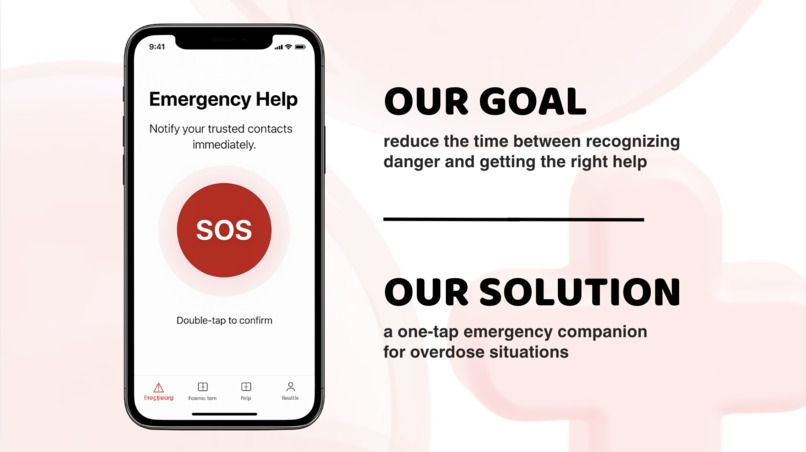
Goal
-
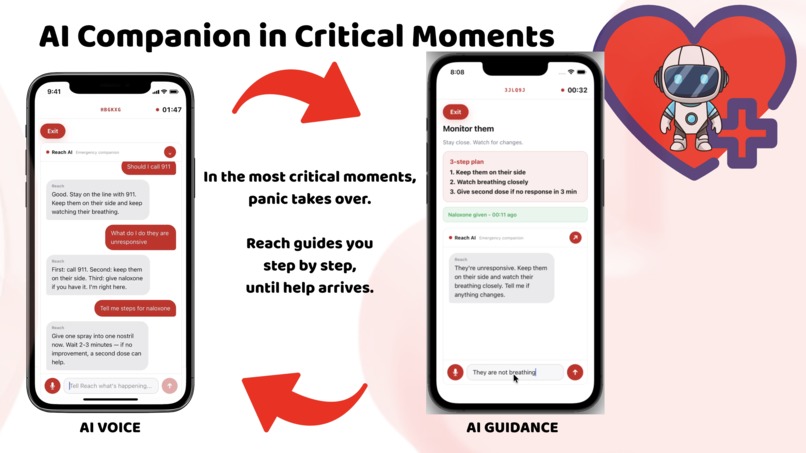
AI Chatbot
-
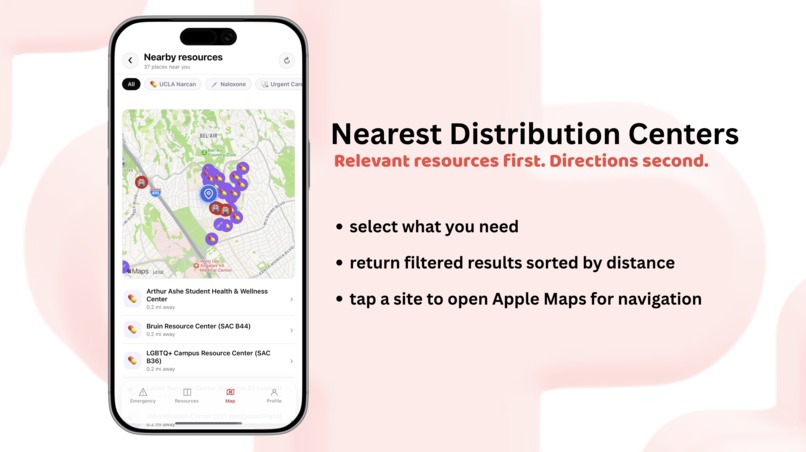
Custom map system
-
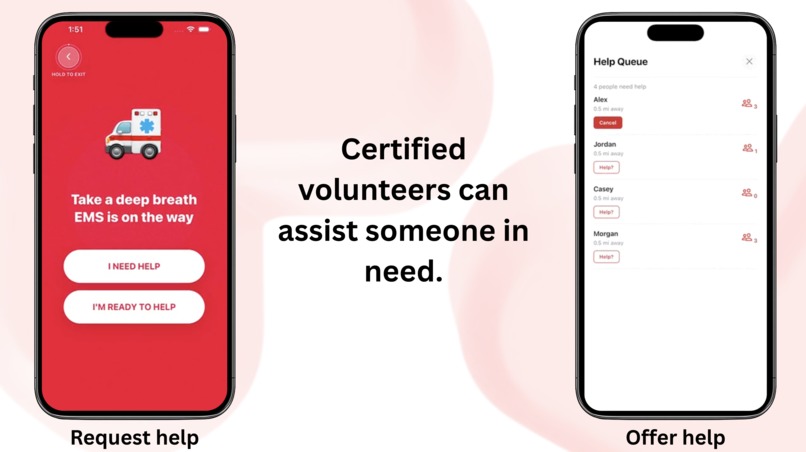
Leveraging community
Inspiration
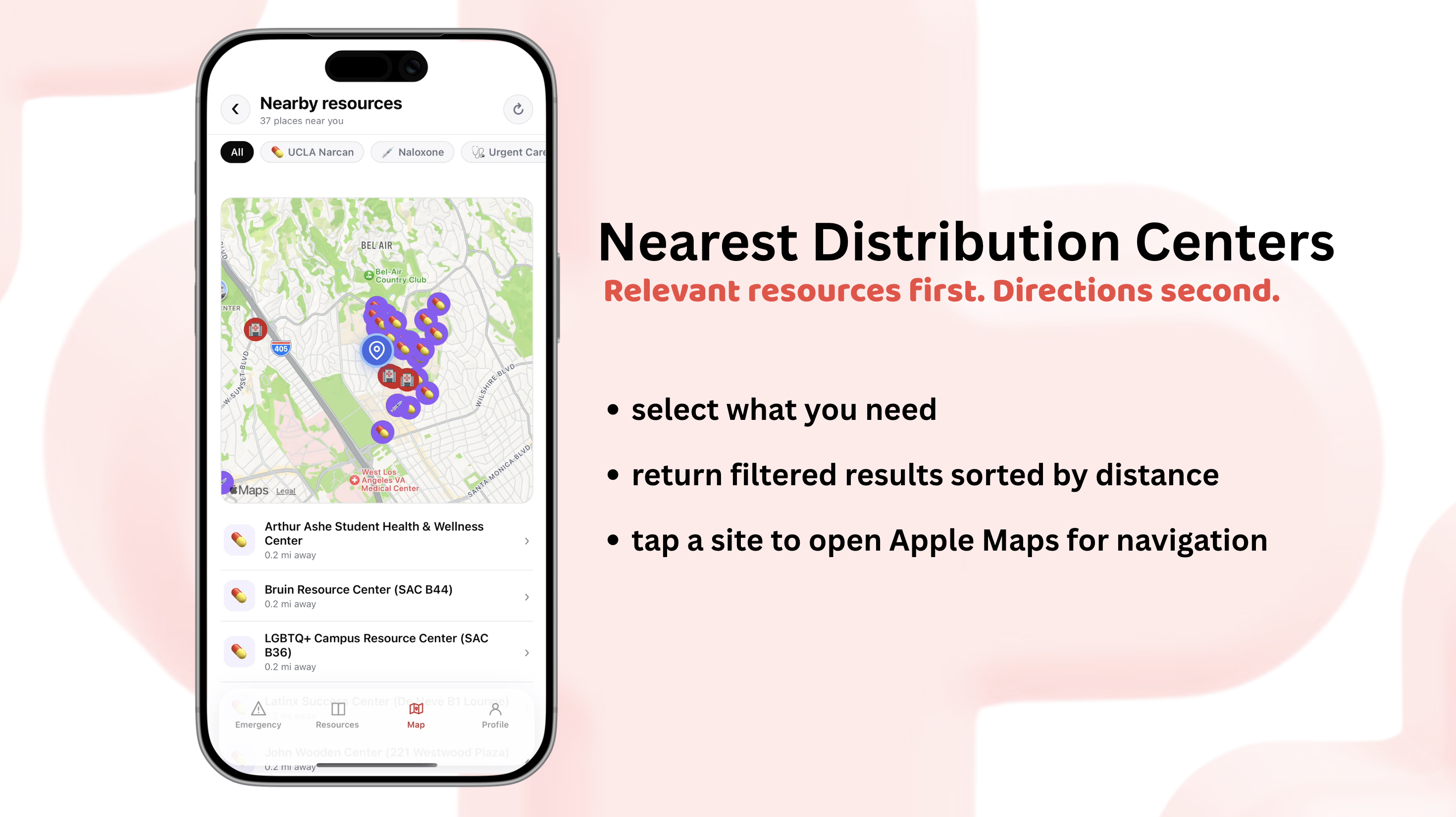
Reach was inspired by the gap between available emergency resources and the people who need them most. During an overdose or crisis, these resources may be nearby, but locating them quickly can be difficult, confusing, and overwhelming.
End Overdose’s mission is to prevent drug-related deaths through education, training, and access to lifesaving tools like naloxone and fentanyl test strips. The problem is not always that resources do not exist. Often, the problem is that people cannot access the right resource quickly enough in a high-stress moment.
We built Reach to address this gap by creating a calm, accessible, need-first safety tool that helps users take the next right step: activating support, administering proper bystander care, and connecting to relevant overdose prevention and harm reduction resources.
What it does
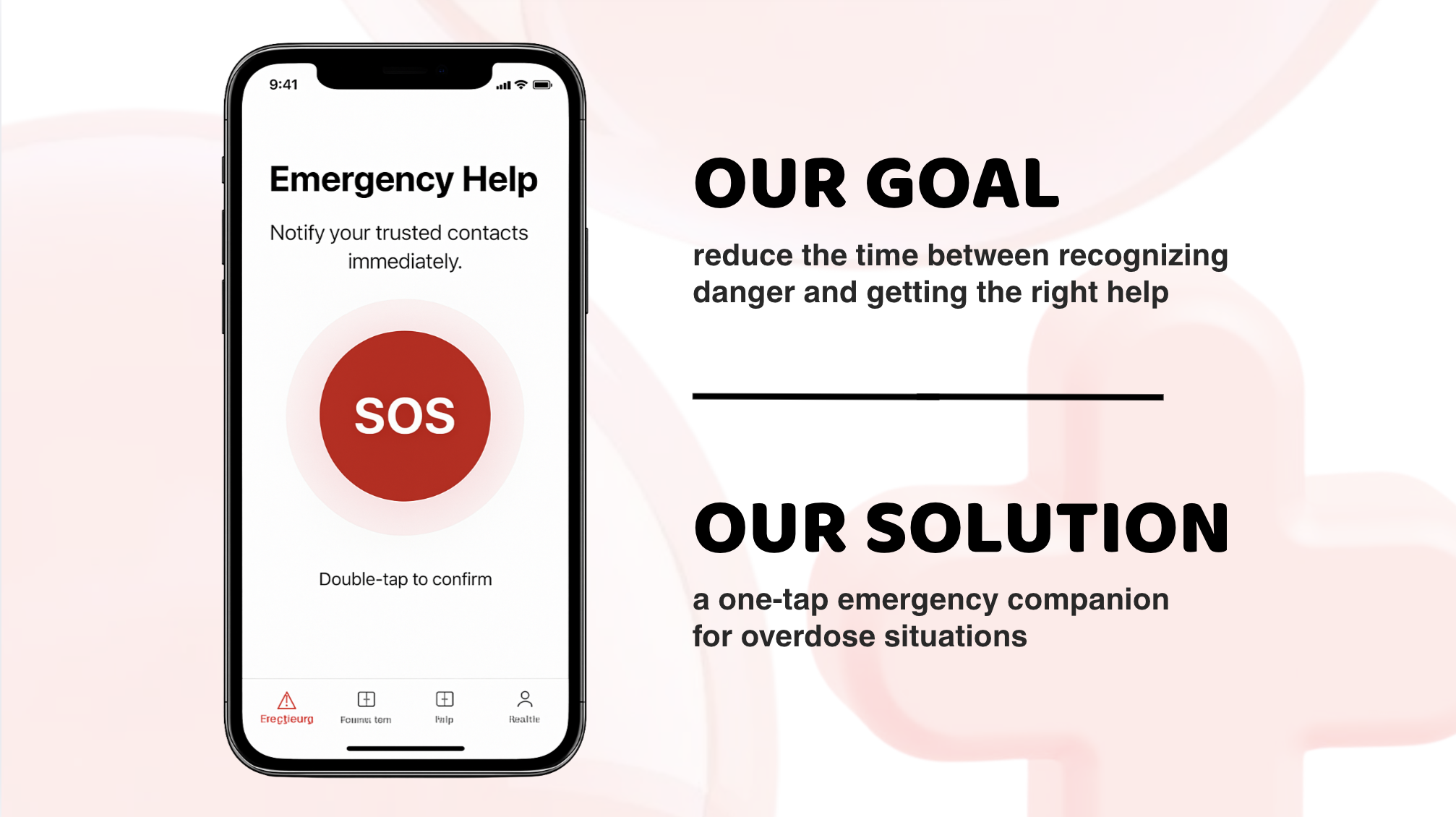
Reach is a mobile safety app designed to help people respond faster during overdose-risk and crisis situations.
The app centers on a simple SOS flow. When a user starts an emergency, Reach enters an active emergency mode that streamlines the support process and gives the user clear next steps. The experience is designed around speed, accessibility, and clear action that does not overwhelm the user with too much information.
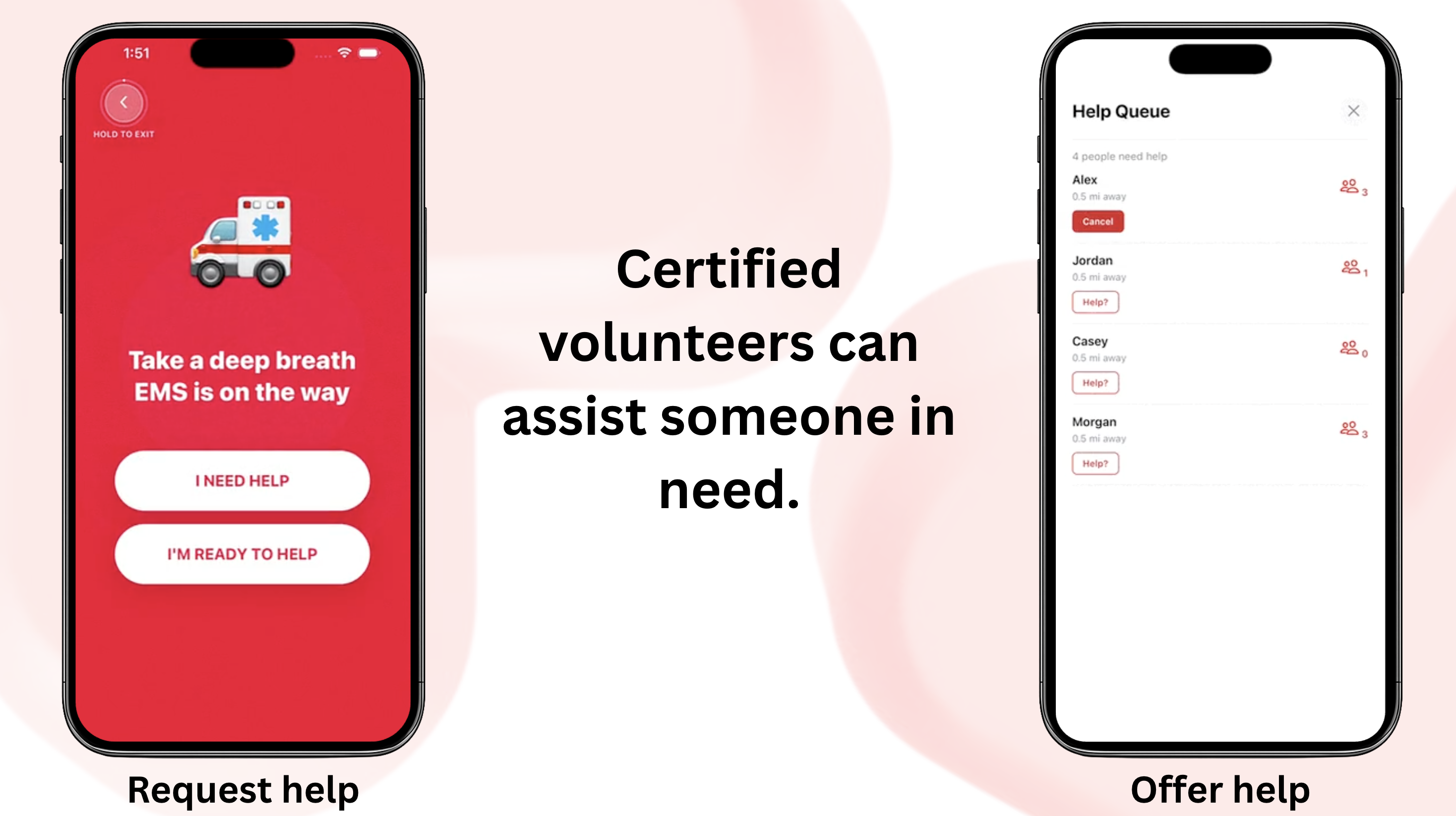
Reach also supports trusted contacts and volunteers so the community can stay informed and respond faster to emergency situations. Beyond immediate SOS, Reach is designed to grow into a trusted community response network where trained or certified volunteers can log in, verify their status, and support nearby overdose-risk situations.
This creates multiple layers of support: immediate self-guidance, trusted contacts, emergency services, and trained community responders. Longer term, Reach is designed to connect users not only to emergency help, but also to harm reduction resources such as naloxone access, fentanyl test strips, overdose-response education, and local support services.
How we built it
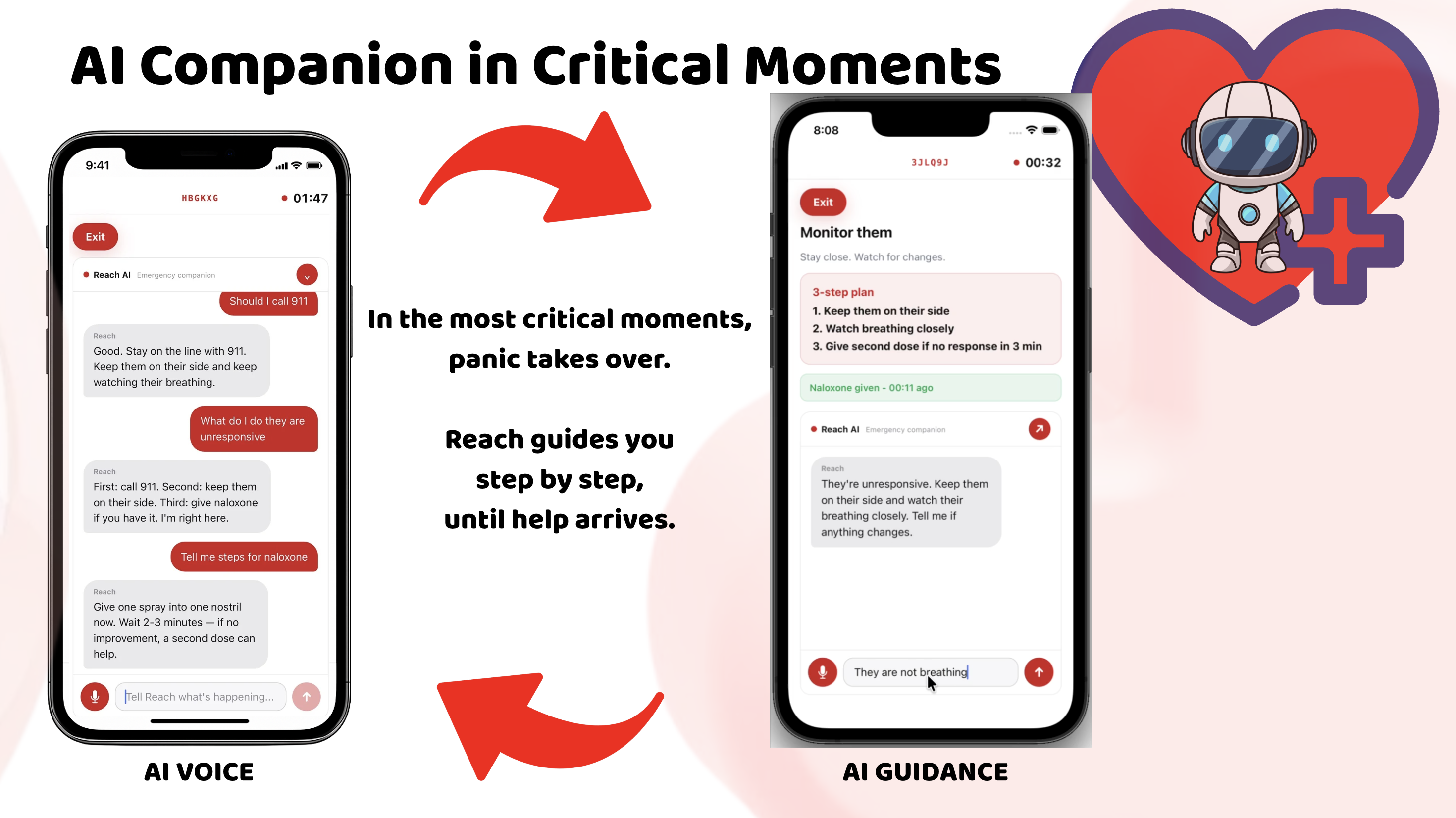
We built Reach as a React Native mobile app using Expo and TypeScript. We used Google Maps API for location-aware resource discovery, OpenAI Whisper API for voice input, and Claude API to support an emergency guidance chatbot.
The app uses shared context to manage emergency state, user information, and flows like starting, navigating, and exiting an emergency. We organized the app into dedicated screens for SOS, active emergency guidance, contacts, map resources, profile, and community connection features.
Challenges we ran into
The biggest challenge was designing for high-stress emergency situations where users may need to make critical decisions quickly.
We had to decide how much information to show, when to show it, and how to make each step clear without overwhelming the user. Reach needed to be fast enough for urgent use, but intentional enough to reduce accidental SOS activation.
Another challenge was balancing immediate emergency support with the broader End Overdose mission. We did not want to build only a panic button. We wanted Reach to become a foundation for prevention, intervention, and follow-up care.
The hardest part of the community layer was trust. A nearby responder system could be powerful, but it cannot be open-ended or unverified. That pushed us to think carefully about certified volunteer login, training verification, responder boundaries, and how to make community support fast without making it unsafe.
As the app grew, we also had to keep the codebase organized across emergency, contacts, map, profile, and community-response flows.
Accomplishments that we're proud of
We’re proud that Reach feels focused and humane. We’re also proud of the helper flow, which turns a chaotic overdose-risk situation into a sequence of simple decisions and immediate actions.
The emergency experience became clearer through a prominent SOS action, simple confirmation language, reduced visual noise, and an active emergency mode that communicates urgency without feeling chaotic.
We’re also proud that the project aligns closely with End Overdose’s real-world problem: resources are only lifesaving if people can actually reach them. Reach creates a foundation for connecting users to trusted contacts, location-aware support, harm reduction tools, certified community responders, and post-emergency resources in a way that is accessible and easy to understand.
We are especially proud of the community-centered direction of Reach. The product is not just about helping one person press a button; it is about building a safer support network around people before, during, and after a crisis.
What we learned
We learned that emergency design is about removing friction.
In a crisis, users should not have to navigate a complicated interface, understand public health terminology, or search through static directories. The product needs to make the next action obvious.
We also learned that accessibility is not a secondary feature for this problem space. It is central to impact. A tool for overdose response has to support people who may be panicked, disoriented, neurodiverse, low-vision, unfamiliar with harm reduction language, or using the app under pressure.
We also learned that community response requires trust by design. For Reach to involve volunteers responsibly, the app needs more than a map of nearby people. It needs verification, training status, clear responder roles, and boundaries around what volunteers should and should not do.
Finally, we learned the importance of separating UI from core logic. That allowed us to refine the emergency experience while preserving the underlying emergency state and support flows.
What's next for reach
Next, we want to make Reach more useful in real emergency and overdose-risk situations by improving trusted contact alerts, location sharing, and post-emergency follow-up.
We also want to expand Reach into a stronger End Overdose resource navigator by adding naloxone access points, fentanyl test strip resources, overdose-response education, local support services, treatment and recovery resources, multilingual support, and offline emergency guidance.
Longer term, Reach could help connect users to harm reduction resources, certified community responders, local support networks, and recovery care so support does not end after the immediate emergency. A key next step is building a volunteer login and certification flow, where trained responders can verify their status, opt in to nearby alerts, and support users as part of a trusted harm reduction network.
Tech Stack
| Layer | Tech |
|---|---|
| Framework | React Native + Expo |
| Language | TypeScript |
| Navigation | Expo Router + React Navigation |
| AI Companion | Anthropic Claude |
| Voice Input | OpenAI Whisper |
| Maps + Location | Google Maps API, OpenStreetMap Overpass API, react-native-maps, Expo Location |
| Mobile Permissions | Expo Location |
| Resource Discovery | OpenStreetMap Overpass API + location-based filtering |
Built With
- claude-api
- expo.io
- google-maps
- react-native
- typescript
- webspeech


Log in or sign up for Devpost to join the conversation.