Inspiration
Problem
Every Friday in Charing Cross, over 300 people rely on warm meals from the Jalaram Soup Kitchen. For over 15 years, Dr. Mansukh Morjaria has tirelessly coordinated food donations, volunteers, and deliveries. This has been done entirely manually, with no digital tools. We called him and he said:
"There were only 2 of us today. I was not supposed to do any heavy lifting, but there was no one else... My shoulder is now in pain and I won’t be able to sleep tonight."
Food donations arrive daily from supermarkets like Waitrose and Sainsbury's, local shops, and generous individuals. Yet, much of it goes to waste because last-minute offers cannot be matched with available volunteers. Potential helpers, such as students who want to contribute flexibly or with friends, often remain unaware of opportunities to help.
This problem affects multiple stakeholders: foodbank coordinators who are overwhelmed by manual logistics, volunteers who are willing but constrained by schedules, and communities relying on consistent access to food. Every missed call, cancelled driver, or uninformed volunteer can result in wasted food and exhausted coordinators.
Every day, charities struggle with unpredictable volunteer availability while passionate individuals waste hours searching for meaningful opportunities that fit their schedules. Food banks don't know if delivery drivers will ever help them, so they spend hours doing it themselves. Communities cannot plan events without confirmed volunteers. Meanwhile, people with genuine desire to help get lost in a sea of mismatched opportunities.
By creating a platform that efficiently connects willing volunteers with food charities in need, we can reduce the burden on coordinators, prevent food from going to waste, and cultivate a resilient, community-driven network of support for those who need it most.
We also want to rethink how people travel. The best trips aren’t just about sightseeing—they’re about truly immersing yourself in the local culture and building real connections. We’re bridging the gap between tourism and community, making it easier for travellers to give back and leave a positive footprint while they explore.
What it does
What We Built
Reach is a dual-sided mobile and web platform that connects volunteers with charitable organisations through real-time coordination & matching, and verified impact tracking.
How It Solves the Problem
Traditional volunteering suffers from three key failures:
- Unpredictability: Charities can't plan services without knowing if volunteers will show up
- Mismatch: Volunteers waste hours searching for opportunities that fit their schedule and location
- Unverified Impact: Neither side can track impact, since everything is recorded on paper or messy WhatsApp chains
Reach transforms this broken model into a reliable marketplace:
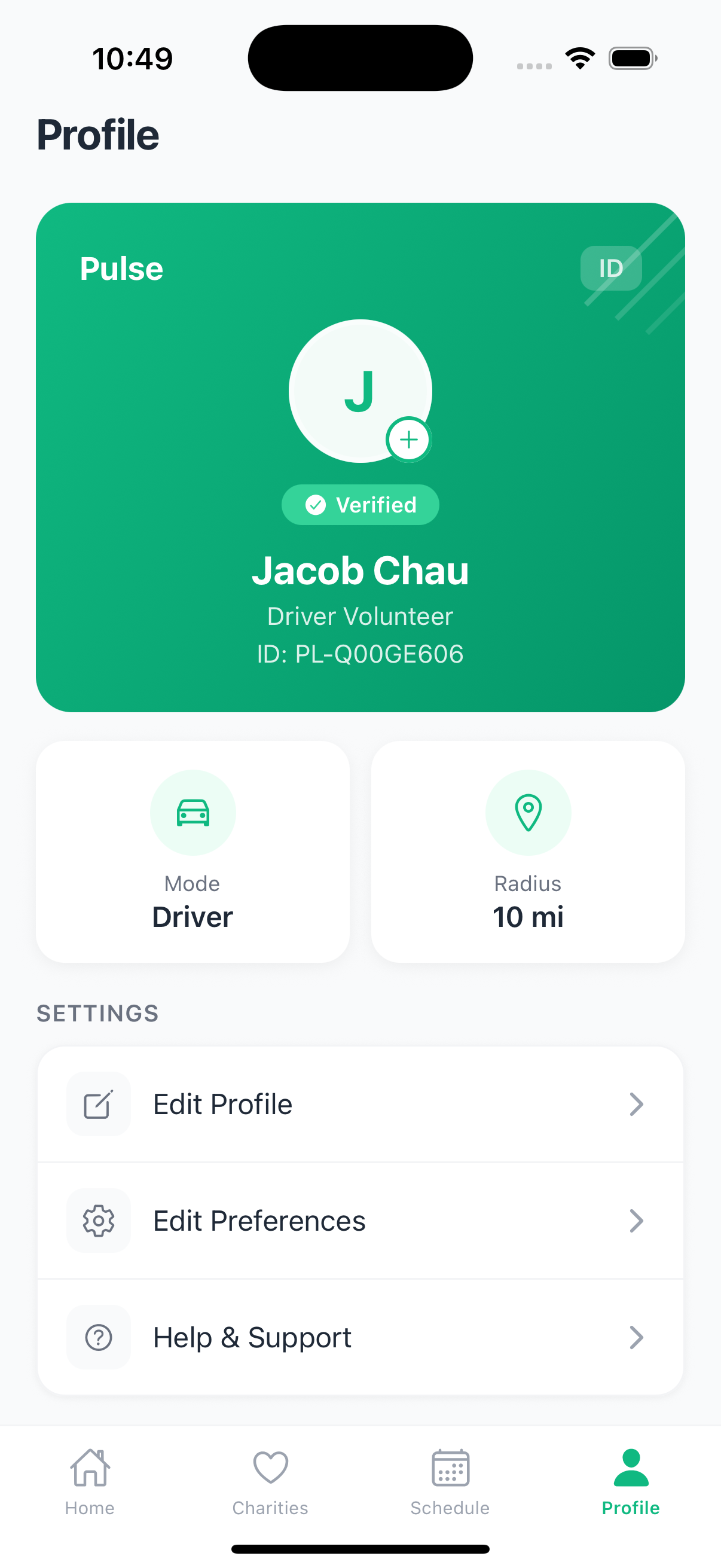
- For Volunteers: Smart filters match opportunities to your exact availability, location (e.g. up to 25 mile radius), transport mode, and interests. This means no more endless scrolling and a system where you can volunteer however often and wherever you want.
- For Charities: Structured application pipeline (pending → accepted → in-progress → completed) with notifications ensures predictable volunteer staffing.
- For Everyone: Dual verification system – volunteers mark jobs complete, charities confirm – creates trustworthy impact data.
Using this product, people travelling will be able to easily find opportunities to volunteer in the country they're in and fully experience the country to the maximum potential as well as meet locals or other travellers.
Volunteer-Opportunity Workflow
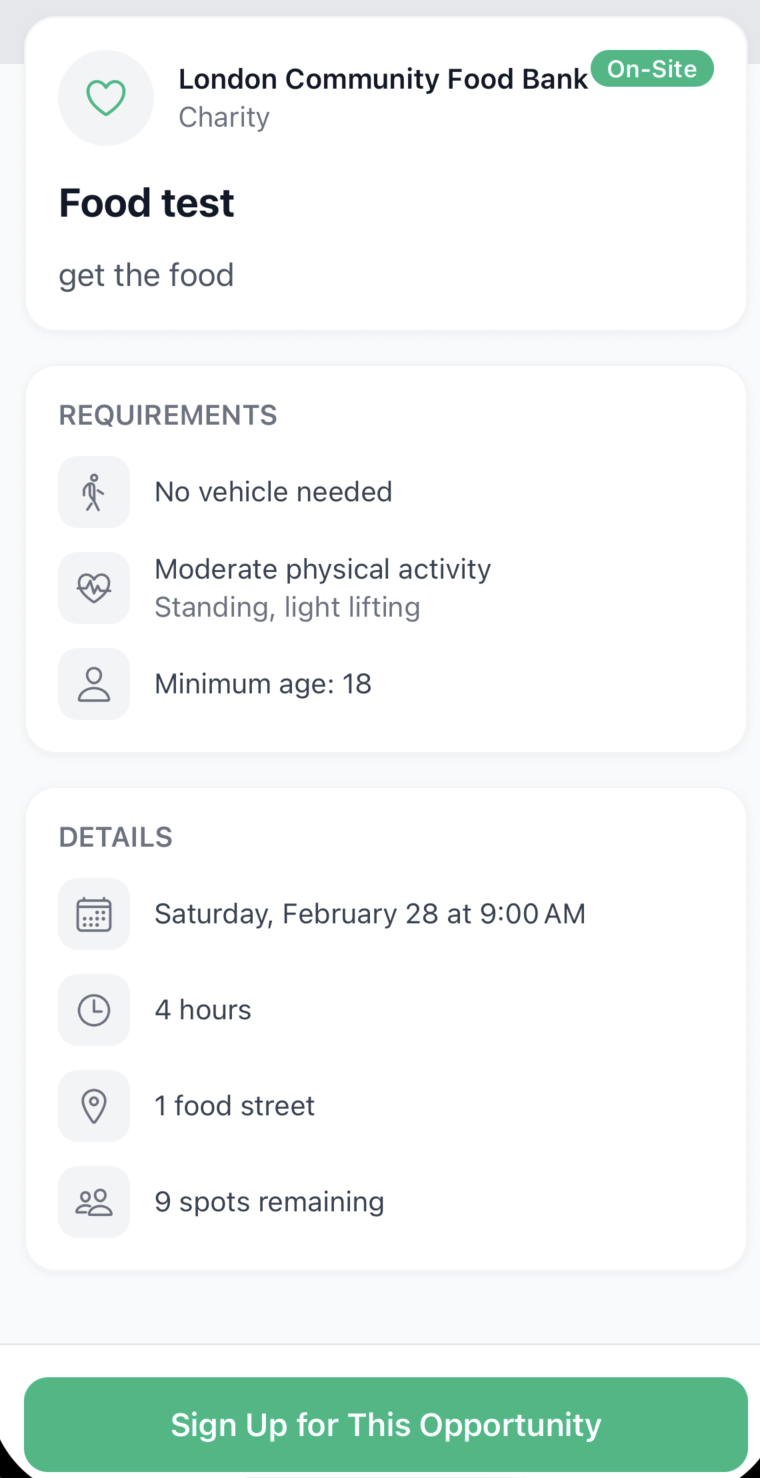
- A volunteer browses available opportunities and requests to join one.
- The charity reviews the request and approves the volunteer for the opportunity.
- The volunteer begins the task, while the charity can monitor progress in real time.
- Upon completing the task, the volunteer marks it as finished.
- The charity reviews and confirms completion, closing the loop.
What Makes It Different
Two-Step Verification System
Unlike platforms where self-reported hours go unverified, Reach requires both volunteer completion and charity confirmation – building trust and generating credible impact metrics.Live Job Guidance
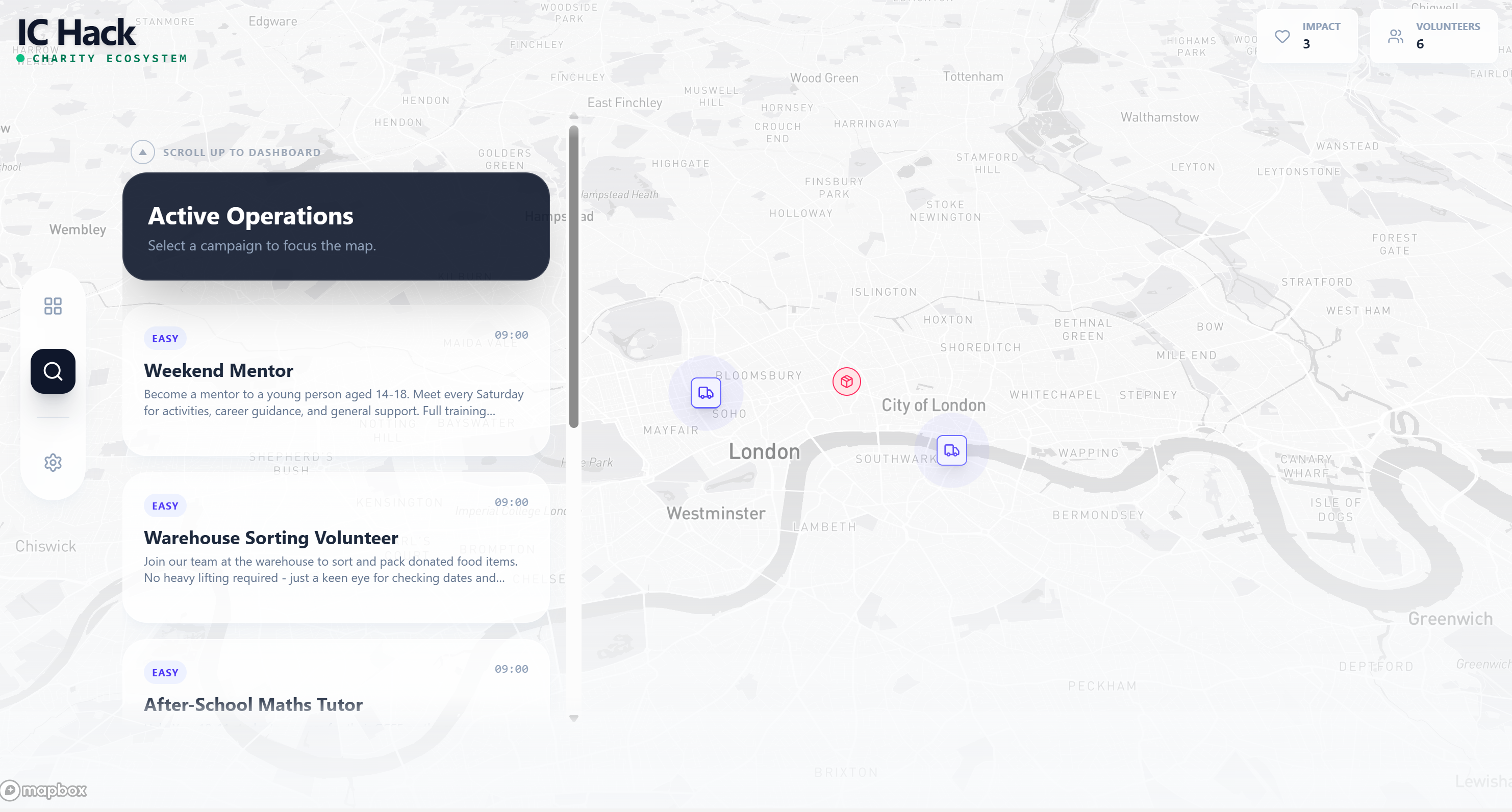
When volunteers accept delivery missions, the online web platform transforms into mission control with interactive maps, progress updates, and check-in systems at each stop. Very similar to Uber, but for doing good!Dual Dashboard Design
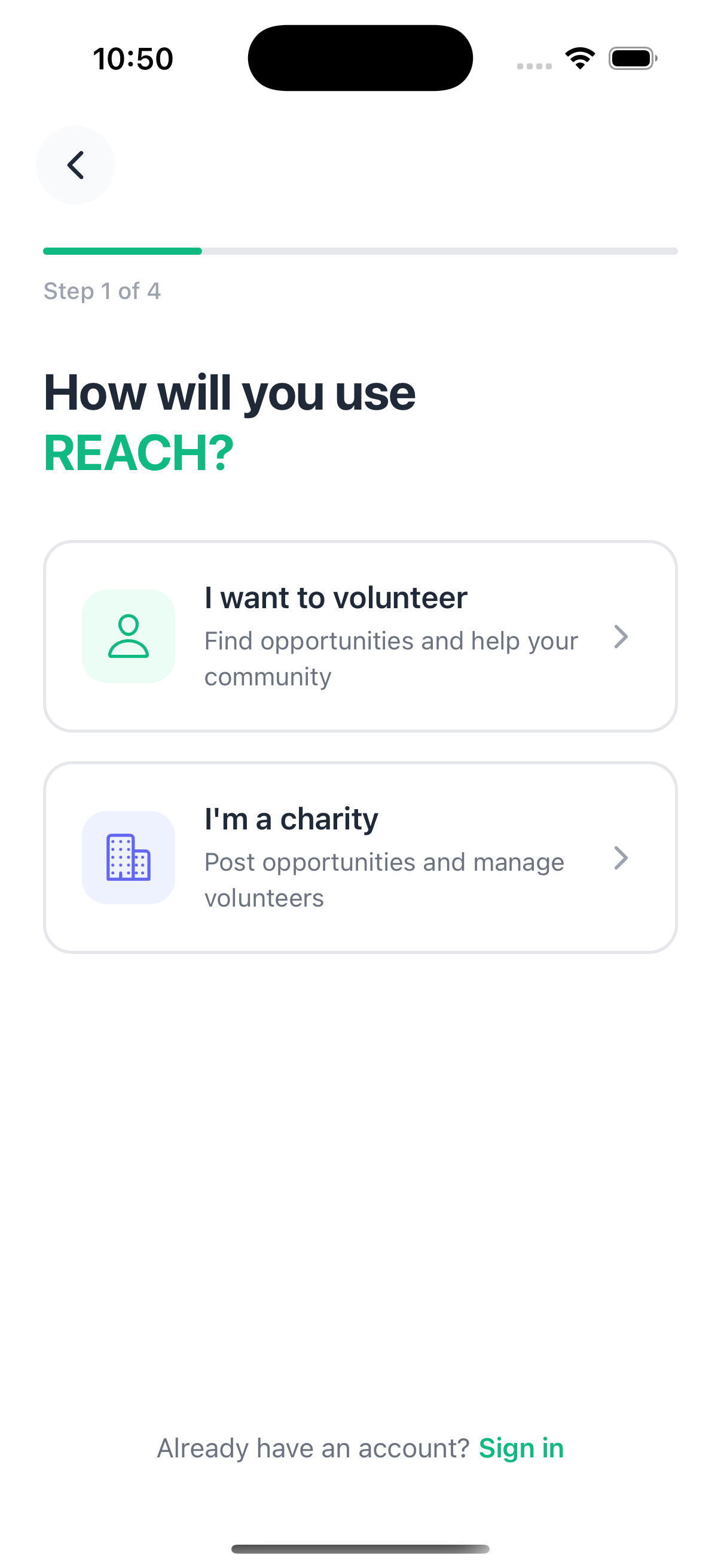
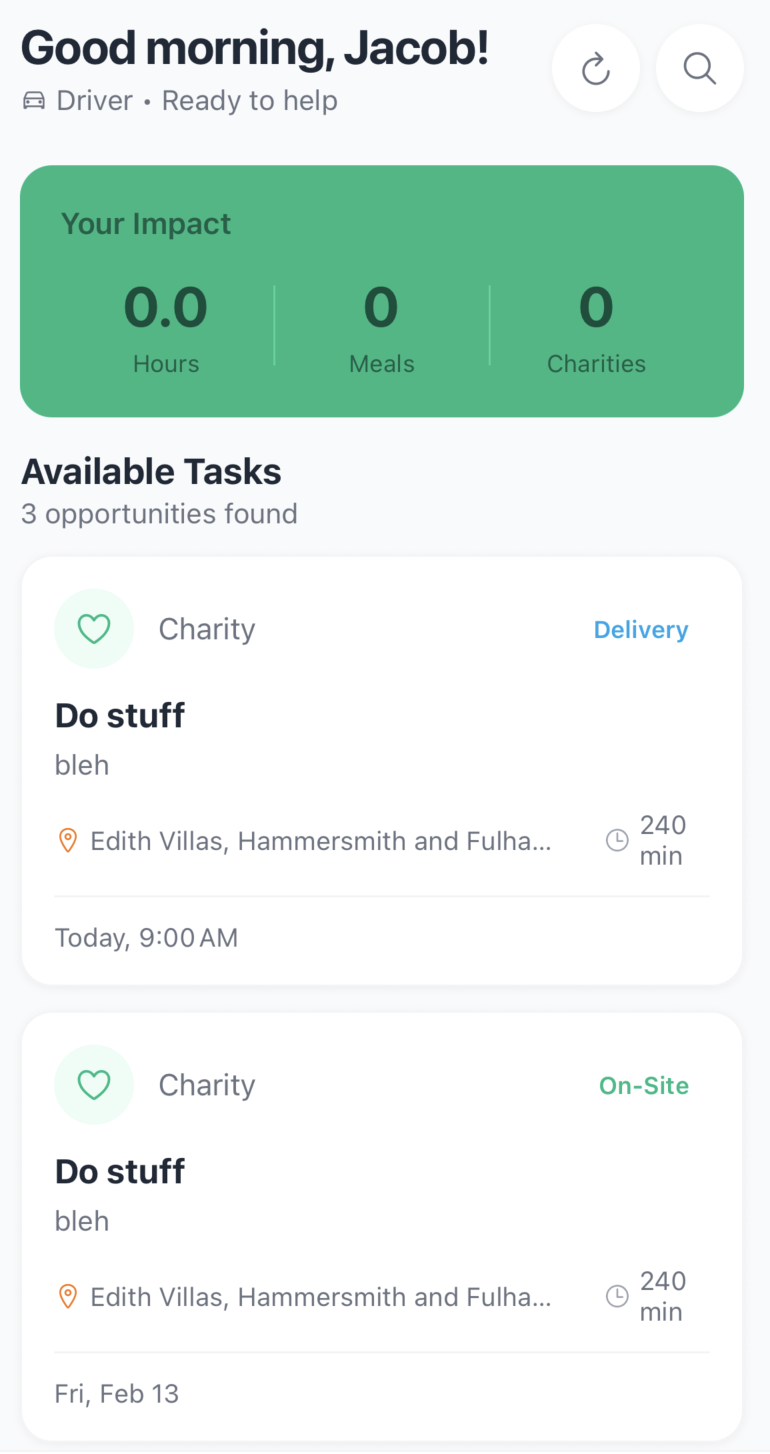
Most platforms serve either volunteers or organizations. Reach treats both as key stakeholders with purpose-built interfaces for each.- Volunteers: Browse charities, apply for campaigns, navigate and track impact.
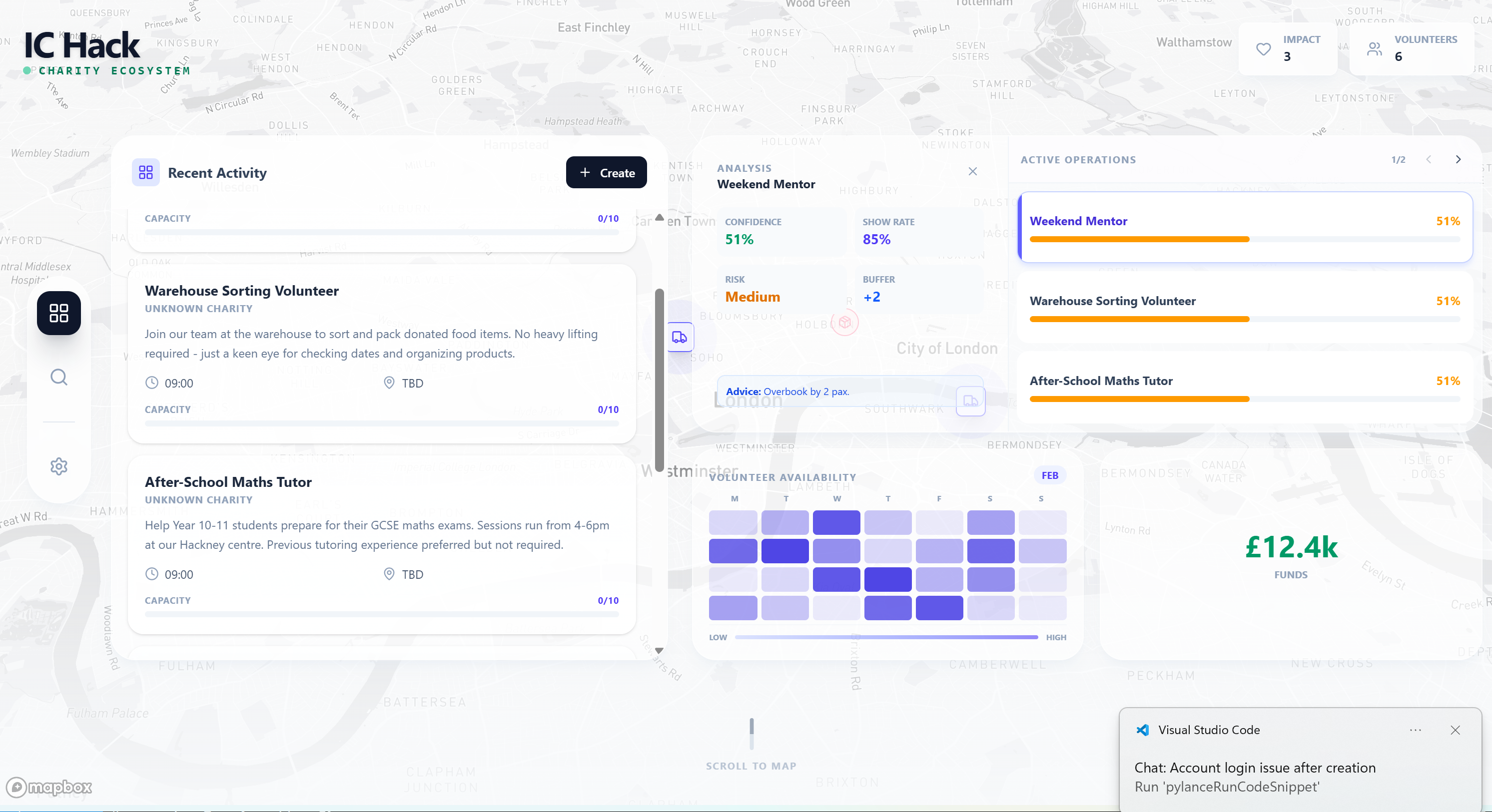
- Charities: Post campaigns, review applications, monitor active sessions, confirm completions.
- Volunteers: Browse charities, apply for campaigns, navigate and track impact.
Intelligent Matching
Rather than showing all campaigns everywhere, Reach filters by travel radius, transport mode (driving vs. walking vs. casual volunteer), physical capability, and charity preferences. This ensures volunteers can realistically commit to what they sign up for.
Reach doesn't just digitise volunteering, but reimagines community service as a reliable, data-driven marketplace full of compassion.
How We Built It
The Reach platform uses a dual-client architecture, connecting a React Native mobile app for volunteers with a React web dashboard for charities. Both interfaces communicate with a unified FastAPI backend, which manages all business logic, authentication, and data aggregation. Data is stored in Firebase Firestore, providing a scalable and real-time database that serves as the single source of truth for both clients. This layered backend structure enables role-based access control, real-time data synchronization, and geospatial filtering, allowing volunteers to discover local opportunities and charities to visualize engagement and manage campaigns efficiently.
This architecture is a strong design choice for Reach because it balances flexibility, scalability, and maintainability. By separating the volunteer and charity experiences into dedicated clients, each user group benefits from tailored interfaces and workflows. The shared backend and database ensure data consistency and simplify integration, while FastAPI and Firestore offer robust performance and easy extensibility. Role-based authentication secures sensitive data, and real-time features keep all users up-to-date. Overall, this approach supports rapid development, future feature expansion, and a seamless experience for both volunteers and charities.
Challenges We Ran Into
Our team was challenged by the amount of input as we all had many different features we wanted to include for our demo. Our biggest task was sitting down and figuring out which features were 'must-haves' versus 'nice-to-haves' so we could actually get the project across the finish line.
Another challenge we ran into was finding real-life use cases for our project. We connected with a soup kitchen coordinator and had a call with him, which really helped us understand what we needed to deliver to both volunteers and charities.
In terms of technical challenges, we had difficulty implementing advanced features such as a heat map of availability onto our web app, recommendation algorithms for volunteers, and parallelizing frontend, backend, and database schema creation all together.
Accomplishments That We're Proud Of
We are proud of the impact and reach we believe our product could deliver. Additionally, we are proud of building a fully functional prototype from scratch in under 24 hours. We managed to take a massive list of 'what-ifs' and put them into a working core that actually solves the problem we set out to tackle.
We also accomplished working together as a team with some people we had never met before, leveraging each other's strengths to create a working product in such little time. We are proud of the way our app looks and feels—it displays information in a simple yet informative way, giving a genuine user experience.
What We Learned
One of the most important things we learned while building this project was how easy it is to create features and analytics that look impressive but aren’t actually useful for the people you’re building for. Early on, we experimented with several data visualisations and metrics that were interesting to look at, but didn’t help charity coordinators make better decisions. Stepping back from this forced us to rethink what “useful analytics” really means in a real-world charity setting, which led us to focus on reliability and confidence metrics that reflect actual operational risk rather than surface-level engagement.
Alongside this, we learned how to integrate mapping functionality to make campaigns more tangible and actionable, allowing coordinators to quickly understand location-based constraints and logistics instead of dealing with abstract lists. We also used prompt engineering to rapidly prototype features and iterate on both the UI and analytics logic, which helped us move quickly using existing technologies without reinventing the wheel. The overall takeaway was learning when to step back, simplify, and design around real user needs rather than technical novelty.
What's Next for Reach
We want to keep the analytics streamlined and simple for charity coordinators who need clarity when running campaigns, but that doesn’t prevent us from extending the analytics and tools we’ve built as more volunteer data becomes available.
While the volunteer reliability and “confidence” metrics shown to charities are already data-driven, as the platform grows we can use historical attendance data to calibrate these metrics, replacing heuristic weights with learned parameters. Since campaigns often have both a desired number and a minimum number of volunteers, we can extend the system to give probabilistic guarantees that campaigns will meet minimum staffing levels and allow charities to set optional safety thresholds depending on criticality. Tracking signup momentum would help coordinators spot campaigns that are unlikely to fill in time and intervene earlier.
On the volunteer–campaign matching side, overbooking recommendations can be updated dynamically in real time as volunteers sign up or drop out, combined with signup momentum to improve accuracy. Task matching can also be improved by learning which volunteer attributes correlate with higher attendance for specific campaign types.
To improve UX for both coordinators and volunteers, we want to surface clearer, actionable recommendations directly from the risk metrics, reducing manual interpretation. Better calendar and notification integrations would make it easier for volunteers to commit and for charities to coordinate, while keeping administrative overhead low.
As we prepare for deployment, more data collection is essential to properly test the backend and ensure legal compliance. This includes ad

Log in or sign up for Devpost to join the conversation.