-
-
Voice Profile
-
Dashboard
-
Main
Inspiration
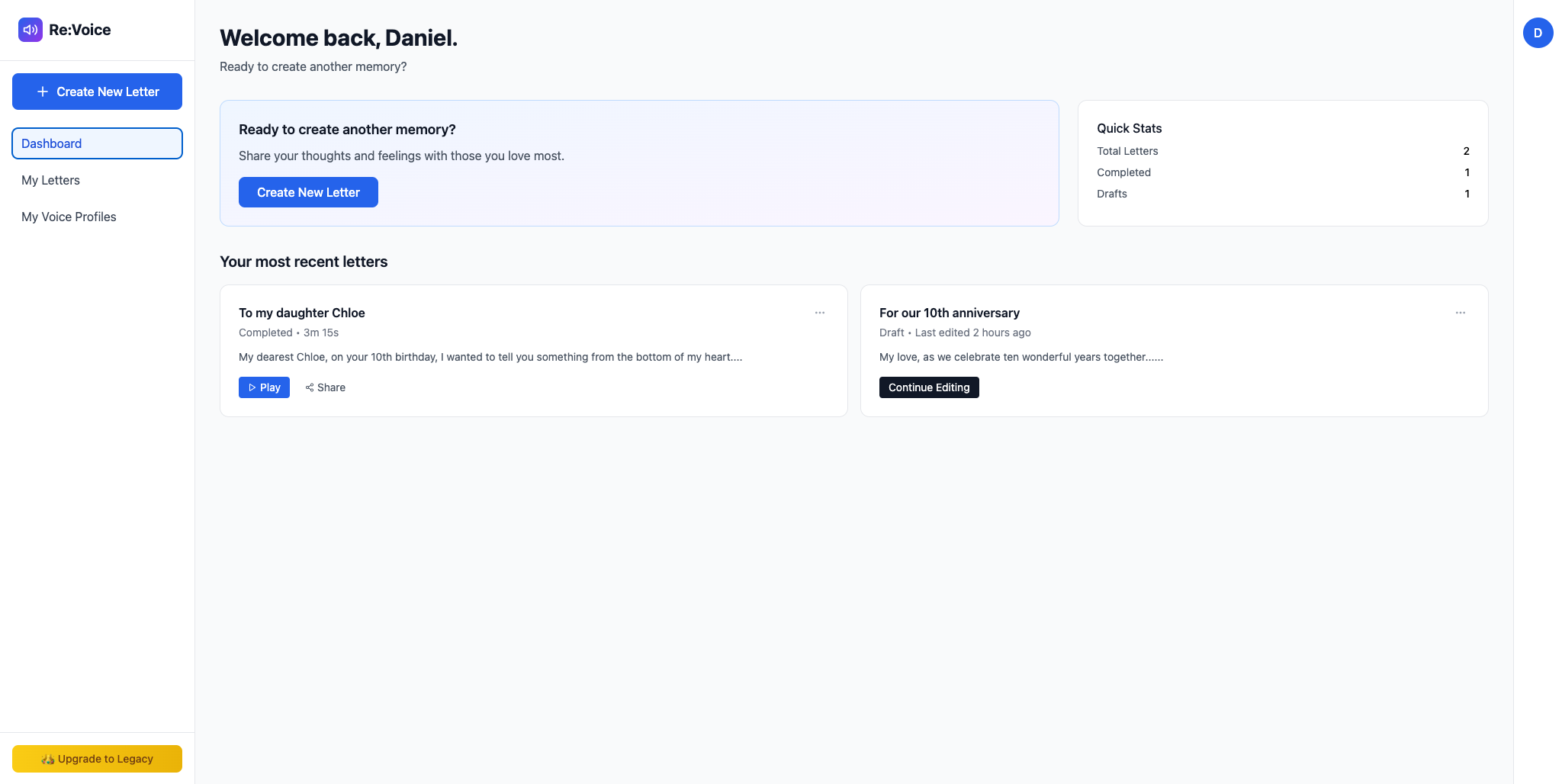
This project didn't start with a line of code, but with a phone call. My cousin, Daniel, a man full of life and warmth, was diagnosed with a rare disease that suddenly took his voice. He told me his deepest wishes were simple: to be able to wish his daughter, Chloe, a happy 10th birthday and to tell his wife how much he loved her on their upcoming 10th anniversary—not with a typed message, but with his voice, the one they cherished. His voice was trapped in the past, in old videos and voicemails. That moment of shared helplessness was the spark that ignited Re:Voice. We realized that just as AI can restore old photos, its highest purpose could be to restore a human voice.
What it does
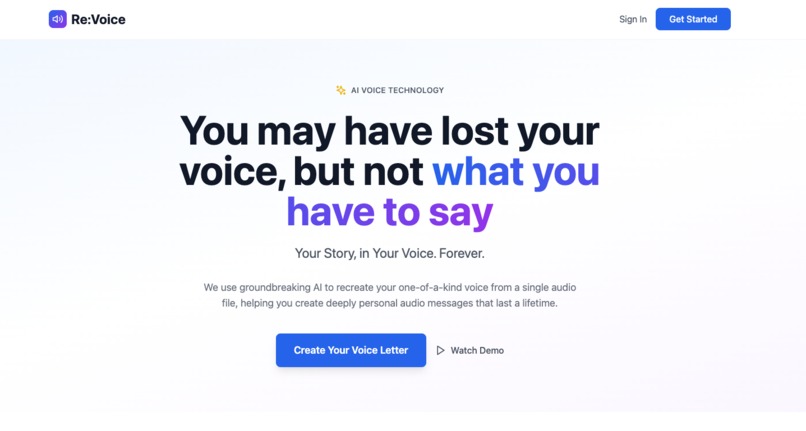
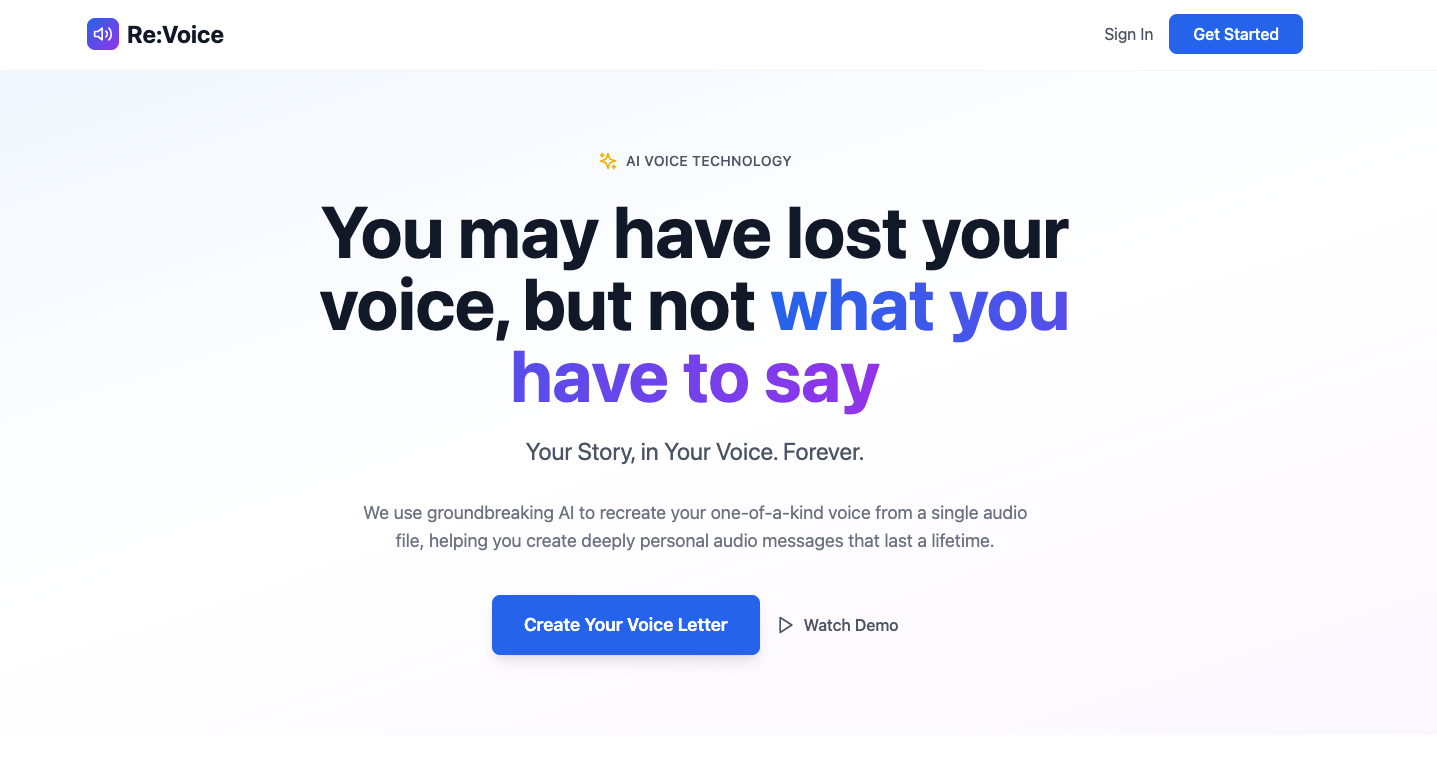
Re:Voice is a web application that allows individuals who have lost their voice to create new, emotionally rich audio messages in a perfect digital recreation of their own voice.
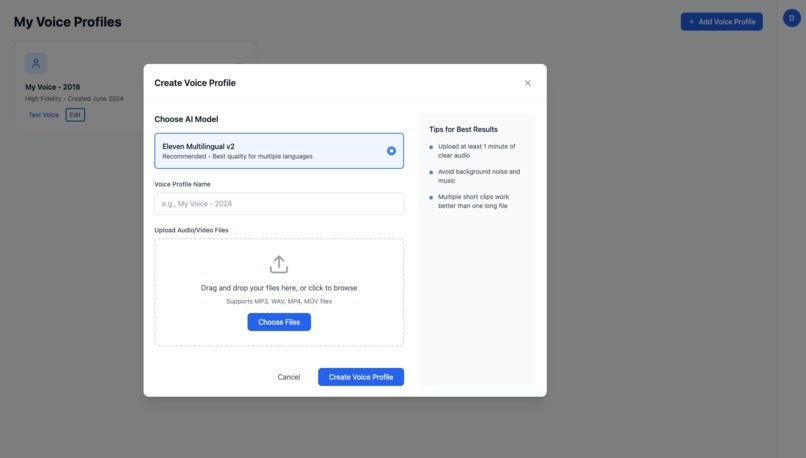
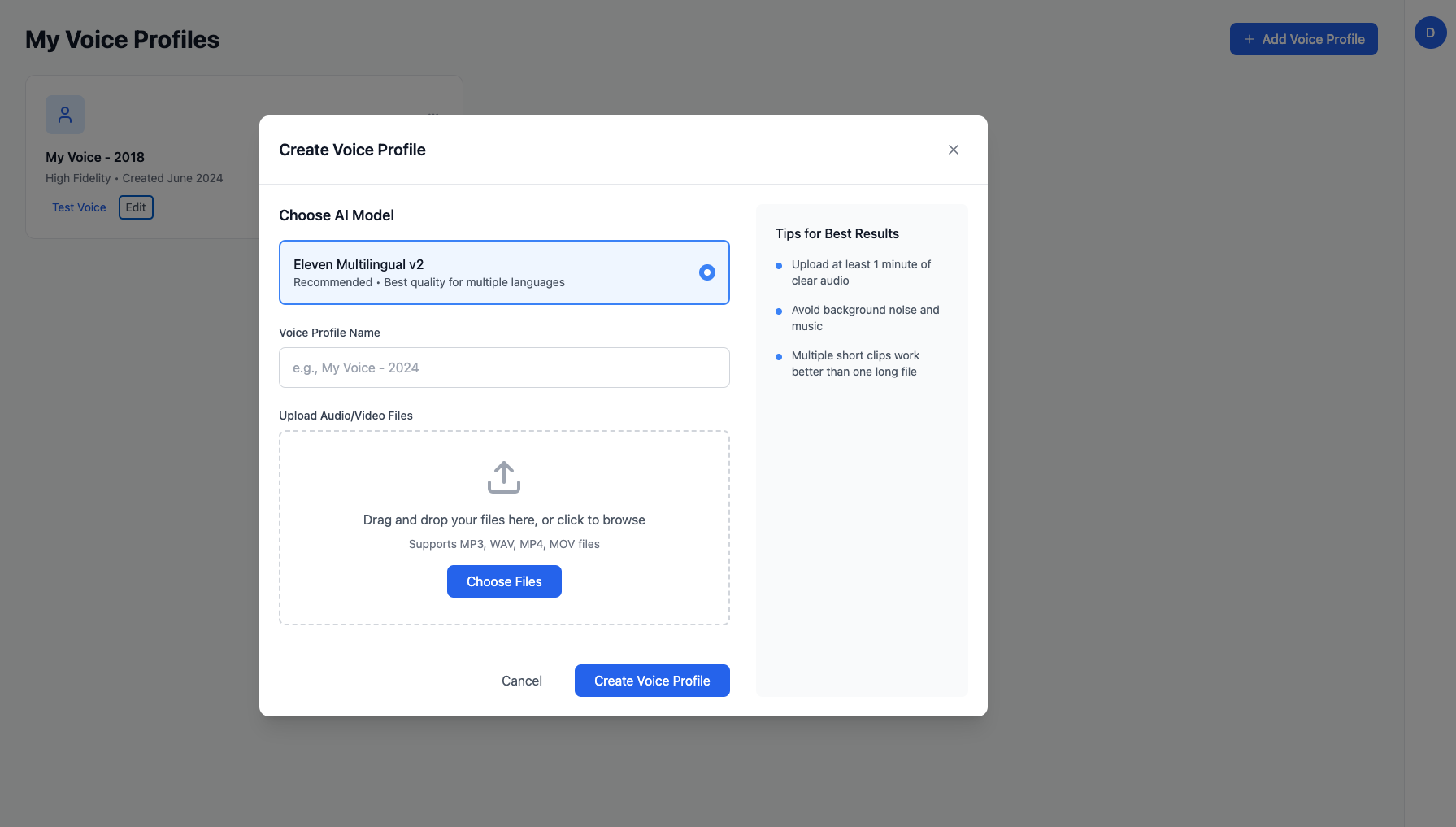
- Clones Your Voice: Users upload a short audio or video recording from their past. Our application analyzes this sample and creates a high-fidelity, authentic digital clone of their voice.
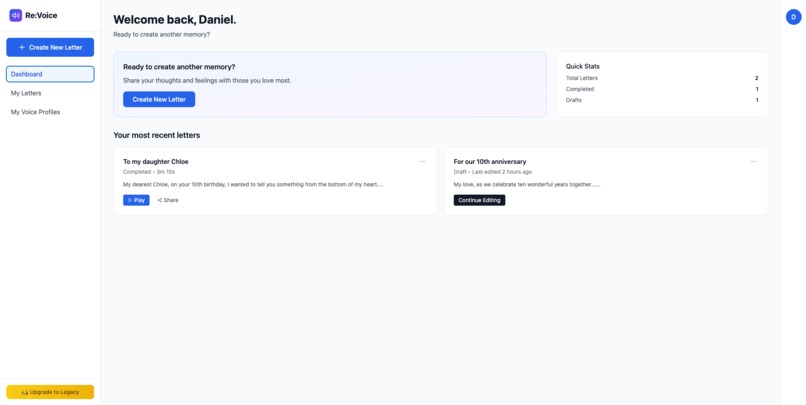
- Compose a Message: A clean, minimalist editor provides a sanctuary for users to write letters, speeches, or simple messages from the heart.
- Generate an Audio Legacy: With a single click, the written text is converted into a natural, emotive audio file, spoken in the user's own cloned voice and paired with optional background music.
- Share with Loved Ones: The final audio message can be shared via a private link or downloaded as an MP3 file, creating a timeless keepsake that can be cherished forever.
How we built it
We built Re:Voice with a focus on a seamless user experience and a powerful AI core.
The application is a full-stack project built on Next.js and React, providing a fast, server-rendered frontend that feels responsive and intuitive. For the AI-powered voice cloning and synthesis, we integrated the ElevenLabs API, which is the heart of our product. It handles the complex task of analyzing voice samples and generating incredibly realistic speech.
Our backend, running on Node.js, serves as a secure bridge between the user and the AI API. It manages user accounts, saves letter drafts, and processes the audio generation queue. Vercel is used for deploying the frontend, while AWS S3 securely stores the user-uploaded audio samples and the final generated MP3 files.
Challenges we ran into
- Emotional Responsibility: The biggest challenge was ethical, not technical. We were handling the most intimate part of a person's identity. This demanded an obsessive focus on security and privacy, leading us to implement a strict data policy and end-to-end encryption from day one.
- Achieving True Authenticity: Early AI models sometimes produced results with slight robotic artifacts. It required significant tuning of the API parameters and our processing logic to ensure the final audio was not just clear, but truly captured the warmth and nuance of a human voice.
- Designing Simplicity: Creating an interface for a user who may be in emotional distress is incredibly difficult. We had to ruthlessly strip away every non-essential feature to create a calming, guided experience that wouldn't cause any frustration.
Accomplishments that we're proud of
- Fulfilling the Original Mission: Our proudest accomplishment is that we succeeded in our initial goal. My cousin was able to create those two precious letters: one for his daughter Chloe's birthday and another for his 10th wedding anniversary, both in his own, unforgettable voice. Hearing the profound impact this had on his family proved that Re:Voice could create real, meaningful connections.
- The "Invisible" UI: We are incredibly proud of the user interface. It is so simple and intuitive that the technology fades into the background, allowing the user to focus solely on their message and their memories.
- High-Fidelity Voice Recreation: We successfully integrated the AI to the point where the generated voice is nearly indistinguishable from the original recordings. Hearing that first truly authentic result was a major breakthrough for the team.
What we learned
We learned that technology's most profound application isn't just to create efficiency, but to foster and restore human connection. A voice is more than soundwaves; it is identity, memory, and love. We also learned that for a tool this personal, the best interface is one that feels invisible. The user’s focus should always be on their message, not on our buttons and menus. This project reinforced that the most powerful products are built from a place of genuine empathy.
What's next for Re:Voice
Our vision for Re:Voice is just beginning. We see a future where no one has to lose their voice forever.
- Real-Time Conversation Mode: We plan to develop a low-latency mode that allows for real-time, spoken conversations, making daily interactions more natural.
- Mobile Applications: Native iOS and Android apps will make Re:Voice more accessible for on-the-go communication.
- The Re:Voice Library: Our ultimate goal is to create a "voice bank," where healthy individuals can securely store a high-quality profile of their voice for the future, ensuring that a core part of their identity is preserved, no matter what happens.
Built With
- bolt.new
- elevenlabs
- next.js
- openai
- tailwind


Log in or sign up for Devpost to join the conversation.