-
-
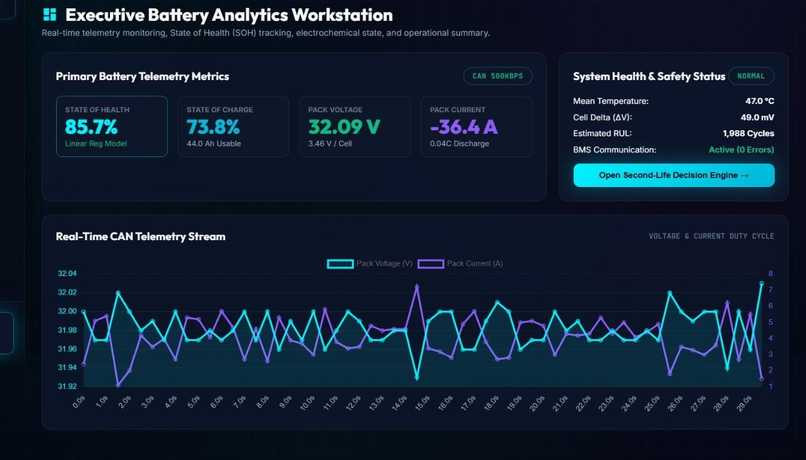
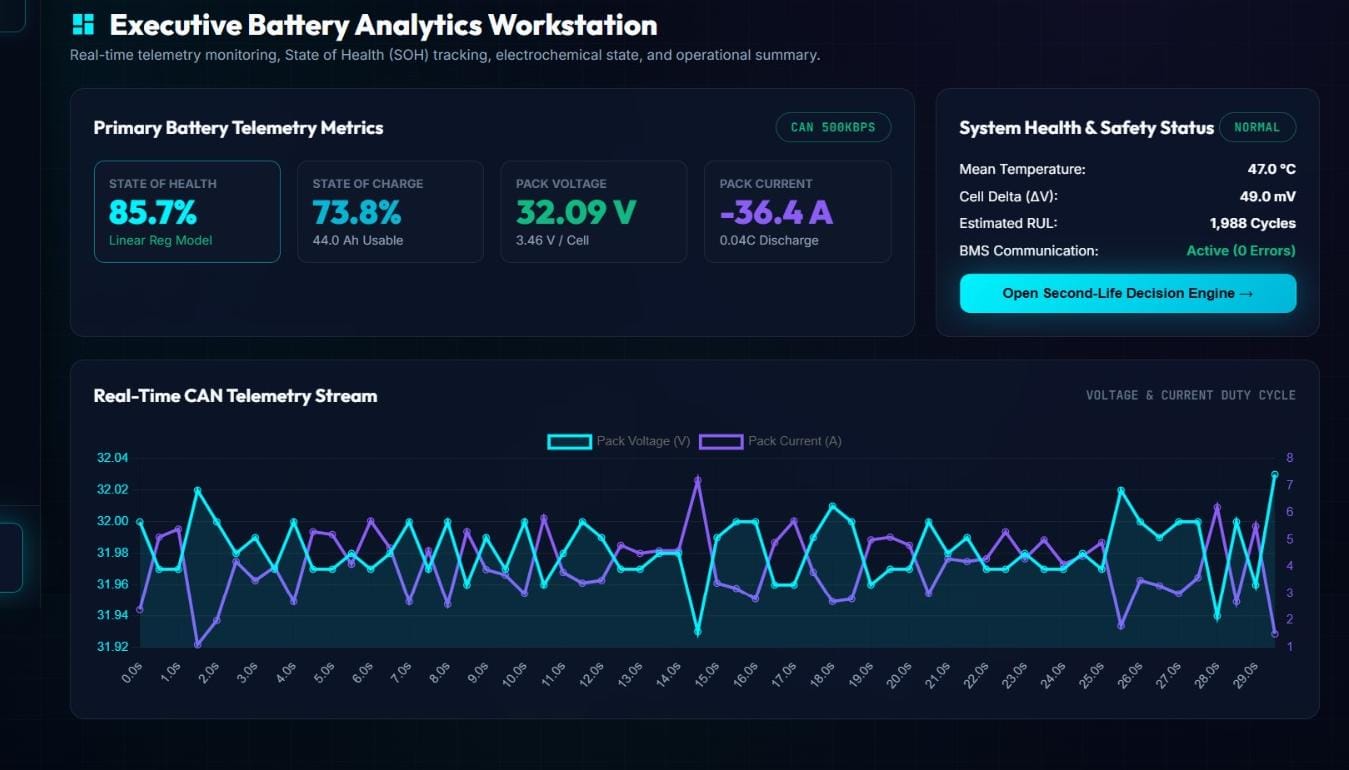
Executive Battery Analytics
-
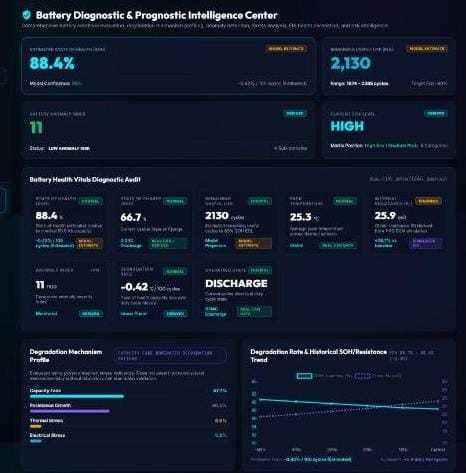
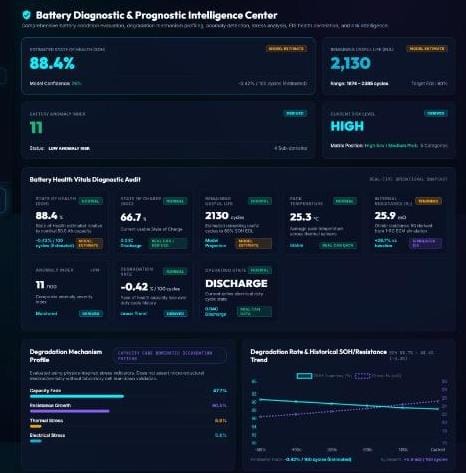
Battery Diagnostic & Prognostic Intelligence Center
-
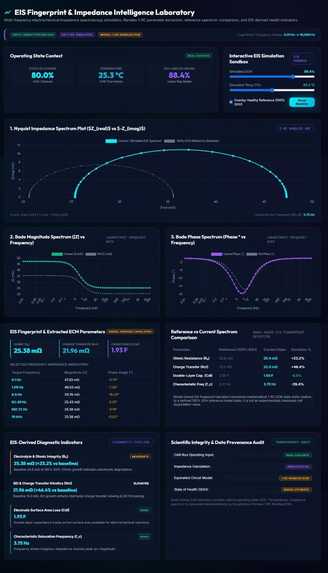
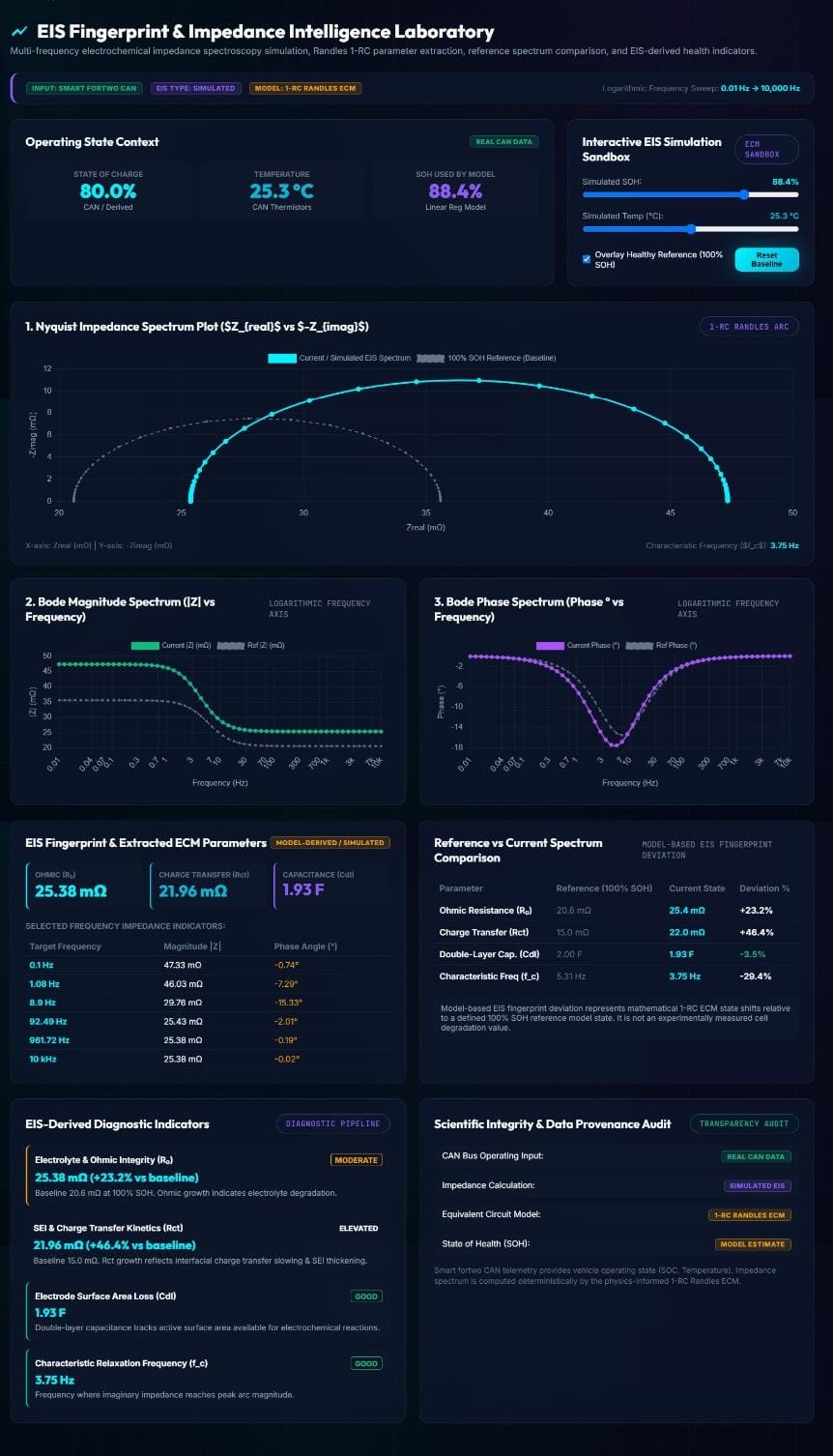
EIS Fingerprint & Impedance Intelligent System
-
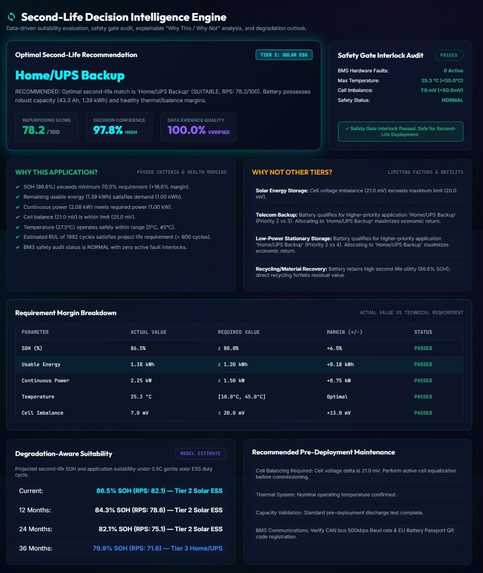
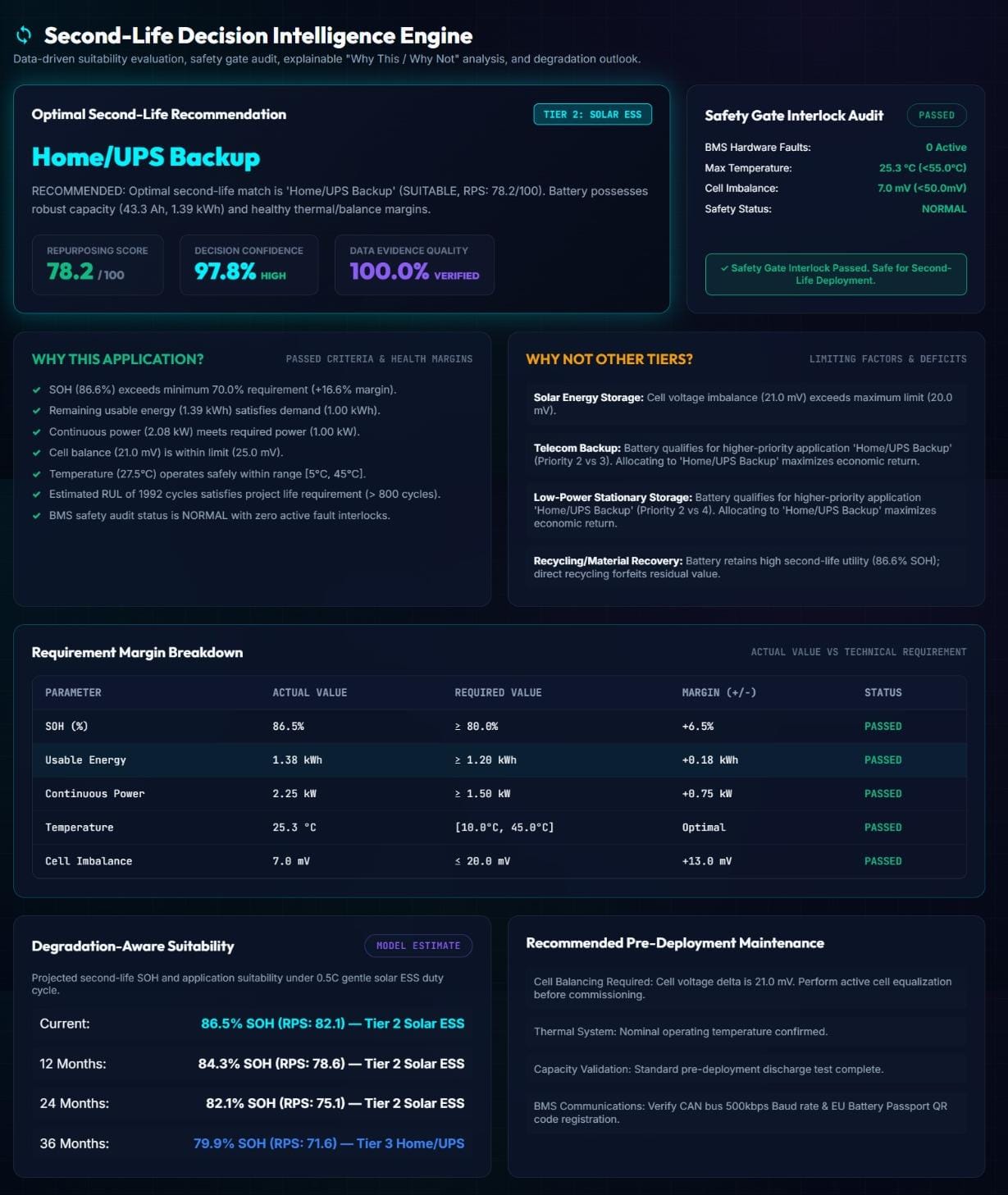
Second-Life Decision Intelligence Engine
-
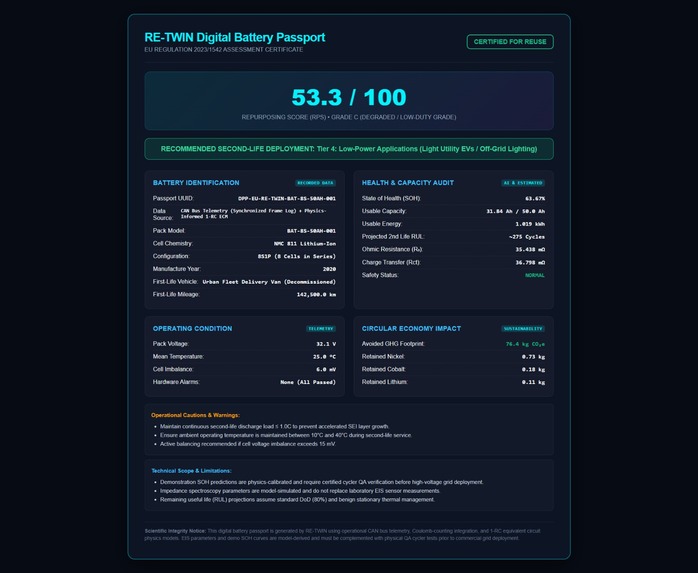
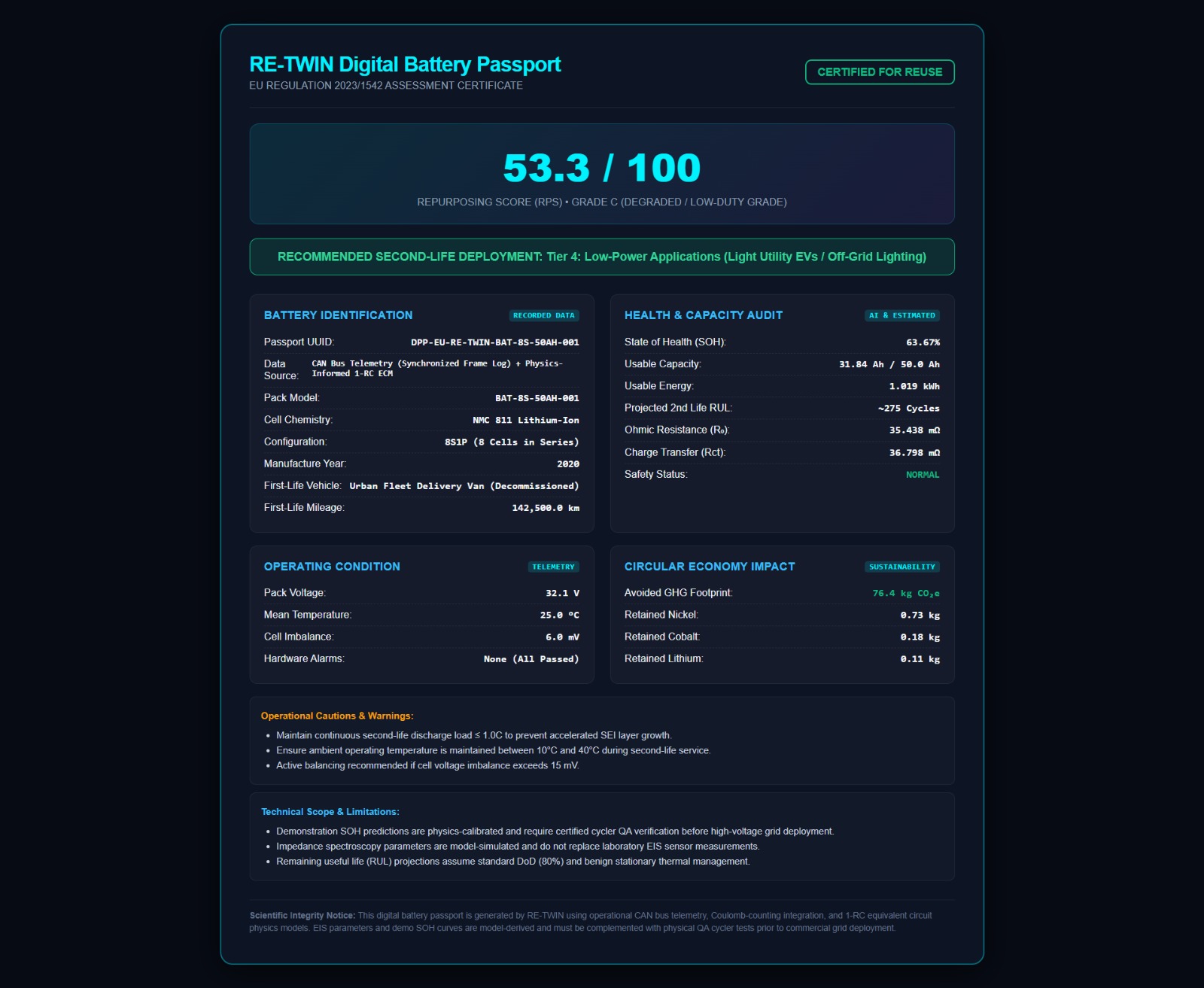
Battery Passport
Inspiration
EV batteries do not necessarily become useless when they are retired from electric vehicles. Many may still have useful capacity and remaining life, but determining their condition and identifying the right second-life application is a challenging process.
Existing approaches often focus on individual aspects such as BMS monitoring, capacity testing, resistance measurement, EIS-based diagnosis, or battery health prediction. We wanted to connect these capabilities into a single intelligent workflow.
This led us to RE-TWIN — EIS-Fingerprint & Physics-Informed Digital Twin for Intelligent Second-Life EV Battery Repurposing.
Our core idea is simple:
Don't just ask how healthy a retired battery is. Ask what useful life it still has and what it can become next.
What RE-TWIN Does
RE-TWIN combines multiple sources of battery information, including:
- CAN/BMS data such as voltage, current, temperature and SOC
- Battery usage and cycling history
- EIS (Electrochemical Impedance Spectroscopy) fingerprints
- Electrical and thermal characteristics
The collected information is processed using a multimodal AI pipeline to estimate:
- State of Health (SOH)
- Remaining Useful Life (RUL)
- Degradation behaviour
- Anomaly and risk indicators
Instead of relying only on data-driven predictions, the proposed model incorporates known battery degradation behaviour as physical constraints to encourage physically plausible predictions.
Digital Twin
The predicted battery state is represented through a Digital Twin — a virtual representation of the physical battery.
The Digital Twin allows us to perform what-if simulations before deploying the physical battery into a new application.
For example, we can explore how predicted battery behaviour changes under different:
- Temperature conditions
- Load profiles
- Charging/discharging patterns
- Usage durations
This allows the system to move from simply diagnosing the battery to understanding its possible future behaviour.
Second-Life Decision Engine
The final stage of RE-TWIN is an intelligent Second-Life Decision Engine.
Instead of simply classifying a battery as healthy or unhealthy, the system evaluates its predicted health, remaining life, risk, energy capability and application requirements to determine which second-life use may be appropriate.
Potential applications include:
- Solar energy storage
- Home backup systems
- Telecom backup
- Other stationary energy-storage applications
The result is an application-specific suitability assessment rather than a single generic health score.
How We Built It
The proposed system is organized into multiple stages:
Battery Data → EIS Fingerprint → Data Processing → Multimodal AI → Physics Constraints → SOH/RUL/Risk → Digital Twin → What-if Simulation → Second-Life Decision Engine
The software prototype is designed with a modular architecture so that simulated or public battery datasets can be used during development, while future versions can integrate real CAN/BMS and EIS acquisition hardware.
Challenges
One of our biggest challenges was combining different types of battery information into a meaningful model. CAN data is mainly operational and time-dependent, while EIS produces frequency-domain electrochemical information.
Another challenge was avoiding purely data-driven predictions that could become physically unrealistic. This motivated the use of physics-based constraints within the AI pipeline.
We also had to consider the difficulty of obtaining large, well-labelled datasets containing synchronized battery ageing, operational and EIS measurements.
What We Learned
Through RE-TWIN, we explored how battery diagnostics, EIS, machine learning, physics-informed modelling, Digital Twins and sustainable energy systems can work together.
We learned that the important challenge is not simply predicting battery health, but converting that prediction into a useful engineering decision.
Future Scope
Future versions of RE-TWIN can integrate real-time CAN/BMS data and higher-grade EIS instrumentation, improve chemistry-specific models, incorporate uncertainty estimation, and continuously update the Digital Twin during second-life operation.
Our long-term vision is to create a complete battery lifecycle intelligence platform:
First Life → Retirement → Intelligent Assessment → Digital Twin → Second-Life Selection → Continuous Monitoring → End-of-Life Recycling
We don't just grade a battery. We give it a second future.
Built With
- battery-management-system
- can-bus
- digital-twin
- eis
- fastapi
- machine-learning
- numpy
- pandas
- physics-informed-ai
- python
- pytorch
- react
- scikit-learn
- tailwind
- time-series-analysis
- xgboost

Log in or sign up for Devpost to join the conversation.