-
-
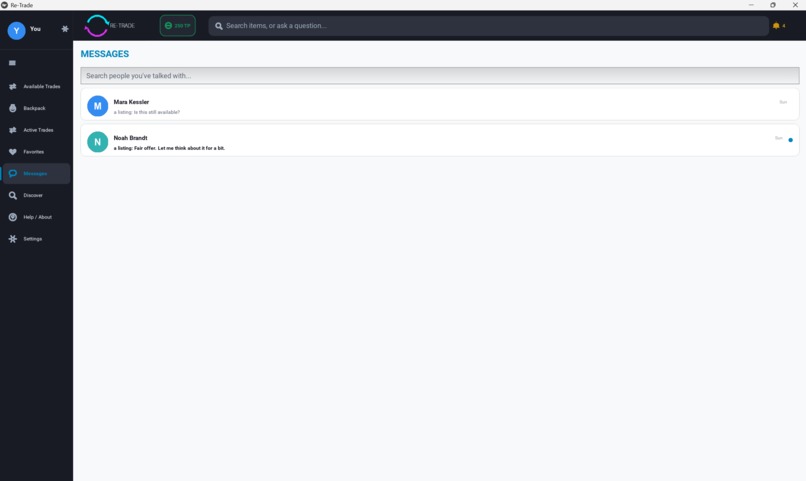
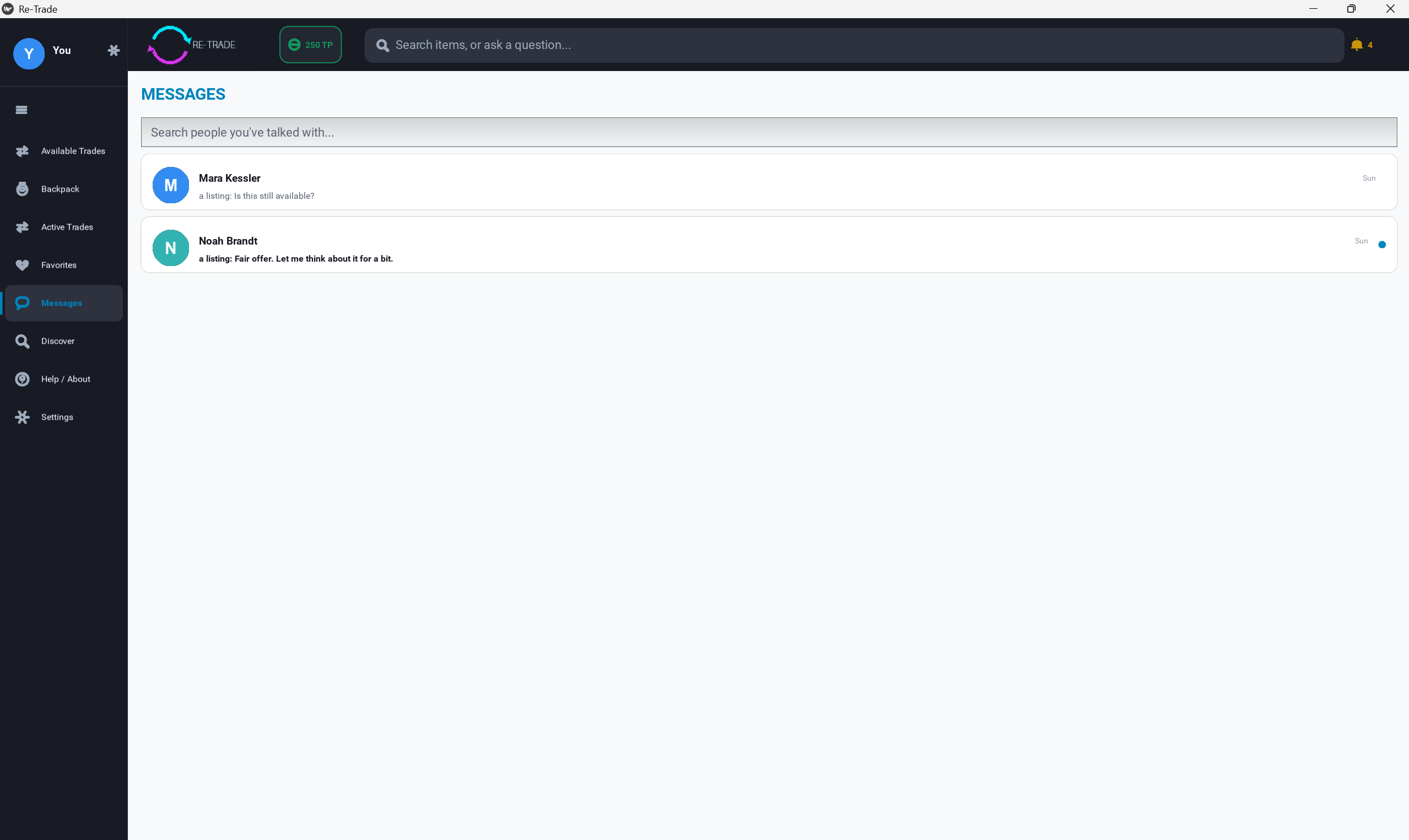
Discuss about your trades
-
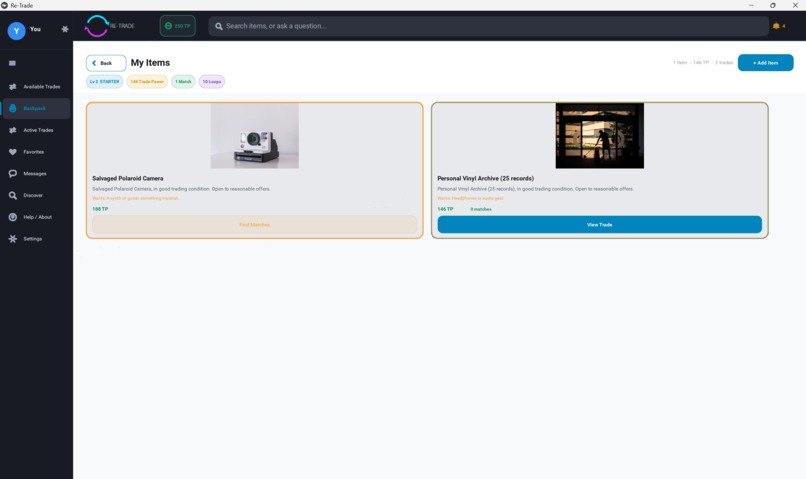
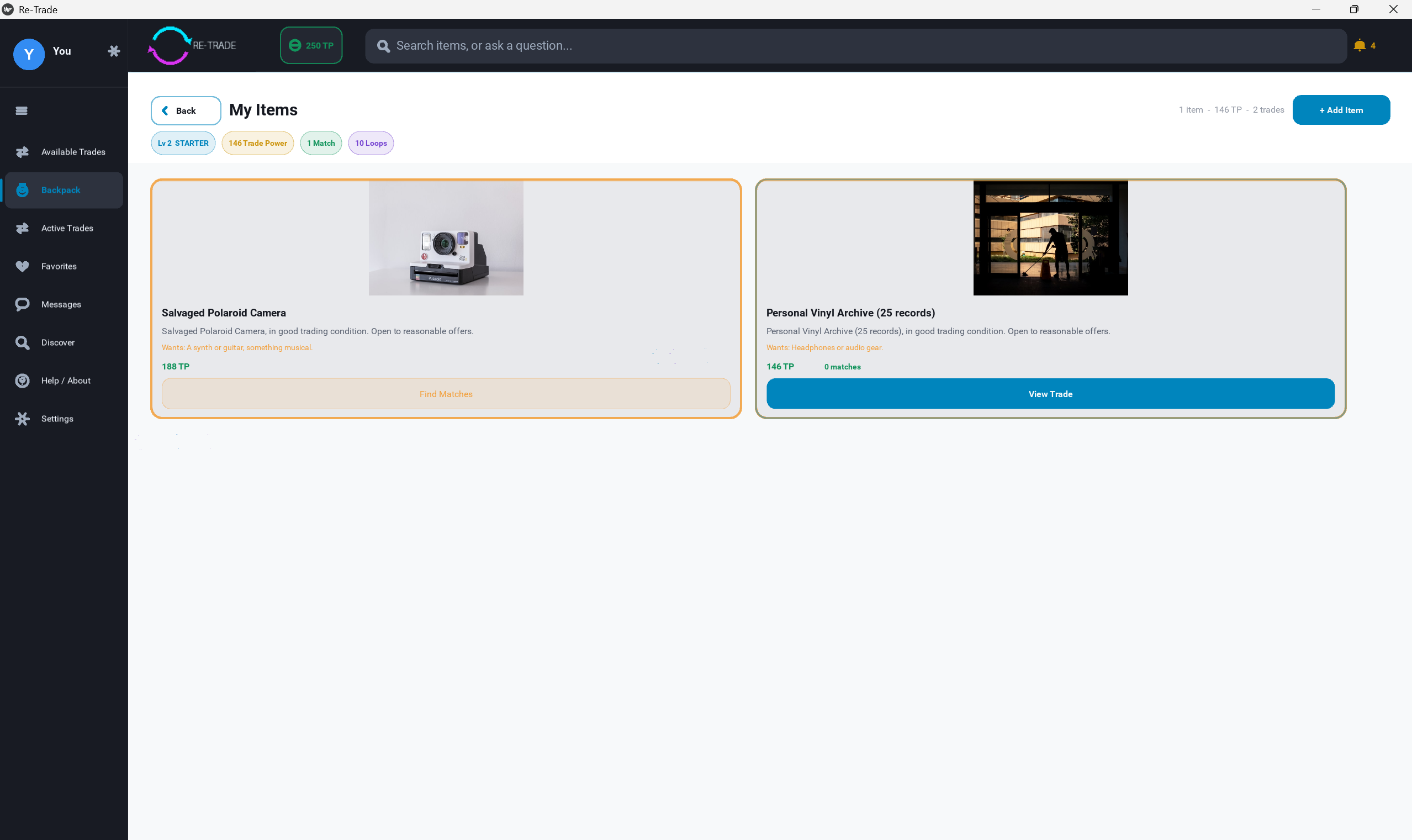
Add new items and skills to you'r backpack
-
-
Inspiration
When we first heard “future city,” we put aside all the futuristic bells and whistles, and tried our best to envision what such a place is actually like to live in: we thought about inflation, scarce resources, rising costs, and how many useful objects dust off in their owner’s possession while other people need them. These hypotheticals led us to realize that the future is not only about smarter cities, but smarter exchange of finite resources. What followed was Re-Trade.
What it does
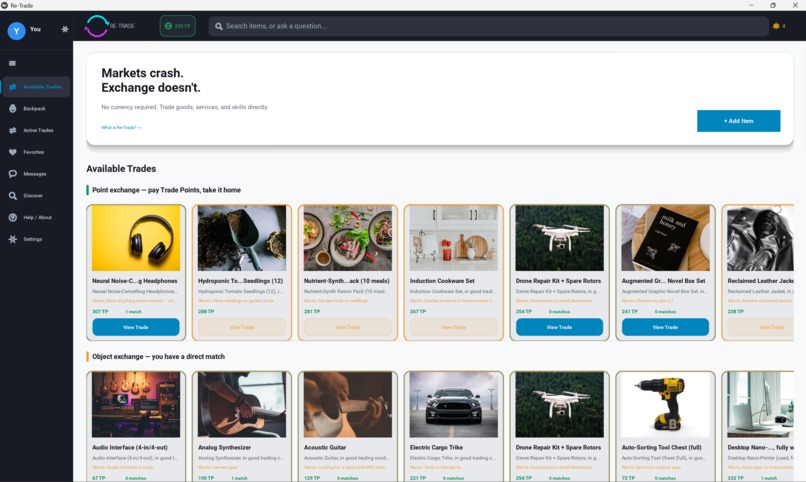
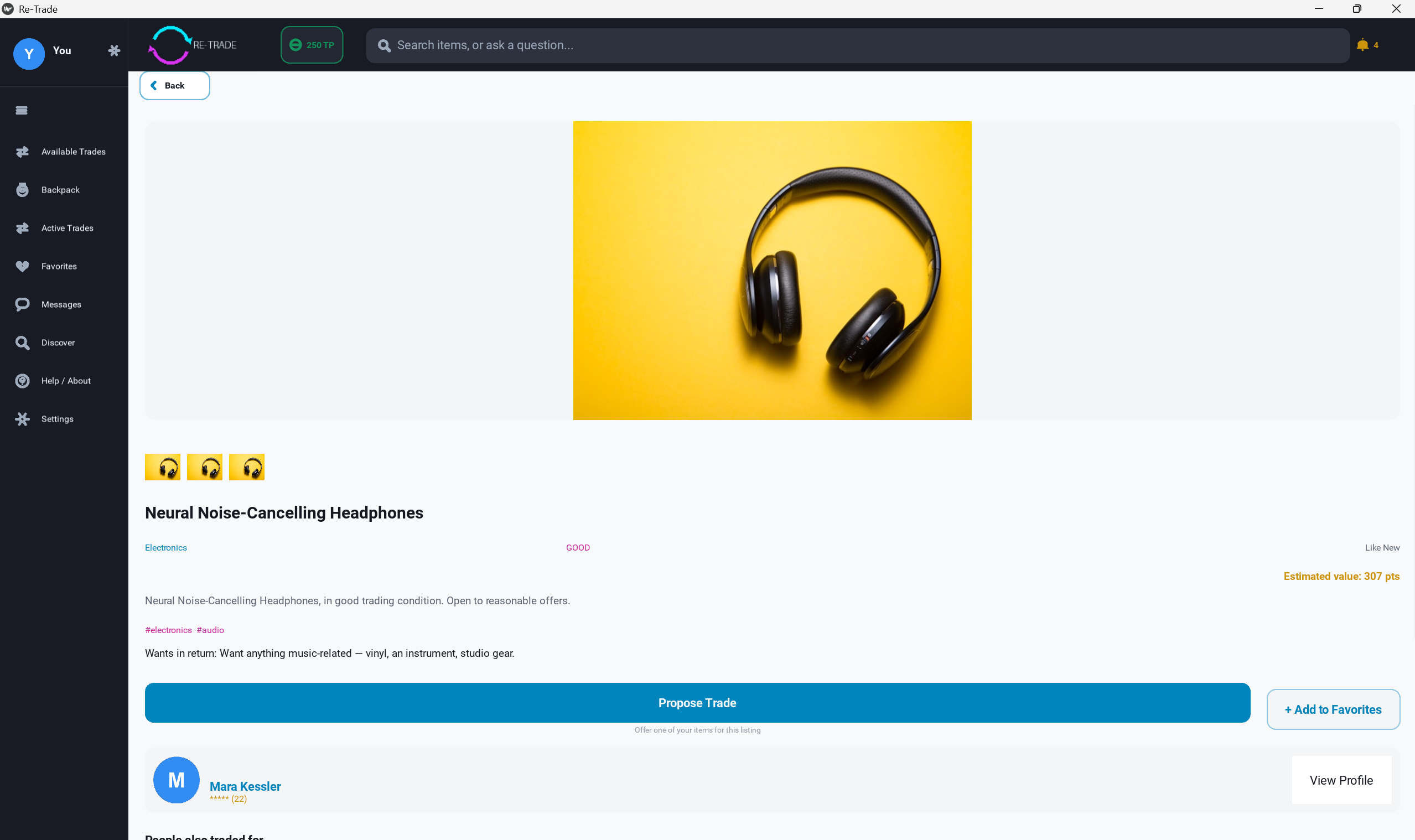
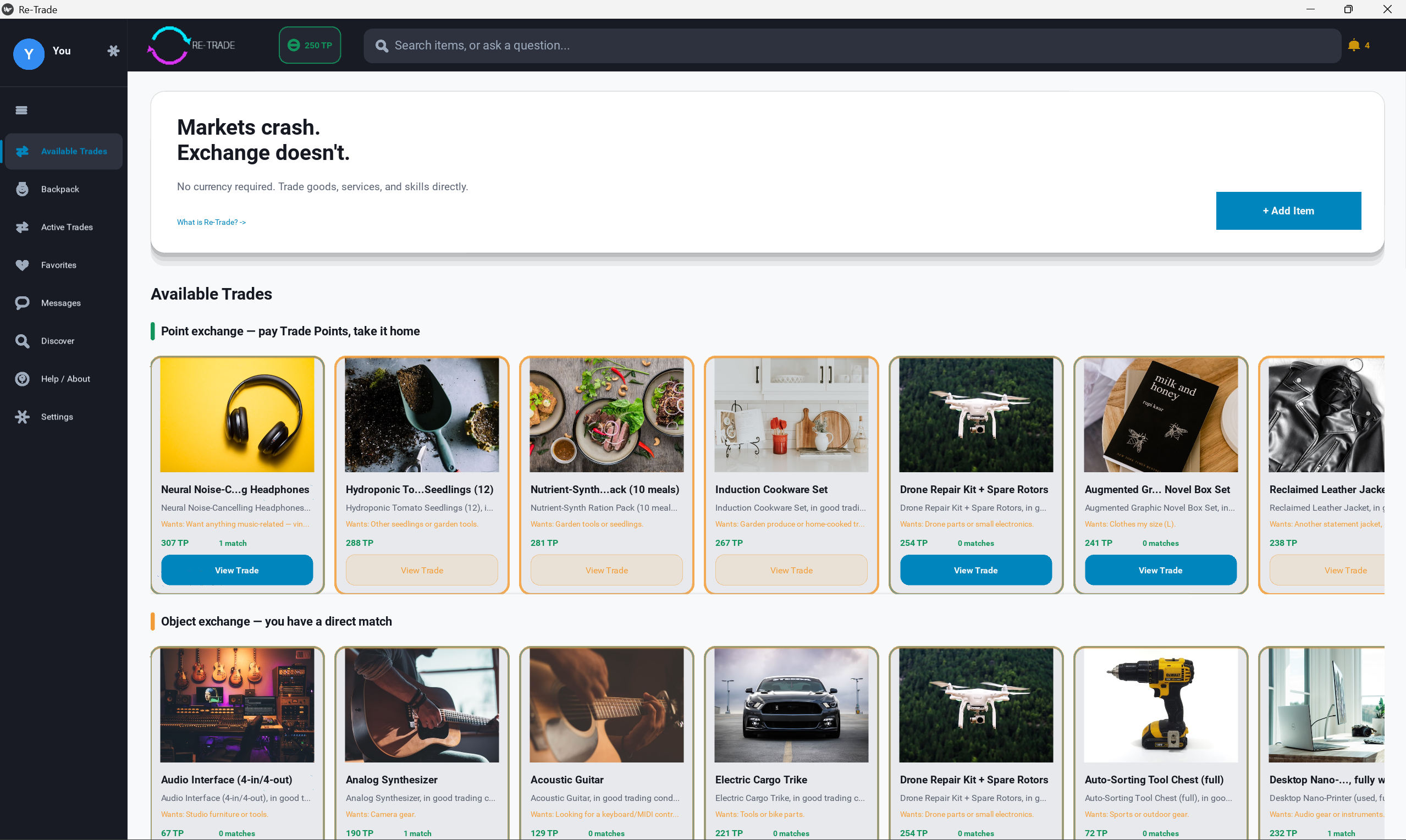
Re-Trade lets people turn unused goods and skills into value through intelligent trading. Users add items or services to their digital Backpack, discover what others are offering, and exchange through direct trades, Trade Points, or multi-way trading loops. Instead of needing two people to want each other’s items, Re-Trade can connect several users so everyone gives something they no longer need and receives something they actually want.
How we built it
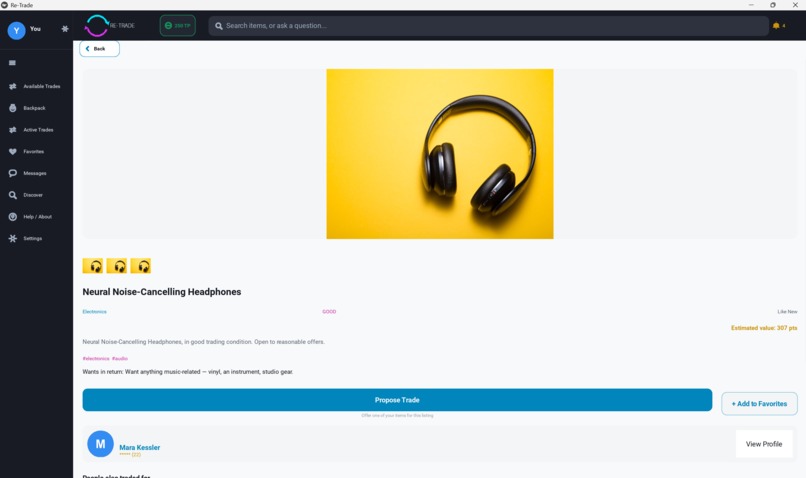
We designed Re-Trade as a desktop-first platform with a Backpack inventory, Discover page, favorites, messaging, active trades, available trades, settings, and an About Us page. We focused on making the product feel less like a normal second-hand marketplace and more like a gamified exchange experience, using collectible-style item cards, smooth interactions, and a clear trading flow.
Challenges we ran into
The hardest challenge was making barter scalable. A simple one-to-one exchange is too limited because people rarely want exactly what the other person has. We had to rethink trading as a network problem, where multiple users can be matched through loops. Another challenge was balancing trust, logistics, and simplicity so the product still felt easy to use.
Accomplishments that we're proud of
We are proud of turning a broad hackathon prompt into a concrete product with a clear identity that has a tangible real-world impact on a city-wide scale. Re-Trade is not just another marketplace. It combines sustainability, inflation resilience, barter, gamification, and community exchange into one app. We are also proud of the multi-way trading concept, because it directly solves the biggest weakness of traditional barter.
What we learned
We learned that the strongest ideas often come from reframing the problem. At first, we focused on the future city itself, but then realized the deeper issue was how value moves inside a community. We also learned that sustainability products need to feel useful and rewarding, not like sacrifice.
What's next for Re-Trade
Next, we want to improve the matching engine, expand multi-way trading, add stronger trust and verification systems, and test the platform with real users. Long-term, we wish to extend Re-Trade’s infrastructure beyond its app interface, and truly attempt at constructing its centralized warehouse that streamlines the trading process between users. The establishment of such a centralized hub is key in Re-Trade’s scalability, as it adds a firm layer of trust in the exchange process, eliminates uncertainty, reduces scams, and creates a smooth experience from beginning to end.
Built With
- claud
- openaiapi
- python

Log in or sign up for Devpost to join the conversation.