-
-
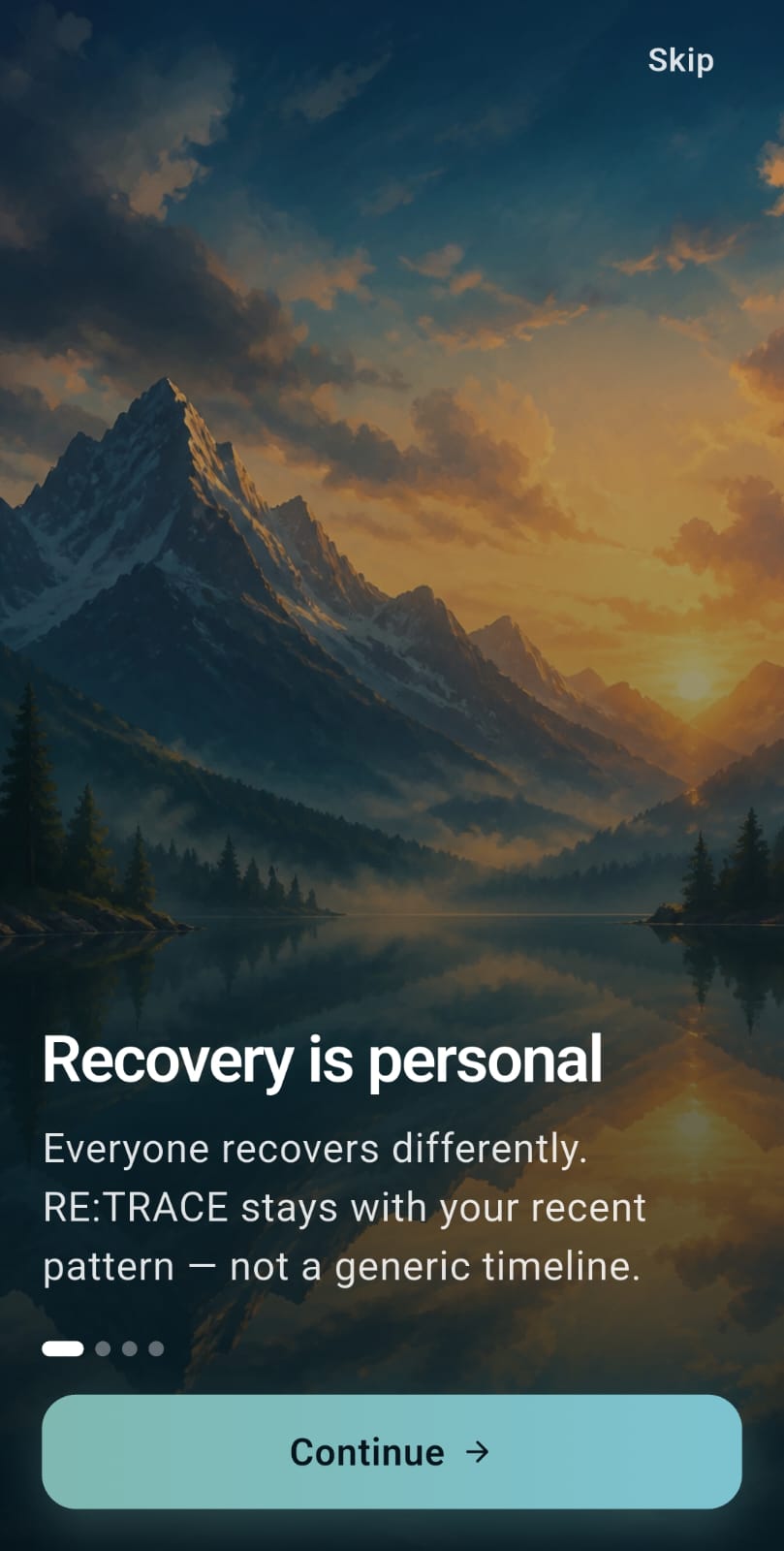
Onboarding
-
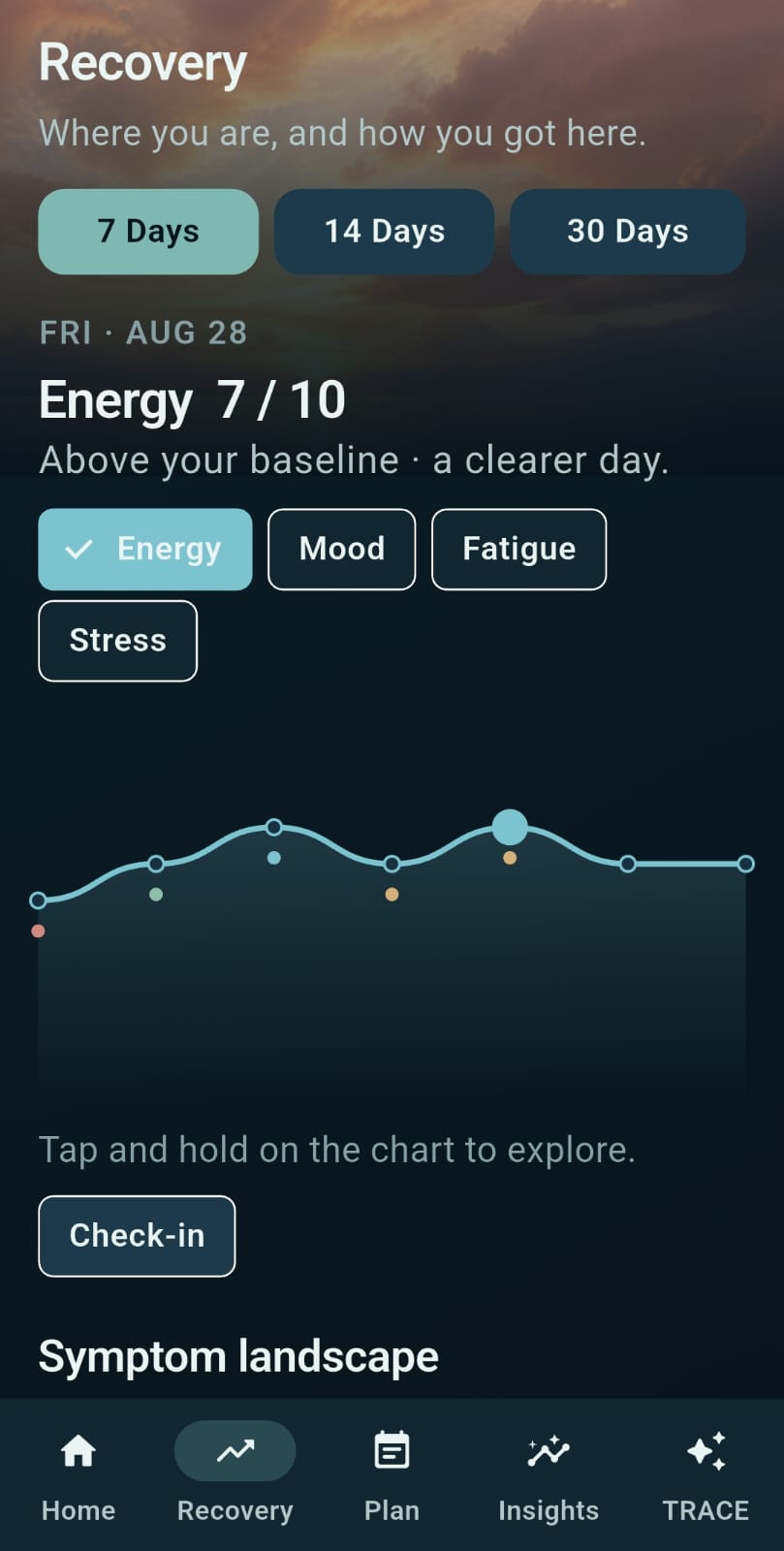
Recovery Monitoring
-
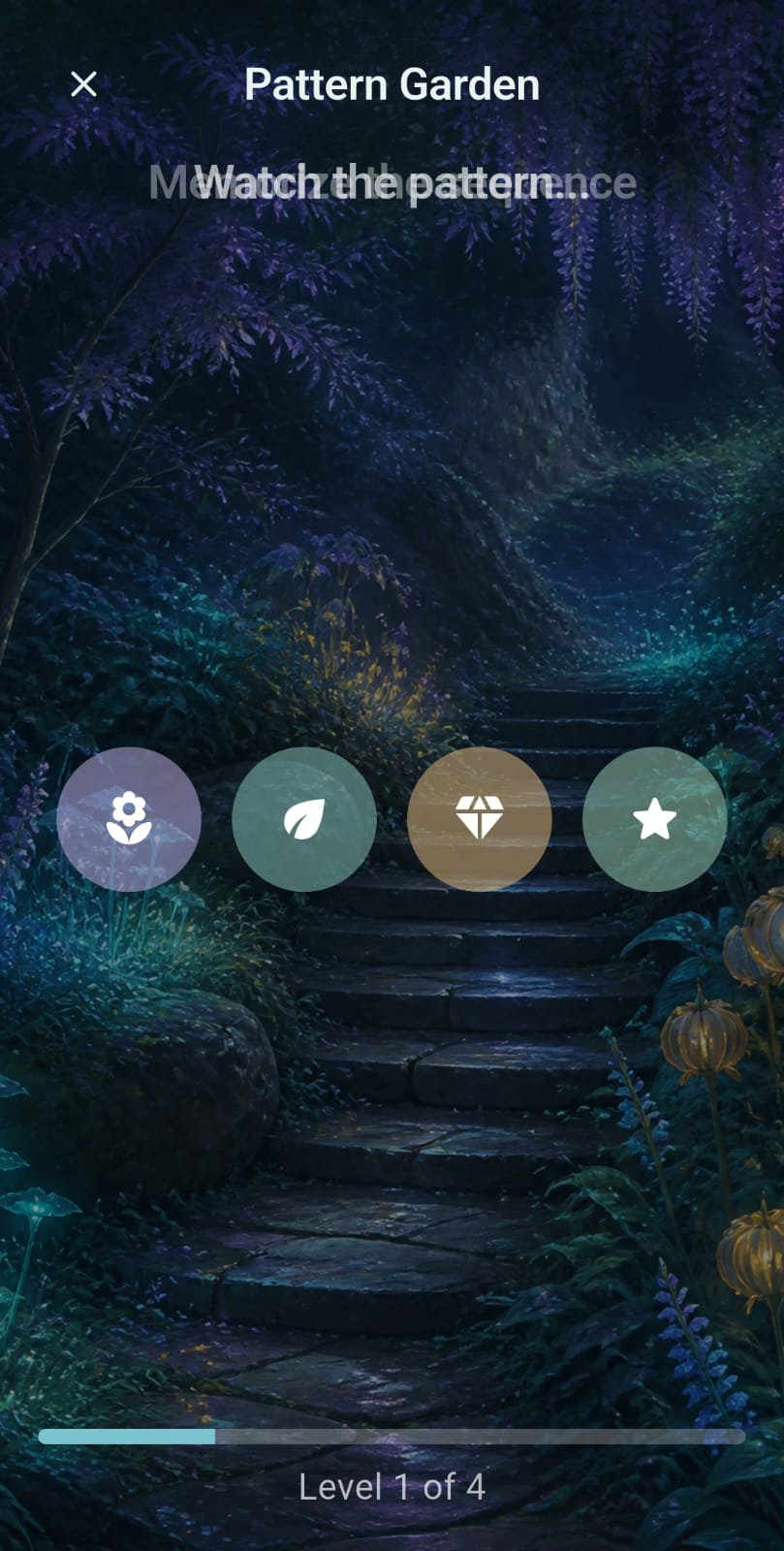
Pattern Garden
-
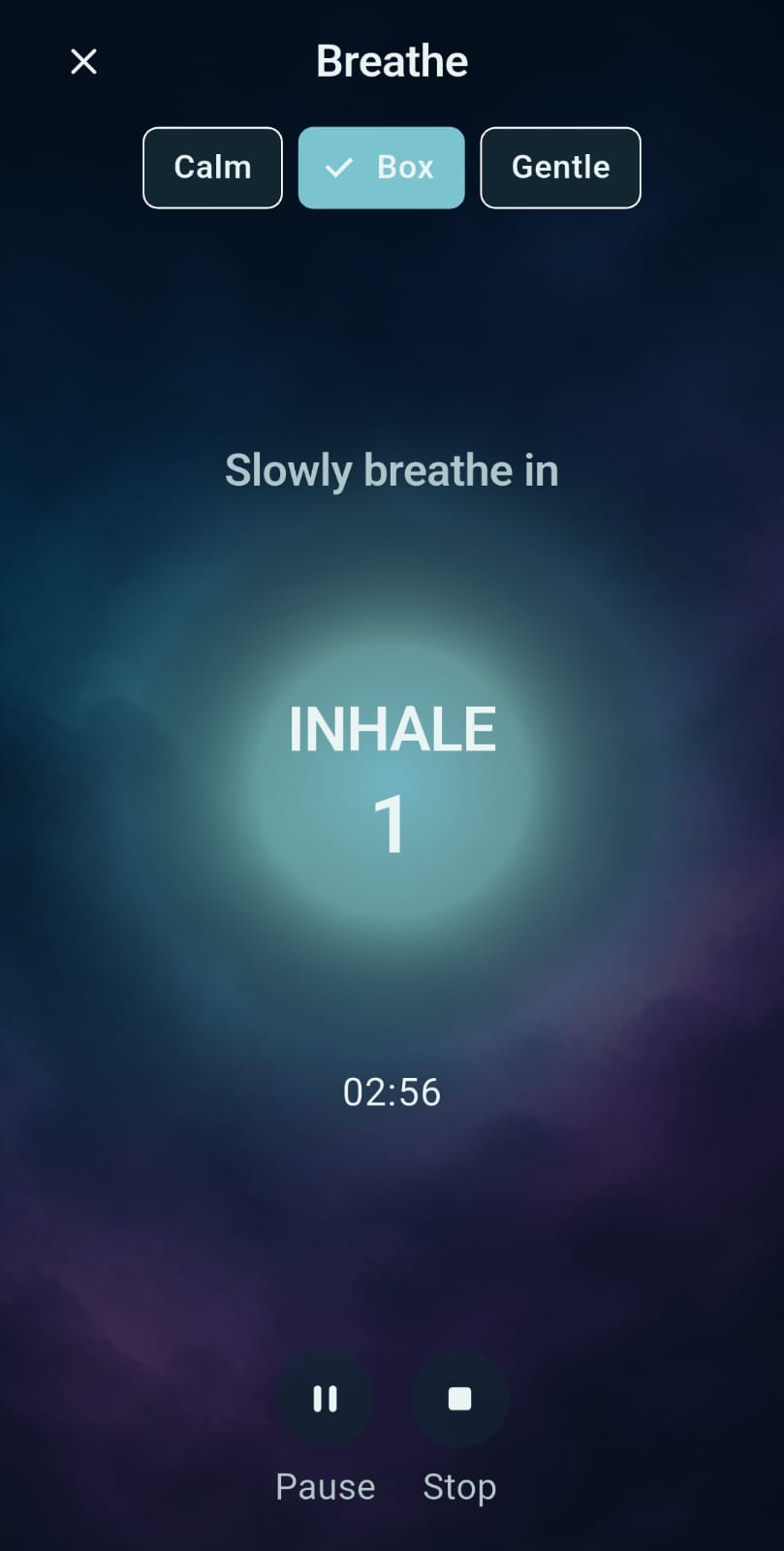
Guided Breathing Tool
-
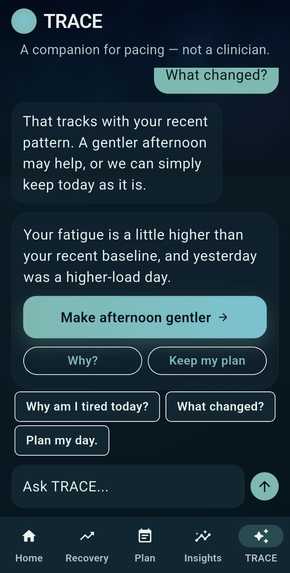
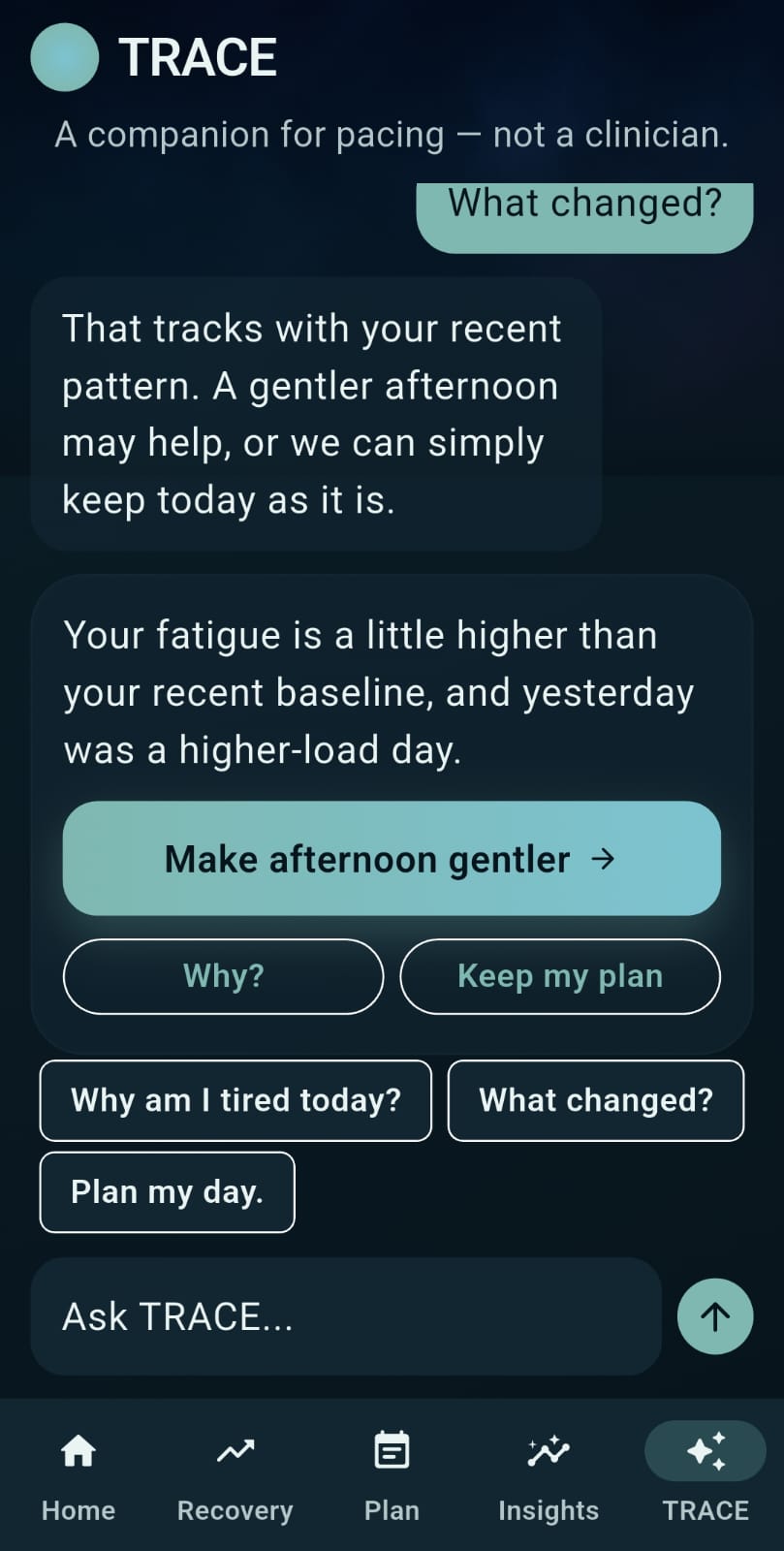
TRACE : Interactive AI Companion
Inspiration
Recovery is rarely a straight line. Whether someone is recovering from a concussion, dealing with cognitive fatigue, or simply trying to return to a demanding routine, a good day does not necessarily mean they are fully recovered, and a bad day does not necessarily mean they are getting worse.
We noticed that most recovery experiences are fragmented. People track symptoms in one place, sleep and activity somewhere else, and their actual day-to-day experiences often remain in their head or in a notebook. The data exists, but there is very little help in understanding how these factors relate to each other personally.
That inspired us to ask:
What if recovery could learn from you, instead of simply asking you to track it?
This led to RE:TRACE — a personalized AI recovery companion designed to understand individual recovery patterns and turn them into meaningful, actionable guidance.
What it does
RE:TRACE creates a personal picture of recovery by bringing together daily check-ins, symptoms, mood, fatigue, stress, sleep, activity, workload, and other available health signals.
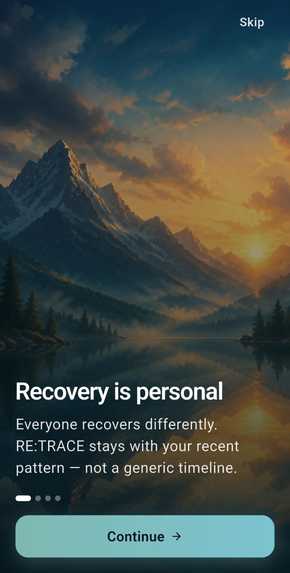
Instead of relying on a generic definition of "normal", RE:TRACE establishes an individual's personal baseline and looks for meaningful changes from that baseline.
Users can:
- Track their energy, fatigue, symptoms, stress, and overall recovery.
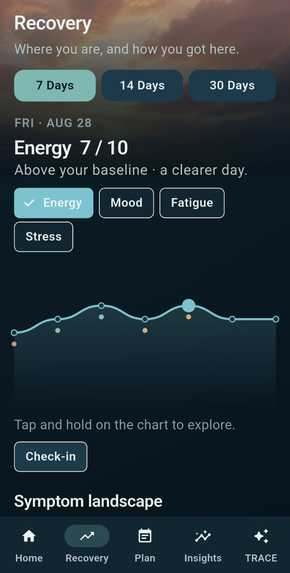
- View recovery patterns across 7, 14, and 30-day periods.
- Understand what has changed and which factors may be contributing to it.
- Receive personalized suggestions for structuring their day.
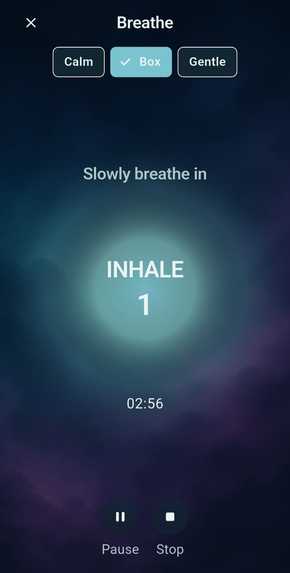
- Use guided breathing and short reset activities when they need to reduce cognitive load.
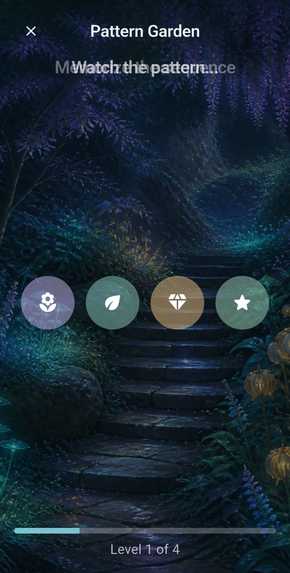
- Visualize their long-term progress through the interactive Pattern Garden.
- Interact with TRACE, our AI recovery companion, to make recovery information easier to understand.
The goal is not to diagnose the user or replace professional medical care. RE:TRACE is designed as a personal decision-support and self-management tool that helps users understand their own patterns and respond to them more thoughtfully.
How we built it
We built RE:TRACE as an interactive mobile application prototype with three main layers: a recovery data layer, an AI intelligence layer, and an interactive experience layer.
The recovery layer organizes self-reported symptoms and behavioral/health signals into a timeline and personal baseline.
The AI layer interprets changes in these signals and converts them into natural-language insights and personalized recommendations rather than leaving users with raw numbers and graphs.
The experience layer brings this information together through a low-stimulation interface, TRACE as the conversational companion, guided recovery activities, and the Pattern Garden.
For the prototype, we focused on demonstrating the complete user journey—from checking in and understanding current recovery to receiving insights, planning the day, taking a reset, and seeing progress over time.
The architecture is designed to be extensible so that supported health platforms and wearable APIs can be integrated as the product moves beyond the prototype.
Challenges we ran into
One of our biggest challenges was deciding how to make recovery data useful without turning the product into another overwhelming health dashboard.
There are many metrics that can potentially be collected, but more data does not automatically mean better recovery guidance. We had to focus on what information is meaningful to the user and how to communicate it without creating additional cognitive load.
Another challenge was balancing personalization with safety. Recovery is highly individual, and an AI system should not present predictions or patterns as medical facts. We therefore designed RE:TRACE around personal trends and transparent insights rather than diagnosis.
We also had to think carefully about accessibility. Since our target users may experience fatigue, headaches, brain fog, or sensitivity to stimulation, the interface itself needed to feel calm and easy to navigate.
Accomplishments that we're proud of
We are proud that we moved beyond the idea of a conventional symptom tracker and created a complete recovery experience.
The prototype connects several parts of the recovery journey: personal check-ins, baseline tracking, pattern visualization, personalized insights, daily planning, guided breathing, and the Pattern Garden.
We're especially proud of TRACE because it gives the system a human and approachable interface. Instead of forcing users to interpret complex recovery information themselves, TRACE helps translate it into simple conversations and actions.
Most importantly, we were able to turn our central idea—"recovery should be understood personally"—into an interactive experience rather than just a concept.
What we learned
We learned that building for well-being requires a different mindset from building a conventional productivity or data application.
The goal isn't to show users everything the system knows. The goal is to show them what matters right now.
We also learned that personalization does not necessarily mean collecting more data. A small number of meaningful signals, understood in the context of an individual's own baseline, can be more useful than a dashboard filled with unrelated metrics.
Finally, we learned that accessibility has to be considered from the beginning. For a recovery-focused product, reducing cognitive and visual load is part of the functionality—not simply a visual design choice.
What's next for RE:TRACE
Our next step is to move from a prototype to a continuously learning, privacy-conscious recovery platform.
We want to integrate supported health platforms and wearable devices so users can optionally connect real sleep, activity, heart-rate, and other available health signals.
We also want to improve the personalization model using longitudinal data, make the recommendations more explainable, and validate the experience with real users and healthcare professionals.
Beyond concussion recovery, we see RE:TRACE evolving into a broader cognitive wellness platform for students, professionals, athletes, and anyone returning to demanding routines after periods of illness, fatigue, or overload.
Our long-term vision is simple:
RE:TRACE doesn't just track recovery. It learns it, explains it, and helps you move forward.
Built With
- dart
- docker
- express.js
- flutter
- github-actions
- node.js
- typescript
- vercel


Log in or sign up for Devpost to join the conversation.