-
-
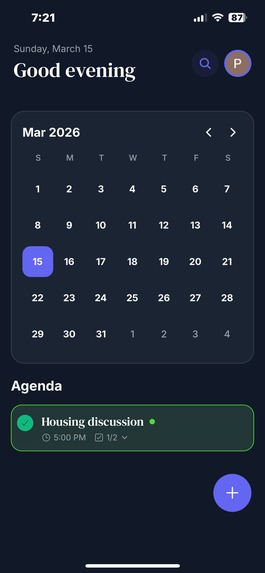
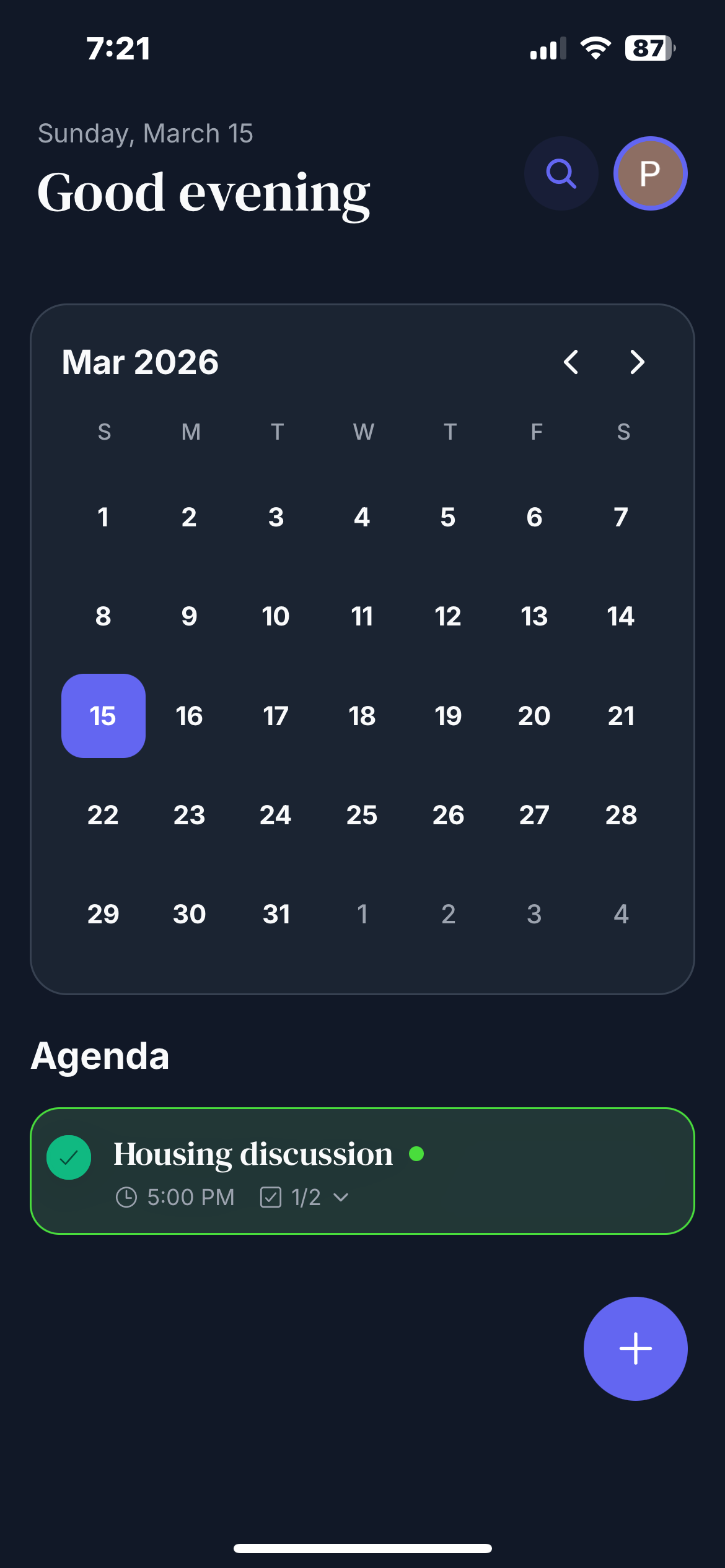
Callender View
-
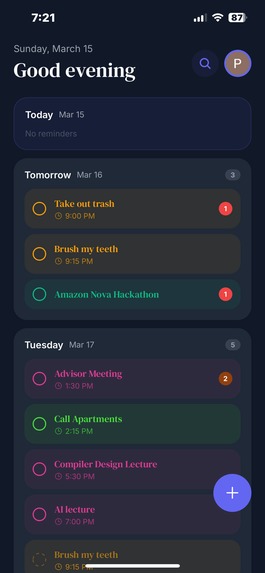
Weekly Forecast View
-
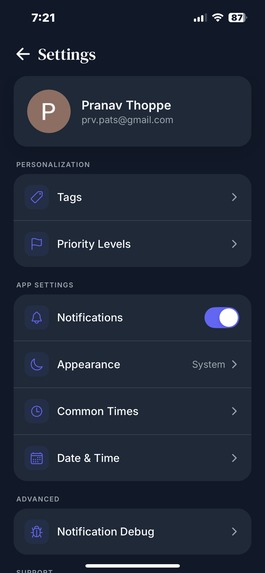
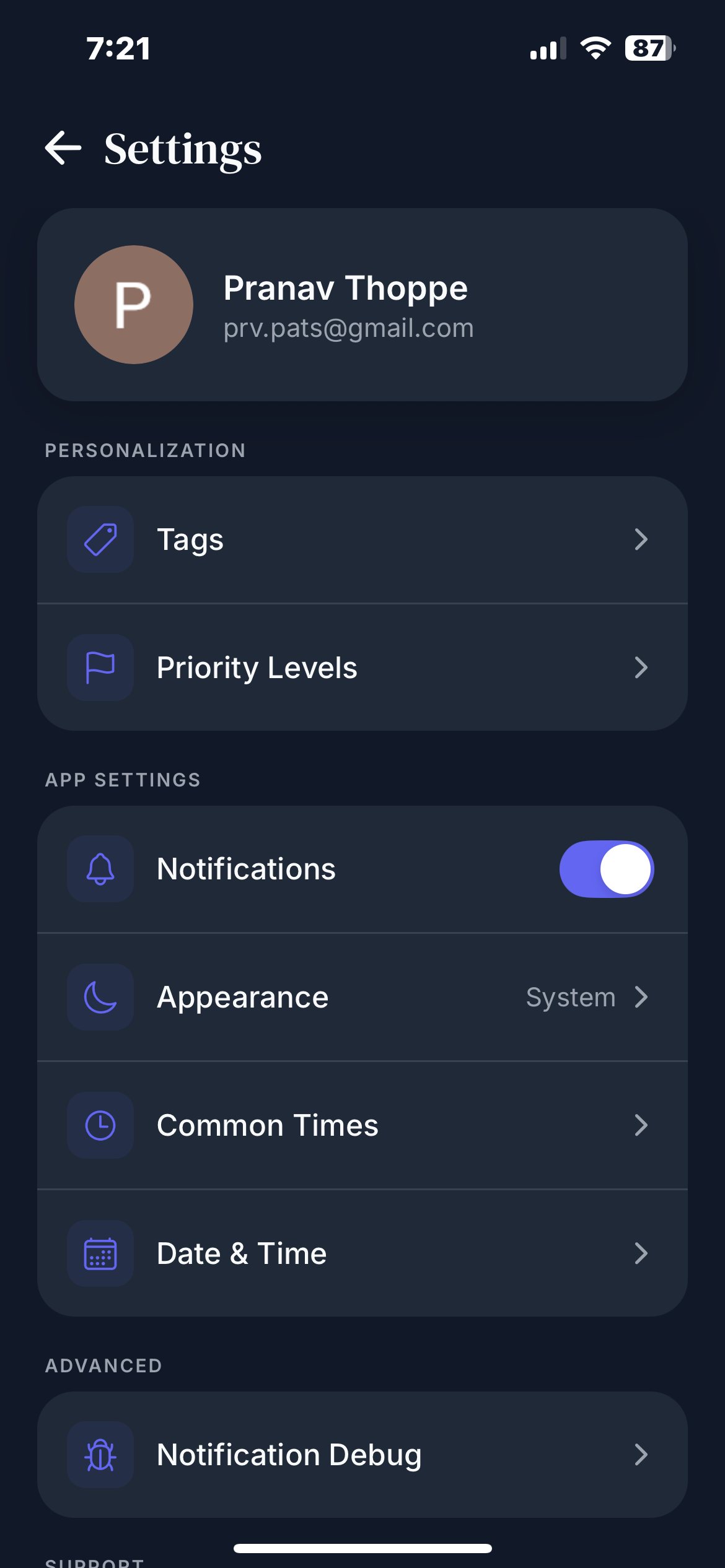
Settings
-
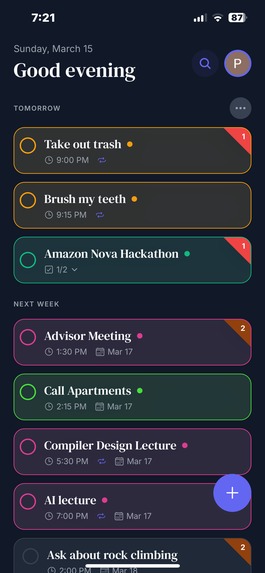
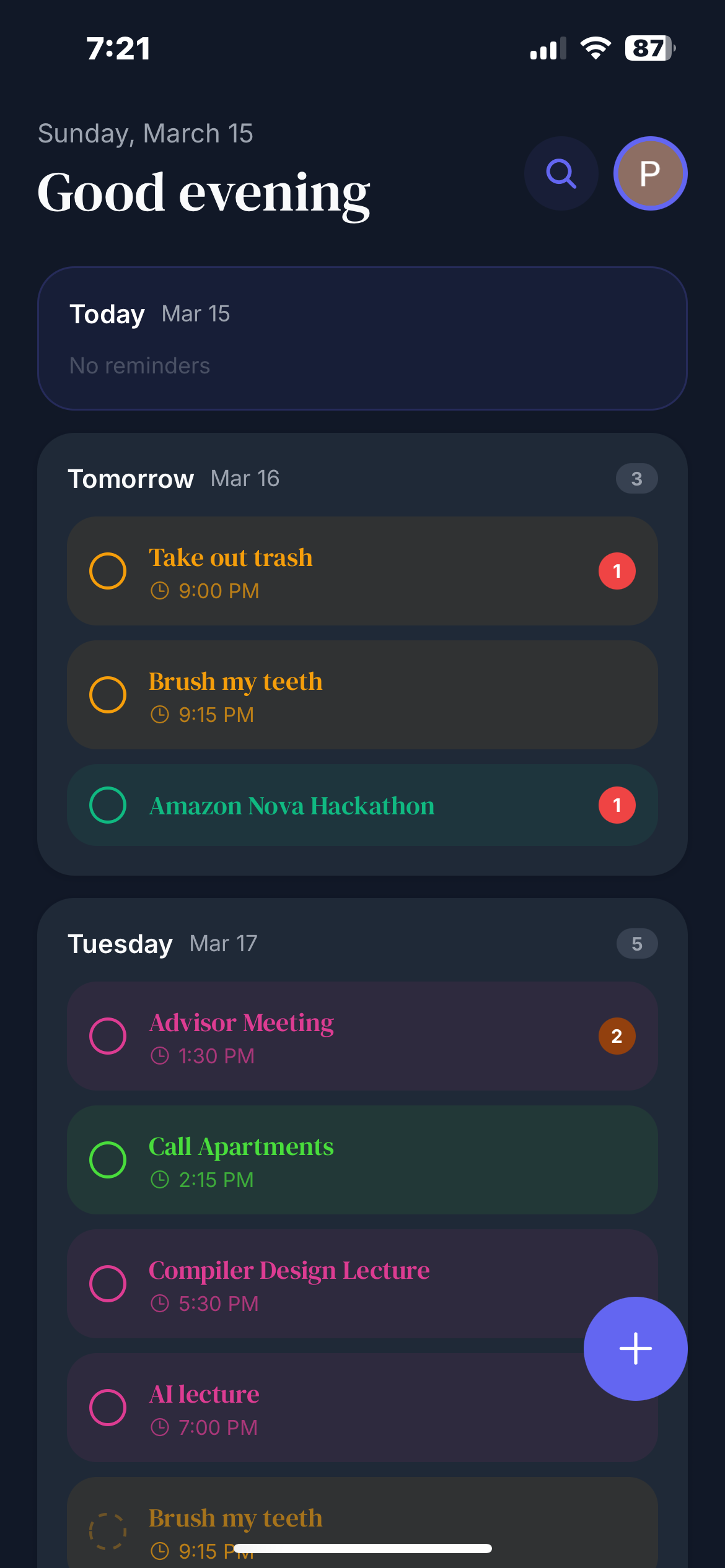
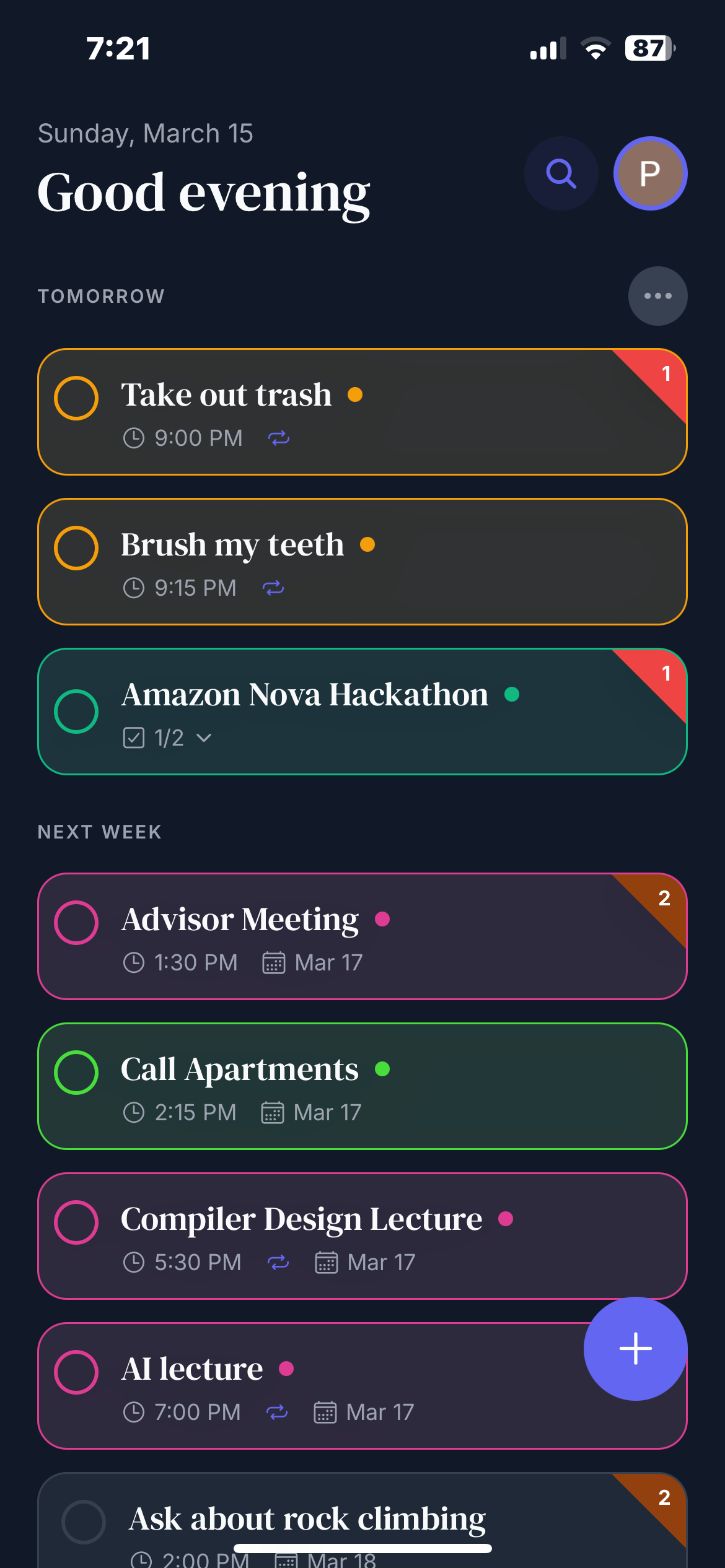
List View
-
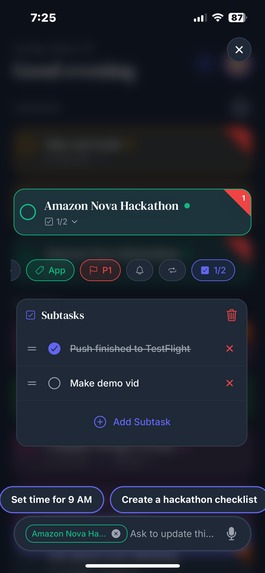
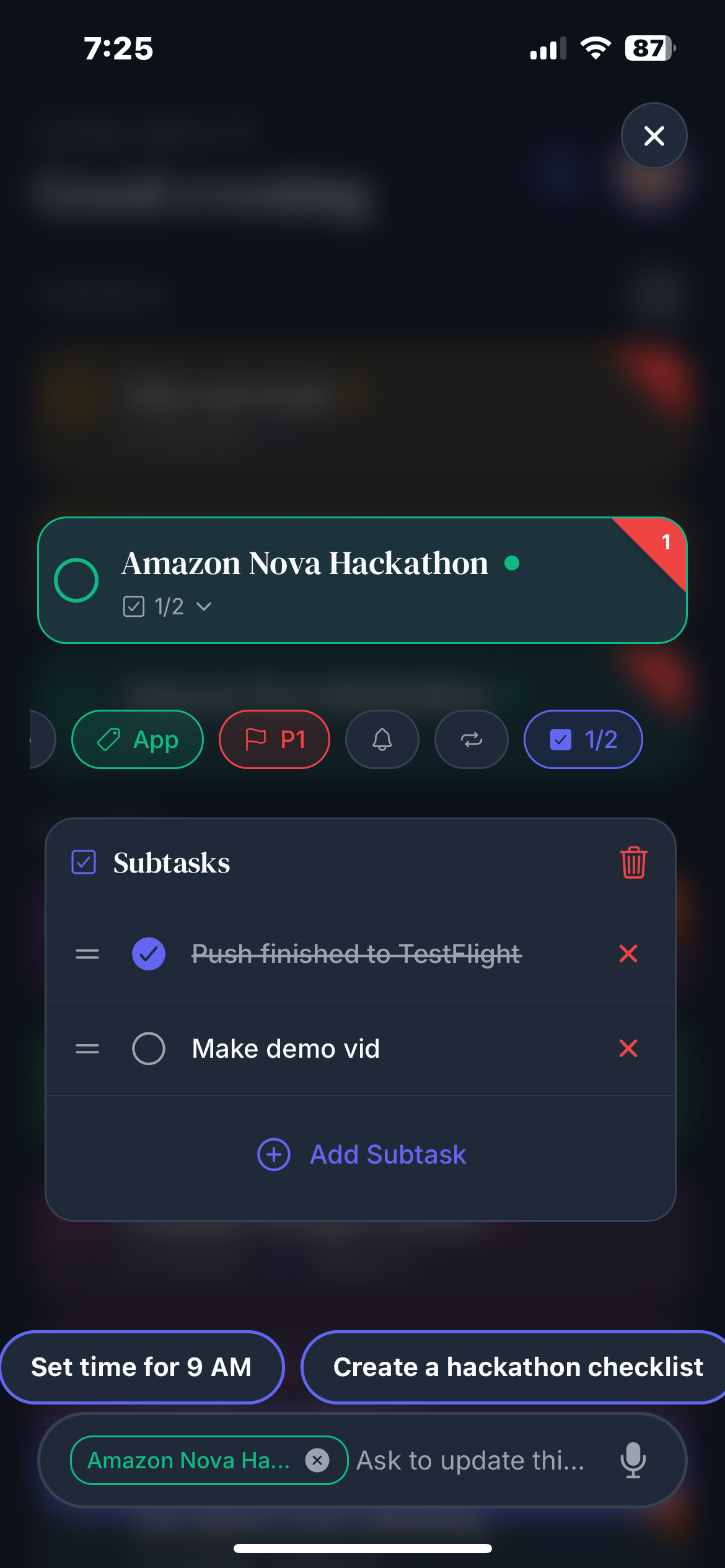
Subtask Modal
-
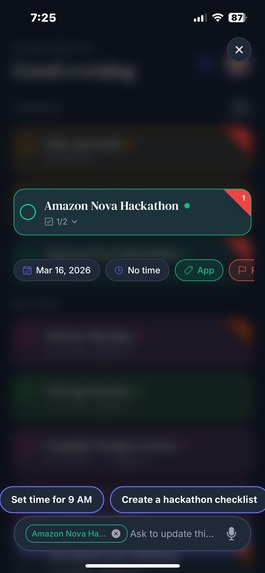
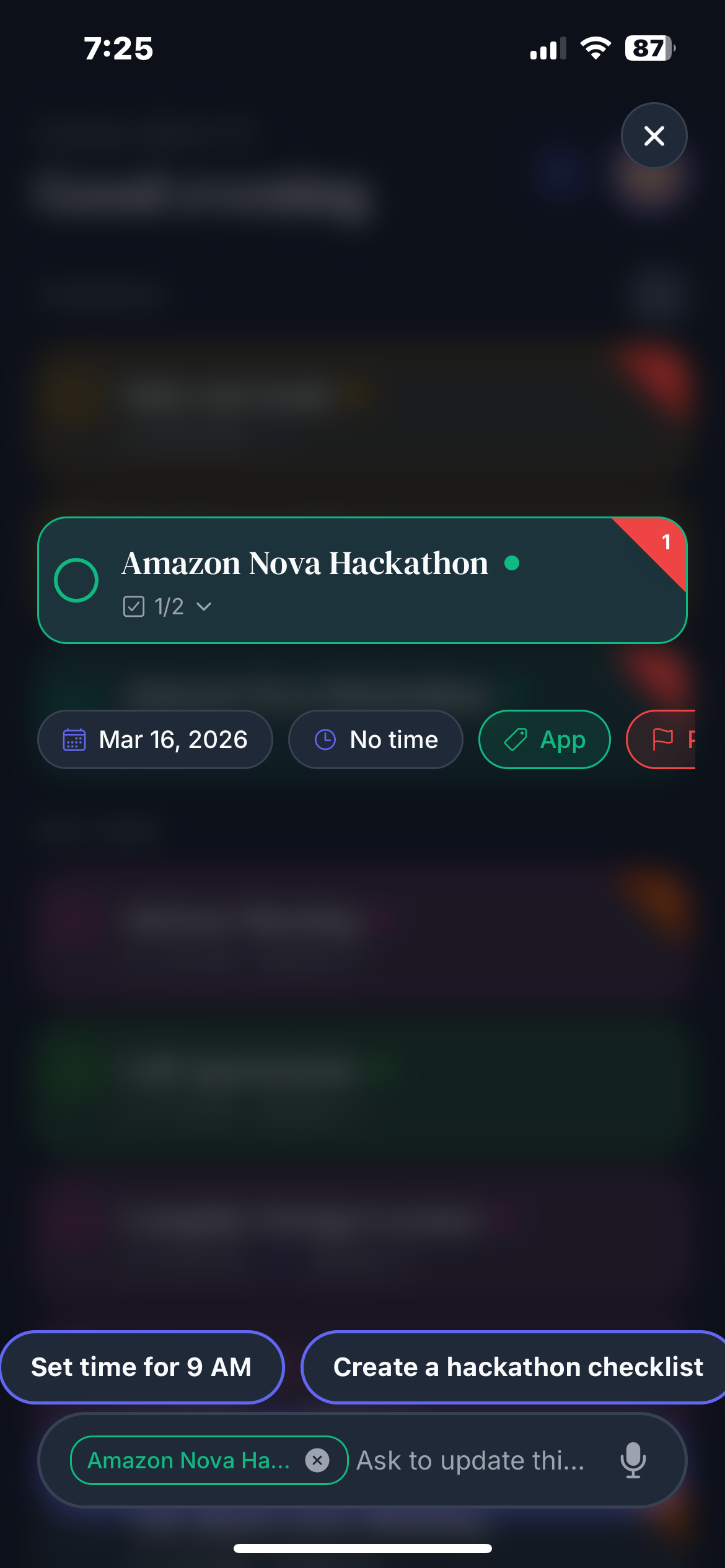
Reminder Updating
Inspiration
I started building Re-Mind around 2 months ago for a different hackathon to build a reminders app. Since then, I feel Re-Mind has evolved into its own AI-centered platform. When I first started building the reminders app, one of the most important pieces of feedback I got was that since I wanted to make a personalized app, entering all the little details for each reminder was tedious. So, I switched gears and wanted to make the process as easy as possible with AI acting as the middleman between the user and staying organized.
What it does
Amazon Nova models are an important part of the app's standout features. It's easiest to break it down into 3 distinct agents:
- Creating Reminders
- Updating Reminders
- Searching Reminder History
1: Letting the user create reminders in the easiest way possible was the main focus of incorporating AI into the app. Because the app is highly personalized for each user, Nova can assign tags, priority levels, notification timing, repeating rules, and even subtasks all for a singular reminder. Letting an AI handle all these values makes using the app much less time-consuming since the user can just explain what they want with natural language. The user's main ways of communicating with the models are through chat mode, voice mode, or image mode.
2: The update agent is meant to have a personal-assistant-type role. It can help the user reschedule, break down tasks, and give proactive insights for a specific reminder. In the future, there will be more ‘update agent’-specific features, but right now this is the core of what it does aside from reassigning values in the same way the reminder-creation agent does.
3: Letting the user have an archive of their previous tasks is something I haven’t seen in many other reminder apps. Using Nova’s vector-embedding database, this agent can search based on how the user has personalized their use of the app. The search takes in keywords and phrases and ranks the most relevant reminders, while generating an analysis of what it finds.
How I built it
I'm proud to say that this app as a whole has been 99.9% coded by AI. Using tools like Cursor and Antigravity, I've been able to speed up development by having the agents write up plans and documentation that I can review. Reviewing plans has been a game-changer for AI-assisted development. Previously, I would explain a feature I wanted to implement, but the AI would often miss an edge case, and I would have no way of realizing where the mistake was coming from. With plans, I can gain an understanding of where in the codebase the feature will live and based on that, I can ask questions and request modifications from the agent.
Challenges I ran into
This was my first time building an AI system that would generate new reminders, modals and components that would work inside the reminder system. There's a massive difference in having a chatbot that takes input and outputs text, compared to an agent that's calling tools, formatting output in specific ways to communicate with the frontend, and understanding previous user context. These are a lot of moving parts. Prompting the different agents to understand how the app works and what their roles are was a huge learning curve.
What I learned
Working on this project gave me a great first experience working on an agentic system. Platforms of the future are going to be agent driven. This means each user will have an LLM with context specific to the user's actions. Re-Mind's Nova agents form the foundation layer of the final vision, and I learned how to give an agent user specific context so that, with tool-calling abilities, it can personalize to how the user organized their tasks.
What's next for Re-Mind
The next step for Re-Mind would be marketing and gaining users, BUT I think the future features I have in mind are worth building and talking about. Expanding on what I said earlier on agentic platforms, I think building more on user context is an interesting route to go down. Agents can now go through user activities on other platforms like Slack, Teams, Discord, and more. This could be utilized in-app through an agent that is given user permission by the user to go out and be an assistant that can surface important items to the user, and even schedule time blocks for them.
Another idea is to use the same agent architecture into a peer-to-peer system. A problem my friends and I have is that often our schedules never line up and hanging out with everyone rarely happens. Since an app like Re-Mind can understand what the user has going on, it's just a matter of having your agent talk to your friends' and let them handle the hard part of finding a time.
Built With
- antigravity
- cursor
- expo.io
- react-native
- supabase

Log in or sign up for Devpost to join the conversation.