-
-
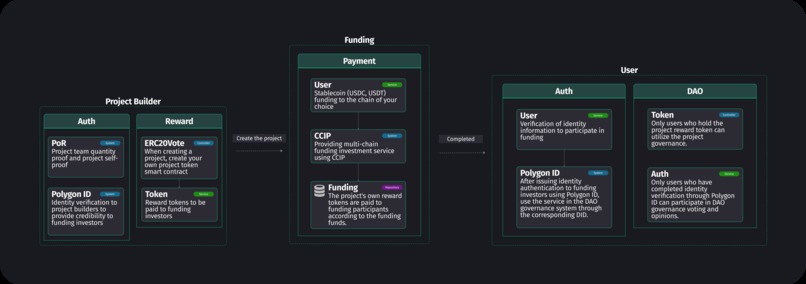
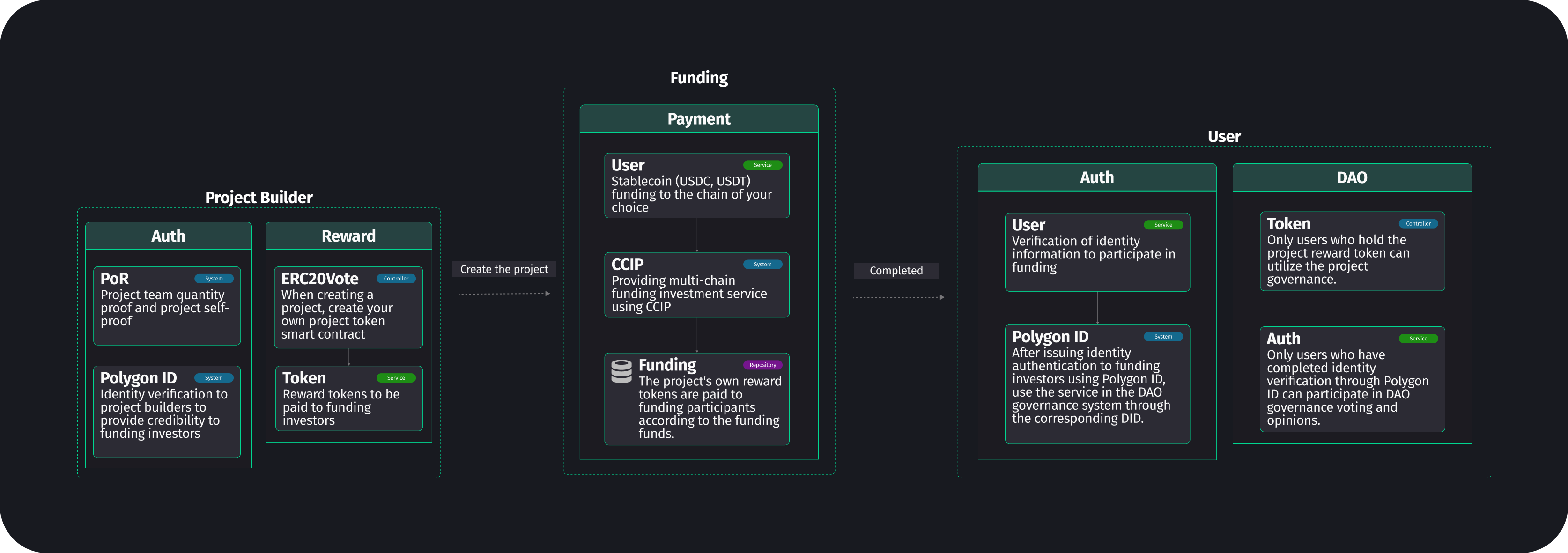
Architecture in the Re-Fresh UserFlow
-
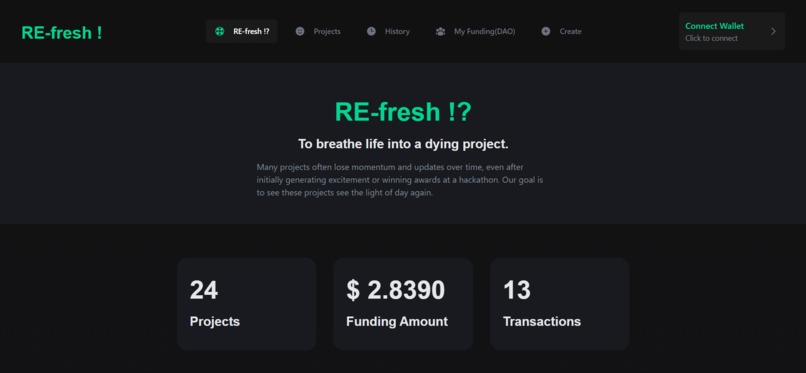
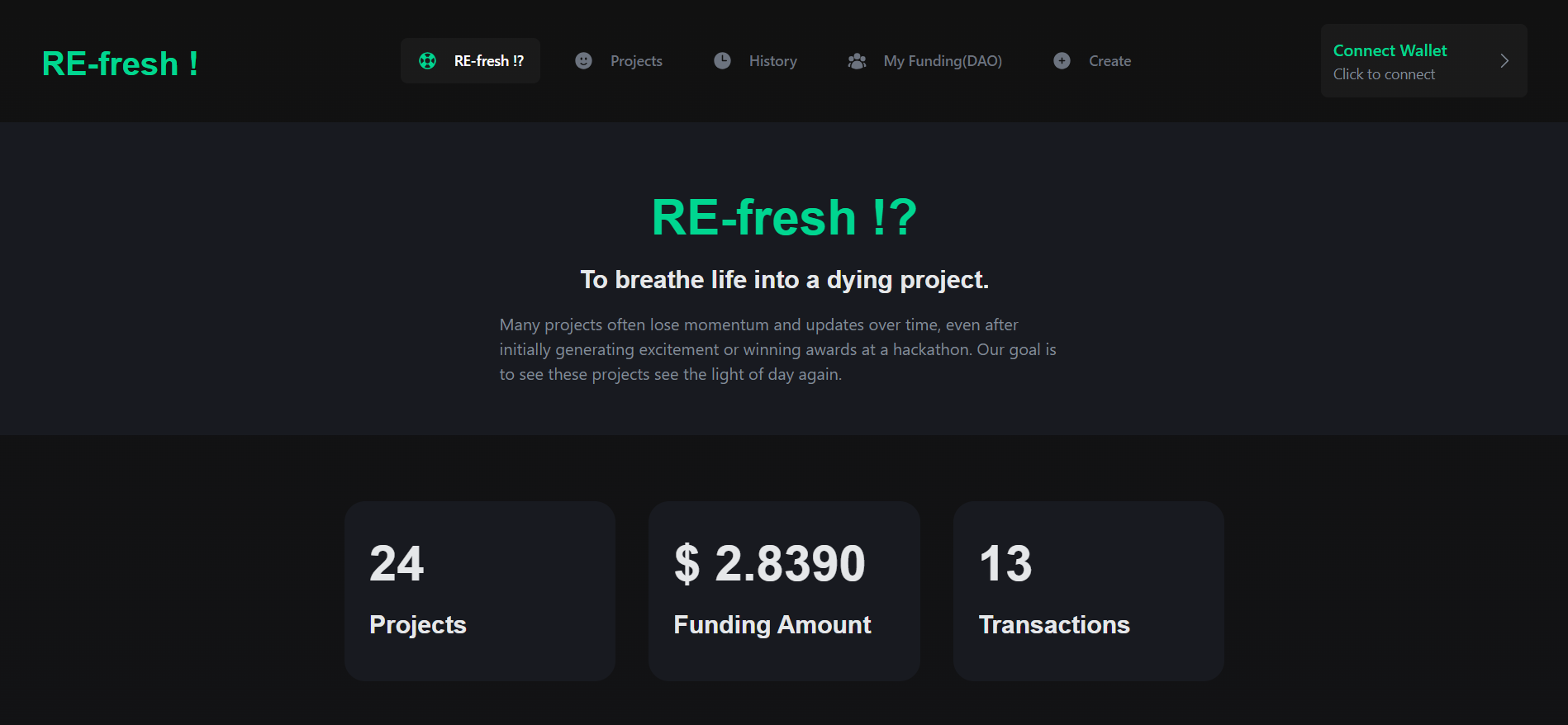
Main
-
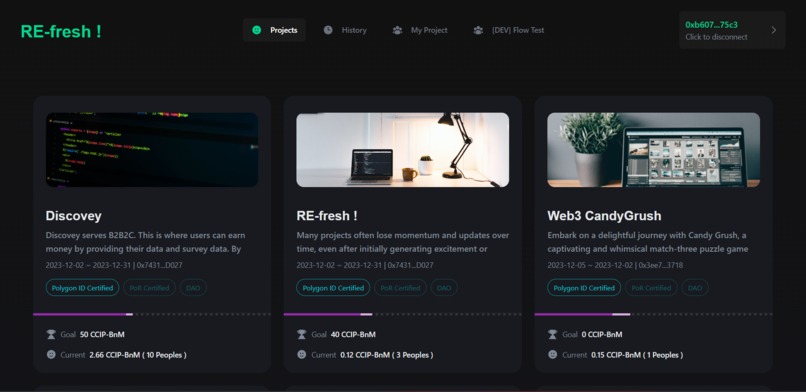
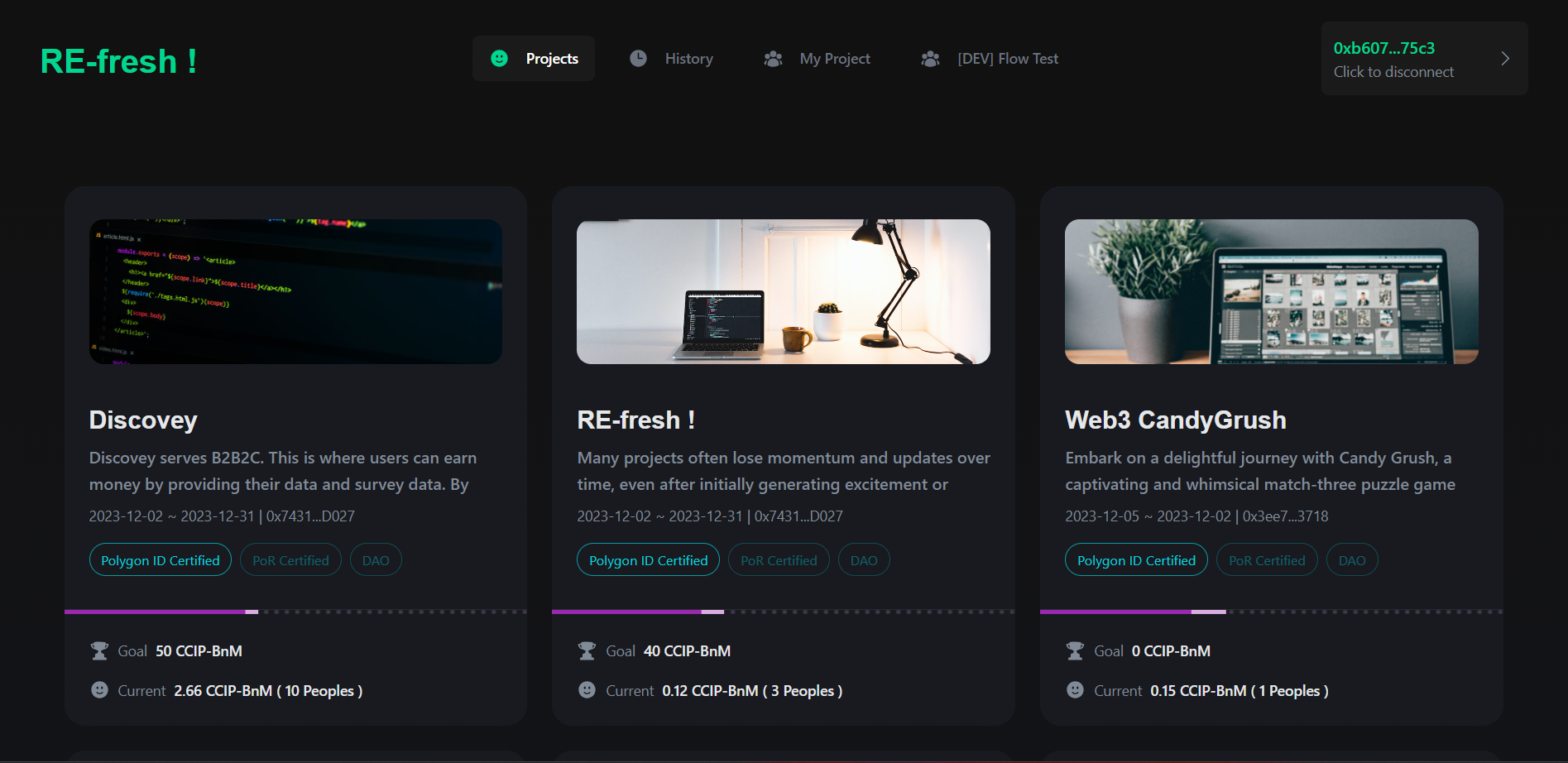
Project
-
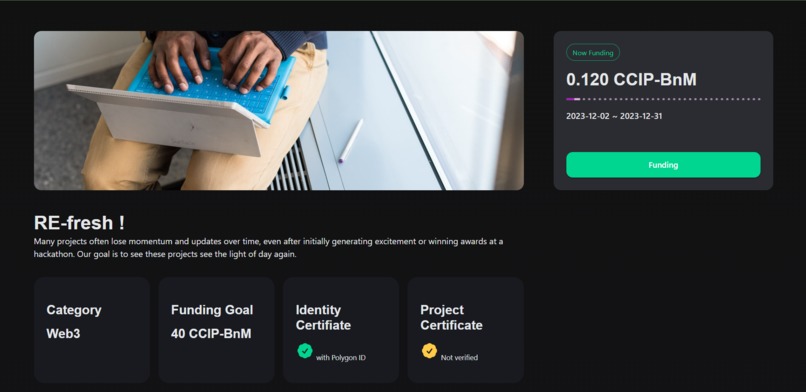
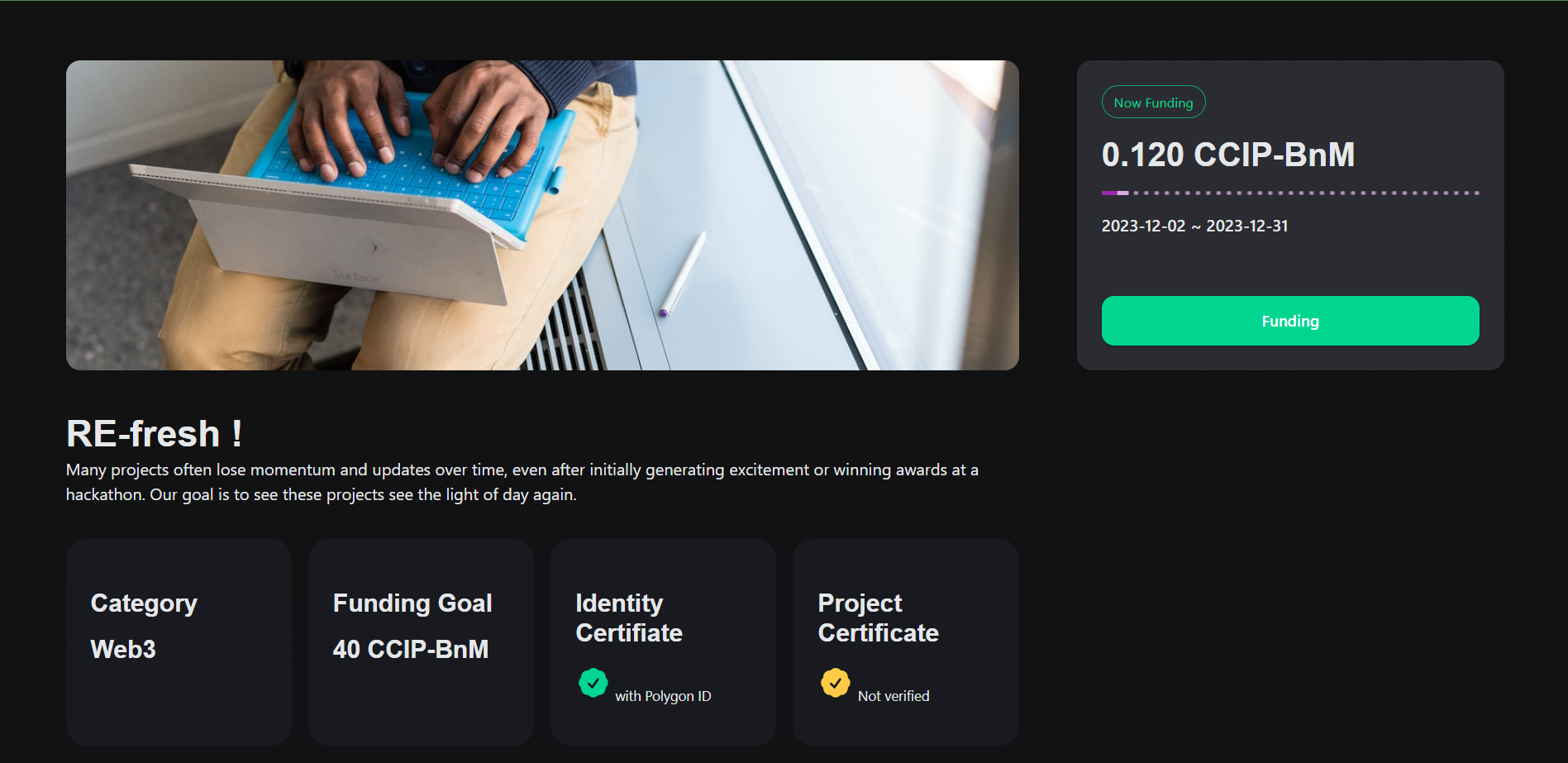
Project Detail
-
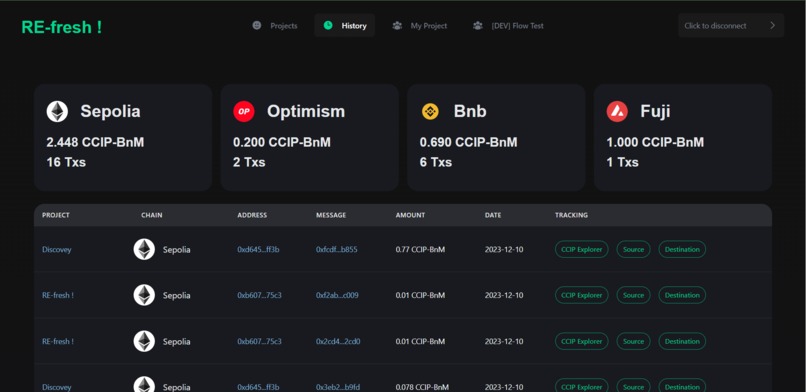
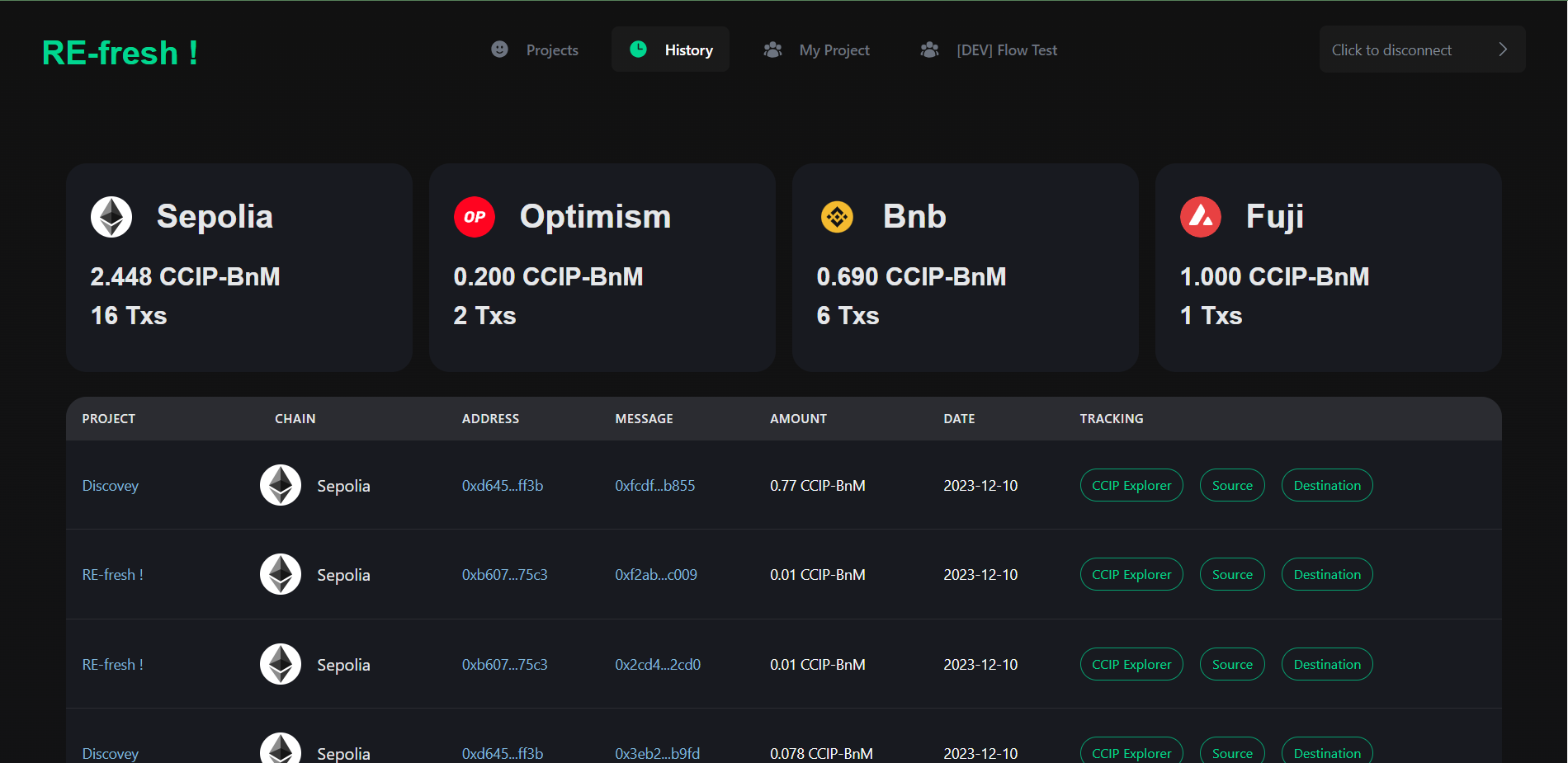
History
Inspiration
Many IT and software-related service projects initially generate high interest and enthusiasm. However, over time, with the emergence of new technologies and services, these earlier projects often lose attention and stop receiving updates. For instance, in hackathons, only a few projects among many submissions receive awards, while the rest tend to vanish without further updates. Even the awarded projects frequently cease to receive updates after receiving the prize money. Consequently, numerous projects tend to fade away alongside the advent of new technologies.
(As an example, taking the ETHGlobal 2023 Online hackathon, among approximately 500 submitted projects, around 1/5 or approximately 100 projects received awards. However, it's noticeable that even these awarded projects are not consistently being updated or further developed after receiving the awards.)
Therefore, among the projects submerged or dormant, some possess excellent structure and planning. These projects hold potential to regain attention with new support. Hence, it's crucial to revitalize them by rebuilding them in new directions. This approach can aid in activating these previously potential-driven projects by attracting new prizes or investments.
What it does
Our platform allows for the registration of projects that are no longer being updated or those seeking continual updates, making their introductions and code fully accessible. Users can participate in these projects, collaborating on updates or rebuilding efforts, and share profits with both the original project owners and those involved in the revamped projects through funding.
User authentication is provided using Polygon ID to establish trust among individual users, while project authentication ensures clear and certain proof for funding investors through token proof or proof of the project itself via PoR(developing). When participating in project funding, individuals receive tokens as rewards for the specific project, gaining membership in the DAO governance system. Participants in this DAO can contribute opinions, vote on the project's direction, and engage in various social communities.
Additionally, the distribution of reward tokens and fund management for DAOs and funding leverage CCIP, allowing users the convenience to invest in various tokens across multiple network chains rather than being confined to a restricted network. This enables users to invest using diverse tokens as per their preference.
How we built it
- Utilizing CCIP for the development of funding functionality across multiple chains.
- Advanced Contract enhancements for streamlining the CCIP Flow.
- Integration of investor PolygonID for DAO (currently implemented for fund allocation only).
- Integration of PolygonID and PoR (To Be Determined) for secure project verification.
- Development of Contracts for managing core project metadata.
Challenges we ran into
In the realm of CCIP, the process of data exchange across multiple chains posed a challenge due to the cumbersome flow involving repeated signing and chain transitions. To address this, significant structural changes were made to streamline the flow, resulting in a nearly one-step funding process.
Implementing PolygonID for verification proved challenging due to the need to comprehend four chapters - Issuer, Verifier, Wallet, and Smart Contract - within a short time. While I couldn't achieve 100% of the envisioned functionalities due to time constraints, I gained insight into the potential utility and future development directions.
The funding platform necessitated secure asset handling and project validation. Leveraging Chainlink's technologies posed various deliberations on improving these aspects over other platforms. Although I managed to explore three to four technologies within the given timeframe, I plan to analyze and integrate additional technologies post-project completion.
Creating CCIP-related test codes encountered difficulties, particularly when facing issues like "out of gas" or reverts occurring at the router level during the transition to CCIP, making it challenging for a developer to precisely pinpoint the problem. Having guidelines on gas fees would be beneficial.
Crafting test codes proved extremely challenging, indicating potential inconveniences in testing the service in a production environment.
Accomplishments that we're proud of
We are most delighted to have developed and completed the construction of the system:
- Funding of BnM(stable coin) across various networks through CCIP.
- Verification of user identity for funding participants using Polygon ID.
- Issuance and distribution of reward tokens for each project, allowing funding investors holding these tokens to join the DAO governance of the respective project, engaging in various activities.
We’re very very excited to use and join new blockchain technology which is trendly tech I know in this chainlink constellation hackerton.
First one tech is ChainLink CCIP. Nowaday, There are some project that is making blockchain interoperation tech in others blockchains such as ChainLink CCIP, LayerZero, and Noble CCTP.
Personally, This tech will be able to not only simple token sending but also send more functional commucation in the future. Modularism might be simliar concept in interoperational communicatio in blockchains.
Specifically, We think the Chainlink CCIP will adapt off-chain data(REAL CASH) with Bank System by using CCIP adapter.
When I saw and experienced by using CCIP or something, We could learn and feel these trend tech and image how to be changed blockchain ecosystem and tech if CCIP is adapted. And also, We as a web3 developers would want to share how to adapt these tech in our application and how to test these tech via contributing and sharing with each other
In our project, We use CCIP to make cross chain funding system based on BnM token was same Stable Coin(USDC, USDT). In these concept, many web3 project will be able to make self production in multichain ecosystem. not depends on only one chain. We want to make a good example for this concept.
Second one is Polygon ID. Actually, I didn’t know what is polygon ID, DID and why we use this complex technology. But, After understanding polygon ID concept, we can feel this tech will make us really blockchain tech for everyone.
Based on blockchain basic concept, Users don’t have any point connected with real users’ identification or something. However, For realistic d-applications want to check KYC or any identification for users and productors in Defi and NFT ecosystem.
In these meaning, DID and personal identification are very very important to keep personal information private regardless to personal identification verification in application level and business logic level.
So, We made two polygon ID for identify builders and funders.
Builder ID means making correct and valid builder verification who funder want to fund.
What we learned
Through Polygon ID, I discovered how easy it is to implement DID and ZK authentication. It seems promising for future projects requiring DID and ZK, as they can be easily implemented using Polygon ID.
Understanding CCIP Technology: Comparing CCIP with other multi-chain platforms allowed me to comprehend its pros and cons. Utilizing this understanding, I could develop a multi-chain funding platform with improved UX.
Utilizing PoR (Proof of Reserves): Understanding the concept of PoR and how Chainlink utilizes data feeds, such as prices, for blockchain enhancement was insightful. I found it to be a great feature for validation within Re-Fresh, even though I couldn't achieve 100% implementation due to time constraints. There are plans to further implement this feature.
What's next for Re-Fresh
- Provides various social services for DAO governance voting and opinions for funding investors
- Providing a job search social community for project rebuilding
- Automatic creation of a funding reward profit distribution system using Chainlink Functions and Automation (vesting contract)
- PoR development completed
- UX/UI user improvements
Github
Built With
- chainlink
- echo
- ens
- ethers
- golang
- javascript
- next.js
- polygon
- react
- solidity
- typescript
- web3


Log in or sign up for Devpost to join the conversation.