-
-
-
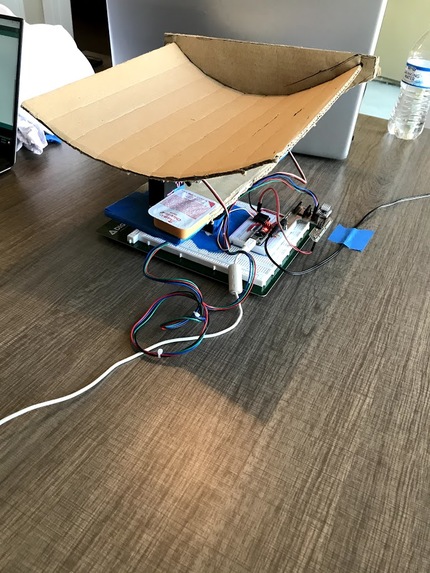
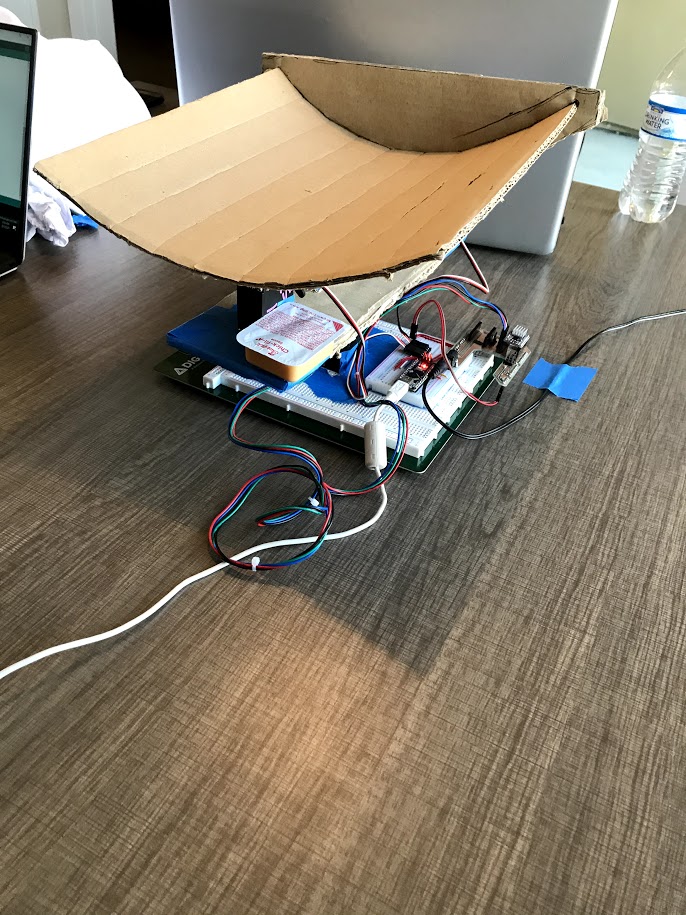
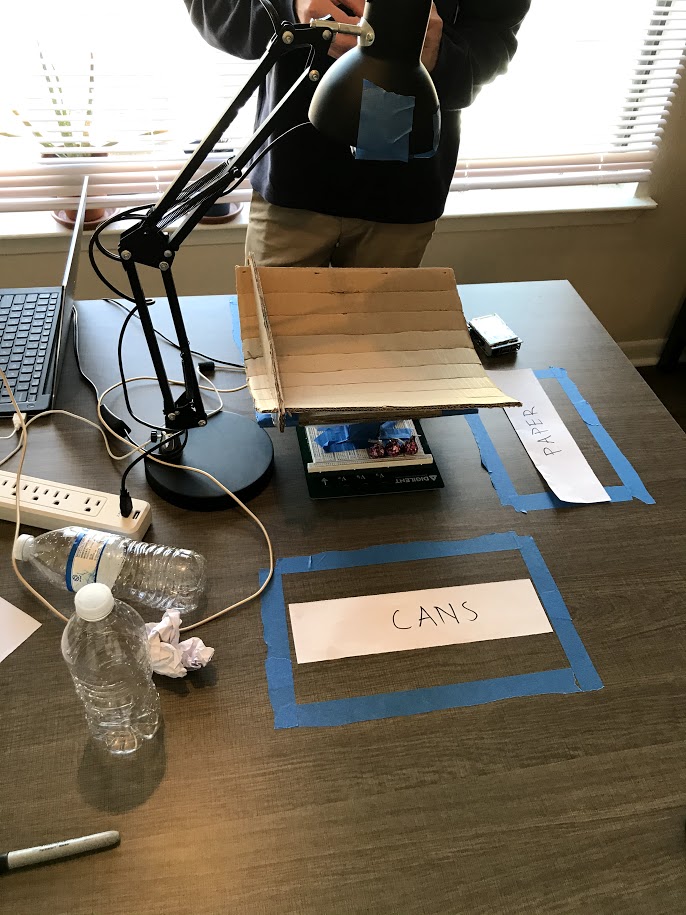
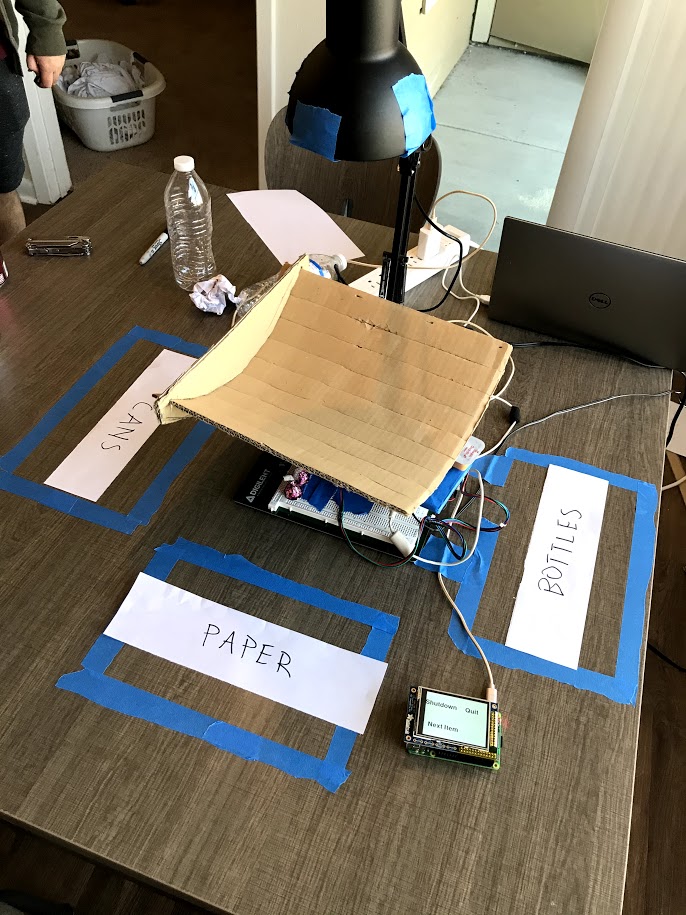
Here you can see the inner workings of the aparatus (including a chick fil a sauce for good luck!)
-
-
-
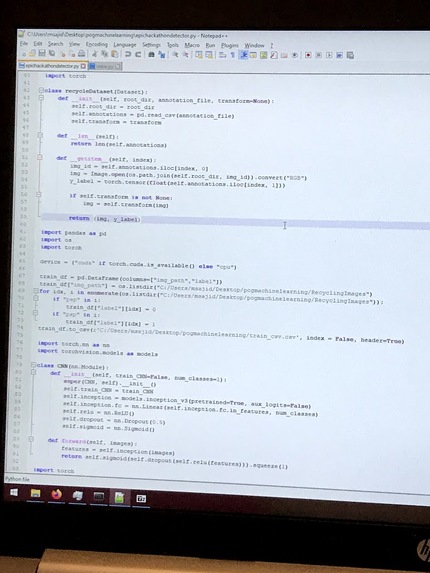
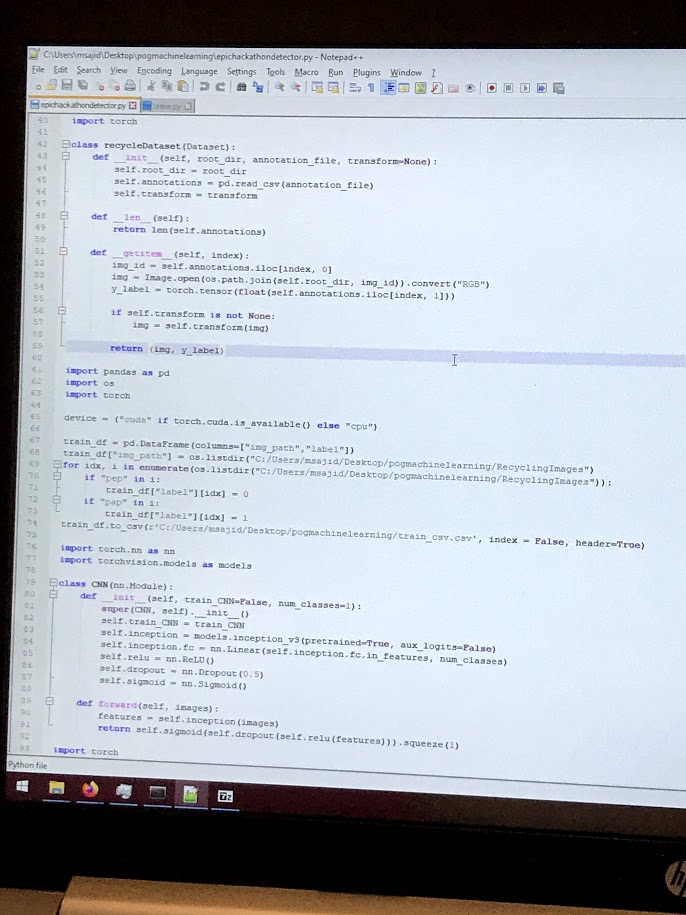
A snippet of the machine learning script (Muhammad codes in light mode ewwww!)
-
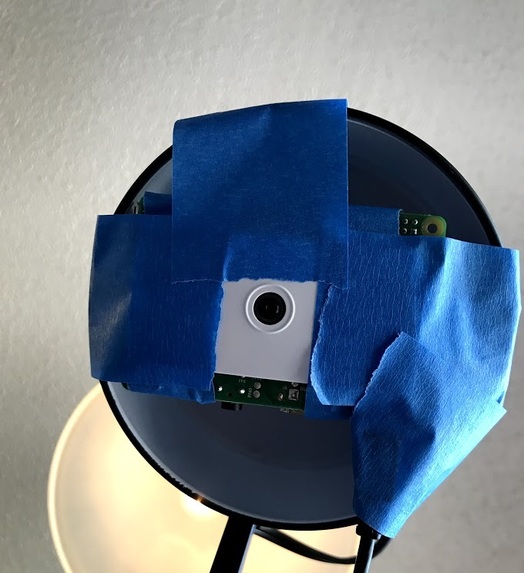
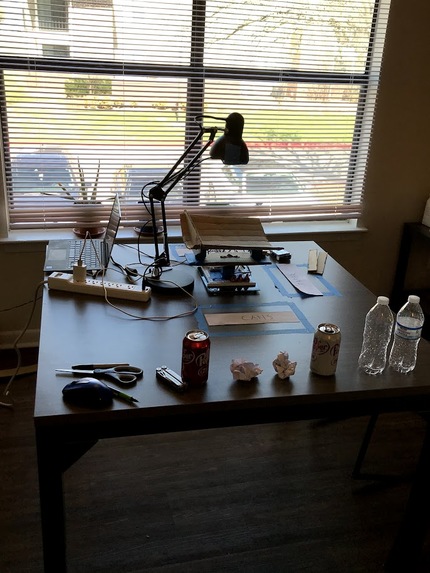
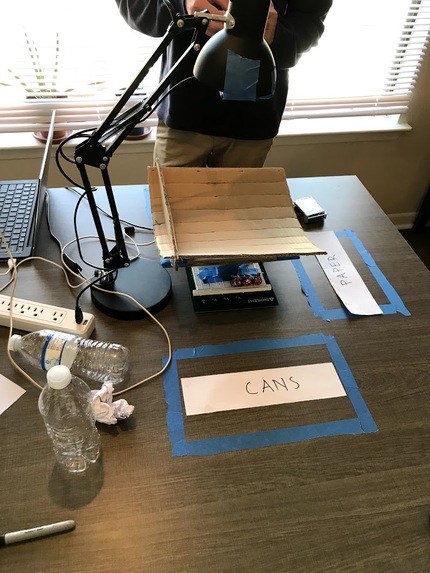
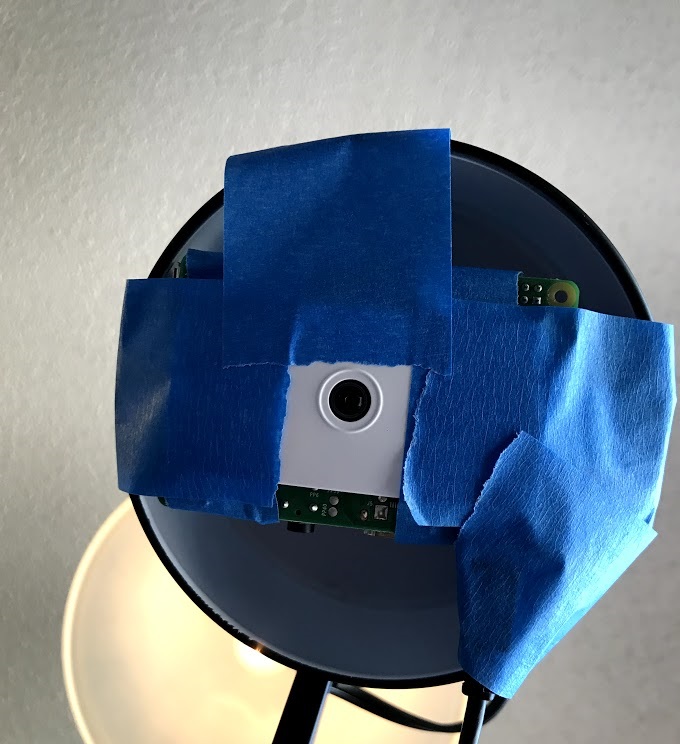
We jerry-rigged the camera to an adjustable lamp for easier use
Inspiration
Sorting through one's recyclables can be a tedious and daunting task, and people can become discouraged and not properly recycle their goods. This automated sorter helps individuals sort through the various kinds of recyclables so that goods are accurately and quickly sorted. Through an easier way to recycle goods in the proper manner, we can help contribute to a greener Earth.
What it does
Semi-automatic sorted recycling using a convolutional neural network via PyTorch and sorter apparatus run from a touchscreen GUI.
How we built it
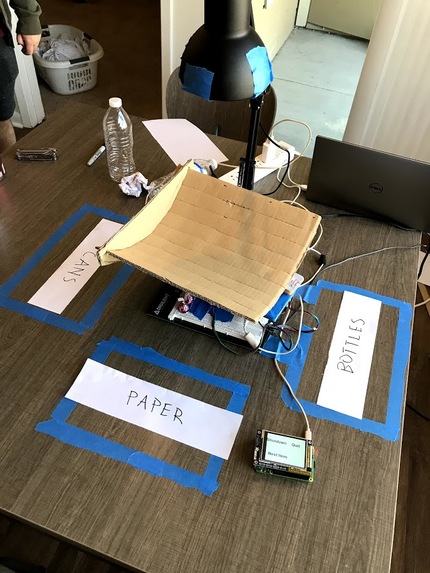
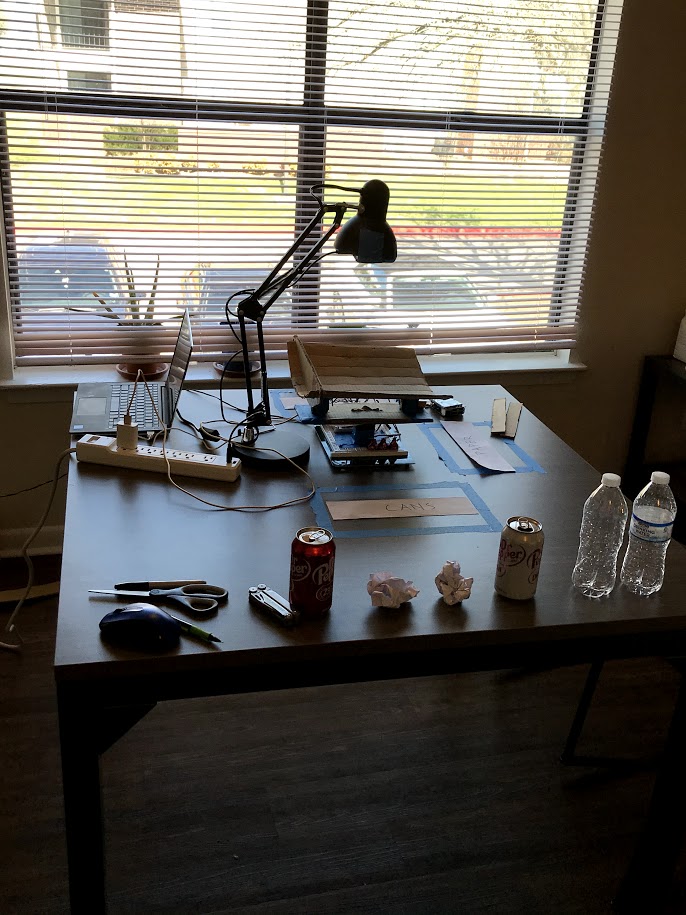
Utilizing OpenCV and Pytorch we created a convolutional neural network and image processor that can handle code and utilizing AI detect the type of material present. We used a custom data set and loader, to go through our custom training data, to train the neural network, and then used watchdog to detect file updates to check for pictures taken to evaluate through the neural network. The images are taken from a Raspberry Pi camera, and using a touchscreen gui on another raspberry pi we can communicate that another object is coming. Then the mechanism takes the classification of the object from the neural network to determine where to sort it.
Challenges we ran into
One of the main challenges of our project was system communication. We had 3 distinct parts of our project: The sorting apparatus, the camera and machine learning algorithm, and the touchscreen GUI. The raspberry pi that we mounted the touchscreen on serves as the middle-man, receiving instructions from the camera and then serial communicating to the Arduino that operates the apparatus.
When building the AI we struggled to have enough data to train the neural networks. Because of our unique situation, we had to create our own data set of images that were labeled, which was time consuming and difficult, to manipulate the data to work on a limited system. Alongside this, the neural network needed to be portable enough to run on a limited system as well.
In the construction of the apparatus to physically sort the material, we had a difficult time creating a mechanism that was both robust enough to handle material of varying size and weight, lightweight enough to be practical, and easy enough to use that the average person could utilize it.
Accomplishments that we're proud of
A successful classification and detection neural network, that can sort materials.
What we learned
We learned during this project how to utilize OpenCV to process images, and then through a convolutional neural network create an object classification system.
What's next for RE: cycle
We would like to expand the project by making our sorting apparatus more robust by enabling it to deposit trash in 8 separate directions. We also plan to continue training our machine learning algorithm to allow it to recognize more types of trash and increase its accuracy at doing so. As our current design is a prototype we are also planning to create a sturdier 3D-printed facade.


Log in or sign up for Devpost to join the conversation.