-
-
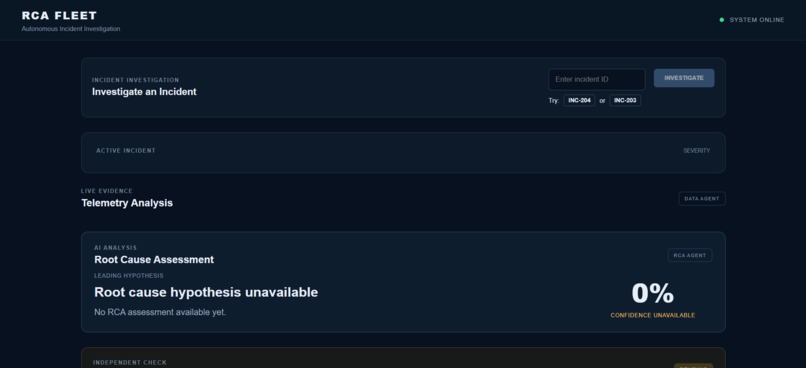
RCA Fleet — AI-Powered Incident Investigation Dashboard
-
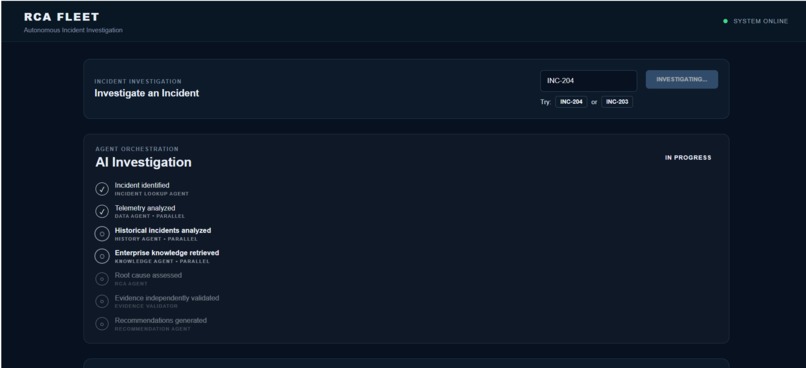
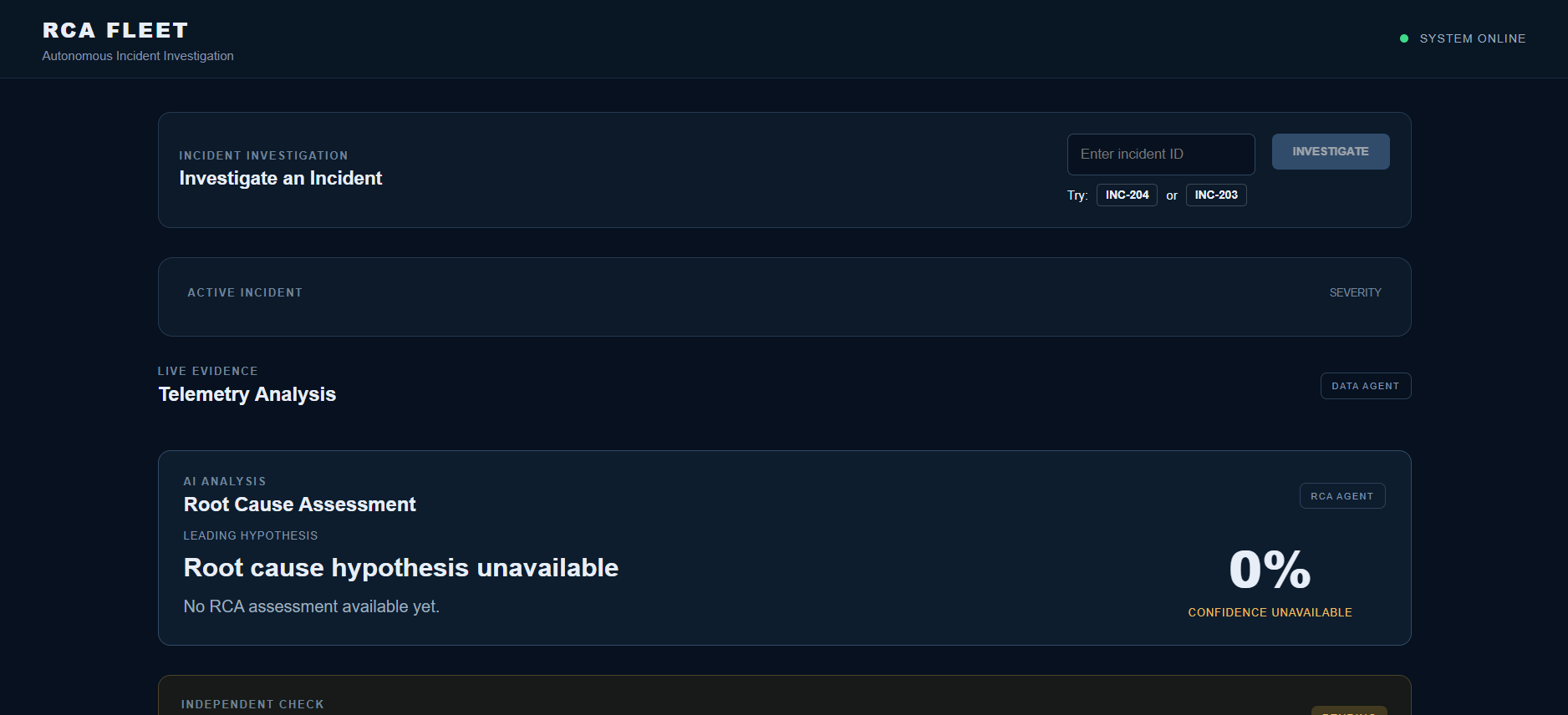
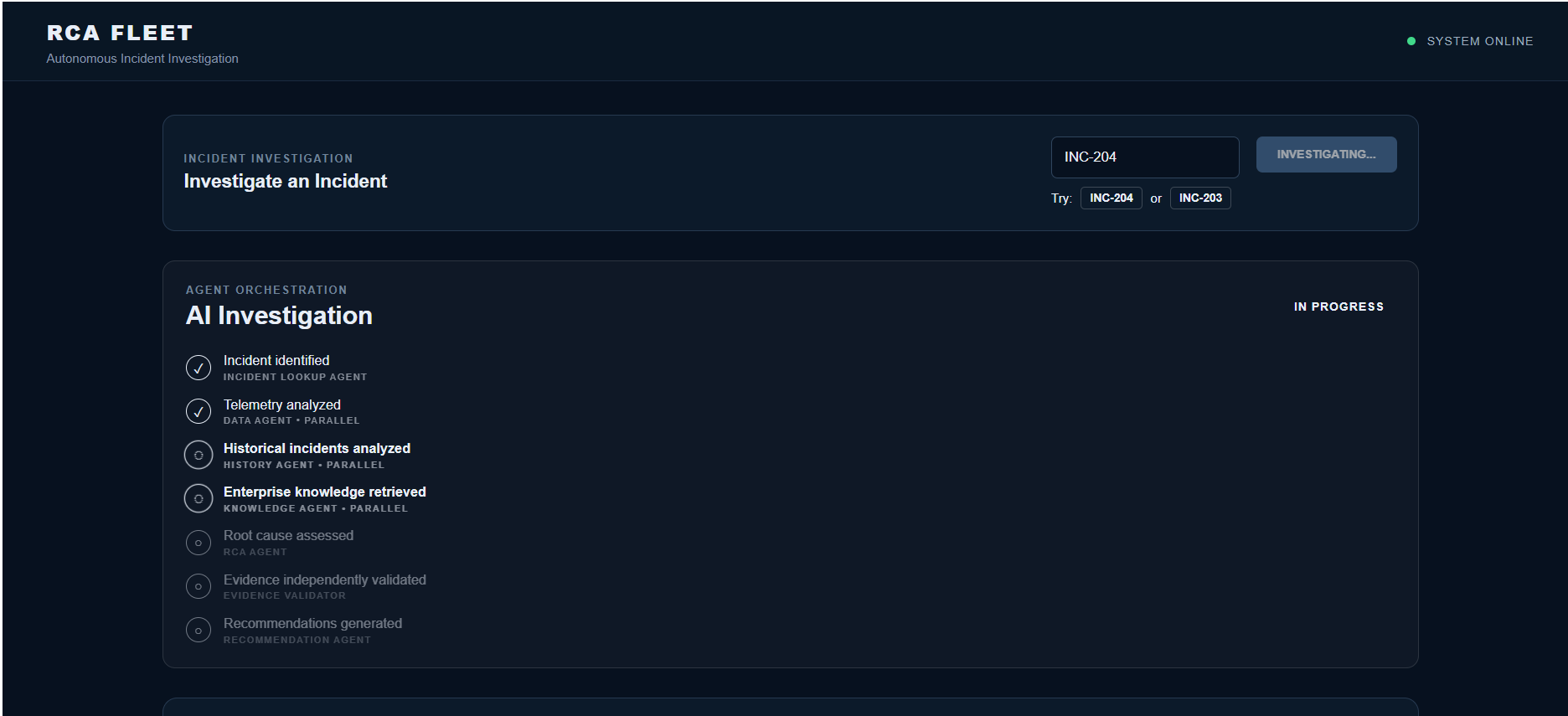
Multi-Agent Investigation Workflow with Parallel Evidence Analysis
-
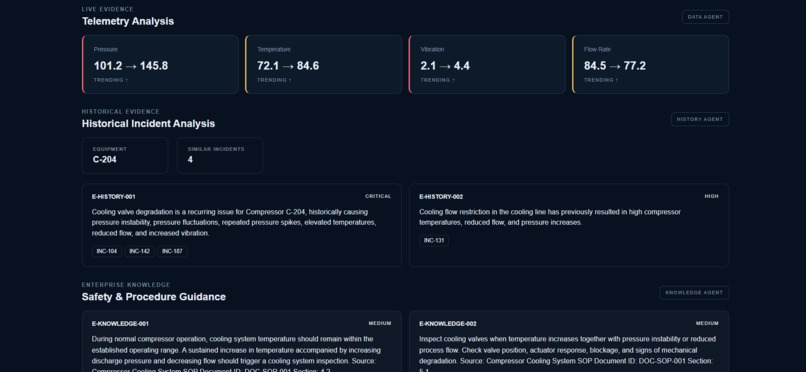
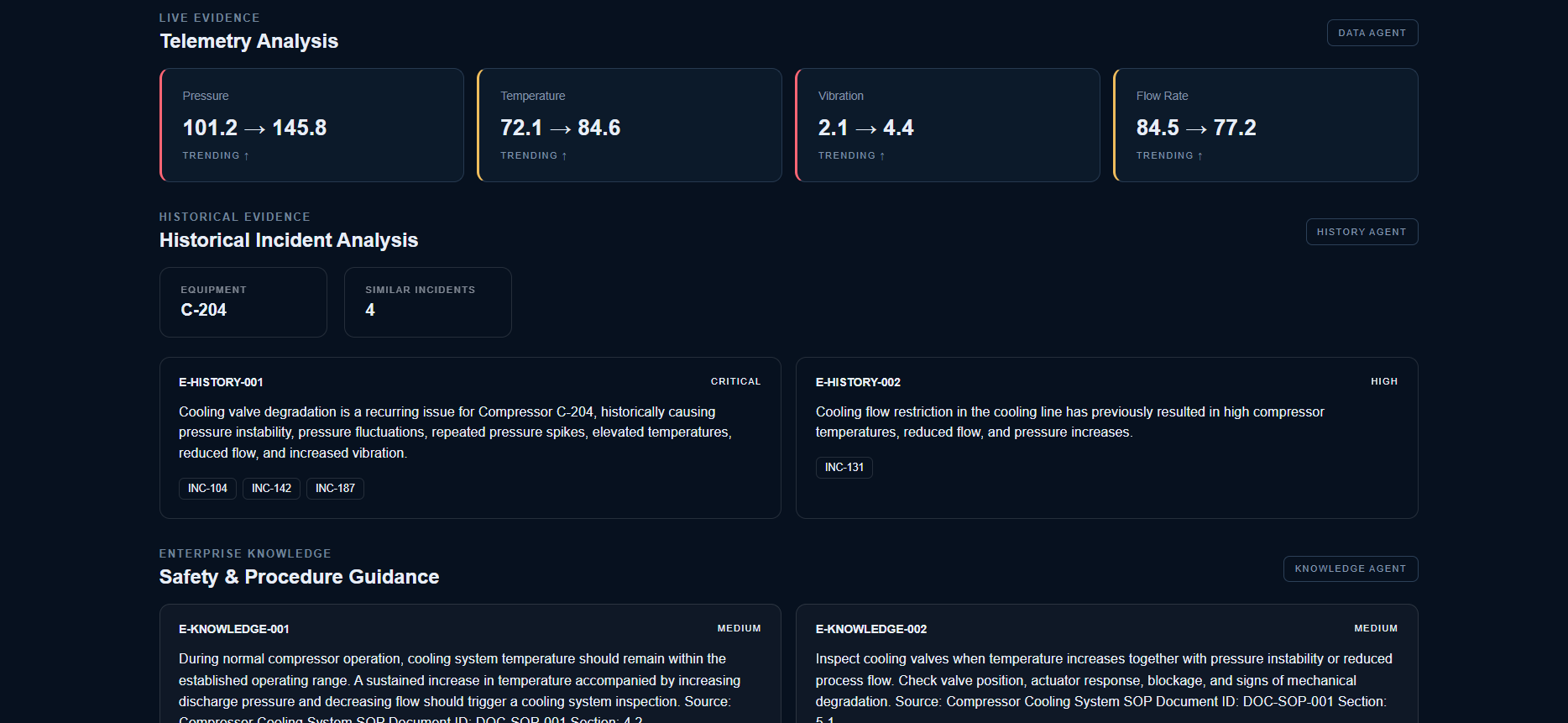
Unified Evidence from Live Telemetry, Historical Incidents, and Enterprise Knowledge
-
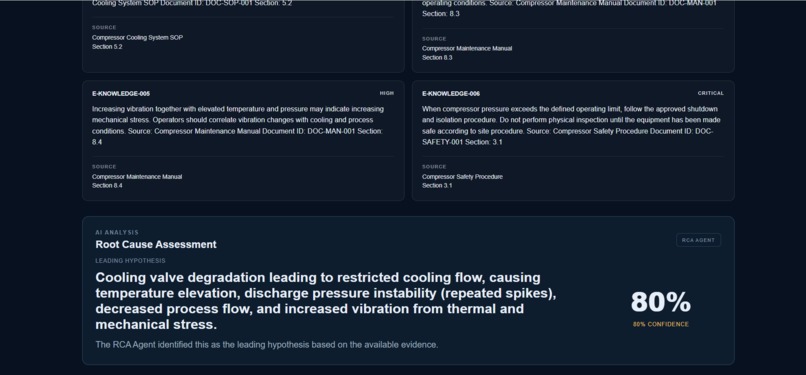
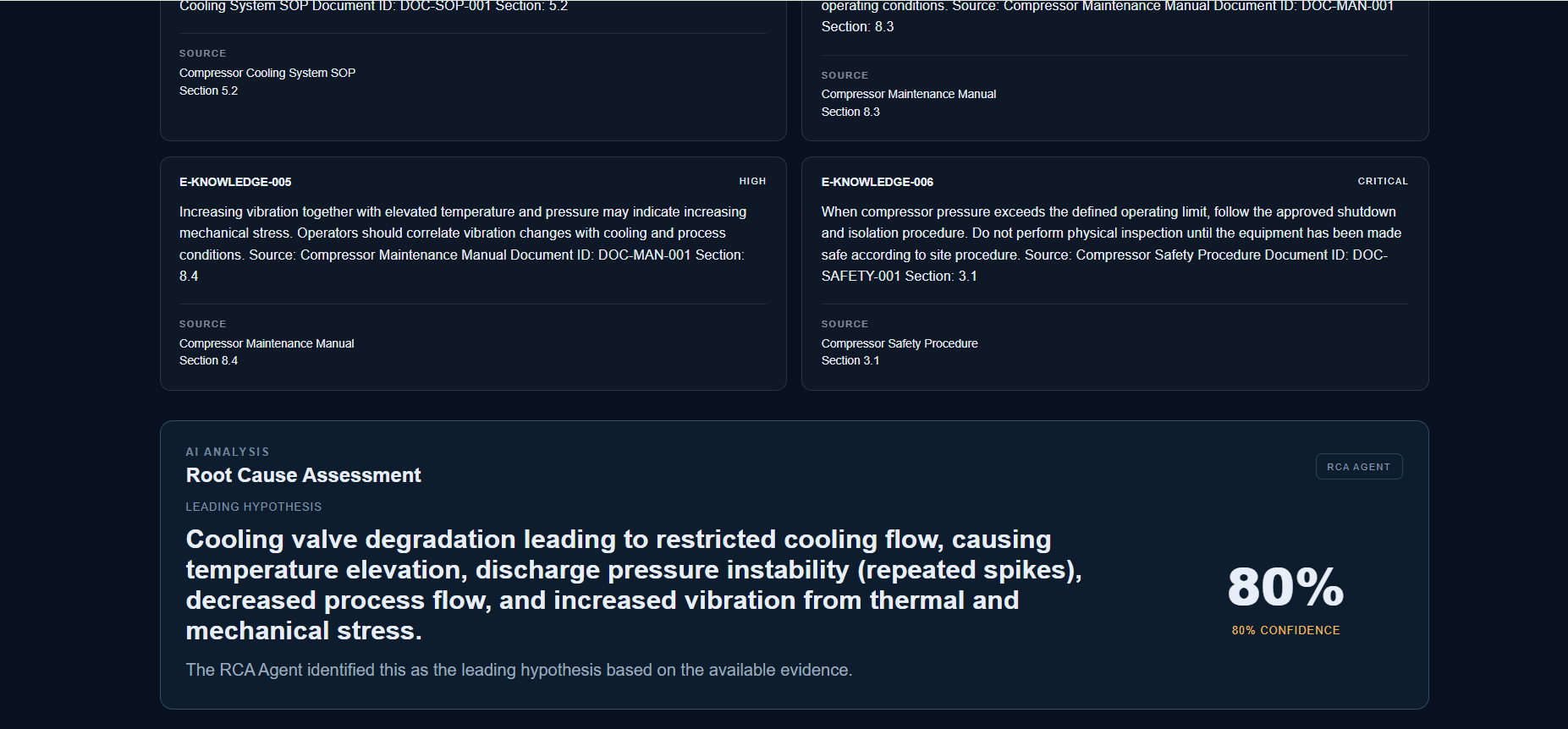
AI Root Cause Assessment with Evidence-Based Confidence Scoring
-
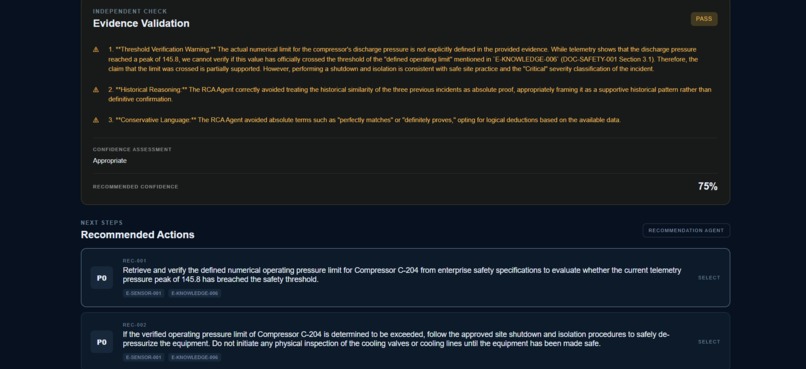
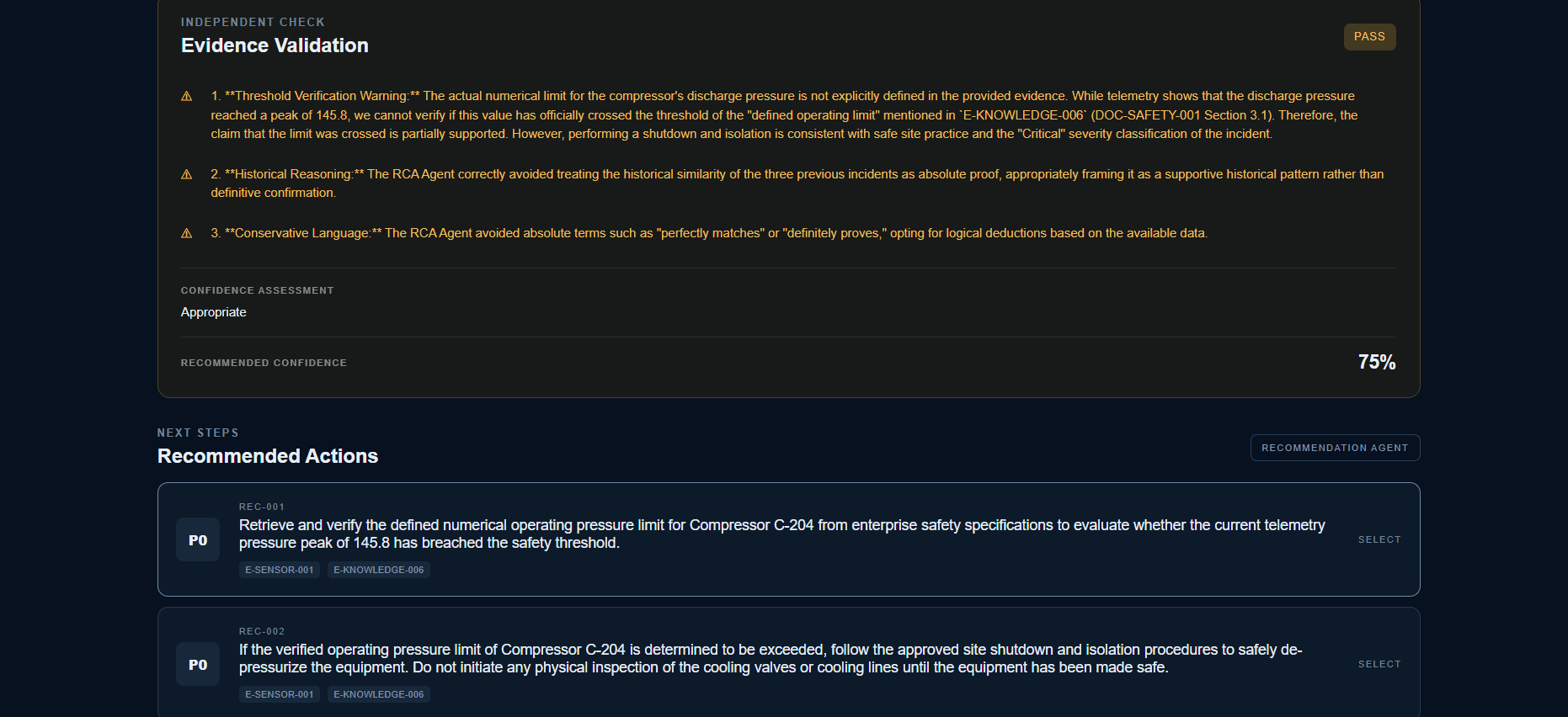
Independent Evidence Validation for Conservative and Safety-Aware RCA
-
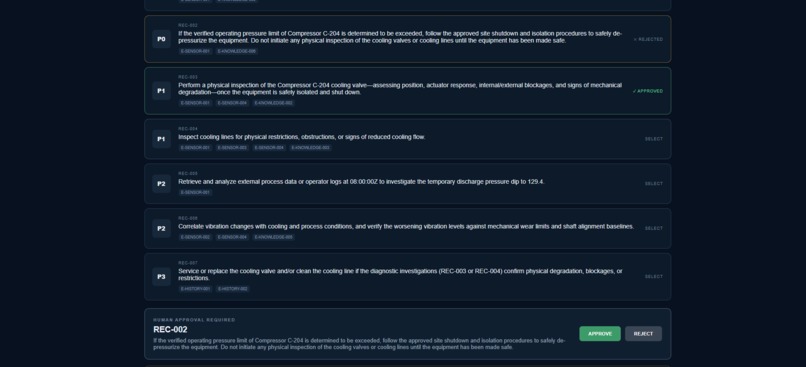
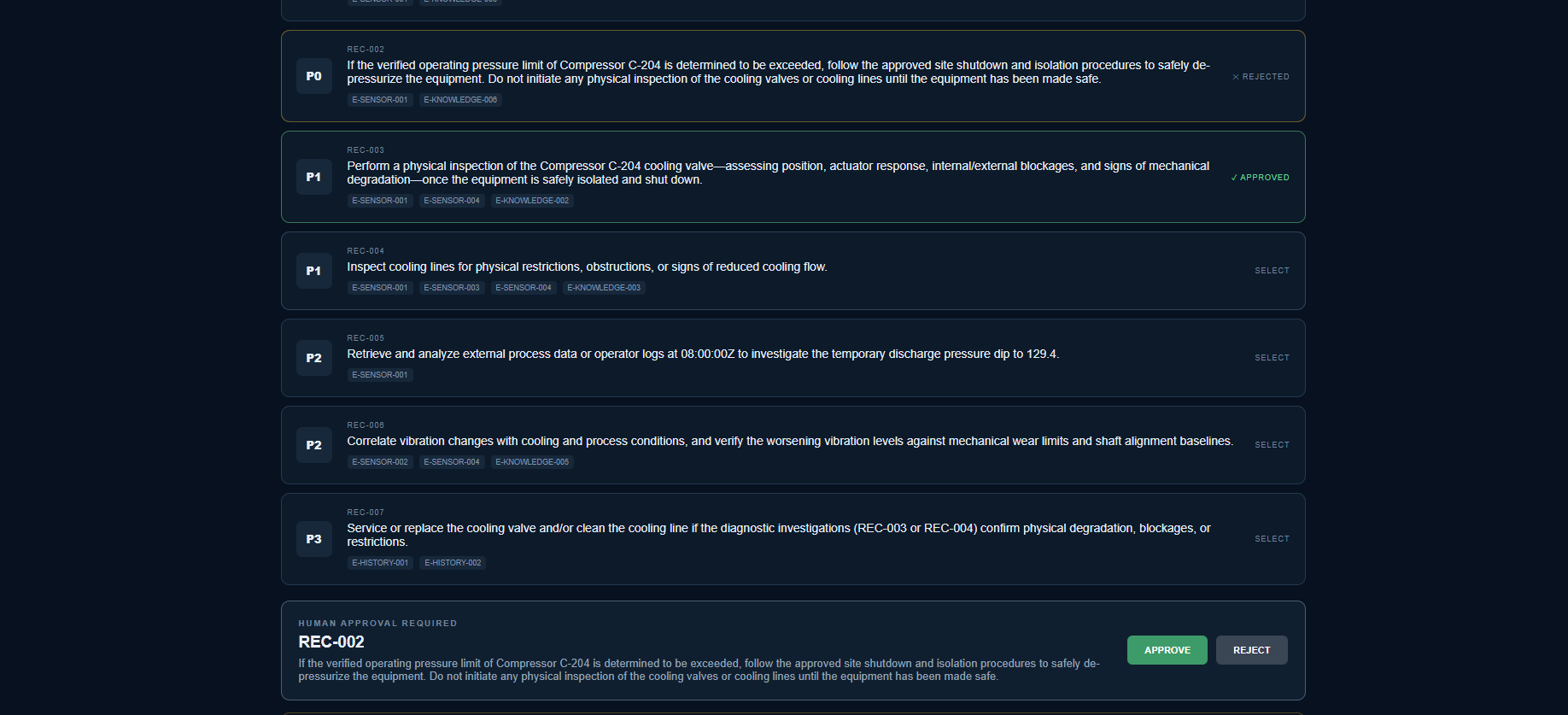
Evidence-Traceable Recommendations with Priority and Human Approval Controls
Inspiration
Industrial equipment incidents often require engineers to bring together information from multiple places: the incident record, live telemetry, previous failures, and enterprise safety and maintenance procedures. The investigation can become slow and inconsistent when this information has to be manually reviewed and correlated.
We wanted to explore whether a team of specialized AI agents could work together to perform this investigation while keeping human oversight and operational safety at the center.
This led to RCA Fleet — a multi-agent AI system for investigating industrial equipment incidents, identifying likely root causes, validating the evidence, and generating actionable recommendations.
What the Project Does
RCA Fleet takes an incident such as a compressor pressure anomaly and orchestrates a complete investigation:
- Incident Lookup Agent retrieves the official incident record.
- Data Agent analyzes equipment telemetry and identifies important trends.
- History Agent investigates similar historical incidents and previous corrective actions.
- Knowledge Agent retrieves relevant enterprise procedures, maintenance guidance, and safety documentation.
- These evidence-gathering agents run in parallel to reduce investigation time.
- RCA Agent evaluates the combined evidence and produces a root-cause hypothesis with a confidence assessment.
- Evidence Validator Agent independently checks the RCA against the available evidence and identifies warnings or unsupported conclusions.
- Recommendation Agent generates prioritized, evidence-traceable actions.
- A Human Approval step is required before any operational action can be executed.
- The Action Safety layer blocks actions when explicit human approval has not been provided.
The system also supports different incidents dynamically. For example, INC-204 investigates Compressor C-204, while INC-203 investigates Pump P-103 and produces a different investigation result.
How We Built It
The backend is built with Python and FastAPI, with Google ADK used to orchestrate the specialized agents.
The agents are organized into a sequential workflow with a parallel evidence-gathering stage:
Incident Lookup
      |
      v
+-------------------------------+
|      Parallel Investigation   |
|                               |
|  Data   |   History | Knowledge
+-------------------------------+
      |
      v
   RCA Agent
      |
      v
Evidence Validator
      |
      v
Recommendation Agent
      |
      v
Human Approval
      |
      v
Action Safety / Simulation
What We Learned
We learned the importance of:
Giving each agent a clearly defined responsibility. Separating evidence gathering from reasoning. Running independent investigations in parallel where possible. Validating an AI-generated conclusion with another agent. Keeping recommendations traceable to evidence. Designing explicit human approval boundaries for operational actions. Handling AI output carefully because generated responses are not guaranteed to follow one rigid text format.
We also learned how to integrate Google ADK agent orchestration with a real application rather than treating the agents as an isolated chatbot.
Challenges We Ran Into
A major challenge was making the system work reliably from end to end.
The agent responses are naturally generated text, so the frontend initially had to deal with variations in formatting when extracting telemetry, RCA results, validation information, and recommendations. We addressed this by making the parsing more tolerant while keeping the displayed data structured.
Another challenge was coordinating the asynchronous multi-agent workflow with the frontend timeline. We wanted the UI to accurately reflect the difference between sequential agents and the three evidence agents running in parallel.
We also wanted to avoid a common failure mode in AI systems: allowing an action to appear successful simply because an AI recommended it. Therefore, action execution was deliberately separated behind an explicit human approval step and a safety layer.
Why It Matters
RCA Fleet is designed around a simple principle:
AI can accelerate the investigation, but humans remain responsible for operational decisions.
By combining multi-agent investigation, parallel evidence gathering, independent validation, explainable recommendations, and human approval, RCA Fleet demonstrates how agentic AI can be applied to safety-sensitive industrial workflows without removing humans from the decision loop.
What's Next for RCA Fleet
Future versions could connect RCA Fleet to real-time industrial telemetry, enterprise knowledge repositories, equipment maintenance systems, and production work-order systems.
The goal would be to move from an investigation assistant toward a continuously operating industrial incident investigation and decision-support platform, while preserving the same evidence traceability and human-approval safeguards.
Built With
- adk
- agentic-ai
- angular.js
- artificial-intelligence
- fastapi
- gemini
- generative-ai
- google-cloud
- multi-agent
- python
- rest-api
- vertex-ai

Log in or sign up for Devpost to join the conversation.