Inspiration
We were inspired by the idea of giving mobility and agency to people who don’t have it—and doing it in a way that doesn’t rely on invasive surgery or expensive robotics. With the theme of “Supercharge”, we asked: What if someone with limited movement could be “supercharged” by a trusted companion remotely guiding them?
That led us to build CoMotion, a remote-controlled, non-invasive human augmentation system using TENS and GVS stimulation.
What it does
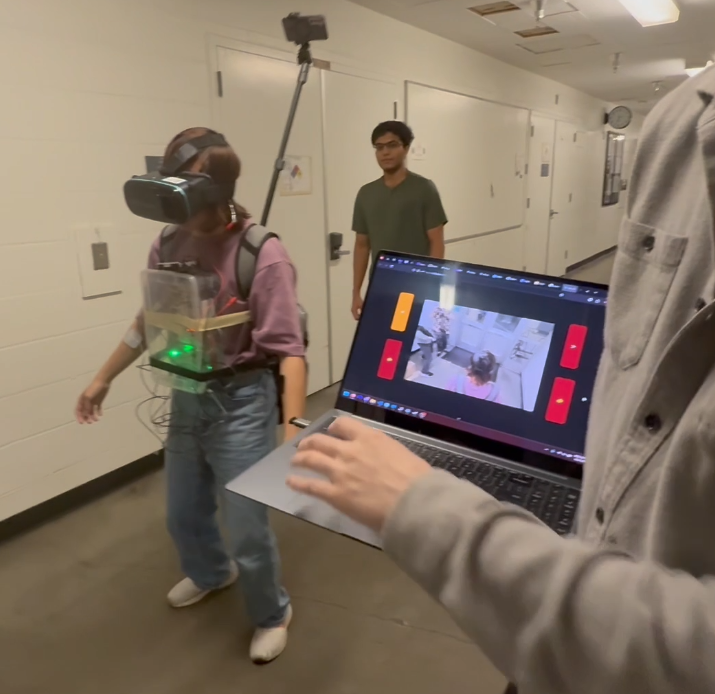
CoMotion is a wearable system that lets one person remotely control another’s physical movement in real time.
- TENS units stimulate the biceps to produce arm movement.
- Galvanic Vestibular Stimulation (GVS) influences walking direction.
- A keyboard or controller sends movement commands.
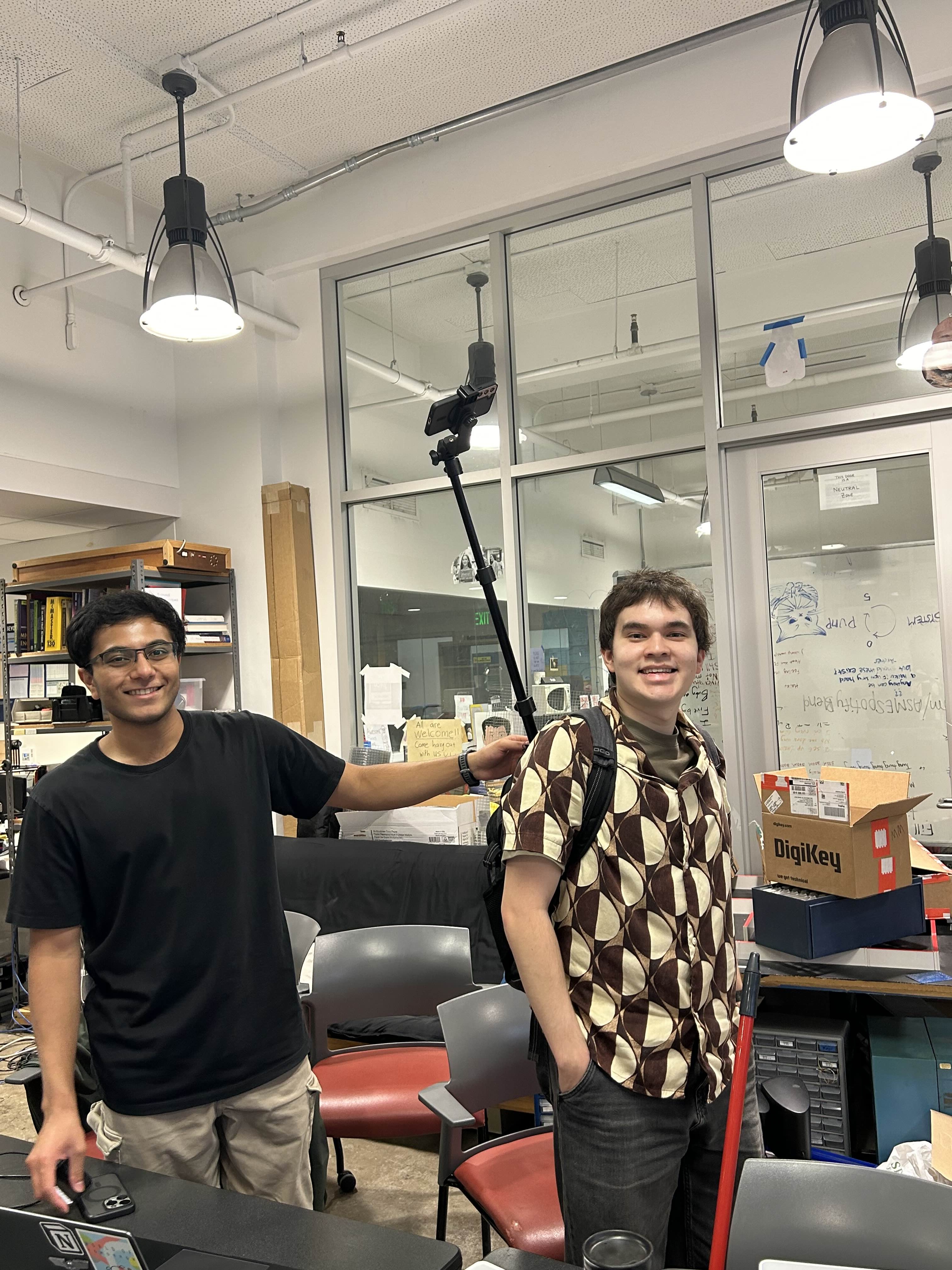
- A third-person video stream gives the operator a clear view for safe, accurate control.
The system can assist people with disabilities, enable remote physical therapy, or let a trusted person help someone move with confidence.
How we built it
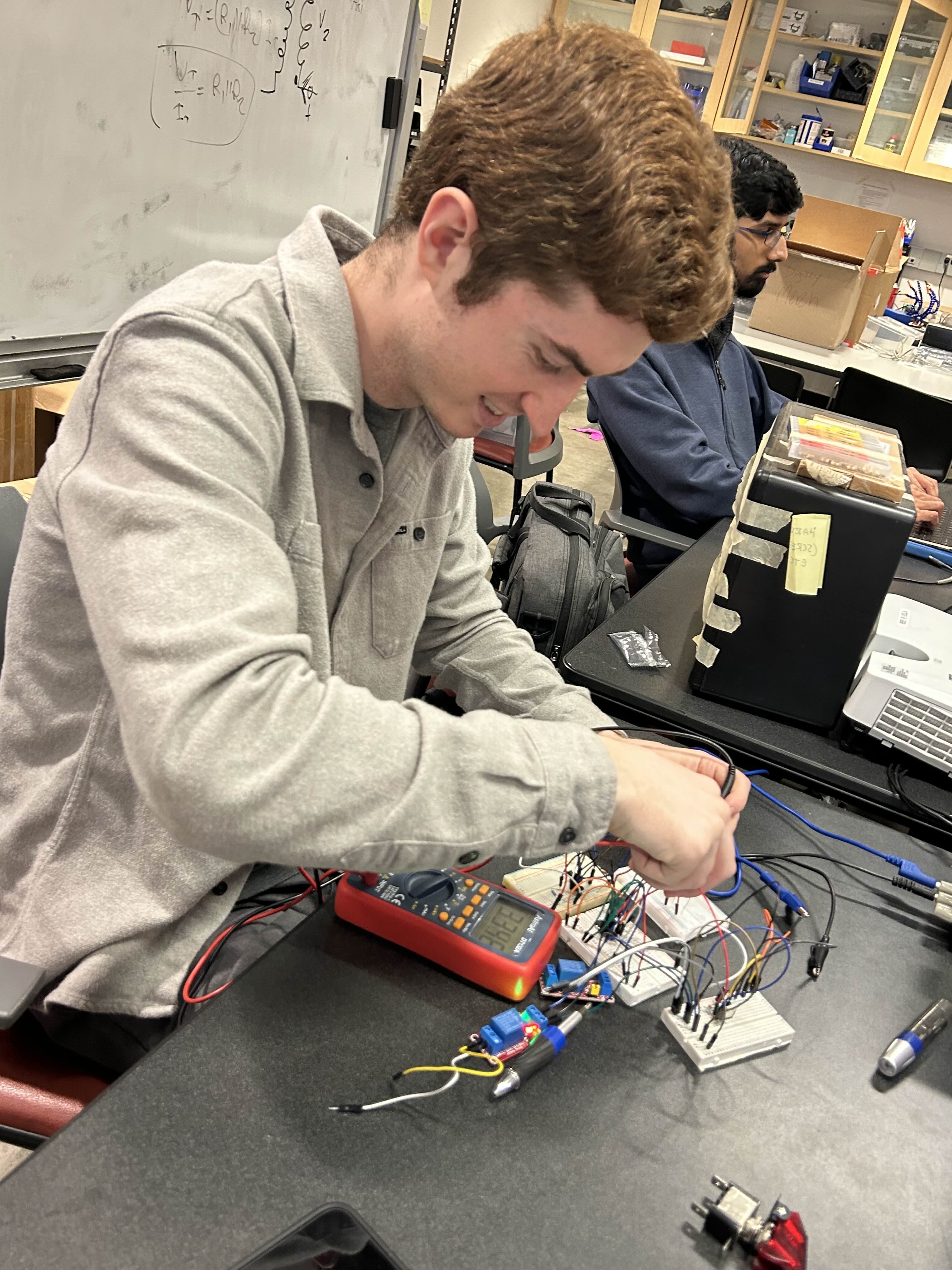
We prototyped safe, repeatable TENS and GVS circuits that could be triggered via microcontroller.
- Custom signal mappings translated keyboard inputs into muscle and balance stimulation.
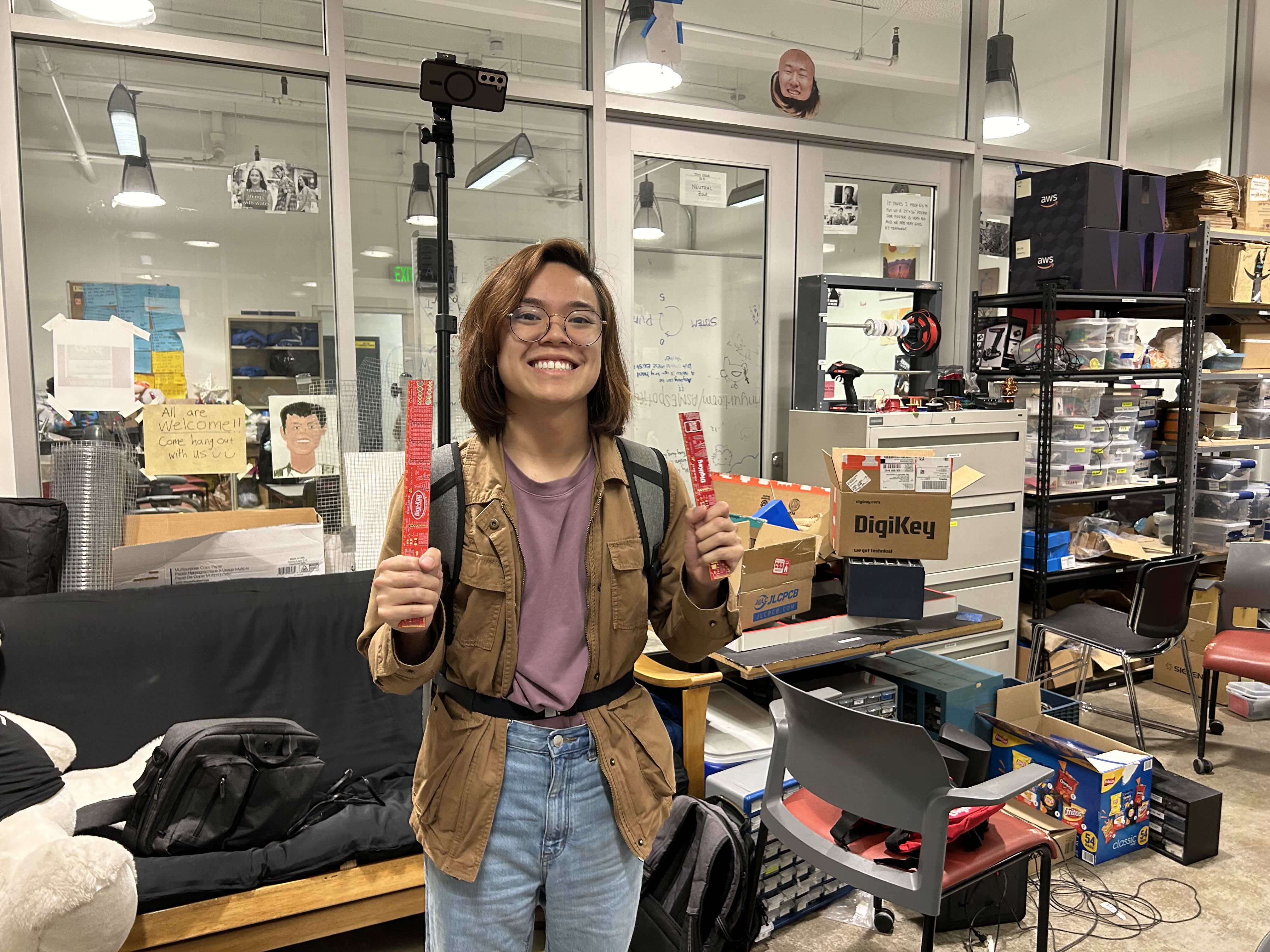
- We used a body-mounted camera for wireless third-person video streaming.
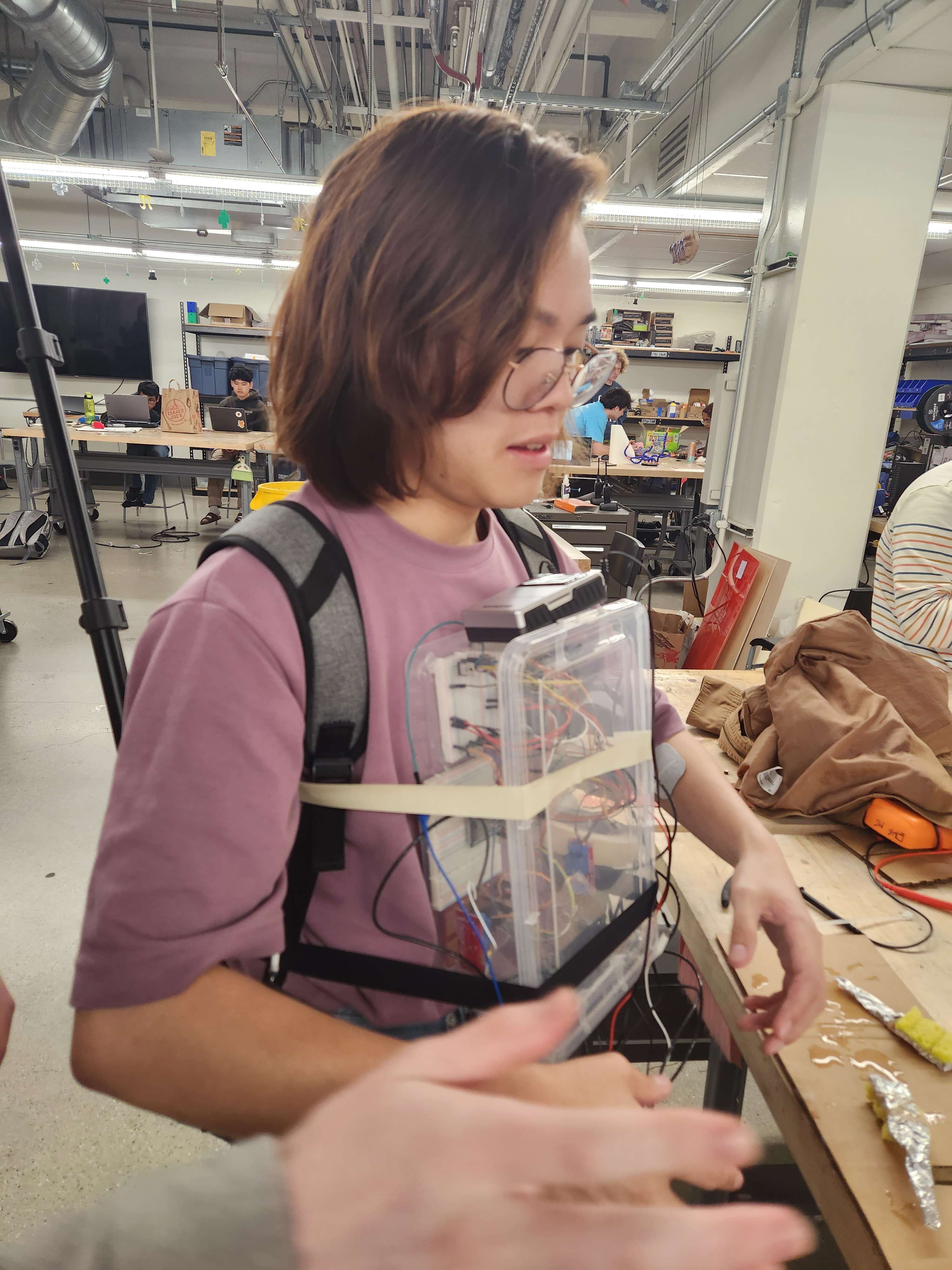
- Everything is battery-powered, wearable, and designed for comfort and flexibility.
We iterated quickly, testing on one team member to refine calibration, timing, and movement accuracy.
Challenges we ran into
- Calibrating GVS was difficult—it affects balance differently depending on posture and strength.
- Ensuring safety and comfort required lots of tuning and simulation of the circuits.
- Integrating controller input with timed stimulation was tricky to avoid false triggers.
- Making the system wearable and low-latency pushed our prototyping limits.
- Making serial connection reliable and consistent
- Setting up infrastructure for high quality video streaming via peer to peer connection
Accomplishments that we're proud of
- Built a fully functional remote-control system for human motion using safe, non-invasive tech.
- Successfully demonstrated remote walking and arm movement control.
- Delivered an end-to-end system with controller, video, and real-time feedback.
- Kept the system affordable and replicable for future development.
What we learned
- How to safely use TENS and GVS in creative, controlled applications.
- How to unify hardware, wireless video, and real-time control in a working prototype.
- How to effectively integrate a hardware-software system from start to finish
What's next for CoMotion?
- Add a user-friendly GUI for control mapping and safety controls.
- Implement real-time feedback sensing, such as proximity sensors to map the environment
- Explore clinical applications for physical therapy and mobility support.
- Create a universal "suit" that the patient can use more easily.
We see CoMotion as a step toward a future where mobility and independence are enhanced by technology, not limited by the body.


Log in or sign up for Devpost to join the conversation.