-
-
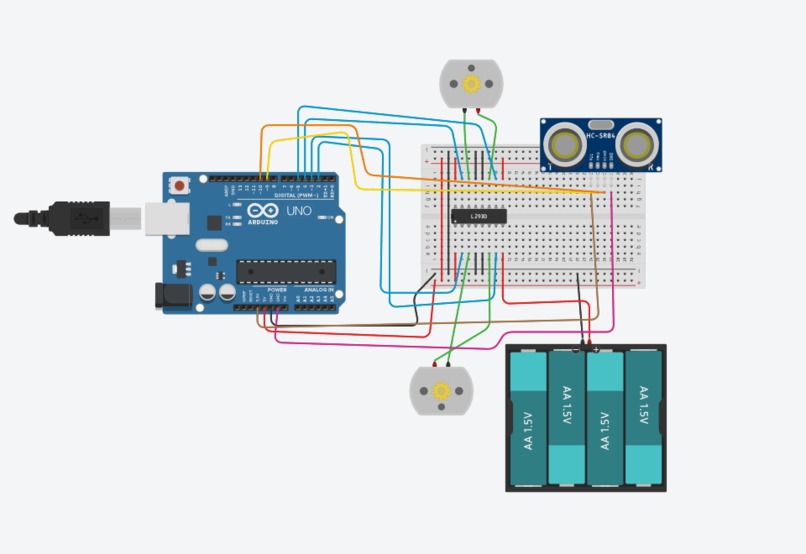
TinkerCad
-
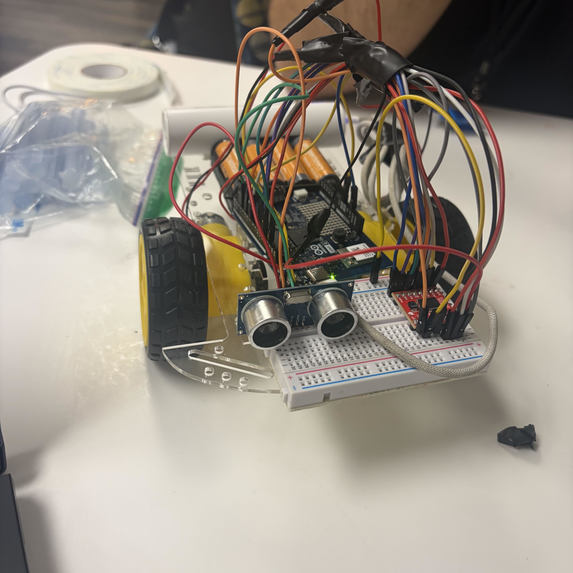
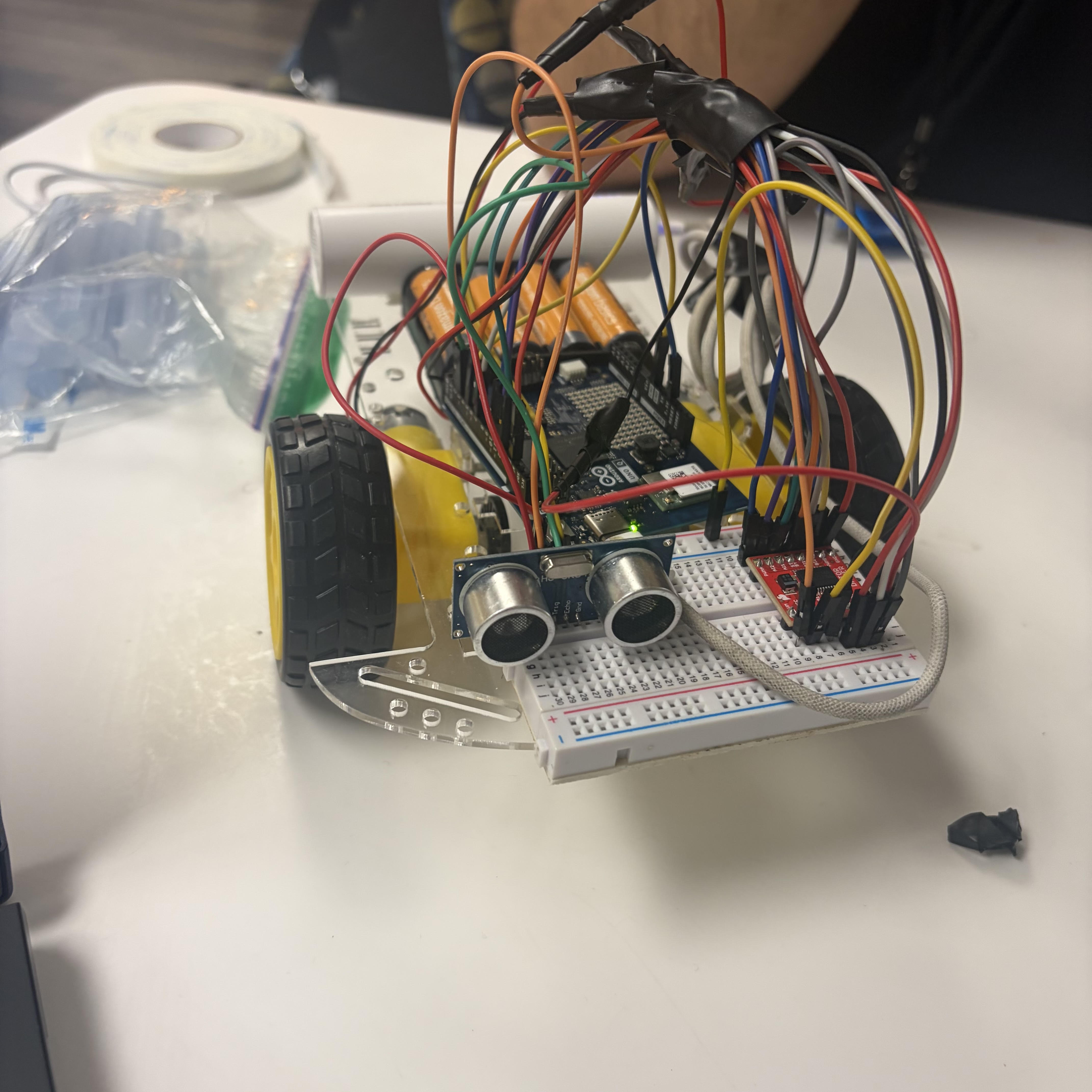
Inspiration Our interest inspired our group in robotics, programming, and electronics. We wanted to challenge ourselves by creating something that combined both software and hardware into one working system. Our main idea was to build a robot car that could follow a route drawn by the user on a computer and receive those commands wirelessly. We also wanted the project to have real-world potential beyond just being an RC car.
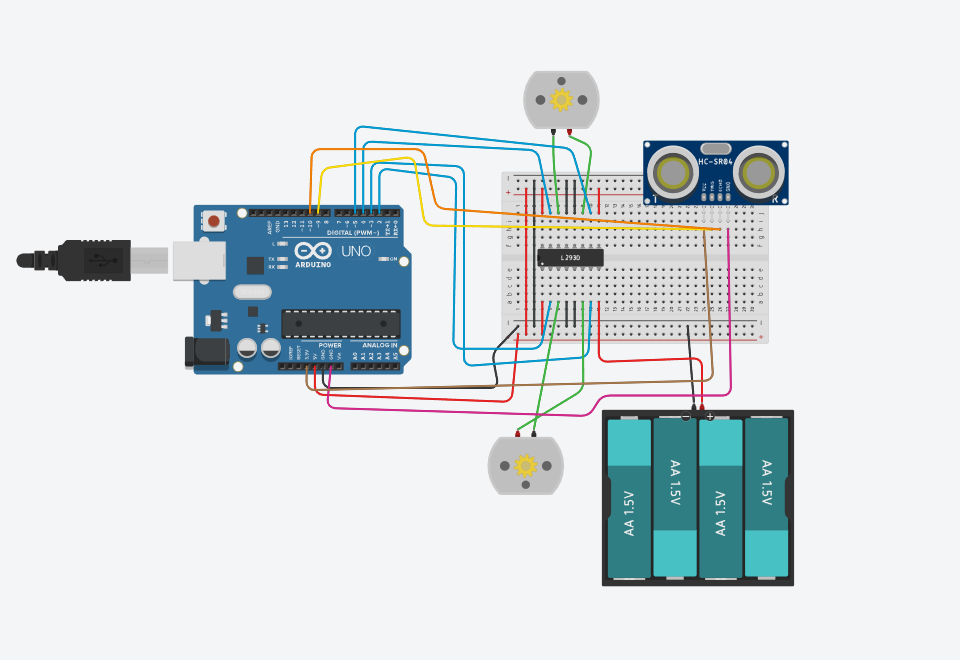
How We Built It We created a Python application that allows users to draw a route on a grid. The program then converts that route into movement commands such as forward, left, right, and stop. These commands are sent over Wi-Fi to the robot car. On the hardware side, we connected an Arduino UNO Q to a motor driver and two DC motors to control the car’s movement. We also added an ultrasonic distance sensor so the car can detect obstacles in front of it and stop when something is too close. A large part of the project involved testing and calibrating the timing of the motors so the car could move and turn more accurately. Challenges We Ran Into Some of our biggest challenges were getting both motors to move correctly, figuring out the wiring, and making sure all of the components were connected properly. We also had issues with motor direction, turning accuracy, and wireless communication. At different points, we had to troubleshoot both hardware and software problems, test different wiring setups, and adjust our code. Calibration was also a challenge because even small differences between the motors could affect how straight the car moved or how accurately it turned.
Accomplishments That We’re Proud Of We’re proud that we were able to combine our programming and electronics knowledge into one working project. We successfully created a route-drawing application, connected it to the robot car through Wi-Fi, controlled the motors, and added working obstacle detection. One of our biggest accomplishments was seeing a route drawn on the computer turn into real movement from the car. We also became much better at troubleshooting problems as a team instead of giving up when something did not work the first time.
What We Learned We learned how microcontrollers, motor drivers, sensors, and wireless communication can work together to control a robotic system. We also learned more about how motor speed, timing, and calibration affect movement. On the software side, we improved our Python and C/C++ skills and learned how to make different parts of a system communicate with each other. Most importantly, we improved our problem-solving, teamwork, and debugging skills by constantly testing, fixing, and improving the project.
What’s Next for CyberTires Our next goal is to make CyberTires follow routes more accurately and improve the consistency of its turning and movement. We also want to add better real-time position tracking so the user can see exactly where the robot is while it is moving. In the future, we would like to improve the obstacle detection system so the robot can respond more intelligently instead of only stopping. Eventually, CyberTires could be expanded into a small autonomous delivery platform for places such as hospitals, warehouses, campuses, offices, and factories.
Built With
- c++
- embedded

Log in or sign up for Devpost to join the conversation.