Inspiration
We were inspired to make a vein scanner as it directly scans the body for hydration, as well as other potential health problems. Veins provide data that is extremely valuable for the human body, and they are often a highly neglected source of information.
What it does
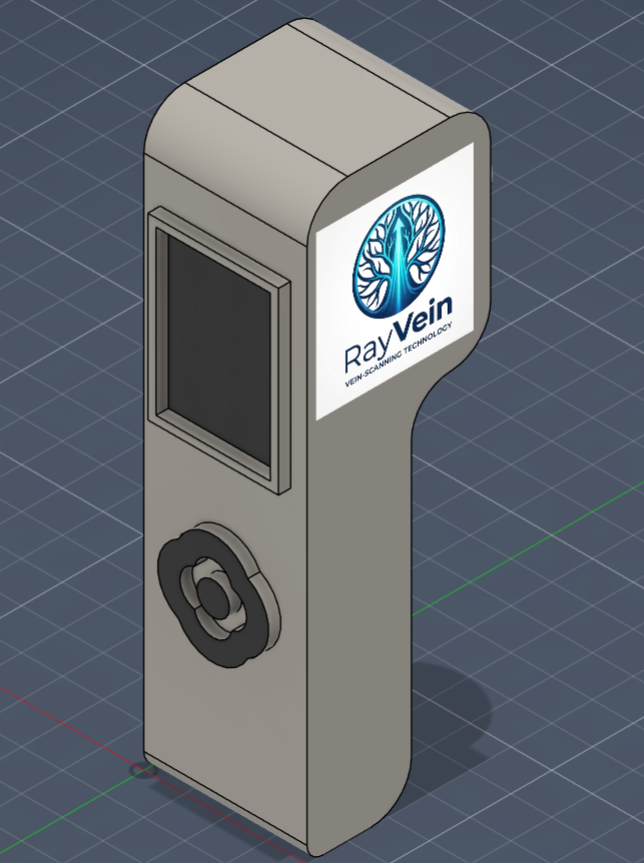
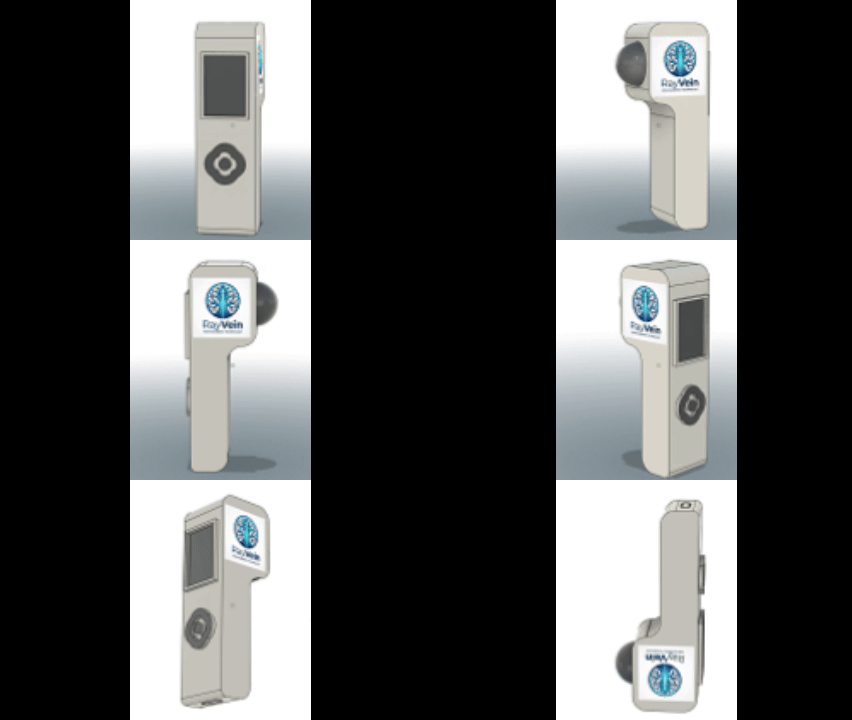
There are two components to RayVein. A physical component scans the forearm veins of a particular user. The data from this is then sent to the app (software component), which compiles all data and generates user reports as well as trends.
How we built it
The physical component was made in AutoDesk Fusion and was crafted without any outsider help. The software component was made entirely using Figma.
Challenges we ran into
We ran into many challenges along the way. AutoDesk posed several challenges when designing the logo for the brand and implementing it onto the part. However, with the help of Ini's CAD expertise and the folks at the AutoDesk help desk, we were able to successfully navigate these issues. Additionally, some post-production issues arose, but we were able to effectively tackle all of them.
Accomplishments that we're proud of
We are super proud of how our Figma and AutoDesk components of our presentation turned out!
What we learned
We learned valuable teamwork skills, enhanced our project management ability, and learned about what it means to design a product.
Built With
- autodesk
- claude
- figma

Log in or sign up for Devpost to join the conversation.