-
-
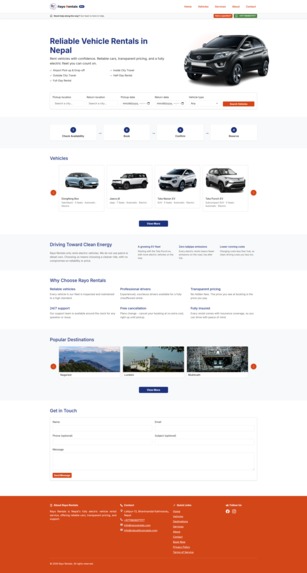
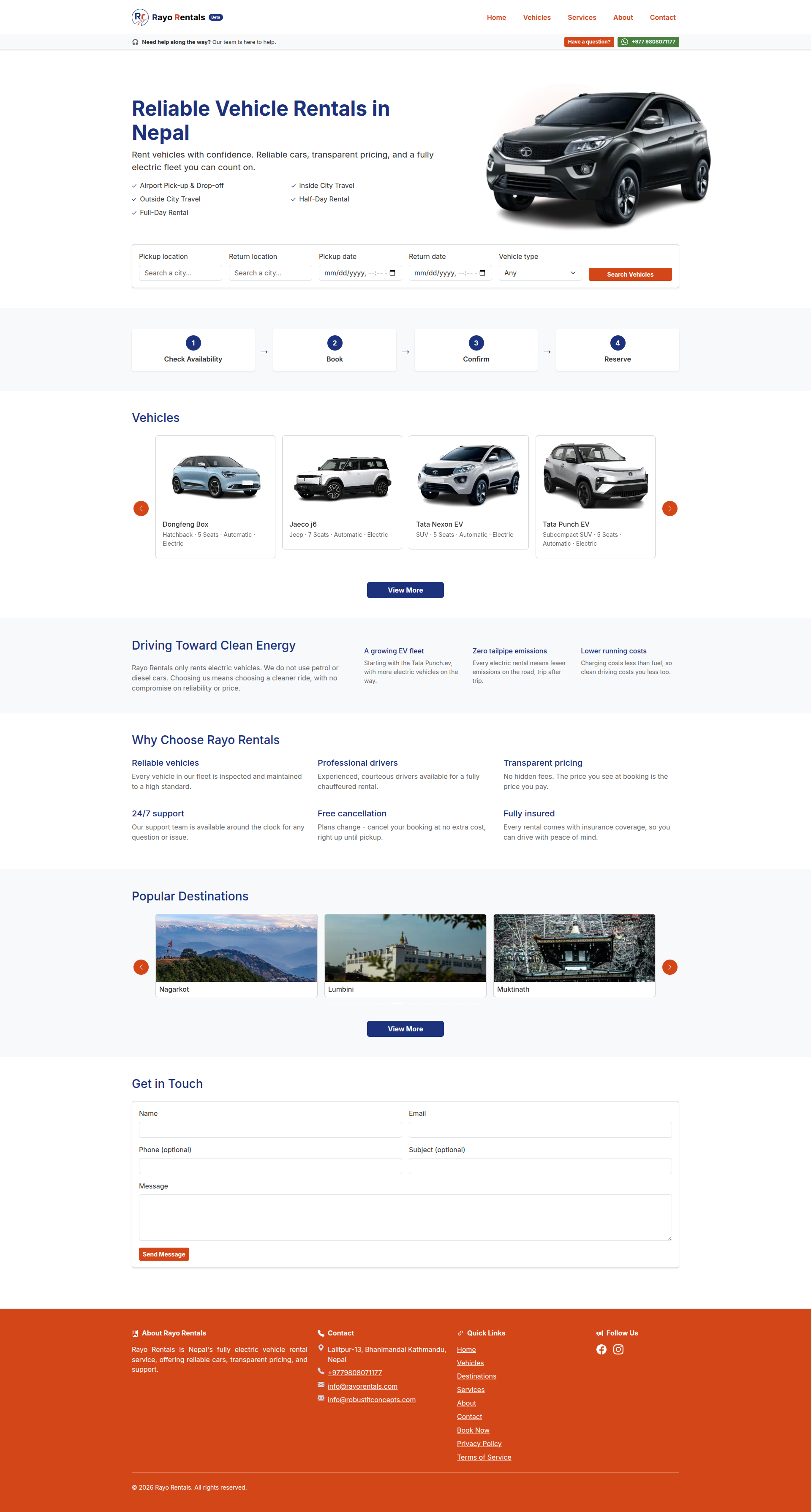
Home Page
-
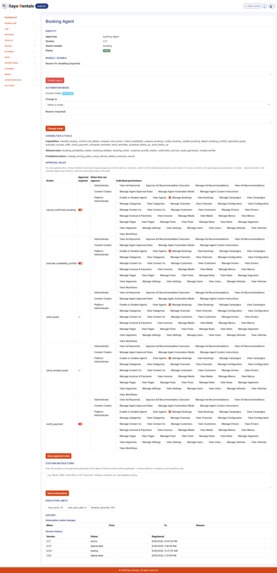
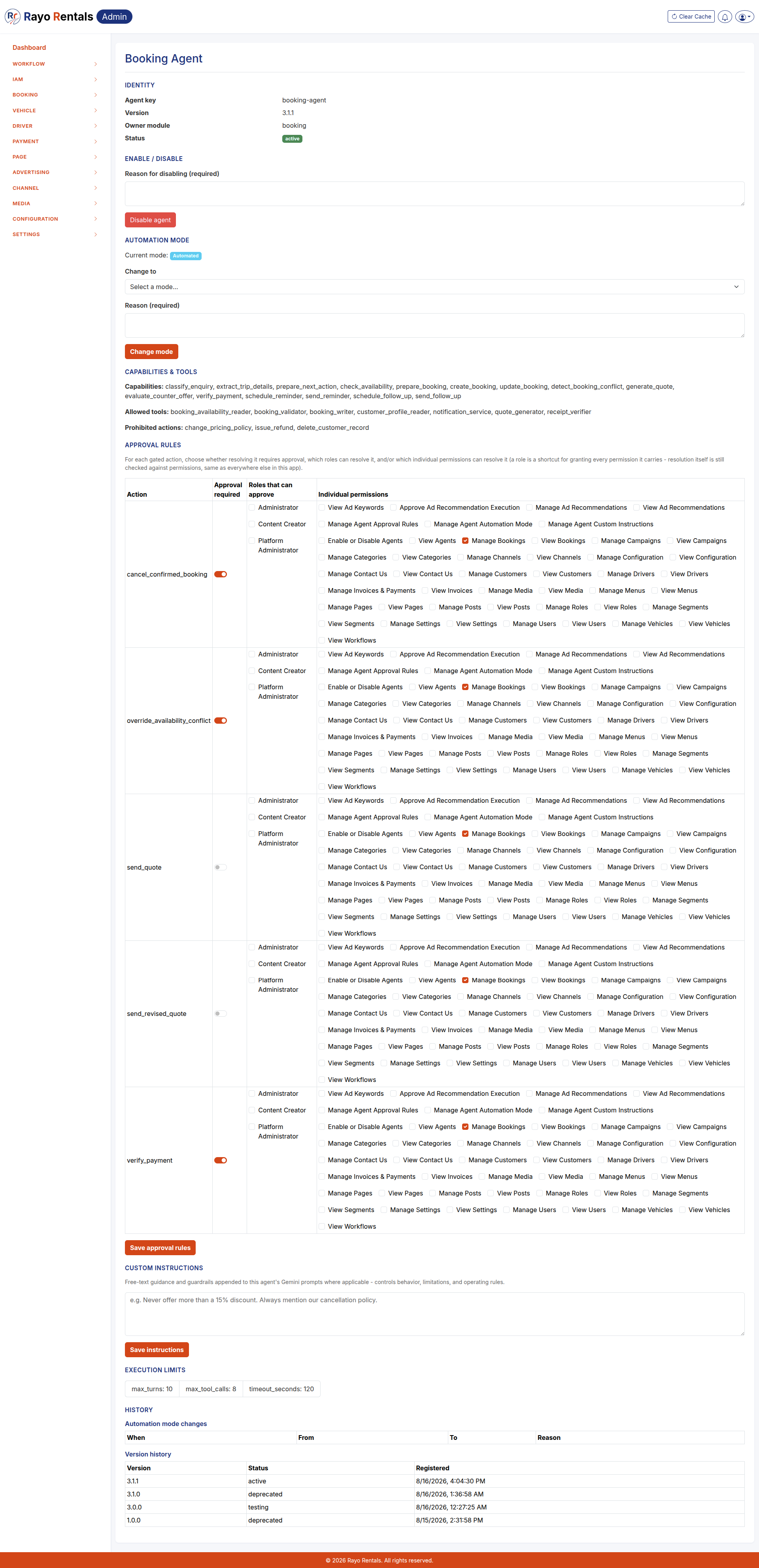
Booking Agent
-
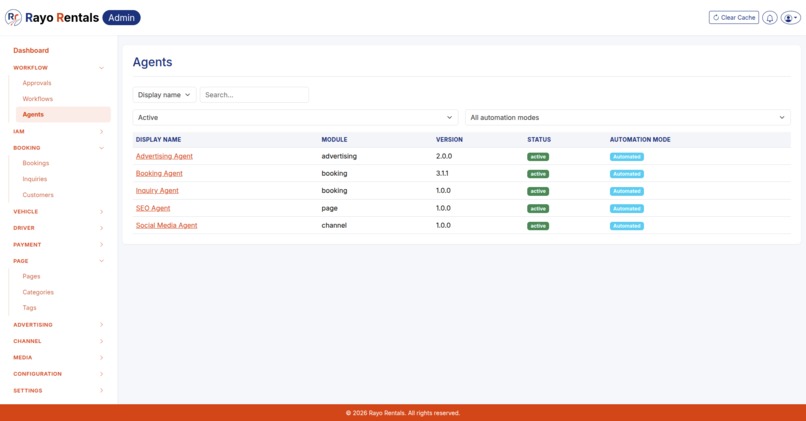
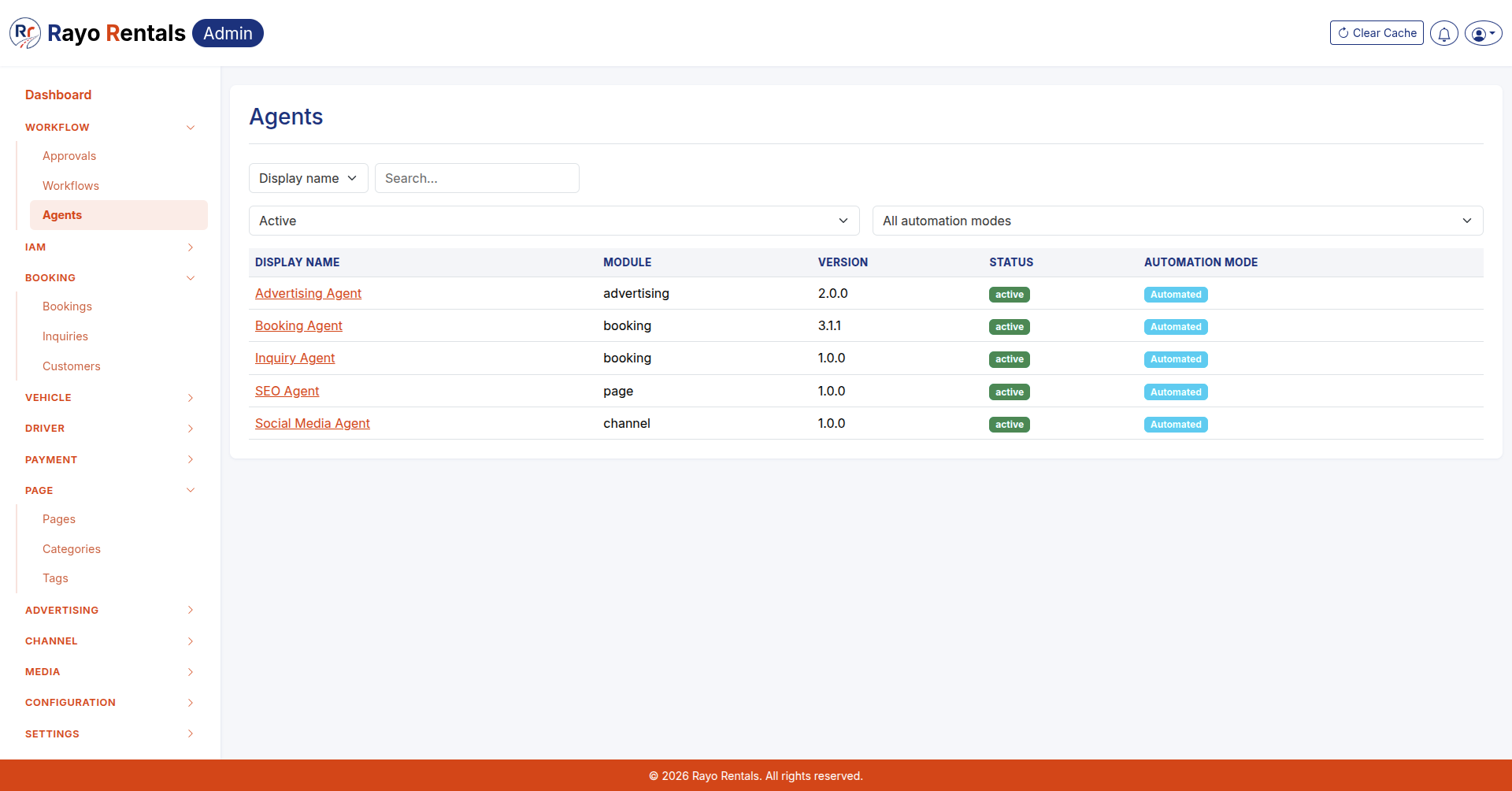
Admin UI - Agents List
-
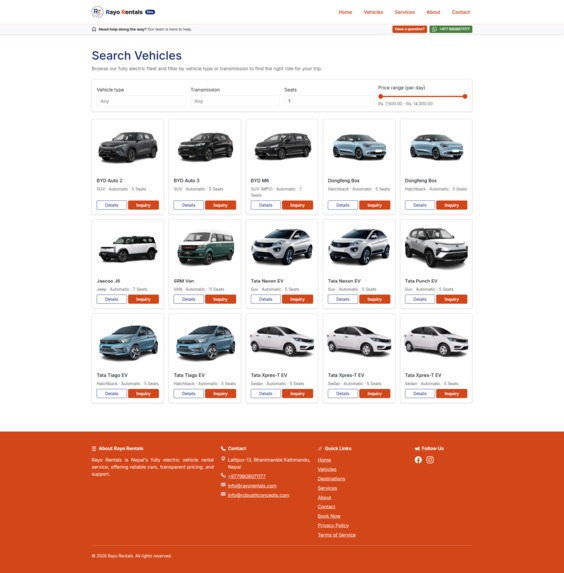
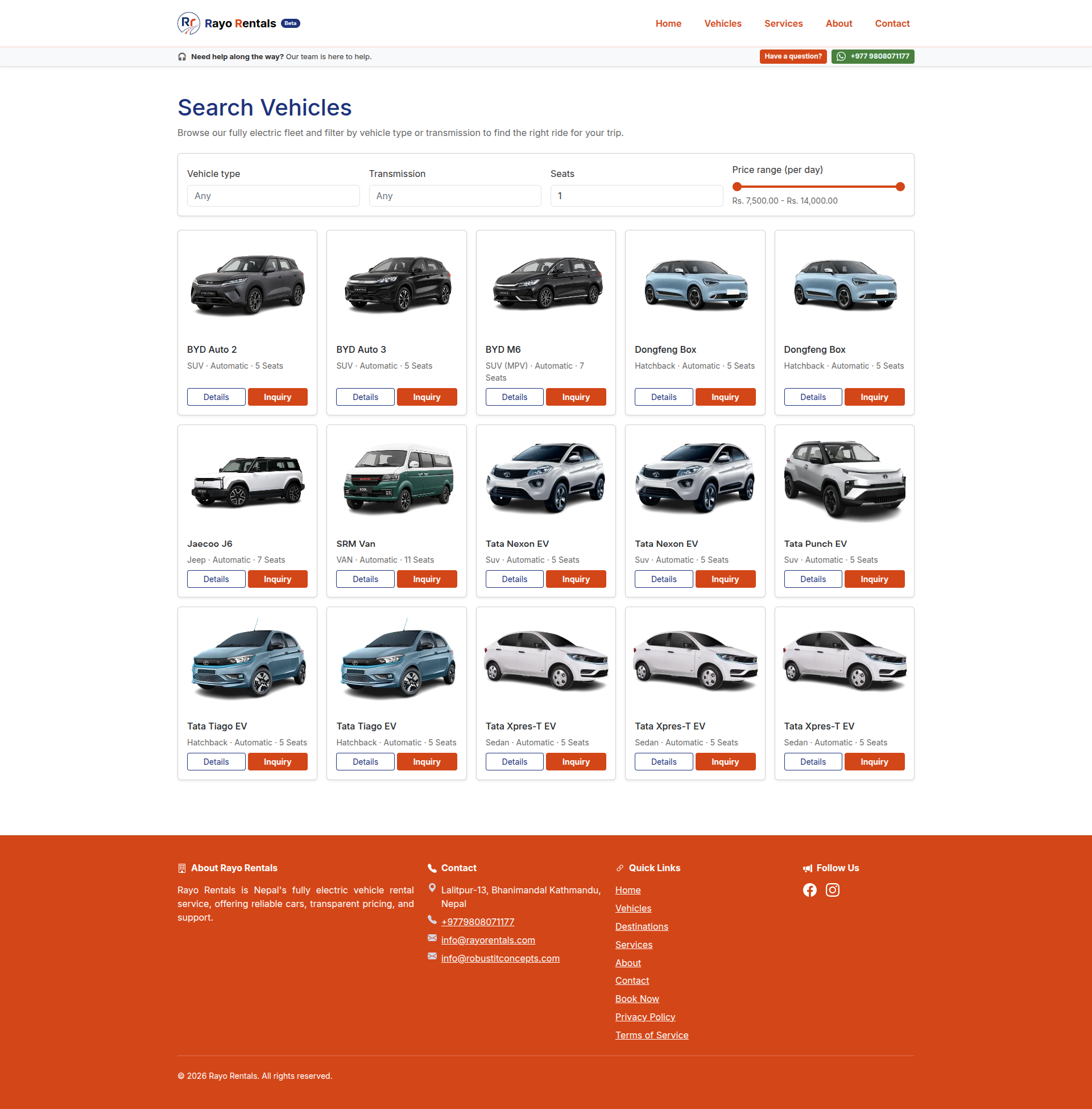
Vehicles Listing Page
Inspiration
The inspiration was to use AI to automate as much of the business as possible and provide better around-the-clock service. I was excited about the idea of building a business with minimal investment because I did not have the huge investment required to set up a large development and operational team. As someone who is introverted and very shy about marketing, and whose main knowledge is in frontend and backend development, I wanted to use AI and automation to help with areas outside my core expertise, especially marketing.
I do not have deep knowledge of Google Ads, Facebook Ads, or SEO either. AI/LLM models helped me build features and workflows that I could not imagine building with a small team in such a short time. I launched the project in 34 days, which was surprising and motivating. It also gave me confidence that I could operate a startup with minimal cost. The most exciting part was integrating AI into booking, SEO, digital marketing, and advertising. These are not my main areas of expertise, but I was still able to work on them and achieve good SEO and performance ratings.The speed at which I could translate my ideas into a real product was exceptional.
What It Does
Rayo Rentals is a rental business platform designed to provide a more automated and accessible experience for customers. It provides an integrated booking experience, customer inquiry handling, and SEO functionality.
The platform currently has multiple AI agents:
- Advertising Agent: automates advertising-related workflows.
- Booking Agent: automates booking workflows.
- Inquiry Agent: automates customer inquiry workflows.
- SEO Agent: automates SEO workflows, including keyword research and SEO updates.
- Social Media Agent: automates social media workflows, including content and post generation.
These agents are deployed as active workflows. I am continuously testing, validating, and refining them to make sure they behave reliably.
The goal is not just to use AI inside the product, but to use AI across the business so that more operations can run with minimal manual effort.
AI-Native Operations and Human Involvement
AI helps automate repetitive work and allows a small team to handle more customers without proportionally increasing the workload. For example, AI can automate booking workflows, marketing research, SEO updates, advertising content, and social media content. Humans remain responsible for supervision, reviewing important decisions, and handling situations where judgment is required. This allows team members to spend less time on repetitive work and more time on higher-value tasks. As the number of customers increases, the same team can handle more operations, improving the business's ability to scale. AI has also helped me develop skills outside my original expertise. I had only moderate knowledge of SEO and advertising, but I was able to integrate these capabilities into the platform and automate parts of the process.
Category Impact and Opportunity
Nepal is a popular tourism destination because of its natural beauty, diverse landscapes, the Himalayan region, Mount Everest, Lumbini, trekking, and growing domestic tourism. Tourists increasingly want comfortable and private transportation that gives them more flexibility during their trips. Rayo Rentals aims to provide this through reliable, comfortable, and affordable rental services, with a focus on electric vehicles and greener transportation. The platform also creates opportunities for vehicle owners, rental companies, and drivers by giving them a way to list vehicles and reach customers without having to build their own technology platform.By using AI to automate booking, marketing, SEO, customer inquiries, and other operations, Rayo Rentals can allow a small team to operate a larger transportation marketplace with lower operating costs. As the platform grows, this can create more opportunities for vehicle owners and drivers while making private and comfortable transportation more accessible to travelers.
How We Built It
Even though I had read about Agentic AI Engineering before starting to code with AI, I was initially skeptical. I had previously tried using AI for coding, but my experience was not very good. The code often had inconsistent logic, and I was concerned about time and token usage. I then took a Kaggle course that gave me a new perspective on Agentic Engineering. The concept immediately clicked with me. I spent around 10 days developing the initial specifications before writing the code. I started coding on July 25 and used AI throughout the frontend and backend development process.Instead of treating the LLM simply as a code generator, I provided specifications, skills, and guardrails so it could work within the structure I had planned.The project was developed end-to-end, including the booking system and business functionality. I also integrated AI agents into booking, customer inquiries, SEO, social media, digital marketing, and advertising. The important part for me was that AI was not only used to build the software. I wanted AI to become part of the actual business operations and handle real workflows after the software was built.
Product-Market Fit and Traction
The initial opportunity comes from both domestic and international tourism in Nepal. Customers looking for private, comfortable, reliable, and affordable transportation can use Rayo Rentals to find and book vehicles. The system is now live, and we are seeing early traffic, social media engagement, customer activity, and revenue during the hackathon. The platform is still at an early stage, so I am continuing to test the service, collect feedback, and improve the automated workflows based on actual usage. Facebook: Around 1,500 views, with the reported engagement and net-follow metrics. Google Analytics: After four days, the site recorded 13 active users, 12 new users, 43 minutes of average engagement time, and around 3.6K events.
Challenges We Ran Into
One of my biggest challenges was the limited budget. I started with a minimal budget of around $200. I did not have significant financial resources to run the project or hire a large development and operational team, so I had to be careful about how I used AI credits and tokens.During the project, I went through 3–4 major refactoring cycles, which consumed a significant amount of credits and tokens. I had to learn how to use LLMs more efficiently.
Some of the challenges I experienced were:
- Partial implementation: Sometimes AI partially implemented requirements even when I explicitly asked it not to use abstract or mock implementations.
- Risky commands:There were situations where AI ran commands that deleted files, which I found concerning.
- Different model performance: Different LLMs performed differently for the same tasks. I found some tools better suited to my workflow than others.
- AI still needs supervision: Even highly capable AI systems still need proper supervision, testing, and verification.
- Working outside my expertise: I have experience in frontend and backend development but did not have deep knowledge of SEO, Google Ads, Facebook Ads, or digital marketing.
Accomplishments
The biggest accomplishment for me was launching the project in 34 days. I was able to go from specifications to a live system with a very limited budget and without a large development or operational team. I am particularly proud of building multiple AI agents for different parts of the business instead of treating AI as only a single feature. The system now has active workflows for advertising, booking, customer inquiries, SEO, and social media. The system is live, and I am continuing to improve the automation based on real usage.
What We Learned
I learned that Agentic AI is not simply about asking an AI to build something. The specifications, guardrails, context, and review process all matter. I also learned that LLMs can make mistakes similar to humans. At times, it felt like I was instructing a junior developer with very strong coding skills who still needed supervision and clear instructions. Most importantly, I learned that AI can dramatically extend what one person can accomplish, but it does not eliminate the need for human judgment, planning, review, and engineering discipline.
Preserving Resources and What's Next
The system is designed to start with an asset-light marketplace by allowing drivers and rental companies to list their vehicles instead of requiring a large fleet investment. As bookings and revenue grow, I plan to gradually invest in our own electric vehicle fleet, technology, and automation. Using EVs also helps reduce fuel costs while providing a more environmentally friendly transportation option.The next focus is to further refine the AI agents, especially digital marketing, advertising, SEO, booking, and customer inquiry workflows. I also plan to gradually add automated pricing, analytics, and demand forecasting. My goal is to continue growing Rayo Rentals while keeping operational costs low and using AI as a multiplier for what a small team can accomplish.
Built With
- claude
- digitalocean
- fastapi
- gemini
- google-cloud
- nextjs
- postgresql

Log in or sign up for Devpost to join the conversation.